South-Eastern Europe Journal of Economics 2 (2016) 127-139
Abstract
The article deals with the overall strategic perspectives of business, technology
and innovation management models for sustainable development (SD). Radical
changes introduced by new technological breakthroughs and innovation in the
light of social, economic and ecological impacts and goals urgently call for new
business and technology models and solutions. The new goals and ­
principles of
SD highly influence the establishment of a fresh business philosophy with new
dimensions. In this article we present a framework that describes the ­
essential
­relationsandnewbusinessandtechnologymodels.Theresearchresults­presented
contribute to the theoretical background for creating more sustainable business
and technology solutions in practice.
JEL Classification: O35, L21, O33
Keywords: Sustainable Development, Innovation, Business and Technology Models
Corresponding Address: Maja Levi Jaksic, PhD, University of Belgrade, Faculty of Organizational
Sciences, Jove Ilica 154, 11000 Beograd, Serbia. Email: majal@fon.bg.ac.rs
SUSTAINABLE INNOVATION OF TECHNOLOGY
AND BUSINESS MODELS:
RETHINKING BUSINESS STRATEGY
MAJA LEVI JAKSIC
University of Belgrade, Serbia
M.L. JAKSIC, South-Eastern Europe Journal of Economics 2 (2016) 127-139
128
1. Introduction
Concepts of Sustainable Development (SD) were introduced and have largely been
investigated in relation to macro perspectives of economy and society. In the world
acclaimed Brundtland Report, SD is defined as “the development that meets the needs
of the present without compromising the ability of future generations to meet their
own needs” (United Nations, 1987). Since then, the concept has evolved to focus
on three basic principles, defined as the Triple Integrated Equation (TIE), ­
requiring
an understanding of the complex interplay of environmental, economic and social
­
processes. The rising awareness and urgency to take action towards achieving SD
goals is evident and reflected in the increasing number of countries, organisations,
and institutions worldwide committed to these goals; all these agencies adopt com-
mon principles, objectives, and instruments. In the past two decades, leading inter-
national organisations related to sustainable development, e.g. the United ­
Nations
Environmental Program (UNEP), the Coalition of Environmentally Responsible
Economies (CERES), the World Commission on Environment and Development
(WCED), the World Business Council for Sustainable Development (WBCSD), the
World Economic Forum (WEF), among others, have substantially contributed to
various perspectives and definitions of sustainable development, sustainability and
Sustainable Business Development (SBD). According to one such definition, “SBD
involves formulating and implementing business strategies, innovations and initia-
tives to help create a more sustainable world” (Rainey, 2006; p 28).
	 Yet, it could be concluded that the clear, comprehensive and consistent ­
meaning is
still elusive as indicated by evidence from both theory and practice. Discussions and
research for appropriate solutions leading to SD at different levels of the ­
economy
and society have been conducted and implemented resulting in an intricate pattern.
This means that there is an urgent need for a consistent and comprehensive approach
so as to overcome partial solutions. When investigating theoretical and practical
­
contributions, it seems that a wide range of instruments, in different ­
domains and
at different levels of society and economy, i.e. education, communication, participa-
tion, legal acts and regulations, R&D company acitivities, technology and innova-
tion, ­
business domains, still need to be developed. The challenge for SD is to trans-
late goals, ­
objectives and principles into concrete actions, behaviour patterns and
­
attitudes at all levels, whether macro or micro.
	 In this article, the focus is on investigating sustainable technology and business
models at the micro level. Sustainable business development (SBD) is underpinned
by sustainable technology and innovation, while managing technological change
has a direct impact on the sustainable competitiveness of business operations (Popa,
2014, Levi Jaksic, 2012).
	 It is argued that organisations and companies are value-generating agents. They
are the crucial bearers of value creating activities in the economy and society and this
M.L. JAKSIC, South-Eastern Europe Journal of Economics 2 (2016) 127-139 129
is where changes towards sustainable solutions are a priority. At the company level,
technology is transferred into primary and secondary business operations for ­creating,
delivering and capturing value through impacting the environment, the economy and
society (Porter, 1985; Chesbrough, 2006; Levi Jakšić, 2006, 2007, 2015). Companies
are generators of crucial determinants for sustainable development (SD), as “business
firms are catalysts and agents of social and economic change” (McIntyre, 201; p xix)
and, more specifically, “it is indeed at the strategic level that sustainable development
can fully uncover its value creation potential for a company” (Sempels & Hoffman,
2013; p 3). In this context, attention is drawn particularly to sustainable business
development (SBD) .
	 Theoretical aspects of sustainable business development, as shown by actual
­
literature reviews, have not been sufficiently investigated (Chesbourough, 2014;
Moore, 2014). Examination of examples in practice and case studies, on the other
hand, presented in relevant literature and within different lists ranking the most inno-
vative companies, e.g. the FORBES list, the Fast company list, the BRW list, show
a rising interest expressed by companies involved in offering an array of innovative
technology and business solutions in practice.
	 The relevance of the subject is based on the necessity for companies to ­
reconcile
sustainability aspects, while also satisfying all stakeholders’ needs, ensuring
­
profitability and respecting the diversified demands for the fulfillment of social goals
(Adams, 2014; Epstein & Roy, 2001). The ultimate goal is overall quality of life
­improvement.
	 It is a radically revised framework that needs to be elaborated, particularly from
a company perspective; this means that traditional technology, innovation and
­
business models still present in theory and practice need to be reviewed (Ricart,
2014; ­
Chesbrough, 2003; 2014; Levi Jaksic, 2006; 2015).
	 Relevant research is based on perspectives of conceptual reflection in ­
literature
and analysis and synthesis methods, as well as interpretation and appropriate
­comparisons.
	 The remainder of the article is organised in the following manner: Section 2
deals with the general model that is based on the three pillars/goals of SD, using
a systems approach and represented by an input-process-output model. Section 3
elaborates on the concepts of Sustainable Business Development (SBD) combining
external and resource-based views. Technology and businesses are regarded as insti-
gators of ­
problems, while sustainable technology and business innovations are key to
­
solving these problems. Models of sustainable business and technology innovation
are ­
presented. Section 4 includes concluding remarks, indicating both limitations and
aspects of future research. The paper closes with the presentation of the References
used.
M.L. JAKSIC, South-Eastern Europe Journal of Economics 2 (2016) 127-139
130
2. The general model: technology and business model innovation at the core of
sustainable development
Using a systems and process approach, a comprehensive, general model has been
developed based on the understanding that “the economy is a means, ecosystems
integrity is a condition, and the social dimension is the objective of sustainable
­
development“ (Gendron, 2013; p 55).
	 The complex sustainabiltiy equation is derived from a set of social, ­
economic
and environmental equations, known as the Triple Integrated Equation (TIE),
­
corresponding to the three basic pillars of sustainable development. The new
­
strategic management framework of SBD requires “a holistic view of the business
­
environment taking into account social, economic and environmental considerations
as well as the more conventional concerns of customers, markets, and competition”
(Rainey, 2006; p 9). The new business perspective is brought about by changes to the
traditional ‘business for profit’strategy and the inclusion of social and environmental
principles and goals.
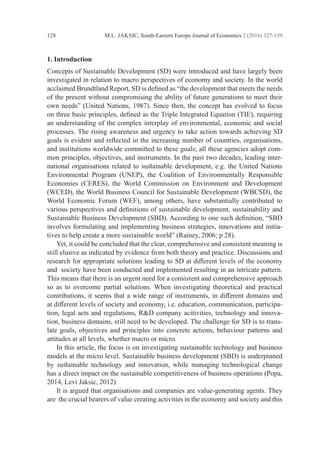
Figure 1. Sustainable development relations: input (environment), process (­economy)
and output (social and environmental objectives).
		 	
	Source: Author
M.L. JAKSIC, South-Eastern Europe Journal of Economics 2 (2016) 127-139 131
	 The general model (see Fig. 1) considers the three pillars of sustainable develop-
ment in the context of a systems approach based on an input-process-output model.
In the general model (see Fig. 1) inputs are factors of the environment – PESTLE
­(Political, Economic, Social, Technological, Legal, natural Environment), ­designated
as the social and environmental conditions, the economy is the process through which
value creation and distribution are achieved, while the fulfillment of social and envi-
ronmental goals are the output (based on the consumption of goods and services).
	 This approach explicitly points out the economic, social and environmental
­
dimensions and factors to be taken into account in all actions performed by the
­
economy and society, as presented by the Triple Helix Model (THM) of Government,
Industry and University (Etzkowitz & Leydesdorff, 2000; Levi Jakšić et al, 2014).
The tasks of simultaneously fulfilling economic, social and environmental goals are
derived from the basic input-process-output model (Fig. 1) and impact all actors
within the THM. This means that such goals are affected by demand for sustainability
that requires specific tasks leading to changes and innovation in all domains.
	 Changes in the Industry domain of the THM due to introducing the principles
and goals of SD have pointed out the significance of further investigating and
­
innovating business models and strategy. The complexity of business goals to be
fulfilled for SBD emphasizes social and environmental, alongside economic and prof-
itability goals. This brings the new concepts of eco-social business closer to con-
ventional business in general concepts (Schieffer & Lessem, 2009). Although “there
is no clear, consensual definition of ‘social entrerprise’ in the literature” (Bardy &
Massaro, 2013; p 140), it is concluded that “sustainability issues are getting more
and more important” as sustainable business strategies “not only solve social and
­
economic problems, but also care for the maintenance of resources and bring about
resource consumption that benefits the local communities and their environment as
well as the revenue interest of their respective national governments” (Bardy & Mas-
saro, 2013; p 143). ‘Sustainopreneurship’ is a term coined on the basis of earlier
­
conceptual ­
development of social enterprise and entrepreneurship emphasising that
entrepreneurship is based on innovation creating new value for economic growth
and enabling the fulfillment of individual and social goals represented by a broad
set of quality of life objectives. Social entrepreneurship means utilising resources in
a transactional way. Resources become tools and are used as much as possible for a
specific purpose in both the ­
economic and the social realms. Social entrepreneurship
undertakes social ­
activities for a profit, which is subsequently distributed in an effort
to create social value ­
(Kardosa, 2012).
	 Field and Field (2006) argue that social cost components include external costs.
It is a cost caused by an enterprise’s activity, which burdens society and the environ-
ment. Social value is provided by social entrepreneurship by “its business activities
which has an impact on society or the environment” (Bagus & Manzilati, 2014; p 14).
M.L. JAKSIC, South-Eastern Europe Journal of Economics 2 (2016) 127-139
132
The rethinking of business models includes efforts to appraise costs and revenues in
a broad social and environmental perspective, while some solutions introduce into
sustainable business models Costs and Benefits for Society and the Environment
(Sempels & Hoffmann, 2013; p 38).
3. Sustainable technology and business innovation model
Within the economy, the Technology & Business Innovation Models are at the core
of competitive performance (Levi Jakšić et al, 2014). Such models are ­
undergoing
­
radical change and have become the dynamic ‘steam engine’ for sustainable
­
development, their mission being to create social value while, simultaneously, appre-
ciating the ­
environment as a condition and keeping the whole system running, vital
and successful. The triple helix actors - government, industry and university - are
clearly presented (Fig. 1) as key-vectors of responsibility for innovating technology
& business models and for a sustainable development strategy (Levi Jakšić, 2011).
	 Technology and business innovation drive the economy towards achieving the
­
sustainable development goals set. The technology we use in performing ­
business
operations impacts the environment, society and economy, and, consequently,
­
technology and business enterprises are perpetrators of potential damage and cause
unwanted effects on economy, society and the environment. At the same time,
these actors are key to finding solutions to said problems by developing ­
sustainable
­
technology for sustainable businesses. Hence, where sustainable business strategy is
approached through a sustainable business, technology and innovation model, the em-
phasis is placed on technology and business innovation. (Adams, 2014; ­
Mendelson,
2014; Hall et al, 2010) It is emphasized that the business model encompasses eco-
nomic, environmental and social issues, and “the business model should be innovated
by integrating sustainability in order to build or keep a competitive advantage in an
ever changing economy” (Sempels & Hoffman, 2013; p 20).
	 In the Society and Environment Pull (SEP) Business model (see Fig. 2), a positive
circle chain model is presented. This positivity is based on all the links that contribute
to the overall strength of the chain. The Society and Environment link, through social
and environmental objectives, keeps affecting Sustainable Strategy, leading to Busi-
ness and Technology Innovation, which further impacts processes of Creating and
Delivering Value in the form of goods and services; the latter, in turn, keep reaching
customers through the Market, thus influencing Consumption. Society and the Envi-
ronment, within the closed loop relations presented in the SEP Business Model (Fig. 2),
are influenced by all actions and links in the chain. Following the general model (see
Fig. 1), Society and the Environment are enhanced, as they are the starting point and
they ultimately bear the consequences of the combined result of all actors presented
as links in the chain (see Fig. 2).
M.L. JAKSIC, South-Eastern Europe Journal of Economics 2 (2016) 127-139 133
Figure 2. SEP Business Model.
	 Source: Author
The comprehensive SEPmodel combines macro and micro dimensions; it respects the
basic relations of achieving sustainability in the macroperspective, while ­
focusing on
technology & business innovation as a core factor affecting sustainable development.
	 Sustainable business competitiveness means achieving a wide range of goals -
economic and non-economic - of the firm (Epstein, 2001, Meyer, 2002). It is a ­
concept
based on quantitative and qualitative performance indicators, namely, the ­
integration
of traditional business performance goals measured by traditional economic indica-
tors (e.g. profitability) applying a set of new, non-economic performance criteria that
emphasise the satisfaction of the needs of customers, employees and all other stake-
holders. The SBD approach is based on efforts to build sustainable competitiveness
while taking into account multiple factors (Meyer, 2002; p 42).
	 Business model innovation is increasingly becoming a priority for managers in
view of creating competitive advantages and achieving superior performance (Velu,
2015). The Triple Integrated Equation (TIE) comprising social, ecological (environ-
mental) and economic functions within the sustainable business development (SBD)
concept has incorporated the perespectives of ecology and society to the economic
equation already established.
M.L. JAKSIC, South-Eastern Europe Journal of Economics 2 (2016) 127-139
134
	 The focus of some studies (Boons & Ludeke-Freund, 2013) on green ­
technology
has led to assumptions that our efforts are to be directed towards safe, green
­
technology and that by achieving the goals of environmentally safe technology,
­
issues of ­
sustainable business will have been automatically resolved, too. As a result,
focus on green technology and ‘pushing’ it into the businesses sector appears to be a
prevailing ­concern.
	 The meaning of SBD exlusive focus on the ecological equation without includ-
ing economic and social aspects could be perceived as a consequence of the long-
term neglect of the natural environment and of actually tackling the very urgent
need to take action, against the alarming background of deteriorating soil, water and
air ­
quality resullting from irresponsible business operations. Priority for sustain-
able business strategy means preserving the ‘essential’ or ‘critical’ natural capital
and ­
“sustainable development is achieved if actions of producers and consumers
do not harm air, ­
biodiversity, climate, soil and water, and thus maintain the earth’s
­
ecosystem services” (Bardy & Massaro, 2013). Some authors even postulate that the
economic and the ecological equation are conflicting, contradictory and opposing
each other. These scholars insist that solutions should be sought exclusively through
compulsory measures, legal acts and regulations limiting, forbidding and constrainig
actions damaging the environment. This could be seen as a reaction to urgent needs
only within a short time span. Such a line of thinking might be misleading, since, in
practice, we find evidence that ‘green’ technological and business innovations also
make a substantial contribution to economic growth. It is of paramount importance to
decouple economic growth from environmental degradation (Machiba, 2013; p 23).
In this article we argue for the significance of dealing with the complete TIE of SBD
for the long-term, sustainable future.
	 As result of a relevant literature review and an analysis of the main concepts intro-
duced in this article, we have come to the conclusion that the concepts of ­
sustainable
innovation and sustainable business are converging. It is difficult to draw a line,
since innovation is perceived as the commercialization of an invention (idea) and
refers to the idea being introduced to the market and further transferred. Focus on
technology and innovation for the purpose of economic growth and socio-economic
­
development puts pressure on technology innovation towards achieving sustainable
socio-economic development. It is stated that
Research and experimental development (R&D), when appropriately
valorized, lead to technological innovation in the form of new products
and processes, which contribute to growth, competitiveness and job
creation, and which produce other societal benefits. Because of market
failures, the private sector, left to its own devices, invests in R&D in
sectors not always fully aligned with, and at levels below, the socially
desirable, and is unable to fully valorize its research output. (Delanghe
& Muldur, 2014).
M.L. JAKSIC, South-Eastern Europe Journal of Economics 2 (2016) 127-139 135
	 This means that not all technological solutions are in line with SD goals. The
necessity to develop sustainable technological innovation and sustainable business
models based on the TIE entails revising and rethinking our traditional technology
and innovation models. The ‘idea to idea’ and complete ‘life cycle assessment- LCA’
concepts and approaches (Sempels & Hoffmann, 2013; p 78-94) introduced in the
early phases of research & development and innovation processes, have led to sus-
tainable business solutions in the complete life cycle perpsective – namely, idea,
innovation, market, exploitation, end of life, new ideas for the next innovation cycle.
When reviewing relevant literature on the definitions of business models, it is evident
that the concepts of technology and business innovation are closely linked: a busi-
ness model is used as a plan that specifies how a new venture can become profitable.
(Boons&Ludeke-Freund, 2013; p 10). A business model is a “market device” (Callon
et al, 2007), an intermediary between different innovation actors, such as companies,
financiers, research institutions, etc., i.e. actors who shape innovation networks. A
business model describes the principles according to which an organisation creates,
distributes and captures value (Sempels & Hoffman, 2013; p 35). A business model is
a means by which company strategy is established (Sempels & Hoffman, 2013; p 3).
An answer to the dilemmas concerning the relations between business models and
technology innovation, a dilemma definitely more significant than ‘the hen or the
egg’, can be found in the brief statement by H. Chesbrough (2014) “Innovate the
business model, not just the technology”; this is further elaborated as follows: “a
better business model often beats a better technology”. In this article it is argued
that sustainable technology innovation is inseparable from sustainable business, as
­
presented in the Sustainable Push - Pull Model in Figure 3.
	 In relevant literature, a business model consists of different ‘blocks’: value propo-
sition, value architecture and economic equation (Sempels & Hoffman, 2013), or
value proposition, supply chain, customer interface, financial model (Boons & Lude-
ke-Freund, 2013).
	 Sustainable competitive strategy is based on the interaction between the two
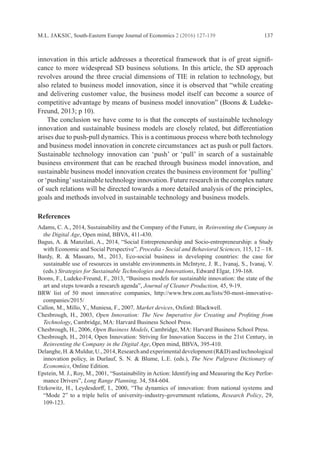
spheres (see Fig. 3). Sustainable technology pushes sustainable business (SB) and
sustainable business pulls sustainable technology innovation (STI). The business and
technology relations presented in a push-pull manner (Fig. 3) lead to an ­understanding
which can affect practical solutions. The push-pull model unveils essential relation-
ships between technology and business, leading to continuous innovation in an effort
to create an SBD strategy and find solutions in concrete real-life circumstances.
M.L. JAKSIC, South-Eastern Europe Journal of Economics 2 (2016) 127-139
136
Figure 3. The sustainable model of PUSH-PULL relations between SB and and STI
models.
		 	
	 Source: Author
4. Conclusions
The input-process-output model of SD focuses on the economy as a dynamic process
through which new value is created in order to increase overall welfare, ­
satisfaction
and benefits for society. The driving force of economy dynamics is the use of
­
technology by businesseses so as to develop operations leading to the generation of
new added value in the form of goods and services to be consumed and used so as to
further increase social benefits and welfare.
	 The broad concept of technology management entails incorporating techno-
logical issues in all aspects of business development. We develop the SEP model
that starts and ends with the societal and environmental conditions, objectives and
goals. ­
Furthermore, a sustainable Push–Pull model in regard to the relations between
a ­
sustainable business model and Technology Innovation calls for business and
­
technology innovation efforts aimed at reaching SBD.
	 Rethinking strategy means setting the sustainability TIE as the overall ­
business
goal and deriving means for its fulfillment through sustainable business and
­
technology innovation. Although sustainablity encompasses the complex TIE, in
practice it is often noted that sustainable business goals are achieved through the
mere implementation of green technology. In this article it is argued that the complete
effects of SD can be achieved only by combining innovative efforts when trying to
reach sustainable technology innovation and sustainable business model innovation
in practice. Focus on rethinking new models of sustainable business and technology
M.L. JAKSIC, South-Eastern Europe Journal of Economics 2 (2016) 127-139 137
innovation in this article addresses a theoretical framework that is of great signifi-
cance to more widespread SD business solutions. In this article, the SD approach
­
revolves around the three crucial dimensions of TIE in relation to technology, but
also related to business model innovation, since it is observed that “while creating
and delivering customer value, the business model itself can become a source of
competitive advantage by means of business model innovation” (Boons & Ludeke-
Freund, 2013; p 10).
	 The conclusion we have come to is that the concepts of sustainable technology
innovation and sustainable business models are closely related, but differentiation
arises due to push-pull dynamics. This is a continuous process where both technology
and business model innovation in concrete circumstances act as push or pull factors.
Sustainable technology innovation can ‘push’ or ‘pull’ in search of a ­
sustainable
­
business environment that can be reached through business model innovation, and
sustainable business model innovation creates the business environment for ­
‘pulling’
or ‘pushing’sustainable technology innovation. Future research in the complex ­nature
of such relations will be directed towards a more detailed analysis of the ­
principles,
goals and methods involved in sustainable technology and business models.
References
Adams, C. A., 2014, Sustainability and the Company of the Future, in Reinventing the Company in
the Digital Age, Open mind, BBVA, 411-430.
Bagus, A. & Manzilati, A., 2014, “Social Entrepreneurship and Socio-entrepreneurship: a Study
with Economic and Social Perspective”, Procedia - Social and Behavioral Sciences, 115, 12 – 18.
Bardy, R. & Massaro, M., 2013, Eco-social business in developing countries: the case for
­
sustainable use of resources in unstable environments.in McIntyre, J. R., Ivanaj, S., Ivanaj, V.
(eds.) ­
Strategies for Sustainable Technologies and Innovations, Edward Elgar, 139-168.
Boons, F., Ludeke-Freund, F., 2013, “Business models for sustainable innovation: the state of the
art and steps towards a research agenda”, Journal of Cleaner Production, 45, 9-19.
BRW list of 50 most innovative companies, http://www.brw.com.au/lists/50-most-innovative-
companies/2015/
Callon, M., Millo, Y., Muniesa, F., 2007, Market devices, Oxford: Blackwell.
Chesbrough, H., 2003, Open Innovation: The New Imperative for Creating and Profiting from
­Technology, Cambridge, MA: Harvard Business School Press.
Chesbrough, H., 2006, Open Business Models, Cambridge, MA: Harvard Business School Press.
Chesbrough, H., 2014, Open Innovation: Striving for Innovation Success in the 21st Century, in
Reinventing the Company in the Digital Age, Open mind, BBVA, 395-410.
Delanghe,H.&Muldur,U.,2014,Researchandexperimentaldevelopment(R&D)and­technological
innovation policy, in Durlauf, S. N. & Blume, L.E. (eds.), The New Palgrave ­
Dictionary of
­Economics, Online Edition.
Epstein, M. J., Roy, M., 2001, “Sustainability in Action: Identifying and Measuring the Key Perfor-
mance Drivers”, Long Range Planning, 34, 584-604.
Etzkowitz, H., Leydesdorff, I., 2000, “The dynamics of innovation: from national systems and
“Mode 2” to a triple helix of university-industry-government relations, Research Policy, 29,
109-123.
M.L. JAKSIC, South-Eastern Europe Journal of Economics 2 (2016) 127-139
138
Fast Company 50 most innovative companies, (http://www.fastcompany.com/section/most-inno-
vative-companies-2015
Field, B. C. & Field, M. K., 2006, Environmental Economics: An Introduction. New York:
McGrawHill/Urwin.
FORBES list of 100 most innovative comapnies, (http://www.forbes.com/innovative-companies/
Gendron, C., 2013, Sustainable development through innovation? A social challenge. in McIn-
tyre, J. R., Ivanaj, S., Ivanaj, V. (eds.) Strategies for Sustainable Technologies and Innovations,
­
Edward Elgar, 51-74.
Hall, J. K., Daneke, G. A., Lenox, M. J., 2010, “Sustainable Development and Entrepreneurship:
Past Contributions and Future Directions”, Journal of Business Venturing, 25, 439-448.
Kardosa, M., 2012, “The relationship between entrepreneurship, innovation and sustainable
­
development. Research on European Union Countries”, Procedia Economics and Finance, 3,
1030 – 1035.
Levi Jaksic, M., 2015, Sustainable Innovation of Technology and Business Models: Steps Toward
Rethinking Technology and Business Strategy, Proceedings of the 11th
International Conference
of ASECU, “Openness, Innovation, Efficiency and Democratization”, organized by Cracow
­
University of Economics, Cracow, 282-293.
Levi Jakšić, M., 2005, Kooperativna tehnološka strategija, Transfer tehnologije-za evropsku Srbiju,
Mašinski fakultet, Beograd.
Levi Jakšić, M., 2006, “The New paradigm of Technology and Innovation Management”,
­
Management, 43, 28-38.
Levi Jakšić, M., 2007, Technology Innovation Management for Sustainable Business ­
Development,
in B. Rakita, S. Lovreta, M. Petković (eds.), Proceedings of International Conference:
­
Contemporary Challenges of Theory and Practice in Economics, Ekonomski fakultet, Beograd,
155-167.
Levi Jakšić, M., 2011. Sustainable Technology and Innovation Management, in Tsekouras, Y.,
­Damyanov, A. (eds.), Recent Economic Crisis and Future Development Tendencies, ASECU,
425-437.
Levi Jakšić, M., 2012, Innovation Entrepreneurship for Sustainable Development, in Tipurić, D.
& Dabić, M. (eds). Management, Governance and Entrepreneurship – New Perspectives and
­Challenges, London: Access Press, 487-508.
Levi Jakšić, M., Marinković, S., Kojić, J., 2014, Technology and Innovation Management in Serbia,
in Levi Jakšić, M., Barjaktarović Rakočević, S., Martić, M., (eds.) Innovative management and
Firm Performance-An Interdisciplinary Approach. London: Palgrave Macmillan, 37-68.
Machiba, T., 2013, Understanding eco-innovation for enabling a green industry transformation,
in McIntyre, J. R., Ivanaj, S., and Ivanaj, V. (eds.) Strategies for Sustainable Technologies and
­Innovations, Edward Elgar, 21 – 50.
McIntyre, J. R., Ivanaj, S., and Ivanaj, V, 2013, Introduction: Foundational considerations in
­
balancing innovatory processes and sustainable development practices in comaprative light, in
McIntyre, J. R., Ivanaj, S., and Ivanaj, V. (eds.) Strategies for Sustainable Technologies and
­Innovations, Edward Elgar, 21 – 50.
Mendelson, H., 2014, Business Models, Information Technology and the Company of the Future,
in Reinventing the Company in the Digital Age, Open mind, BBVA, 2014. 63-83.
Meyer, M. W., 2002, Rethinking Performance Measurement, Cambridge: Cambridge University
press.
Moore, G., 2014, The Nature of the Firm – 75 Years Later, in Reinventing the Company in the
­Digital Age, Open mind, BBVA, 2014, 51-61.
Popa, H. L., 2014, “Integrative innovation as core determinant for sustainable progress”, Procedia
– Social and Behavioral Sciences, 124, 460 – 467.
M.L. JAKSIC, South-Eastern Europe Journal of Economics 2 (2016) 127-139 139
Porter, M., 1985, Competitive Advantage: Creating and Sustaining Superior performance, New
York: Free Press.
Rainey, D., 2006, Sustainable Business Development, Cambridge: Cambridge University Press.
Ricart, J., 2014, Business Models for the Companies of the Future, in Reinventing the Company in
the Digital Age, Open mind, BBVA, 2014, pp. 134-146.
Schieffer, A. and Lessem, R., 2009, “Beyond social and private enterprise: towards the integrated
entreprise”, Transition Studies Review, 15(4), 713-725.
Sempels, C. & Hoffman, J., 2013, Sustainable Innovation Strategy - creating value in a world of
finite resources. London: Palgrave Macmillan.
United Nations, World Commission on Environment and Development (1987), Our Common
­
Future (The Brundtland Report), UN Documents.
Velu, C., 2015, “Business model innovation and third-party alliance on the survival of new firms”
Technovation 35, 1-11.

issue27-jaksic_inovationsustainable.pdf

  • 1.
    South-Eastern Europe Journalof Economics 2 (2016) 127-139 Abstract The article deals with the overall strategic perspectives of business, technology and innovation management models for sustainable development (SD). Radical changes introduced by new technological breakthroughs and innovation in the light of social, economic and ecological impacts and goals urgently call for new business and technology models and solutions. The new goals and ­ principles of SD highly influence the establishment of a fresh business philosophy with new dimensions. In this article we present a framework that describes the ­ essential ­relationsandnewbusinessandtechnologymodels.Theresearchresults­presented contribute to the theoretical background for creating more sustainable business and technology solutions in practice. JEL Classification: O35, L21, O33 Keywords: Sustainable Development, Innovation, Business and Technology Models Corresponding Address: Maja Levi Jaksic, PhD, University of Belgrade, Faculty of Organizational Sciences, Jove Ilica 154, 11000 Beograd, Serbia. Email: majal@fon.bg.ac.rs SUSTAINABLE INNOVATION OF TECHNOLOGY AND BUSINESS MODELS: RETHINKING BUSINESS STRATEGY MAJA LEVI JAKSIC University of Belgrade, Serbia
  • 2.
    M.L. JAKSIC, South-EasternEurope Journal of Economics 2 (2016) 127-139 128 1. Introduction Concepts of Sustainable Development (SD) were introduced and have largely been investigated in relation to macro perspectives of economy and society. In the world acclaimed Brundtland Report, SD is defined as “the development that meets the needs of the present without compromising the ability of future generations to meet their own needs” (United Nations, 1987). Since then, the concept has evolved to focus on three basic principles, defined as the Triple Integrated Equation (TIE), ­ requiring an understanding of the complex interplay of environmental, economic and social ­ processes. The rising awareness and urgency to take action towards achieving SD goals is evident and reflected in the increasing number of countries, organisations, and institutions worldwide committed to these goals; all these agencies adopt com- mon principles, objectives, and instruments. In the past two decades, leading inter- national organisations related to sustainable development, e.g. the United ­ Nations Environmental Program (UNEP), the Coalition of Environmentally Responsible Economies (CERES), the World Commission on Environment and Development (WCED), the World Business Council for Sustainable Development (WBCSD), the World Economic Forum (WEF), among others, have substantially contributed to various perspectives and definitions of sustainable development, sustainability and Sustainable Business Development (SBD). According to one such definition, “SBD involves formulating and implementing business strategies, innovations and initia- tives to help create a more sustainable world” (Rainey, 2006; p 28). Yet, it could be concluded that the clear, comprehensive and consistent ­ meaning is still elusive as indicated by evidence from both theory and practice. Discussions and research for appropriate solutions leading to SD at different levels of the ­ economy and society have been conducted and implemented resulting in an intricate pattern. This means that there is an urgent need for a consistent and comprehensive approach so as to overcome partial solutions. When investigating theoretical and practical ­ contributions, it seems that a wide range of instruments, in different ­ domains and at different levels of society and economy, i.e. education, communication, participa- tion, legal acts and regulations, R&D company acitivities, technology and innova- tion, ­ business domains, still need to be developed. The challenge for SD is to trans- late goals, ­ objectives and principles into concrete actions, behaviour patterns and ­ attitudes at all levels, whether macro or micro. In this article, the focus is on investigating sustainable technology and business models at the micro level. Sustainable business development (SBD) is underpinned by sustainable technology and innovation, while managing technological change has a direct impact on the sustainable competitiveness of business operations (Popa, 2014, Levi Jaksic, 2012). It is argued that organisations and companies are value-generating agents. They are the crucial bearers of value creating activities in the economy and society and this
  • 3.
    M.L. JAKSIC, South-EasternEurope Journal of Economics 2 (2016) 127-139 129 is where changes towards sustainable solutions are a priority. At the company level, technology is transferred into primary and secondary business operations for ­creating, delivering and capturing value through impacting the environment, the economy and society (Porter, 1985; Chesbrough, 2006; Levi Jakšić, 2006, 2007, 2015). Companies are generators of crucial determinants for sustainable development (SD), as “business firms are catalysts and agents of social and economic change” (McIntyre, 201; p xix) and, more specifically, “it is indeed at the strategic level that sustainable development can fully uncover its value creation potential for a company” (Sempels & Hoffman, 2013; p 3). In this context, attention is drawn particularly to sustainable business development (SBD) . Theoretical aspects of sustainable business development, as shown by actual ­ literature reviews, have not been sufficiently investigated (Chesbourough, 2014; Moore, 2014). Examination of examples in practice and case studies, on the other hand, presented in relevant literature and within different lists ranking the most inno- vative companies, e.g. the FORBES list, the Fast company list, the BRW list, show a rising interest expressed by companies involved in offering an array of innovative technology and business solutions in practice. The relevance of the subject is based on the necessity for companies to ­ reconcile sustainability aspects, while also satisfying all stakeholders’ needs, ensuring ­ profitability and respecting the diversified demands for the fulfillment of social goals (Adams, 2014; Epstein & Roy, 2001). The ultimate goal is overall quality of life ­improvement. It is a radically revised framework that needs to be elaborated, particularly from a company perspective; this means that traditional technology, innovation and ­ business models still present in theory and practice need to be reviewed (Ricart, 2014; ­ Chesbrough, 2003; 2014; Levi Jaksic, 2006; 2015). Relevant research is based on perspectives of conceptual reflection in ­ literature and analysis and synthesis methods, as well as interpretation and appropriate ­comparisons. The remainder of the article is organised in the following manner: Section 2 deals with the general model that is based on the three pillars/goals of SD, using a systems approach and represented by an input-process-output model. Section 3 elaborates on the concepts of Sustainable Business Development (SBD) combining external and resource-based views. Technology and businesses are regarded as insti- gators of ­ problems, while sustainable technology and business innovations are key to ­ solving these problems. Models of sustainable business and technology innovation are ­ presented. Section 4 includes concluding remarks, indicating both limitations and aspects of future research. The paper closes with the presentation of the References used.
  • 4.
    M.L. JAKSIC, South-EasternEurope Journal of Economics 2 (2016) 127-139 130 2. The general model: technology and business model innovation at the core of sustainable development Using a systems and process approach, a comprehensive, general model has been developed based on the understanding that “the economy is a means, ecosystems integrity is a condition, and the social dimension is the objective of sustainable ­ development“ (Gendron, 2013; p 55). The complex sustainabiltiy equation is derived from a set of social, ­ economic and environmental equations, known as the Triple Integrated Equation (TIE), ­ corresponding to the three basic pillars of sustainable development. The new ­ strategic management framework of SBD requires “a holistic view of the business ­ environment taking into account social, economic and environmental considerations as well as the more conventional concerns of customers, markets, and competition” (Rainey, 2006; p 9). The new business perspective is brought about by changes to the traditional ‘business for profit’strategy and the inclusion of social and environmental principles and goals. Figure 1. Sustainable development relations: input (environment), process (­economy) and output (social and environmental objectives). Source: Author
  • 5.
    M.L. JAKSIC, South-EasternEurope Journal of Economics 2 (2016) 127-139 131 The general model (see Fig. 1) considers the three pillars of sustainable develop- ment in the context of a systems approach based on an input-process-output model. In the general model (see Fig. 1) inputs are factors of the environment – PESTLE ­(Political, Economic, Social, Technological, Legal, natural Environment), ­designated as the social and environmental conditions, the economy is the process through which value creation and distribution are achieved, while the fulfillment of social and envi- ronmental goals are the output (based on the consumption of goods and services). This approach explicitly points out the economic, social and environmental ­ dimensions and factors to be taken into account in all actions performed by the ­ economy and society, as presented by the Triple Helix Model (THM) of Government, Industry and University (Etzkowitz & Leydesdorff, 2000; Levi Jakšić et al, 2014). The tasks of simultaneously fulfilling economic, social and environmental goals are derived from the basic input-process-output model (Fig. 1) and impact all actors within the THM. This means that such goals are affected by demand for sustainability that requires specific tasks leading to changes and innovation in all domains. Changes in the Industry domain of the THM due to introducing the principles and goals of SD have pointed out the significance of further investigating and ­ innovating business models and strategy. The complexity of business goals to be fulfilled for SBD emphasizes social and environmental, alongside economic and prof- itability goals. This brings the new concepts of eco-social business closer to con- ventional business in general concepts (Schieffer & Lessem, 2009). Although “there is no clear, consensual definition of ‘social entrerprise’ in the literature” (Bardy & Massaro, 2013; p 140), it is concluded that “sustainability issues are getting more and more important” as sustainable business strategies “not only solve social and ­ economic problems, but also care for the maintenance of resources and bring about resource consumption that benefits the local communities and their environment as well as the revenue interest of their respective national governments” (Bardy & Mas- saro, 2013; p 143). ‘Sustainopreneurship’ is a term coined on the basis of earlier ­ conceptual ­ development of social enterprise and entrepreneurship emphasising that entrepreneurship is based on innovation creating new value for economic growth and enabling the fulfillment of individual and social goals represented by a broad set of quality of life objectives. Social entrepreneurship means utilising resources in a transactional way. Resources become tools and are used as much as possible for a specific purpose in both the ­ economic and the social realms. Social entrepreneurship undertakes social ­ activities for a profit, which is subsequently distributed in an effort to create social value ­ (Kardosa, 2012). Field and Field (2006) argue that social cost components include external costs. It is a cost caused by an enterprise’s activity, which burdens society and the environ- ment. Social value is provided by social entrepreneurship by “its business activities which has an impact on society or the environment” (Bagus & Manzilati, 2014; p 14).
  • 6.
    M.L. JAKSIC, South-EasternEurope Journal of Economics 2 (2016) 127-139 132 The rethinking of business models includes efforts to appraise costs and revenues in a broad social and environmental perspective, while some solutions introduce into sustainable business models Costs and Benefits for Society and the Environment (Sempels & Hoffmann, 2013; p 38). 3. Sustainable technology and business innovation model Within the economy, the Technology & Business Innovation Models are at the core of competitive performance (Levi Jakšić et al, 2014). Such models are ­ undergoing ­ radical change and have become the dynamic ‘steam engine’ for sustainable ­ development, their mission being to create social value while, simultaneously, appre- ciating the ­ environment as a condition and keeping the whole system running, vital and successful. The triple helix actors - government, industry and university - are clearly presented (Fig. 1) as key-vectors of responsibility for innovating technology & business models and for a sustainable development strategy (Levi Jakšić, 2011). Technology and business innovation drive the economy towards achieving the ­ sustainable development goals set. The technology we use in performing ­ business operations impacts the environment, society and economy, and, consequently, ­ technology and business enterprises are perpetrators of potential damage and cause unwanted effects on economy, society and the environment. At the same time, these actors are key to finding solutions to said problems by developing ­ sustainable ­ technology for sustainable businesses. Hence, where sustainable business strategy is approached through a sustainable business, technology and innovation model, the em- phasis is placed on technology and business innovation. (Adams, 2014; ­ Mendelson, 2014; Hall et al, 2010) It is emphasized that the business model encompasses eco- nomic, environmental and social issues, and “the business model should be innovated by integrating sustainability in order to build or keep a competitive advantage in an ever changing economy” (Sempels & Hoffman, 2013; p 20). In the Society and Environment Pull (SEP) Business model (see Fig. 2), a positive circle chain model is presented. This positivity is based on all the links that contribute to the overall strength of the chain. The Society and Environment link, through social and environmental objectives, keeps affecting Sustainable Strategy, leading to Busi- ness and Technology Innovation, which further impacts processes of Creating and Delivering Value in the form of goods and services; the latter, in turn, keep reaching customers through the Market, thus influencing Consumption. Society and the Envi- ronment, within the closed loop relations presented in the SEP Business Model (Fig. 2), are influenced by all actions and links in the chain. Following the general model (see Fig. 1), Society and the Environment are enhanced, as they are the starting point and they ultimately bear the consequences of the combined result of all actors presented as links in the chain (see Fig. 2).
  • 7.
    M.L. JAKSIC, South-EasternEurope Journal of Economics 2 (2016) 127-139 133 Figure 2. SEP Business Model. Source: Author The comprehensive SEPmodel combines macro and micro dimensions; it respects the basic relations of achieving sustainability in the macroperspective, while ­ focusing on technology & business innovation as a core factor affecting sustainable development. Sustainable business competitiveness means achieving a wide range of goals - economic and non-economic - of the firm (Epstein, 2001, Meyer, 2002). It is a ­ concept based on quantitative and qualitative performance indicators, namely, the ­ integration of traditional business performance goals measured by traditional economic indica- tors (e.g. profitability) applying a set of new, non-economic performance criteria that emphasise the satisfaction of the needs of customers, employees and all other stake- holders. The SBD approach is based on efforts to build sustainable competitiveness while taking into account multiple factors (Meyer, 2002; p 42). Business model innovation is increasingly becoming a priority for managers in view of creating competitive advantages and achieving superior performance (Velu, 2015). The Triple Integrated Equation (TIE) comprising social, ecological (environ- mental) and economic functions within the sustainable business development (SBD) concept has incorporated the perespectives of ecology and society to the economic equation already established.
  • 8.
    M.L. JAKSIC, South-EasternEurope Journal of Economics 2 (2016) 127-139 134 The focus of some studies (Boons & Ludeke-Freund, 2013) on green ­ technology has led to assumptions that our efforts are to be directed towards safe, green ­ technology and that by achieving the goals of environmentally safe technology, ­ issues of ­ sustainable business will have been automatically resolved, too. As a result, focus on green technology and ‘pushing’ it into the businesses sector appears to be a prevailing ­concern. The meaning of SBD exlusive focus on the ecological equation without includ- ing economic and social aspects could be perceived as a consequence of the long- term neglect of the natural environment and of actually tackling the very urgent need to take action, against the alarming background of deteriorating soil, water and air ­ quality resullting from irresponsible business operations. Priority for sustain- able business strategy means preserving the ‘essential’ or ‘critical’ natural capital and ­ “sustainable development is achieved if actions of producers and consumers do not harm air, ­ biodiversity, climate, soil and water, and thus maintain the earth’s ­ ecosystem services” (Bardy & Massaro, 2013). Some authors even postulate that the economic and the ecological equation are conflicting, contradictory and opposing each other. These scholars insist that solutions should be sought exclusively through compulsory measures, legal acts and regulations limiting, forbidding and constrainig actions damaging the environment. This could be seen as a reaction to urgent needs only within a short time span. Such a line of thinking might be misleading, since, in practice, we find evidence that ‘green’ technological and business innovations also make a substantial contribution to economic growth. It is of paramount importance to decouple economic growth from environmental degradation (Machiba, 2013; p 23). In this article we argue for the significance of dealing with the complete TIE of SBD for the long-term, sustainable future. As result of a relevant literature review and an analysis of the main concepts intro- duced in this article, we have come to the conclusion that the concepts of ­ sustainable innovation and sustainable business are converging. It is difficult to draw a line, since innovation is perceived as the commercialization of an invention (idea) and refers to the idea being introduced to the market and further transferred. Focus on technology and innovation for the purpose of economic growth and socio-economic ­ development puts pressure on technology innovation towards achieving sustainable socio-economic development. It is stated that Research and experimental development (R&D), when appropriately valorized, lead to technological innovation in the form of new products and processes, which contribute to growth, competitiveness and job creation, and which produce other societal benefits. Because of market failures, the private sector, left to its own devices, invests in R&D in sectors not always fully aligned with, and at levels below, the socially desirable, and is unable to fully valorize its research output. (Delanghe & Muldur, 2014).
  • 9.
    M.L. JAKSIC, South-EasternEurope Journal of Economics 2 (2016) 127-139 135 This means that not all technological solutions are in line with SD goals. The necessity to develop sustainable technological innovation and sustainable business models based on the TIE entails revising and rethinking our traditional technology and innovation models. The ‘idea to idea’ and complete ‘life cycle assessment- LCA’ concepts and approaches (Sempels & Hoffmann, 2013; p 78-94) introduced in the early phases of research & development and innovation processes, have led to sus- tainable business solutions in the complete life cycle perpsective – namely, idea, innovation, market, exploitation, end of life, new ideas for the next innovation cycle. When reviewing relevant literature on the definitions of business models, it is evident that the concepts of technology and business innovation are closely linked: a busi- ness model is used as a plan that specifies how a new venture can become profitable. (Boons&Ludeke-Freund, 2013; p 10). A business model is a “market device” (Callon et al, 2007), an intermediary between different innovation actors, such as companies, financiers, research institutions, etc., i.e. actors who shape innovation networks. A business model describes the principles according to which an organisation creates, distributes and captures value (Sempels & Hoffman, 2013; p 35). A business model is a means by which company strategy is established (Sempels & Hoffman, 2013; p 3). An answer to the dilemmas concerning the relations between business models and technology innovation, a dilemma definitely more significant than ‘the hen or the egg’, can be found in the brief statement by H. Chesbrough (2014) “Innovate the business model, not just the technology”; this is further elaborated as follows: “a better business model often beats a better technology”. In this article it is argued that sustainable technology innovation is inseparable from sustainable business, as ­ presented in the Sustainable Push - Pull Model in Figure 3. In relevant literature, a business model consists of different ‘blocks’: value propo- sition, value architecture and economic equation (Sempels & Hoffman, 2013), or value proposition, supply chain, customer interface, financial model (Boons & Lude- ke-Freund, 2013). Sustainable competitive strategy is based on the interaction between the two spheres (see Fig. 3). Sustainable technology pushes sustainable business (SB) and sustainable business pulls sustainable technology innovation (STI). The business and technology relations presented in a push-pull manner (Fig. 3) lead to an ­understanding which can affect practical solutions. The push-pull model unveils essential relation- ships between technology and business, leading to continuous innovation in an effort to create an SBD strategy and find solutions in concrete real-life circumstances.
  • 10.
    M.L. JAKSIC, South-EasternEurope Journal of Economics 2 (2016) 127-139 136 Figure 3. The sustainable model of PUSH-PULL relations between SB and and STI models. Source: Author 4. Conclusions The input-process-output model of SD focuses on the economy as a dynamic process through which new value is created in order to increase overall welfare, ­ satisfaction and benefits for society. The driving force of economy dynamics is the use of ­ technology by businesseses so as to develop operations leading to the generation of new added value in the form of goods and services to be consumed and used so as to further increase social benefits and welfare. The broad concept of technology management entails incorporating techno- logical issues in all aspects of business development. We develop the SEP model that starts and ends with the societal and environmental conditions, objectives and goals. ­ Furthermore, a sustainable Push–Pull model in regard to the relations between a ­ sustainable business model and Technology Innovation calls for business and ­ technology innovation efforts aimed at reaching SBD. Rethinking strategy means setting the sustainability TIE as the overall ­ business goal and deriving means for its fulfillment through sustainable business and ­ technology innovation. Although sustainablity encompasses the complex TIE, in practice it is often noted that sustainable business goals are achieved through the mere implementation of green technology. In this article it is argued that the complete effects of SD can be achieved only by combining innovative efforts when trying to reach sustainable technology innovation and sustainable business model innovation in practice. Focus on rethinking new models of sustainable business and technology
  • 11.
    M.L. JAKSIC, South-EasternEurope Journal of Economics 2 (2016) 127-139 137 innovation in this article addresses a theoretical framework that is of great signifi- cance to more widespread SD business solutions. In this article, the SD approach ­ revolves around the three crucial dimensions of TIE in relation to technology, but also related to business model innovation, since it is observed that “while creating and delivering customer value, the business model itself can become a source of competitive advantage by means of business model innovation” (Boons & Ludeke- Freund, 2013; p 10). The conclusion we have come to is that the concepts of sustainable technology innovation and sustainable business models are closely related, but differentiation arises due to push-pull dynamics. This is a continuous process where both technology and business model innovation in concrete circumstances act as push or pull factors. Sustainable technology innovation can ‘push’ or ‘pull’ in search of a ­ sustainable ­ business environment that can be reached through business model innovation, and sustainable business model innovation creates the business environment for ­ ‘pulling’ or ‘pushing’sustainable technology innovation. Future research in the complex ­nature of such relations will be directed towards a more detailed analysis of the ­ principles, goals and methods involved in sustainable technology and business models. References Adams, C. A., 2014, Sustainability and the Company of the Future, in Reinventing the Company in the Digital Age, Open mind, BBVA, 411-430. Bagus, A. & Manzilati, A., 2014, “Social Entrepreneurship and Socio-entrepreneurship: a Study with Economic and Social Perspective”, Procedia - Social and Behavioral Sciences, 115, 12 – 18. Bardy, R. & Massaro, M., 2013, Eco-social business in developing countries: the case for ­ sustainable use of resources in unstable environments.in McIntyre, J. R., Ivanaj, S., Ivanaj, V. (eds.) ­ Strategies for Sustainable Technologies and Innovations, Edward Elgar, 139-168. Boons, F., Ludeke-Freund, F., 2013, “Business models for sustainable innovation: the state of the art and steps towards a research agenda”, Journal of Cleaner Production, 45, 9-19. BRW list of 50 most innovative companies, http://www.brw.com.au/lists/50-most-innovative- companies/2015/ Callon, M., Millo, Y., Muniesa, F., 2007, Market devices, Oxford: Blackwell. Chesbrough, H., 2003, Open Innovation: The New Imperative for Creating and Profiting from ­Technology, Cambridge, MA: Harvard Business School Press. Chesbrough, H., 2006, Open Business Models, Cambridge, MA: Harvard Business School Press. Chesbrough, H., 2014, Open Innovation: Striving for Innovation Success in the 21st Century, in Reinventing the Company in the Digital Age, Open mind, BBVA, 395-410. Delanghe,H.&Muldur,U.,2014,Researchandexperimentaldevelopment(R&D)and­technological innovation policy, in Durlauf, S. N. & Blume, L.E. (eds.), The New Palgrave ­ Dictionary of ­Economics, Online Edition. Epstein, M. J., Roy, M., 2001, “Sustainability in Action: Identifying and Measuring the Key Perfor- mance Drivers”, Long Range Planning, 34, 584-604. Etzkowitz, H., Leydesdorff, I., 2000, “The dynamics of innovation: from national systems and “Mode 2” to a triple helix of university-industry-government relations, Research Policy, 29, 109-123.
  • 12.
    M.L. JAKSIC, South-EasternEurope Journal of Economics 2 (2016) 127-139 138 Fast Company 50 most innovative companies, (http://www.fastcompany.com/section/most-inno- vative-companies-2015 Field, B. C. & Field, M. K., 2006, Environmental Economics: An Introduction. New York: McGrawHill/Urwin. FORBES list of 100 most innovative comapnies, (http://www.forbes.com/innovative-companies/ Gendron, C., 2013, Sustainable development through innovation? A social challenge. in McIn- tyre, J. R., Ivanaj, S., Ivanaj, V. (eds.) Strategies for Sustainable Technologies and Innovations, ­ Edward Elgar, 51-74. Hall, J. K., Daneke, G. A., Lenox, M. J., 2010, “Sustainable Development and Entrepreneurship: Past Contributions and Future Directions”, Journal of Business Venturing, 25, 439-448. Kardosa, M., 2012, “The relationship between entrepreneurship, innovation and sustainable ­ development. Research on European Union Countries”, Procedia Economics and Finance, 3, 1030 – 1035. Levi Jaksic, M., 2015, Sustainable Innovation of Technology and Business Models: Steps Toward Rethinking Technology and Business Strategy, Proceedings of the 11th International Conference of ASECU, “Openness, Innovation, Efficiency and Democratization”, organized by Cracow ­ University of Economics, Cracow, 282-293. Levi Jakšić, M., 2005, Kooperativna tehnološka strategija, Transfer tehnologije-za evropsku Srbiju, Mašinski fakultet, Beograd. Levi Jakšić, M., 2006, “The New paradigm of Technology and Innovation Management”, ­ Management, 43, 28-38. Levi Jakšić, M., 2007, Technology Innovation Management for Sustainable Business ­ Development, in B. Rakita, S. Lovreta, M. Petković (eds.), Proceedings of International Conference: ­ Contemporary Challenges of Theory and Practice in Economics, Ekonomski fakultet, Beograd, 155-167. Levi Jakšić, M., 2011. Sustainable Technology and Innovation Management, in Tsekouras, Y., ­Damyanov, A. (eds.), Recent Economic Crisis and Future Development Tendencies, ASECU, 425-437. Levi Jakšić, M., 2012, Innovation Entrepreneurship for Sustainable Development, in Tipurić, D. & Dabić, M. (eds). Management, Governance and Entrepreneurship – New Perspectives and ­Challenges, London: Access Press, 487-508. Levi Jakšić, M., Marinković, S., Kojić, J., 2014, Technology and Innovation Management in Serbia, in Levi Jakšić, M., Barjaktarović Rakočević, S., Martić, M., (eds.) Innovative management and Firm Performance-An Interdisciplinary Approach. London: Palgrave Macmillan, 37-68. Machiba, T., 2013, Understanding eco-innovation for enabling a green industry transformation, in McIntyre, J. R., Ivanaj, S., and Ivanaj, V. (eds.) Strategies for Sustainable Technologies and ­Innovations, Edward Elgar, 21 – 50. McIntyre, J. R., Ivanaj, S., and Ivanaj, V, 2013, Introduction: Foundational considerations in ­ balancing innovatory processes and sustainable development practices in comaprative light, in McIntyre, J. R., Ivanaj, S., and Ivanaj, V. (eds.) Strategies for Sustainable Technologies and ­Innovations, Edward Elgar, 21 – 50. Mendelson, H., 2014, Business Models, Information Technology and the Company of the Future, in Reinventing the Company in the Digital Age, Open mind, BBVA, 2014. 63-83. Meyer, M. W., 2002, Rethinking Performance Measurement, Cambridge: Cambridge University press. Moore, G., 2014, The Nature of the Firm – 75 Years Later, in Reinventing the Company in the ­Digital Age, Open mind, BBVA, 2014, 51-61. Popa, H. L., 2014, “Integrative innovation as core determinant for sustainable progress”, Procedia – Social and Behavioral Sciences, 124, 460 – 467.
  • 13.
    M.L. JAKSIC, South-EasternEurope Journal of Economics 2 (2016) 127-139 139 Porter, M., 1985, Competitive Advantage: Creating and Sustaining Superior performance, New York: Free Press. Rainey, D., 2006, Sustainable Business Development, Cambridge: Cambridge University Press. Ricart, J., 2014, Business Models for the Companies of the Future, in Reinventing the Company in the Digital Age, Open mind, BBVA, 2014, pp. 134-146. Schieffer, A. and Lessem, R., 2009, “Beyond social and private enterprise: towards the integrated entreprise”, Transition Studies Review, 15(4), 713-725. Sempels, C. & Hoffman, J., 2013, Sustainable Innovation Strategy - creating value in a world of finite resources. London: Palgrave Macmillan. United Nations, World Commission on Environment and Development (1987), Our Common ­ Future (The Brundtland Report), UN Documents. Velu, C., 2015, “Business model innovation and third-party alliance on the survival of new firms” Technovation 35, 1-11.