ISO 27001 Certification
Ensuring
Information
Security
Management
INTRODUCTION
What is ISO 27001?
ISO/IEC 27001 is an international standard for managing
information security. It defines a framework and best
practices for establishing, implementing, maintaining,
and continually improving an Information Security
Management System (ISMS).
ISO 27001 is an international standard for managing
information security. It helps organizations establish,
implement, and continually improve an Information Security
Management System (ISMS) to protect information assets,
mitigate risks, ensure legal compliance, and build trust with
customers. Achieving ISO 27001 certification demonstrates a
commitment to information security and provides a
competitive advantage.
Why ISO 27001?
ISO 27001 Certification
ISO 27001 certification is a formal recognition that an
organization's Information Security Management System (ISMS)
meets the stringent requirements of the ISO/IEC 27001
standard. This certification is awarded by an accredited
certification body after the organization has successfully
undergone a thorough audit process.
ISO 27001 Course allows you to use widely
accepted audit concepts, methods, and
techniques to gain the knowledge required to
conduct an Information Security Management
System (ISMS) audit.
ISO 27001 Course
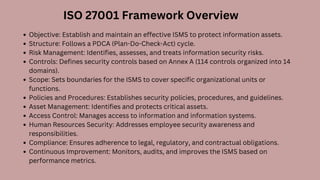
Objective: Establish and maintain an effective ISMS to protect information assets.
Structure: Follows a PDCA (Plan-Do-Check-Act) cycle.
Risk Management: Identifies, assesses, and treats information security risks.
Controls: Defines security controls based on Annex A (114 controls organized into 14
domains).
Scope: Sets boundaries for the ISMS to cover specific organizational units or
functions.
Policies and Procedures: Establishes security policies, procedures, and guidelines.
Asset Management: Identifies and protects critical assets.
Access Control: Manages access to information and information systems.
Human Resources Security: Addresses employee security awareness and
responsibilities.
Compliance: Ensures adherence to legal, regulatory, and contractual obligations.
Continuous Improvement: Monitors, audits, and improves the ISMS based on
performance metrics.
ISO 27001 Framework Overview
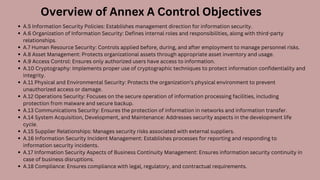
A.5 Information Security Policies: Establishes management direction for information security.
A.6 Organization of Information Security: Defines internal roles and responsibilities, along with third-party
relationships.
A.7 Human Resource Security: Controls applied before, during, and after employment to manage personnel risks.
A.8 Asset Management: Protects organizational assets through appropriate asset inventory and usage.
A.9 Access Control: Ensures only authorized users have access to information.
A.10 Cryptography: Implements proper use of cryptographic techniques to protect information confidentiality and
integrity.
A.11 Physical and Environmental Security: Protects the organization’s physical environment to prevent
unauthorized access or damage.
A.12 Operations Security: Focuses on the secure operation of information processing facilities, including
protection from malware and secure backup.
A.13 Communications Security: Ensures the protection of information in networks and information transfer.
A.14 System Acquisition, Development, and Maintenance: Addresses security aspects in the development life
cycle.
A.15 Supplier Relationships: Manages security risks associated with external suppliers.
A.16 Information Security Incident Management: Establishes processes for reporting and responding to
information security incidents.
A.17 Information Security Aspects of Business Continuity Management: Ensures information security continuity in
case of business disruptions.
A.18 Compliance: Ensures compliance with legal, regulatory, and contractual requirements.
Overview of Annex A Control Objectives
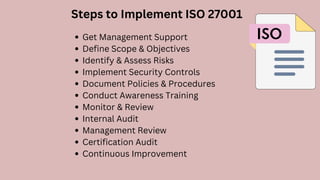
Get Management Support
Define Scope & Objectives
Identify & Assess Risks
Implement Security Controls
Document Policies & Procedures
Conduct Awareness Training
Monitor & Review
Internal Audit
Management Review
Certification Audit
Continuous Improvement
Steps to Implement ISO 27001
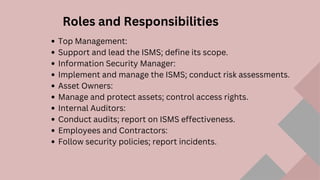
Top Management:
Support and lead the ISMS; define its scope.
Information Security Manager:
Implement and manage the ISMS; conduct risk assessments.
Asset Owners:
Manage and protect assets; control access rights.
Internal Auditors:
Conduct audits; report on ISMS effectiveness.
Employees and Contractors:
Follow security policies; report incidents.
Roles and Responsibilities
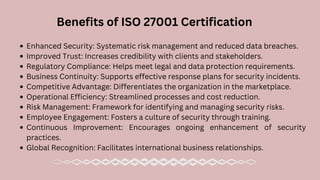
Enhanced Security: Systematic risk management and reduced data breaches.
Improved Trust: Increases credibility with clients and stakeholders.
Regulatory Compliance: Helps meet legal and data protection requirements.
Business Continuity: Supports effective response plans for security incidents.
Competitive Advantage: Differentiates the organization in the marketplace.
Operational Efficiency: Streamlined processes and cost reduction.
Risk Management: Framework for identifying and managing security risks.
Employee Engagement: Fosters a culture of security through training.
Continuous Improvement: Encourages ongoing enhancement of security
practices.
Global Recognition: Facilitates international business relationships.
Benefits of ISO 27001 Certification
Thank You

ISO 27001 Certification ISO 27001 Course

  • 1.
  • 2.
    INTRODUCTION What is ISO27001? ISO/IEC 27001 is an international standard for managing information security. It defines a framework and best practices for establishing, implementing, maintaining, and continually improving an Information Security Management System (ISMS).
  • 3.
    ISO 27001 isan international standard for managing information security. It helps organizations establish, implement, and continually improve an Information Security Management System (ISMS) to protect information assets, mitigate risks, ensure legal compliance, and build trust with customers. Achieving ISO 27001 certification demonstrates a commitment to information security and provides a competitive advantage. Why ISO 27001?
  • 4.
    ISO 27001 Certification ISO27001 certification is a formal recognition that an organization's Information Security Management System (ISMS) meets the stringent requirements of the ISO/IEC 27001 standard. This certification is awarded by an accredited certification body after the organization has successfully undergone a thorough audit process.
  • 5.
    ISO 27001 Courseallows you to use widely accepted audit concepts, methods, and techniques to gain the knowledge required to conduct an Information Security Management System (ISMS) audit. ISO 27001 Course
  • 6.
    Objective: Establish andmaintain an effective ISMS to protect information assets. Structure: Follows a PDCA (Plan-Do-Check-Act) cycle. Risk Management: Identifies, assesses, and treats information security risks. Controls: Defines security controls based on Annex A (114 controls organized into 14 domains). Scope: Sets boundaries for the ISMS to cover specific organizational units or functions. Policies and Procedures: Establishes security policies, procedures, and guidelines. Asset Management: Identifies and protects critical assets. Access Control: Manages access to information and information systems. Human Resources Security: Addresses employee security awareness and responsibilities. Compliance: Ensures adherence to legal, regulatory, and contractual obligations. Continuous Improvement: Monitors, audits, and improves the ISMS based on performance metrics. ISO 27001 Framework Overview
  • 7.
    A.5 Information SecurityPolicies: Establishes management direction for information security. A.6 Organization of Information Security: Defines internal roles and responsibilities, along with third-party relationships. A.7 Human Resource Security: Controls applied before, during, and after employment to manage personnel risks. A.8 Asset Management: Protects organizational assets through appropriate asset inventory and usage. A.9 Access Control: Ensures only authorized users have access to information. A.10 Cryptography: Implements proper use of cryptographic techniques to protect information confidentiality and integrity. A.11 Physical and Environmental Security: Protects the organization’s physical environment to prevent unauthorized access or damage. A.12 Operations Security: Focuses on the secure operation of information processing facilities, including protection from malware and secure backup. A.13 Communications Security: Ensures the protection of information in networks and information transfer. A.14 System Acquisition, Development, and Maintenance: Addresses security aspects in the development life cycle. A.15 Supplier Relationships: Manages security risks associated with external suppliers. A.16 Information Security Incident Management: Establishes processes for reporting and responding to information security incidents. A.17 Information Security Aspects of Business Continuity Management: Ensures information security continuity in case of business disruptions. A.18 Compliance: Ensures compliance with legal, regulatory, and contractual requirements. Overview of Annex A Control Objectives
  • 8.
    Get Management Support DefineScope & Objectives Identify & Assess Risks Implement Security Controls Document Policies & Procedures Conduct Awareness Training Monitor & Review Internal Audit Management Review Certification Audit Continuous Improvement Steps to Implement ISO 27001
  • 9.
    Top Management: Support andlead the ISMS; define its scope. Information Security Manager: Implement and manage the ISMS; conduct risk assessments. Asset Owners: Manage and protect assets; control access rights. Internal Auditors: Conduct audits; report on ISMS effectiveness. Employees and Contractors: Follow security policies; report incidents. Roles and Responsibilities
  • 10.
    Enhanced Security: Systematicrisk management and reduced data breaches. Improved Trust: Increases credibility with clients and stakeholders. Regulatory Compliance: Helps meet legal and data protection requirements. Business Continuity: Supports effective response plans for security incidents. Competitive Advantage: Differentiates the organization in the marketplace. Operational Efficiency: Streamlined processes and cost reduction. Risk Management: Framework for identifying and managing security risks. Employee Engagement: Fosters a culture of security through training. Continuous Improvement: Encourages ongoing enhancement of security practices. Global Recognition: Facilitates international business relationships. Benefits of ISO 27001 Certification
  • 11.