Is SaaS Dead? The Evolution
of Cloud-Based Software
Some tech leaders suggest SaaS is on the decline due to rising
acquisition costs, churn rates, and market saturation. Microsoft CEO
Satya Nadella predicts AI agents will orchestrate across multiple SaaS
applications, disrupting current models.
www.softprodigy.com
Understanding SaaS: Definition and Impact
What is SaaS?
SaaS (Software as a Service) is a business model where
users pay to access cloud-hosted software over the Internet
via subscriptions, eliminating the need for local installation.
Popular examples include Salesforce, Slack, and HubSpot,
offering CRM, communication, and collaboration solutions.
Key SaaS Statistics
• 73% of organizations used SaaS in 2023.
• 85% of business applications could be SaaS-based by 2025.
• Microsoft projects a 40% rise in cloud SaaS subscriptions
in 2024.
• 75% of SaaS companies may implement AI automation
by 2026.
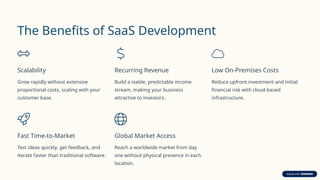
The Benefits of SaaS Development
Scalability
Grow rapidly without extensive
proportional costs, scaling with your
customer base.
Recurring Revenue
Build a stable, predictable income
stream, making your business
attractive to investors.
Low On-Premises Costs
Reduce upfront investment and initial
financial risk with cloud-based
infrastructure.
Fast Time-to-Market
Test ideas quickly, get feedback, and
iterate faster than traditional software.
Global Market Access
Reach a worldwide market from day
one without physical presence in each
location.
Challenges Facing SaaS Development
User Adoption Challenges
Resistance to change, lack of training, or poor UX can hinder ROI.
Skyrocketing Customer Acquisition Costs
Intense competition drives up costs for acquiring new customers.
Subscription Fatigue
Users are overwhelmed by multiple subscriptions, leading to higher churn.
Cybersecurity Concerns
Rising cyberthreats and data breach costs demand heavy investment
in security.
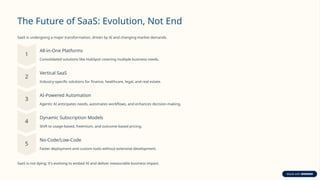
The Future of SaaS: Evolution, Not End
SaaS is undergoing a major transformation, driven by AI and changing market demands.
All-in-One Platforms
Consolidated solutions like HubSpot covering multiple business needs.
Vertical SaaS
Industry-specific solutions for finance, healthcare, legal, and real estate.
AI-Powered Automation
Agentic AI anticipates needs, automates workflows, and enhances decision-making.
Dynamic Subscription Models
Shift to usage-based, freemium, and outcome-based pricing.
No-Code/Low-Code
Faster deployment and custom tools without extensive development.
SaaS is not dying; it's evolving to embed AI and deliver measurable business impact.

Is-SaaS-Dead-The-Evolution-of-Cloud-Based-Software.pptx

  • 1.
    Is SaaS Dead?The Evolution of Cloud-Based Software Some tech leaders suggest SaaS is on the decline due to rising acquisition costs, churn rates, and market saturation. Microsoft CEO Satya Nadella predicts AI agents will orchestrate across multiple SaaS applications, disrupting current models. www.softprodigy.com
  • 2.
    Understanding SaaS: Definitionand Impact What is SaaS? SaaS (Software as a Service) is a business model where users pay to access cloud-hosted software over the Internet via subscriptions, eliminating the need for local installation. Popular examples include Salesforce, Slack, and HubSpot, offering CRM, communication, and collaboration solutions. Key SaaS Statistics • 73% of organizations used SaaS in 2023. • 85% of business applications could be SaaS-based by 2025. • Microsoft projects a 40% rise in cloud SaaS subscriptions in 2024. • 75% of SaaS companies may implement AI automation by 2026.
  • 3.
    The Benefits ofSaaS Development Scalability Grow rapidly without extensive proportional costs, scaling with your customer base. Recurring Revenue Build a stable, predictable income stream, making your business attractive to investors. Low On-Premises Costs Reduce upfront investment and initial financial risk with cloud-based infrastructure. Fast Time-to-Market Test ideas quickly, get feedback, and iterate faster than traditional software. Global Market Access Reach a worldwide market from day one without physical presence in each location.
  • 4.
    Challenges Facing SaaSDevelopment User Adoption Challenges Resistance to change, lack of training, or poor UX can hinder ROI. Skyrocketing Customer Acquisition Costs Intense competition drives up costs for acquiring new customers. Subscription Fatigue Users are overwhelmed by multiple subscriptions, leading to higher churn. Cybersecurity Concerns Rising cyberthreats and data breach costs demand heavy investment in security.
  • 5.
    The Future ofSaaS: Evolution, Not End SaaS is undergoing a major transformation, driven by AI and changing market demands. All-in-One Platforms Consolidated solutions like HubSpot covering multiple business needs. Vertical SaaS Industry-specific solutions for finance, healthcare, legal, and real estate. AI-Powered Automation Agentic AI anticipates needs, automates workflows, and enhances decision-making. Dynamic Subscription Models Shift to usage-based, freemium, and outcome-based pricing. No-Code/Low-Code Faster deployment and custom tools without extensive development. SaaS is not dying; it's evolving to embed AI and deliver measurable business impact.