“The grammar of a language consists of the sound and
sound patterns, the basic units of meaning such as
words, and the rules to combine all of these to form
sentences with the desired meaning. The grammar,
then, is what we know. It represents our linguistic
competence ( the ability to apply the knowledge of the
language ). To understand the nature of language we
must understand the nature of grammar and in
particular the internalized, unconscious set of rules
that is part of every language.”
An Introduction to Language. (V.Fromkin et al)
Grammar includes everything speakers know
about the language:
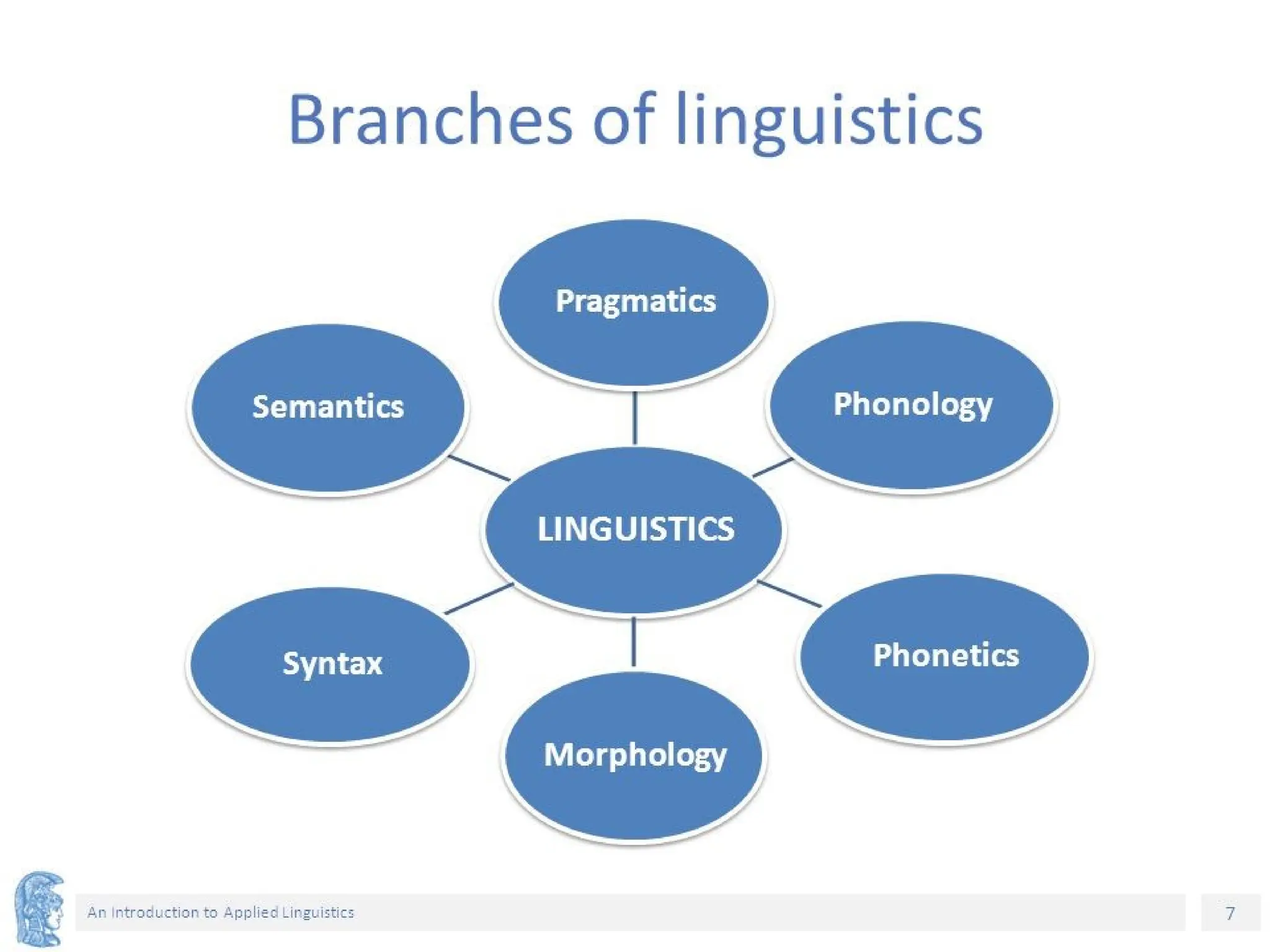
Speech sounds Phonology
Formation of words  Morphology
The order of words in a sentence  Syntax
Meaning  Semantics
Grammar is traditionally seen as the study of the
syntax and morphology of sentences.
A sentence is a complete unit of meaning
which contains a subject and a finite verb.
It must be carefully structured and
punctuated. It must begin with a capital
letter and end with a full stop, a question
mark or an exclamation mark.
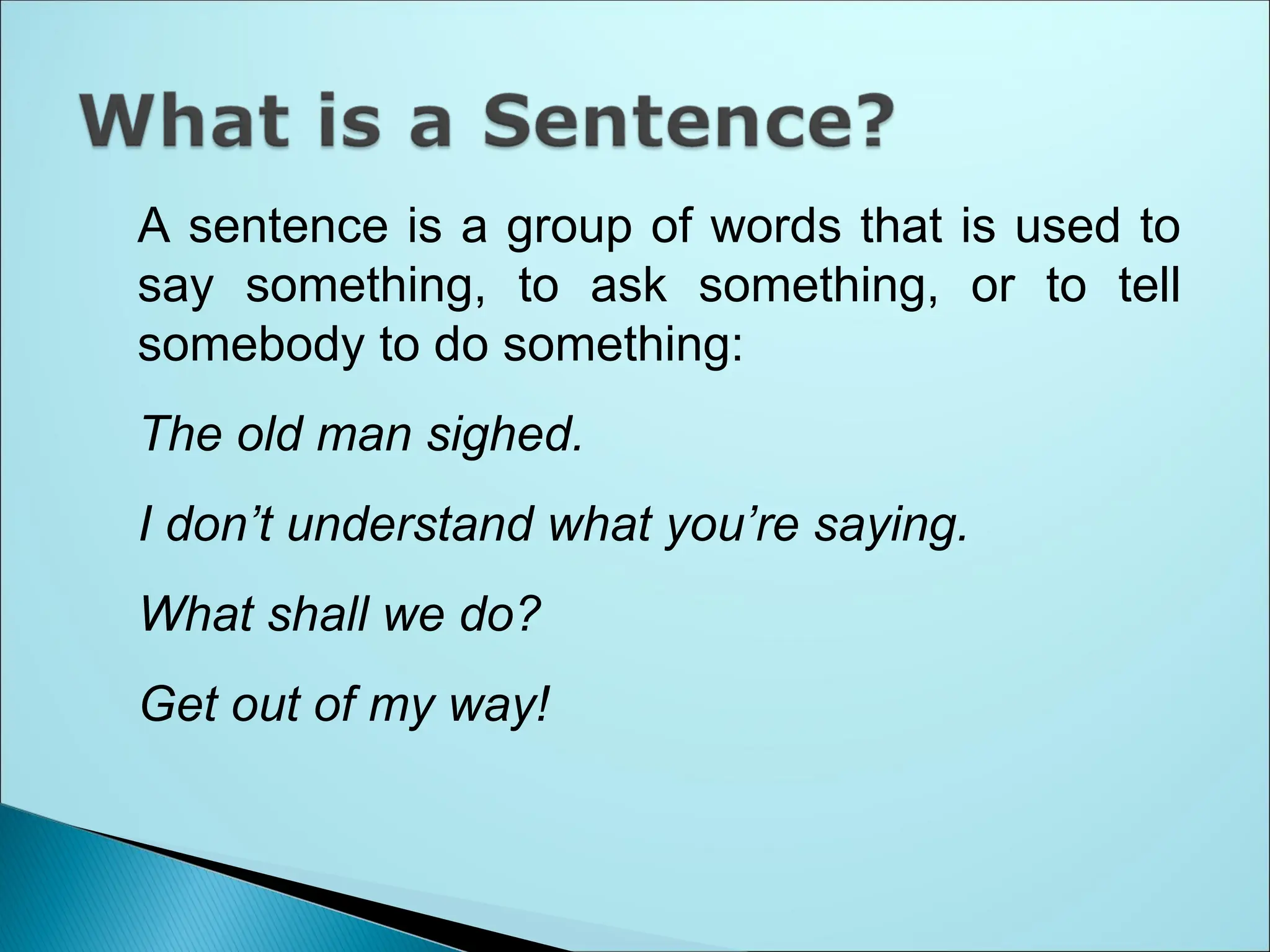
A sentence is a group of words that is used to
say something, to ask something, or to tell
somebody to do something:
The old man sighed.
I don’t understand what you’re saying.
What shall we do?
Get out of my way!
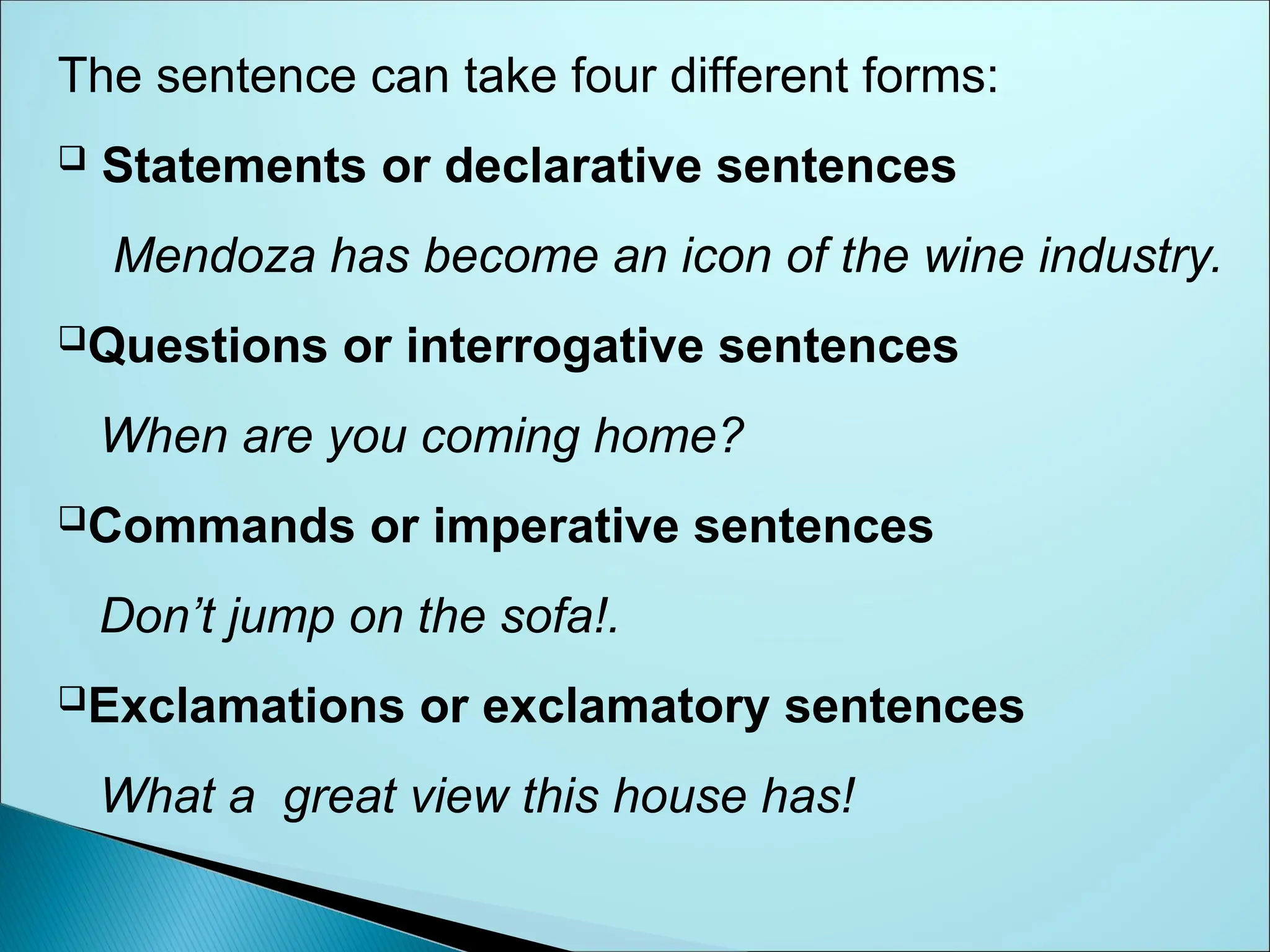
The sentence can take four different forms:
 Statements or declarative sentences
Mendoza has become an icon of the wine industry.
Questions or interrogative sentences
When are you coming home?
Commands or imperative sentences
Don’t jump on the sofa!.
Exclamations or exclamatory sentences
What a great view this house has!
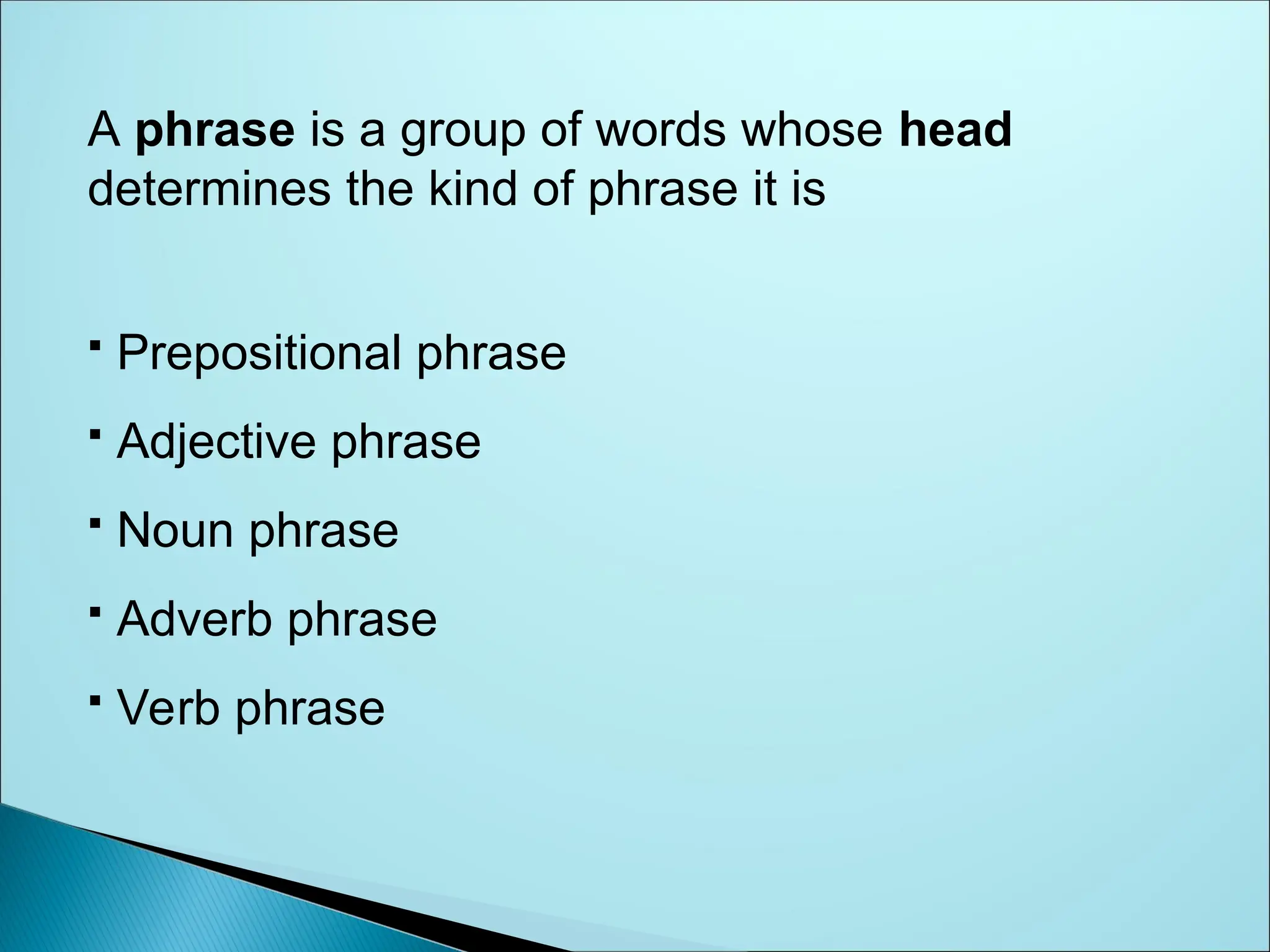
A phrase is a group of words whose head
determines the kind of phrase it is
 Prepositional phrase
 Adjective phrase
 Noun phrase
 Adverb phrase
 Verb phrase
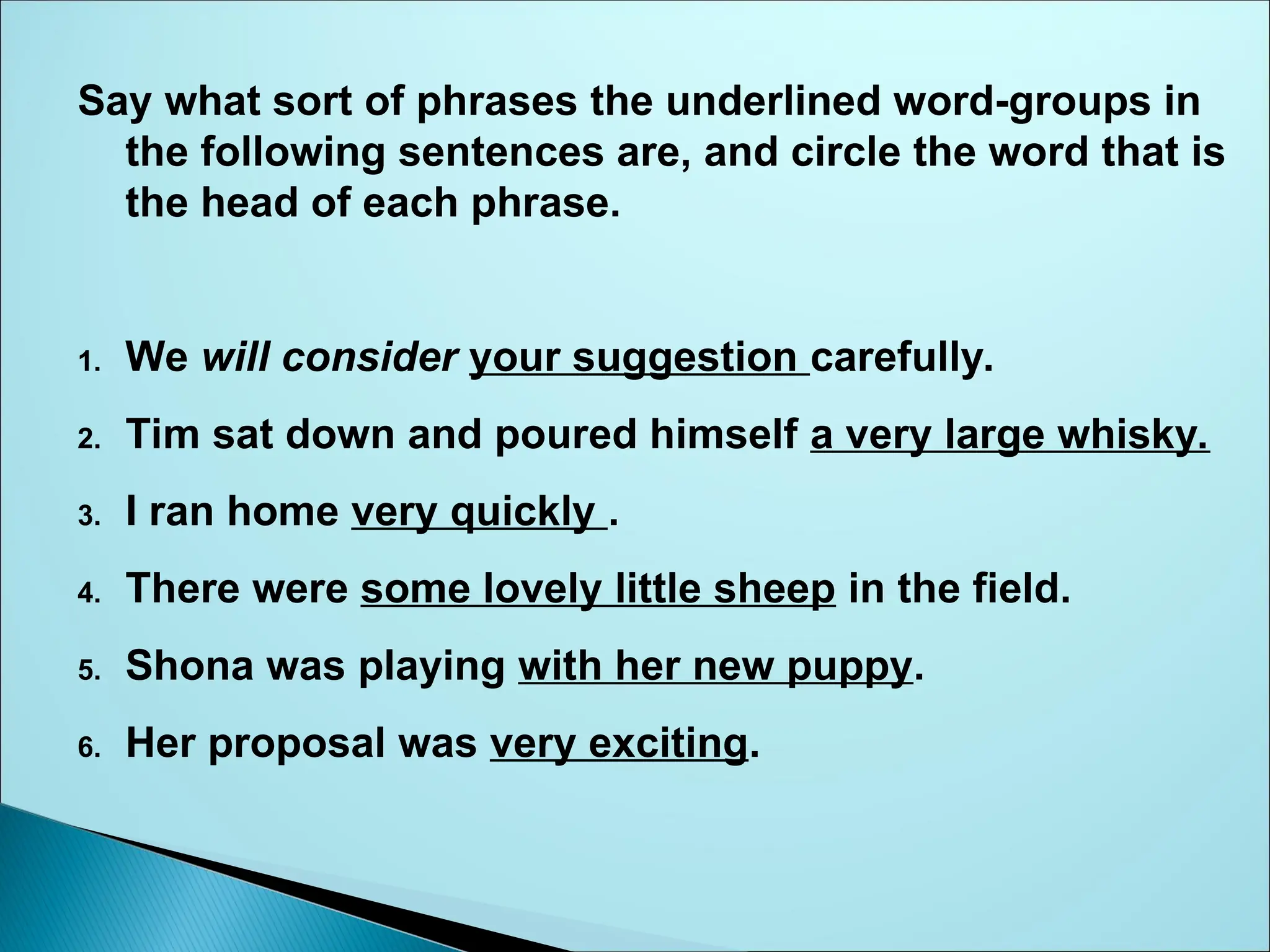
Say what sort of phrases the underlined word-groups in
the following sentences are, and circle the word that is
the head of each phrase.
1. We will consider your suggestion carefully.
2. Tim sat down and poured himself a very large whisky.
3. I ran home very quickly .
4. There were some lovely little sheep in the field.
5. Shona was playing with her new puppy.
6. Her proposal was very exciting.
A Clause is a group of words consisting of a subject
and a finite verb. A clause has the same structure as
a sentence but it is part of a larger sentence.
The house seems very empty when you aren’t here.
Quino, whose real name is Joaquín Lavado, is very
famous all over the world
He was speaking as if he knew about the matter.
The therapist suggested that Sheila should take a
long-term therapy.
INTRODUCTORY CLASS. What is Grammar.ppt .

  • 5.
    “The grammar ofa language consists of the sound and sound patterns, the basic units of meaning such as words, and the rules to combine all of these to form sentences with the desired meaning. The grammar, then, is what we know. It represents our linguistic competence ( the ability to apply the knowledge of the language ). To understand the nature of language we must understand the nature of grammar and in particular the internalized, unconscious set of rules that is part of every language.” An Introduction to Language. (V.Fromkin et al)
  • 6.
    Grammar includes everythingspeakers know about the language: Speech sounds Phonology Formation of words  Morphology The order of words in a sentence  Syntax Meaning  Semantics Grammar is traditionally seen as the study of the syntax and morphology of sentences.
  • 7.
    A sentence isa complete unit of meaning which contains a subject and a finite verb. It must be carefully structured and punctuated. It must begin with a capital letter and end with a full stop, a question mark or an exclamation mark.
  • 8.
    A sentence isa group of words that is used to say something, to ask something, or to tell somebody to do something: The old man sighed. I don’t understand what you’re saying. What shall we do? Get out of my way!
  • 9.
    The sentence cantake four different forms:  Statements or declarative sentences Mendoza has become an icon of the wine industry. Questions or interrogative sentences When are you coming home? Commands or imperative sentences Don’t jump on the sofa!. Exclamations or exclamatory sentences What a great view this house has!
  • 10.
    A phrase isa group of words whose head determines the kind of phrase it is  Prepositional phrase  Adjective phrase  Noun phrase  Adverb phrase  Verb phrase
  • 11.
    Say what sortof phrases the underlined word-groups in the following sentences are, and circle the word that is the head of each phrase. 1. We will consider your suggestion carefully. 2. Tim sat down and poured himself a very large whisky. 3. I ran home very quickly . 4. There were some lovely little sheep in the field. 5. Shona was playing with her new puppy. 6. Her proposal was very exciting.
  • 12.
    A Clause isa group of words consisting of a subject and a finite verb. A clause has the same structure as a sentence but it is part of a larger sentence. The house seems very empty when you aren’t here. Quino, whose real name is Joaquín Lavado, is very famous all over the world He was speaking as if he knew about the matter. The therapist suggested that Sheila should take a long-term therapy.