Introduction to
Radiation Physics
The study of radiation physics encompasses the properties, effects, and
applications of radiation, playing a pivotal role in the advancement of
medical imaging, nuclear technology, and understanding environmental
radiation.
by Jude Fernandez
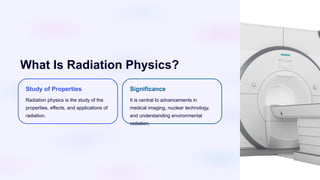
What Is Radiation Physics?
Study of Properties
Radiation physics is the study of the
properties, effects, and applications of
radiation.
Significance
It is central to advancements in
medical imaging, nuclear technology,
and understanding environmental
radiation.
What is Radiation?
Definition
Radiation is the emission or transmission of
energy in the form of waves or particles.
Types
Ionizing radiation has high energy and can
ionize atoms, while Non-Ionizing radiation
has lower energy and cannot ionize atoms.
Ionizing Radiation – An Overview
1 Definition
Radiation with enough
energy to remove
electrons from atoms,
forming ions.
2 Characteristics
Includes higher energy
electromagnetic
waves and particles.
3 Biological Effects
Can cause cellular
and DNA damage,
leading to potential
health risks like
cancer.
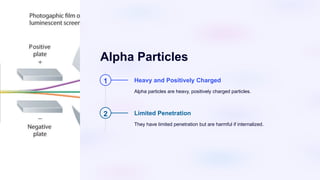
Alpha Particles
1 Heavy and Positively Charged
Alpha particles are heavy, positively charged particles.
2 Limited Penetration
They have limited penetration but are harmful if internalized.
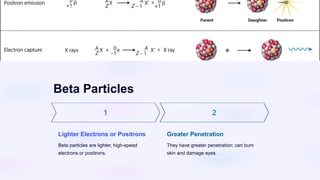
Beta Particles
Lighter Electrons or Positrons
Beta particles are lighter, high-speed
electrons or positrons.
Greater Penetration
They have greater penetration; can burn
skin and damage eyes.
Gamma Rays
High-Energy Electromagnetic
Waves
Gamma rays are high-energy
electromagnetic waves.
Deeply Penetrating
They are deeply penetrating and used in
medical imaging and therapy.
X-rays
1 Similar to Gamma Rays
X-rays are similar to gamma rays but
generally have lower energy.
2 Widely Used in Medical
Diagnostics
They are widely used in medical
diagnostics.
Terrestrial Sources of Ionizing
Radiation
Natural Sources
Includes Radon gas, uranium, thorium
in the Earth's crust.
Artificial Sources
Comprises medical X-rays, industrial
radiography.
Radon Gas
1 Decay Product of Uranium
Radon gas is a decay product of
uranium, prevalent in some soils.
2
Can Accumulate in Homes
It can accumulate in homes.
Uranium in Soil
1 Naturally Occurring
Radioactive Element
Uranium is a naturally occurring
radioactive element.
2 Long-term Exposure Can
Be Harmful
Long-term exposure to uranium can
be harmful.
Medical X-rays
Used for Diagnostics and Treatment
Medical X-rays are used for diagnostics and
treatment.
Managed Exposure to Minimize
Risks
Exposure is managed to minimize risks.
Extraterrestrial Sources of Ionizing
Radiation
Overview
Radiation originating from outside the
Earth's atmosphere.
Examples
Includes cosmic rays, solar flares.
Cosmic Rays
1 High-Energy Particles from Outer Space
Cosmic rays are high-energy particles from outer space.
2 Intensified During Solar Storms
They are intensified during solar storms.
Solar Radiation
Energetic Particles Emitted by the Sun
Solar radiation consists of energetic particles emitted by the sun.
Varying with Solar Activity
The intensity of solar radiation varies with solar activity.
Astronomical Events
Radiation from Supernovae
Radiation from events like supernovae.
Black Holes and Other Cosmic
Phenomena
Includes radiation from black holes and other
cosmic phenomena.
Non-Ionizing Radiation – An Overview
1 Definition
Radiation that lacks the energy to ionize
atoms or molecules.
2 Types
Includes ultraviolet light, visible light,
infrared, microwaves, and radio waves.
Ultraviolet Light
1 Can Cause Skin Burns and
Cancer
Ultraviolet light can cause skin
burns and cancer.
2
Varies in Intensity Based
on Wavelength
The intensity of ultraviolet light
varies based on wavelength (UVA,
UVB, UVC).
Visible and Infrared Light
Visible Light Is Safe
Visible light is safe for exposure.
Infrared Used for Heating and
Remote Sensing
Infrared is used for heating and remote
sensing applications.
Radiofrequency and Microwaves
Used in Communication and
Cooking
Radiofrequency and microwaves are used in
communication and cooking.
Concerns Over Long-Term
Exposure Effects
There are concerns over the long-term
effects of exposure to these frequencies.
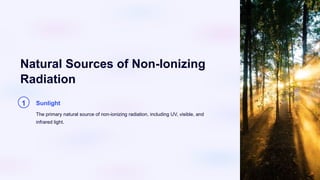
Natural Sources of Non-Ionizing
Radiation
1 Sunlight
The primary natural source of non-ionizing radiation, including UV, visible, and
infrared light.
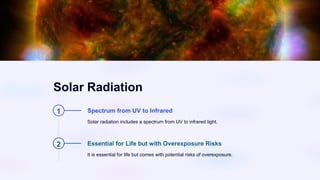
Solar Radiation
1 Spectrum from UV to Infrared
Solar radiation includes a spectrum from UV to infrared light.
2 Essential for Life but with Overexposure Risks
It is essential for life but comes with potential risks of overexposure.
Terrestrial Heat
Earth Emits Infrared Radiation
The Earth emits infrared radiation.
Contributes to the Planet's
Energy Balance
This contributes to the planet's energy balance.
Background Electromagnetic Fields
Low-Level Natural Radiation
Background electromagnetic fields represent low-level natural radiation present
everywhere.
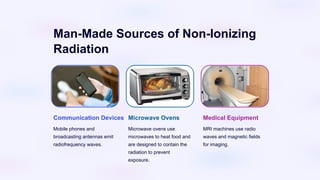
Man-Made Sources of Non-Ionizing
Radiation
Communication Devices
Mobile phones and
broadcasting antennas emit
radiofrequency waves.
Microwave Ovens
Microwave ovens use
microwaves to heat food and
are designed to contain the
radiation to prevent
exposure.
Medical Equipment
MRI machines use radio
waves and magnetic fields
for imaging.

Introduction-to-Radiation-Physics (1).pptx

  • 1.
    Introduction to Radiation Physics Thestudy of radiation physics encompasses the properties, effects, and applications of radiation, playing a pivotal role in the advancement of medical imaging, nuclear technology, and understanding environmental radiation. by Jude Fernandez
  • 2.
    What Is RadiationPhysics? Study of Properties Radiation physics is the study of the properties, effects, and applications of radiation. Significance It is central to advancements in medical imaging, nuclear technology, and understanding environmental radiation.
  • 3.
    What is Radiation? Definition Radiationis the emission or transmission of energy in the form of waves or particles. Types Ionizing radiation has high energy and can ionize atoms, while Non-Ionizing radiation has lower energy and cannot ionize atoms.
  • 4.
    Ionizing Radiation –An Overview 1 Definition Radiation with enough energy to remove electrons from atoms, forming ions. 2 Characteristics Includes higher energy electromagnetic waves and particles. 3 Biological Effects Can cause cellular and DNA damage, leading to potential health risks like cancer.
  • 5.
    Alpha Particles 1 Heavyand Positively Charged Alpha particles are heavy, positively charged particles. 2 Limited Penetration They have limited penetration but are harmful if internalized.
  • 6.
    Beta Particles Lighter Electronsor Positrons Beta particles are lighter, high-speed electrons or positrons. Greater Penetration They have greater penetration; can burn skin and damage eyes.
  • 7.
    Gamma Rays High-Energy Electromagnetic Waves Gammarays are high-energy electromagnetic waves. Deeply Penetrating They are deeply penetrating and used in medical imaging and therapy.
  • 8.
    X-rays 1 Similar toGamma Rays X-rays are similar to gamma rays but generally have lower energy. 2 Widely Used in Medical Diagnostics They are widely used in medical diagnostics.
  • 9.
    Terrestrial Sources ofIonizing Radiation Natural Sources Includes Radon gas, uranium, thorium in the Earth's crust. Artificial Sources Comprises medical X-rays, industrial radiography.
  • 10.
    Radon Gas 1 DecayProduct of Uranium Radon gas is a decay product of uranium, prevalent in some soils. 2 Can Accumulate in Homes It can accumulate in homes.
  • 11.
    Uranium in Soil 1Naturally Occurring Radioactive Element Uranium is a naturally occurring radioactive element. 2 Long-term Exposure Can Be Harmful Long-term exposure to uranium can be harmful.
  • 12.
    Medical X-rays Used forDiagnostics and Treatment Medical X-rays are used for diagnostics and treatment. Managed Exposure to Minimize Risks Exposure is managed to minimize risks.
  • 13.
    Extraterrestrial Sources ofIonizing Radiation Overview Radiation originating from outside the Earth's atmosphere. Examples Includes cosmic rays, solar flares.
  • 14.
    Cosmic Rays 1 High-EnergyParticles from Outer Space Cosmic rays are high-energy particles from outer space. 2 Intensified During Solar Storms They are intensified during solar storms.
  • 15.
    Solar Radiation Energetic ParticlesEmitted by the Sun Solar radiation consists of energetic particles emitted by the sun. Varying with Solar Activity The intensity of solar radiation varies with solar activity.
  • 16.
    Astronomical Events Radiation fromSupernovae Radiation from events like supernovae. Black Holes and Other Cosmic Phenomena Includes radiation from black holes and other cosmic phenomena.
  • 17.
    Non-Ionizing Radiation –An Overview 1 Definition Radiation that lacks the energy to ionize atoms or molecules. 2 Types Includes ultraviolet light, visible light, infrared, microwaves, and radio waves.
  • 18.
    Ultraviolet Light 1 CanCause Skin Burns and Cancer Ultraviolet light can cause skin burns and cancer. 2 Varies in Intensity Based on Wavelength The intensity of ultraviolet light varies based on wavelength (UVA, UVB, UVC).
  • 19.
    Visible and InfraredLight Visible Light Is Safe Visible light is safe for exposure. Infrared Used for Heating and Remote Sensing Infrared is used for heating and remote sensing applications.
  • 20.
    Radiofrequency and Microwaves Usedin Communication and Cooking Radiofrequency and microwaves are used in communication and cooking. Concerns Over Long-Term Exposure Effects There are concerns over the long-term effects of exposure to these frequencies.
  • 21.
    Natural Sources ofNon-Ionizing Radiation 1 Sunlight The primary natural source of non-ionizing radiation, including UV, visible, and infrared light.
  • 22.
    Solar Radiation 1 Spectrumfrom UV to Infrared Solar radiation includes a spectrum from UV to infrared light. 2 Essential for Life but with Overexposure Risks It is essential for life but comes with potential risks of overexposure.
  • 23.
    Terrestrial Heat Earth EmitsInfrared Radiation The Earth emits infrared radiation. Contributes to the Planet's Energy Balance This contributes to the planet's energy balance.
  • 24.
    Background Electromagnetic Fields Low-LevelNatural Radiation Background electromagnetic fields represent low-level natural radiation present everywhere.
  • 25.
    Man-Made Sources ofNon-Ionizing Radiation Communication Devices Mobile phones and broadcasting antennas emit radiofrequency waves. Microwave Ovens Microwave ovens use microwaves to heat food and are designed to contain the radiation to prevent exposure. Medical Equipment MRI machines use radio waves and magnetic fields for imaging.