Bahir Dar Institute of Technology
School of Mechanical and Industrial
Engineering
Introduction to Turbomachinery
By: Tereche Getnet
January 17, 2013 E.C
1
Content Outline
• Introduction
• Working Principle
• Classification
• Application
2
Introduction
• The word turbo or turbinis is of Latin origin and implies that
which spins or whirls around (a rotating blade row, a rotor or
an impeller)
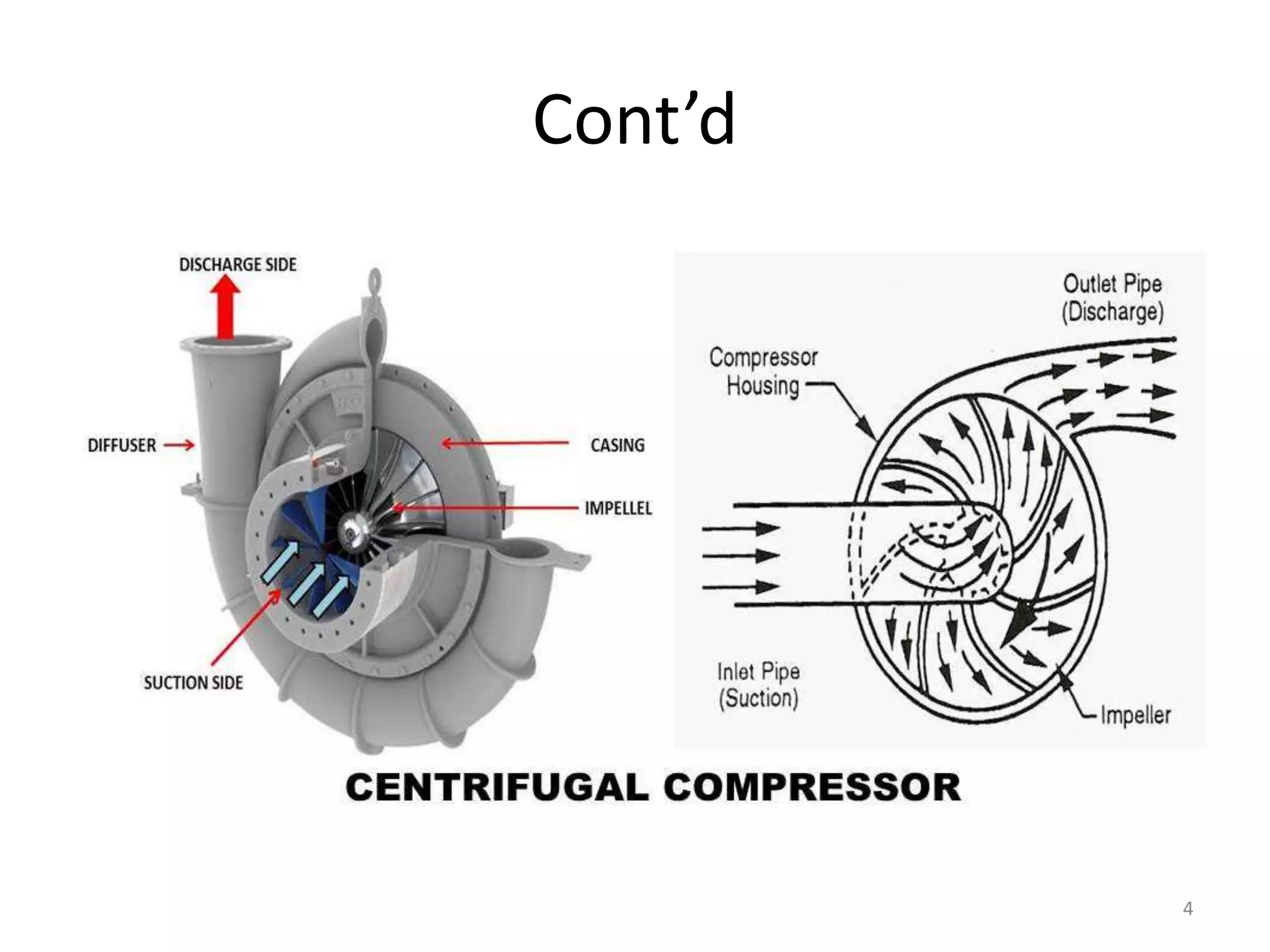
• A turbomachine is a device in which energy transfer occurs
between a flowing fluid and a rotating element due to dynamic
action, and results in a change in pressure and momentum of
the fluid.
3
Cont’d
4
Working Principle
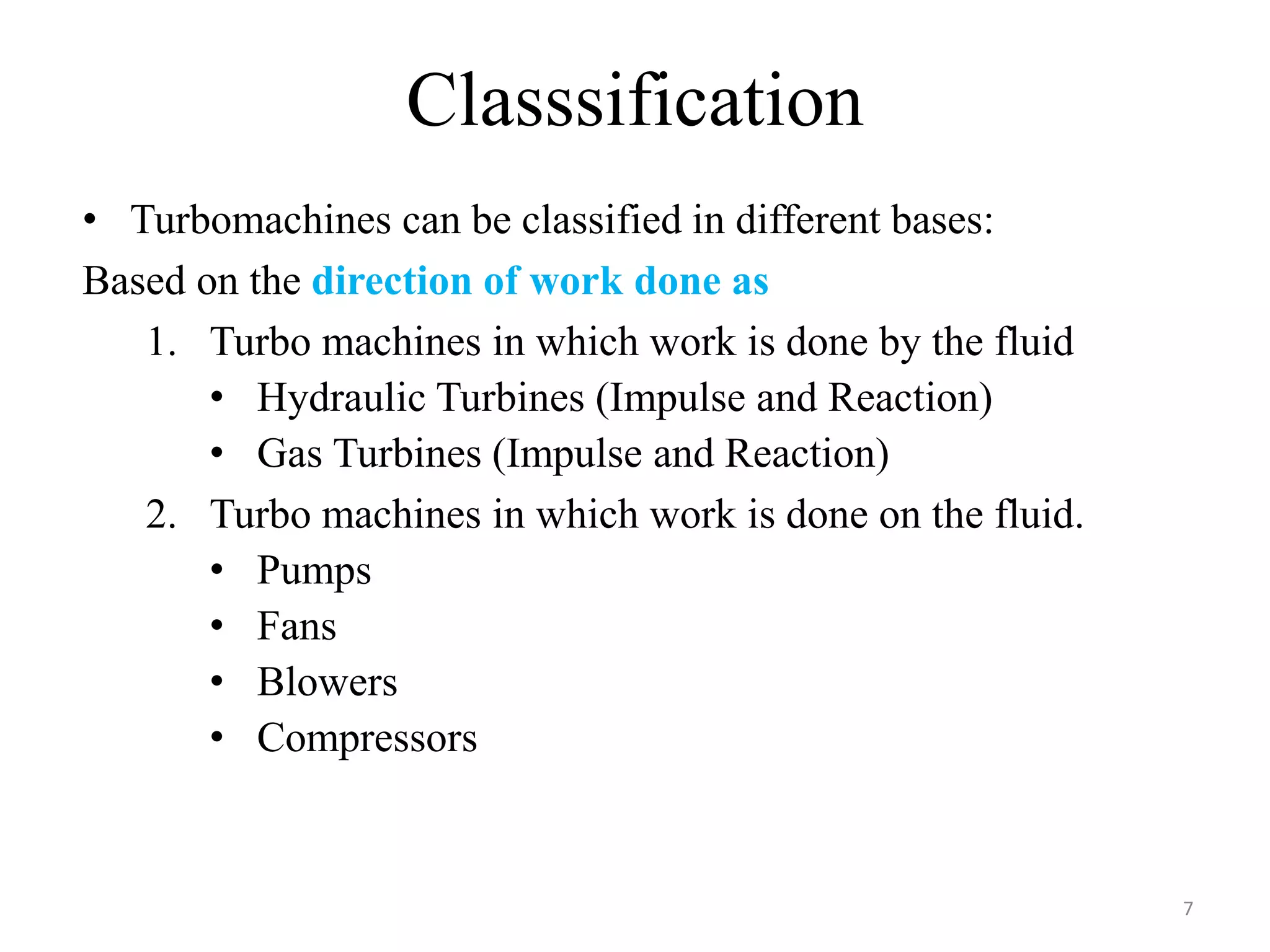
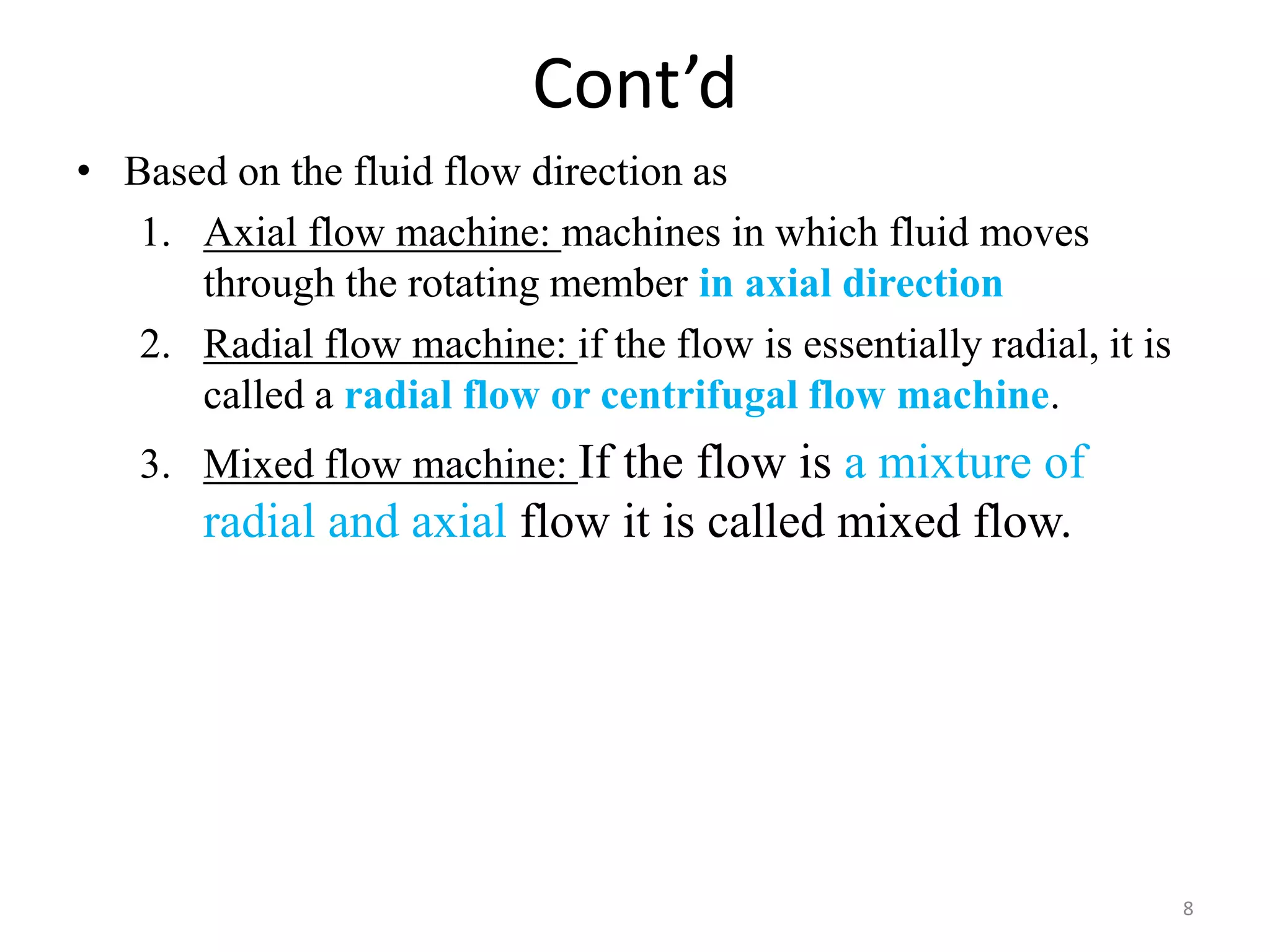
• The Momentum Principle (Newton’s second law of motion).
• The momentum equation relates the sum of the external forces
acting on a fluid element to its acceleration, or to the rate of
change of momentum in the direction of the resultant external
force.
• The force exerted upon a blade in a compressor or turbine
cascade caused by the deflection or acceleration of fluid
passing the blades.
5
Cont’d
6
Classsification
7
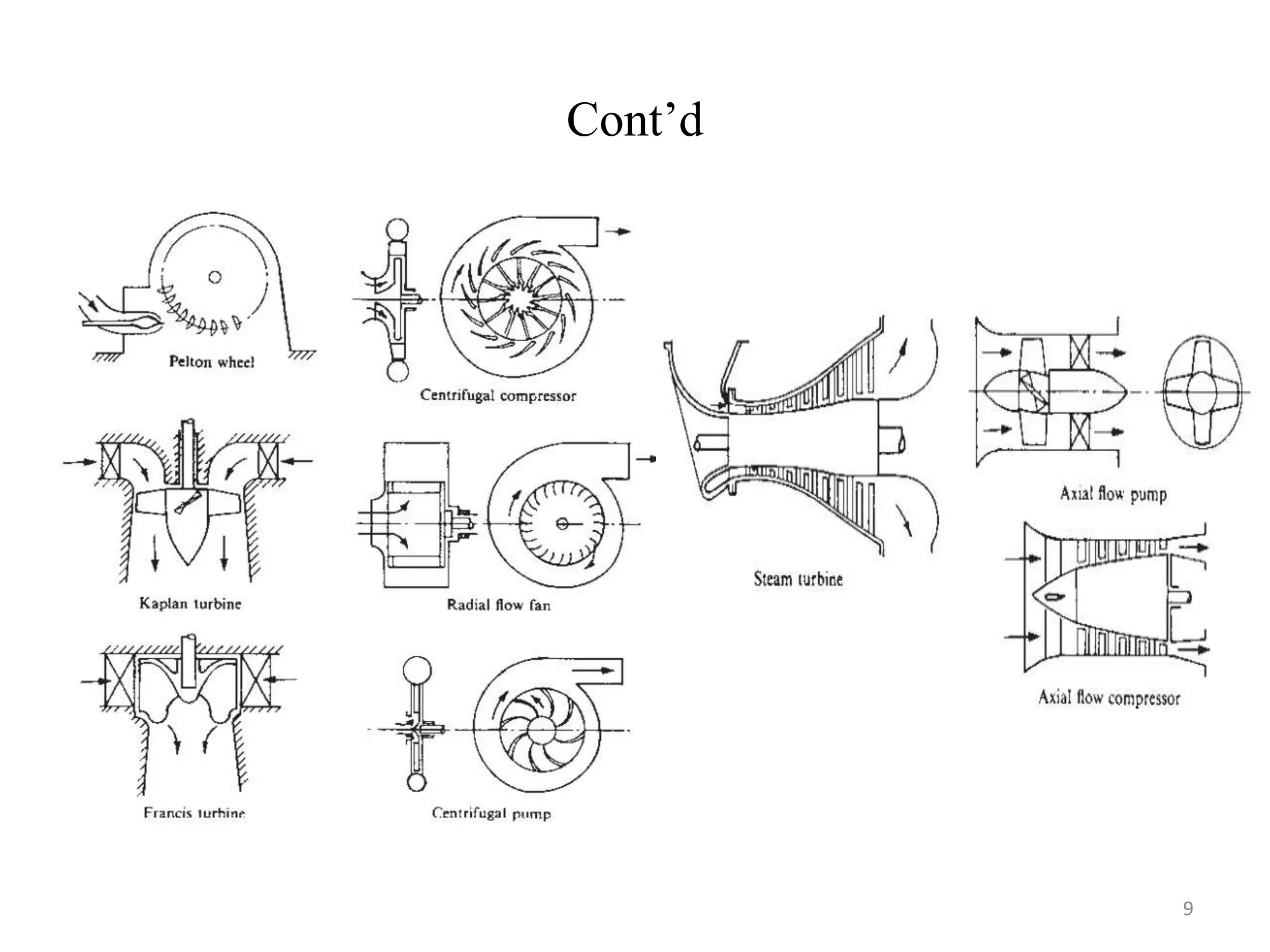
• Turbomachines can be classified in different bases:
Based on the direction of work done as
1. Turbo machines in which work is done by the fluid
• Hydraulic Turbines (Impulse and Reaction)
• Gas Turbines (Impulse and Reaction)
2. Turbo machines in which work is done on the fluid.
• Pumps
• Fans
• Blowers
• Compressors
Cont’d
• Based on the fluid flow direction as
1. Axial flow machine: machines in which fluid moves
through the rotating member in axial direction
2. Radial flow machine: if the flow is essentially radial, it is
called a radial flow or centrifugal flow machine.
3. Mixed flow machine: If the flow is a mixture of
radial and axial flow it is called mixed flow.
8
Cont’d
9
Application Areas
In Industries
 Centrifugal pumps
 Centrifugal Compressors
 Fans,
Air crafts
• Axial compressors
• Gas turbines
Steam turbines
Hydraulic turbines
Wind turbines
Turbochargers in Automobiles
10
11

Introduction to turbomachinery

  • 1.
    Bahir Dar Instituteof Technology School of Mechanical and Industrial Engineering Introduction to Turbomachinery By: Tereche Getnet January 17, 2013 E.C 1
  • 2.
    Content Outline • Introduction •Working Principle • Classification • Application 2
  • 3.
    Introduction • The wordturbo or turbinis is of Latin origin and implies that which spins or whirls around (a rotating blade row, a rotor or an impeller) • A turbomachine is a device in which energy transfer occurs between a flowing fluid and a rotating element due to dynamic action, and results in a change in pressure and momentum of the fluid. 3
  • 4.
  • 5.
    Working Principle • TheMomentum Principle (Newton’s second law of motion). • The momentum equation relates the sum of the external forces acting on a fluid element to its acceleration, or to the rate of change of momentum in the direction of the resultant external force. • The force exerted upon a blade in a compressor or turbine cascade caused by the deflection or acceleration of fluid passing the blades. 5
  • 6.
  • 7.
    Classsification 7 • Turbomachines canbe classified in different bases: Based on the direction of work done as 1. Turbo machines in which work is done by the fluid • Hydraulic Turbines (Impulse and Reaction) • Gas Turbines (Impulse and Reaction) 2. Turbo machines in which work is done on the fluid. • Pumps • Fans • Blowers • Compressors
  • 8.
    Cont’d • Based onthe fluid flow direction as 1. Axial flow machine: machines in which fluid moves through the rotating member in axial direction 2. Radial flow machine: if the flow is essentially radial, it is called a radial flow or centrifugal flow machine. 3. Mixed flow machine: If the flow is a mixture of radial and axial flow it is called mixed flow. 8
  • 9.
  • 10.
    Application Areas In Industries Centrifugal pumps  Centrifugal Compressors  Fans, Air crafts • Axial compressors • Gas turbines Steam turbines Hydraulic turbines Wind turbines Turbochargers in Automobiles 10
  • 11.