Introduction to
Transgenic Organisms
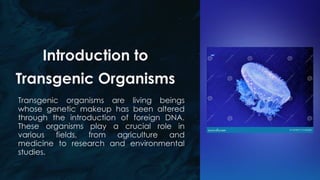
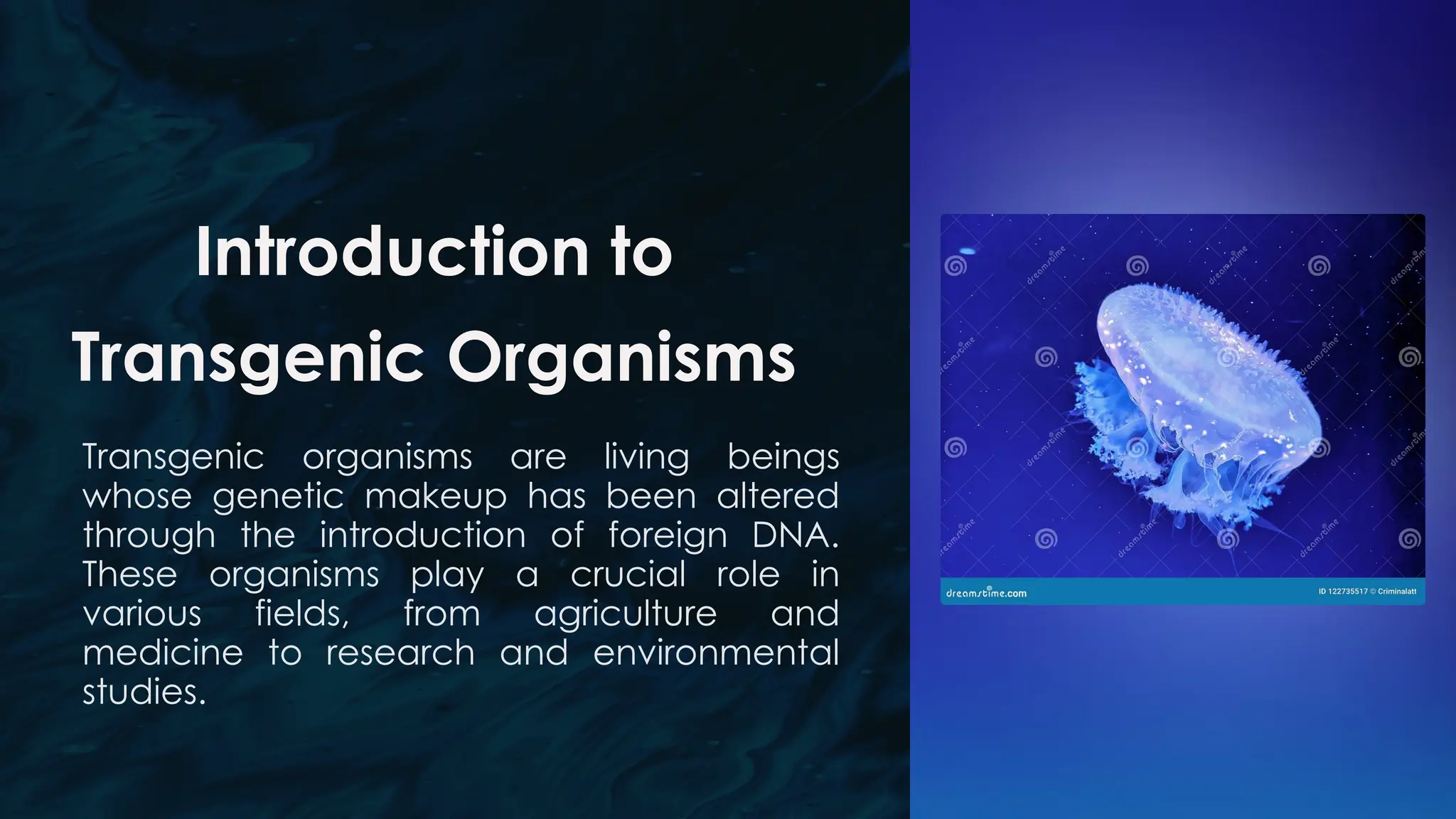
Transgenic organisms are living beings
whose genetic makeup has been altered
through the introduction of foreign DNA.
These organisms play a crucial role in
various fields, from agriculture and
medicine to research and environmental
studies.
Definition and Characteristics
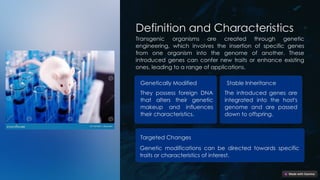
Transgenic organisms are created through genetic
engineering, which involves the insertion of specific genes
from one organism into the genome of another. These
introduced genes can confer new traits or enhance existing
ones, leading to a range of applications.
Genetically Modified
They possess foreign DNA
that alters their genetic
makeup and influences
their characteristics.
Stable Inheritance
The introduced genes are
integrated into the host's
genome and are passed
down to offspring.
Targeted Changes
Genetic modifications can be directed towards specific
traits or characteristics of interest.
Techniques for Genetic Modification
Various techniques are used to modify the genetic makeup of organisms, each with specific advantages and applications.
1 Gene Cloning
The process involves creating copies of specific genes for
insertion into target organisms.
2 Gene Transfer
Introducing foreign genes into the host's genome through
methods like viral vectors or microinjection.
3 CRISPR-Cas9 Technology
A highly precise gene editing technique that allows for
targeted modifications at specific DNA sequences.
4 Transposons
Mobile genetic elements that can insert foreign DNA into a
host's genome.
Applications of Transgenic Organisms
Transgenic organisms have a wide range of applications, impacting various industries and scientific disciplines.
Agriculture
Increased crop yields, resistance
to pests and herbicides, improved
nutritional content.
Medicine
Production of therapeutic
proteins and antibodies, disease
models, organ transplantation.
Research
Understanding gene function,
disease mechanisms,
development of new drugs and
treatments.
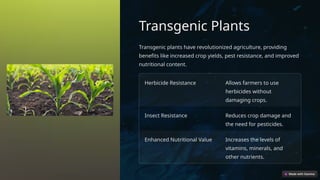
Transgenic Plants
Transgenic plants have revolutionized agriculture, providing
benefits like increased crop yields, pest resistance, and improved
nutritional content.
Herbicide Resistance Allows farmers to use
herbicides without
damaging crops.
Insect Resistance Reduces crop damage and
the need for pesticides.
Enhanced Nutritional Value Increases the levels of
vitamins, minerals, and
other nutrients.
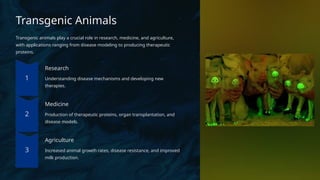
Transgenic Animals
Transgenic animals play a crucial role in research, medicine, and agriculture,
with applications ranging from disease modeling to producing therapeutic
proteins.
Research
Understanding disease mechanisms and developing new
therapies.
Medicine
Production of therapeutic proteins, organ transplantation, and
disease models.
Agriculture
Increased animal growth rates, disease resistance, and improved
milk production.
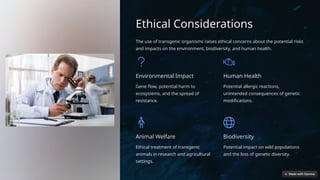
Ethical Considerations
The use of transgenic organisms raises ethical concerns about the potential risks
and impacts on the environment, biodiversity, and human health.
Environmental Impact
Gene flow, potential harm to
ecosystems, and the spread of
resistance.
Human Health
Potential allergic reactions,
unintended consequences of genetic
modifications.
Animal Welfare
Ethical treatment of transgenic
animals in research and agricultural
settings.
Biodiversity
Potential impact on wild populations
and the loss of genetic diversity.
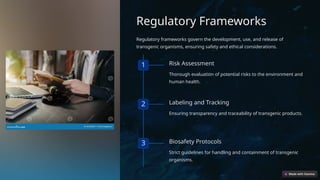
Regulatory Frameworks
Regulatory frameworks govern the development, use, and release of
transgenic organisms, ensuring safety and ethical considerations.
1 Risk Assessment
Thorough evaluation of potential risks to the environment and
human health.
2 Labeling and Tracking
Ensuring transparency and traceability of transgenic products.
3 Biosafety Protocols
Strict guidelines for handling and containment of transgenic
organisms.
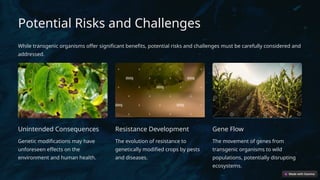
Potential Risks and Challenges
While transgenic organisms offer significant benefits, potential risks and challenges must be carefully considered and
addressed.
Unintended Consequences
Genetic modifications may have
unforeseen effects on the
environment and human health.
Resistance Development
The evolution of resistance to
genetically modified crops by pests
and diseases.
Gene Flow
The movement of genes from
transgenic organisms to wild
populations, potentially disrupting
ecosystems.
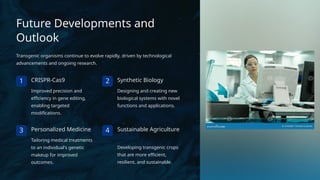
Future Developments and
Outlook
Transgenic organisms continue to evolve rapidly, driven by technological
advancements and ongoing research.
1 CRISPR-Cas9
Improved precision and
efficiency in gene editing,
enabling targeted
modifications.
2 Synthetic Biology
Designing and creating new
biological systems with novel
functions and applications.
3 Personalized Medicine
Tailoring medical treatments
to an individual's genetic
makeup for improved
outcomes.
4 Sustainable Agriculture
Developing transgenic crops
that are more efficient,
resilient, and sustainable.

Introduction-to-Transgenic-Organisms.pptx

  • 1.
    Introduction to Transgenic Organisms Transgenicorganisms are living beings whose genetic makeup has been altered through the introduction of foreign DNA. These organisms play a crucial role in various fields, from agriculture and medicine to research and environmental studies.
  • 2.
    Definition and Characteristics Transgenicorganisms are created through genetic engineering, which involves the insertion of specific genes from one organism into the genome of another. These introduced genes can confer new traits or enhance existing ones, leading to a range of applications. Genetically Modified They possess foreign DNA that alters their genetic makeup and influences their characteristics. Stable Inheritance The introduced genes are integrated into the host's genome and are passed down to offspring. Targeted Changes Genetic modifications can be directed towards specific traits or characteristics of interest.
  • 3.
    Techniques for GeneticModification Various techniques are used to modify the genetic makeup of organisms, each with specific advantages and applications. 1 Gene Cloning The process involves creating copies of specific genes for insertion into target organisms. 2 Gene Transfer Introducing foreign genes into the host's genome through methods like viral vectors or microinjection. 3 CRISPR-Cas9 Technology A highly precise gene editing technique that allows for targeted modifications at specific DNA sequences. 4 Transposons Mobile genetic elements that can insert foreign DNA into a host's genome.
  • 4.
    Applications of TransgenicOrganisms Transgenic organisms have a wide range of applications, impacting various industries and scientific disciplines. Agriculture Increased crop yields, resistance to pests and herbicides, improved nutritional content. Medicine Production of therapeutic proteins and antibodies, disease models, organ transplantation. Research Understanding gene function, disease mechanisms, development of new drugs and treatments.
  • 5.
    Transgenic Plants Transgenic plantshave revolutionized agriculture, providing benefits like increased crop yields, pest resistance, and improved nutritional content. Herbicide Resistance Allows farmers to use herbicides without damaging crops. Insect Resistance Reduces crop damage and the need for pesticides. Enhanced Nutritional Value Increases the levels of vitamins, minerals, and other nutrients.
  • 6.
    Transgenic Animals Transgenic animalsplay a crucial role in research, medicine, and agriculture, with applications ranging from disease modeling to producing therapeutic proteins. Research Understanding disease mechanisms and developing new therapies. Medicine Production of therapeutic proteins, organ transplantation, and disease models. Agriculture Increased animal growth rates, disease resistance, and improved milk production.
  • 7.
    Ethical Considerations The useof transgenic organisms raises ethical concerns about the potential risks and impacts on the environment, biodiversity, and human health. Environmental Impact Gene flow, potential harm to ecosystems, and the spread of resistance. Human Health Potential allergic reactions, unintended consequences of genetic modifications. Animal Welfare Ethical treatment of transgenic animals in research and agricultural settings. Biodiversity Potential impact on wild populations and the loss of genetic diversity.
  • 8.
    Regulatory Frameworks Regulatory frameworksgovern the development, use, and release of transgenic organisms, ensuring safety and ethical considerations. 1 Risk Assessment Thorough evaluation of potential risks to the environment and human health. 2 Labeling and Tracking Ensuring transparency and traceability of transgenic products. 3 Biosafety Protocols Strict guidelines for handling and containment of transgenic organisms.
  • 9.
    Potential Risks andChallenges While transgenic organisms offer significant benefits, potential risks and challenges must be carefully considered and addressed. Unintended Consequences Genetic modifications may have unforeseen effects on the environment and human health. Resistance Development The evolution of resistance to genetically modified crops by pests and diseases. Gene Flow The movement of genes from transgenic organisms to wild populations, potentially disrupting ecosystems.
  • 10.
    Future Developments and Outlook Transgenicorganisms continue to evolve rapidly, driven by technological advancements and ongoing research. 1 CRISPR-Cas9 Improved precision and efficiency in gene editing, enabling targeted modifications. 2 Synthetic Biology Designing and creating new biological systems with novel functions and applications. 3 Personalized Medicine Tailoring medical treatments to an individual's genetic makeup for improved outcomes. 4 Sustainable Agriculture Developing transgenic crops that are more efficient, resilient, and sustainable.