Introduction to
Supply Chain
Integration
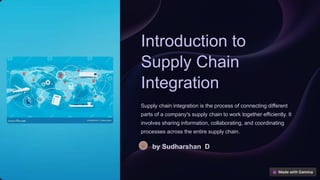
Supply chain integration is the process of connecting different
parts of a company's supply chain to work together efficiently. It
involves sharing information, collaborating, and coordinating
processes across the entire supply chain.
SD
by Sudharshan D
Importance of Supply Chain Integration
Improved Efficiency
Streamlining processes,
reducing waste, and optimizing
resource allocation.
Enhanced Customer
Satisfaction
Meeting customer demands
promptly, consistently, and
accurately.
Increased Profitability
Reducing costs, increasing
revenue, and improving overall
financial performance.
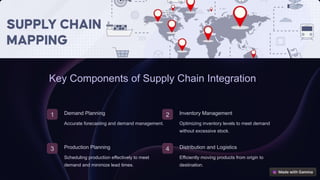
Key Components of Supply Chain Integration
1 Demand Planning
Accurate forecasting and demand management.
2 Inventory Management
Optimizing inventory levels to meet demand
without excessive stock.
3 Production Planning
Scheduling production effectively to meet
demand and minimize lead times.
4 Distribution and Logistics
Efficiently moving products from origin to
destination.
Challenges in Supply Chain
Integration
Data Silos
Lack of data sharing and communication between different parts of the supply chain.
Process Complexity
Managing multiple processes and systems across different stakeholders.
Lack of Collaboration
Silos and a lack of trust among supply chain partners.
Technology Barriers
Difficulties in integrating different systems and technologies.
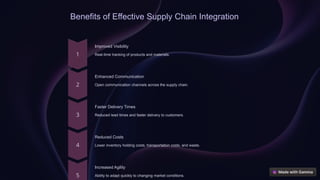
Benefits of Effective Supply Chain Integration
Improved Visibility
Real-time tracking of products and materials.
Enhanced Communication
Open communication channels across the supply chain.
Faster Delivery Times
Reduced lead times and faster delivery to customers.
Reduced Costs
Lower inventory holding costs, transportation costs, and waste.
Increased Agility
Ability to adapt quickly to changing market conditions.
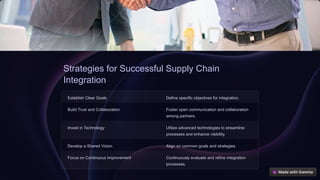
Strategies for Successful Supply Chain
Integration
Establish Clear Goals Define specific objectives for integration.
Build Trust and Collaboration Foster open communication and collaboration
among partners.
Invest in Technology Utilize advanced technologies to streamline
processes and enhance visibility.
Develop a Shared Vision Align on common goals and strategies.
Focus on Continuous Improvement Continuously evaluate and refine integration
processes.
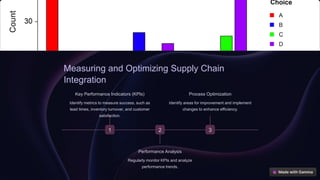
Measuring and Optimizing Supply Chain
Integration
1
Key Performance Indicators (KPIs)
Identify metrics to measure success, such as
lead times, inventory turnover, and customer
satisfaction.
2
Performance Analysis
Regularly monitor KPIs and analyze
performance trends.
3
Process Optimization
Identify areas for improvement and implement
changes to enhance efficiency.
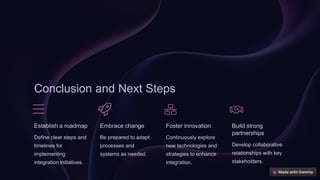
Conclusion and Next Steps
Establish a roadmap
Define clear steps and
timelines for
implementing
integration initiatives.
Embrace change
Be prepared to adapt
processes and
systems as needed.
Foster innovation
Continuously explore
new technologies and
strategies to enhance
integration.
Build strong
partnerships
Develop collaborative
relationships with key
stakeholders.

Introduction-to-Supply-Chain-Integration.pptx

  • 1.
    Introduction to Supply Chain Integration Supplychain integration is the process of connecting different parts of a company's supply chain to work together efficiently. It involves sharing information, collaborating, and coordinating processes across the entire supply chain. SD by Sudharshan D
  • 2.
    Importance of SupplyChain Integration Improved Efficiency Streamlining processes, reducing waste, and optimizing resource allocation. Enhanced Customer Satisfaction Meeting customer demands promptly, consistently, and accurately. Increased Profitability Reducing costs, increasing revenue, and improving overall financial performance.
  • 3.
    Key Components ofSupply Chain Integration 1 Demand Planning Accurate forecasting and demand management. 2 Inventory Management Optimizing inventory levels to meet demand without excessive stock. 3 Production Planning Scheduling production effectively to meet demand and minimize lead times. 4 Distribution and Logistics Efficiently moving products from origin to destination.
  • 4.
    Challenges in SupplyChain Integration Data Silos Lack of data sharing and communication between different parts of the supply chain. Process Complexity Managing multiple processes and systems across different stakeholders. Lack of Collaboration Silos and a lack of trust among supply chain partners. Technology Barriers Difficulties in integrating different systems and technologies.
  • 5.
    Benefits of EffectiveSupply Chain Integration Improved Visibility Real-time tracking of products and materials. Enhanced Communication Open communication channels across the supply chain. Faster Delivery Times Reduced lead times and faster delivery to customers. Reduced Costs Lower inventory holding costs, transportation costs, and waste. Increased Agility Ability to adapt quickly to changing market conditions.
  • 6.
    Strategies for SuccessfulSupply Chain Integration Establish Clear Goals Define specific objectives for integration. Build Trust and Collaboration Foster open communication and collaboration among partners. Invest in Technology Utilize advanced technologies to streamline processes and enhance visibility. Develop a Shared Vision Align on common goals and strategies. Focus on Continuous Improvement Continuously evaluate and refine integration processes.
  • 7.
    Measuring and OptimizingSupply Chain Integration 1 Key Performance Indicators (KPIs) Identify metrics to measure success, such as lead times, inventory turnover, and customer satisfaction. 2 Performance Analysis Regularly monitor KPIs and analyze performance trends. 3 Process Optimization Identify areas for improvement and implement changes to enhance efficiency.
  • 8.
    Conclusion and NextSteps Establish a roadmap Define clear steps and timelines for implementing integration initiatives. Embrace change Be prepared to adapt processes and systems as needed. Foster innovation Continuously explore new technologies and strategies to enhance integration. Build strong partnerships Develop collaborative relationships with key stakeholders.