Plastic pallets manufacturers specialize in producing durable, lightweight, and recyclable pallets, offering cost-effective solutions for industries seeking reliable material handling and transportation options.
About the
Company CompanyOverview:
Provide a brief introduction to the
company, highlightingits history,
mission, andvalues.
[Spanco Storage Systems] has been a
leader in the plastic pallet
manufacturing industry for over [X]
years. Our commitment to quality,
innovation, and sustainability has
positioned us as a trusted partner for
businesses worldwide."
3.
Introduction to Plastic
Pallets
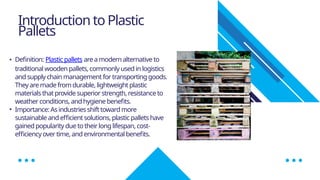
•Definition: Plastic pallets area modern alternativeto
traditional wooden pallets, commonly used in logistics
and supply chain managementfor transporting goods.
They aremadefromdurable,lightweight plastic
materialsthat providesuperior strength, resistanceto
weather conditions, and hygienebenefits.
• Importance: Asindustriesshifttoward more
sustainableand efficient solutions, plastic pallets have
gained popularity due to their long lifespan, cost-
efficiency over time, and environmental benefits.
4.
Why Choose
Plastic Pallets?
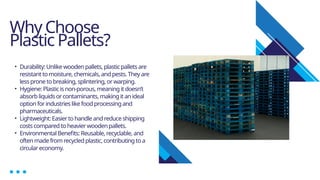
•Durability: Unlike wooden pallets, plasticpallets are
resistant to moisture, chemicals, and pests. They are
less prone to breaking, splintering, or warping.
• Hygiene: Plastic is non-porous, meaning it doesn’t
absorb liquids or contaminants, makingit an ideal
option for industries like food processingand
pharmaceuticals.
• Lightweight: Easier to handle and reduce shipping
costs compared to heavier wooden pallets.
• Environmental Benefits: Reusable, recyclable, and
often made from recycled plastic, contributing to a
circular economy.
5.
Key Features ofPlastic Pallets
• Types of Plastic Used: High-density polyethylene
(HDPE), polypropylene (PP), and recycled plastics.
• Customization: Manufacturers offer various
designs, colors, and sizes tailored to industry-
specific needs.
• Load Capacity: Plastic pallets can handle different
load capacities depending on their design and
material, ranging from lightweight to heavy-duty
models.
• Compliance: Meeting global safetyand
regulatory standards (e.g.,ISO,FDA compliance
for food-grade plastic pallets).
6.
Benefits for
Manufacturers •Cost Efficiency: Although the upfront cost of plastic
pallets can be higher than wood, they offer long-
term savings due to their durability and low
maintenance.
• Easy Handling & Storage: Plastic pallets are often
stackable, facilitating easier storage and transport
in warehouses.
• Consistent Quality: Manufactured under controlled
conditions, plastic pallets maintain uniform quality,
reducing defects and returns.
7.
Applications of PlasticPallets
• Food and Beverage Industry: Plastic
pallets meet stringent hygiene
standards, reducing the risk of
contamination during storage and
transportation.
• Pharmaceuticals: They provide a clean,
reliable surface for handling sensitive
products.
• Retail and E-commerce: Plastic pallets
are used for efficient handling of
products in warehouses and
distribution centers.
• Automotive and Electronics: Their
durability and resistance to impact
make them ideal for heavy-duty
goods.
8.
Top Plastic Pallet
Manufacturers
•Global Leaders: Highlight major players in the
industry, such as Orbis Corporation, Cabka Group,
Schoeller Allibert, and iGPS*.
• Innovative Practices: Discuss how leading
manufacturers are pushing the boundaries of
design and technology to create lighter
, stronger
,
and more eco-friendly pallets.
• Manufacturing Techniques: Injection molding, blow
molding, and thermoforming are some of the
processes used by manufacturers to produce plastic
pallets.
9.
Challenges in thePlastic Pallet
Industry
• Material Costs: The price of raw materials for
plastic pallets can fluctuate, affecting production
costs.
• Sustainability Concerns: While recyclable, the
overall environmental impact of plastic
production is still a topic of debate.
• Adoption Barriers: Some industries or regions
may be slow to adopt plastic pallets due to initial
cost concerns or resistance to change from
traditional wooden pallets.
10.
Future Trends inPlastic Pallet
Manufacturing
• Sustainability Initiatives: Increased focus on
using recycled plastic and creating pallets that
are 100% recyclable.
• Automation and Smart Pallets: Integration of
sensors and RFID technology to track pallets in
real-time, enhancing logistics efficiency.
• Customization: Growing demand for pallets
tailored to specific industries and load
requirements.
11.
Conclusion
Summary: Plastic palletsrepresent a forward-
thinking solution for businesses aiming to
improve operational efficiency, reduce costs,
and enhance sustainability. Manufacturers in
this industry continue to innovate, addressing
key challenges while meeting the evolving
needs of the global market.

![About the
Company Company Overview:
Provide a brief introduction to the
company, highlightingits history,
mission, andvalues.
[Spanco Storage Systems] has been a
leader in the plastic pallet
manufacturing industry for over [X]
years. Our commitment to quality,
innovation, and sustainability has
positioned us as a trusted partner for
businesses worldwide."](https://image.slidesharecdn.com/introductiontoplasticpallets2-250428091428-230b3cbd/85/Introduction-to-Plastic-Pallets-Manufacturers-2-320.jpg)