The Orchestra
What is an orchestra?
The orchestra is made of four
families of instruments:
•Strings
•Brass
•Woodwinds
•Percussion
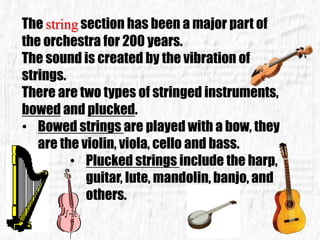
The string section has been a major part of
the orchestra for 200 years.
The sound is created by the vibration of
strings.
There are two types of stringed instruments,
bowed and plucked.
• Bowed strings are played with a bow, they
are the violin, viola, cello and bass.
• Plucked strings include the harp,
guitar, lute, mandolin, banjo, and
others.
The strings were
originally made out
of cat gut, just as
tennis racket
strings used to be
made.
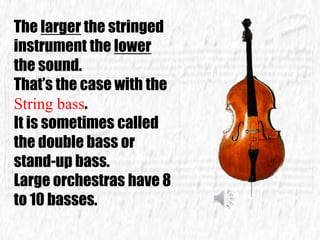
The larger the stringed
instrument the lower
the sound.
That’s the case with the
String bass.
It is sometimes called
the double bass or
stand-up bass.
Large orchestras have 8
to 10 basses.
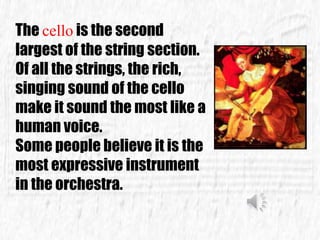
The cello is the second
largest of the string section.
Of all the strings, the rich,
singing sound of the cello
make it sound the most like a
human voice.
Some people believe it is the
most expressive instrument
in the orchestra.
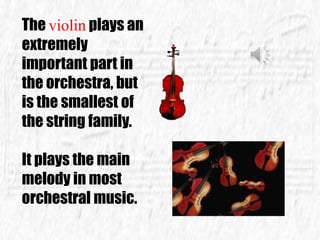
The violin plays an
extremely
important part in
the orchestra, but
is the smallest of
the string family.
It plays the main
melody in most
orchestral music.
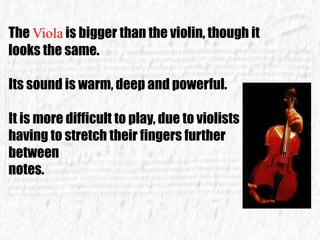
The Viola is bigger than the violin, though it
looks the same.
Its sound is warm, deep and powerful.
It is more difficult to play, due to violists
having to stretch their fingers further
between
notes.
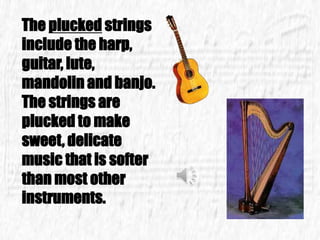
The plucked strings
include the harp,
guitar, lute,
mandolin and banjo.
The strings are
plucked to make
sweet, delicate
music that is softer
than most other
instruments.
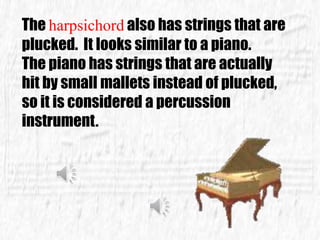
The harpsichord also has strings that are
plucked. It looks similar to a piano.
The piano has strings that are actually
hit by small mallets instead of plucked,
so it is considered a percussion
instrument.
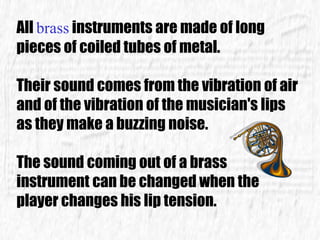
All brass instruments are made of long
pieces of coiled tubes of metal.
Their sound comes from the vibration of air
and of the vibration of the musician's lips
as they make a buzzing noise.
The sound coming out of a brass
instrument can be changed when the
player changes his lip tension.
Members of the brass section
include:
•French horn
•Tuba
•Trumpet
•Trombone
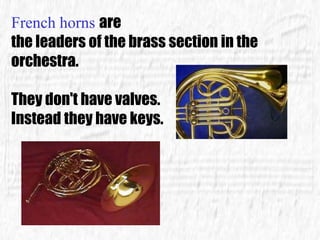
French horns are
the leaders of the brass section in the
orchestra.
They don't have valves.
Instead they have keys.
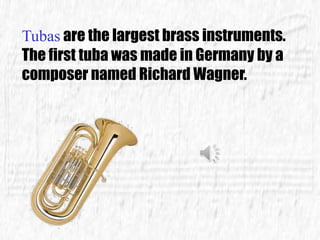
Tubas are the largest brass instruments.
The first tuba was made in Germany by a
composer named Richard Wagner.
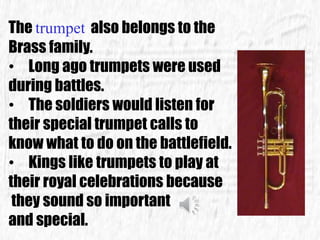
The trumpet also belongs to the
Brass family.
• Long ago trumpets were used
during battles.
• The soldiers would listen for
their special trumpet calls to
know what to do on the battlefield.
• Kings like trumpets to play at
their royal celebrations because
they sound so important
and special.
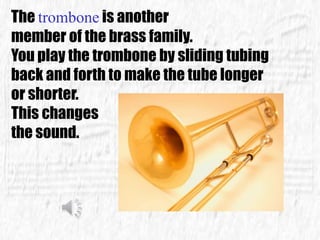
The trombone is another
member of the brass family.
You play the trombone by sliding tubing
back and forth to make the tube longer
or shorter.
This changes
the sound.
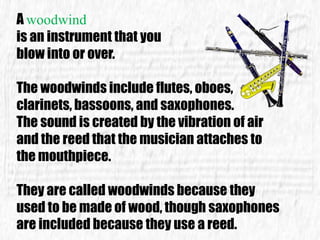
A woodwind
is an instrument that you
blow into or over.
The woodwinds include flutes, oboes,
clarinets, bassoons, and saxophones.
The sound is created by the vibration of air
and the reed that the musician attaches to
the mouthpiece.
They are called woodwinds because they
used to be made of wood, though saxophones
are included because they use a reed.
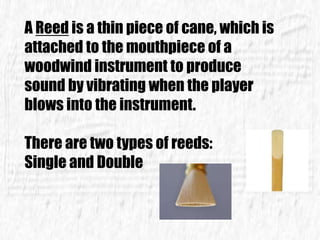
A Reed is a thin piece of cane, which is
attached to the mouthpiece of a
woodwind instrument to produce
sound by vibrating when the player
blows into the instrument.
There are two types of reeds:
Single and Double
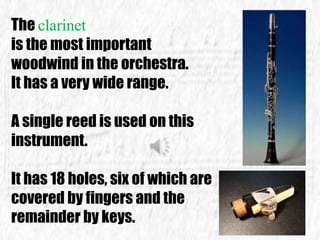
The clarinet
is the most important
woodwind in the orchestra.
It has a very wide range.
A single reed is used on this
instrument.
It has 18 holes, six of which are
covered by fingers and the
remainder by keys.
The highest woodwind is the flute.
Opening and closing holes in the body of
the instrument controls the pitch of the
tones.
This woodwind does not need a reed.
The vibration is created by the air
blowing over the mouthpiece.
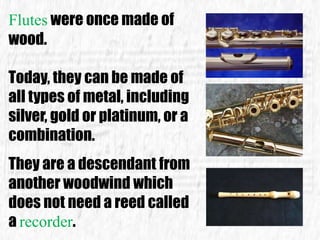
Flutes were once made of
wood.
Today, they can be made of
all types of metal, including
silver, gold or platinum, or a
combination.
They are a descendant from
another woodwind which
does not need a reed called
a recorder.
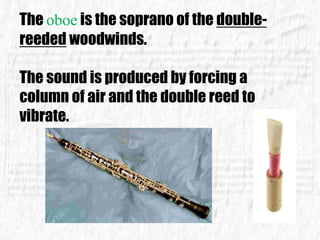
The oboe is the soprano of the double-
reeded woodwinds.
The sound is produced by forcing a
column of air and the double reed to
vibrate.
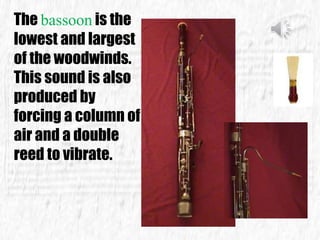
The bassoon is the
lowest and largest
of the woodwinds.
This sound is also
produced by
forcing a column of
air and a double
reed to vibrate.
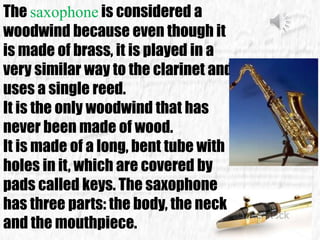
The saxophone is considered a
woodwind because even though it
is made of brass, it is played in a
very similar way to the clarinet and
uses a single reed.
It is the only woodwind that has
never been made of wood.
It is made of a long, bent tube with
holes in it, which are covered by
pads called keys. The saxophone
has three parts: the body, the neck
and the mouthpiece.
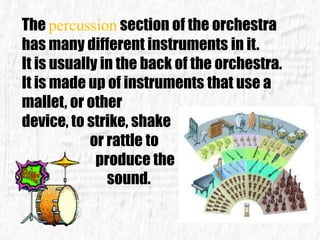
The percussion section of the orchestra
has many different instruments in it.
It is usually in the back of the orchestra.
It is made up of instruments that use a
mallet, or other
device, to strike, shake
or rattle to
produce the
sound.
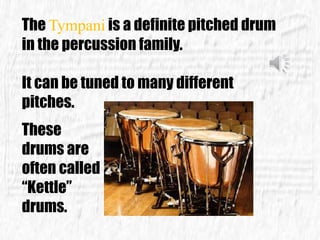
The Tympani is a definite pitched drum
in the percussion family.
It can be tuned to many different
pitches.
These
drums are
often called
“Kettle”
drums.
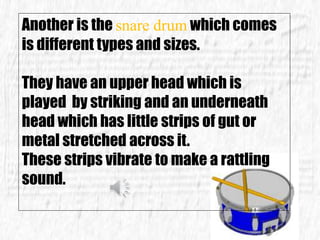
Another is the snare drum which comes
is different types and sizes.
They have an upper head which is
played by striking and an underneath
head which has little strips of gut or
metal stretched across it.
These strips vibrate to make a rattling
sound.
Drums are probably the oldest type of
percussion instrument. People in the
Middle East used to put drums on either
side of their camels. The drummer sat
on top and played
them.
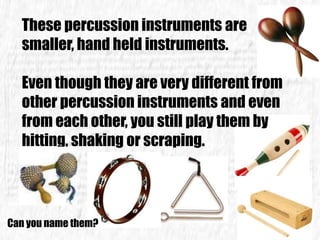
These percussion instruments are
smaller, hand held instruments.
Even though they are very different from
other percussion instruments and even
from each other, you still play them by
hitting, shaking or scraping.
Can you name them?
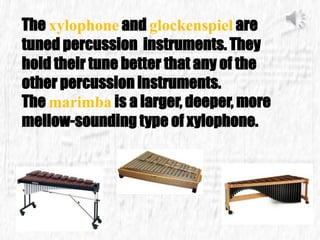
The xylophone and glockenspiel are
tuned percussion instruments. They
hold their tune better that any of the
other percussion instruments.
The marimba is a larger, deeper, more
mellow-sounding type of xylophone.
Can you name at least two instruments
from each family of the orchestra?
Can you recognize the distinct sound of
Each family?

Introduction to musical instruments.pptx

  • 1.
  • 2.
    What is anorchestra? The orchestra is made of four families of instruments: •Strings •Brass •Woodwinds •Percussion
  • 3.
    The string sectionhas been a major part of the orchestra for 200 years. The sound is created by the vibration of strings. There are two types of stringed instruments, bowed and plucked. • Bowed strings are played with a bow, they are the violin, viola, cello and bass. • Plucked strings include the harp, guitar, lute, mandolin, banjo, and others.
  • 4.
    The strings were originallymade out of cat gut, just as tennis racket strings used to be made.
  • 5.
    The larger thestringed instrument the lower the sound. That’s the case with the String bass. It is sometimes called the double bass or stand-up bass. Large orchestras have 8 to 10 basses.
  • 6.
    The cello isthe second largest of the string section. Of all the strings, the rich, singing sound of the cello make it sound the most like a human voice. Some people believe it is the most expressive instrument in the orchestra.
  • 7.
    The violin playsan extremely important part in the orchestra, but is the smallest of the string family. It plays the main melody in most orchestral music.
  • 8.
    The Viola isbigger than the violin, though it looks the same. Its sound is warm, deep and powerful. It is more difficult to play, due to violists having to stretch their fingers further between notes.
  • 9.
    The plucked strings includethe harp, guitar, lute, mandolin and banjo. The strings are plucked to make sweet, delicate music that is softer than most other instruments.
  • 10.
    The harpsichord alsohas strings that are plucked. It looks similar to a piano. The piano has strings that are actually hit by small mallets instead of plucked, so it is considered a percussion instrument.
  • 11.
    All brass instrumentsare made of long pieces of coiled tubes of metal. Their sound comes from the vibration of air and of the vibration of the musician's lips as they make a buzzing noise. The sound coming out of a brass instrument can be changed when the player changes his lip tension.
  • 12.
    Members of thebrass section include: •French horn •Tuba •Trumpet •Trombone
  • 13.
    French horns are theleaders of the brass section in the orchestra. They don't have valves. Instead they have keys.
  • 14.
    Tubas are thelargest brass instruments. The first tuba was made in Germany by a composer named Richard Wagner.
  • 15.
    The trumpet alsobelongs to the Brass family. • Long ago trumpets were used during battles. • The soldiers would listen for their special trumpet calls to know what to do on the battlefield. • Kings like trumpets to play at their royal celebrations because they sound so important and special.
  • 16.
    The trombone isanother member of the brass family. You play the trombone by sliding tubing back and forth to make the tube longer or shorter. This changes the sound.
  • 17.
    A woodwind is aninstrument that you blow into or over. The woodwinds include flutes, oboes, clarinets, bassoons, and saxophones. The sound is created by the vibration of air and the reed that the musician attaches to the mouthpiece. They are called woodwinds because they used to be made of wood, though saxophones are included because they use a reed.
  • 18.
    A Reed isa thin piece of cane, which is attached to the mouthpiece of a woodwind instrument to produce sound by vibrating when the player blows into the instrument. There are two types of reeds: Single and Double
  • 19.
    The clarinet is themost important woodwind in the orchestra. It has a very wide range. A single reed is used on this instrument. It has 18 holes, six of which are covered by fingers and the remainder by keys.
  • 20.
    The highest woodwindis the flute. Opening and closing holes in the body of the instrument controls the pitch of the tones. This woodwind does not need a reed. The vibration is created by the air blowing over the mouthpiece.
  • 21.
    Flutes were oncemade of wood. Today, they can be made of all types of metal, including silver, gold or platinum, or a combination. They are a descendant from another woodwind which does not need a reed called a recorder.
  • 22.
    The oboe isthe soprano of the double- reeded woodwinds. The sound is produced by forcing a column of air and the double reed to vibrate.
  • 23.
    The bassoon isthe lowest and largest of the woodwinds. This sound is also produced by forcing a column of air and a double reed to vibrate.
  • 24.
    The saxophone isconsidered a woodwind because even though it is made of brass, it is played in a very similar way to the clarinet and uses a single reed. It is the only woodwind that has never been made of wood. It is made of a long, bent tube with holes in it, which are covered by pads called keys. The saxophone has three parts: the body, the neck and the mouthpiece.
  • 25.
    The percussion sectionof the orchestra has many different instruments in it. It is usually in the back of the orchestra. It is made up of instruments that use a mallet, or other device, to strike, shake or rattle to produce the sound.
  • 26.
    The Tympani isa definite pitched drum in the percussion family. It can be tuned to many different pitches. These drums are often called “Kettle” drums.
  • 27.
    Another is thesnare drum which comes is different types and sizes. They have an upper head which is played by striking and an underneath head which has little strips of gut or metal stretched across it. These strips vibrate to make a rattling sound.
  • 28.
    Drums are probablythe oldest type of percussion instrument. People in the Middle East used to put drums on either side of their camels. The drummer sat on top and played them.
  • 29.
    These percussion instrumentsare smaller, hand held instruments. Even though they are very different from other percussion instruments and even from each other, you still play them by hitting, shaking or scraping. Can you name them?
  • 30.
    The xylophone andglockenspiel are tuned percussion instruments. They hold their tune better that any of the other percussion instruments. The marimba is a larger, deeper, more mellow-sounding type of xylophone.
  • 31.
    Can you nameat least two instruments from each family of the orchestra? Can you recognize the distinct sound of Each family?