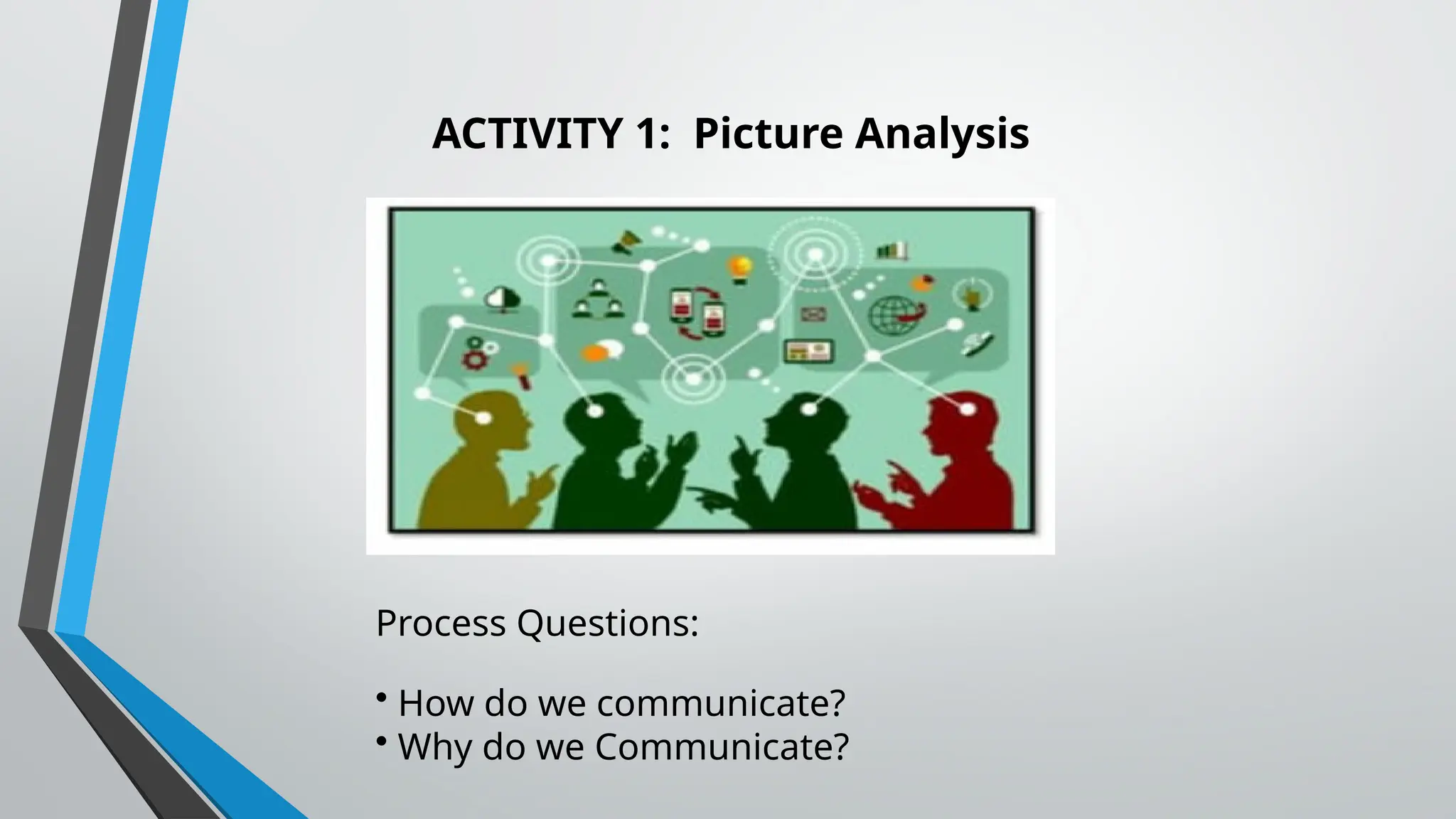
ACTIVITY 1: Picture Analysis
Process Questions:
• How do we communicate?
• Why do we Communicate?
CONTENT STANDARD
The learner demonstrates understanding of media and information
Literacy (MIL) and MIL related concepts.
PERFORMANCE STANDARD
The learner organizes a creative and interactive symposium for the community
focusing on being a media and information literate individual.
LEARNING COMPETENCY
1. Describes how communication is affected
by media and information. MIL11/12IMIL-IIIa-1
2. Identifies the similarities and differences of media literacy, information literacy,
and technology literacy. MIL11/12IMIL-IIIa-2
3. Editorializes the value of being a media and information literate individual.
MIL11/12IMIL-IIIa-3
Learning Objectives
At the end of the lesson, students should be able to:
1. Know the different examples of Communication Medium.
2. Differentiate between media literacy, technology literacy and
information literacy.
3. Analyze the different information coming from different sources
of
introduction to media literacy, technology literacy and
information literacy.
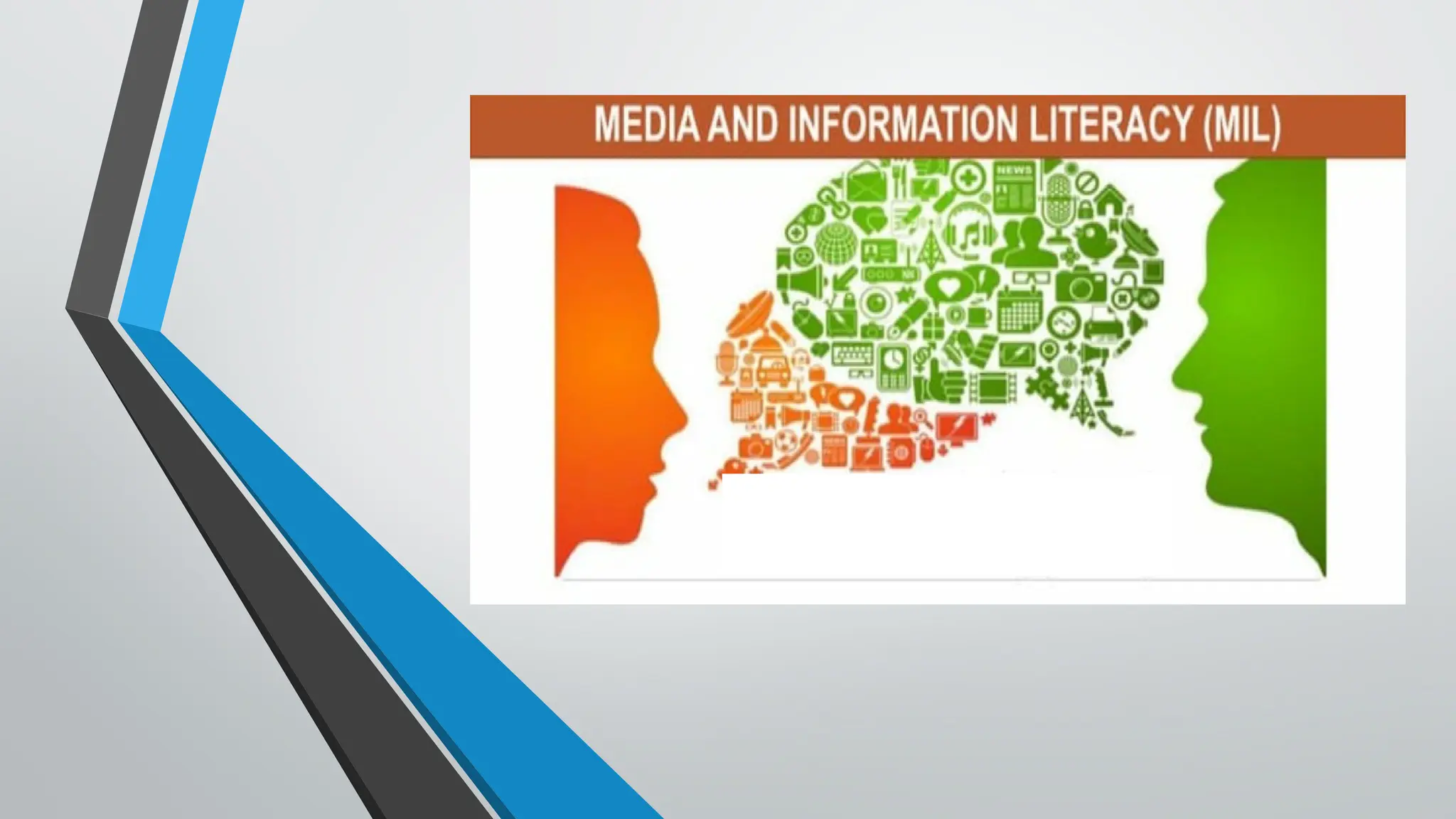
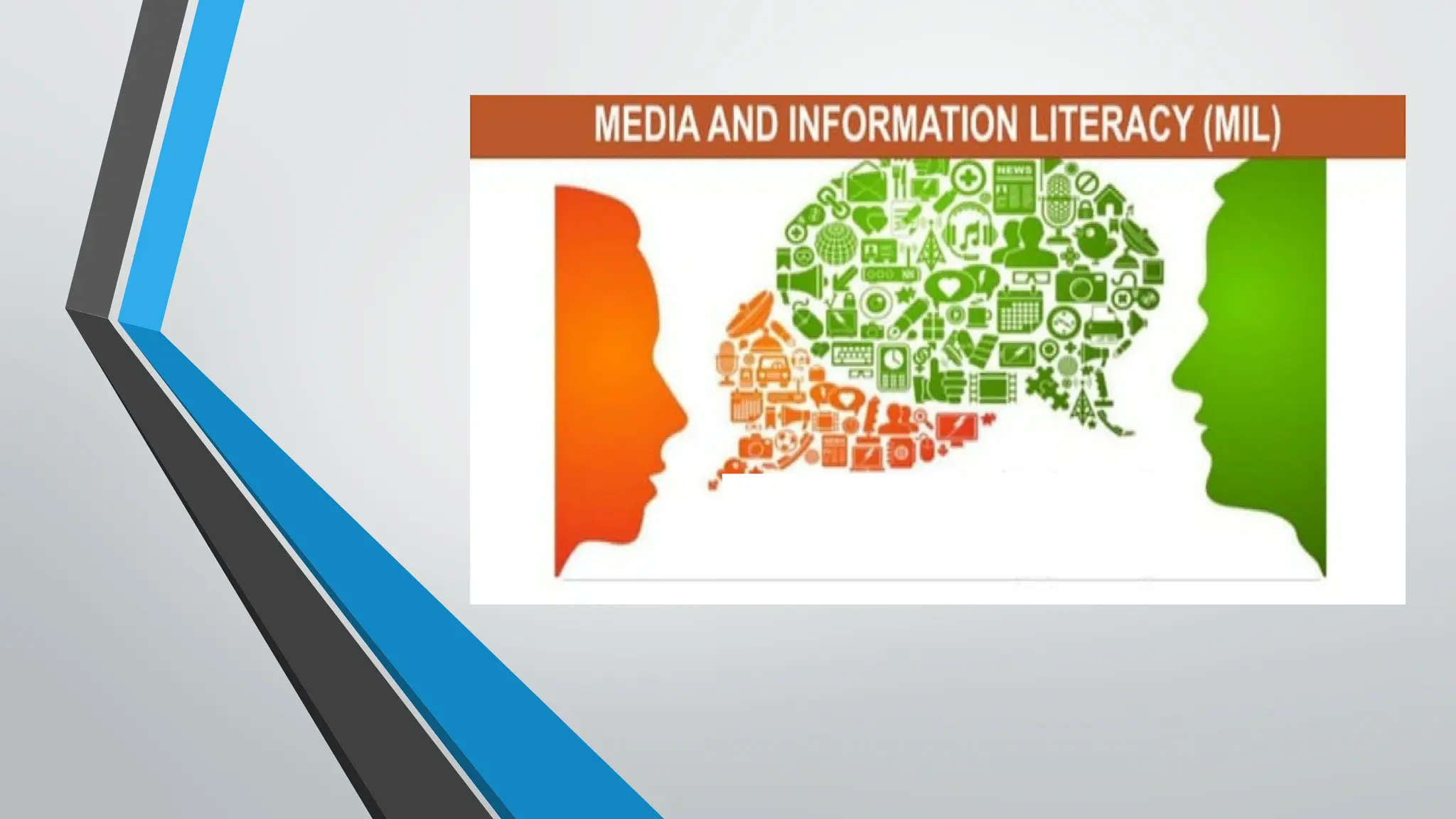
Media and Infromation
Literacy (MIL)
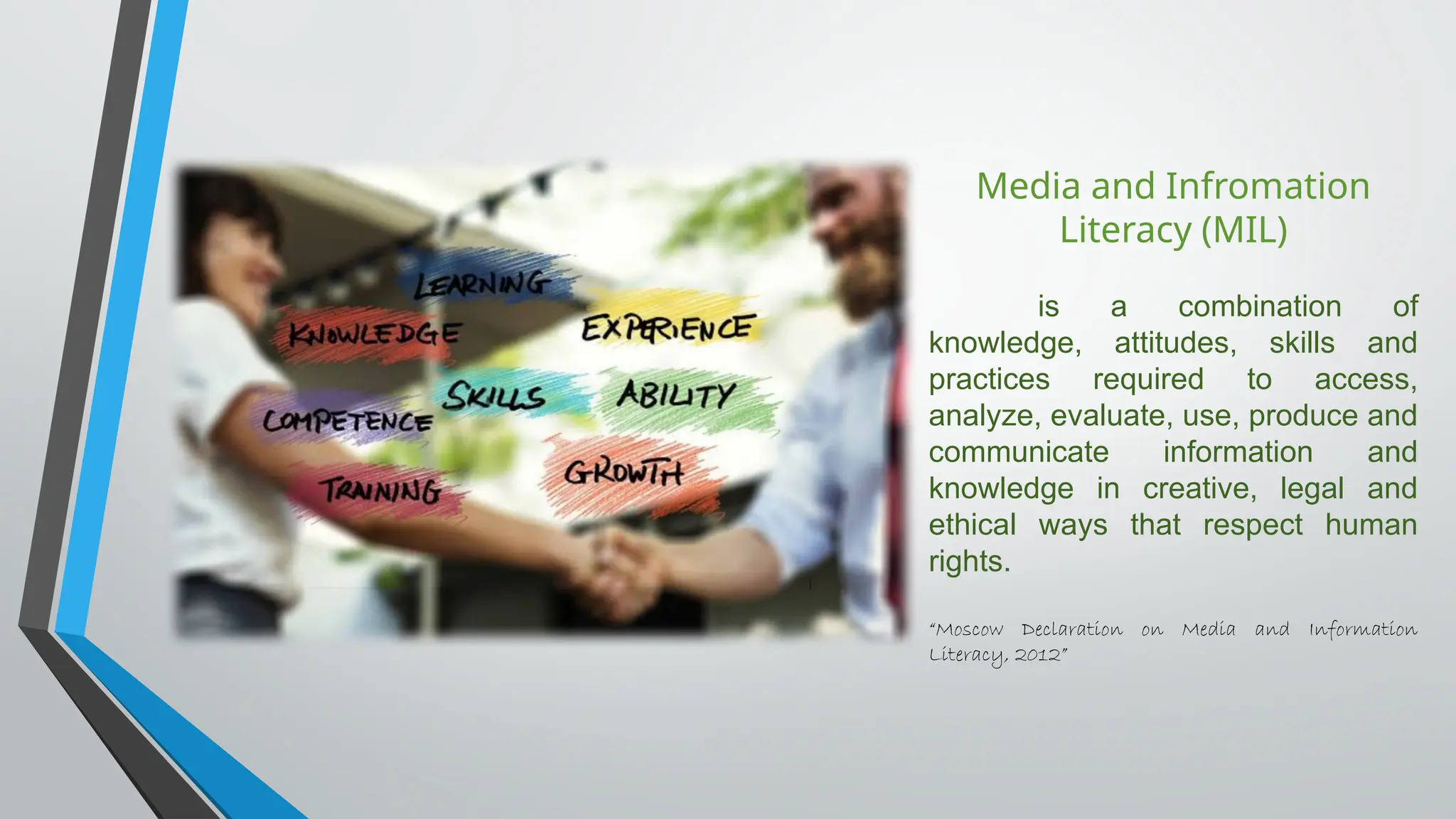
is a combination of
knowledge, attitudes, skills and
practices required to access,
analyze, evaluate, use, produce and
communicate information and
knowledge in creative, legal and
ethical ways that respect human
rights.
“Moscow Declaration on Media and Information
Literacy, 2012”
Lesson Proper
What is Communication?
Lesson Proper
Lesson Proper
Lesson Proper
Lesson Proper
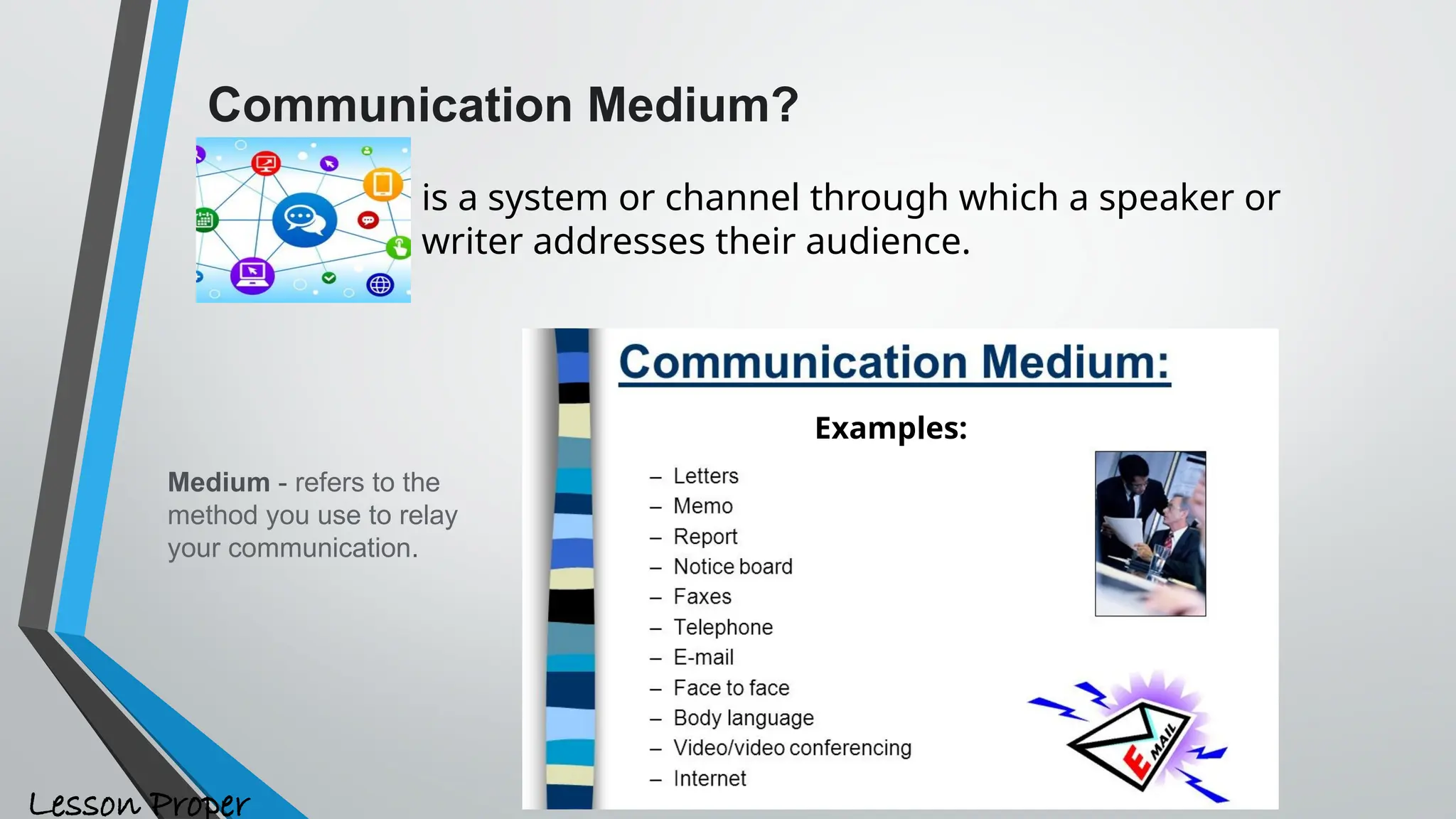
is a system or channel through which a speaker or
writer addresses their audience.
Communication Medium?
Examples:
Medium - refers to the
method you use to relay
your communication.
Lesson Proper
 Media
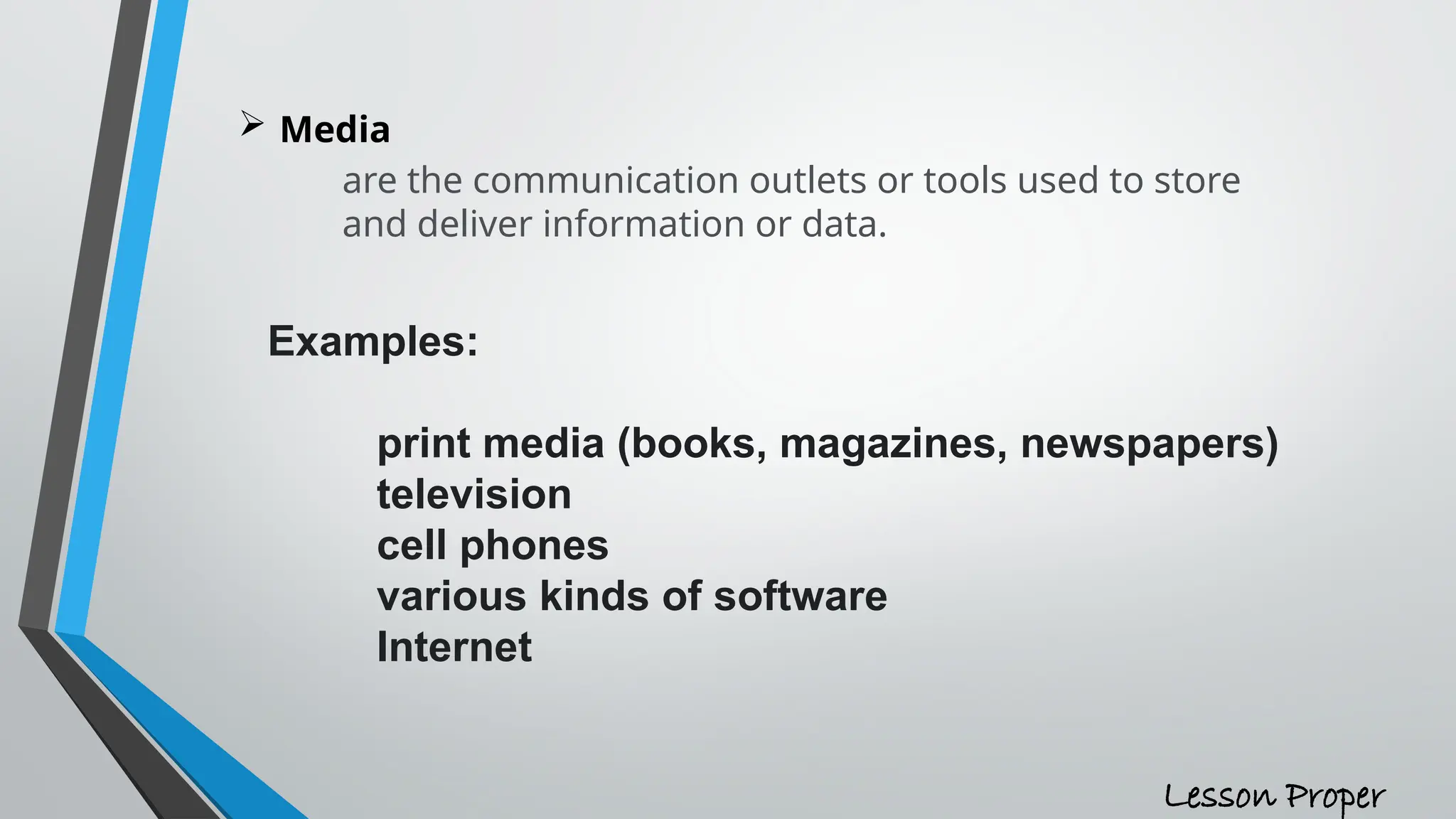
are the communication outlets or tools used to store
and deliver information or data.
Examples:
print media (books, magazines, newspapers)
television
cell phones
various kinds of software
Internet
Lesson Proper
Literacy
- The ability to identify, understand, interpret,
create, communicate and compute, using printed
and written materials associated with varying
contexts. Literacy involves a continuum of
learning, wherein individuals are able to achieve
their goals, develop their knowledge and potential,
and participate fully in their community and wider
society.
Lesson Proper
Media Literacy
The ability to access, analyze,
evaluate, and create media in a variety of
forms. It aims to empower citizens by
providing them with the competencies
(knowledge and skills) necessary to engage
with traditional media and new technologies.
Lesson Proper
Information
A broad term that covers
processed data, knowledge derived from study,
experience, instruction, signals or symbols.
Information Literacy
The ability to recognize when
information is needed, and to locate, evaluate,
and effectively communicate information in its
various formats. Lesson Proper
Technology (Digital) Literacy
The ability of an individual, either
working independently or with others, to
responsibly, appropriately, and effectively use
technological tools. Using these tools an
individual can access, manage, integrate,
evaluate, create and communicate information.
Lesson Proper
Media and Information Literacy
The essential skills and
competencies that allow individuals to engage
with media and other information providers
effectively.
Lesson Proper
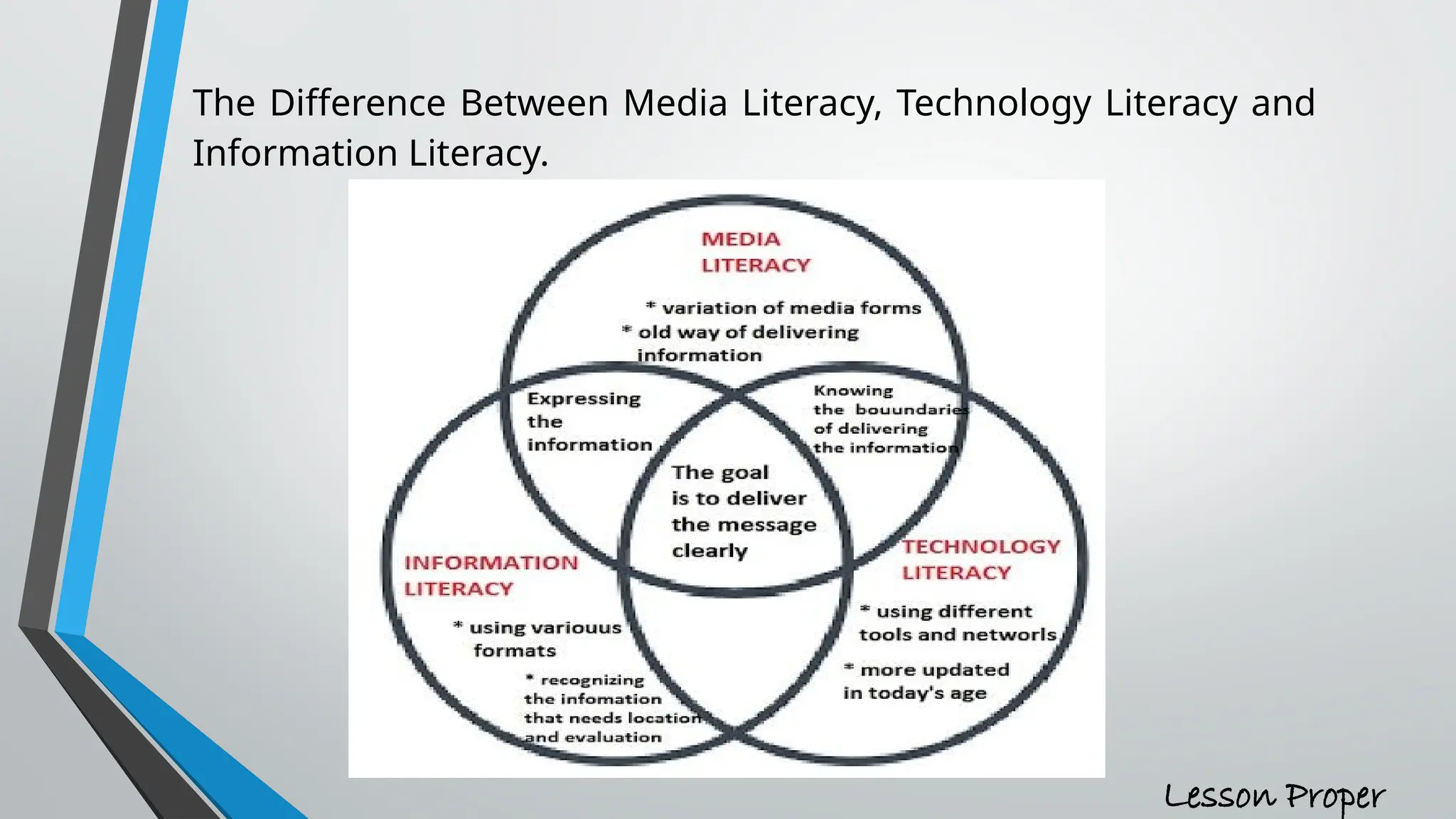
The Difference Between Media Literacy, Technology Literacy and
Information Literacy.
Lesson Proper
Media Used Use of Media
1.
2.
3.
4.
5.
6.
7.
8.
9.
10.
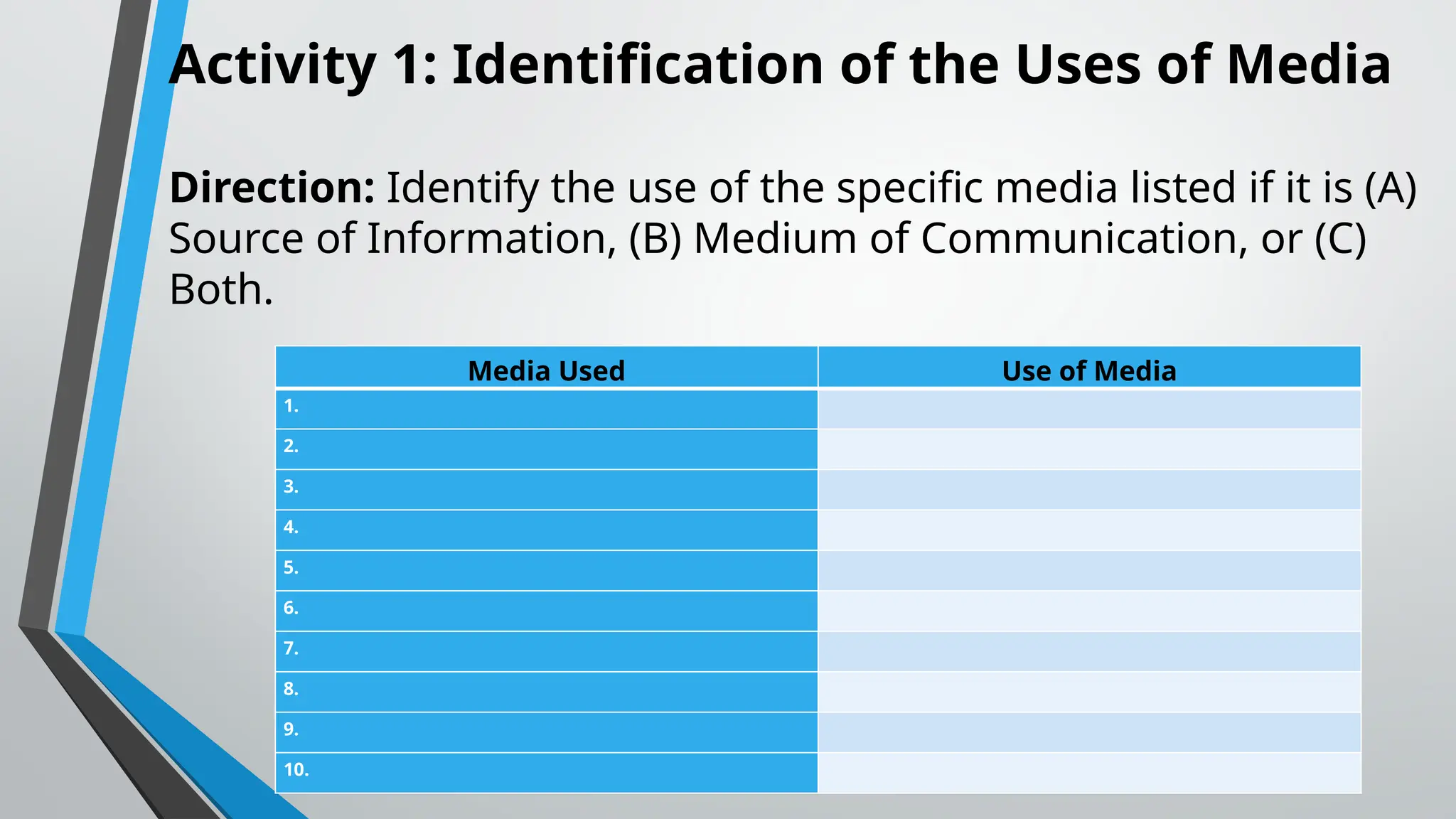
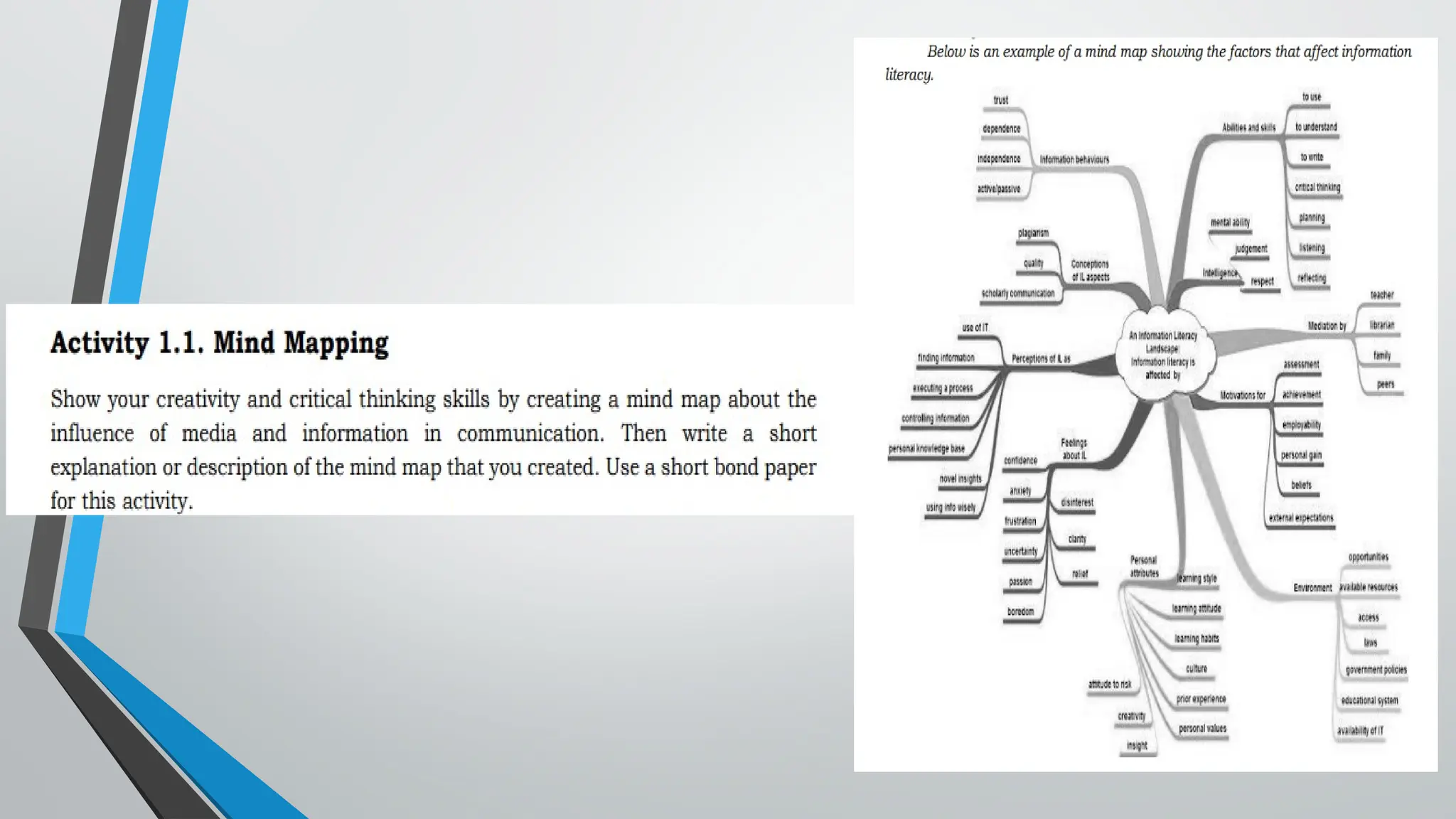
Activity 1: Identification of the Uses of Media
Direction: Identify the use of the specific media listed if it is (A)
Source of Information, (B) Medium of Communication, or (C)
Both.
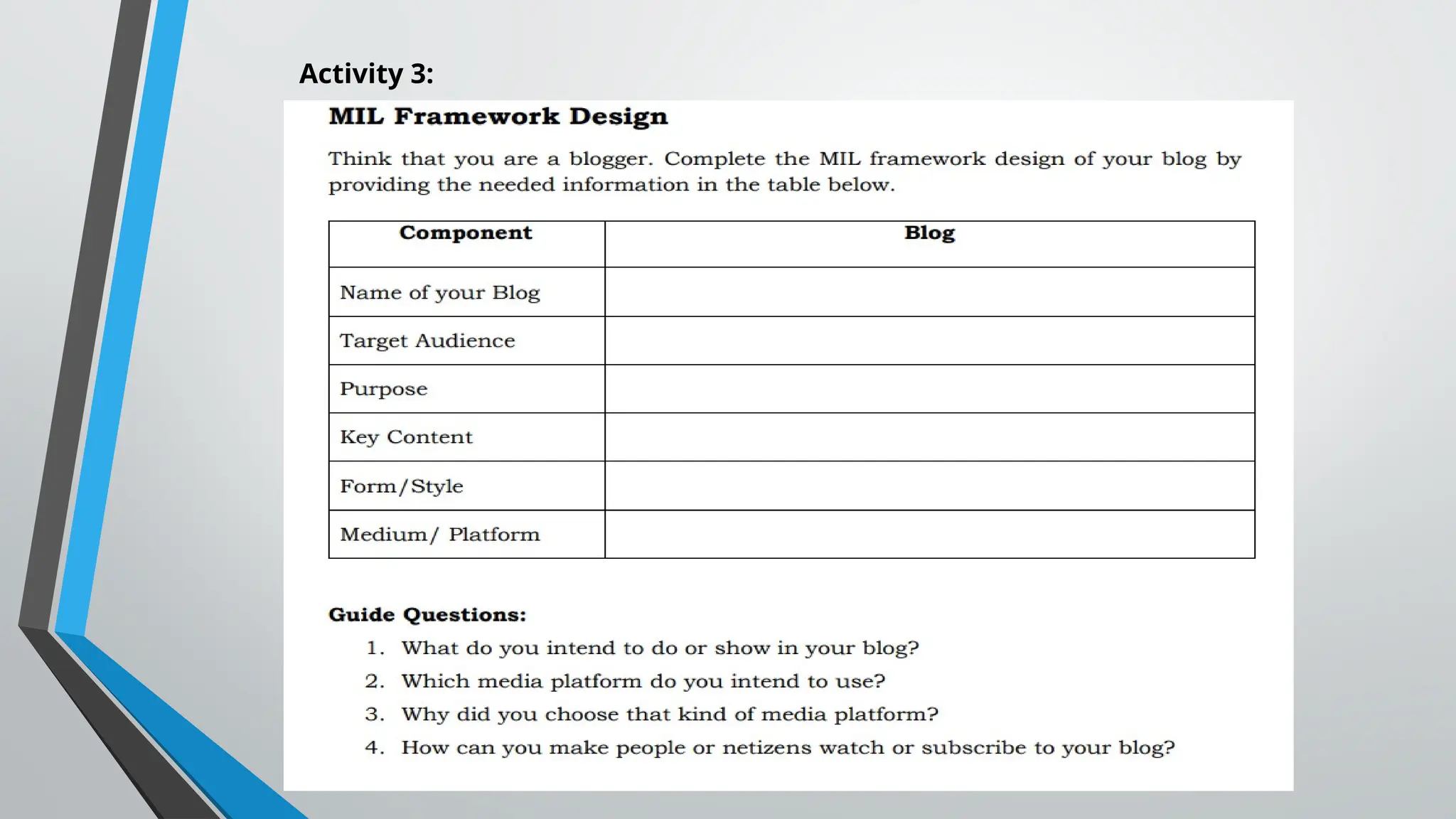
Activity 3:
GENERALIZATION
Ask the students the following:
1. What are the different style in verbal communication?
2. How media and information affect communication?
3. What are the difference between information and
literacy?
APPLICATION
Activity 2: Online Browsing of Satirical Site
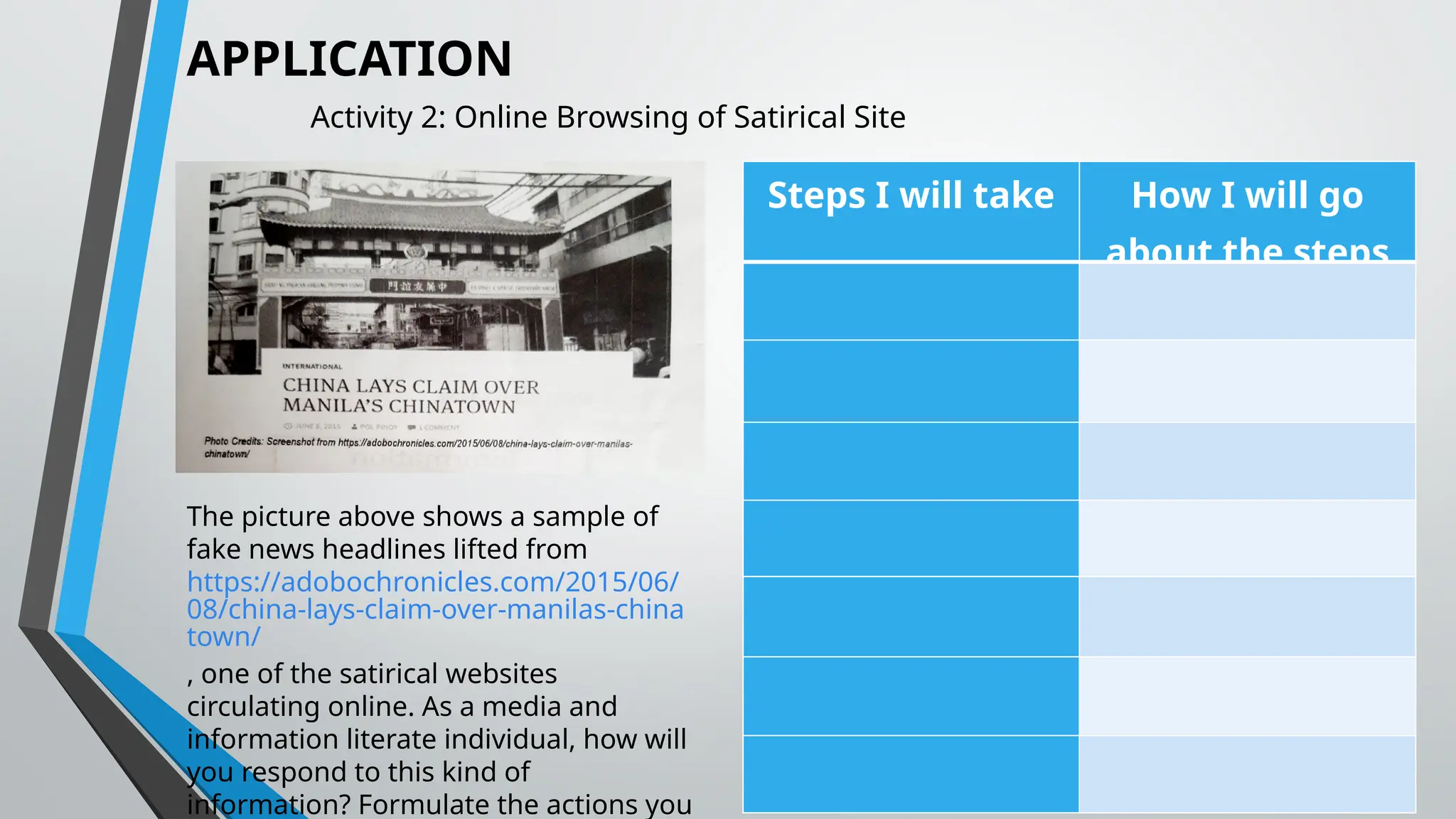
The picture above shows a sample of
fake news headlines lifted from
https://adobochronicles.com/2015/06/
08/china-lays-claim-over-manilas-china
town/
, one of the satirical websites
circulating online. As a media and
information literate individual, how will
you respond to this kind of
information? Formulate the actions you
Steps I will take How I will go
about the steps
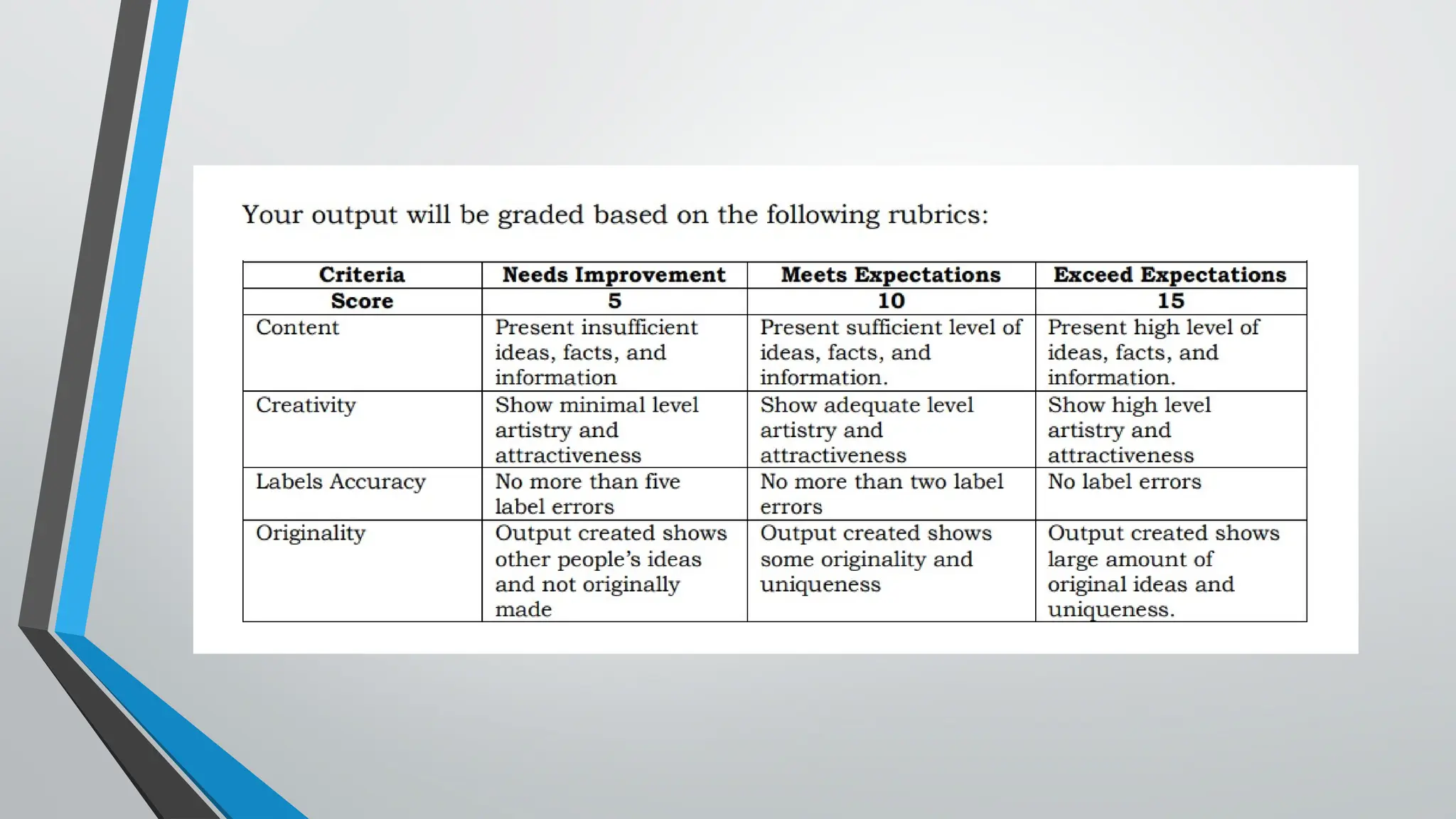
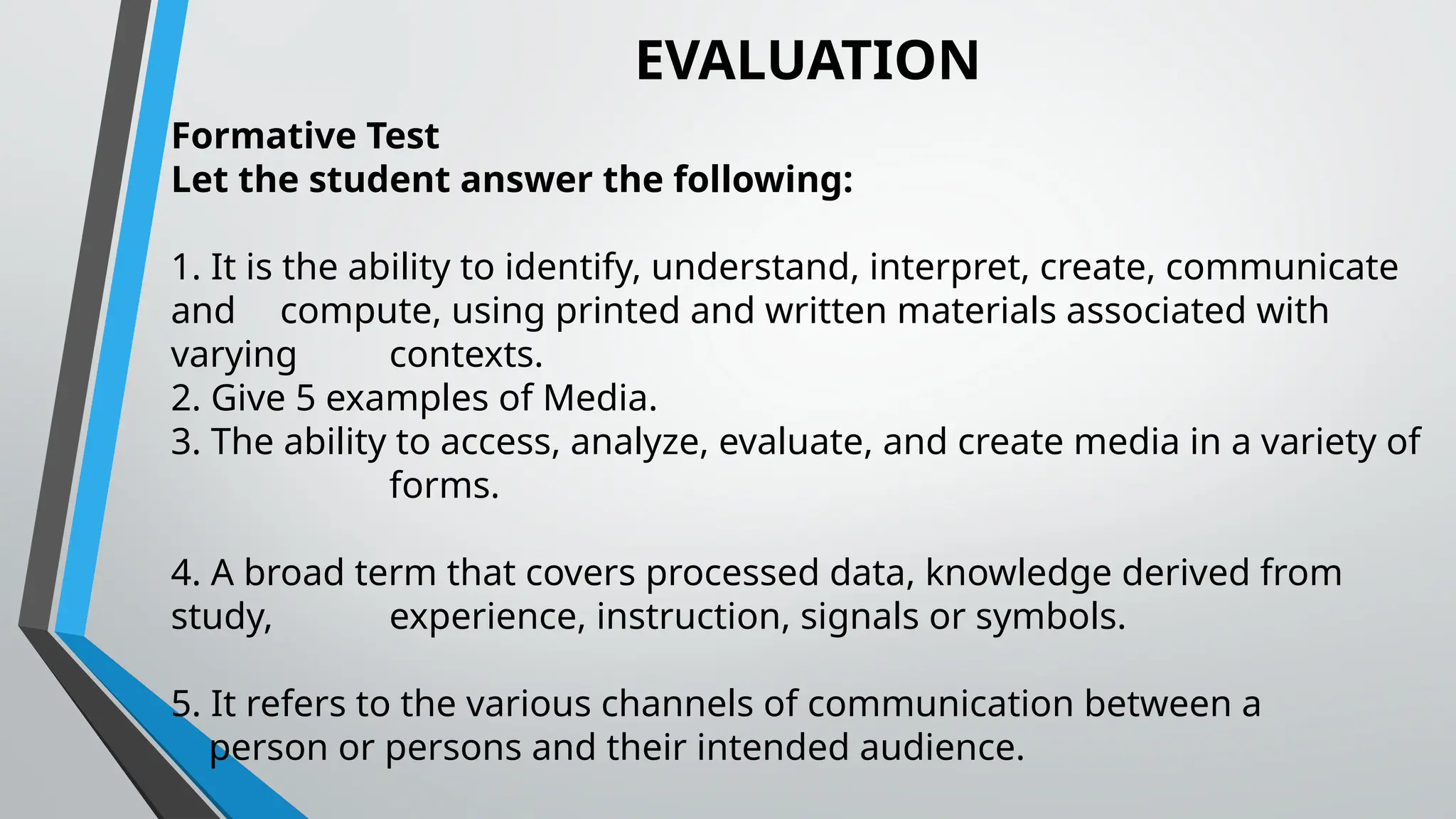
Score Criteria
16-20 Accurate, relevant and detailed.
11-15 Mostly accurate, relevant and detailed.
6-10 Partially accurate, relevant and detailed.
1-5 Inaccurate, Inappropriate and not detailed.
Scoring Rubrics:
EVALUATION
Formative Test
Let the student answer the following:
1. It is the ability to identify, understand, interpret, create, communicate
and compute, using printed and written materials associated with
varying contexts.
2. Give 5 examples of Media.
3. The ability to access, analyze, evaluate, and create media in a variety of
forms.
4. A broad term that covers processed data, knowledge derived from
study, experience, instruction, signals or symbols.
5. It refers to the various channels of communication between a
person or persons and their intended audience.
ADDITIONAL ACTIVITIES/ASSIGNMENT
From your own point of view, make a list that describes a
person who is literate in media and information. Write down
at least five (5) characteristics.
a.
b.
c.
d.
e.
introduction to media and information Literacy

introduction to media and information Literacy

  • 2.
    ACTIVITY 1: PictureAnalysis Process Questions: • How do we communicate? • Why do we Communicate?
  • 3.
    CONTENT STANDARD The learnerdemonstrates understanding of media and information Literacy (MIL) and MIL related concepts. PERFORMANCE STANDARD The learner organizes a creative and interactive symposium for the community focusing on being a media and information literate individual. LEARNING COMPETENCY 1. Describes how communication is affected by media and information. MIL11/12IMIL-IIIa-1 2. Identifies the similarities and differences of media literacy, information literacy, and technology literacy. MIL11/12IMIL-IIIa-2 3. Editorializes the value of being a media and information literate individual. MIL11/12IMIL-IIIa-3
  • 4.
    Learning Objectives At theend of the lesson, students should be able to: 1. Know the different examples of Communication Medium. 2. Differentiate between media literacy, technology literacy and information literacy. 3. Analyze the different information coming from different sources of introduction to media literacy, technology literacy and information literacy.
  • 6.
    Media and Infromation Literacy(MIL) is a combination of knowledge, attitudes, skills and practices required to access, analyze, evaluate, use, produce and communicate information and knowledge in creative, legal and ethical ways that respect human rights. “Moscow Declaration on Media and Information Literacy, 2012”
  • 7.
    Lesson Proper What isCommunication?
  • 8.
  • 9.
  • 10.
  • 11.
  • 12.
    is a systemor channel through which a speaker or writer addresses their audience. Communication Medium? Examples: Medium - refers to the method you use to relay your communication. Lesson Proper
  • 13.
     Media are thecommunication outlets or tools used to store and deliver information or data. Examples: print media (books, magazines, newspapers) television cell phones various kinds of software Internet Lesson Proper
  • 14.
    Literacy - The abilityto identify, understand, interpret, create, communicate and compute, using printed and written materials associated with varying contexts. Literacy involves a continuum of learning, wherein individuals are able to achieve their goals, develop their knowledge and potential, and participate fully in their community and wider society. Lesson Proper
  • 16.
    Media Literacy The abilityto access, analyze, evaluate, and create media in a variety of forms. It aims to empower citizens by providing them with the competencies (knowledge and skills) necessary to engage with traditional media and new technologies. Lesson Proper
  • 17.
    Information A broad termthat covers processed data, knowledge derived from study, experience, instruction, signals or symbols. Information Literacy The ability to recognize when information is needed, and to locate, evaluate, and effectively communicate information in its various formats. Lesson Proper
  • 18.
    Technology (Digital) Literacy Theability of an individual, either working independently or with others, to responsibly, appropriately, and effectively use technological tools. Using these tools an individual can access, manage, integrate, evaluate, create and communicate information. Lesson Proper
  • 19.
    Media and InformationLiteracy The essential skills and competencies that allow individuals to engage with media and other information providers effectively. Lesson Proper
  • 20.
    The Difference BetweenMedia Literacy, Technology Literacy and Information Literacy. Lesson Proper
  • 21.
    Media Used Useof Media 1. 2. 3. 4. 5. 6. 7. 8. 9. 10. Activity 1: Identification of the Uses of Media Direction: Identify the use of the specific media listed if it is (A) Source of Information, (B) Medium of Communication, or (C) Both.
  • 24.
  • 25.
    GENERALIZATION Ask the studentsthe following: 1. What are the different style in verbal communication? 2. How media and information affect communication? 3. What are the difference between information and literacy?
  • 26.
    APPLICATION Activity 2: OnlineBrowsing of Satirical Site The picture above shows a sample of fake news headlines lifted from https://adobochronicles.com/2015/06/ 08/china-lays-claim-over-manilas-china town/ , one of the satirical websites circulating online. As a media and information literate individual, how will you respond to this kind of information? Formulate the actions you Steps I will take How I will go about the steps
  • 27.
    Score Criteria 16-20 Accurate,relevant and detailed. 11-15 Mostly accurate, relevant and detailed. 6-10 Partially accurate, relevant and detailed. 1-5 Inaccurate, Inappropriate and not detailed. Scoring Rubrics:
  • 28.
    EVALUATION Formative Test Let thestudent answer the following: 1. It is the ability to identify, understand, interpret, create, communicate and compute, using printed and written materials associated with varying contexts. 2. Give 5 examples of Media. 3. The ability to access, analyze, evaluate, and create media in a variety of forms. 4. A broad term that covers processed data, knowledge derived from study, experience, instruction, signals or symbols. 5. It refers to the various channels of communication between a person or persons and their intended audience.
  • 29.
    ADDITIONAL ACTIVITIES/ASSIGNMENT From yourown point of view, make a list that describes a person who is literate in media and information. Write down at least five (5) characteristics. a. b. c. d. e.

Editor's Notes

  • #1 Media Knowledge obtain from investigaton or study or instruction Litearcy the quality or sstate of being literate.
  • #5 Media Knowledge obtain from investigaton or study or instruction Litearcy the quality or sstate of being literate.
  • #6 -empowers people to think critically about information and use of digital tools.
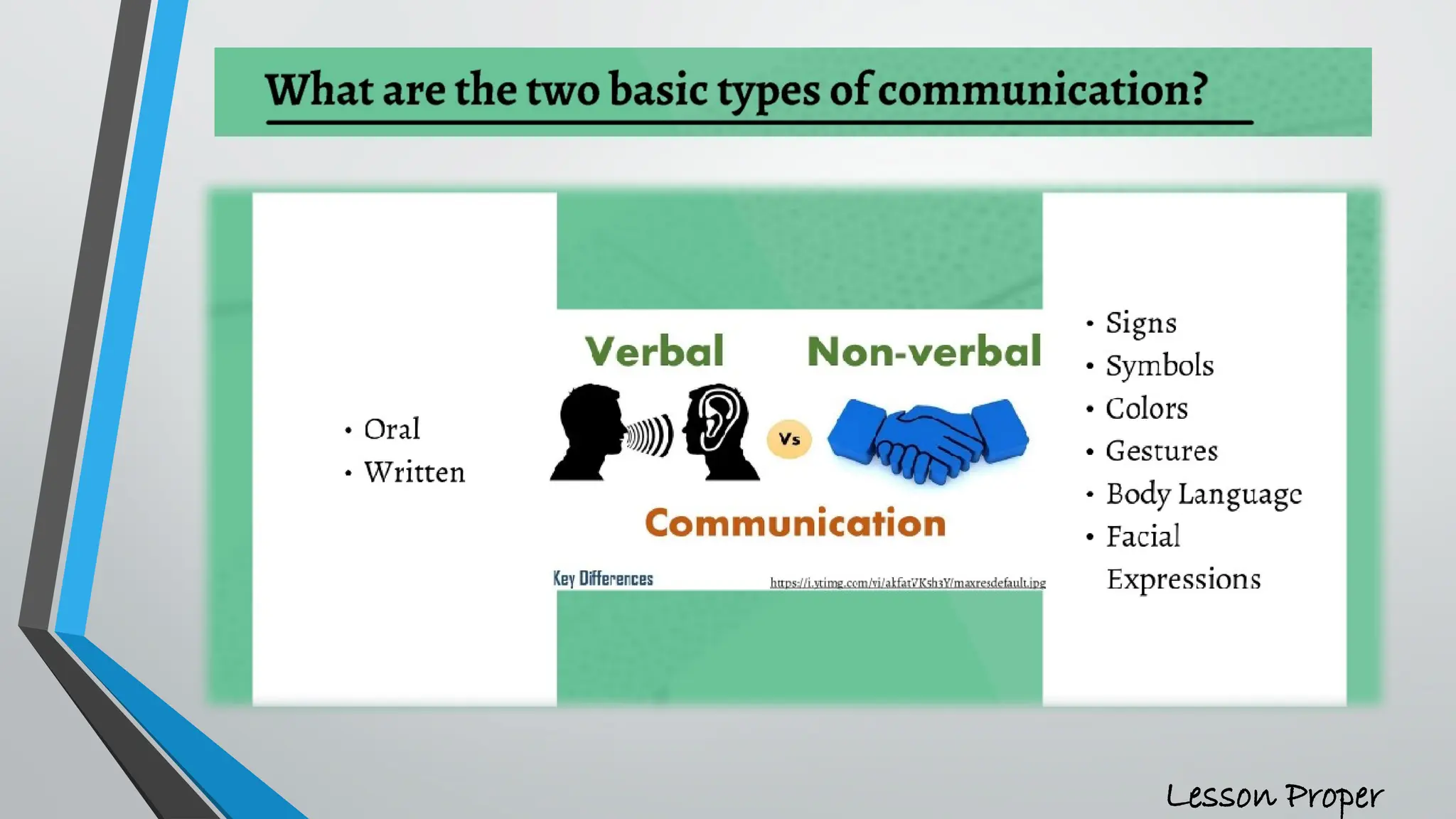
  • #10 Indirect verbal style- tend to hide or camouflage the speaker or writer's true intentions and use a more nuanced tone. A statement in an indirect style says one thing, but implies another meaning, often to avoid embarrassment or conflict. Direct Verbal style- make the author's intentions obvious—they say exactly what they mean—and generally use a tone of voice that is forthright. Phonology- the study of the patterns of sounds in a language and across languages. Non verbal emblems- gestures that have a specific meaning. Personal space - The distance a person creates and maintains between you is often an indication of their comfort level. Chronemics- the study of the use of time in nonverbal communication. Time perceptions include punctuality, willingness to wait, and interactions. The use of time can affect lifestyles, daily agendas, speed of speech, movements, and how long people are willing to listen. Monochromic System-things are done one at a time and time is segmented into precise, small units. polychromic System- several things can e done at once and schedules are flexible. Physical Appearance- the way we portray our selves in face to face communication. Or the first impressions we have on others.
  • #16 Gina empower ang knowledge and skills sang mga citizen to be more involve in using traditional media and new media. Ex. Traditional Newspaper Tv Radio Billboards
  • #18 Creating content: by posting to social media, making a youtube video and writing blog post.
  • #20 It shows relationship.