Feyzi Bagirov
28 Oct 2013
1
2
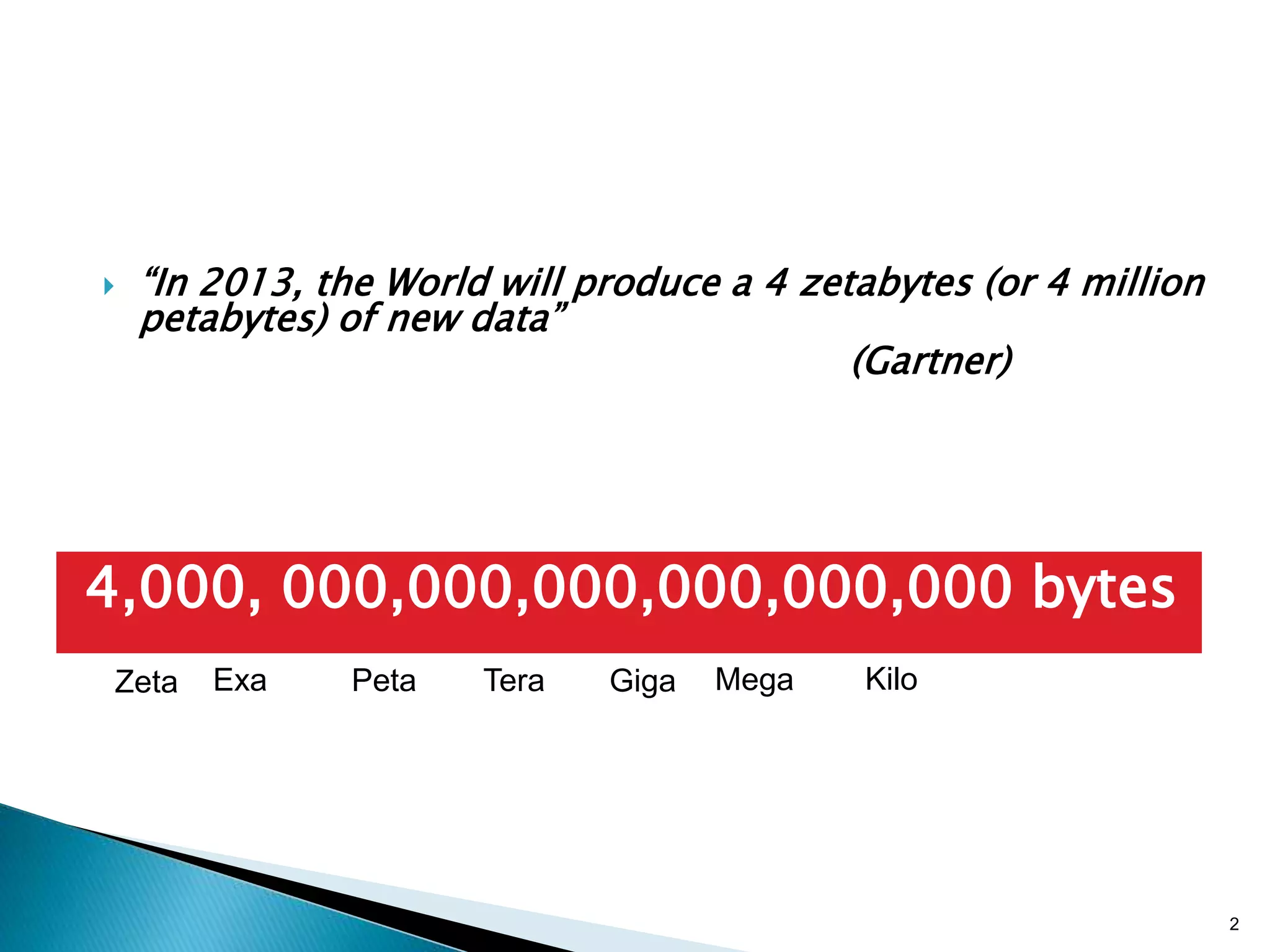
4,000, 000,000,000,000,000,000 bytes
}  “In 2013, the World will produce a 4 zetabytes (or 4 million
petabytes) of new data”
(Gartner)
Exa Tera Giga MegaPeta KiloZeta
3
}  Feyzi Bagirov
4
Your marketing job is about to
become obsolete.
5
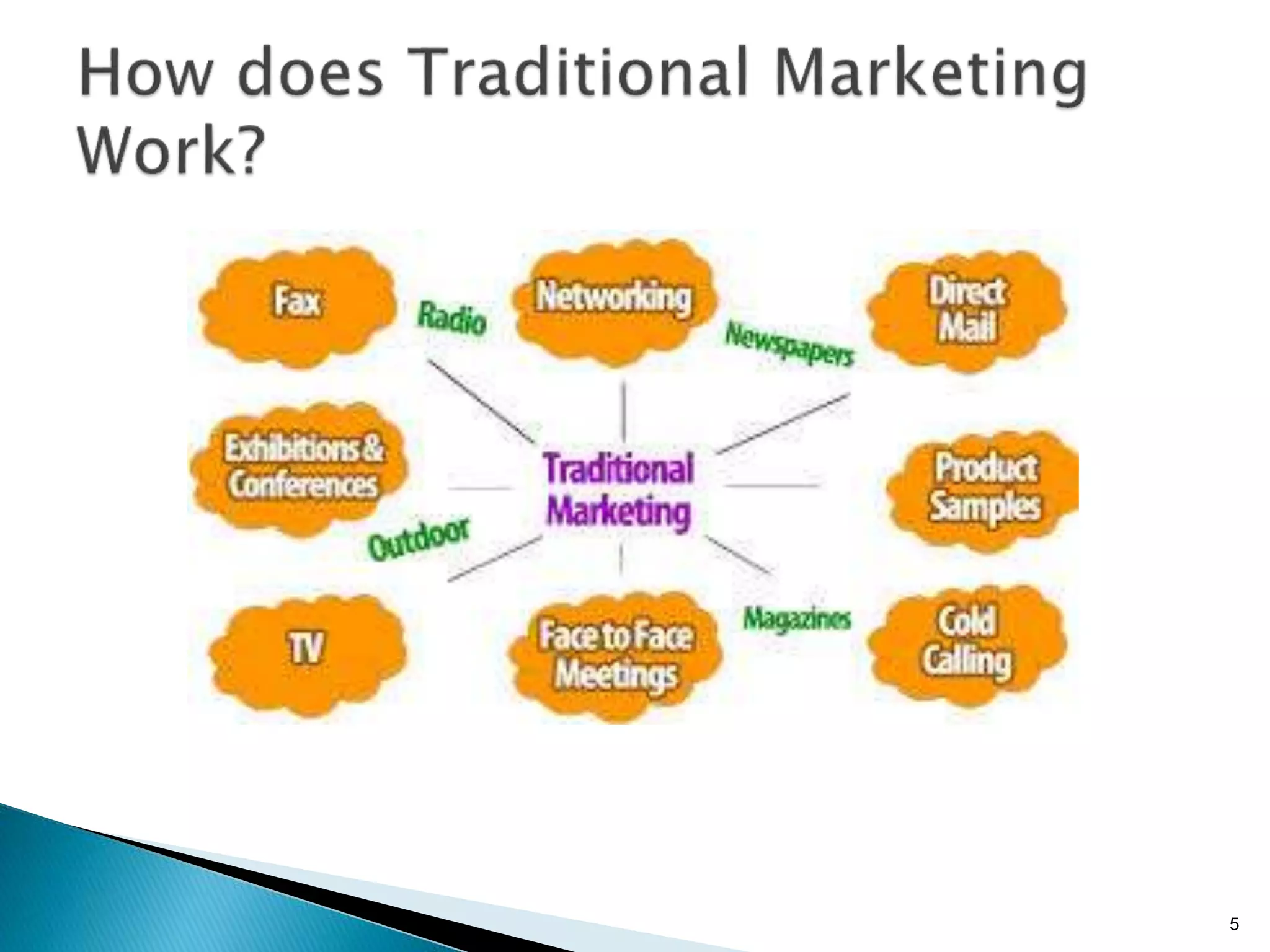
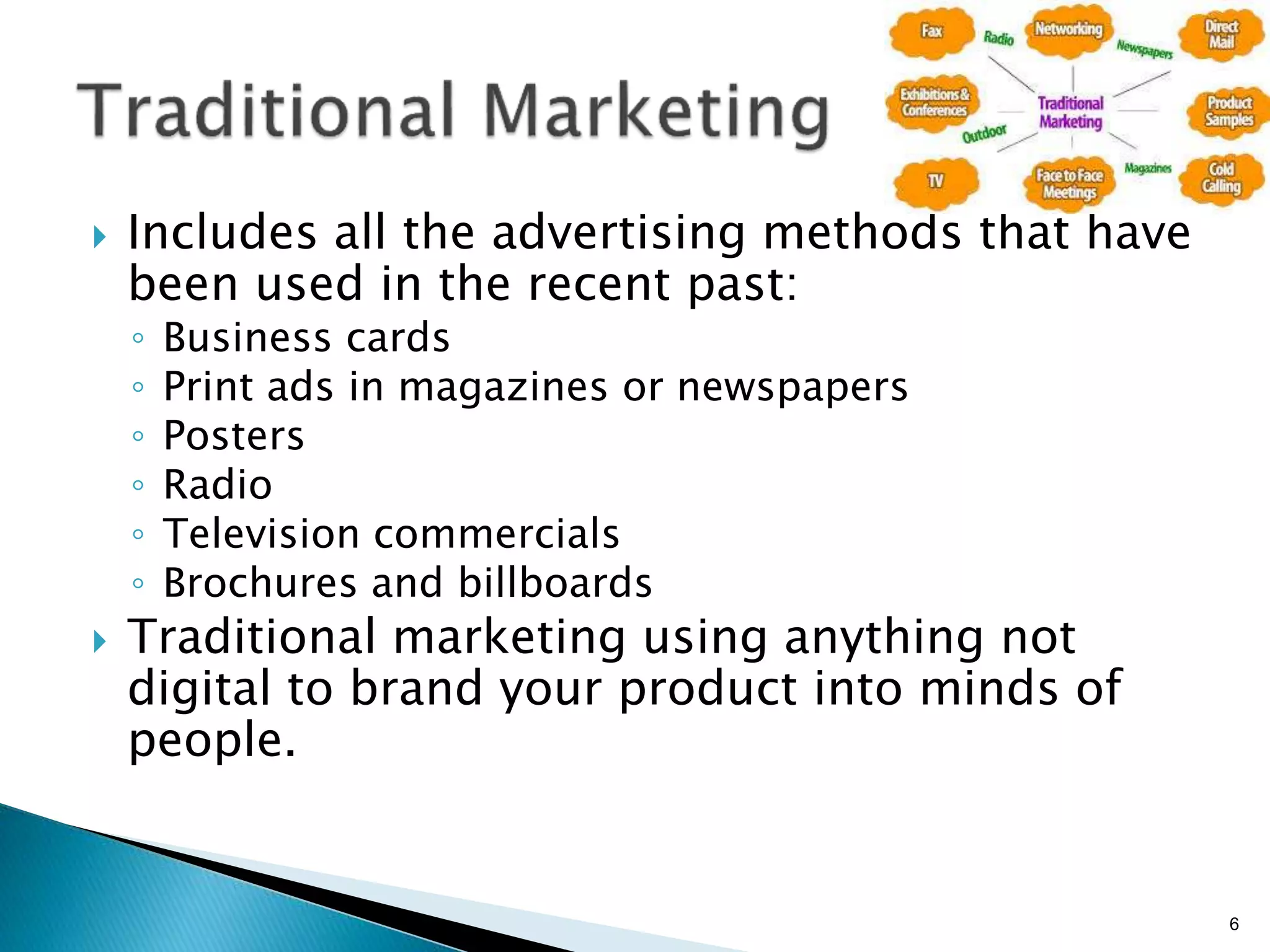
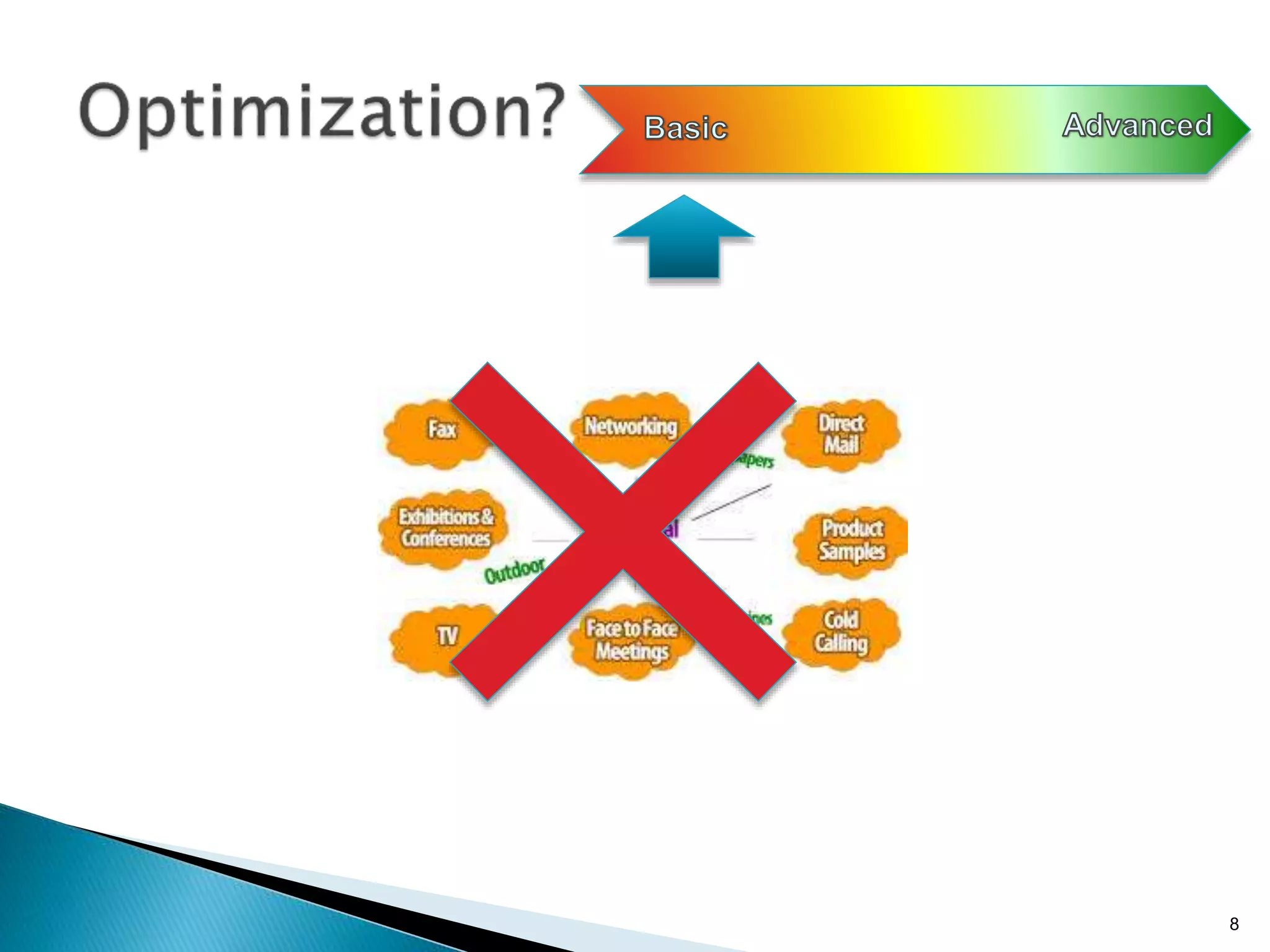
}  Includes all the advertising methods that have
been used in the recent past:
◦  Business cards
◦  Print ads in magazines or newspapers
◦  Posters
◦  Radio
◦  Television commercials
◦  Brochures and billboards
}  Traditional marketing using anything not
digital to brand your product into minds of
people.
6
7
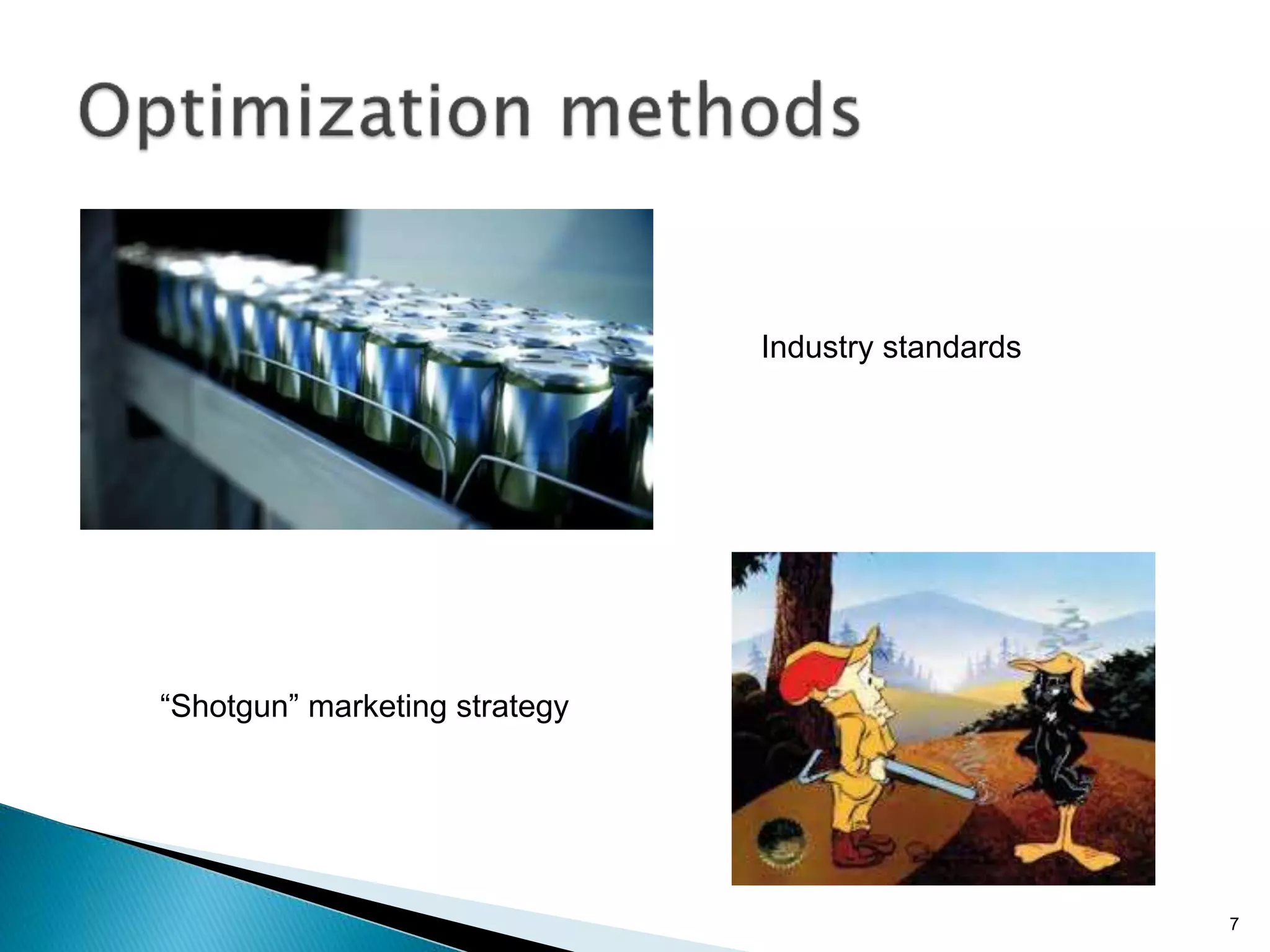
“Shotgun” marketing strategy
Industry standards
8
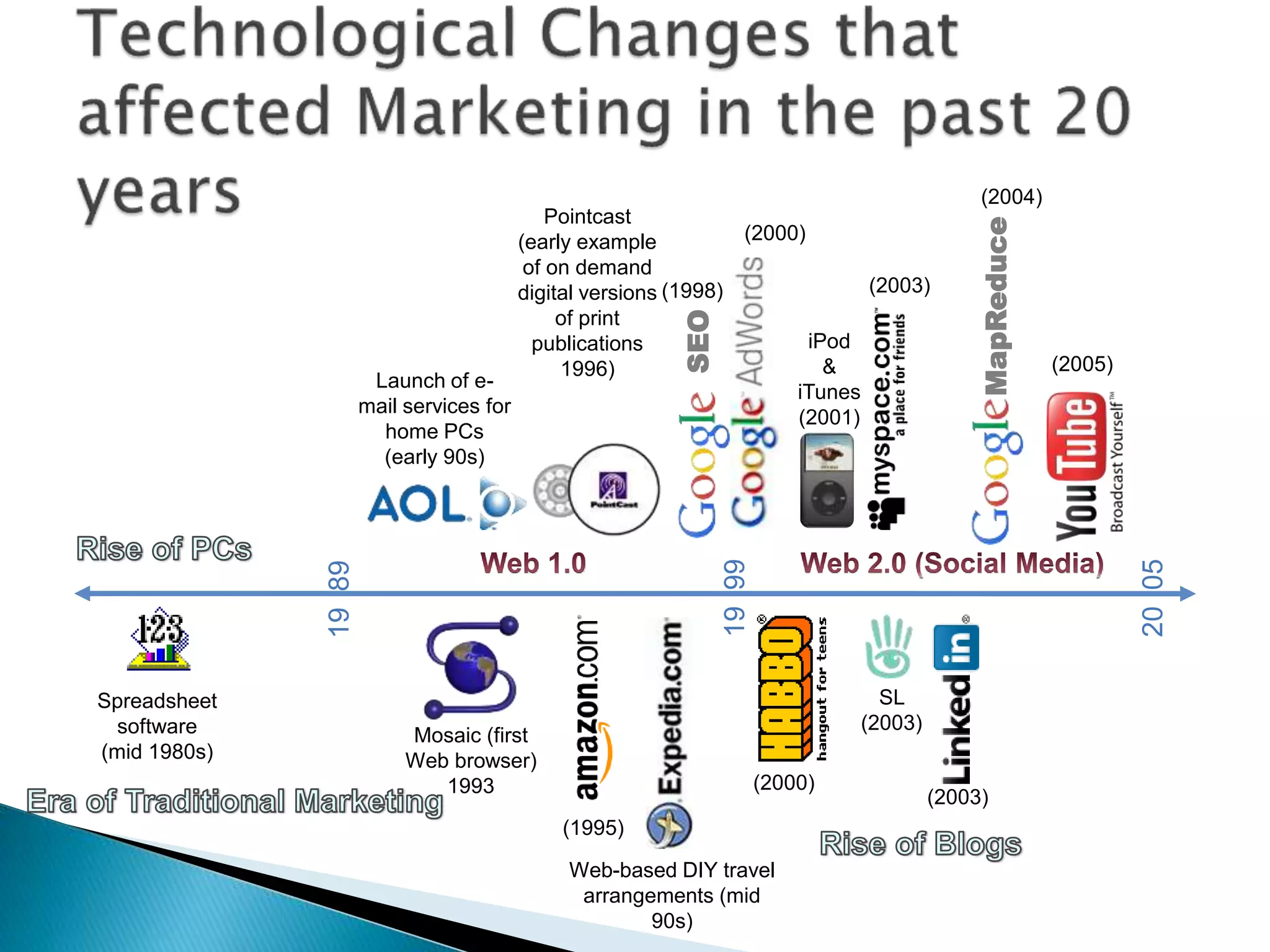
2005
1999
1989
Mosaic (first
Web browser)
1993
Launch of e-
mail services
for home PCs
(early 90s)
iPod
&
iTunes
(2001)
(2003)
(2005)
SL
(2003)
(2000)
(2003)
(1995)
(2000)
Pointcast
(early
example of on
demand
digital
versions of
print
publications
1996)
Web-based DIY travel
arrangements (mid
90s)
Spreadsheet
software
(mid 1980s)
(1998)
SEO
(2004)
MapReduce
10
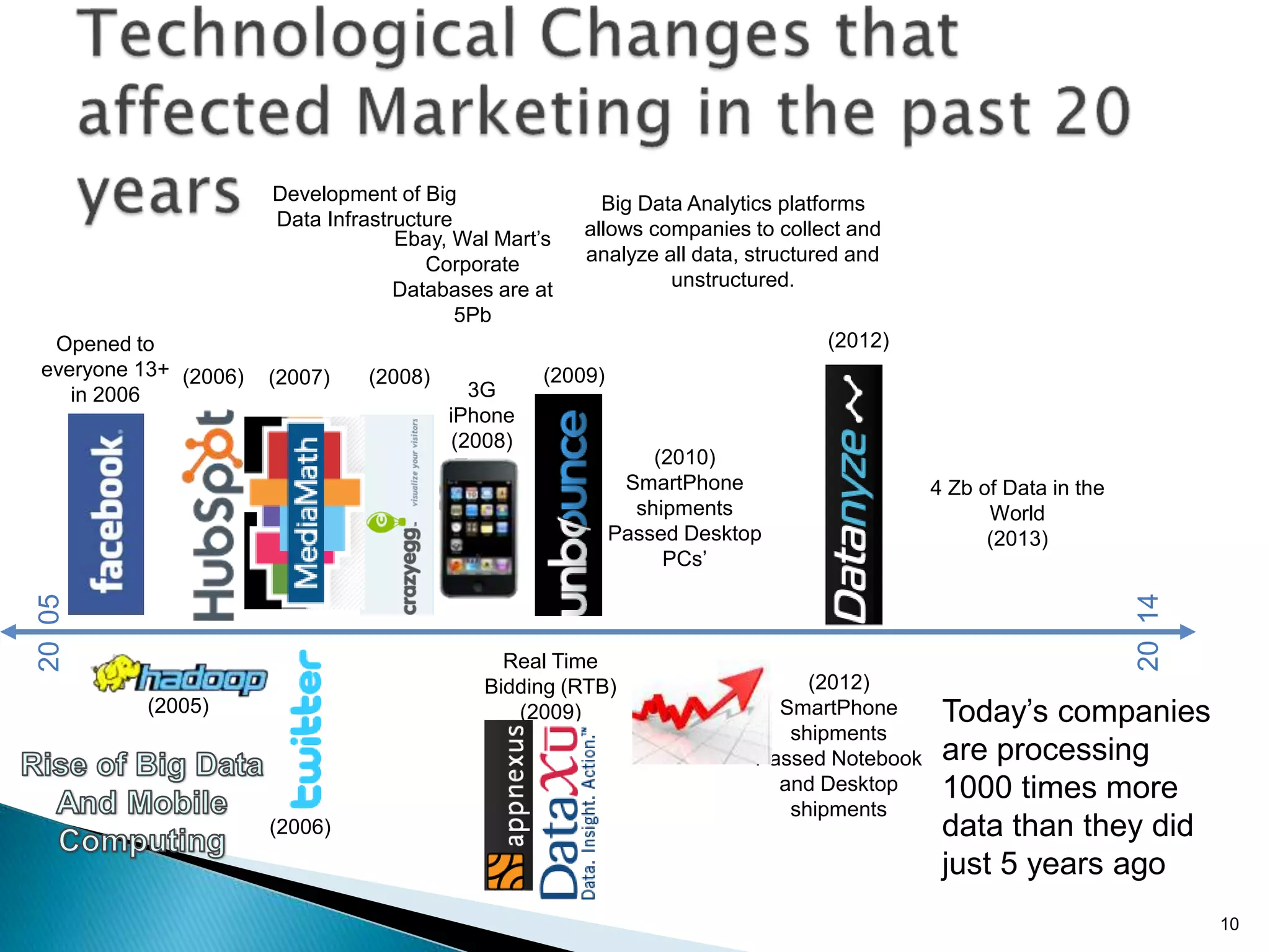
4 Zb of Data in the
World
(2013)
Development of Big
Data Infrastructure
Big Data Analytics platforms
allows companies to collect
and analyze all data,
structured and unstructured.
(2006) (2008)
Real Time
Bidding (RTB)
(2009)(2005)
(2012)
(2007) (2009)
2014
2005
(2010)
SmartPhone
shipments
Passed Desktop
PCs’
(2012)
SmartPhone
shipments
Passed
Notebook and
Desktop
shipments
Ebay, Wal Mart’s
Corporate
Databases are at
5Pb
Today’s companies
are processing
1000 times more
data than they did
just 5 years ago
(2006)
3G
iPhone
(2008)
Opened to
everyone
13+ in 2006
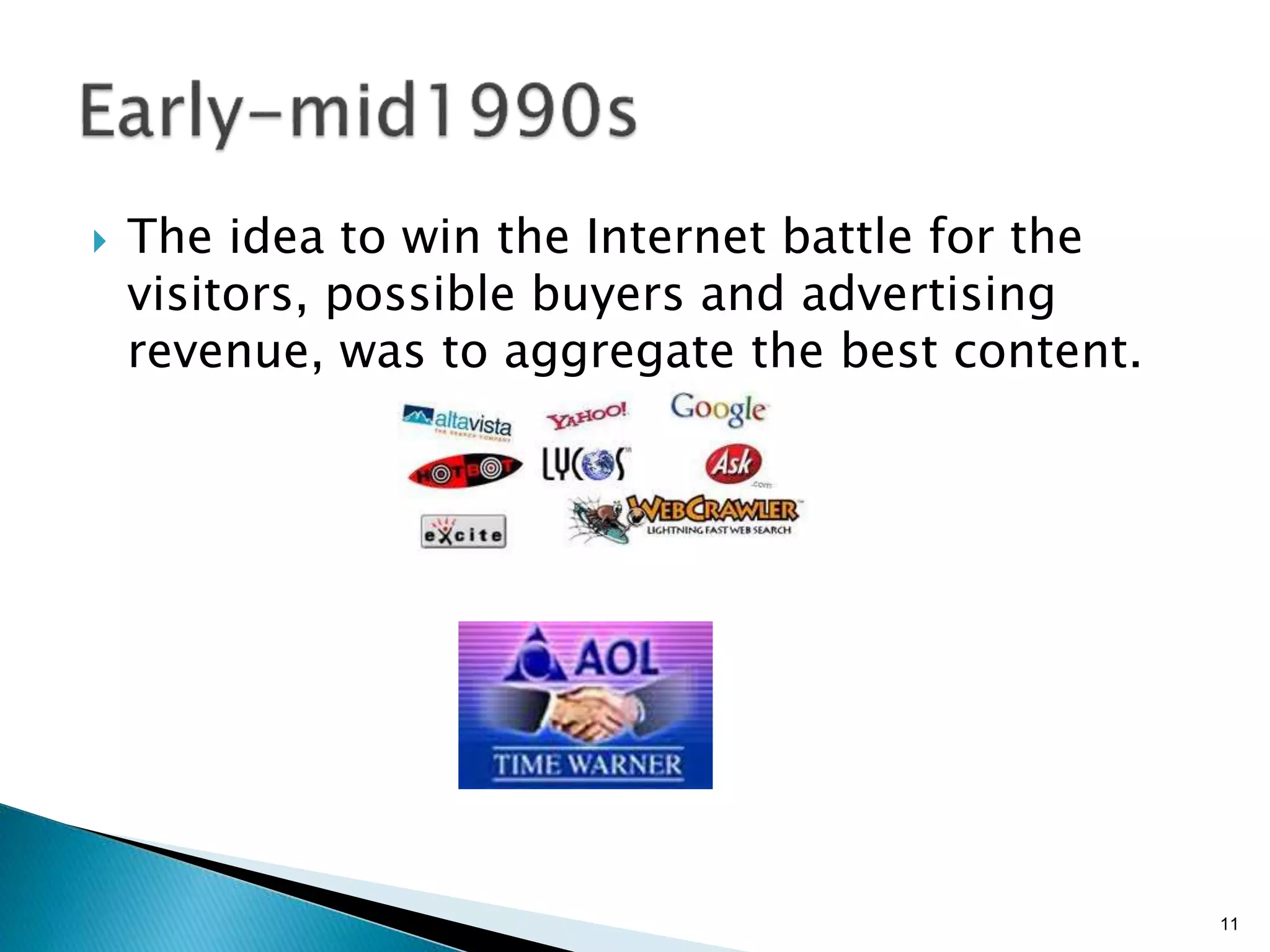
}  The idea to win the Internet battle for the
visitors, possible buyers and advertising
revenue, was to aggregate the best content.
11
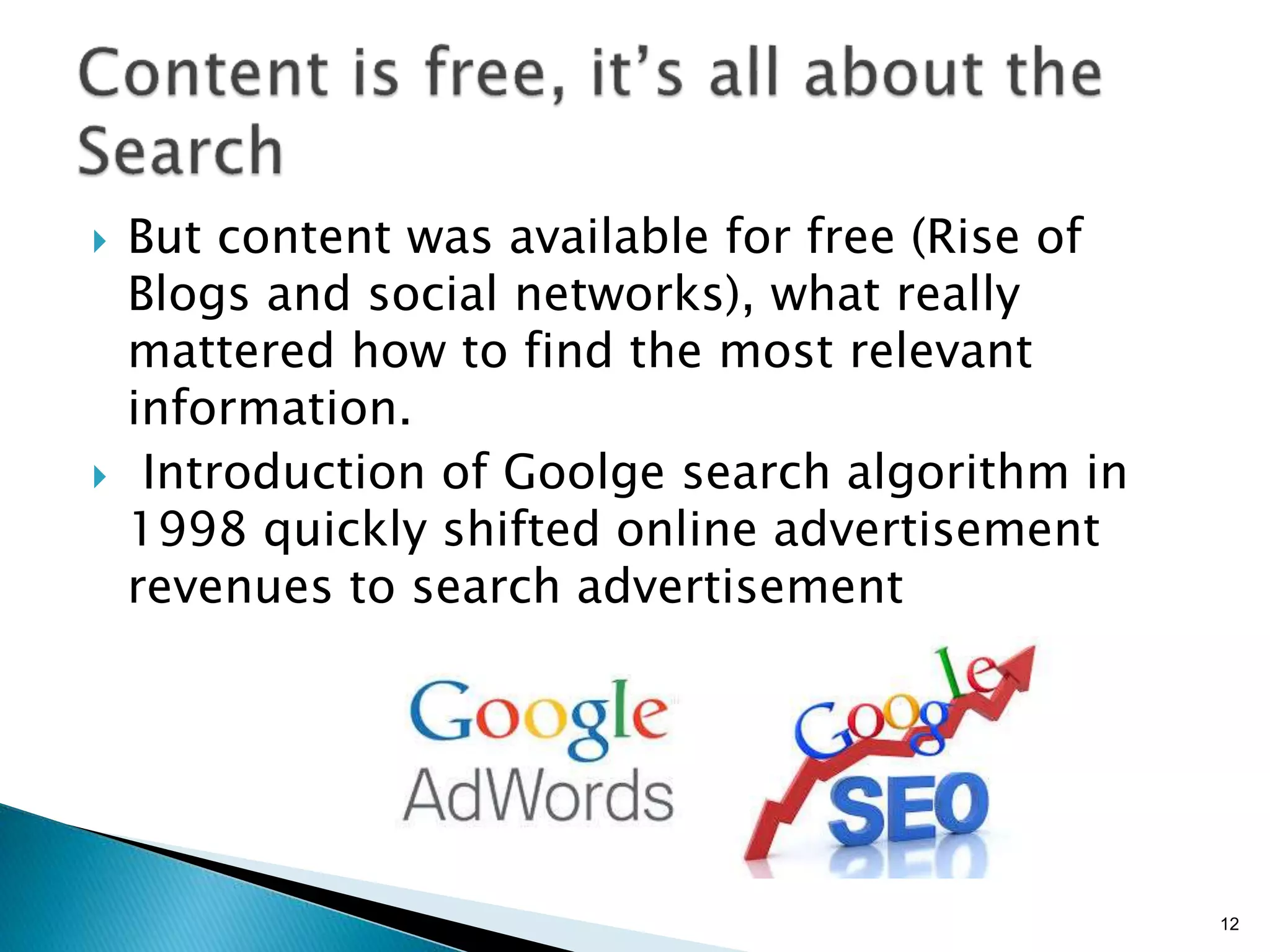
}  But content was available for free (Rise of
Blogs and social networks), what really
mattered how to find the most relevant
information.
}  Introduction of Goolge search algorithm in
1998 quickly shifted online advertisement
revenues to search advertisement
12
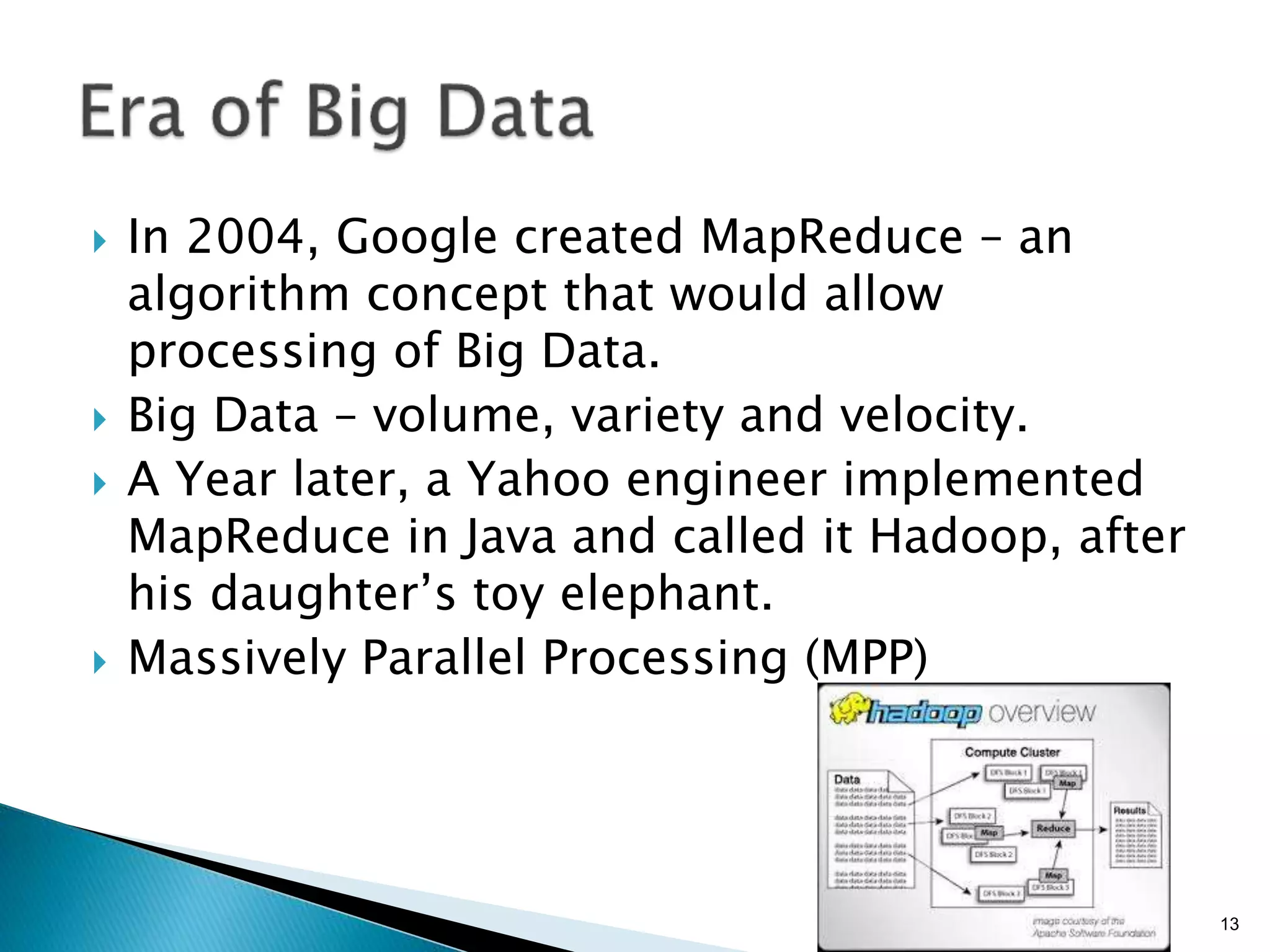
}  In 2004, Google created MapReduce – an
algorithm concept that would allow
processing of Big Data.
}  Big Data – volume, variety and velocity.
}  A Year later, a Yahoo engineer implemented
MapReduce in Java and called it Hadoop, after
his daughter’s toy elephant.
}  Massively Parallel Processing (MPP)
13
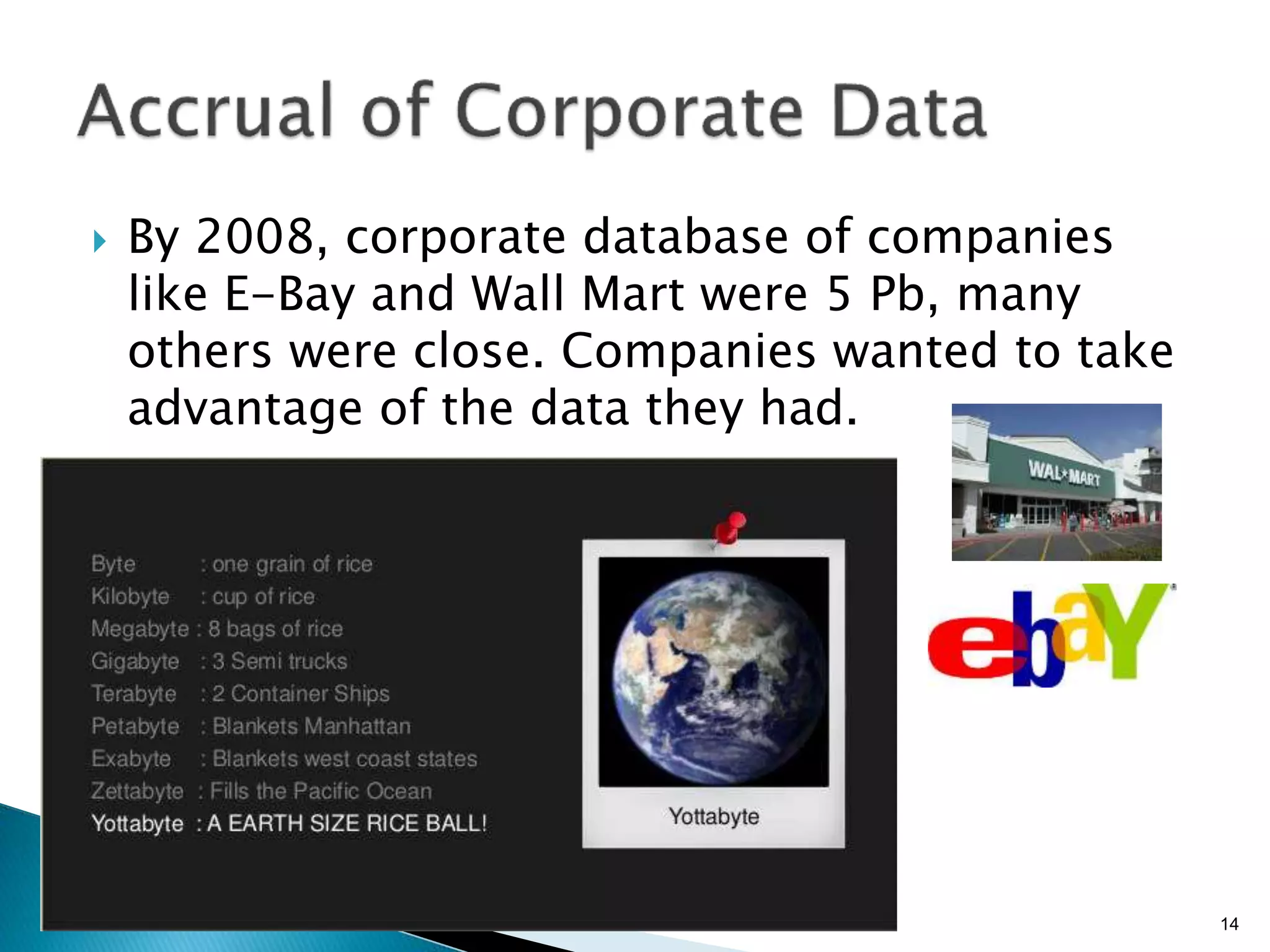
}  By 2008, corporate database of companies
like E-Bay and Wall Mart were 5 Pb, many
others were close. Companies wanted to take
advantage of the data they had.
14
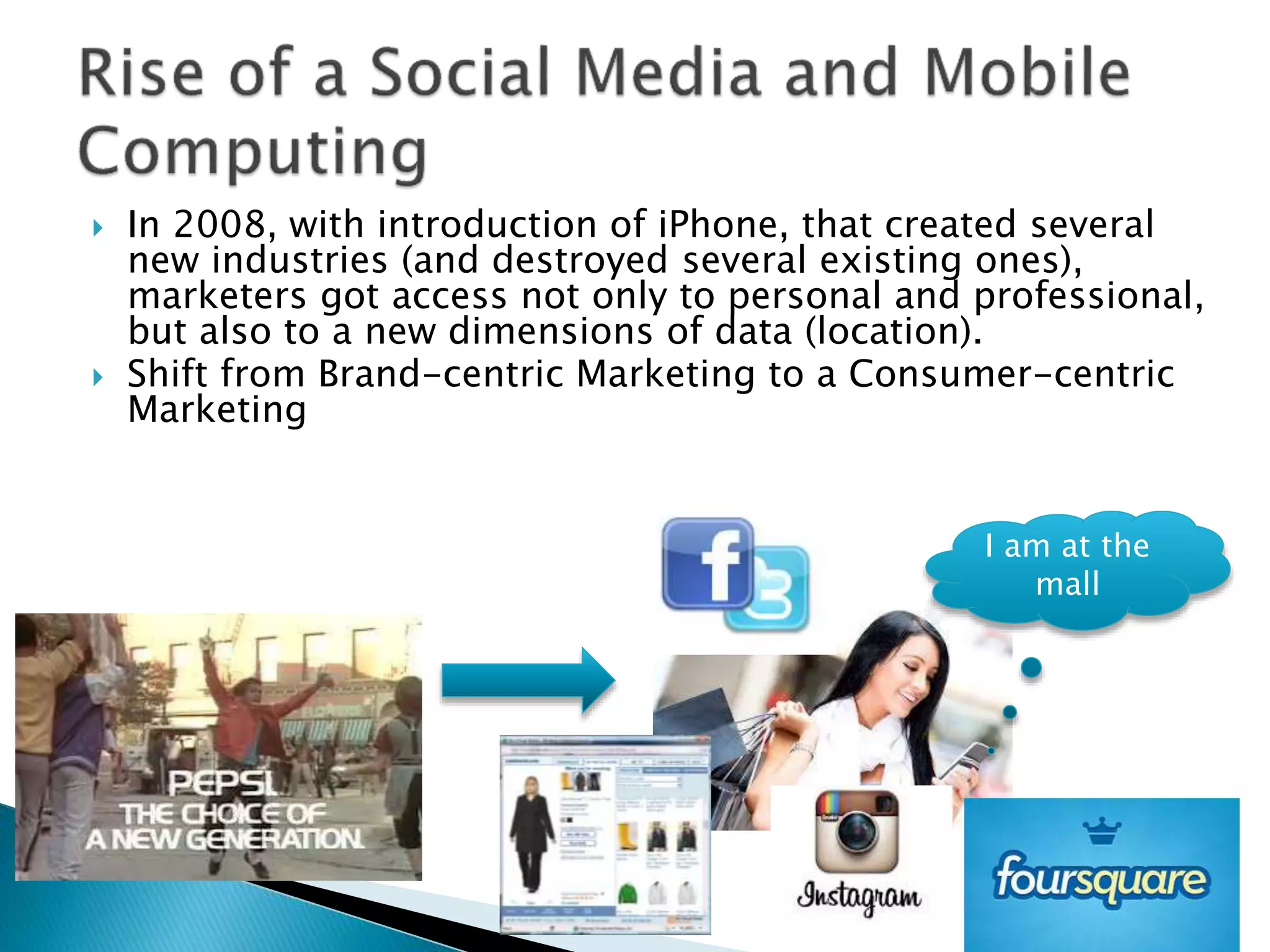
}  In 2008, with introduction of iPhone, that created several
new industries (and destroyed several existing ones),
marketers got access not only to personal and professional,
but also to a new dimensions of data (location). 
}  Shift from Brand-centric Marketing to a Consumer-centric
Marketing
15
I am at the
mall
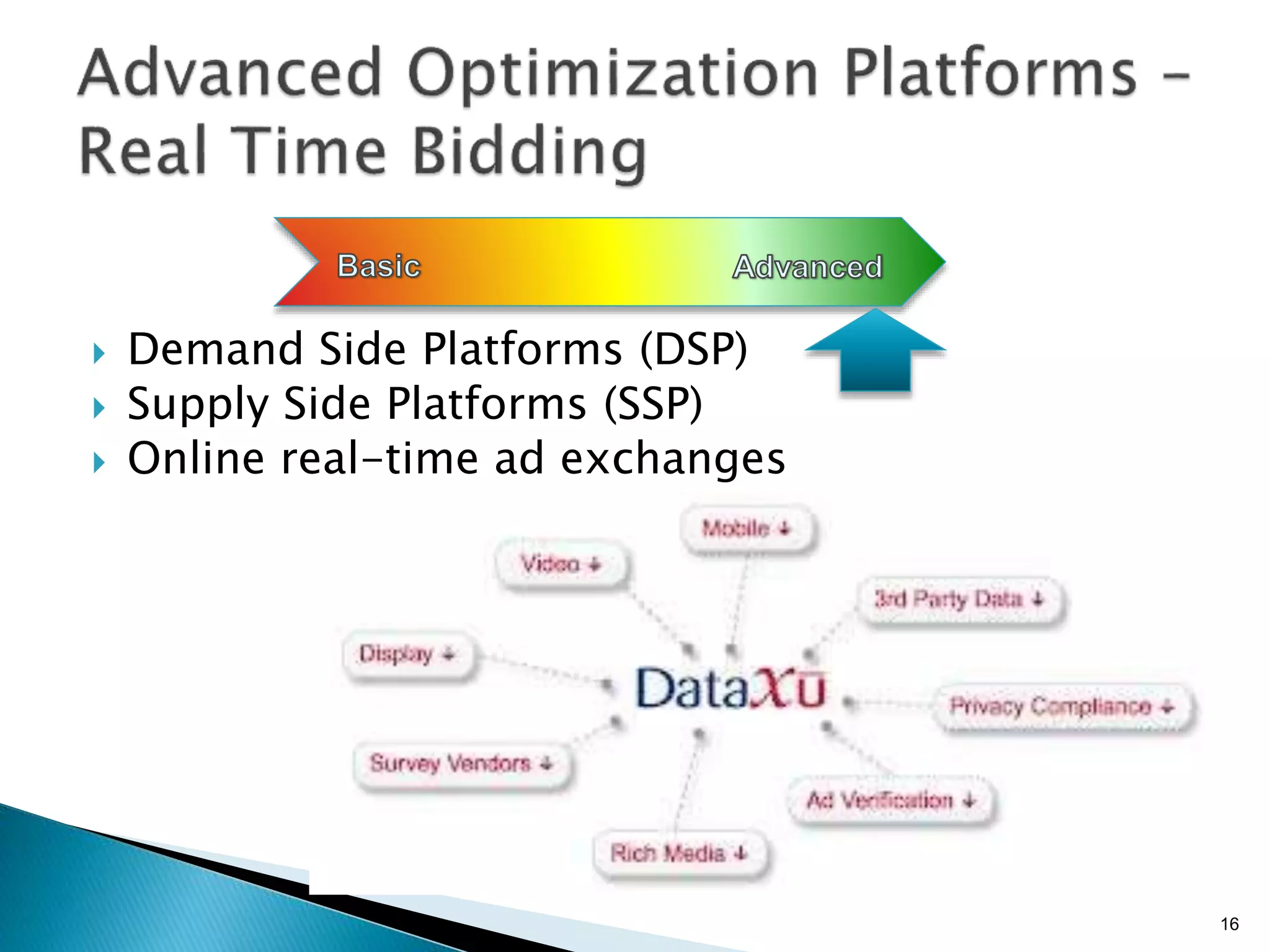
}  Demand Side Platforms (DSP)
}  Supply Side Platforms (SSP)
}  Online real-time ad exchanges
16
17
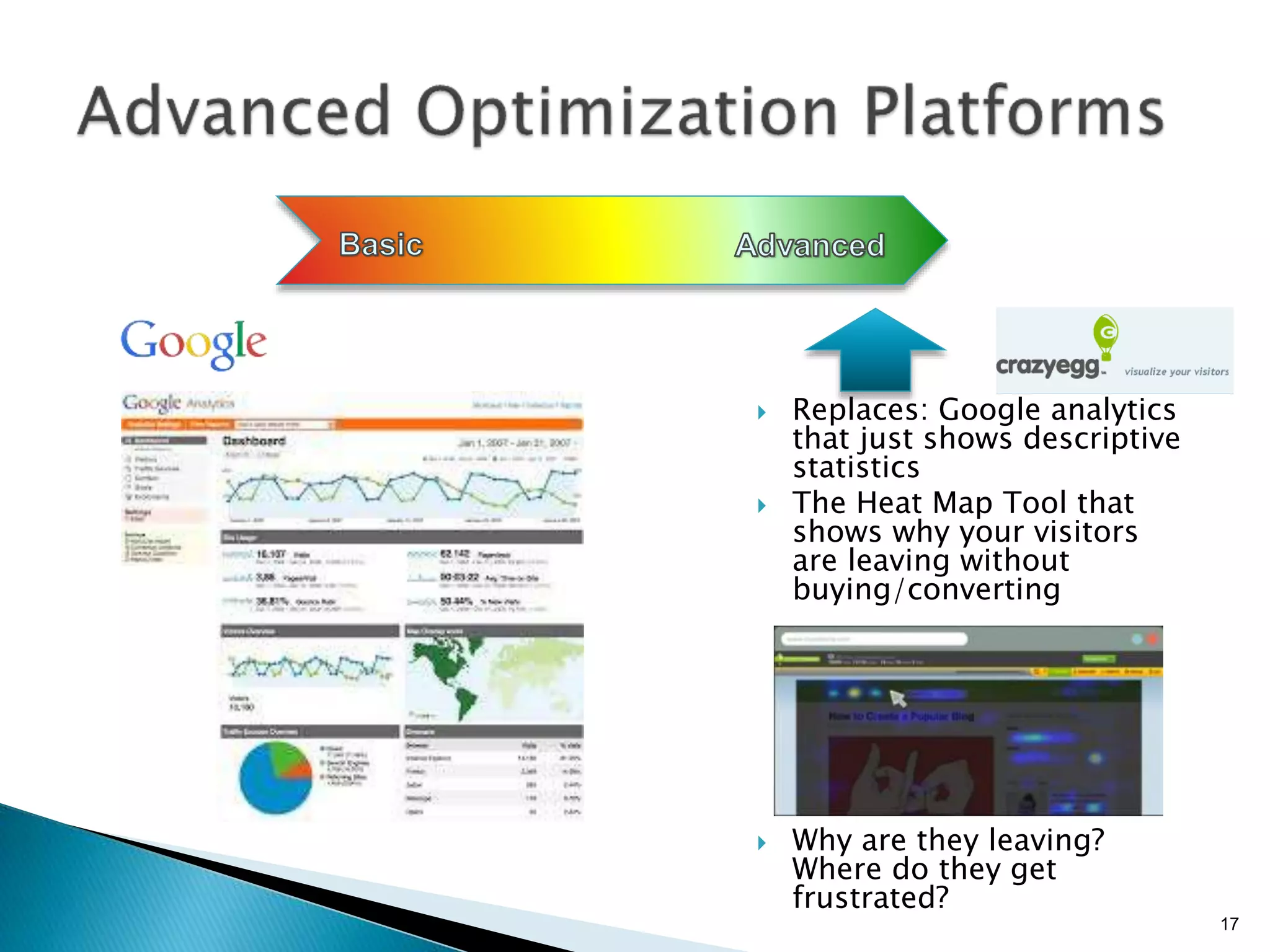
}  Replaces: Google analytics
that just shows descriptive
statistics
}  The Heat Map Tool that
shows why your visitors
are leaving without
buying/converting
}  Why are they leaving?
Where do they get
frustrated?
18
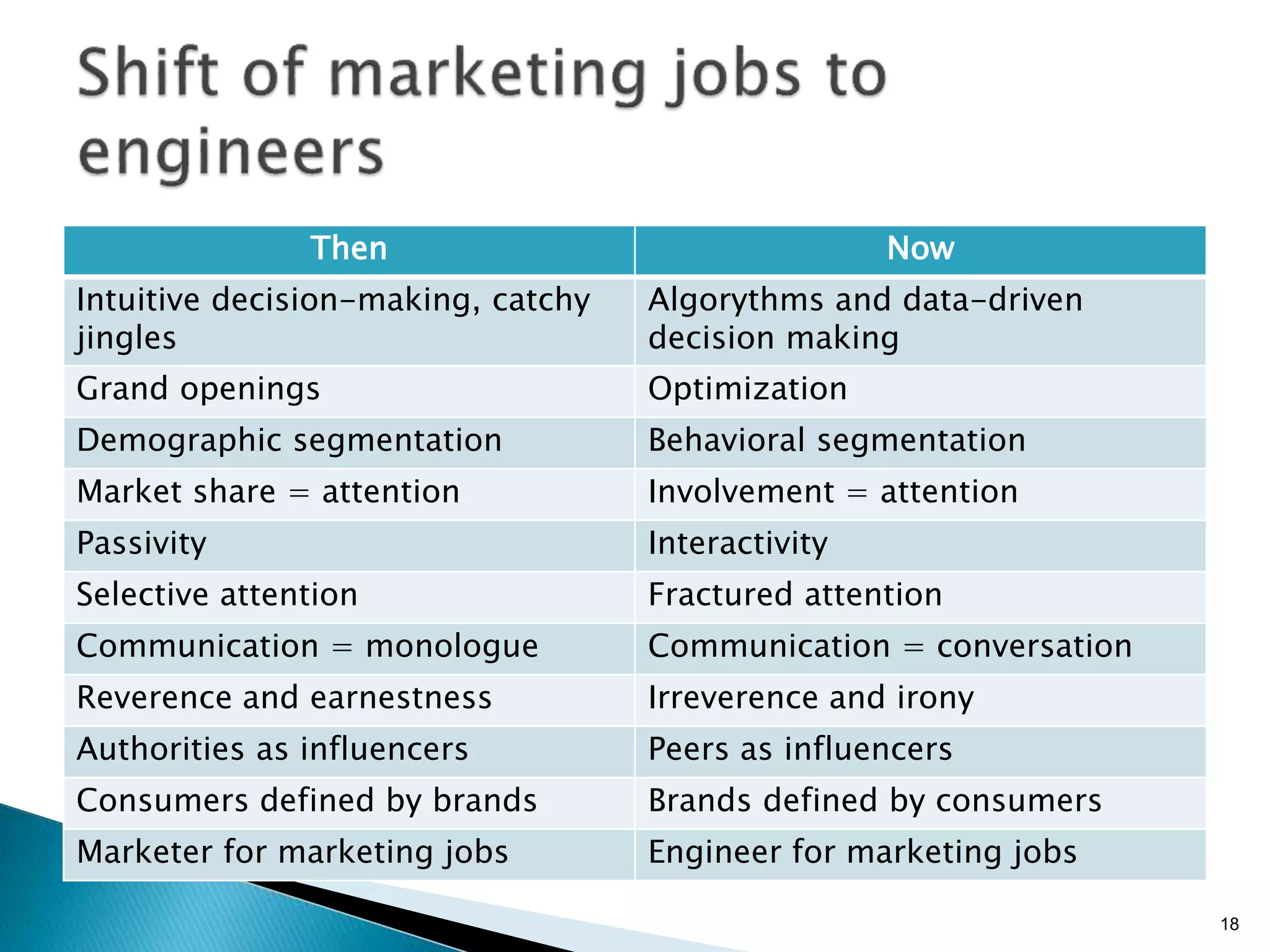
Then Now
Intuitive decision-making, catchy
jingles
Algorythms and data-driven
decision making
Grand openings Optimization
Demographic segmentation Behavioral segmentation
Market share = attention Involvement = attention
Passivity Interactivity
Selective attention Fractured attention
Communication = monologue Communication = conversation
Reverence and earnestness Irreverence and irony
Authorities as influencers Peers as influencers
Consumers defined by brands Brands defined by consumers
Marketer for marketing jobs Engineer for marketing jobs
}  Today's companies are processing 1000
times more data than they did  just 5 years
ago. 
19
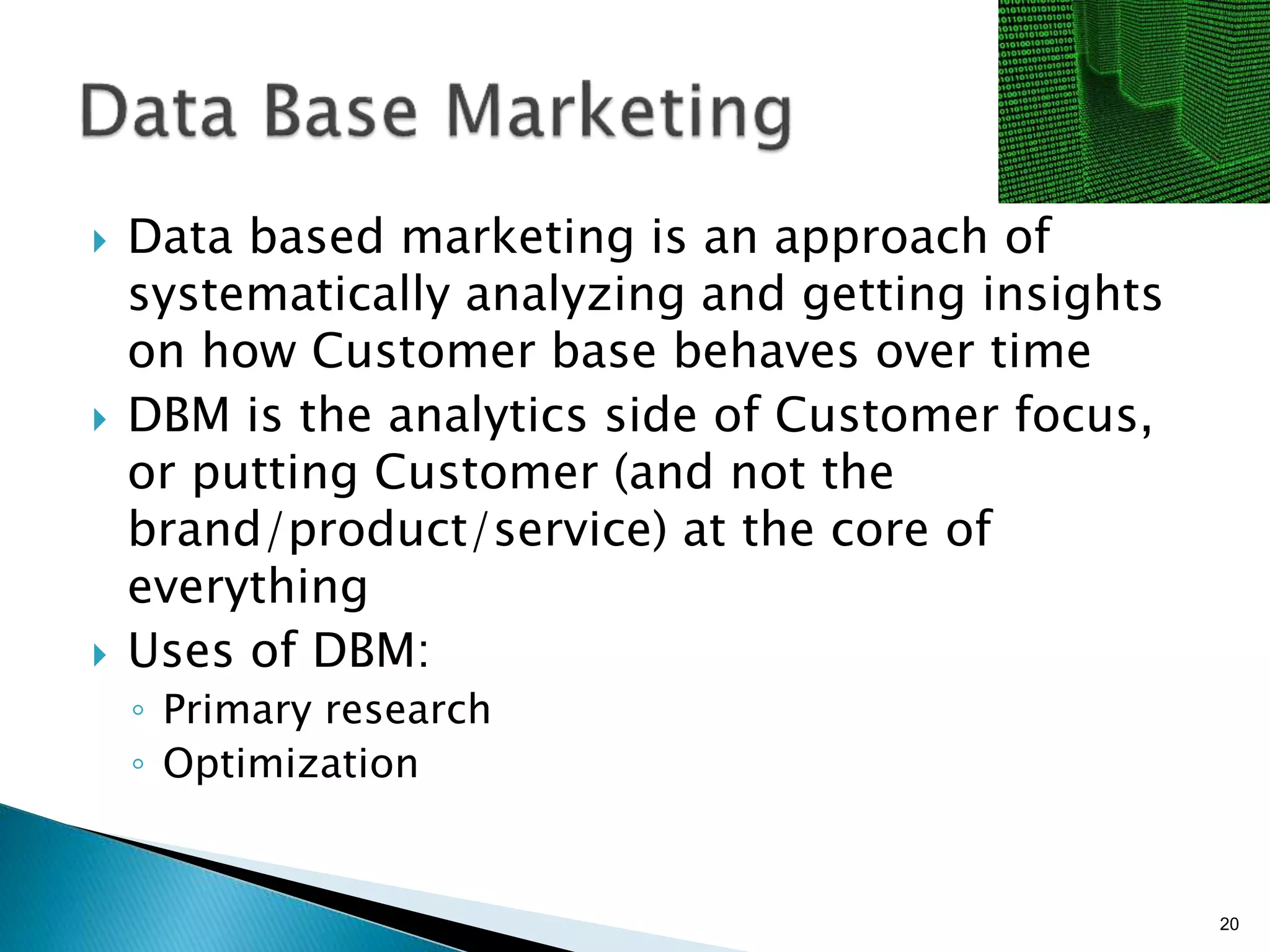
}  Data based marketing is an approach of
systematically analyzing and getting insights
on how Customer base behaves over time
}  DBM is the analytics side of Customer focus,
or putting Customer (and not the brand/
product/service) at the core of everything
}  Uses of DBM:
◦  Primary research
◦  Optimization
20
21
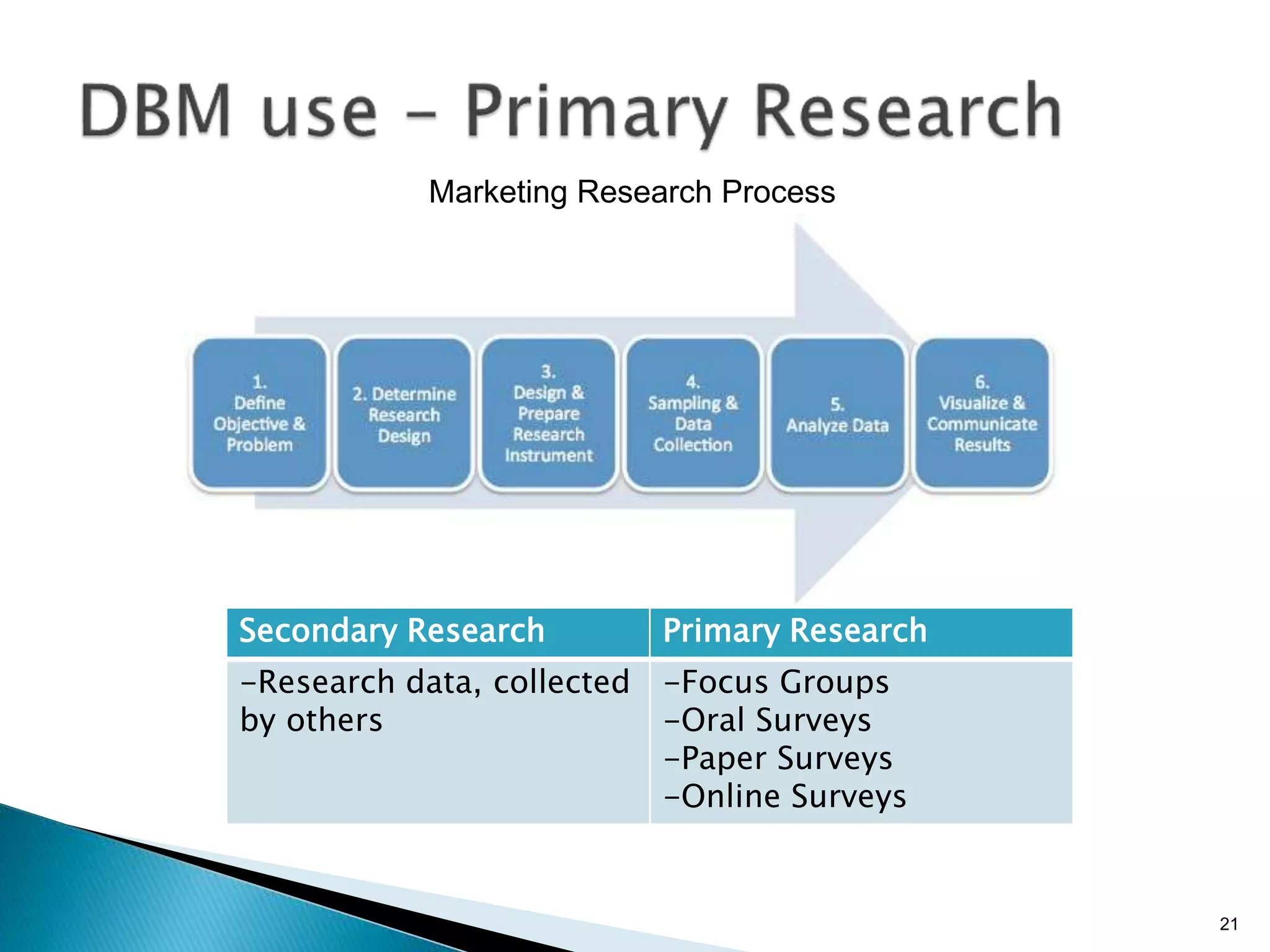
Marketing Research Process
Secondary Research Primary Research
-Research data, collected
by others
-Focus Groups
-Oral Surveys
-Paper Surveys
-Online Surveys
22
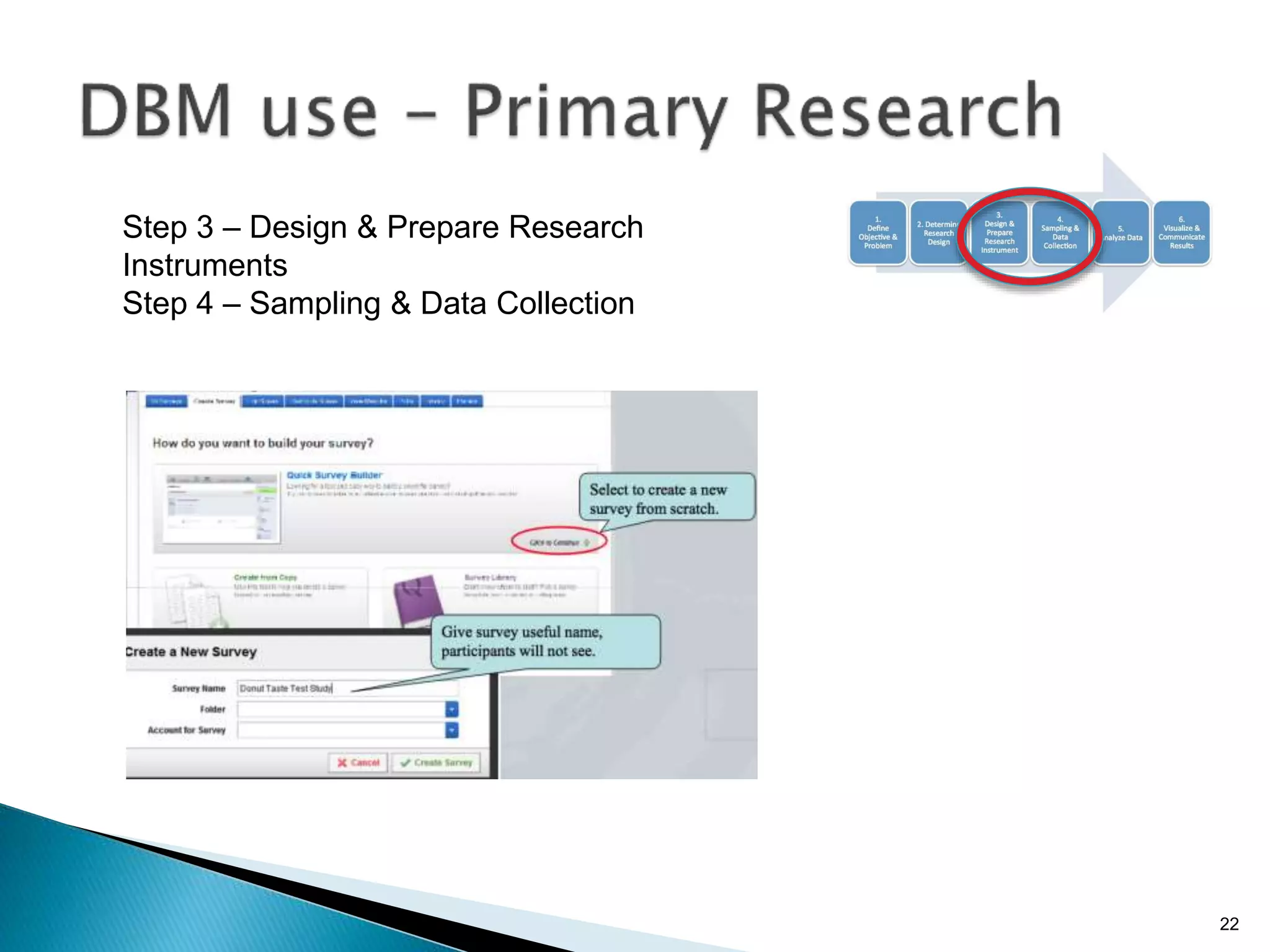
Step 3 – Design & Prepare Research
Instruments
Step 4 – Sampling & Data Collection
23
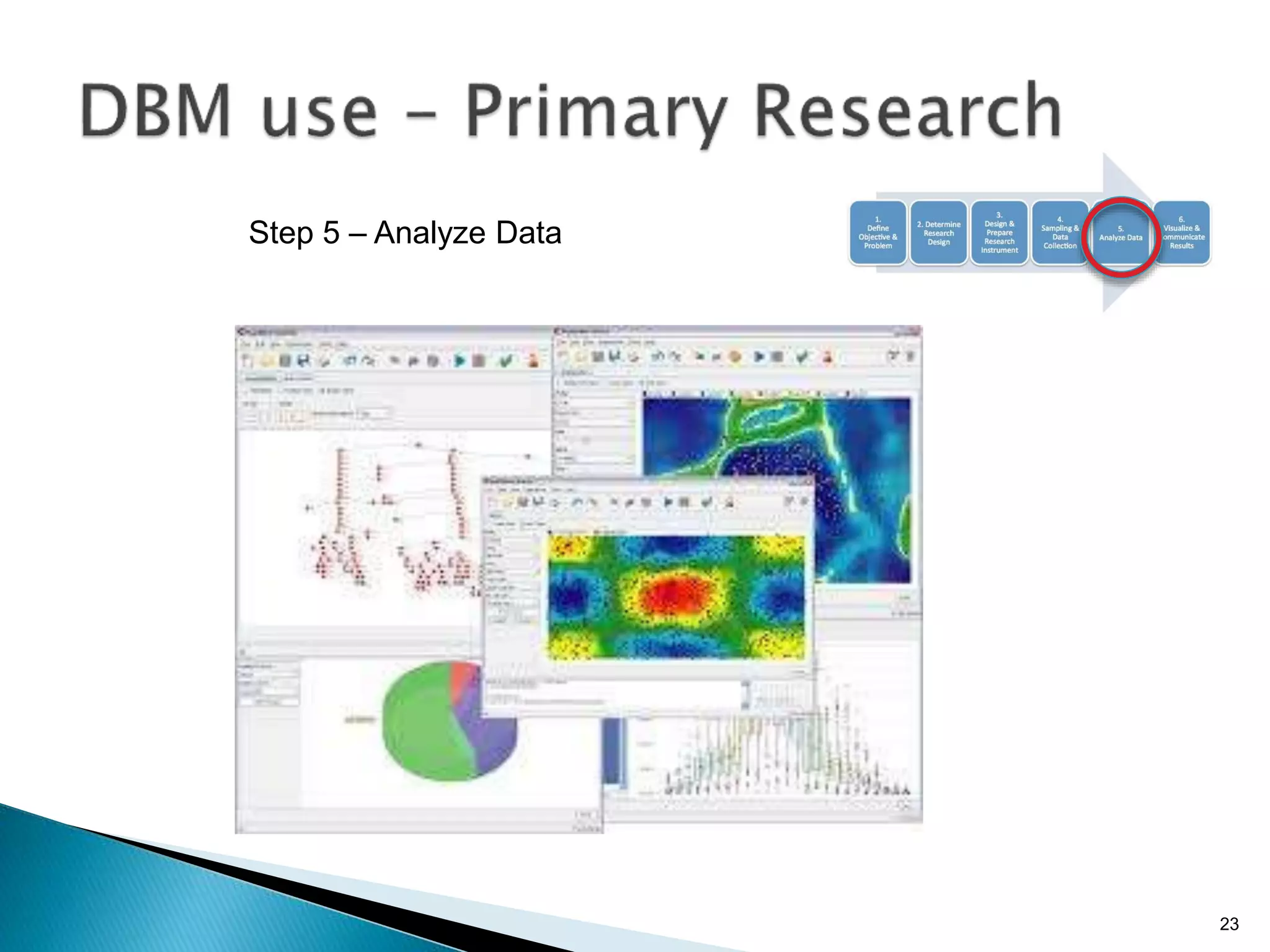
Step 5 – Analyze Data
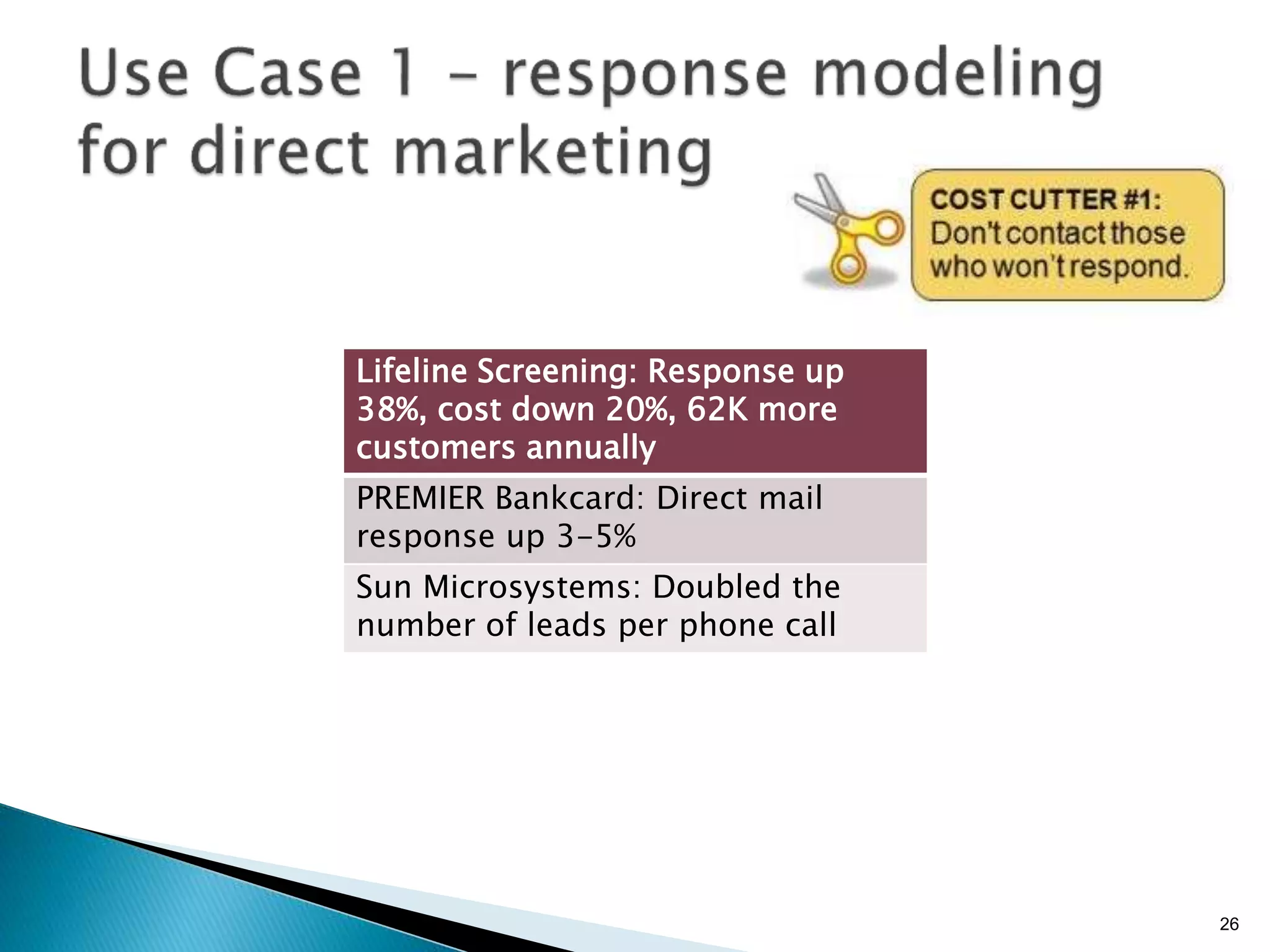
◦  Response modeling for direct customers
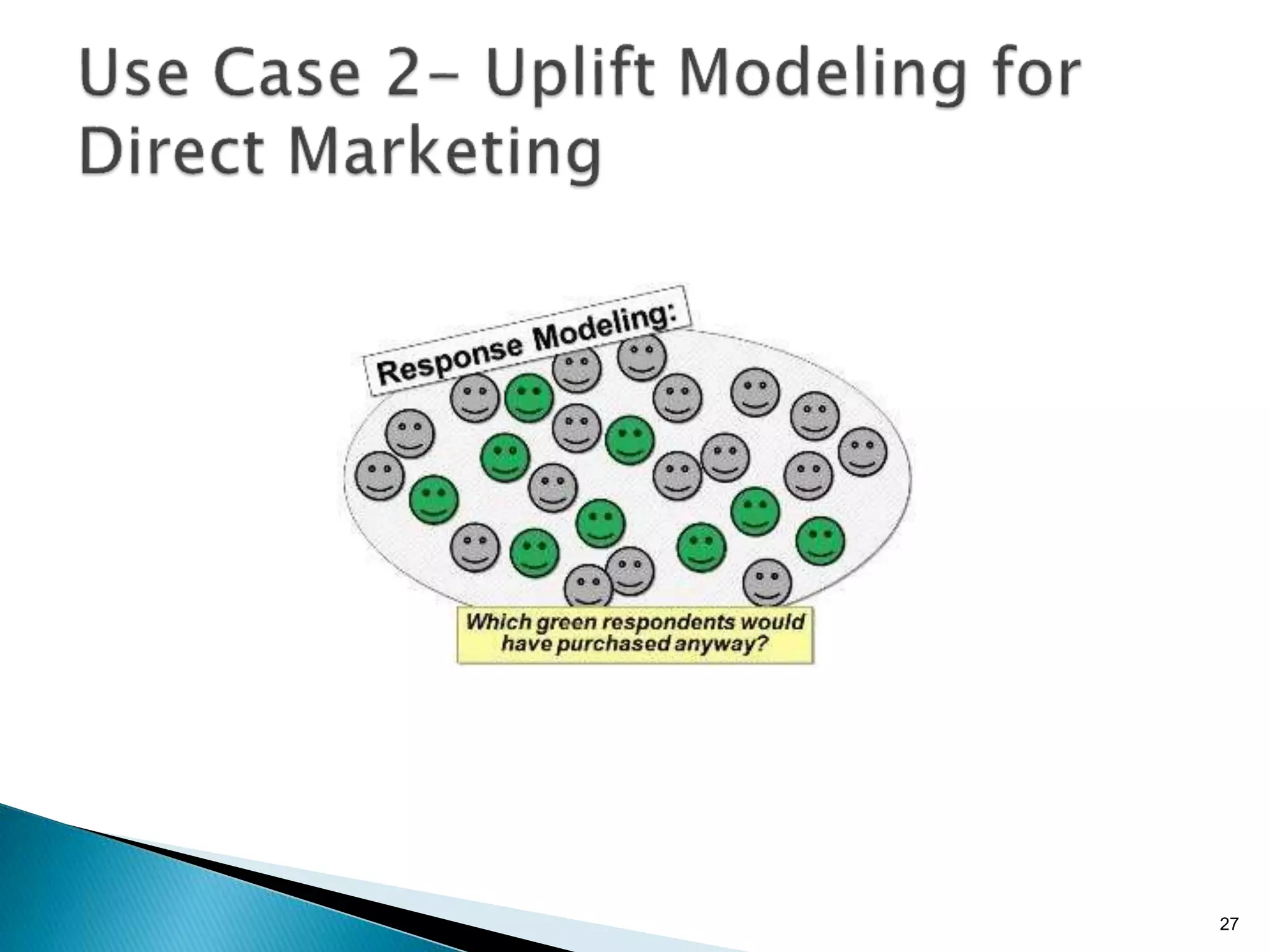
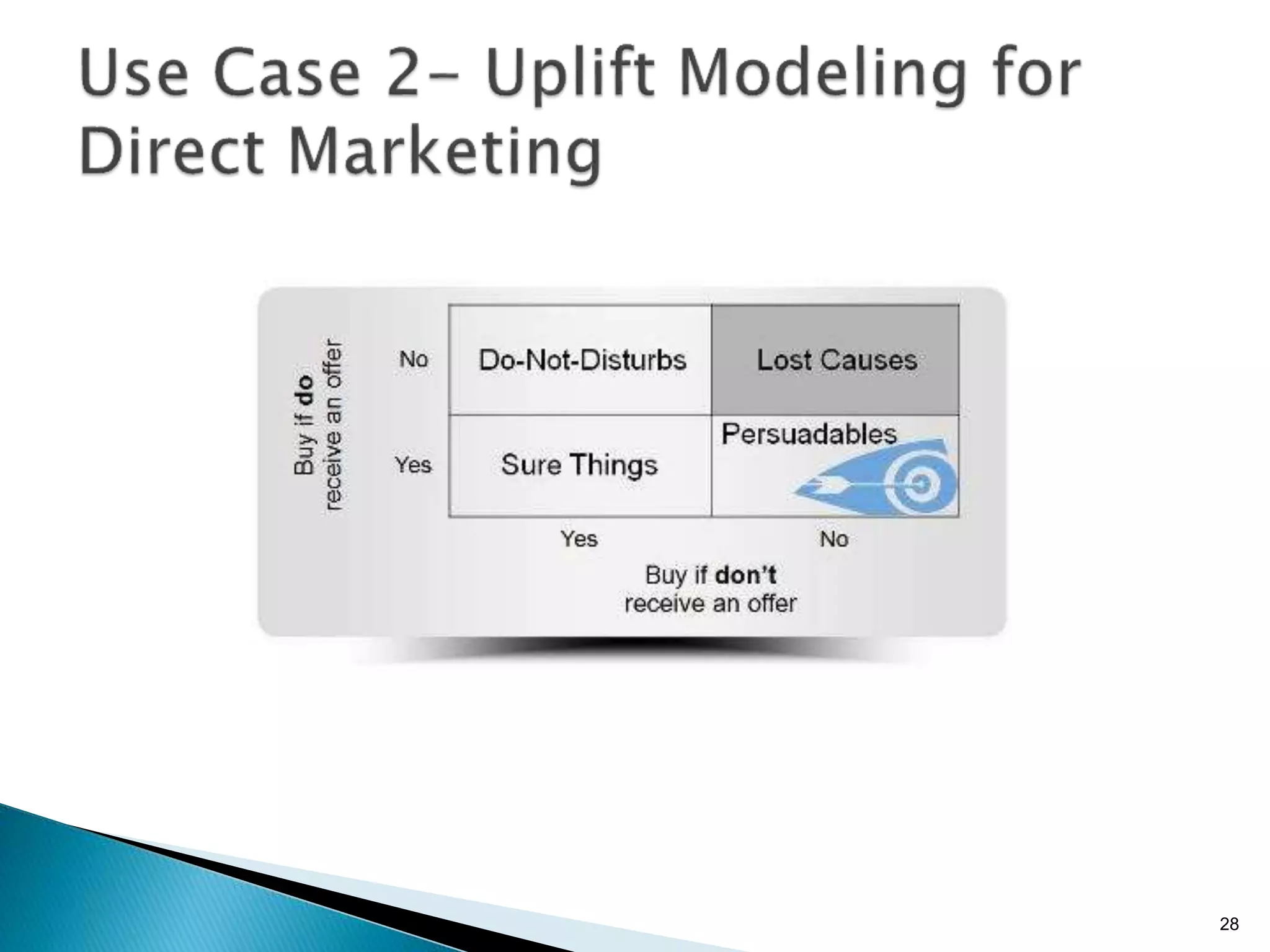
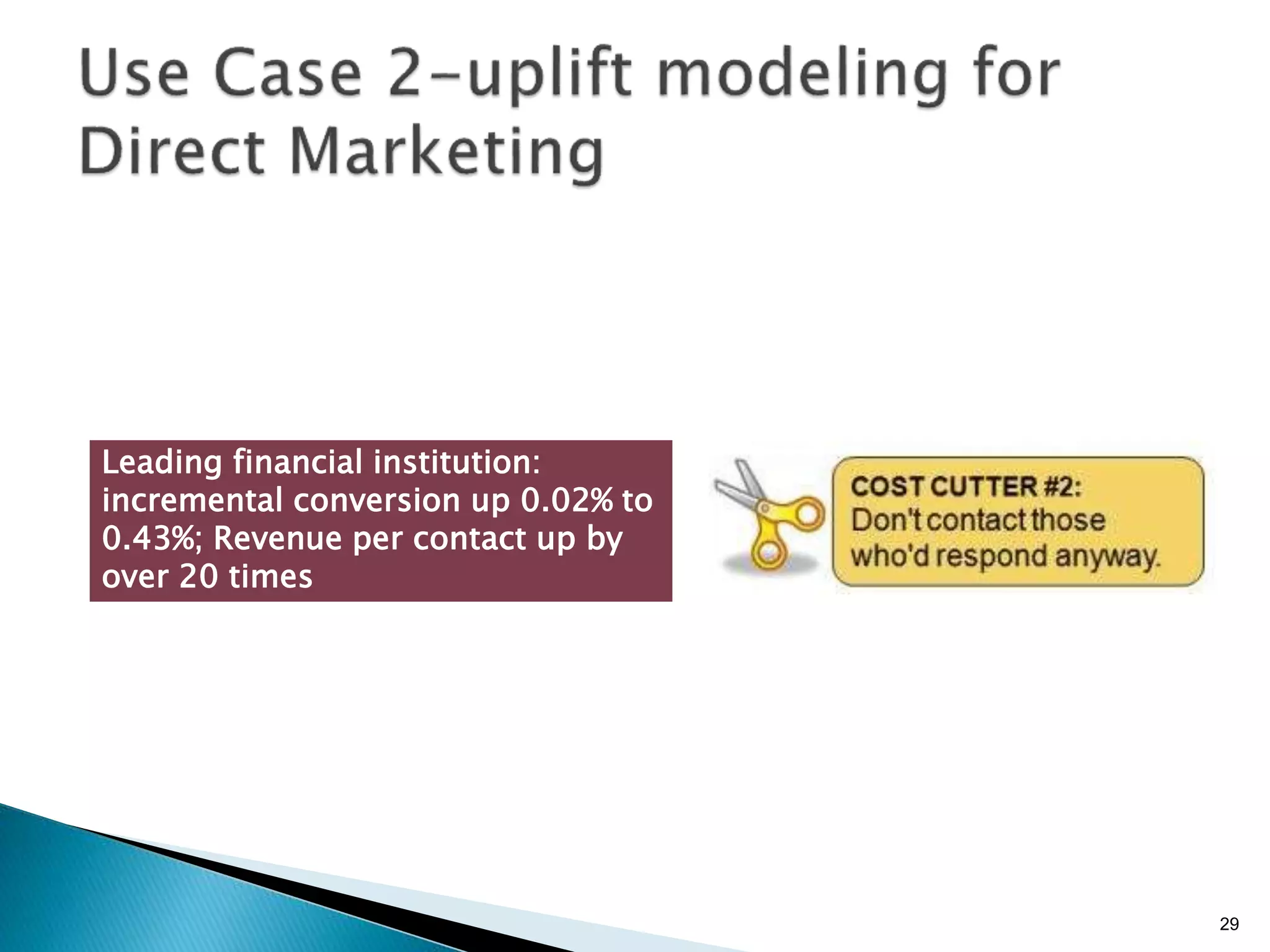
◦  Uplift modeling for direct customers
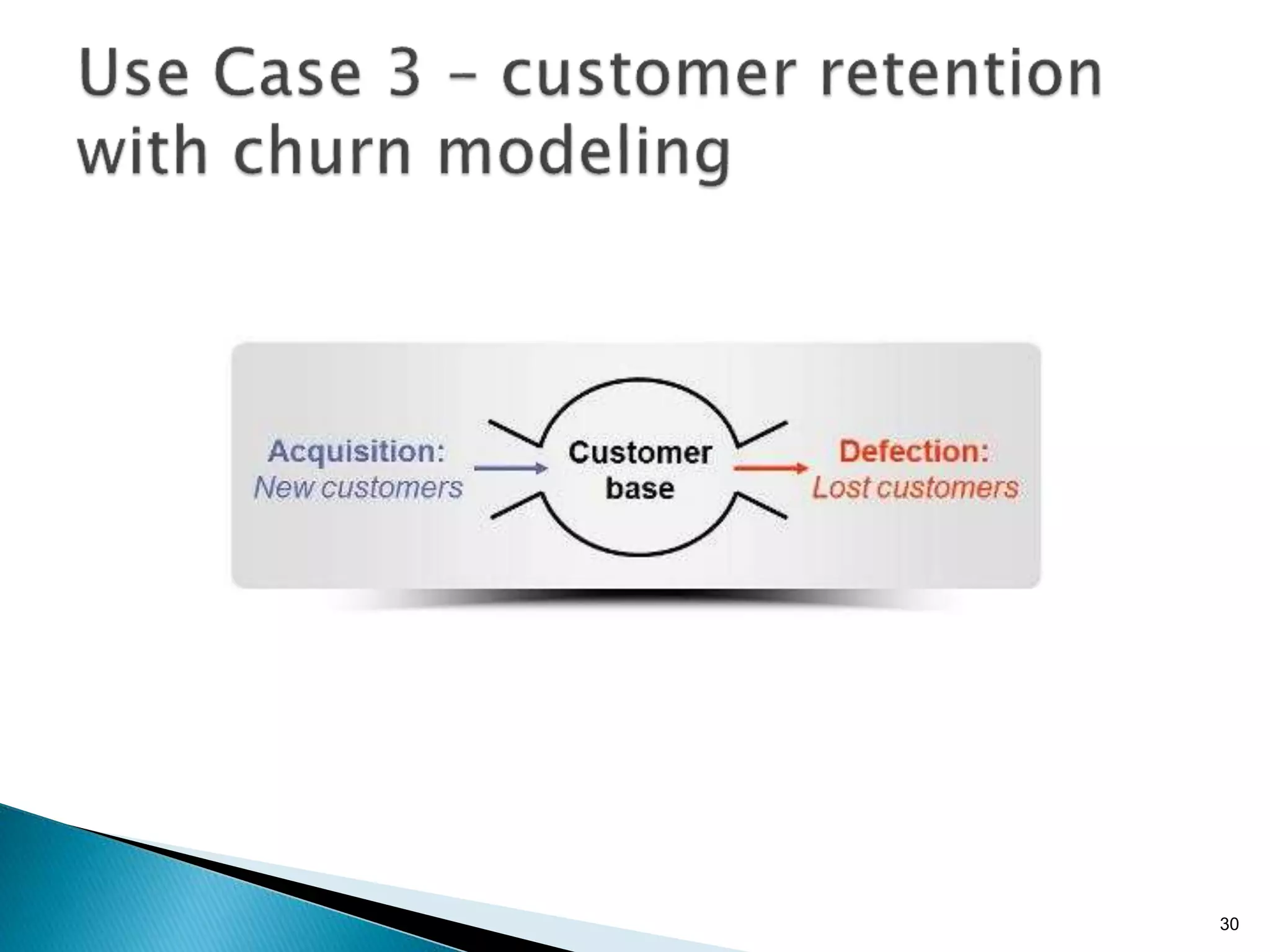
◦  Customer retention with churn modeling
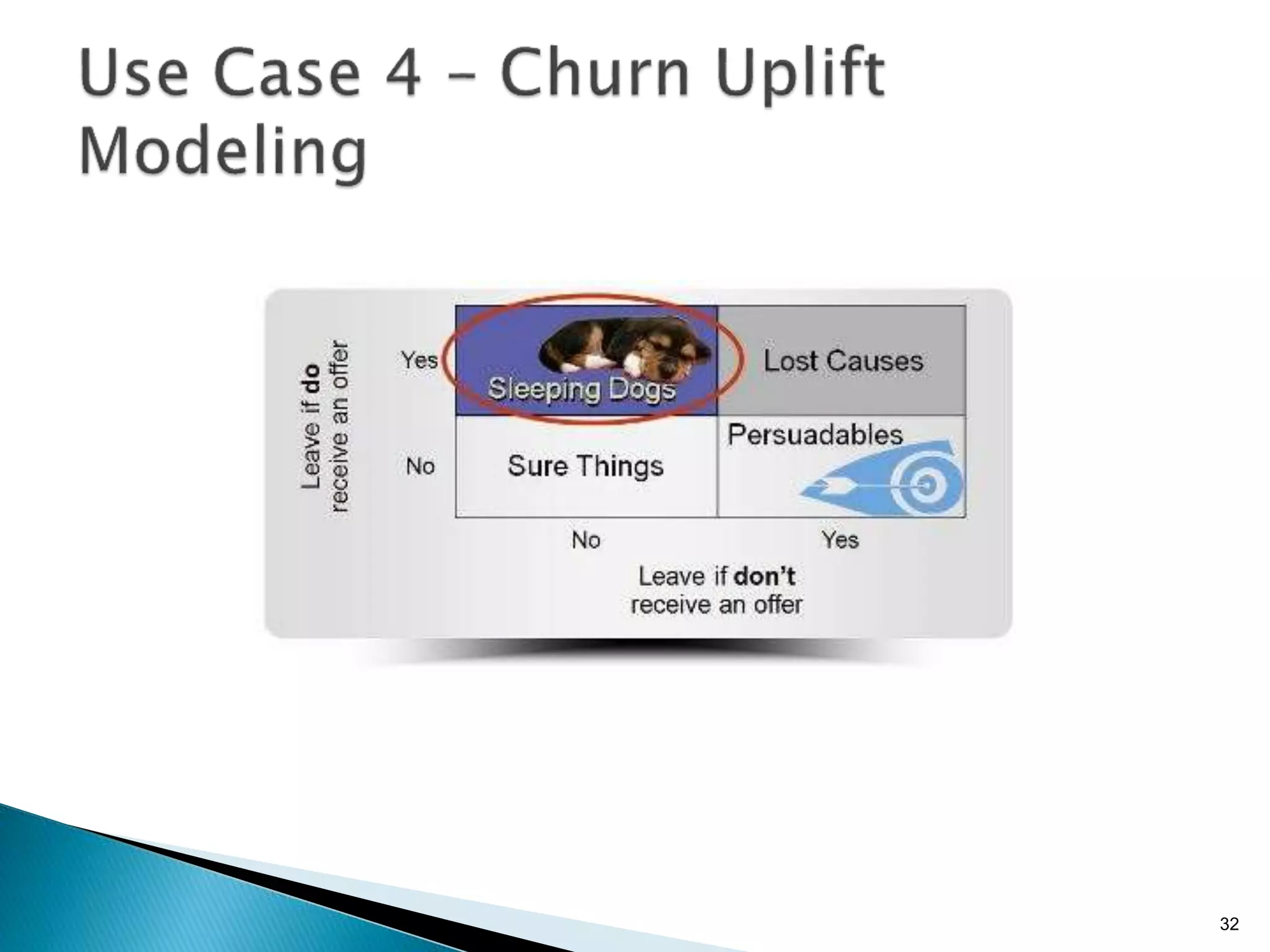
◦  Churn Uplift Modeling
24
25
26
Lifeline Screening: Response up
38%, cost down 20%, 62K more
customers annually
PREMIER Bankcard: Direct mail
response up 3-5%
Sun Microsystems: Doubled the
number of leads per phone call
27
28
29
Leading financial institution:
incremental conversion up 0.02% to
0.43%; Revenue per contact up by
over 20 times
30
31
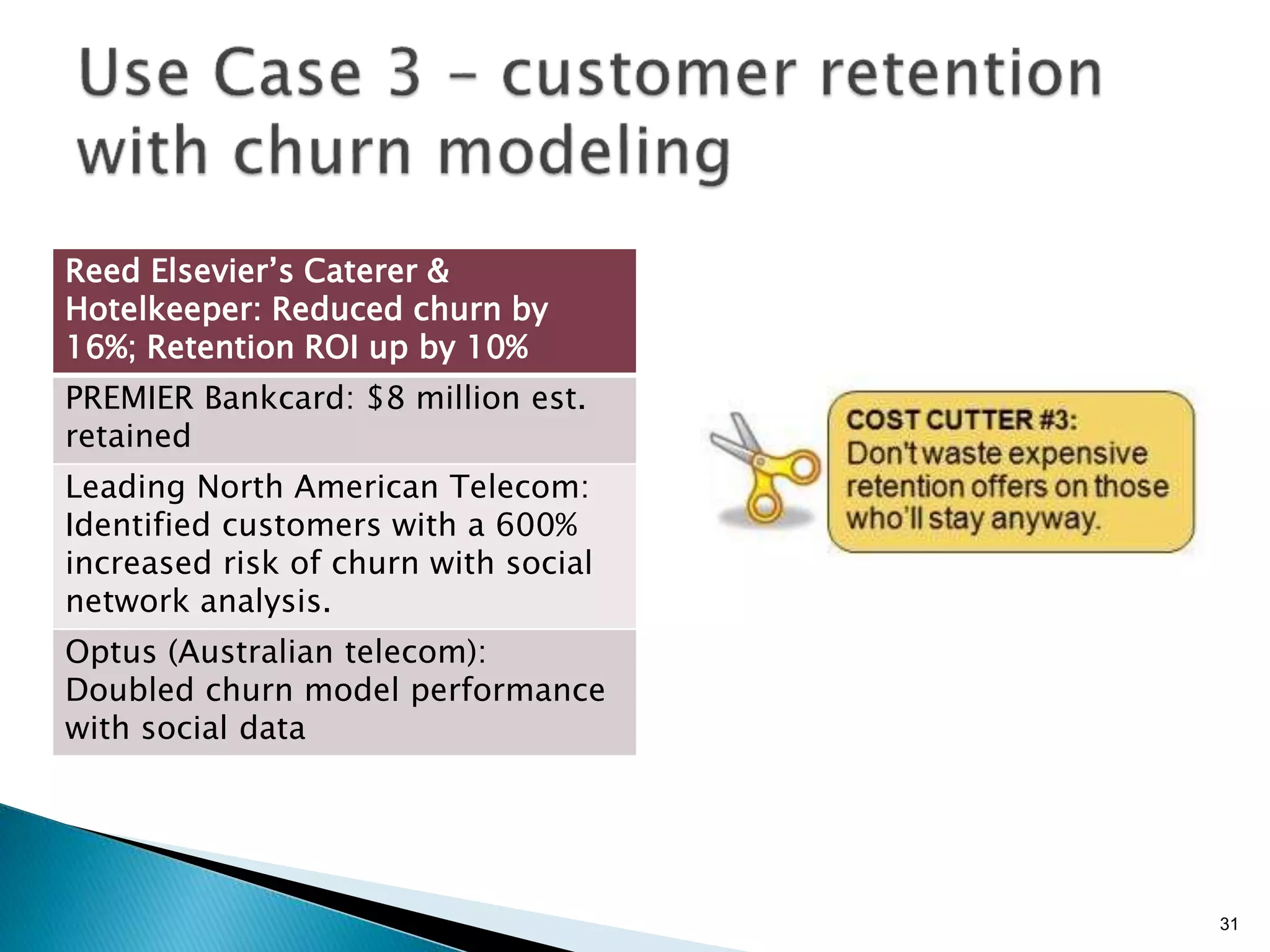
Reed Elsevier’s Caterer &
Hotelkeeper: Reduced churn by
16%; Retention ROI up by 10%
PREMIER Bankcard: $8 million est.
retained
Leading North American Telecom:
Identified customers with a 600%
increased risk of churn with social
network analysis.
Optus (Australian telecom):
Doubled churn model performance
with social data
32
33
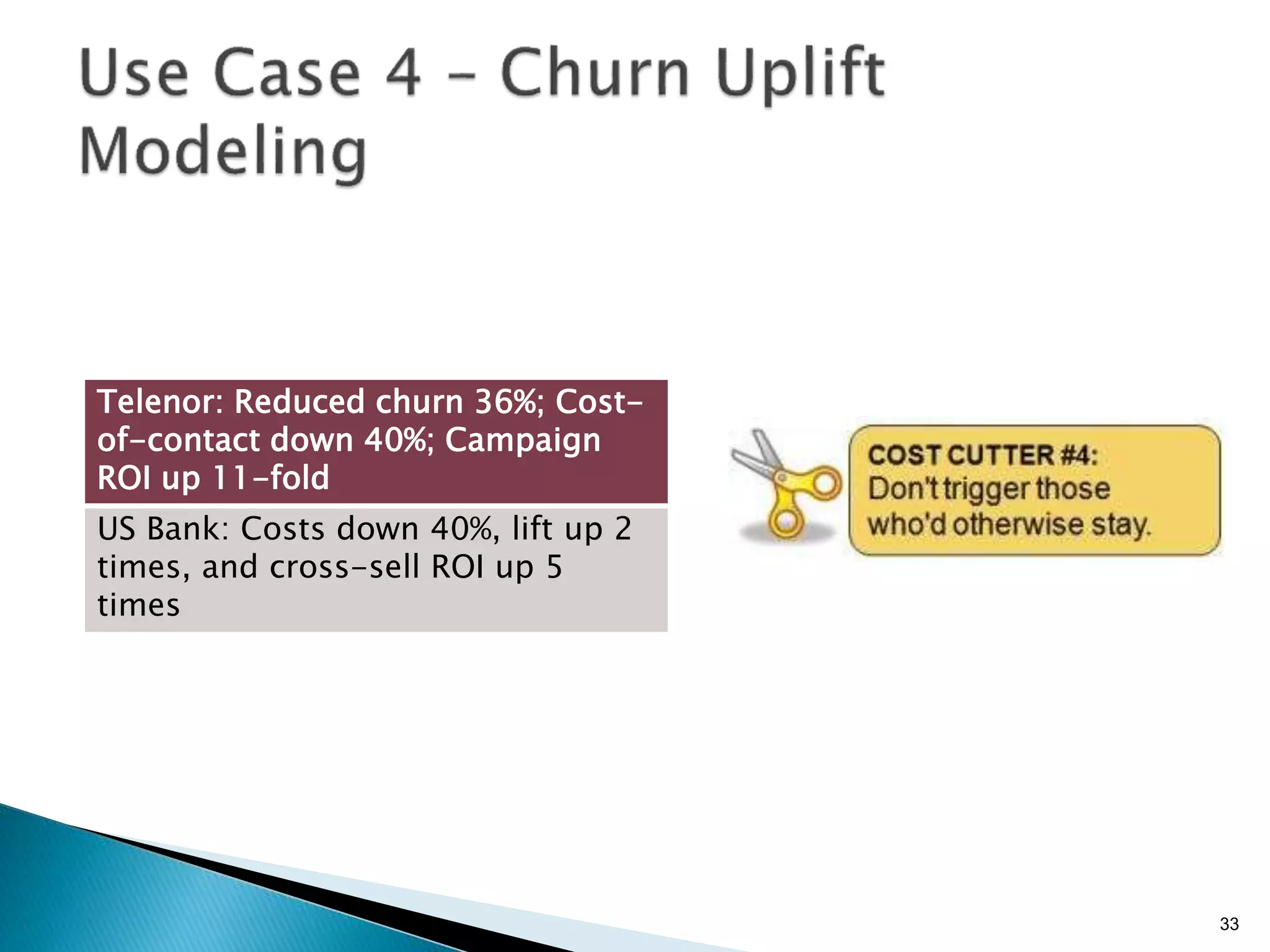
Telenor: Reduced churn 36%; Cost-
of-contact down 40%; Campaign
ROI up 11-fold
US Bank: Costs down 40%, lift up 2
times, and cross-sell ROI up 5
times
}  Only 20% of the data is structured and readily
analyzable.
}  The other 80% is unstructured, including
email, social networks feeds, videos, etc.
}  Lack of data/need to accrue
34
}  Need to start now not to be left outside
}  Develop proper data strategy, data quality
controls and analytical talent now to be
successful when the data analytics arrives to
Azerbaijan in 3-5 years.
35
}  Primary Research Data Analytics
◦  Online Survey Programming
◦  Installation of the Open Source Analytic Tool (Rapid
Miner)
◦  Introduction to statistical principles
◦  Processing Primary Data with Analytical Tool
}  Advanced Data Analytics
◦  Response modeling for direct customers
◦  Uplift modeling for direct customers
◦  Customer retention with churn modeling
◦  Churn Uplift Modeling
36
37
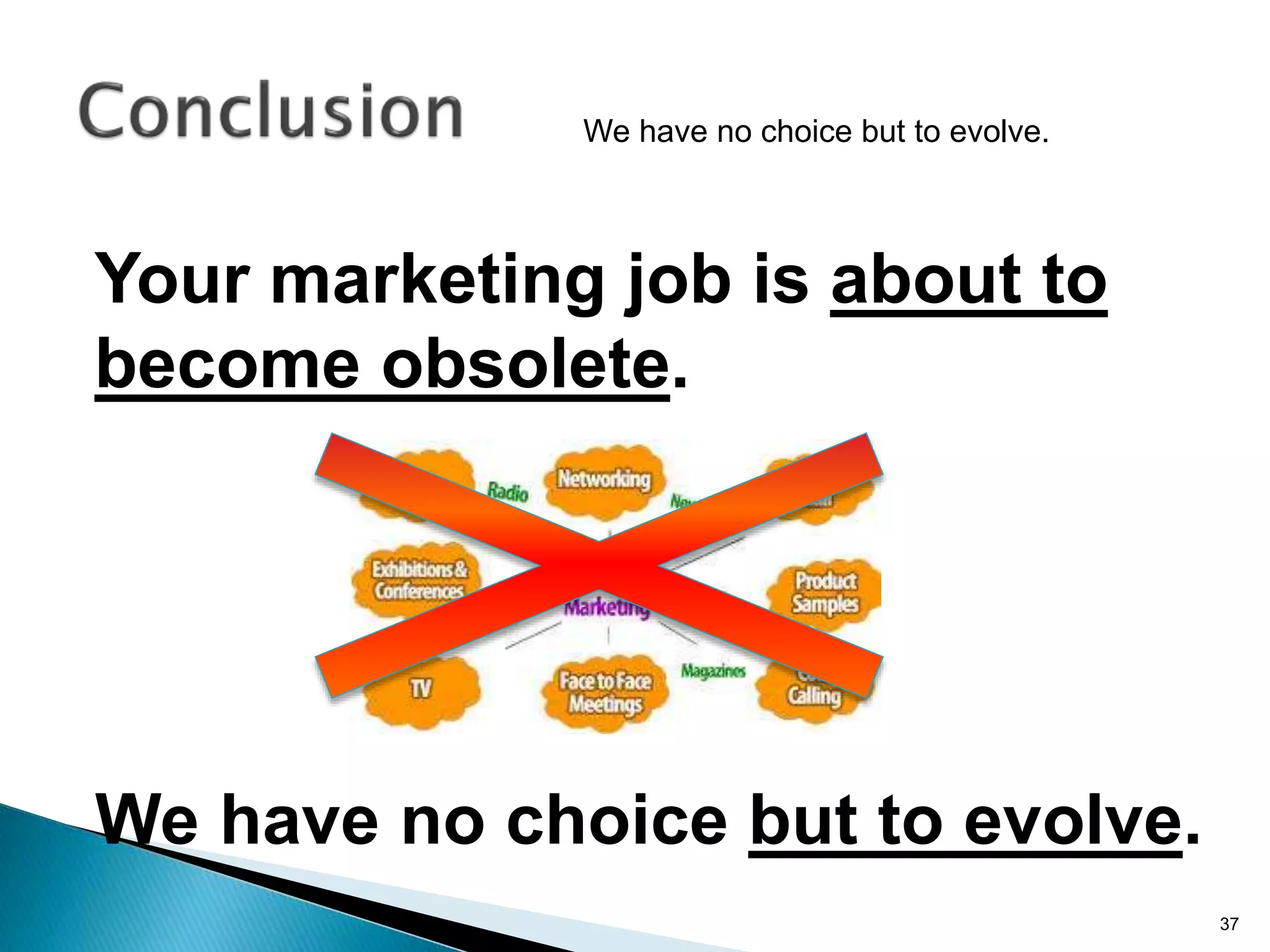
Your marketing job is about to
become obsolete.
We have no choice but to evolve.
38
Questions?
39

Marketing evolution, Database Markeing and Predicting Analytics

  • 1.
  • 2.
    2 4,000, 000,000,000,000,000,000 bytes } “In 2013, the World will produce a 4 zetabytes (or 4 million petabytes) of new data” (Gartner) Exa Tera Giga MegaPeta KiloZeta
  • 3.
  • 4.
    4 Your marketing jobis about to become obsolete.
  • 5.
  • 6.
    }  Includes allthe advertising methods that have been used in the recent past: ◦  Business cards ◦  Print ads in magazines or newspapers ◦  Posters ◦  Radio ◦  Television commercials ◦  Brochures and billboards }  Traditional marketing using anything not digital to brand your product into minds of people. 6
  • 7.
  • 8.
  • 9.
    2005 1999 1989 Mosaic (first Web browser) 1993 Launchof e- mail services for home PCs (early 90s) iPod & iTunes (2001) (2003) (2005) SL (2003) (2000) (2003) (1995) (2000) Pointcast (early example of on demand digital versions of print publications 1996) Web-based DIY travel arrangements (mid 90s) Spreadsheet software (mid 1980s) (1998) SEO (2004) MapReduce
  • 10.
    10 4 Zb ofData in the World (2013) Development of Big Data Infrastructure Big Data Analytics platforms allows companies to collect and analyze all data, structured and unstructured. (2006) (2008) Real Time Bidding (RTB) (2009)(2005) (2012) (2007) (2009) 2014 2005 (2010) SmartPhone shipments Passed Desktop PCs’ (2012) SmartPhone shipments Passed Notebook and Desktop shipments Ebay, Wal Mart’s Corporate Databases are at 5Pb Today’s companies are processing 1000 times more data than they did just 5 years ago (2006) 3G iPhone (2008) Opened to everyone 13+ in 2006
  • 11.
    }  The ideato win the Internet battle for the visitors, possible buyers and advertising revenue, was to aggregate the best content. 11
  • 12.
    }  But contentwas available for free (Rise of Blogs and social networks), what really mattered how to find the most relevant information. }  Introduction of Goolge search algorithm in 1998 quickly shifted online advertisement revenues to search advertisement 12
  • 13.
    }  In 2004,Google created MapReduce – an algorithm concept that would allow processing of Big Data. }  Big Data – volume, variety and velocity. }  A Year later, a Yahoo engineer implemented MapReduce in Java and called it Hadoop, after his daughter’s toy elephant. }  Massively Parallel Processing (MPP) 13
  • 14.
    }  By 2008,corporate database of companies like E-Bay and Wall Mart were 5 Pb, many others were close. Companies wanted to take advantage of the data they had. 14
  • 15.
    }  In 2008,with introduction of iPhone, that created several new industries (and destroyed several existing ones), marketers got access not only to personal and professional, but also to a new dimensions of data (location).  }  Shift from Brand-centric Marketing to a Consumer-centric Marketing 15 I am at the mall
  • 16.
    }  Demand SidePlatforms (DSP) }  Supply Side Platforms (SSP) }  Online real-time ad exchanges 16
  • 17.
    17 }  Replaces: Googleanalytics that just shows descriptive statistics }  The Heat Map Tool that shows why your visitors are leaving without buying/converting }  Why are they leaving? Where do they get frustrated?
  • 18.
    18 Then Now Intuitive decision-making,catchy jingles Algorythms and data-driven decision making Grand openings Optimization Demographic segmentation Behavioral segmentation Market share = attention Involvement = attention Passivity Interactivity Selective attention Fractured attention Communication = monologue Communication = conversation Reverence and earnestness Irreverence and irony Authorities as influencers Peers as influencers Consumers defined by brands Brands defined by consumers Marketer for marketing jobs Engineer for marketing jobs
  • 19.
    }  Today's companiesare processing 1000 times more data than they did  just 5 years ago.  19
  • 20.
    }  Data basedmarketing is an approach of systematically analyzing and getting insights on how Customer base behaves over time }  DBM is the analytics side of Customer focus, or putting Customer (and not the brand/ product/service) at the core of everything }  Uses of DBM: ◦  Primary research ◦  Optimization 20
  • 21.
    21 Marketing Research Process SecondaryResearch Primary Research -Research data, collected by others -Focus Groups -Oral Surveys -Paper Surveys -Online Surveys
  • 22.
    22 Step 3 –Design & Prepare Research Instruments Step 4 – Sampling & Data Collection
  • 23.
    23 Step 5 –Analyze Data
  • 24.
    ◦  Response modelingfor direct customers ◦  Uplift modeling for direct customers ◦  Customer retention with churn modeling ◦  Churn Uplift Modeling 24
  • 25.
  • 26.
    26 Lifeline Screening: Responseup 38%, cost down 20%, 62K more customers annually PREMIER Bankcard: Direct mail response up 3-5% Sun Microsystems: Doubled the number of leads per phone call
  • 27.
  • 28.
  • 29.
    29 Leading financial institution: incrementalconversion up 0.02% to 0.43%; Revenue per contact up by over 20 times
  • 30.
  • 31.
    31 Reed Elsevier’s Caterer& Hotelkeeper: Reduced churn by 16%; Retention ROI up by 10% PREMIER Bankcard: $8 million est. retained Leading North American Telecom: Identified customers with a 600% increased risk of churn with social network analysis. Optus (Australian telecom): Doubled churn model performance with social data
  • 32.
  • 33.
    33 Telenor: Reduced churn36%; Cost- of-contact down 40%; Campaign ROI up 11-fold US Bank: Costs down 40%, lift up 2 times, and cross-sell ROI up 5 times
  • 34.
    }  Only 20%of the data is structured and readily analyzable. }  The other 80% is unstructured, including email, social networks feeds, videos, etc. }  Lack of data/need to accrue 34
  • 35.
    }  Need tostart now not to be left outside }  Develop proper data strategy, data quality controls and analytical talent now to be successful when the data analytics arrives to Azerbaijan in 3-5 years. 35
  • 36.
    }  Primary ResearchData Analytics ◦  Online Survey Programming ◦  Installation of the Open Source Analytic Tool (Rapid Miner) ◦  Introduction to statistical principles ◦  Processing Primary Data with Analytical Tool }  Advanced Data Analytics ◦  Response modeling for direct customers ◦  Uplift modeling for direct customers ◦  Customer retention with churn modeling ◦  Churn Uplift Modeling 36
  • 37.
    37 Your marketing jobis about to become obsolete. We have no choice but to evolve. We have no choice but to evolve.
  • 38.
  • 39.