Introduction to IT
Project
Management
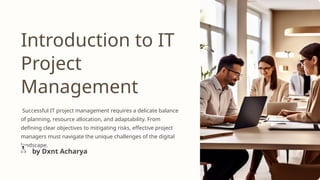
Successful IT project management requires a delicate balance
of planning, resource allocation, and adaptability. From
defining clear objectives to mitigating risks, effective project
managers must navigate the unique challenges of the digital
landscape.
by Dxnt Acharya
Defining Project Success Factors
Scope
Clearly defined project scope and deliverables are essential for keeping the team focused
and the project on track.
Time
Accurate timelines and milestones help ensure the project is completed within the allocated
timeframe.
Budget
Careful budget planning and monitoring help avoid cost overruns and maintain financial
viability.
Quality
Prioritizing quality throughout the project lifecycle ensures the final product meets or
exceeds stakeholder expectations.
Effective Project Planning and
Scheduling
1 Requirements Gathering
Thoroughly understanding the project's requirements is the foundation for
successful planning and execution.
2 Task Identification
Breaking the project down into manageable tasks helps create a detailed
project plan and schedule.
3 Resource Allocation
Assigning the right resources, including personnel and equipment, to each
task is crucial for timely completion.
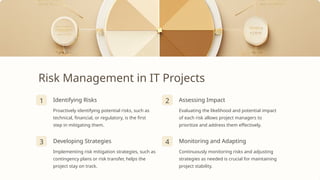
Risk Management in IT Projects
1 Identifying Risks
Proactively identifying potential risks, such as
technical, financial, or regulatory, is the first
step in mitigating them.
2 Assessing Impact
Evaluating the likelihood and potential impact
of each risk allows project managers to
prioritize and address them effectively.
3 Developing Strategies
Implementing risk mitigation strategies, such as
contingency plans or risk transfer, helps the
project stay on track.
4 Monitoring and Adapting
Continuously monitoring risks and adjusting
strategies as needed is crucial for maintaining
project stability.
Stakeholder Engagement and
Communication
Stakeholder
Identification
Accurately identifying all
relevant stakeholders, from
executives to end-users, is
essential for effective
communication and alignment.
Communication Planning
Developing a comprehensive
communication plan ensures
stakeholders receive the right
information at the right time.
Conflict Resolution
Proactively addressing and
resolving stakeholder conflicts
helps maintain project
momentum and stakeholder
buy-in.
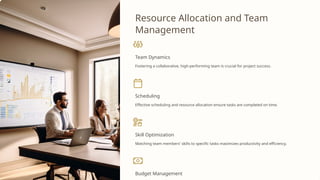
Resource Allocation and Team
Management
Team Dynamics
Fostering a collaborative, high-performing team is crucial for project success.
Scheduling
Effective scheduling and resource allocation ensure tasks are completed on time.
Skill Optimization
Matching team members' skills to specific tasks maximizes productivity and efficiency.
Budget Management
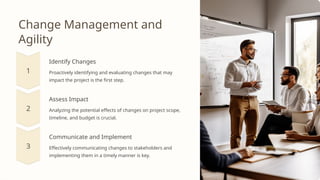
Change Management and
Agility
Identify Changes
Proactively identifying and evaluating changes that may
impact the project is the first step.
Assess Impact
Analyzing the potential effects of changes on project scope,
timeline, and budget is crucial.
Communicate and Implement
Effectively communicating changes to stakeholders and
implementing them in a timely manner is key.
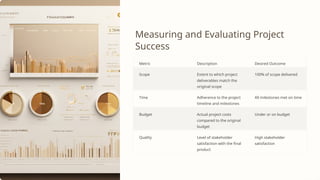
Measuring and Evaluating Project
Success
Metric Description Desired Outcome
Scope Extent to which project
deliverables match the
original scope
100% of scope delivered
Time Adherence to the project
timeline and milestones
All milestones met on time
Budget Actual project costs
compared to the original
budget
Under or on budget
Quality Level of stakeholder
satisfaction with the final
product
High stakeholder
satisfaction
Introduction-to-IT-Project-Management.pptx

Introduction-to-IT-Project-Management.pptx

  • 1.
    Introduction to IT Project Management SuccessfulIT project management requires a delicate balance of planning, resource allocation, and adaptability. From defining clear objectives to mitigating risks, effective project managers must navigate the unique challenges of the digital landscape. by Dxnt Acharya
  • 2.
    Defining Project SuccessFactors Scope Clearly defined project scope and deliverables are essential for keeping the team focused and the project on track. Time Accurate timelines and milestones help ensure the project is completed within the allocated timeframe. Budget Careful budget planning and monitoring help avoid cost overruns and maintain financial viability. Quality Prioritizing quality throughout the project lifecycle ensures the final product meets or exceeds stakeholder expectations.
  • 3.
    Effective Project Planningand Scheduling 1 Requirements Gathering Thoroughly understanding the project's requirements is the foundation for successful planning and execution. 2 Task Identification Breaking the project down into manageable tasks helps create a detailed project plan and schedule. 3 Resource Allocation Assigning the right resources, including personnel and equipment, to each task is crucial for timely completion.
  • 4.
    Risk Management inIT Projects 1 Identifying Risks Proactively identifying potential risks, such as technical, financial, or regulatory, is the first step in mitigating them. 2 Assessing Impact Evaluating the likelihood and potential impact of each risk allows project managers to prioritize and address them effectively. 3 Developing Strategies Implementing risk mitigation strategies, such as contingency plans or risk transfer, helps the project stay on track. 4 Monitoring and Adapting Continuously monitoring risks and adjusting strategies as needed is crucial for maintaining project stability.
  • 5.
    Stakeholder Engagement and Communication Stakeholder Identification Accuratelyidentifying all relevant stakeholders, from executives to end-users, is essential for effective communication and alignment. Communication Planning Developing a comprehensive communication plan ensures stakeholders receive the right information at the right time. Conflict Resolution Proactively addressing and resolving stakeholder conflicts helps maintain project momentum and stakeholder buy-in.
  • 6.
    Resource Allocation andTeam Management Team Dynamics Fostering a collaborative, high-performing team is crucial for project success. Scheduling Effective scheduling and resource allocation ensure tasks are completed on time. Skill Optimization Matching team members' skills to specific tasks maximizes productivity and efficiency. Budget Management
  • 7.
    Change Management and Agility IdentifyChanges Proactively identifying and evaluating changes that may impact the project is the first step. Assess Impact Analyzing the potential effects of changes on project scope, timeline, and budget is crucial. Communicate and Implement Effectively communicating changes to stakeholders and implementing them in a timely manner is key.
  • 8.
    Measuring and EvaluatingProject Success Metric Description Desired Outcome Scope Extent to which project deliverables match the original scope 100% of scope delivered Time Adherence to the project timeline and milestones All milestones met on time Budget Actual project costs compared to the original budget Under or on budget Quality Level of stakeholder satisfaction with the final product High stakeholder satisfaction