Introduction to Information
Security and Management
Information Security and Management (ISM) is a critical field
encompassing the protection of information and its associated systems,
processes, and resources from unauthorized access, disclosure,
modification, destruction, or disruption. It also involves managing and
optimizing information usage, storage, and sharing within organizations
to achieve business objectives effectively.
by Patricia Jliene
Importance of Information Security
Protection Against Cyber Threats
ISM safeguards systems and networks against hacking,
malware, phishing, and other cyberattacks, safeguarding
sensitive data from malicious actors.
Regulatory Compliance
Organizations must meet legal and regulatory requirements
like GDPR, HIPAA, and ISO standards to ensure responsible
data handling.
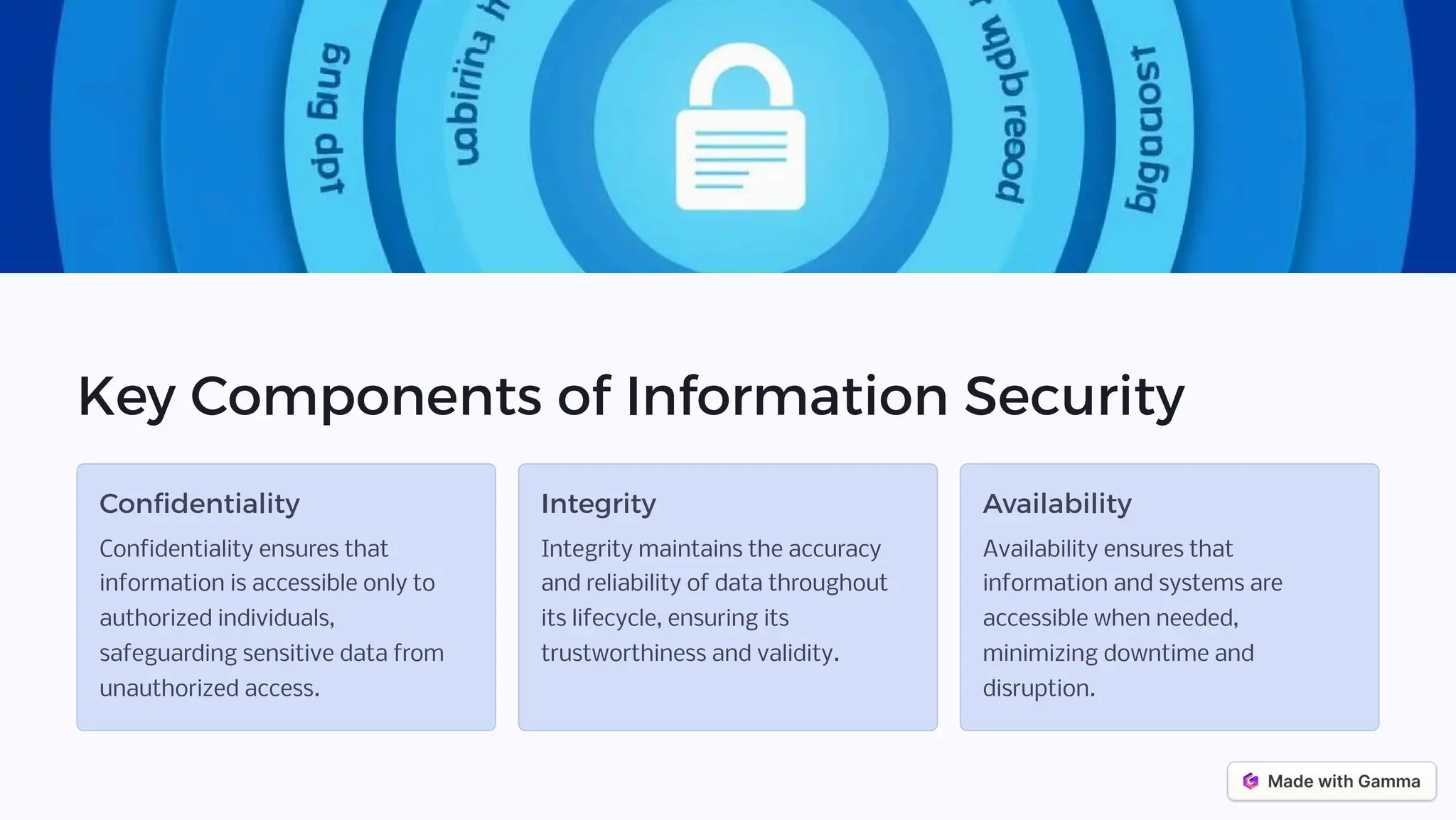
Key Components of Information Security
Confidentiality
Confidentiality ensures that
information is accessible only to
authorized individuals,
safeguarding sensitive data from
unauthorized access.
Integrity
Integrity maintains the accuracy
and reliability of data throughout
its lifecycle, ensuring its
trustworthiness and validity.
Availability
Availability ensures that
information and systems are
accessible when needed,
minimizing downtime and
disruption.
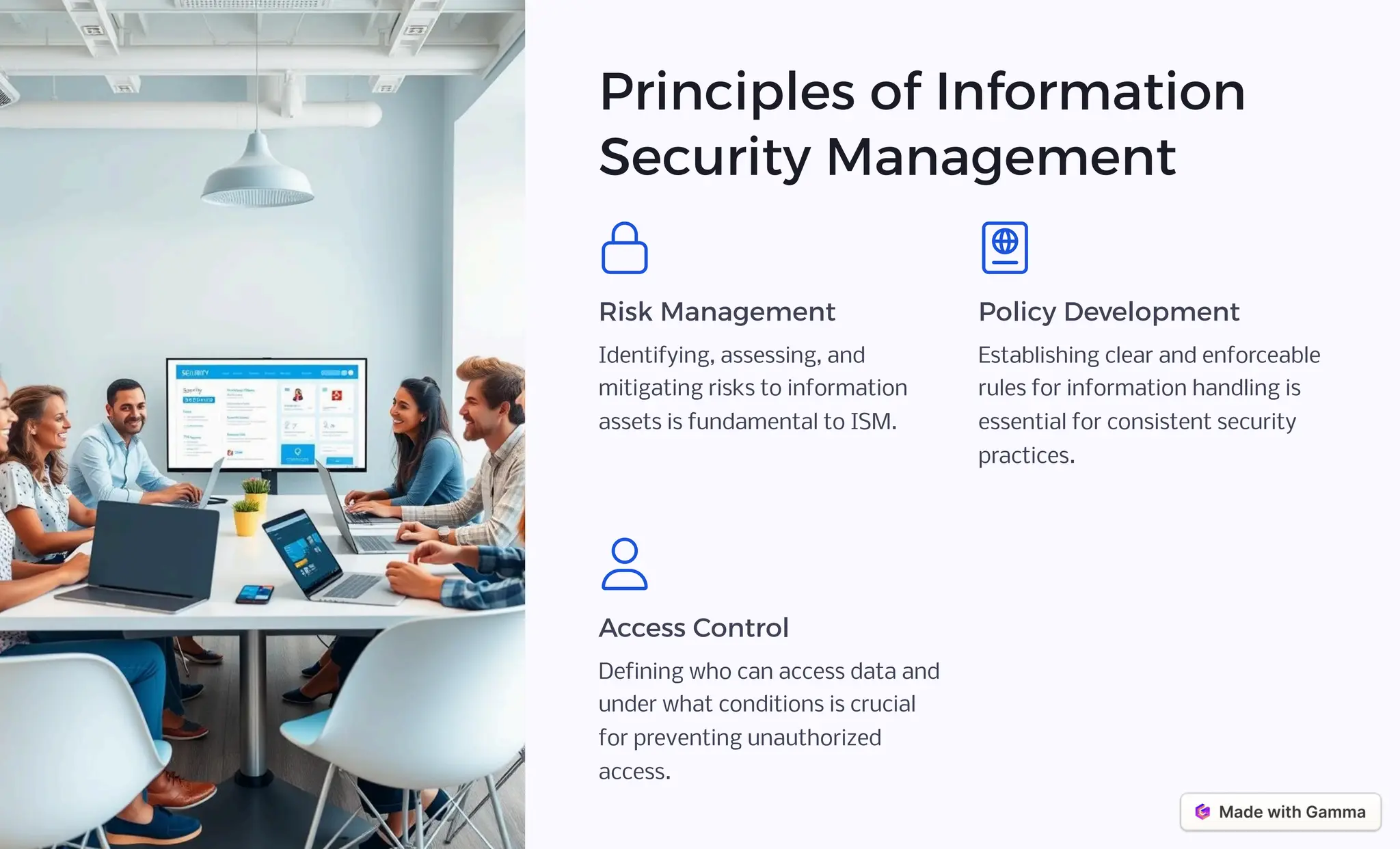
Principles of Information
Security Management
Risk Management
Identifying, assessing, and
mitigating risks to information
assets is fundamental to ISM.
Policy Development
Establishing clear and enforceable
rules for information handling is
essential for consistent security
practices.
Access Control
Defining who can access data and
under what conditions is crucial
for preventing unauthorized
access.
Frameworks and Standards
1 ISO/IEC 27001
An international standard
for information security
management systems
(ISMS), providing a
comprehensive framework
for establishing,
implementing, maintaining,
and continually improving
an ISMS.
2 NIST Cybersecurity
Framework
A guideline for managing
and reducing cybersecurity
risks, outlining five core
functions: Identify, Protect,
Detect, Respond, and
Recover.
3 COBIT
A framework for
governance and
management of enterprise
IT, focusing on aligning IT
with business goals and
managing IT risk.
4 PCI DSS
Standards for securing
payment card transactions,
ensuring the protection of
sensitive cardholder data
during processing,
transmission, and storage.
Emerging Trends in
Information Security
1 Artificial Intelligence and Machine Learning
AI and ML are increasingly used to enhance threat
detection and response, automating analysis and
identifying anomalies in real time.
2 Zero Trust Security
Zero trust security assumes no implicit trust and verifies
every access request, strengthening security posture by
eliminating inherent vulnerabilities.
3 Cloud Security
Securing data and applications in cloud environments,
including data encryption, access control, and
vulnerability management, is paramount.
Building a Secure Future
1
Strong Passwords
Use complex and unique passwords for each online
account, and consider using a password manager to store
and manage them securely.
2
Regular Updates
Keep software and operating systems up to date to patch
vulnerabilities and prevent exploitation by malicious
actors.
3
Be Aware
Stay vigilant about potential phishing scams, malware,
and other cyber threats, and practice safe browsing habits.
4
Report Suspicious Activity
If you encounter any suspicious activity or believe your
account may be compromised, report it immediately to the
relevant authorities.
Benefits of Information Security
1 Increased Trust
2 Improved Reputation
3 Competitive Advantage
4 Financial Stability
5 Business Growth
Conclusion
Information security is a dynamic and evolving field, requiring continuous adaptation and vigilance. By staying informed
about emerging threats, adopting best practices, and leveraging appropriate frameworks and standards, organizations can
build a robust security posture, protect their valuable assets, and ensure their long-term success in the digital landscape.

Introduction-to-Information-Security-and-Management (2).pdf

  • 1.
    Introduction to Information Securityand Management Information Security and Management (ISM) is a critical field encompassing the protection of information and its associated systems, processes, and resources from unauthorized access, disclosure, modification, destruction, or disruption. It also involves managing and optimizing information usage, storage, and sharing within organizations to achieve business objectives effectively. by Patricia Jliene
  • 2.
    Importance of InformationSecurity Protection Against Cyber Threats ISM safeguards systems and networks against hacking, malware, phishing, and other cyberattacks, safeguarding sensitive data from malicious actors. Regulatory Compliance Organizations must meet legal and regulatory requirements like GDPR, HIPAA, and ISO standards to ensure responsible data handling.
  • 3.
    Key Components ofInformation Security Confidentiality Confidentiality ensures that information is accessible only to authorized individuals, safeguarding sensitive data from unauthorized access. Integrity Integrity maintains the accuracy and reliability of data throughout its lifecycle, ensuring its trustworthiness and validity. Availability Availability ensures that information and systems are accessible when needed, minimizing downtime and disruption.
  • 4.
    Principles of Information SecurityManagement Risk Management Identifying, assessing, and mitigating risks to information assets is fundamental to ISM. Policy Development Establishing clear and enforceable rules for information handling is essential for consistent security practices. Access Control Defining who can access data and under what conditions is crucial for preventing unauthorized access.
  • 5.
    Frameworks and Standards 1ISO/IEC 27001 An international standard for information security management systems (ISMS), providing a comprehensive framework for establishing, implementing, maintaining, and continually improving an ISMS. 2 NIST Cybersecurity Framework A guideline for managing and reducing cybersecurity risks, outlining five core functions: Identify, Protect, Detect, Respond, and Recover. 3 COBIT A framework for governance and management of enterprise IT, focusing on aligning IT with business goals and managing IT risk. 4 PCI DSS Standards for securing payment card transactions, ensuring the protection of sensitive cardholder data during processing, transmission, and storage.
  • 6.
    Emerging Trends in InformationSecurity 1 Artificial Intelligence and Machine Learning AI and ML are increasingly used to enhance threat detection and response, automating analysis and identifying anomalies in real time. 2 Zero Trust Security Zero trust security assumes no implicit trust and verifies every access request, strengthening security posture by eliminating inherent vulnerabilities. 3 Cloud Security Securing data and applications in cloud environments, including data encryption, access control, and vulnerability management, is paramount.
  • 7.
    Building a SecureFuture 1 Strong Passwords Use complex and unique passwords for each online account, and consider using a password manager to store and manage them securely. 2 Regular Updates Keep software and operating systems up to date to patch vulnerabilities and prevent exploitation by malicious actors. 3 Be Aware Stay vigilant about potential phishing scams, malware, and other cyber threats, and practice safe browsing habits. 4 Report Suspicious Activity If you encounter any suspicious activity or believe your account may be compromised, report it immediately to the relevant authorities.
  • 8.
    Benefits of InformationSecurity 1 Increased Trust 2 Improved Reputation 3 Competitive Advantage 4 Financial Stability 5 Business Growth
  • 9.
    Conclusion Information security isa dynamic and evolving field, requiring continuous adaptation and vigilance. By staying informed about emerging threats, adopting best practices, and leveraging appropriate frameworks and standards, organizations can build a robust security posture, protect their valuable assets, and ensure their long-term success in the digital landscape.