
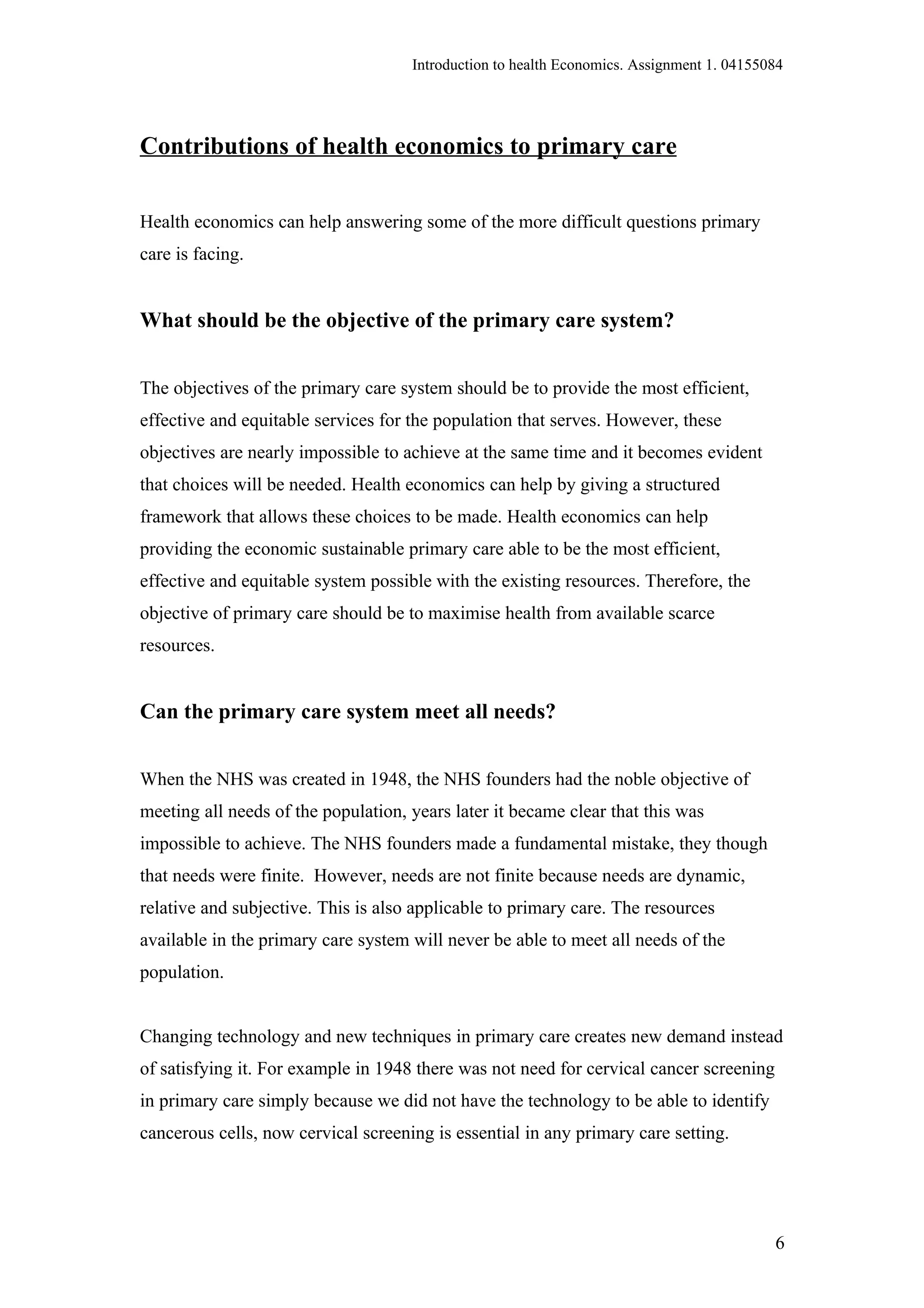
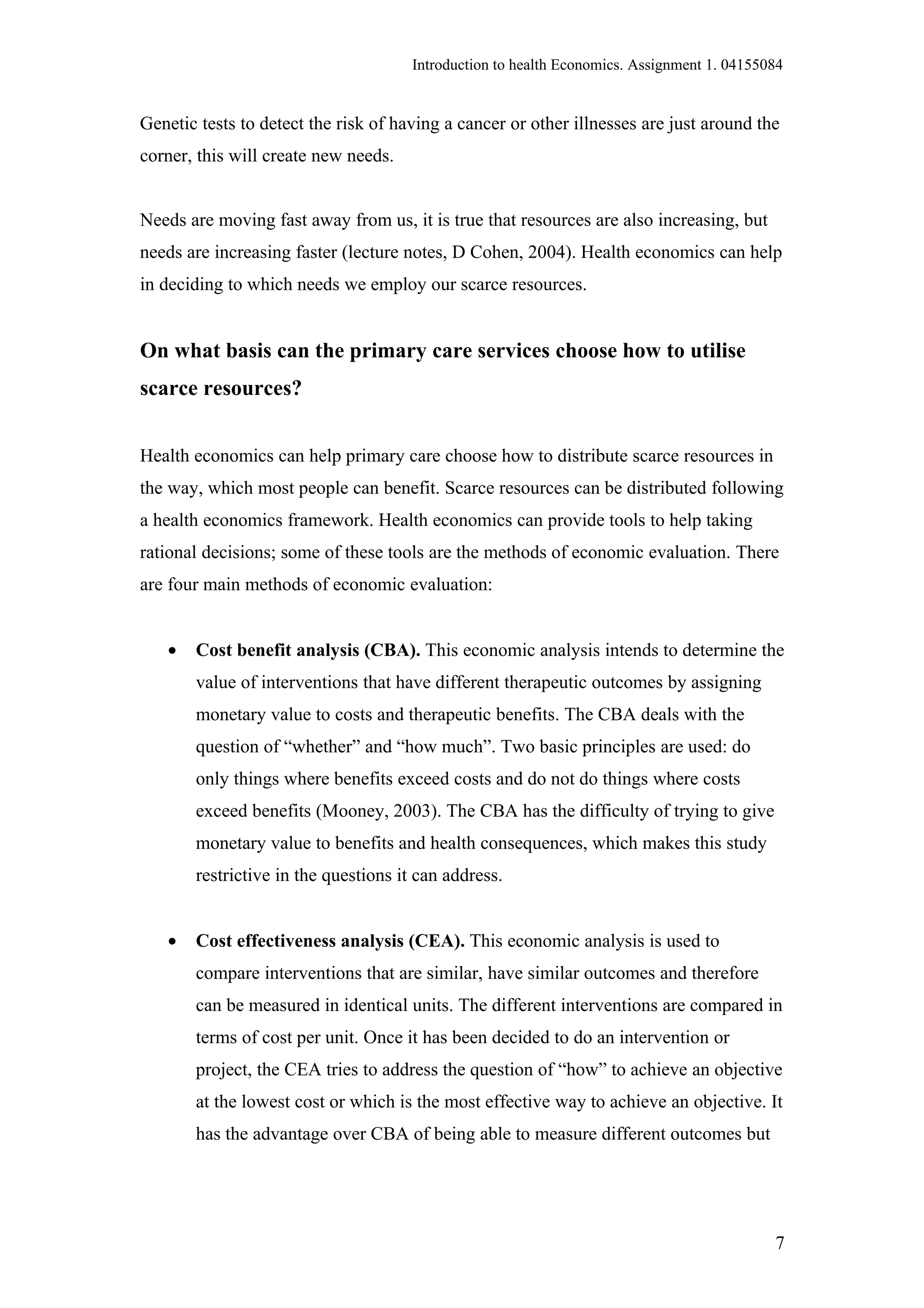
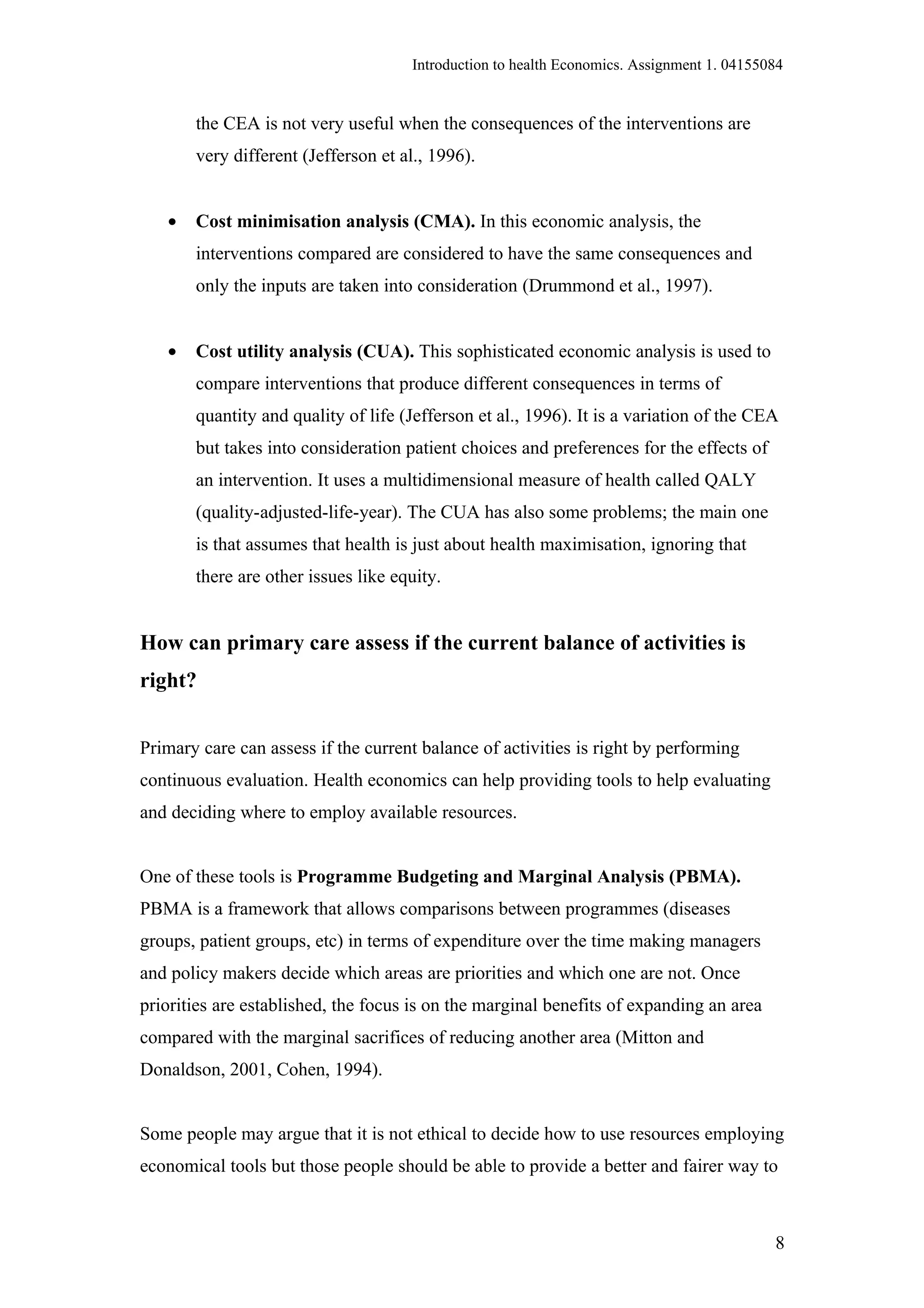
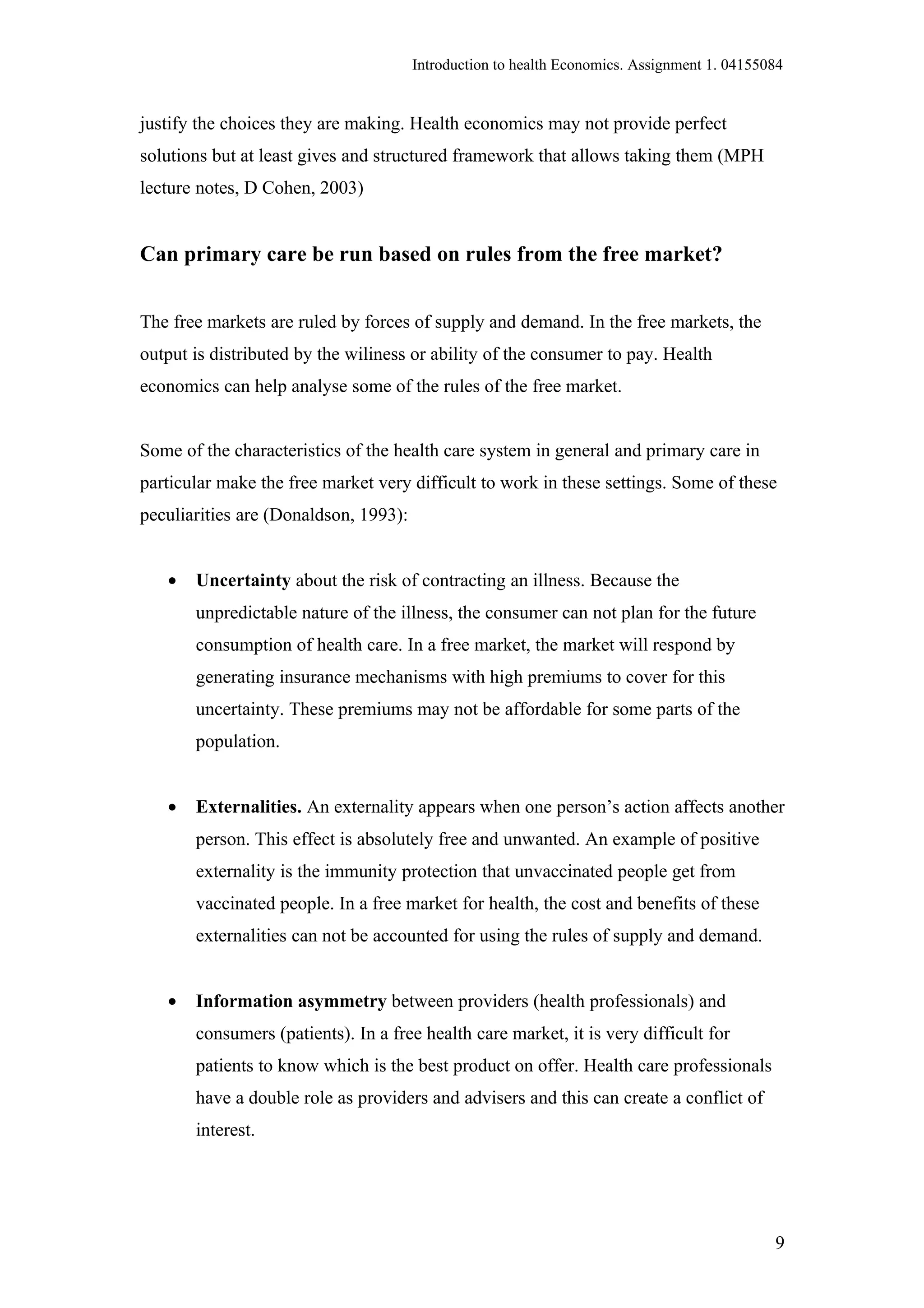


Health economics can contribute to primary care in three key ways: 1. It provides a framework to help primary care establish objectives and make choices about how to allocate scarce resources in the most efficient way to maximize health outcomes. 2. It helps primary care acknowledge that needs will always outpace available resources and make decisions about priority needs. 3. It offers tools like cost-benefit analysis, cost-effectiveness analysis, and cost-utility analysis to help primary care rationally decide how to distribute limited funds and achieve the best health outcomes at the lowest cost.


