© Fairtrade 2014
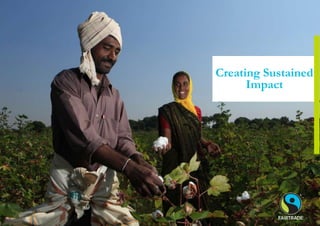
Creating Sustained
Impact
© Fairtrade 2014
Introduction
© Fairtrade 2014
The deepening agricultural crisis in India needs innovative business models
with social responsibility at it’s heart
Nearly 270,000 farmers in India have committed suicide since 1995. That’s
almost two farmers committing suicide every hour.
According to a survey by NSSO nearly 40% farmers in India want to quit
farming
Over 7.7 million Indian farmers have left agriculture as main
employment since 2001, and a large number are shifting to low waged labour.
More than 60% of Indian farmers earn less than Rupees 2,500 per month
© Fairtrade 2014
Typical Issues facing small and marginal farmers
➨Rising Input costs, unpredictable price realisation
➨ Lack of access to mainstream markets
➨ Lack of long-term trading relationships
➨No bargaining power, inability to invest in capacity building/marketing
➨ Lack of proper working conditions for workers
➨Rising risks due to climate change and emergence of super pests
© Fairtrade 2014
Fairtrade
Vision
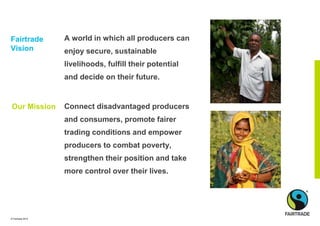
A world in which all producers can
enjoy secure, sustainable
livelihoods, fulfill their potential
and decide on their future.
Connect disadvantaged producers
and consumers, promote fairer
trading conditions and empower
producers to combat poverty,
strengthen their position and take
more control over their lives.
Our Mission
© Fairtrade 2014
Components of Fairtrade approach: A Social Contract for sustainability
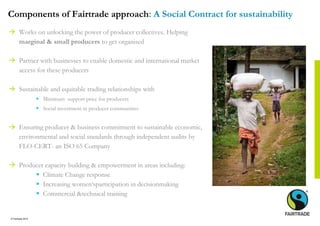
 Works on unlocking the power of producer collectives. Helping
marginal & small producers to get organised
 Partner with businesses to enable domestic and international market
access for these producers
 Sustainable and equitable trading relationships with
 Minimum support price for producers
 Social investment in producer communities
 Ensuring producer & business commitment to sustainable economic,
environmental and social standards through independent audits by
FLO-CERT- an ISO 65 Company
 Producer capacity building & empowerment in areas including:
 Climate Change response
 Increasing women‘sparticipation in decisionmaking
 Commercial &technical training
© Fairtrade 2014
How the FAIRTRADE Mark works
By putting the FAIRTRADE Mark on products, we guarantee
that farmers and businesses in the supply chain are committed
to meeting the Fairtrade standards.
This Mark acts as a consumer guarantee that the farmer has
received a fair price for his/her crop and that social,
economic and environmental standards are followed
We audit the whole supply chain to ensure that what we
commit to is being done
We undertake campaigns and awareness activities to tell
people about Fairtrade and what it means.
We work with retailers and brands to provide market
linkages for these producer groups
We work with producers and their communities for capacity
building in areas such as governance, product development,
Climate Change response, women empowerment, protecting
children’s rights and other social and economic programmes
© Fairtrade 2014
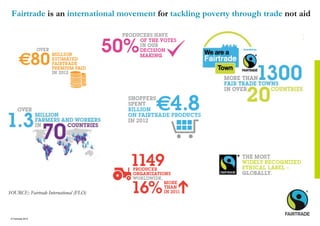
Fairtrade is an international movement for tackling poverty through trade not aid
SOURCE: Fairtrade International (FLO)
© Fairtrade 2014
How Fairtrade Enables
Producers
© Fairtrade 2014
How Fairtrade
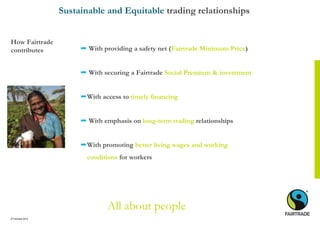
contributes ➨ With providing a safety net (Fairtrade Minimum Price)
➨ With securing a Fairtrade Social Premium & investment
➨With access to timely financing
➨ With emphasis on long-term trading relationships
➨With promoting better living wages and working
conditions for workers
All about people
Sustainable and Equitable trading relationships
© Fairtrade 2014
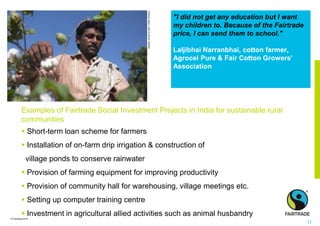
"I did not get any education but I want
my children to. Because of the Fairtrade
price, I can send them to school."
Laljibhai Narranbhai, cotton farmer,
Agrocel Pure & Fair Cotton Growers'
Association
© Nathalie Bertrams
Pickingcotton,India©SimonRawles
Examples of Fairtrade Social Investment Projects in India for sustainable rural
communities
 Short-term loan scheme for farmers
 Installation of on-farm drip irrigation & construction of
village ponds to conserve rainwater
 Provision of farming equipment for improving productivity
 Provision of community hall for warehousing, village meetings etc.
 Setting up computer training centre
 Investment in agricultural allied activities such as animal husbandry
11
© Fairtrade 2014
How Can Producers Join
Fairtrade
© Fairtrade 2014
Fairtrade Standards and Certification
 Though the categories of products being covered by Fairtrade is growing,
currently not all products are covered by Fairtrade. To get a list of the
current Fairtrade product categories visit:
http://www.fairtrade.net/products.html
 For producers interested in working with Fairtrade we provide guidance
on what might be required to fulfill the Fairtrade standards and criteria,
contact us on info@fairtradeindia.org for more information
 Fairtrade certification is carried out by FLO-CERT to learn more about
the certification process visit http://www.flo-cert.net/fairtrade-services/
© Fairtrade 2014
Thank you !
E: info@fairtradeindia.org
W: www.fairtradeindia.org

Introduction to Fairtrade India

  • 1.
  • 2.
  • 3.
    © Fairtrade 2014 Thedeepening agricultural crisis in India needs innovative business models with social responsibility at it’s heart Nearly 270,000 farmers in India have committed suicide since 1995. That’s almost two farmers committing suicide every hour. According to a survey by NSSO nearly 40% farmers in India want to quit farming Over 7.7 million Indian farmers have left agriculture as main employment since 2001, and a large number are shifting to low waged labour. More than 60% of Indian farmers earn less than Rupees 2,500 per month
  • 4.
    © Fairtrade 2014 TypicalIssues facing small and marginal farmers ➨Rising Input costs, unpredictable price realisation ➨ Lack of access to mainstream markets ➨ Lack of long-term trading relationships ➨No bargaining power, inability to invest in capacity building/marketing ➨ Lack of proper working conditions for workers ➨Rising risks due to climate change and emergence of super pests
  • 5.
    © Fairtrade 2014 Fairtrade Vision Aworld in which all producers can enjoy secure, sustainable livelihoods, fulfill their potential and decide on their future. Connect disadvantaged producers and consumers, promote fairer trading conditions and empower producers to combat poverty, strengthen their position and take more control over their lives. Our Mission
  • 6.
    © Fairtrade 2014 Componentsof Fairtrade approach: A Social Contract for sustainability  Works on unlocking the power of producer collectives. Helping marginal & small producers to get organised  Partner with businesses to enable domestic and international market access for these producers  Sustainable and equitable trading relationships with  Minimum support price for producers  Social investment in producer communities  Ensuring producer & business commitment to sustainable economic, environmental and social standards through independent audits by FLO-CERT- an ISO 65 Company  Producer capacity building & empowerment in areas including:  Climate Change response  Increasing women‘sparticipation in decisionmaking  Commercial &technical training
  • 7.
    © Fairtrade 2014 Howthe FAIRTRADE Mark works By putting the FAIRTRADE Mark on products, we guarantee that farmers and businesses in the supply chain are committed to meeting the Fairtrade standards. This Mark acts as a consumer guarantee that the farmer has received a fair price for his/her crop and that social, economic and environmental standards are followed We audit the whole supply chain to ensure that what we commit to is being done We undertake campaigns and awareness activities to tell people about Fairtrade and what it means. We work with retailers and brands to provide market linkages for these producer groups We work with producers and their communities for capacity building in areas such as governance, product development, Climate Change response, women empowerment, protecting children’s rights and other social and economic programmes
  • 8.
    © Fairtrade 2014 Fairtradeis an international movement for tackling poverty through trade not aid SOURCE: Fairtrade International (FLO)
  • 9.
    © Fairtrade 2014 HowFairtrade Enables Producers
  • 10.
    © Fairtrade 2014 HowFairtrade contributes ➨ With providing a safety net (Fairtrade Minimum Price) ➨ With securing a Fairtrade Social Premium & investment ➨With access to timely financing ➨ With emphasis on long-term trading relationships ➨With promoting better living wages and working conditions for workers All about people Sustainable and Equitable trading relationships
  • 11.
    © Fairtrade 2014 "Idid not get any education but I want my children to. Because of the Fairtrade price, I can send them to school." Laljibhai Narranbhai, cotton farmer, Agrocel Pure & Fair Cotton Growers' Association © Nathalie Bertrams Pickingcotton,India©SimonRawles Examples of Fairtrade Social Investment Projects in India for sustainable rural communities  Short-term loan scheme for farmers  Installation of on-farm drip irrigation & construction of village ponds to conserve rainwater  Provision of farming equipment for improving productivity  Provision of community hall for warehousing, village meetings etc.  Setting up computer training centre  Investment in agricultural allied activities such as animal husbandry 11
  • 12.
    © Fairtrade 2014 HowCan Producers Join Fairtrade
  • 13.
    © Fairtrade 2014 FairtradeStandards and Certification  Though the categories of products being covered by Fairtrade is growing, currently not all products are covered by Fairtrade. To get a list of the current Fairtrade product categories visit: http://www.fairtrade.net/products.html  For producers interested in working with Fairtrade we provide guidance on what might be required to fulfill the Fairtrade standards and criteria, contact us on info@fairtradeindia.org for more information  Fairtrade certification is carried out by FLO-CERT to learn more about the certification process visit http://www.flo-cert.net/fairtrade-services/
  • 14.
    © Fairtrade 2014 Thankyou ! E: info@fairtradeindia.org W: www.fairtradeindia.org

Editor's Notes

  • #2 Makaibari Tea Estate India
  • #12 Agrocel Pure & Fair Cotton Growers’ Association was formed in 2005 with the guidance of the Agri-Service Division of Agrocel Industries Ltd. Based at Bangalore, Agrocel’s Agri-Service division currently works with more than 20,000 farmers across India. It aims to improve the livelihoods of small-scale and marginalised Indian farmers by enabling them to participate in organic and Fairtrade production and by marketing with added value their production of cotton, rice, nuts and other crops. Agrocel Pure & Fair Cotton Growers’ Association from Kutch in Gujarat was one of the earliest participants in the project and typifies the scheme. With guidance from Agrocel, this previously unorganised group of 50 farmers was formalised into a legal entity in 2005. This was the first step in successfully gaining Fairtrade certification, which enabled the farmers to supply the UK market when Fairtrade certified cotton products were launched in November 2005. Products made with Agrocel Fairtrade cotton are available from Marks & Spencer, Bishopston Trading, Debenhams, Monsoon Accessorize, People Tree, Traidcraft, Tesco and many more retailers. The success of the group has enabled them to extend membership to farmers in neighbouring Surendranagar district. Membership now stands at 1,930 farmers, including 77 women farmers, and extending to more than 6,000 hectares of cotton production.   Fairtrade Premium projects As well as the Fairtrade Minimum Price and Organic Premium, farmers’ groups receive the additional Fairtrade Premium for investment in business or community projects agreed by members. Recent projects include:  short-term loan scheme for farmers to finance agricultural improvements relief fund to pay medical costs of poor farmers installation of on-farm drip irrigation & construction of village ponds to conserve rainwater construction of a kitchen and provision of clean running water for a village school provision of schoolbooks and clothes for children of poor farmers and villagers rehabilitation of degraded farm land farmer education and training programmes technical assistance to develop compost pits to make organic manure and fertilisers regular veterinary checks for farm animals free vegetable seed distribution scheme for farmers homeworking embroidery scheme to improve women’s incomes footwear stands for village schools (considered holy places so footwear must be removed) provision of solar street lamps in villages provision of pump equipment for the lift irrigation system provision of a tractor and land clearing equipment for the use of farmers provision of community hall for village meetings, weddings, and other social events integrated crop management practices to encourage pollinators, predators and parasitoids (P3), the natural enemies useful in reducing the population of insects known as sucking pests that attack cotton.