INTRODUCTION
TO ENVIRONMENTAL
SCIENCE
Definition, Scope and Importance
• Environmental Science analysis the issues that exists in the environment in
holistic way.
• A discipline that belongs to applied science.
• A multidisciplinary study that involves biology, geology, chemistry, physics,
engineering, sociology, health, anthropology, economics, statistics, computers
and philosophy.
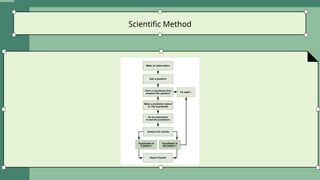
Scientific Method
• Everything that surrounds us.
• Environment coined as “Mother Nature”.
• Melting pot of the development of culture
and tradition.
SCOPE
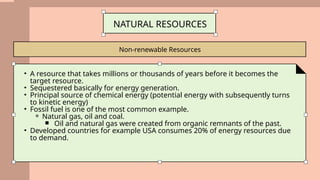
Non-renewable Resources
NATURAL RESOURCES
• A resource that takes millions or thousands of years before it becomes the
target resource.
• Sequestered basically for energy generation.
• Principal source of chemical energy (potential energy with subsequently turns
to kinetic energy)
• Fossil fuel is one of the most common example.
⚬ Natural gas, oil and coal.
■ Oil and natural gas were created from organic remnants of the past.
• Developed countries for example USA consumes 20% of energy resources due
to demand.
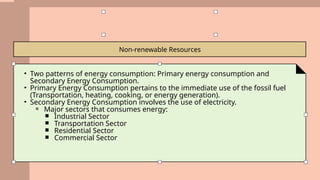
Non-renewable Resources
• Two patterns of energy consumption: Primary energy consumption and
Secondary Energy Consumption.
• Primary Energy Consumption pertains to the immediate use of the fossil fuel
(Transportation, heating, cooking, or energy generation).
• Secondary Energy Consumption involves the use of electricity.
⚬ Major sectors that consumes energy:
■ Industrial Sector
■ Transportation Sector
■ Residential Sector
■ Commercial Sector
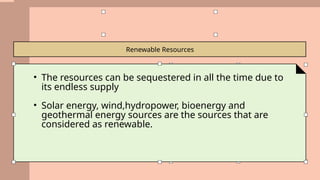
Renewable Resources
• The resources can be sequestered in all the time due to
its endless supply
• Solar energy, wind,hydropower, bioenergy and
geothermal energy sources are the sources that are
considered as renewable.
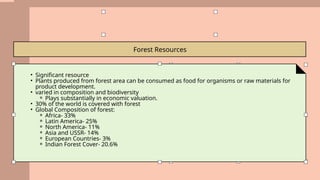
Forest Resources
• Significant resource
• Plants produced from forest area can be consumed as food for organisms or raw materials for
product development.
• varied in composition and biodiversity
⚬ Plays substantially in economic valuation.
• 30% of the world is covered with forest
• Global Composition of forest:
⚬ Africa- 33%
⚬ Latin America- 25%
⚬ North America- 11%
⚬ Asia and USSR- 14%
⚬ European Countries- 3%
⚬ Indian Forest Cover- 20.6%
Forest Resources
Significance of forest
• Commercial Values- Principal source of commercial product
• Ecological Significance- Provides habitat, immobilize pollution,
and produce constant oxygen supply to the Earth System
• Aesthetic values- Superficial value of the forest
• Life and economy of tribal- Provides sustenance for tribal
people
Water Resource
Water is one of the most important resource necessary for the survival of
an organism.
Types of Water Resources
• Saltwater Resources- high salinity level
• Groundwater Resources- most abundant freshwater on earth
• Surface Water Resources- water on the surface of the Earth.
Water Resource
Water is one of the most important resource necessary for the survival of
an organism.
Types of Water Resources
• Saltwater Resources- high salinity level
• Groundwater Resources- most abundant freshwater on earth
• Surface Water Resources- water on the surface of the Earth.
Water Resource
Uses of Freshwater
• Agricultural Use
• Industrial Use
• Domestic Use
• Use for hydropower Generation
• Use for Navigation and Recreation
Mineral Resources
• Mineral resources are naturally occurring substance definite chemical
composition and identifiable physical properties.
• Ore, a mineral or combination of mineral from which a useful
substance (usually metals)
• This resource takes millions of years before it formed on the Earths
surface.
Mineral Resources
• Industrial Use: Iron, aluminum, zinc, manganese, and copper.
• Important Non-metal Resource: Iron, aluminum, zinc, manganese, and
copper
• Stone: Granite, marble, and limestone.
• Ornaments: Gold, Silver, Palatium, and Diamonds
Food Resources
• Food is essential for growth and development of living organism
⚬ Main source of nutrients and trace elements from plants and animals
• Cultivation of crops is the way that people feed their own kind.
• Most of the crops were produced through land-based agriculture of crops
and livestock
• Sources of food: Food crops, livestock, aquaculture
Energy Resources
• Energy is the capacity to do work
• The principal source of energy here on Earth is the Sun that produces
solar energy which drives all the processes on earth.
• Types of energy: Chemical Energy, Electrical Energy, Hydel power, nuclear
energy.
Thank You

Introduction-to-environmental-science ppt

  • 1.
  • 2.
    Definition, Scope andImportance • Environmental Science analysis the issues that exists in the environment in holistic way. • A discipline that belongs to applied science. • A multidisciplinary study that involves biology, geology, chemistry, physics, engineering, sociology, health, anthropology, economics, statistics, computers and philosophy.
  • 3.
  • 4.
    • Everything thatsurrounds us. • Environment coined as “Mother Nature”. • Melting pot of the development of culture and tradition. SCOPE
  • 5.
    Non-renewable Resources NATURAL RESOURCES •A resource that takes millions or thousands of years before it becomes the target resource. • Sequestered basically for energy generation. • Principal source of chemical energy (potential energy with subsequently turns to kinetic energy) • Fossil fuel is one of the most common example. ⚬ Natural gas, oil and coal. ■ Oil and natural gas were created from organic remnants of the past. • Developed countries for example USA consumes 20% of energy resources due to demand.
  • 6.
    Non-renewable Resources • Twopatterns of energy consumption: Primary energy consumption and Secondary Energy Consumption. • Primary Energy Consumption pertains to the immediate use of the fossil fuel (Transportation, heating, cooking, or energy generation). • Secondary Energy Consumption involves the use of electricity. ⚬ Major sectors that consumes energy: ■ Industrial Sector ■ Transportation Sector ■ Residential Sector ■ Commercial Sector
  • 7.
    Renewable Resources • Theresources can be sequestered in all the time due to its endless supply • Solar energy, wind,hydropower, bioenergy and geothermal energy sources are the sources that are considered as renewable.
  • 8.
    Forest Resources • Significantresource • Plants produced from forest area can be consumed as food for organisms or raw materials for product development. • varied in composition and biodiversity ⚬ Plays substantially in economic valuation. • 30% of the world is covered with forest • Global Composition of forest: ⚬ Africa- 33% ⚬ Latin America- 25% ⚬ North America- 11% ⚬ Asia and USSR- 14% ⚬ European Countries- 3% ⚬ Indian Forest Cover- 20.6%
  • 9.
    Forest Resources Significance offorest • Commercial Values- Principal source of commercial product • Ecological Significance- Provides habitat, immobilize pollution, and produce constant oxygen supply to the Earth System • Aesthetic values- Superficial value of the forest • Life and economy of tribal- Provides sustenance for tribal people
  • 10.
    Water Resource Water isone of the most important resource necessary for the survival of an organism. Types of Water Resources • Saltwater Resources- high salinity level • Groundwater Resources- most abundant freshwater on earth • Surface Water Resources- water on the surface of the Earth.
  • 11.
    Water Resource Water isone of the most important resource necessary for the survival of an organism. Types of Water Resources • Saltwater Resources- high salinity level • Groundwater Resources- most abundant freshwater on earth • Surface Water Resources- water on the surface of the Earth.
  • 12.
    Water Resource Uses ofFreshwater • Agricultural Use • Industrial Use • Domestic Use • Use for hydropower Generation • Use for Navigation and Recreation
  • 13.
    Mineral Resources • Mineralresources are naturally occurring substance definite chemical composition and identifiable physical properties. • Ore, a mineral or combination of mineral from which a useful substance (usually metals) • This resource takes millions of years before it formed on the Earths surface.
  • 14.
    Mineral Resources • IndustrialUse: Iron, aluminum, zinc, manganese, and copper. • Important Non-metal Resource: Iron, aluminum, zinc, manganese, and copper • Stone: Granite, marble, and limestone. • Ornaments: Gold, Silver, Palatium, and Diamonds
  • 15.
    Food Resources • Foodis essential for growth and development of living organism ⚬ Main source of nutrients and trace elements from plants and animals • Cultivation of crops is the way that people feed their own kind. • Most of the crops were produced through land-based agriculture of crops and livestock • Sources of food: Food crops, livestock, aquaculture
  • 16.
    Energy Resources • Energyis the capacity to do work • The principal source of energy here on Earth is the Sun that produces solar energy which drives all the processes on earth. • Types of energy: Chemical Energy, Electrical Energy, Hydel power, nuclear energy.
  • 17.