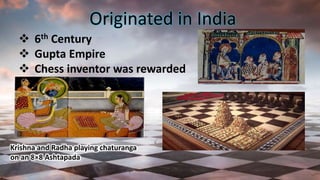
Originated in India
 6th Century
 Gupta Empire
 Chess inventor was rewarded
Krishna and Radha playing chaturanga
on an 8×8 Ashtapada
ரதம் / Rook
பதாதி / Pawn
ரத, கஜ, துரக, பதாதிகள்
துரகம் / Knight கஜம் / Bishop
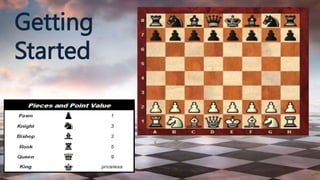
Getting
Started
Board A Board B
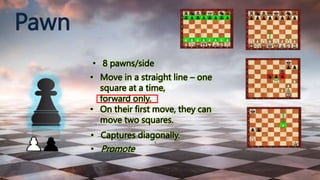
Pawn
• 8 pawns/side
• Move in a straight line – one
square at a time,
forward only.
• On their first move, they can
move two squares.
• Promote
• Captures diagonally.
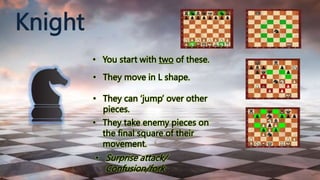
Knight
• You start with two of these.
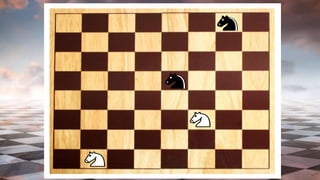
• They move in L shape.
• They can ‘jump’ over other
pieces.
• They take enemy pieces on
the final square of their
movement.
• Surprise attack/
Confusion/fork
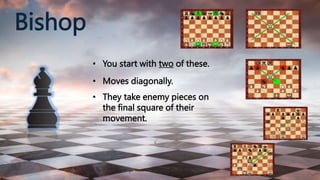
Bishop
• You start with two of these.
• Moves diagonally.
• They take enemy pieces on
the final square of their
movement.
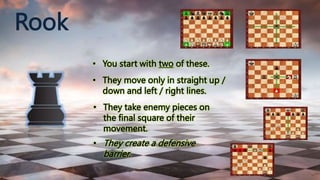
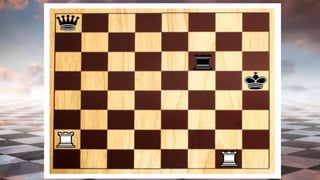
Rook
• You start with two of these.
• They move only in straight up /
down and left / right lines.
• They take enemy pieces on
the final square of their
movement.
• They create a defensive
barrier.
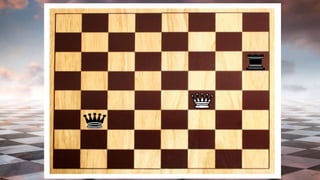
Queen
• You start with one of these.
• This piece moves in straight and
diagonal lines, back and forth.
• They take enemy pieces on
the final square of their
movement.
• They can be used to create
winning strikes at key pieces by
working alongside other pieces.
King
• This one piece is the most
important in the game. If they
are taken by the enemy, the
game is lost.
• This piece can move one square
at a time in any direction.
• Check
• Checkmate
Fair Play Rules
1. White Starts.
2. Don’t touch opponent piece unless you are capturing
3. "touch-move rule“.
Quiz
1. How many players are needed for the game of chess?
2. What two colours are traditionally used for pieces in chess?
3. How many different pieces are there in chess?
4. How many black squares are on the board?
5. How many white squares are on the board?
6. How can you get a piece back once it has been taken?
7. Which piece has the most limited moves available?
8. Which piece has the trickiest move?
9. How many squares and in which direction can a king go?
10. What should be said if you get the enemy’s king in range of an attack?
(2)
(1)
(1) (…)
(…) (1)
(…)
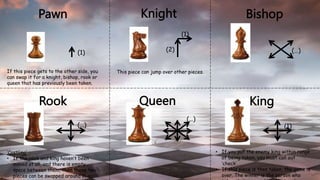
Pawn Knight Bishop
Rook Queen King
If this piece gets to the other side, you
can swap it for a knight, bishop, rook or
queen that has previously been taken.
This piece can jump over other pieces.
• If you put the enemy king within range
of being taken, you must call out
‘check’.
• If this piece is then taken, the game is
over. The winner is the person who
‘Castling’
• If the rook and king haven’t been
moved at all, and there is empty
space between them, then these two
pieces can be swapped around in a

Introduction to Chess.pptx

  • 2.
    Originated in India 6th Century  Gupta Empire  Chess inventor was rewarded Krishna and Radha playing chaturanga on an 8×8 Ashtapada
  • 5.
    ரதம் / Rook பதாதி/ Pawn ரத, கஜ, துரக, பதாதிகள் துரகம் / Knight கஜம் / Bishop
  • 8.
  • 9.
  • 10.
    Pawn • 8 pawns/side •Move in a straight line – one square at a time, forward only. • On their first move, they can move two squares. • Promote • Captures diagonally.
  • 12.
    Knight • You startwith two of these. • They move in L shape. • They can ‘jump’ over other pieces. • They take enemy pieces on the final square of their movement. • Surprise attack/ Confusion/fork
  • 14.
    Bishop • You startwith two of these. • Moves diagonally. • They take enemy pieces on the final square of their movement.
  • 16.
    Rook • You startwith two of these. • They move only in straight up / down and left / right lines. • They take enemy pieces on the final square of their movement. • They create a defensive barrier.
  • 18.
    Queen • You startwith one of these. • This piece moves in straight and diagonal lines, back and forth. • They take enemy pieces on the final square of their movement. • They can be used to create winning strikes at key pieces by working alongside other pieces.
  • 20.
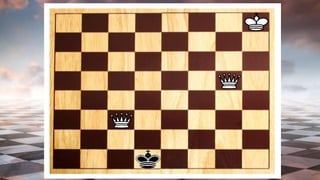
    King • This onepiece is the most important in the game. If they are taken by the enemy, the game is lost. • This piece can move one square at a time in any direction. • Check • Checkmate
  • 22.
    Fair Play Rules 1.White Starts. 2. Don’t touch opponent piece unless you are capturing 3. "touch-move rule“.
  • 24.
    Quiz 1. How manyplayers are needed for the game of chess? 2. What two colours are traditionally used for pieces in chess? 3. How many different pieces are there in chess? 4. How many black squares are on the board? 5. How many white squares are on the board? 6. How can you get a piece back once it has been taken? 7. Which piece has the most limited moves available? 8. Which piece has the trickiest move? 9. How many squares and in which direction can a king go? 10. What should be said if you get the enemy’s king in range of an attack?
  • 25.
    (2) (1) (1) (…) (…) (1) (…) PawnKnight Bishop Rook Queen King If this piece gets to the other side, you can swap it for a knight, bishop, rook or queen that has previously been taken. This piece can jump over other pieces. • If you put the enemy king within range of being taken, you must call out ‘check’. • If this piece is then taken, the game is over. The winner is the person who ‘Castling’ • If the rook and king haven’t been moved at all, and there is empty space between them, then these two pieces can be swapped around in a