


An Introduction to
   Behavior Driven Design
                       Shawn Wallace
                National Service Offering Lead
Application Development and Application Lifecycle Management
                      Senior Architect
                     Centric Consulting
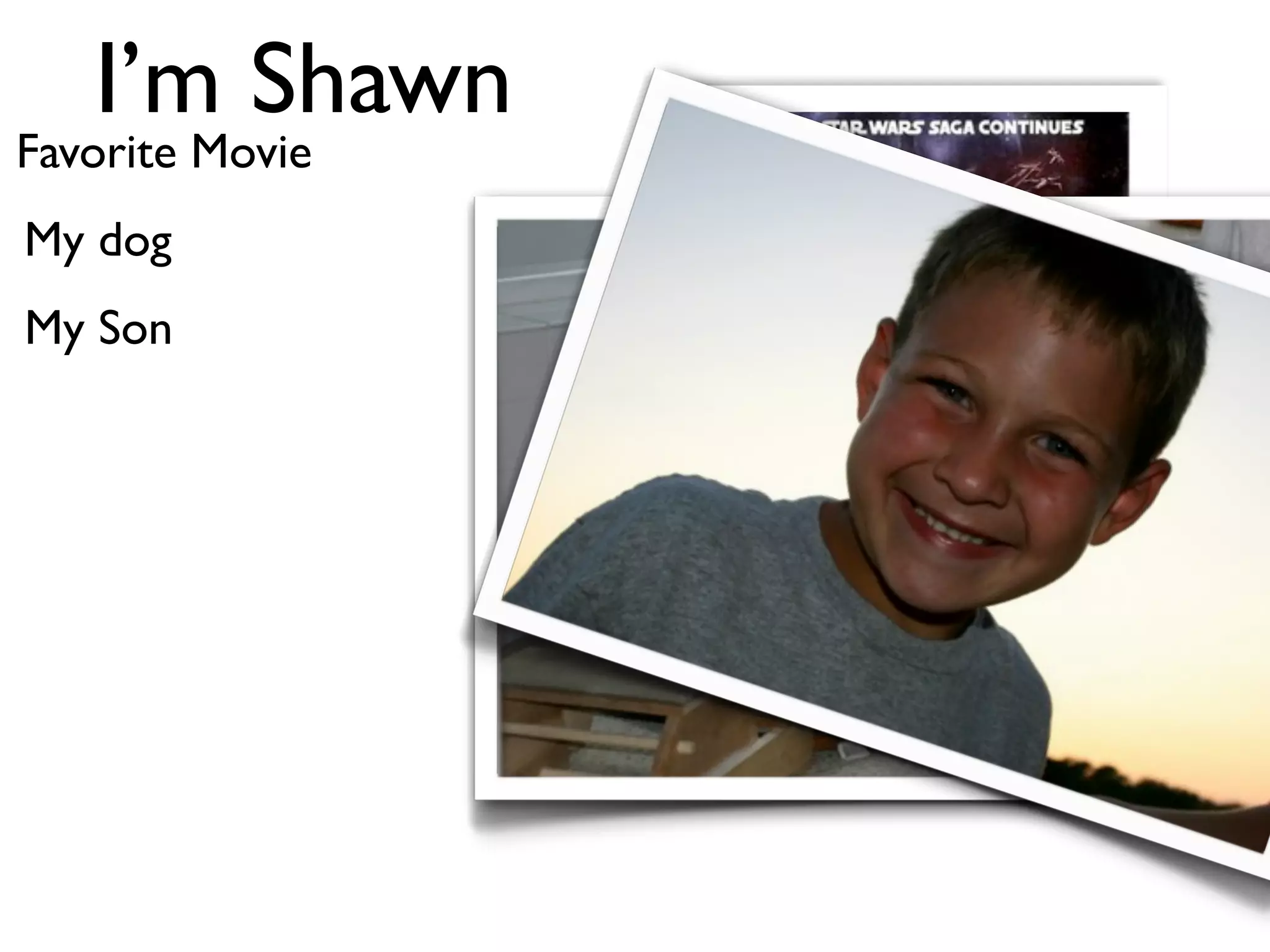
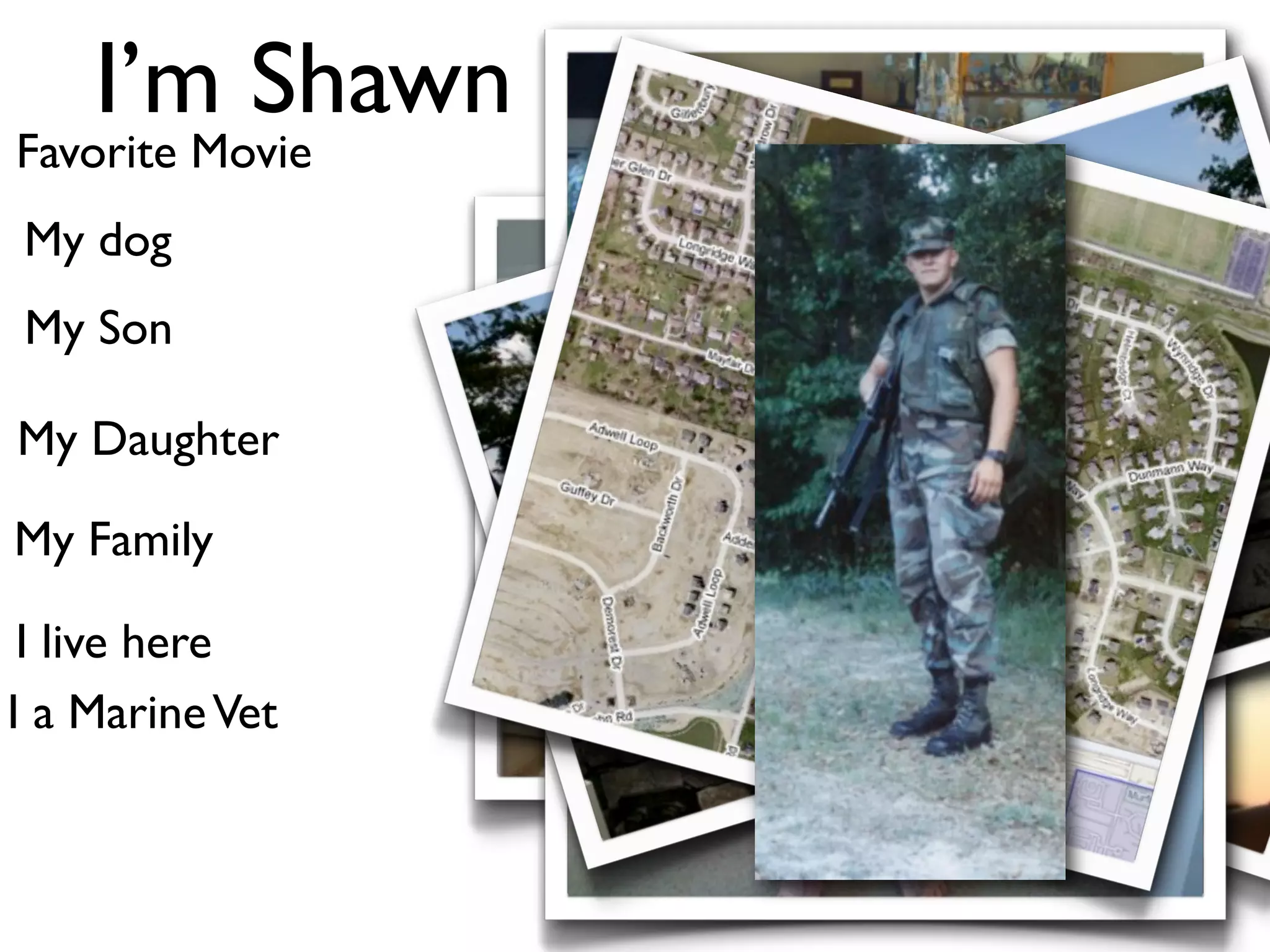
I’m Shawn
I’m Shawn
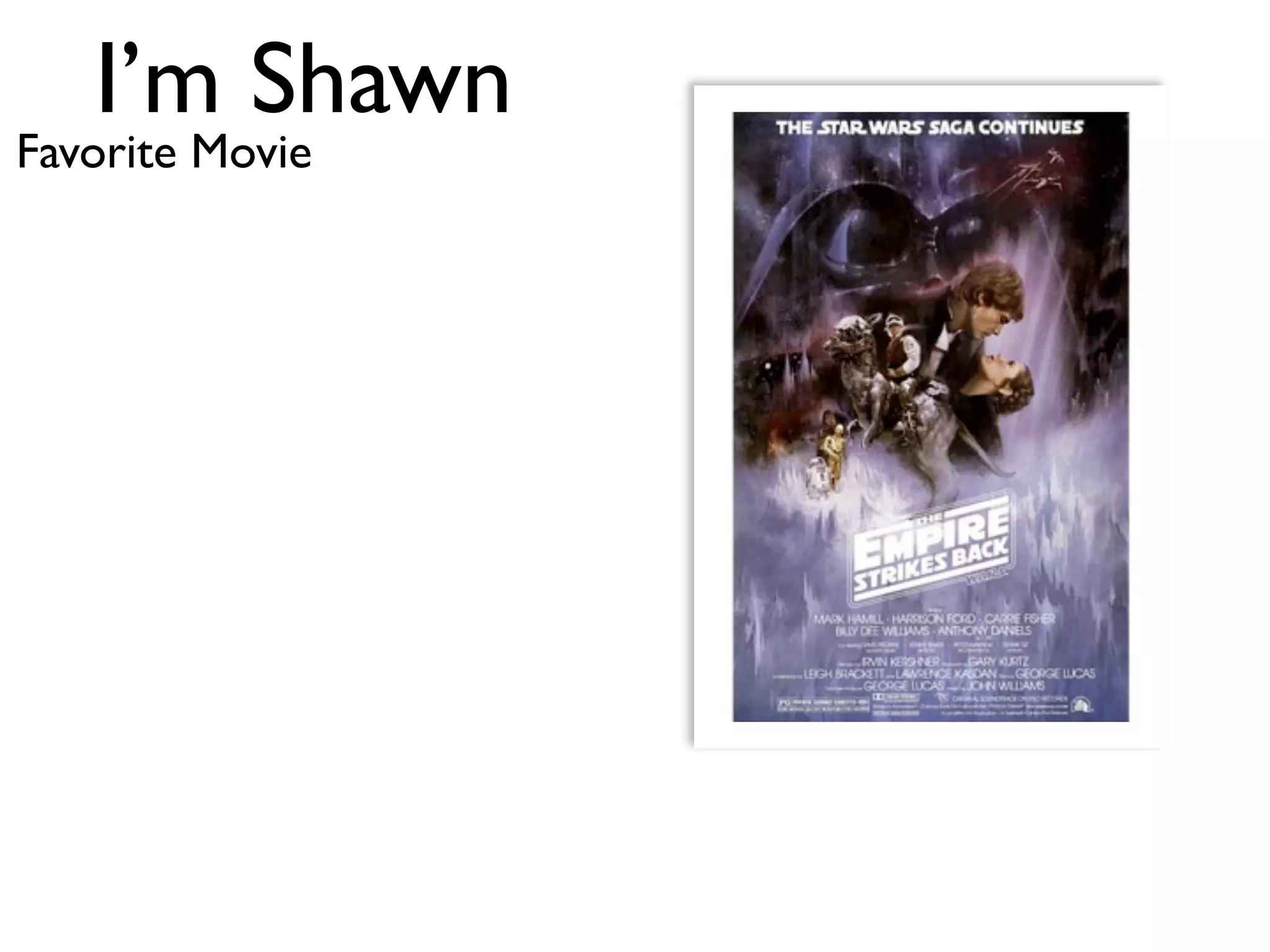
Favorite Movie
I’m Shawn
Favorite Movie
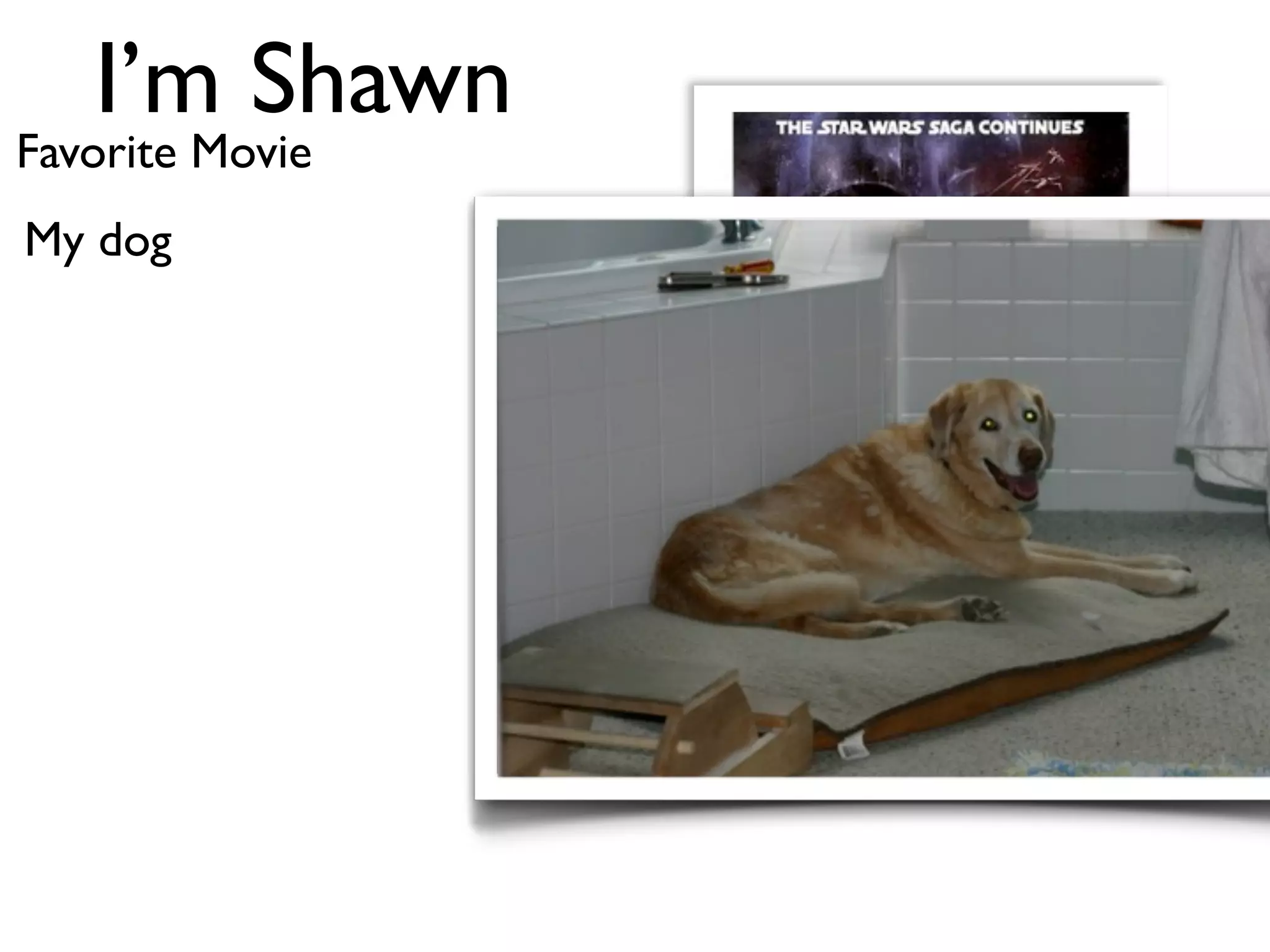
My dog
I’m Shawn
Favorite Movie
My dog
My Son
I’m Shawn
Favorite Movie
My dog
My Son

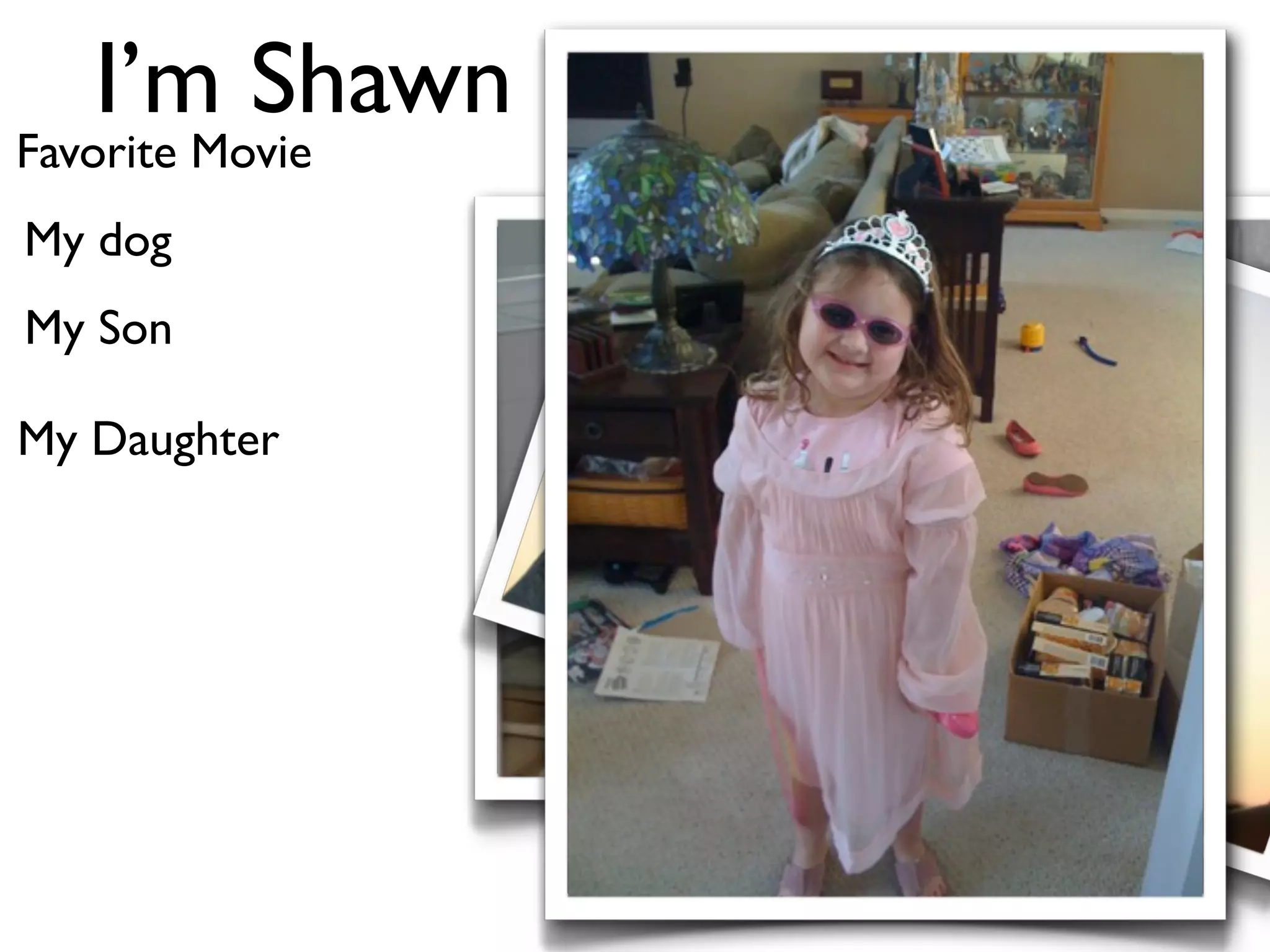
My Daughter
I’m Shawn
Favorite Movie
My dog
My Son

My Daughter

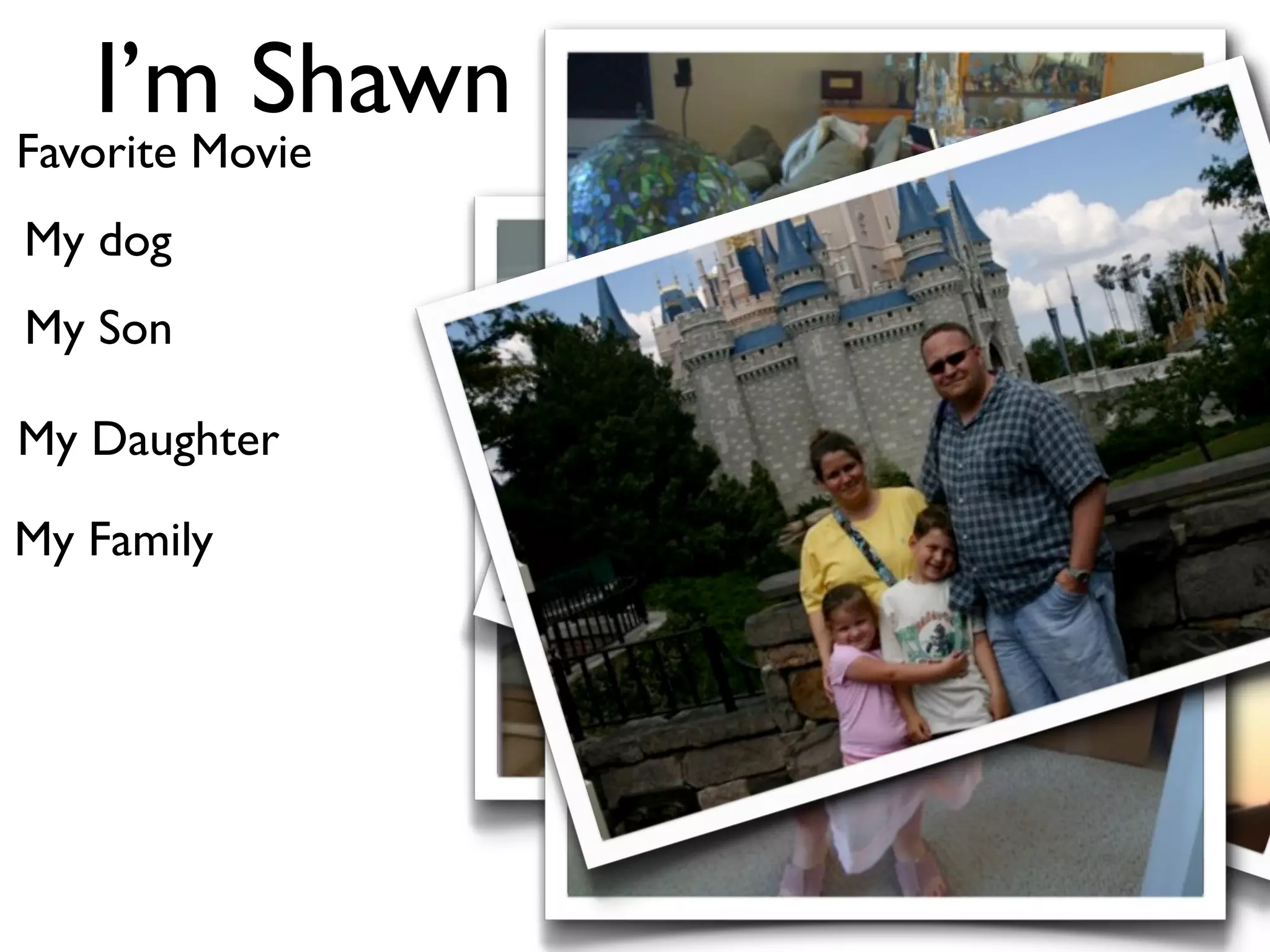
My Family
I’m Shawn
Favorite Movie
My dog
My Son

My Daughter

My Family

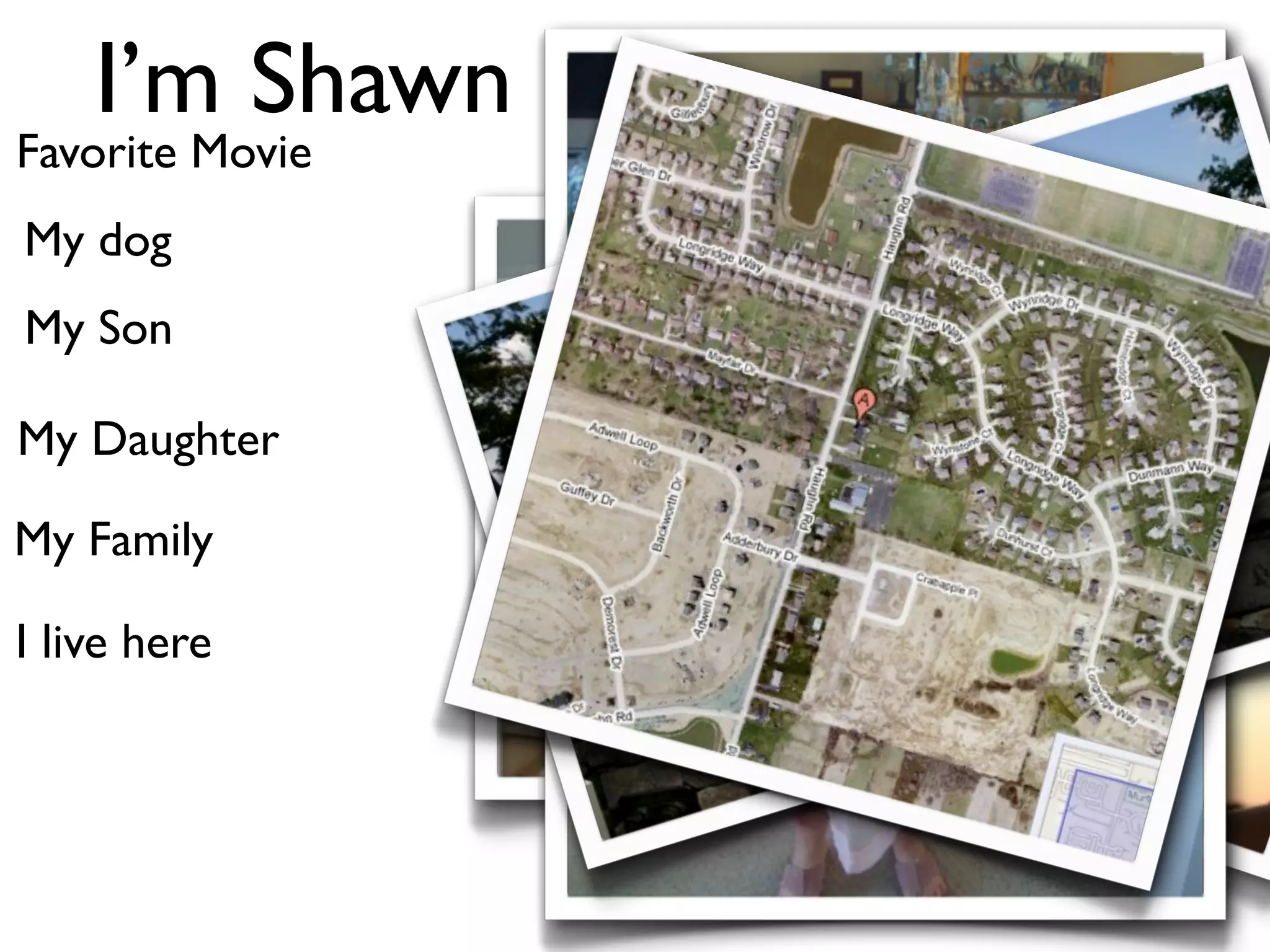
I live here
I’m Shawn
Favorite Movie
My dog
My Son

My Daughter

My Family

 I live here
I a Marine Vet
I’m Shawn
Favorite Movie
My dog
My Son

My Daughter

My Family

 I live here
I a Marine Vet
My Favorite Team
I’m Shawn
Favorite Movie
My dog
My Son

My Daughter

My Family

 I live here
I a Marine Vet
My Favorite Team
Where I work
I’m not a BA
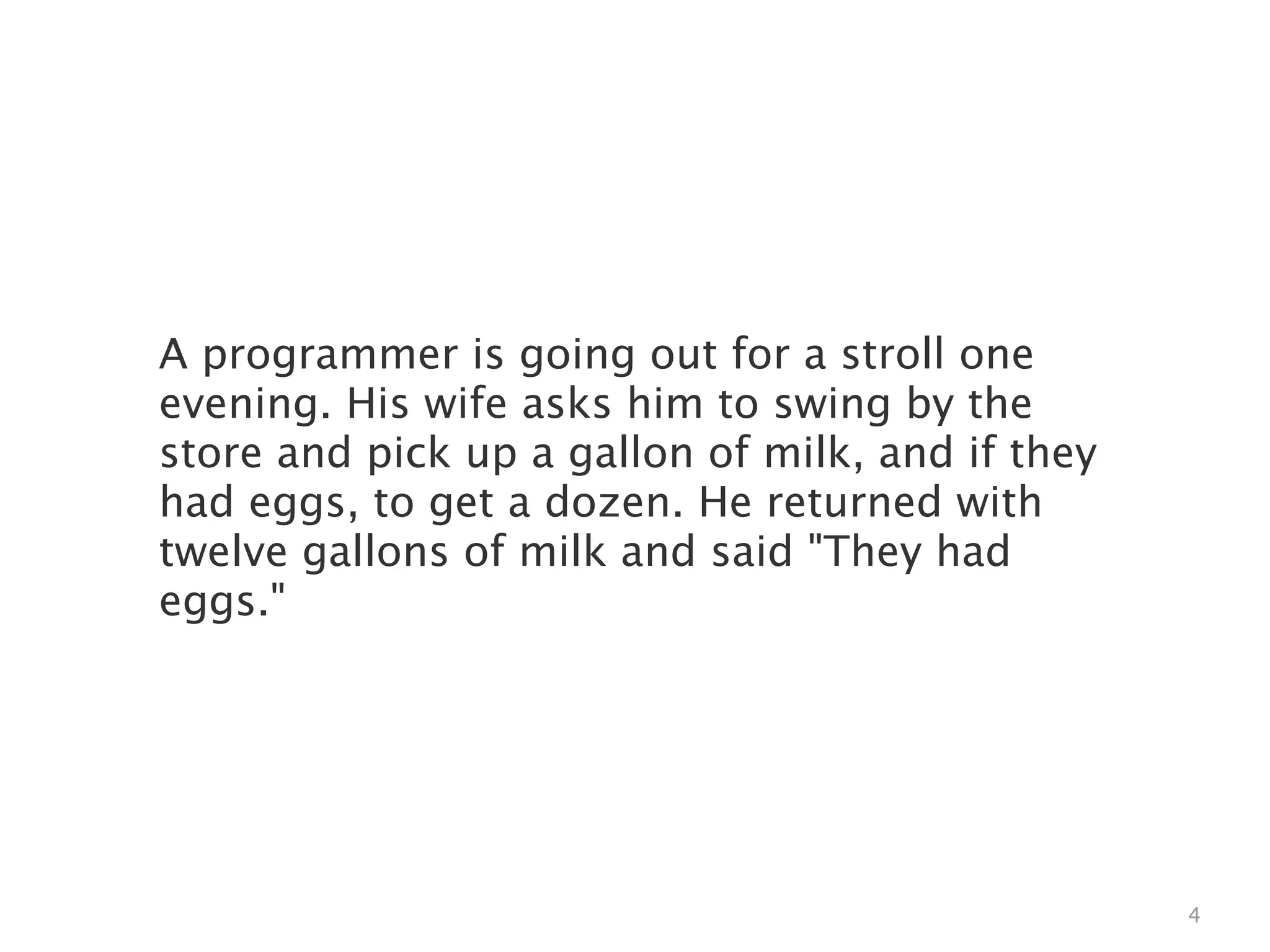
A programmer is going out for a stroll one
evening. His wife asks him to swing by the
store and pick up a gallon of milk, and if they
had eggs, to get a dozen. He returned with
twelve gallons of milk and said "They had
eggs."


                                                  4
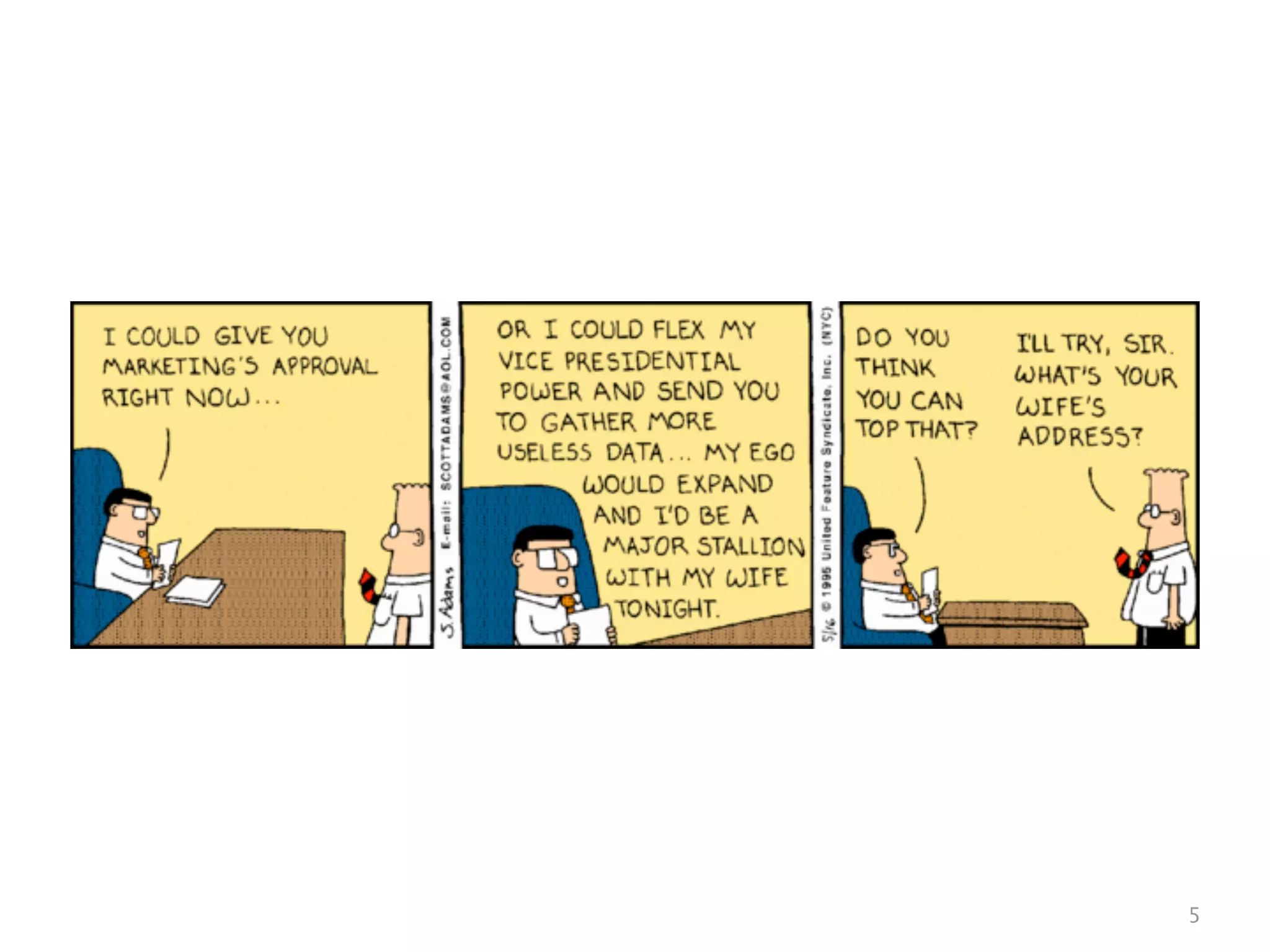
5
Our existences are
  about precise
 communication
The Problem with Agility
We are trying to “productize”
  our approaches...again.
We are trying to “productize”
  our approaches...again.
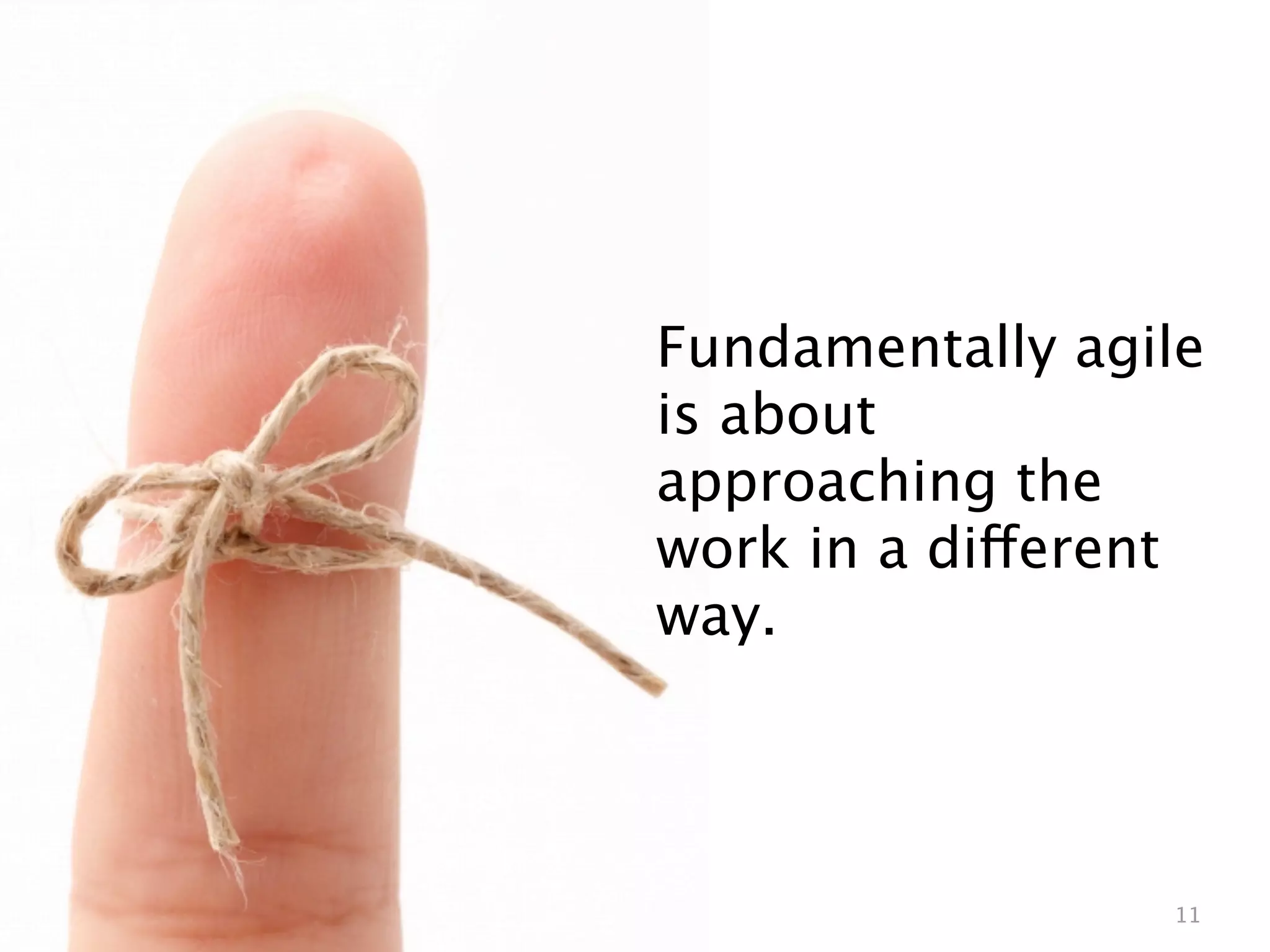
Fundamentally agile
is about
approaching the
work in a different
way.


                 11
12
We need thinking
business analysts
14
15
We’re not building a
     house...
We’re cleaning the
     house...
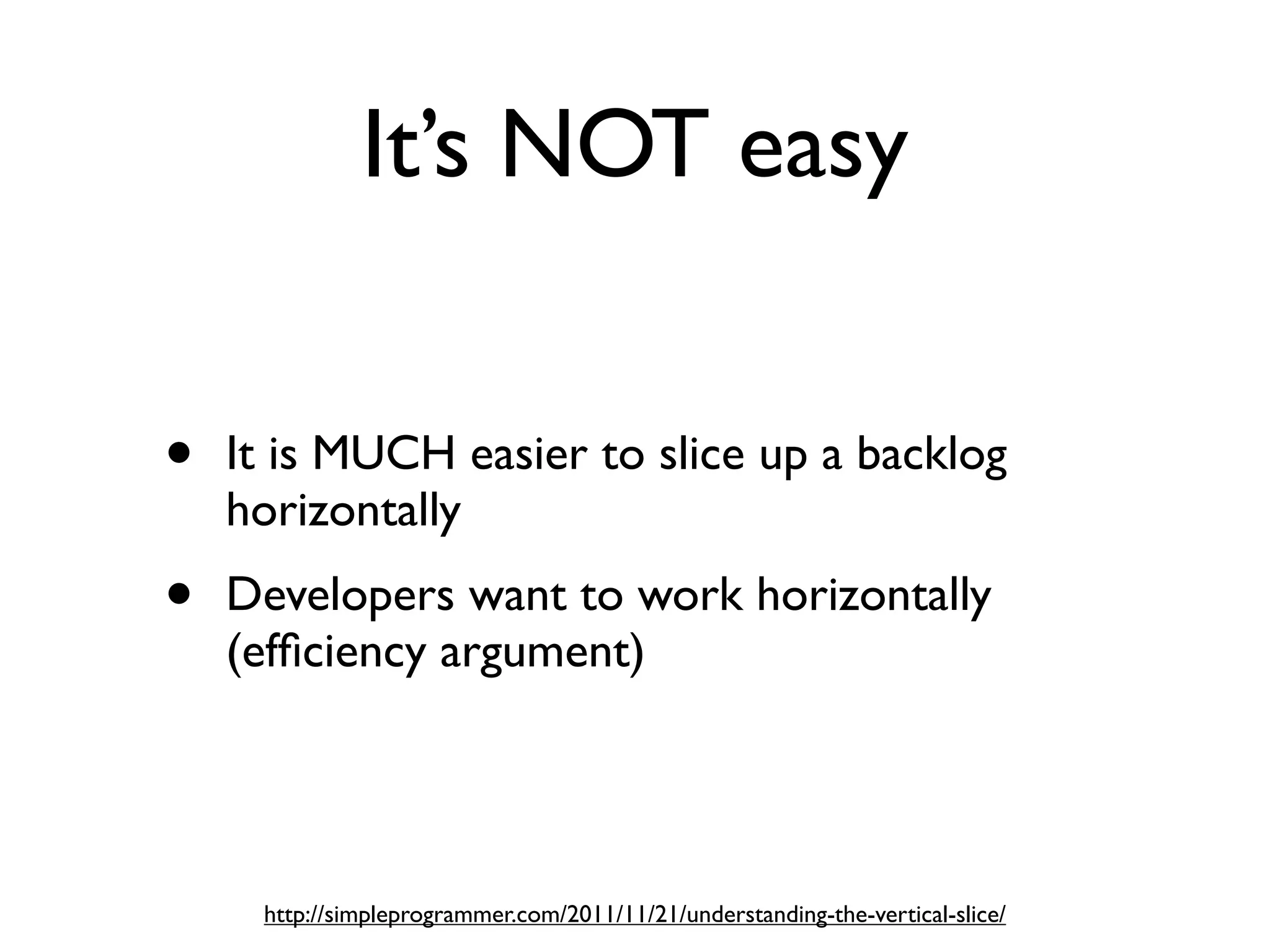
It’s NOT easy


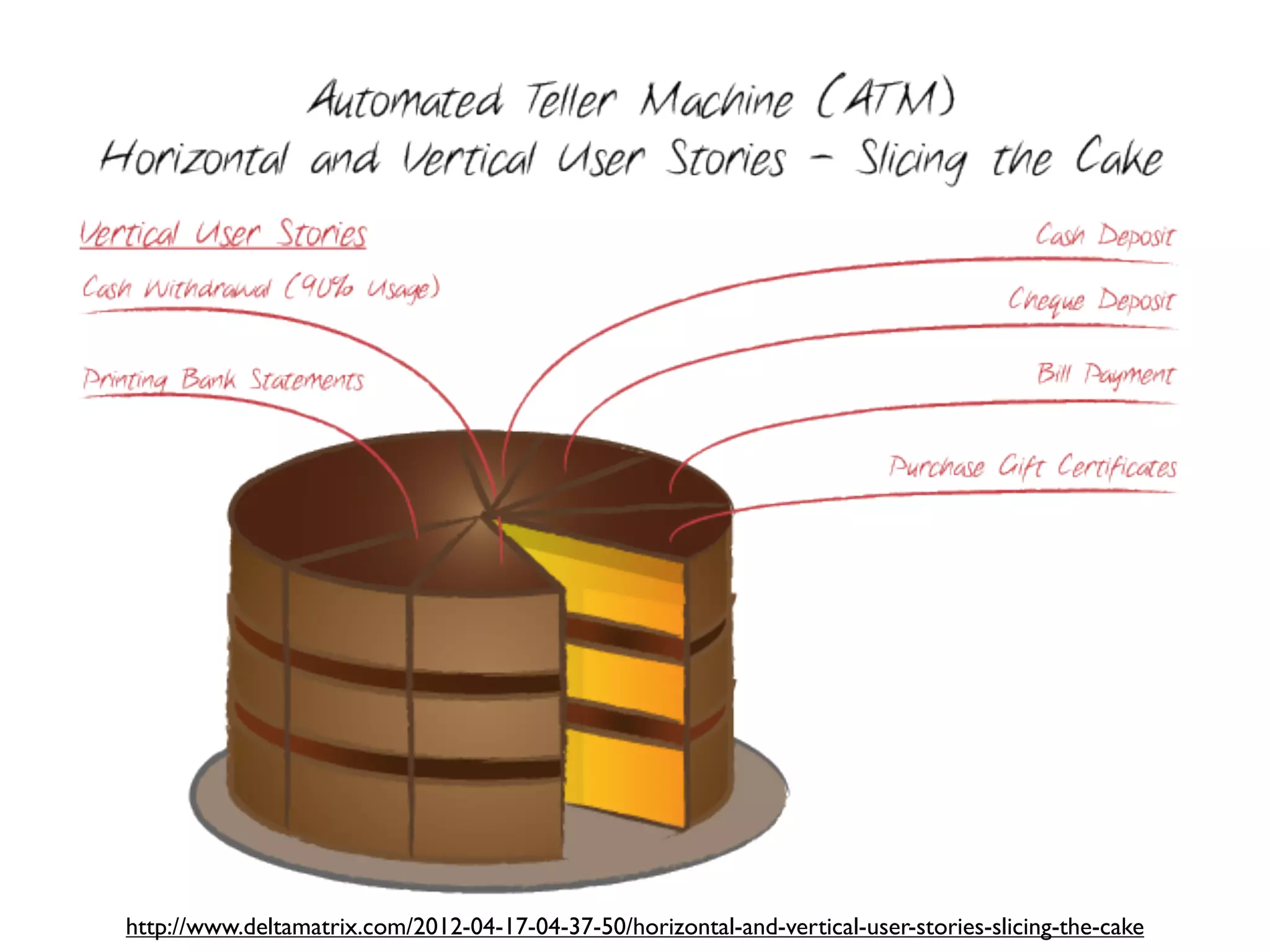
•   It is MUCH easier to slice up a backlog
    horizontally
•   Developers want to work horizontally
    (efficiency argument)


     http://simpleprogrammer.com/2011/11/21/understanding-the-vertical-slice/
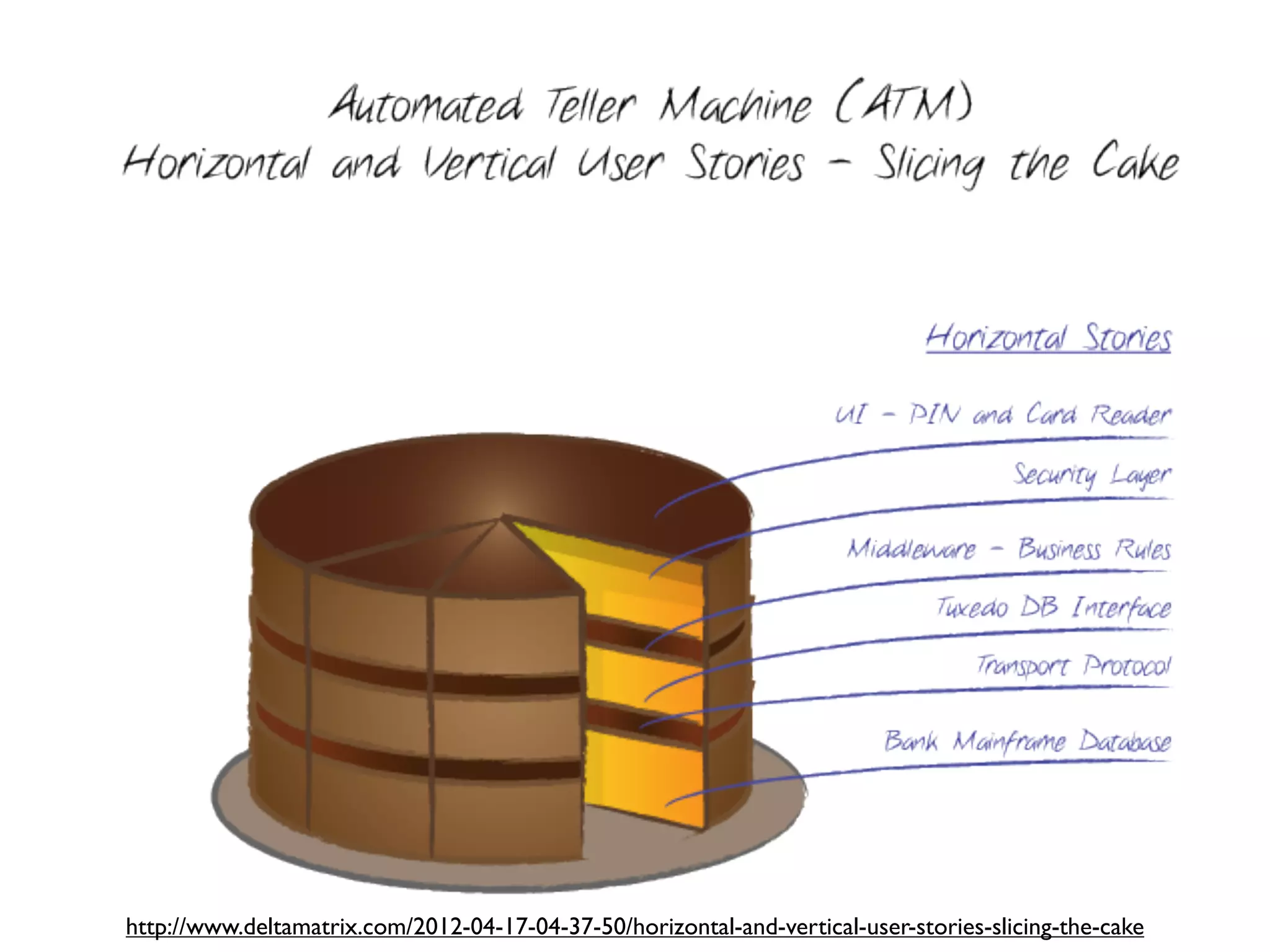
http://www.deltamatrix.com/2012-04-17-04-37-50/horizontal-and-vertical-user-stories-slicing-the-cake
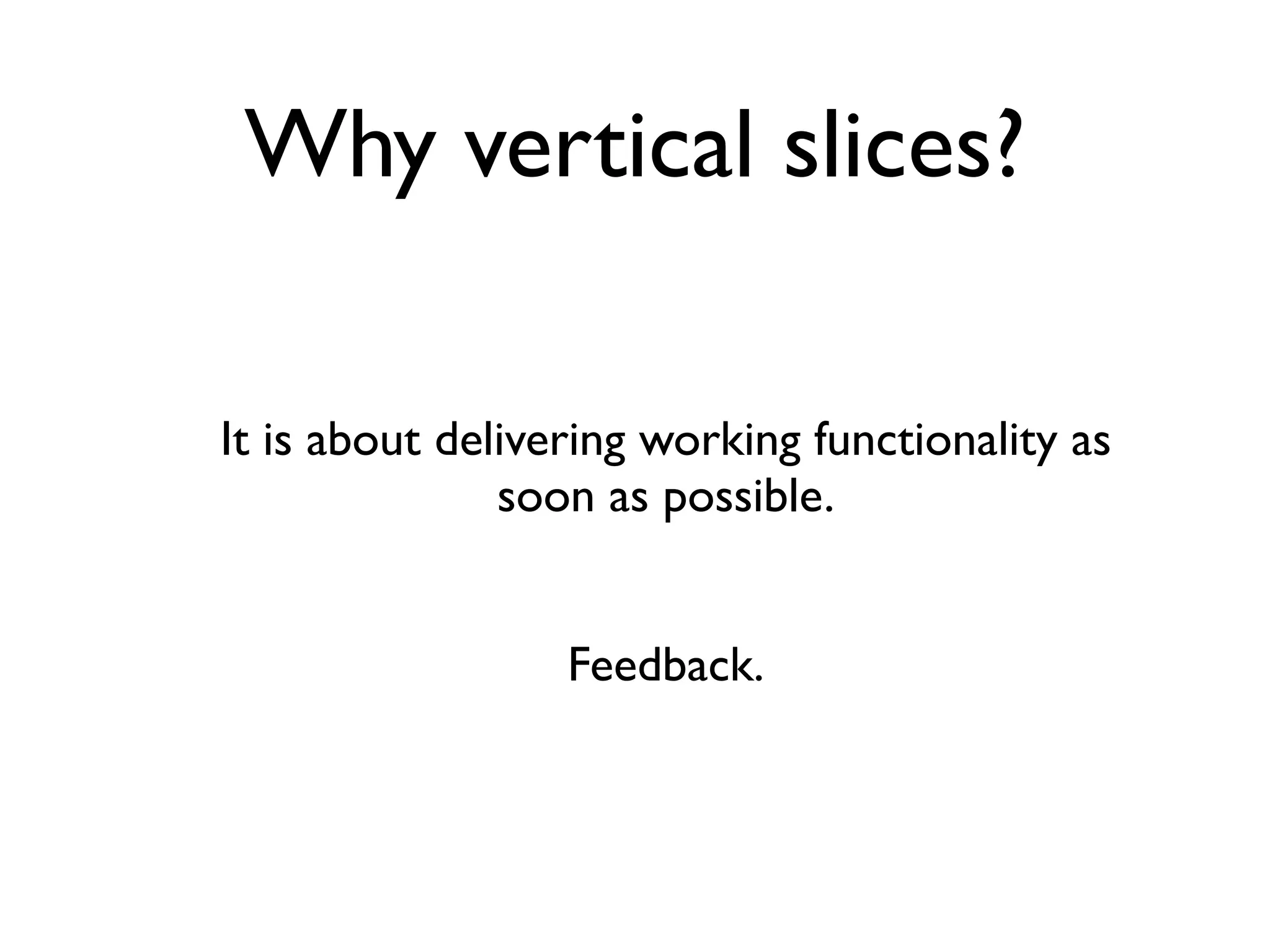
Why vertical slices?

It is about delivering working functionality as
               soon as possible.


                  Feedback.
http://www.deltamatrix.com/2012-04-17-04-37-50/horizontal-and-vertical-user-stories-slicing-the-cake
Behavior Driven
 Development
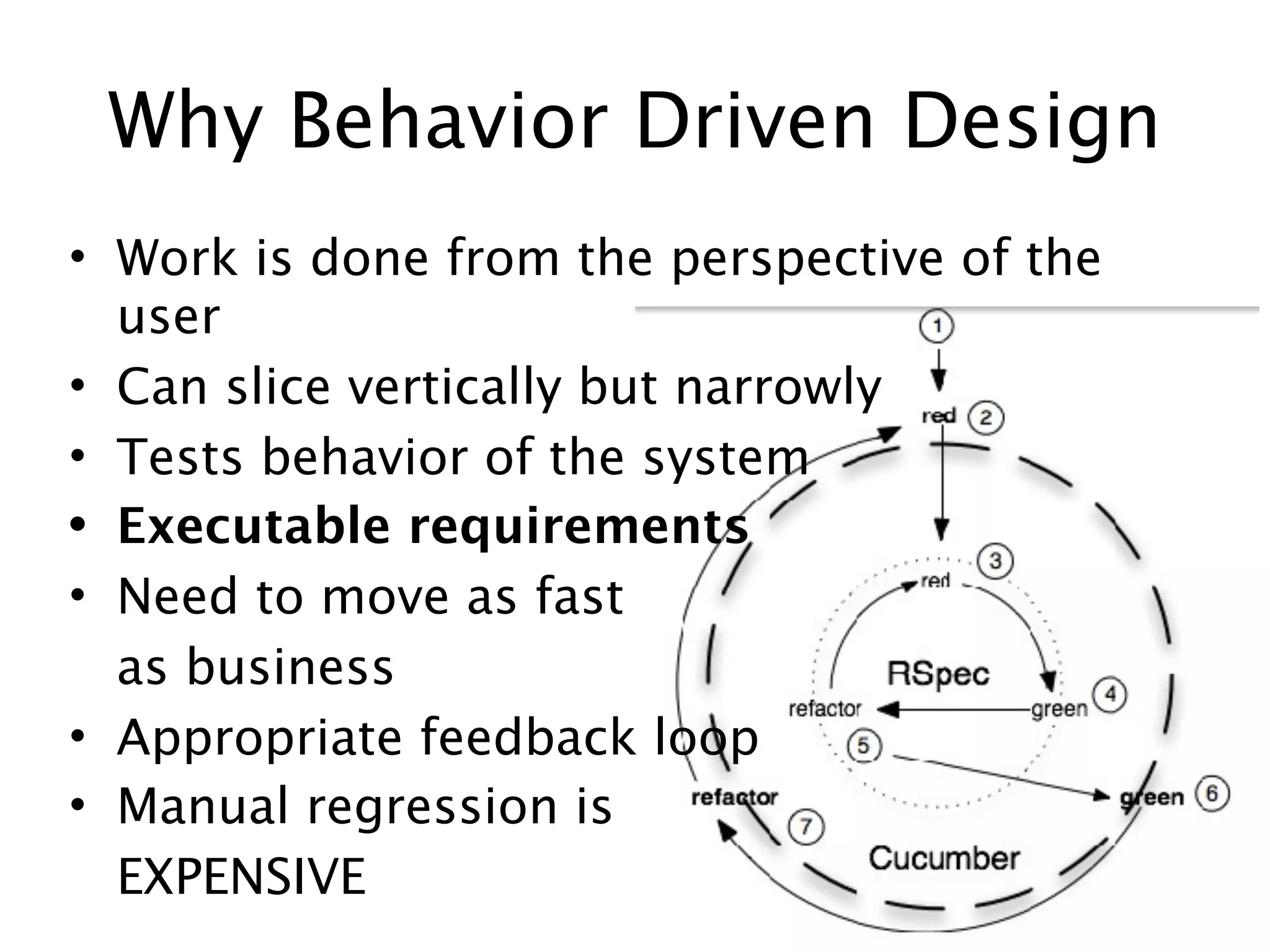
Why Behavior Driven Design
• Work is done from the perspective of the
  user
• Can slice vertically but narrowly
• Tests behavior of the system
• Executable requirements
• Need to move as fast
  as business
• Appropriate feedback loop
• Manual regression is
  EXPENSIVE
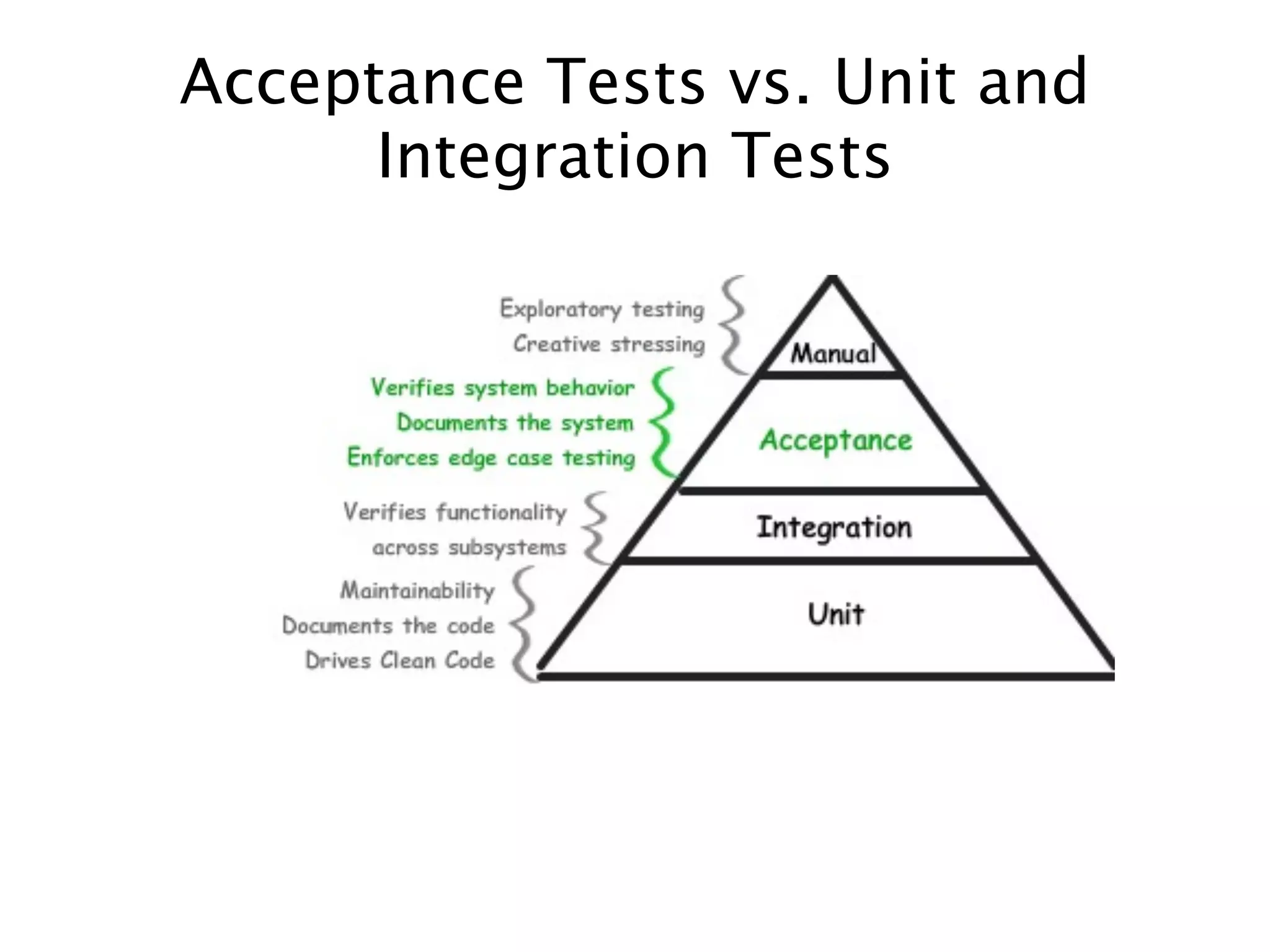
Acceptance Tests vs. Unit and
      Integration Tests
Acceptance Tests vs. Unit and
          Integration Tests
• Unit Tests confirm that you built it
  right (INSIDE OUT)
• Acceptance Tests confirm that you
  build the right thing (OUTSIDE IN)


                                        25
Benefits
•   Implementing changes more efficiently
•   Quick feedback
•   Higher product quality
•   Less rework
•   Better work alignment to priority

                  (not just for agile teams)

                                          26
• Describes how software should behave in plain text
• Gherkin
   – Usable in many different human languages
   – Features can be written and understood by both non/
     technical project members
• Not a replacement for unit testing; it’s not a low
  level testing/spec framework
• Easy to execute in Continuous Integration
  environment (except MS TFS)
Technology Stack
• Cucumber - Domain Specification
• Ruby, JRuby or .NET - map cukes to
  application
• UI testing framework - Watir, Watin,
  Selenium, Capybara (headless),
  anything that supports WebDriver
• Open source
• STRONG community support

                                         28
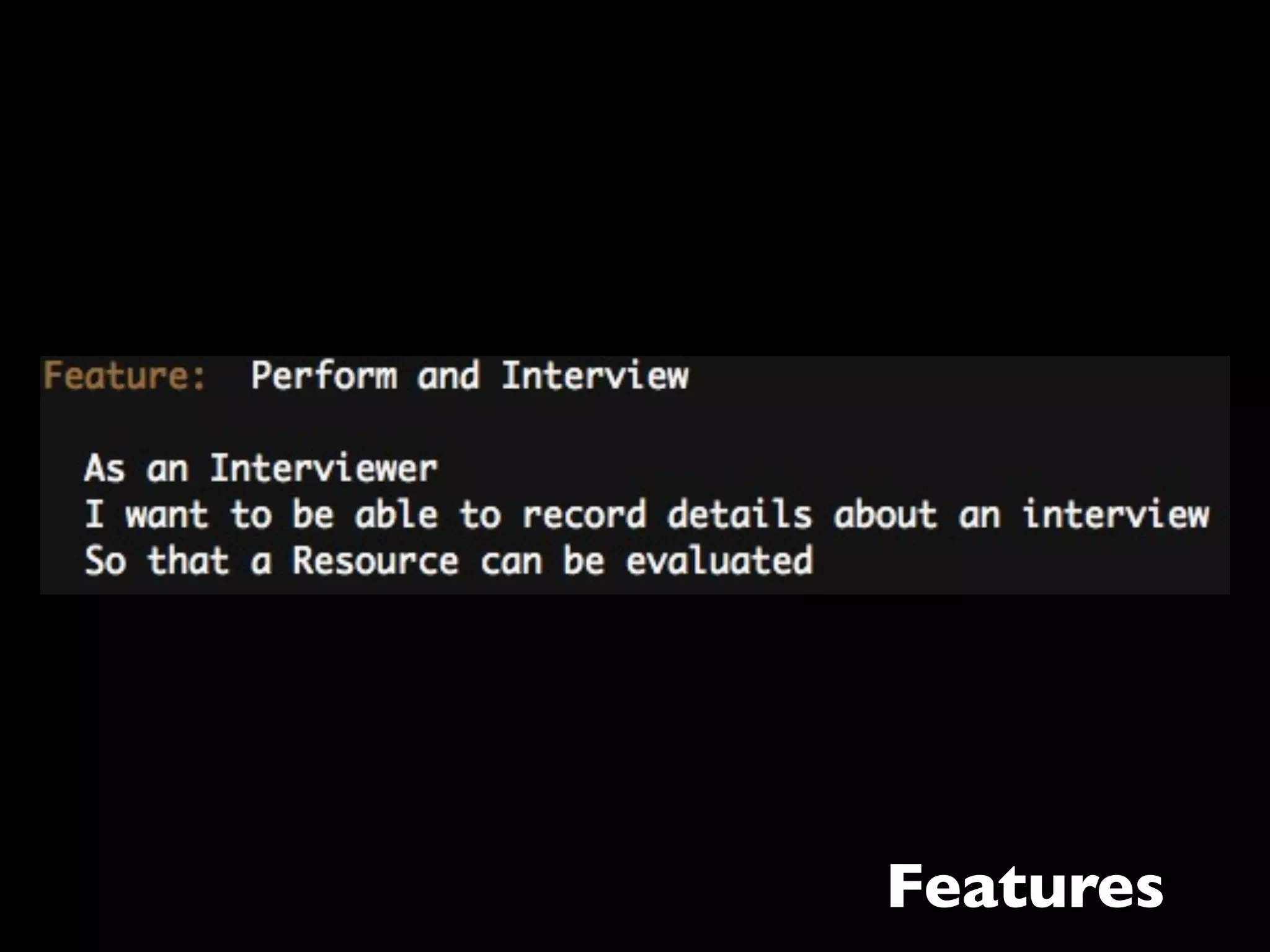
Features
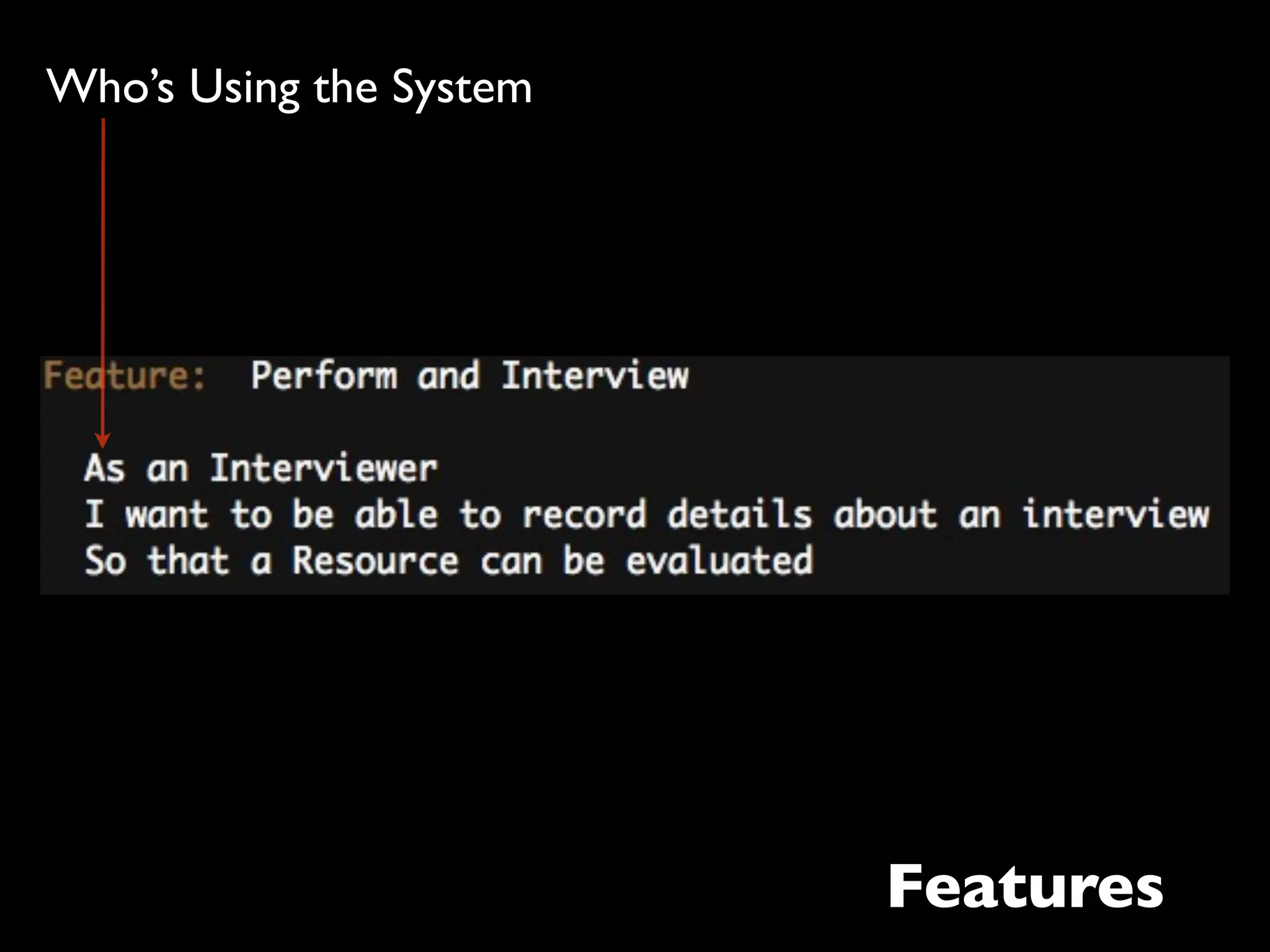
Who’s Using the System


                         Features
Who’s Using the System

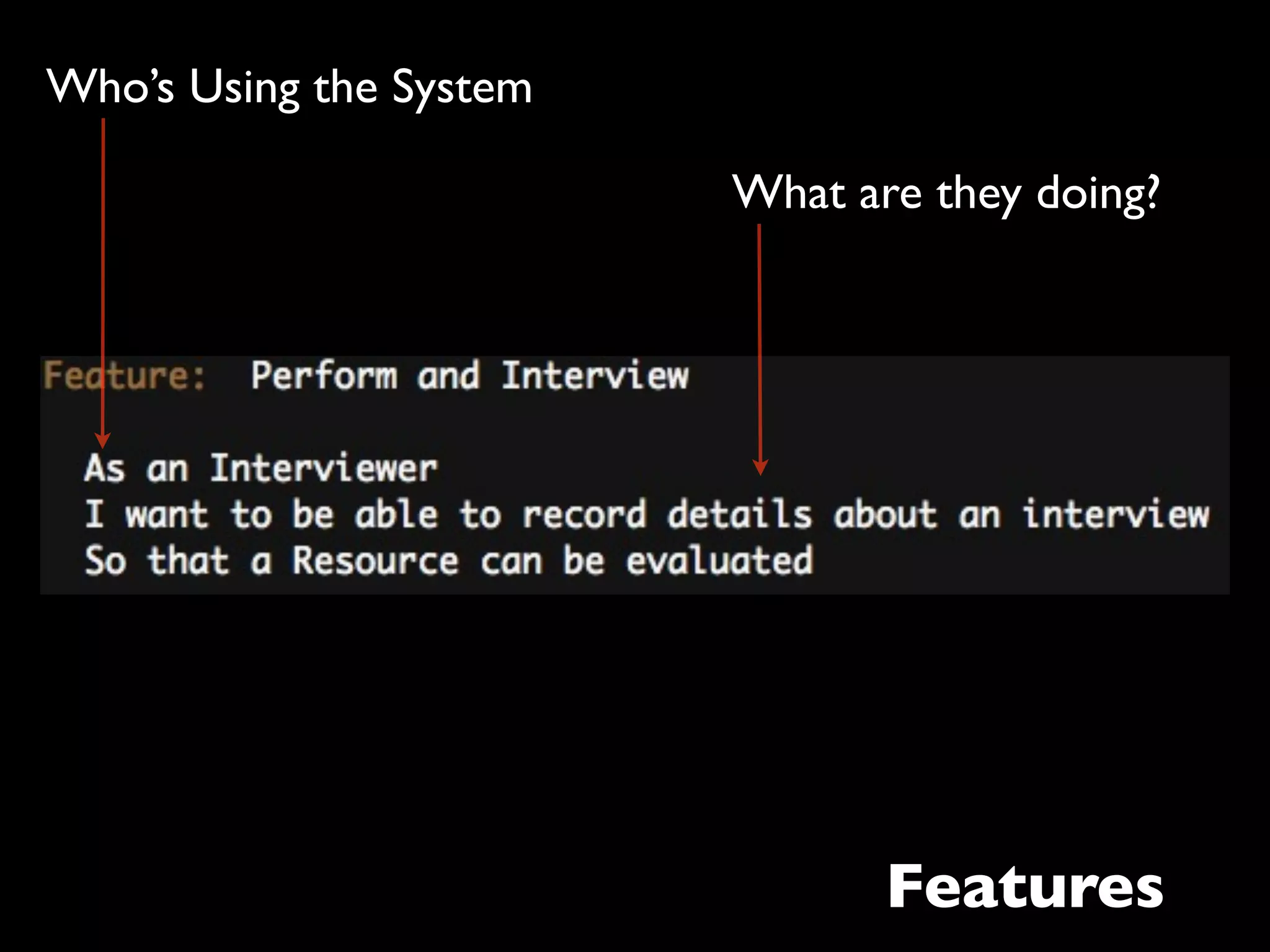
                         What are they doing?


                                Features
Who’s Using the System

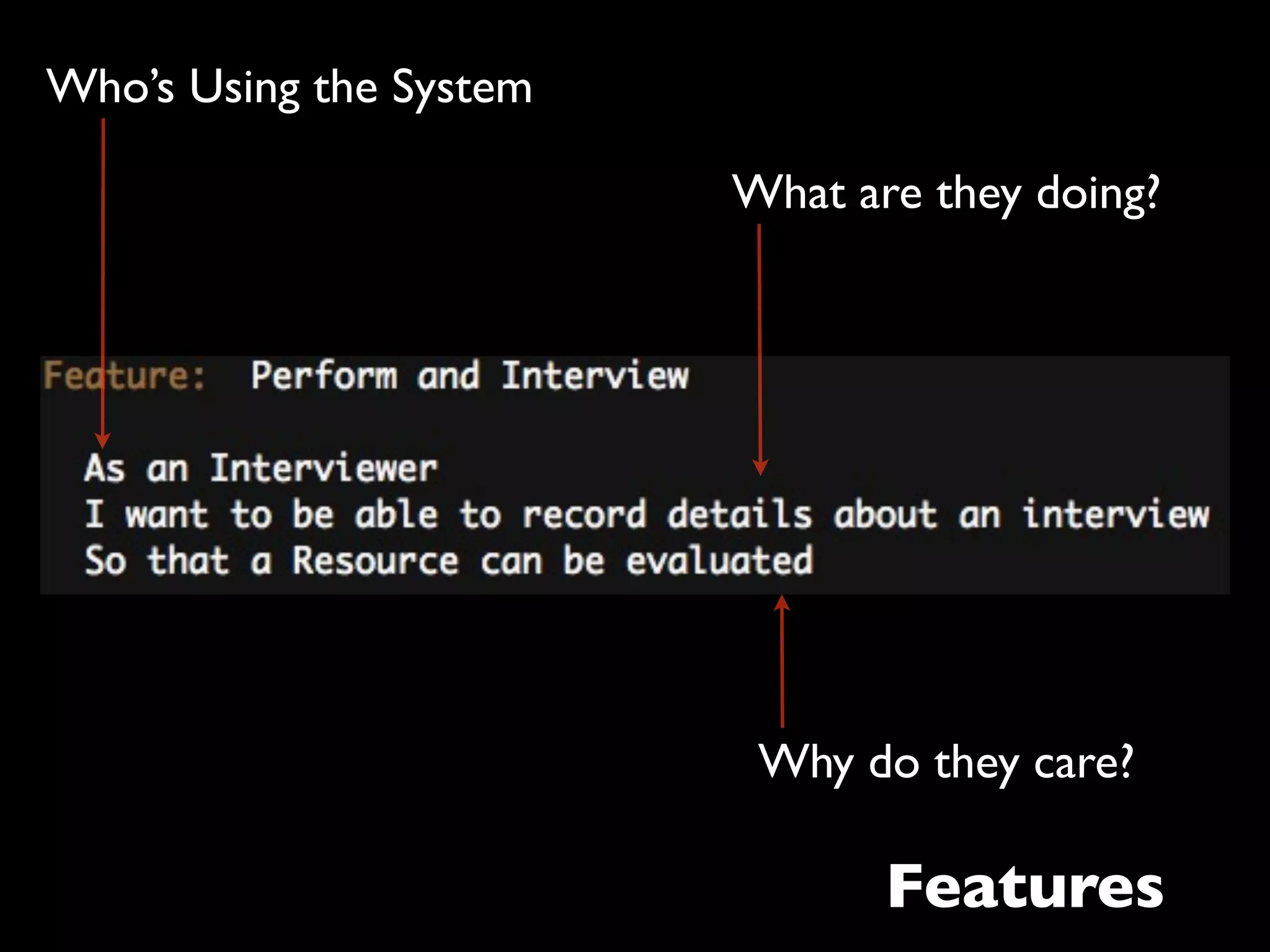
                         What are they doing?


                          Why do they care?

                                Features
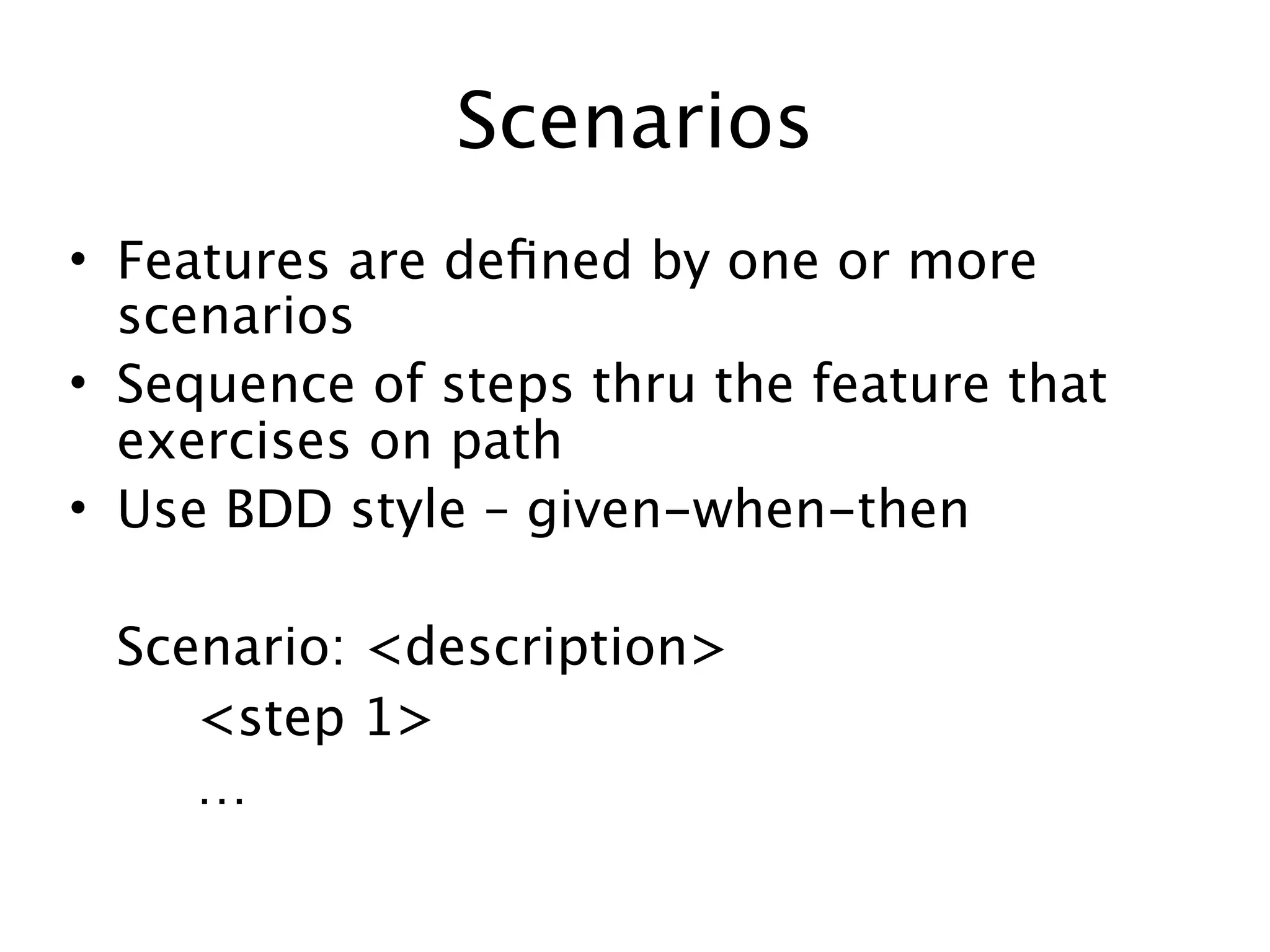
Scenarios
• Features are defined by one or more
  scenarios
• Sequence of steps thru the feature that
  exercises on path
• Use BDD style – given-when-then


 Scenario: <description>

 
 <step 1>

 
 …
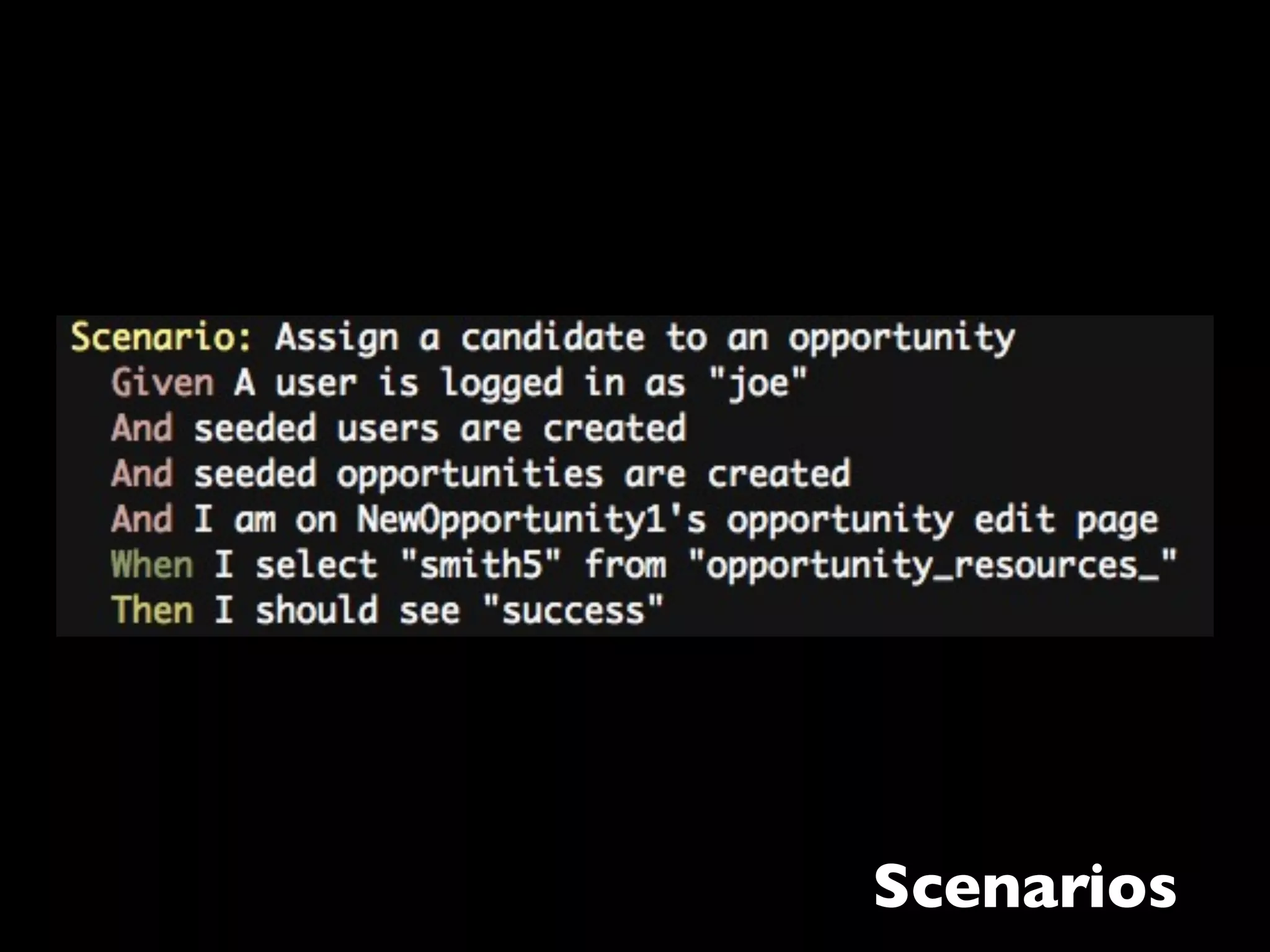
Scenarios
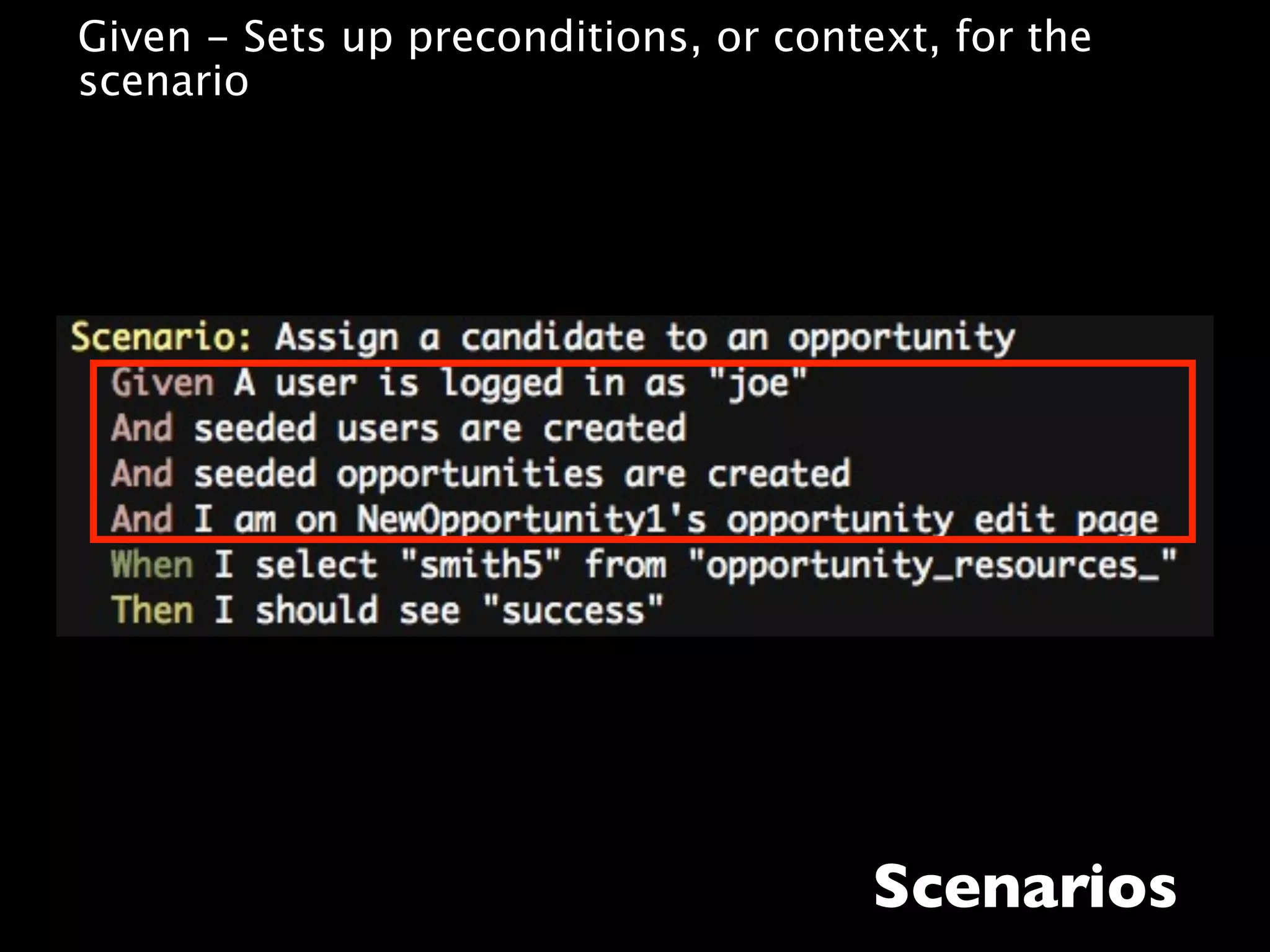
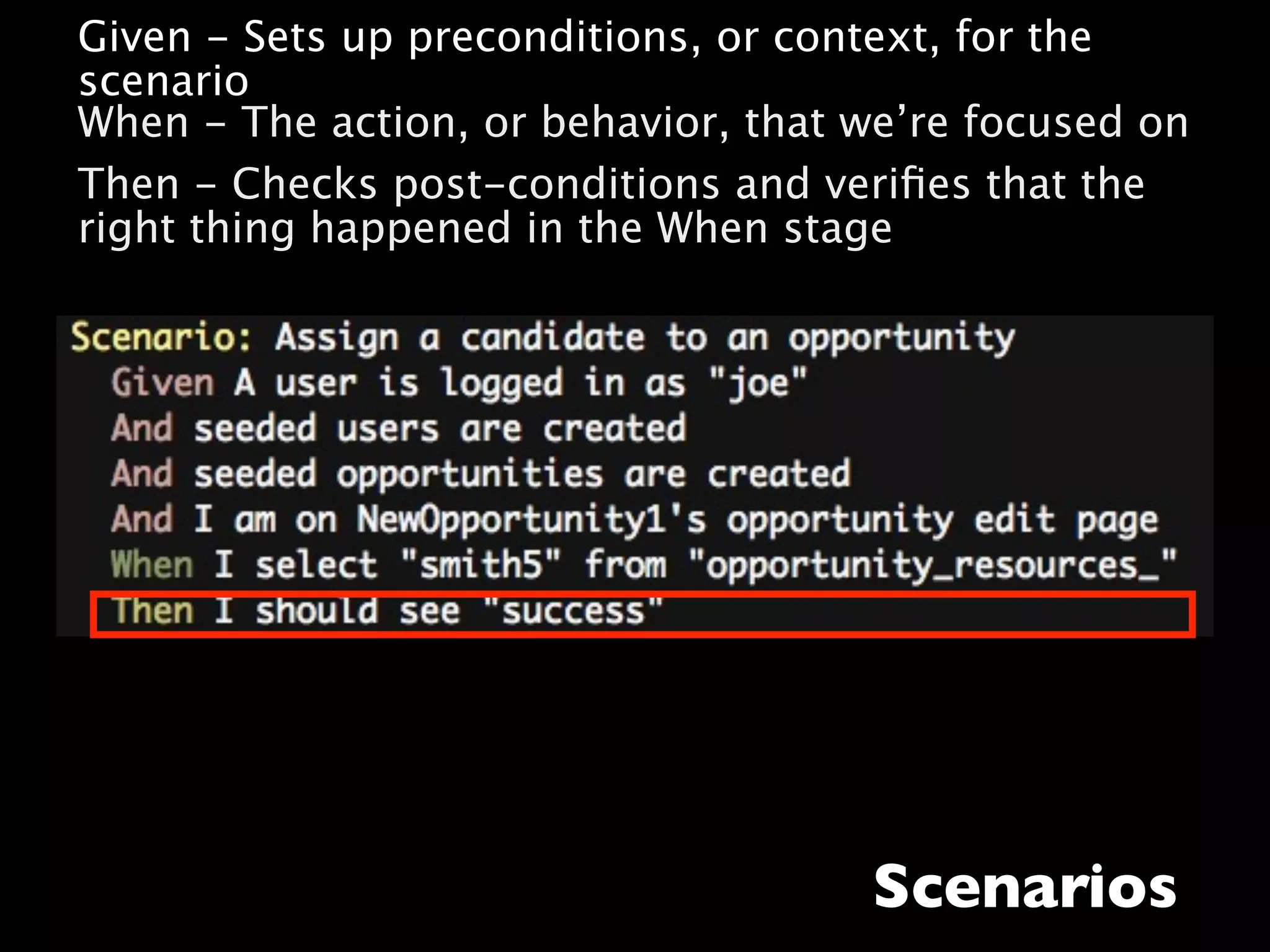
• Given - Sets up preconditions, or context, for the
  scenario


                                         Scenarios
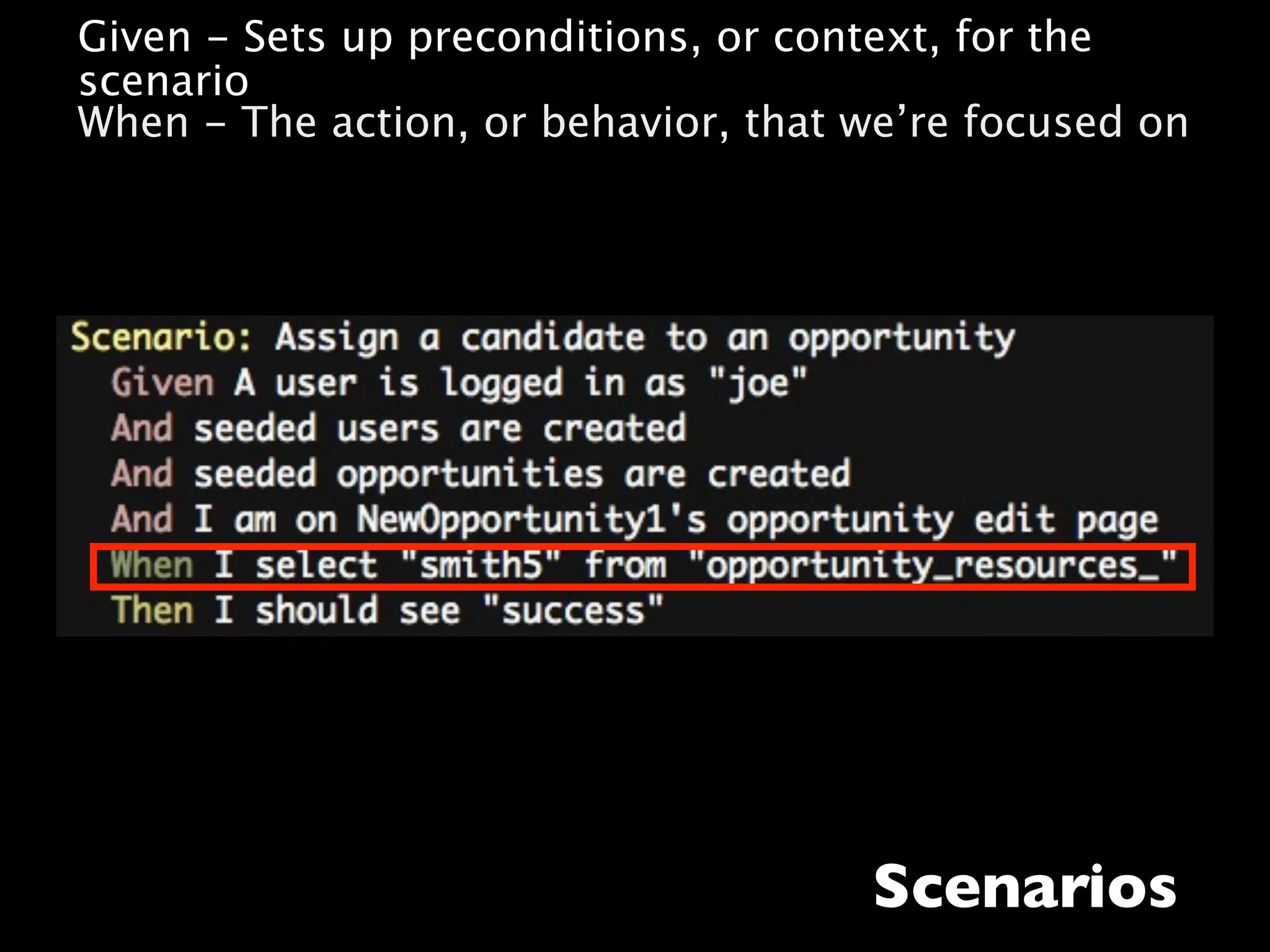
• Given - Sets up preconditions, or context, for the
  scenario
• When - The action, or behavior, that we’re focused on


                                       Scenarios
• Given - Sets up preconditions, or context, for the
  scenario
• When - The action, or behavior, that we’re focused on
• Then - Checks post-conditions and verifies that the
  right thing happened in the When stage


                                       Scenarios
Demonstration


                32
Q&A
                For more information...
•   This Presentation on GitHub - https://github.com/shawnewallace/intro-to-atdd.git
•   cukes.info
•   Gojko Adzic
     – cuke4ninja.com
     – Specification by Example
•   https://github.com/aslakhellesoy/cucumber/wiki
•   http://groups.google.com/group/cukes
•   http://www.cheezyworld.com
•   The Cucumber Book, Matt Wayne, Aslak Hellesøy: http://pragprog.com/book/
    hwcuc/the-cucumber-book
•   The Rspec Book, David Chelimsky: http://www.pragprog.com/titles/achbd/the-
    rspec-book
•   http://simpleprogrammer.com/2011/11/21/understanding-the-vertical-
    slice/
•   http://www.deltamatrix.com/2012-04-17-04-37-50/horizontal-and-
    vertical-user-stories-slicing-the-cake
Shawn Wallace
Work: shawn.wallace@centricconsulting.com
    Personal: shawn@the-wallaces.net
         Twitter: @ShawnWallace
       Blog: blog.shawnewallace.com
    http://www.about.me/shawnwallace
              Shirt size: XXL
              Shoe Size: 11.5
Introduction to atdd

Introduction to atdd

Editor's Notes

  • #2 There is a lot here for...\n\ndevs, qa, ba and project leadership\n\nMeant to wet your whistle.\n
  • #3 A few things about me.\n
  • #4 A few things about me.\n
  • #5 A few things about me.\n
  • #6 A few things about me.\n
  • #7 A few things about me.\n
  • #8 A few things about me.\n
  • #9 A few things about me.\n
  • #10 A few things about me.\n
  • #11 A few things about me.\n
  • #12 A few things about me.\n
  • #13 A few things about me.\n
  • #14 A few things about me.\n
  • #15 A few things about me.\n
  • #16 A few things about me.\n
  • #17 A few things about me.\n
  • #18 A few things about me.\n
  • #19 A few things about me.\n
  • #20 A few things about me.\n
  • #21 A few things about me.\n
  • #22 I &amp;#x2018;fear the light&amp;#x2019;\n\nWhy do I care about this?\n
  • #23 \n
  • #24 our existences are about precise communication\n
  • #25 \n
  • #26 How many agilists in the room\n
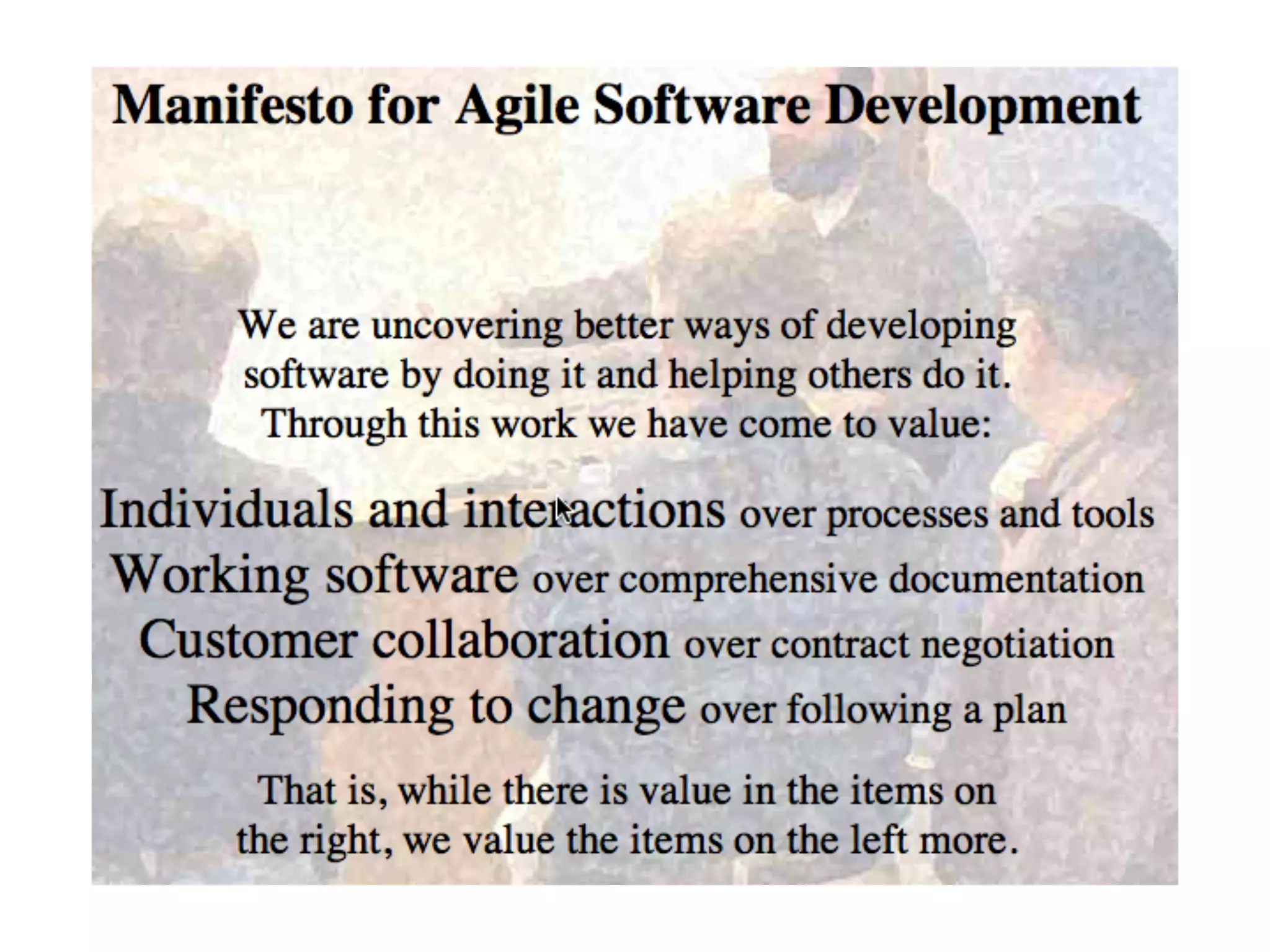
  • #27 Nothing about standups, iterations, product owners, \n\nPeople analyze agile by checking how many of these practices you have put in place.\n\nAlready, we have lost our way.\n
  • #28 The ceremony has become our goal\n
  • #29 The ceremony has become our goal\n
  • #30 Not about process, not about ceremony, about delivering working software\n
  • #31 \n
  • #32 \n
  • #33 \n
  • #34 \n
  • #35 \n
  • #36 \n
  • #37 \n
  • #38 Consider the ATM problem\n
  • #39 Thinking about how to break apart a backlog into vertical slices requires us to step outside the understanding of the code and implementation and instead think about the backlog in small pieces of working functionality.\n
  • #40 \n
  • #41 \n
  • #42 \n
  • #43  IT needs to be able to move faster than the business must make decisions\n Tests from the perspective of the user\n Tests behavior of the system\n Executable requirements, codefied\n not disposable artifacts\n
  • #44 TESTING IS PART OF REQUIREMENTS GATHERING\n TDD is a development practice\n These are fairly accurate ratios\n
  • #45 \n
  • #46 \n
  • #47 \n
  • #48 \n
  • #49 Within the definition of a feature you can provide a plain text description of the story, focusing on three important questions:\n
  • #50 \n
  • #51 \n
  • #52 \n
  • #53 \n
  • #54 \n
  • #55 \n
  • #56 \n
  • #57  And can be used in any of the three sections\n It serves as nice shorthand for repeating the Given, When, or Then\n And stands in for whatever the most recent explicitly named step was\n
  • #58 \nRuby and .NET\n
  • #59 \nRuby and .NET\n
  • #60 \nRuby and .NET\n
  • #61 \nRuby and .NET\n
  • #62 \nRuby and .NET\n
  • #63 \nRuby and .NET\n
  • #64 \nRuby and .NET\n
  • #65 \nRuby and .NET\n
  • #66 1) show feature code\n2) show features run\nRED IS BAD\nYELLOW IS NOT IMPLEMENTED\nGREEN IS GOOD\n3) show feature output\n
  • #67 \n
  • #68 \n
  • #69 \n