Business Plans and Business
          Models
Integrative
Intrapreneur
Entrepreneur
Session Flow
1. Introduction, entrepreneurship & idea
   scrutiny
2. Ideation to business models
3. Business plans
Content
•   Frameworks
•   Examples
•   Cases
•   Exercises
Entrepreneur
Joseph Schumpeter - an innovator playing
  the role of a dynamic businessman adding
  material growth to economic development

Timmons - Entrepreneurship is the process
  of creating or seizing an opportunity and
  pursuing it regardless of the resources
  currently controlled
Reasons for Growth of
           Entrepreneurship
•   Industry Structure
•   New technologies
•   Deregulation and privatization
•   Formation of new business communities
•   Increasing demand for variety
•   Government incentives and subsidies
•   Increasing flow of information
•   Easier access to resources
•   Entrepreneurial education
•   Return on innovation
•   Entrepreneur as a Hero
•   Self-employment is highly valued
•   Rising dissatisfaction at job
•   Acceptance of ex-entrepreneurs in the job
    market
Impact of Entrepreneurial Firms
•   Job Creation
•   Economic growth
•   New Technology
•   Serving small markets
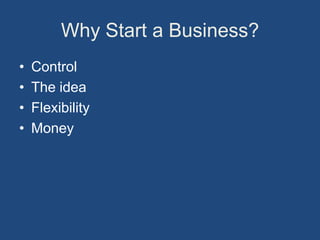
Why Start a Business?
•   Control
•   The idea
•   Flexibility
•   Money
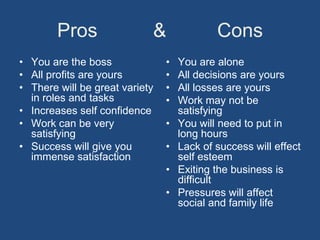
Pros                &               Cons
• You are the boss              •   You are alone
• All profits are yours         •   All decisions are yours
• There will be great variety   •   All losses are yours
  in roles and tasks            •   Work may not be
• Increases self confidence         satisfying
• Work can be very              •   You will need to put in
  satisfying                        long hours
• Success will give you         •   Lack of success will effect
  immense satisfaction              self esteem
                                •   Exiting the business is
                                    difficult
                                •   Pressures will affect
                                    social and family life
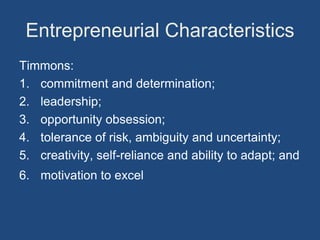
Entrepreneurial Characteristics
Timmons:
1. commitment and determination;
2. leadership;
3. opportunity obsession;
4. tolerance of risk, ambiguity and uncertainty;
5. creativity, self-reliance and ability to adapt; and
6. motivation to excel
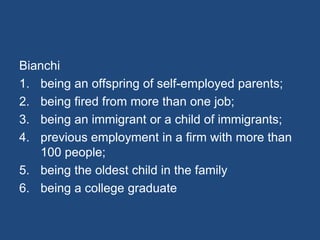
Bianchi
1. being an offspring of self-employed parents;
2. being fired from more than one job;
3. being an immigrant or a child of immigrants;
4. previous employment in a firm with more than
   100 people;
5. being the oldest child in the family
6. being a college graduate
Entrepreneurial Skills
• Creativity and Opportunity Evaluation
• Real-time Strategy and Decision Making
• Comfort with Change and Chaos
• Teamwork
• Evangelism, Selling, Negotiation, and Motivation
  through Influence and Persuasion
• Oral and Written Communication
• Basics of Start-Up Finance, Accounting and Law
Entrepreneurial Attitudes
•   Comfortable with lifestyle changes
•   Willingness to break / bend / stretch laws
•   Patience to start small
•   Prepared to make enemies
•   Comfort with confrontations
•   Dealing with failure
•   Willingness to learn
Types of Entrepreneurs
1. Early starters
2. Experienced
3. Mature

1.   1st generation entrepreneurs
2.   From Business families
3.   Minority entrepreneurs
4.   Women Entrepreneurs
1. Novice
2. Serial
3. Portfolio
Reasons for Entrepreneurial
              Failure
•   Lack of experienced management
•   Few trained or experienced manpower
•   Poor financial management
•   Rapid growth
•   Lack of business linkages
•   Weak marketing efforts
•   Lack of information
•   Incorrect pricing
•   Improper inventory control
•   Short term outlook
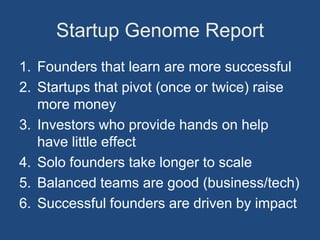
Startup Genome Report
1. Founders that learn are more successful
2. Startups that pivot (once or twice) raise
   more money
3. Investors who provide hands on help
   have little effect
4. Solo founders take longer to scale
5. Balanced teams are good (business/tech)
6. Successful founders are driven by impact
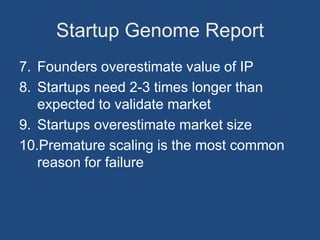
Startup Genome Report
7. Founders overestimate value of IP
8. Startups need 2-3 times longer than
   expected to validate market
9. Startups overestimate market size
10.Premature scaling is the most common
   reason for failure
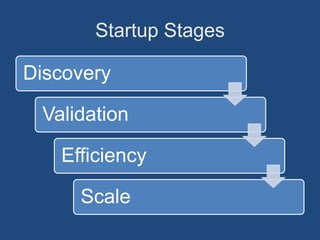
Startup Stages

Discovery

 Validation

   Efficiency

     Scale
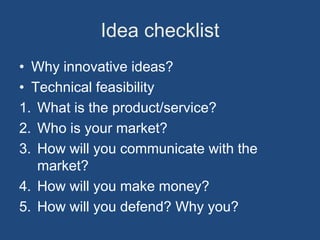
Idea checklist
• Why innovative ideas?
• Technical feasibility
1. What is the product/service?
2. Who is your market?
3. How will you communicate with the
   market?
4. How will you make money?
5. How will you defend? Why you?
Introduction chennai

Introduction chennai

  • 1.
    Business Plans andBusiness Models
  • 2.
  • 3.
    Session Flow 1. Introduction,entrepreneurship & idea scrutiny 2. Ideation to business models 3. Business plans
  • 4.
    Content • Frameworks • Examples • Cases • Exercises
  • 5.
    Entrepreneur Joseph Schumpeter -an innovator playing the role of a dynamic businessman adding material growth to economic development Timmons - Entrepreneurship is the process of creating or seizing an opportunity and pursuing it regardless of the resources currently controlled
  • 6.
    Reasons for Growthof Entrepreneurship • Industry Structure • New technologies • Deregulation and privatization • Formation of new business communities • Increasing demand for variety • Government incentives and subsidies • Increasing flow of information
  • 7.
    Easier access to resources • Entrepreneurial education • Return on innovation • Entrepreneur as a Hero • Self-employment is highly valued • Rising dissatisfaction at job • Acceptance of ex-entrepreneurs in the job market
  • 8.
    Impact of EntrepreneurialFirms • Job Creation • Economic growth • New Technology • Serving small markets
  • 9.
    Why Start aBusiness? • Control • The idea • Flexibility • Money
  • 10.
    Pros & Cons • You are the boss • You are alone • All profits are yours • All decisions are yours • There will be great variety • All losses are yours in roles and tasks • Work may not be • Increases self confidence satisfying • Work can be very • You will need to put in satisfying long hours • Success will give you • Lack of success will effect immense satisfaction self esteem • Exiting the business is difficult • Pressures will affect social and family life
  • 11.
    Entrepreneurial Characteristics Timmons: 1. commitmentand determination; 2. leadership; 3. opportunity obsession; 4. tolerance of risk, ambiguity and uncertainty; 5. creativity, self-reliance and ability to adapt; and 6. motivation to excel
  • 12.
    Bianchi 1. being anoffspring of self-employed parents; 2. being fired from more than one job; 3. being an immigrant or a child of immigrants; 4. previous employment in a firm with more than 100 people; 5. being the oldest child in the family 6. being a college graduate
  • 13.
    Entrepreneurial Skills • Creativityand Opportunity Evaluation • Real-time Strategy and Decision Making • Comfort with Change and Chaos • Teamwork • Evangelism, Selling, Negotiation, and Motivation through Influence and Persuasion • Oral and Written Communication • Basics of Start-Up Finance, Accounting and Law
  • 14.
    Entrepreneurial Attitudes • Comfortable with lifestyle changes • Willingness to break / bend / stretch laws • Patience to start small • Prepared to make enemies • Comfort with confrontations • Dealing with failure • Willingness to learn
  • 15.
    Types of Entrepreneurs 1.Early starters 2. Experienced 3. Mature 1. 1st generation entrepreneurs 2. From Business families 3. Minority entrepreneurs 4. Women Entrepreneurs
  • 16.
  • 17.
    Reasons for Entrepreneurial Failure • Lack of experienced management • Few trained or experienced manpower • Poor financial management • Rapid growth • Lack of business linkages • Weak marketing efforts • Lack of information • Incorrect pricing • Improper inventory control • Short term outlook
  • 18.
    Startup Genome Report 1.Founders that learn are more successful 2. Startups that pivot (once or twice) raise more money 3. Investors who provide hands on help have little effect 4. Solo founders take longer to scale 5. Balanced teams are good (business/tech) 6. Successful founders are driven by impact
  • 19.
    Startup Genome Report 7.Founders overestimate value of IP 8. Startups need 2-3 times longer than expected to validate market 9. Startups overestimate market size 10.Premature scaling is the most common reason for failure
  • 20.
  • 21.
    Idea checklist • Whyinnovative ideas? • Technical feasibility 1. What is the product/service? 2. Who is your market? 3. How will you communicate with the market? 4. How will you make money? 5. How will you defend? Why you?