


Introducing the Global English Style GuideEdwin HollonSenior Technical CommunicatorHansem EZUserGuides, Inc.
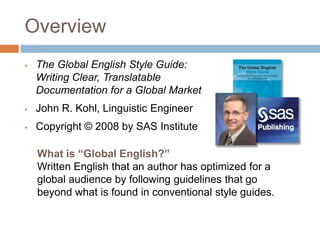
OverviewThe Global English Style Guide: Writing Clear, Translatable Documentation for a Global Market
John R. Kohl, Linguistic Engineer
Copyright © 2008 by SAS InstituteWhat is “Global English?”Written English that an author has optimized for a global audience by following guidelines that go beyond what is found in conventional style guides.
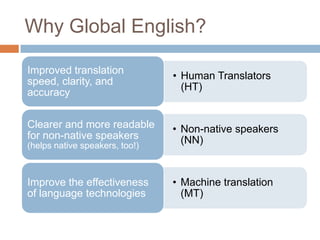
Why Global English?
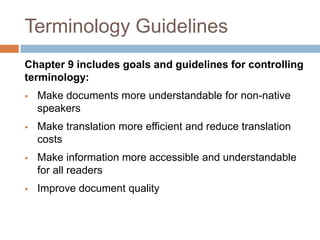
Goals of Global EnglishEliminate misunderstandings in translation
Eliminate terms or grammar that is unfamiliar to non-native speakers
Make sentence structure easier to analyze and comprehend
Eliminate inconsistencies Benefits of Global EnglishLess liability from incorrect translation
Reduced need for technical support
More consistent use of terminology
Improved searching for terms
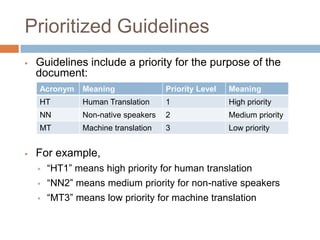
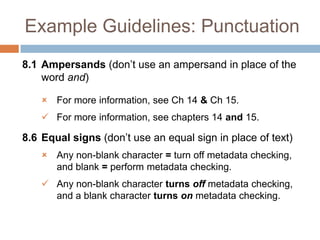
Less work for translatorsPrioritized GuidelinesGuidelines include a priority for the purpose of the document:
For example,
“HT1” means high priority for human translation
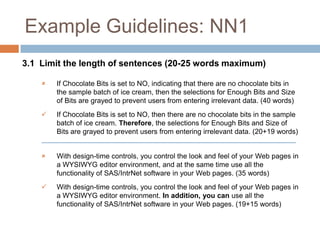
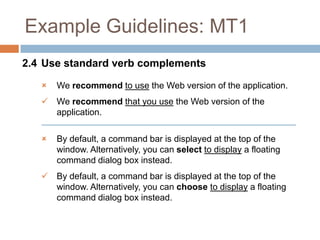
“NN2” means medium priority for non-native speakers
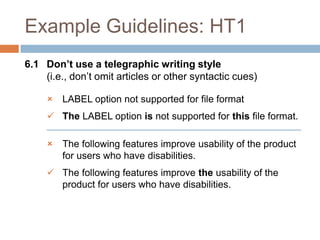
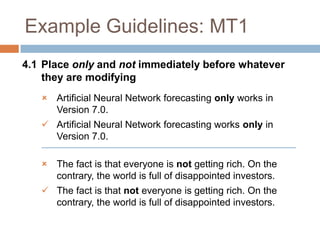
“MT3” means low priority for machine translationExample Guidelines: HT16.1 	Don’t use a telegraphic writing style(i.e., don’t omit articles or other syntactic cues)LABEL option not supported for file format
The LABEL option is not supported for this file format.

Introducing the Global English Style Guide