Introduction to Lab safety
protocols
Department of Pharmacology, PIMC
Why does it matter?
To protect
Yourself
Your colleagues
Other Lab workers
Your work
Consequences of not following safety rules..
 You endanger yourself and
others in the lab.
 You could easily ruin your
experiment.
 You put the lab at risk of an
accident, which could damage
equipment as well as harm
people.
Protect Yourself
Dress for Lab
 Gloves
 Lab Coat
 Covered shoes
 Long pants
Any other, depending on nature of
experiment/Lab
Laboratory Hygiene
Save your snacks for
Canteen/office not lab
 Don't eat or drink in laboratory.
Don't store your food or beverages
in the same refrigerator that
contains experiments, chemicals,
or cultures.
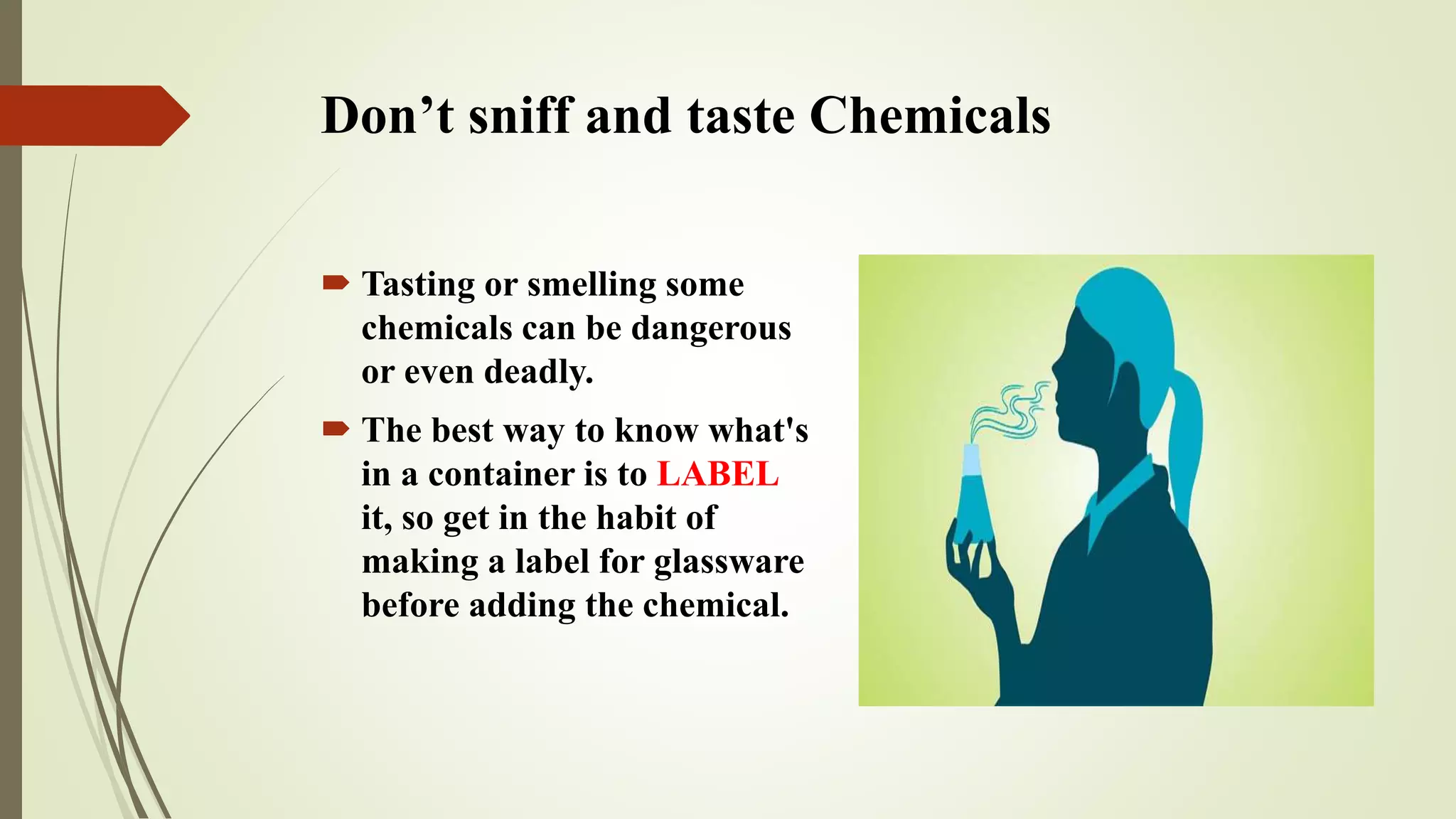
Don’t sniff and taste Chemicals
 Tasting or smelling some
chemicals can be dangerous
or even deadly.
 The best way to know what's
in a container is to LABEL
it, so get in the habit of
making a label for glassware
before adding the chemical.
Don’t play Mad Scientist
Act responsibly in the lab
 Don't play Mad Scientist,
randomly mixing chemicals to see
what happens. The result could be
an explosion, fire, or release of
toxic gases.
Dispose-off Lab waste properly
 One important laboratory safely
rule is to know what to do with
your experiment when it's over.
Before you start an experiment,
you should know what to do at the
end.
Don't leave your mess for the
next person to clean up
Don’t Experiment on Yourself
 You are precious,
so do not risk your
self in an
experiment
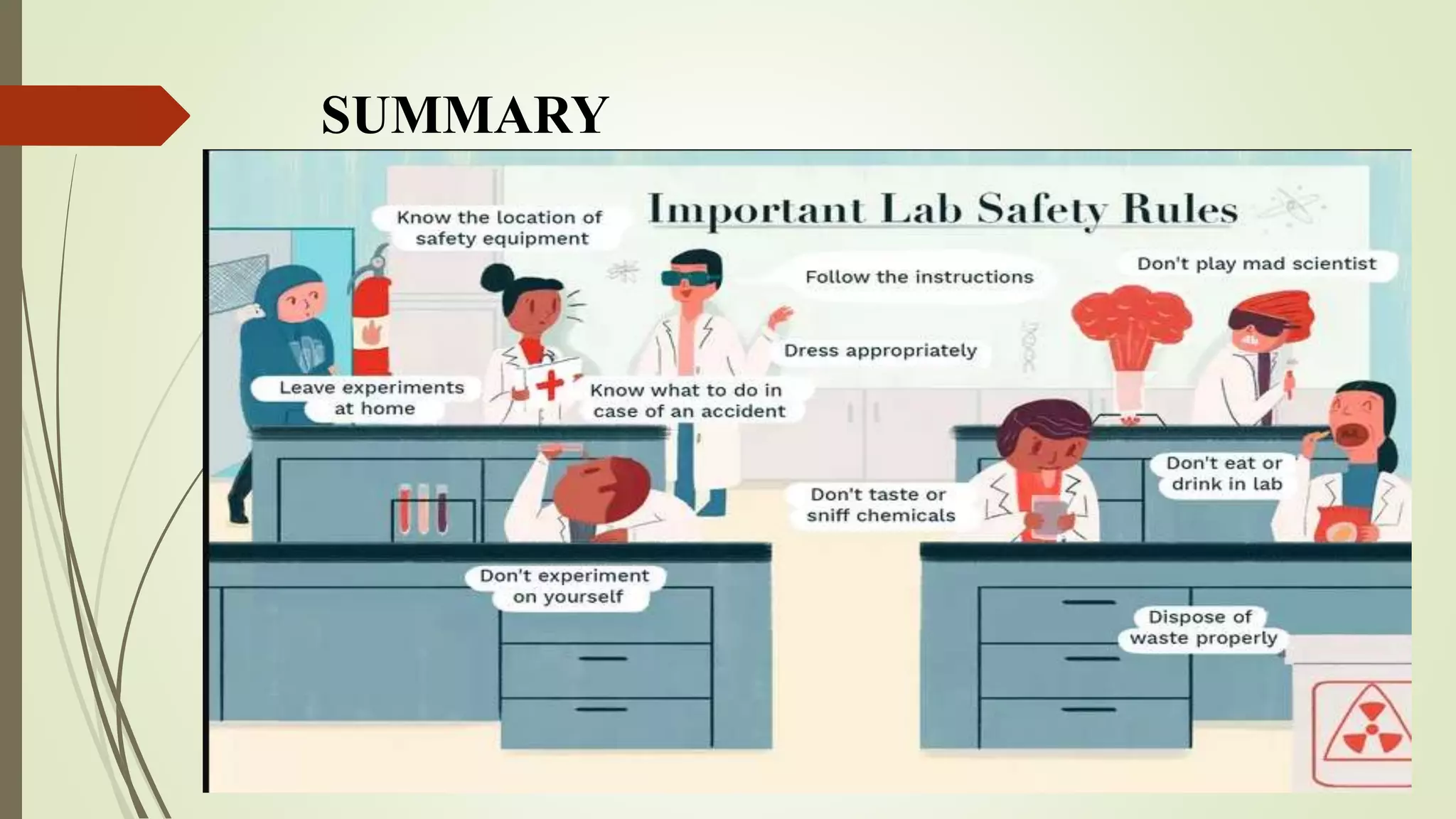
SUMMARY
Introduction to
Pharmacy
Pharmacy
 Derived from Greek word “farmakon” means
drug/poison. It’s a branch of science deals with
compounding, manufacturing & dispensing of drugs
OR
 The science and art concerned with the preparation
and standardization of drugs.
Drug/Medicine
 Any chemical substance, which when taken-up
by the living organism, produce a biological
effect.
OR
 A chemical substance used to treat, cure,
prevent, or diagnose a disease or to promote
well-being.
DRUG
MEDICINE
Active Substance / Inert Substances
Pharmacologically
Active
Added to
give shape
Dosage
form
Branches of Pharmacy
Pharmaceutics
Pharmacognosy
Medicinal Chemistry
Pharmacology
Pharmaceutics
 Also called, the science of
dosage form design
 deals with the process of
turning a new chemical entity
(NCE) or old drugs into a
medication to be used safely
and effectively by patients.
Pharmacognosy
Pharmacognosy is the
study of medicinal drugs
derived from plants or
other natural sources.
Medicinal Chemistry
Medicinal chemistry is a
discipline deals to modify
a molecule’s structure to
design safe and effective
drug.
Pharmacology
 To the study the
Pharmacokinetics and
Pharmacodynamics of
drugs.
 Focuses on research of drug
action.
Pharmaceutical processes
 These are the various methods or processes used for making
crude drugs suitable for administration to the patient &
they also increase the efficiency of drugs.
Comminution
Comminution means “to divide”
Comminution is the process of physical reduction
of a substance to fine particle size, which makes
the substance or drug easier to dissolve and
compound.
Desiccation
Desiccation means “to dry”
Moisture is removed from solid drugs with the help of
dehydrating agent which reduces the bulk of drugs, as
well, as facilitates comminution
Maceration
Maceration ‘To make soft’.
The process of extracting soluble active ingredients from crude
drugs. It consists of soaking crude drugs in suitable solvents mostly
Alcohol for a period of 12-14 days with occasional shaking/
stirring. Then the liquid containing active principle is separated
Percolation
Percolation means “Filtration”.
Process by which active ingredients are extracted by
successive maceration. The solvent is passed through a
drug and allowed to macerate for sometime. The liquid
obtained is called percolate
Decantation
 In this process heavy and
insoluble substances settle down
when soaked in water. The clear
separated liquid is then removed
slowly from the top.
Distillation
It is the process by which a volatile liquid is
separates from a liquid mixture by
evaporation. It consists of;
a. converting a liquid into its vapors.
b. transferring these vapors to another place.
c. converting into a liquid by condensation.
Apparatus used in
Pharmacy
List of Pharmacy Instruments
 Spatula
 Funnels
 Beakers
 Physical/Digital balance
 Test tubes
 Centrifuge
 Dispensing bottle
 Graduated Cylinders
 Petri dishes
 Conical flasks
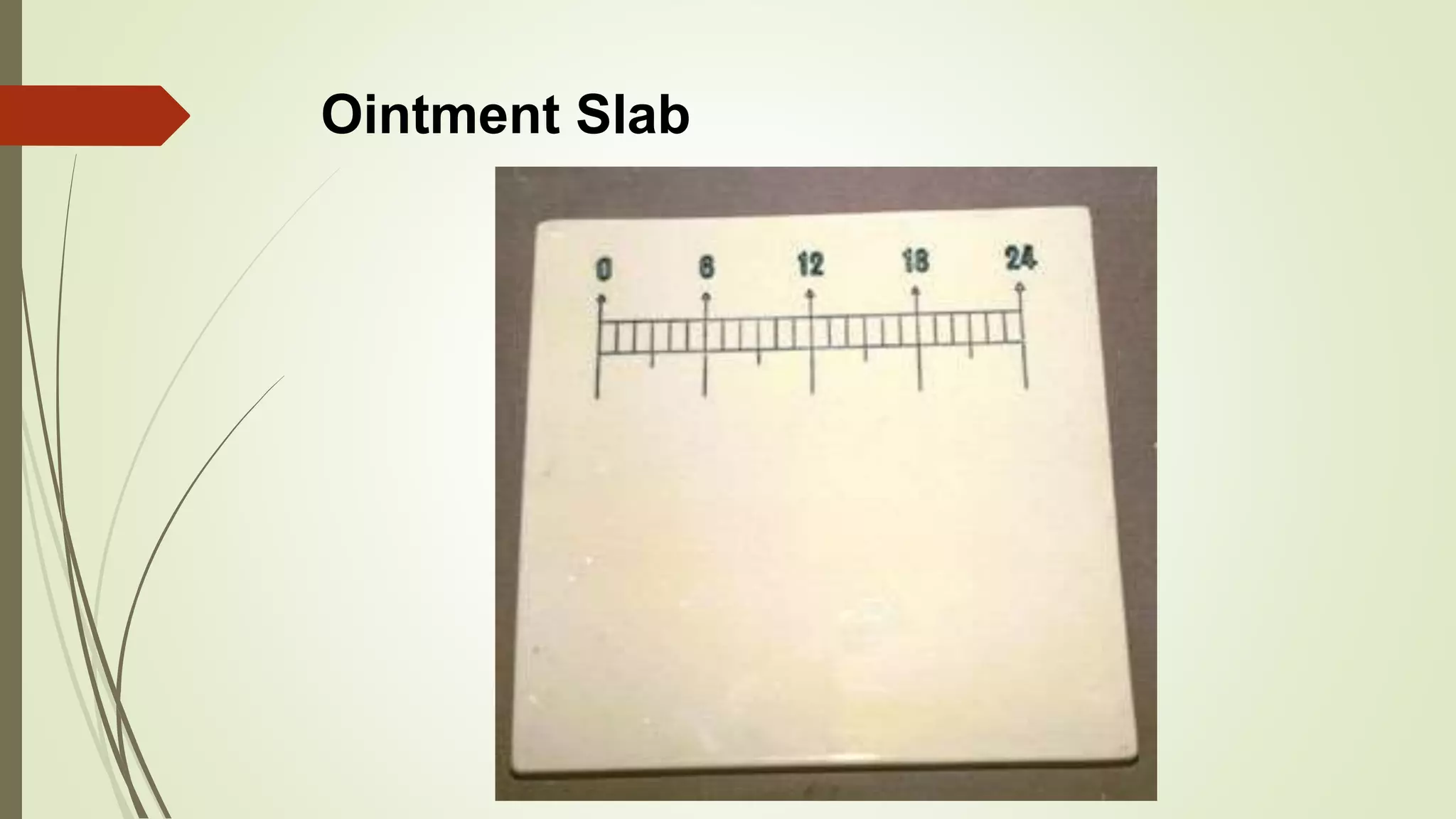
 Ointment slab
 Pipette
 Distillation apparatus
Pharmacy instruments
Spatula
Mortar and Pestle
Funnel
Beakers
Physical Balance
Digital Balance
Test Tubes
Centrifuge
Dispensing bottle
Graduated Cylinders
Petri Dish
Conical Flask
Ointment Slab
Pipette
Distillation Apparatus
intro to lab safety and pharmacy.pptx

intro to lab safety and pharmacy.pptx

  • 1.
    Introduction to Labsafety protocols Department of Pharmacology, PIMC
  • 2.
    Why does itmatter? To protect Yourself Your colleagues Other Lab workers Your work
  • 3.
    Consequences of notfollowing safety rules..  You endanger yourself and others in the lab.  You could easily ruin your experiment.  You put the lab at risk of an accident, which could damage equipment as well as harm people.
  • 4.
    Protect Yourself Dress forLab  Gloves  Lab Coat  Covered shoes  Long pants Any other, depending on nature of experiment/Lab
  • 5.
    Laboratory Hygiene Save yoursnacks for Canteen/office not lab  Don't eat or drink in laboratory. Don't store your food or beverages in the same refrigerator that contains experiments, chemicals, or cultures.
  • 6.
    Don’t sniff andtaste Chemicals  Tasting or smelling some chemicals can be dangerous or even deadly.  The best way to know what's in a container is to LABEL it, so get in the habit of making a label for glassware before adding the chemical.
  • 7.
    Don’t play MadScientist Act responsibly in the lab  Don't play Mad Scientist, randomly mixing chemicals to see what happens. The result could be an explosion, fire, or release of toxic gases.
  • 8.
    Dispose-off Lab wasteproperly  One important laboratory safely rule is to know what to do with your experiment when it's over. Before you start an experiment, you should know what to do at the end. Don't leave your mess for the next person to clean up
  • 9.
    Don’t Experiment onYourself  You are precious, so do not risk your self in an experiment
  • 10.
  • 11.
  • 12.
    Pharmacy  Derived fromGreek word “farmakon” means drug/poison. It’s a branch of science deals with compounding, manufacturing & dispensing of drugs OR  The science and art concerned with the preparation and standardization of drugs.
  • 13.
    Drug/Medicine  Any chemicalsubstance, which when taken-up by the living organism, produce a biological effect. OR  A chemical substance used to treat, cure, prevent, or diagnose a disease or to promote well-being. DRUG MEDICINE
  • 14.
    Active Substance /Inert Substances Pharmacologically Active Added to give shape Dosage form
  • 15.
  • 16.
    Pharmaceutics  Also called,the science of dosage form design  deals with the process of turning a new chemical entity (NCE) or old drugs into a medication to be used safely and effectively by patients.
  • 17.
    Pharmacognosy Pharmacognosy is the studyof medicinal drugs derived from plants or other natural sources.
  • 18.
    Medicinal Chemistry Medicinal chemistryis a discipline deals to modify a molecule’s structure to design safe and effective drug.
  • 19.
    Pharmacology  To thestudy the Pharmacokinetics and Pharmacodynamics of drugs.  Focuses on research of drug action.
  • 20.
    Pharmaceutical processes  Theseare the various methods or processes used for making crude drugs suitable for administration to the patient & they also increase the efficiency of drugs.
  • 21.
    Comminution Comminution means “todivide” Comminution is the process of physical reduction of a substance to fine particle size, which makes the substance or drug easier to dissolve and compound.
  • 22.
    Desiccation Desiccation means “todry” Moisture is removed from solid drugs with the help of dehydrating agent which reduces the bulk of drugs, as well, as facilitates comminution
  • 23.
    Maceration Maceration ‘To makesoft’. The process of extracting soluble active ingredients from crude drugs. It consists of soaking crude drugs in suitable solvents mostly Alcohol for a period of 12-14 days with occasional shaking/ stirring. Then the liquid containing active principle is separated
  • 24.
    Percolation Percolation means “Filtration”. Processby which active ingredients are extracted by successive maceration. The solvent is passed through a drug and allowed to macerate for sometime. The liquid obtained is called percolate
  • 25.
    Decantation  In thisprocess heavy and insoluble substances settle down when soaked in water. The clear separated liquid is then removed slowly from the top.
  • 26.
    Distillation It is theprocess by which a volatile liquid is separates from a liquid mixture by evaporation. It consists of; a. converting a liquid into its vapors. b. transferring these vapors to another place. c. converting into a liquid by condensation.
  • 27.
  • 28.
    List of PharmacyInstruments  Spatula  Funnels  Beakers  Physical/Digital balance  Test tubes  Centrifuge  Dispensing bottle  Graduated Cylinders  Petri dishes  Conical flasks  Ointment slab  Pipette  Distillation apparatus
  • 29.
  • 30.
  • 31.
  • 32.
  • 33.
  • 34.
  • 35.
  • 36.
  • 37.
  • 38.
  • 39.
  • 40.
  • 41.
  • 42.
  • 43.
  • 44.

Editor's Notes

  • #3 The science lab is an inherently dangerous place, with fire hazards, dangerous chemicals, and risky procedures. No one wants to have an accident in the lab, so it's imperative to follow the rules and instructions.
  • #9 Are the chemicals safe to dump down the drain? If not, what do you do with them? If you have biological cultures, is it safe to clean up with soap and water or do you need an autoclave to kill dangerous organisms? Do you have broken glass or needles? Know the protocol for disposing of "sharps"
  • #13 Its scope includes the cultivation of plants that are used as drugs, the synthesis of chemical compounds of medicinal value, and the analysis of medicinal agents. Pharmacists are responsible for the preparation of the dosage forms of drugs, such as tablets, capsules, and sterile solutions for injection. They compound physicians’, dentists’, and veterinarians’ prescriptions for drugs
  • #14 Difference: Raw form---termed as drug Finished pharmaceutical form---- medicine
  • #15 Active moiety Excipients.. Stable, do not interact with drug, cost effective.
  • #18 Pharmacy is not always about synthetic drug. In pharmacy we also will know about medicinal drug. And to understand more about the medicinal drug, there is a branch science of pharmacy called Pharmacognosy. E.g. quinine from Quina/cinchona plant ..used as antimalarial. Clove, Turmeric etc
  • #19 The structure–activity relationship is the relationship between the chemical structure of a molecule and its biological activity.
  • #22 The processes for comminution are cutting, grating, grinding, pulverizing, trituration, and levitation. The first four terms are self-explanatory and are employed primarily on animal and vegetable drugs from which we wish to extract active principles. TRITURATION—This is a process of reducing a solid to a very fine powder by grinding in a mortar and pestle. LEVITATION—Solids can be ground to even finer subdivision by adding a small amount of liquid to make a paste and triturating further. This process is ideal for ointments, creams, and lotions