Introduction to Data
Structures and Algorithms
Learn the building blocks of computer science.
by Mayank Mishra
Importance of Learning Data Structures
and Algorithms
1 Enhancing Problem-Solving Skills
Develop logical and analytical thinking capabilities.
2 Efficient Use of Resources
Optimize memory and processing power.
3 Optimization of Code and Algorithms
Write faster and more efficient programs.
Handling Large Datasets
Big Data
Efficiently manage and process
large volumes of information.
Scalability
Build systems that can handle
growth and increased demand.
Performance
Ensure fast retrieval and
manipulation of massive data
sets.
Building Scalable and Robust Applications
Scalability
Design applications that can
grow to meet user demand.
Reliability
Create applications that are
resilient and dependable.
Security
Implement safeguards to
protect against cyber threats.
Real-World Applications of Data Structures
and Algorithms
Telecommunications
Efficient routing and data
transmission.
Finance
Optimizing trading algorithms
and risk management.
Healthcare
Managing medical records
and patient data.
Practical use in Applications of DSA
Search Engines: Search engines like Google use algorithms such
as PageRank to rank web pages in search results. Data structures
like graphs and hash tables are used to store and manage the
vast amount of data.
Social Networks: Social networking platforms like Facebook and Twitter use
graph data structures to represent and manage the connections between
users. Algorithms are used to analyze social graphs for features like friend
suggestions and community detection.
Practical use in Applications of DSA
Databases: Databases use data structures like B-trees
and hash indexes to store and retrieve data
efficiently. Algorithms are used for query optimization
and transaction management.
File Systems: File systems use data structures like trees and linked lists
to manage files and directories. Algorithms are used for tasks like file
allocation and directory traversal.
Practical use in Applications of DSA
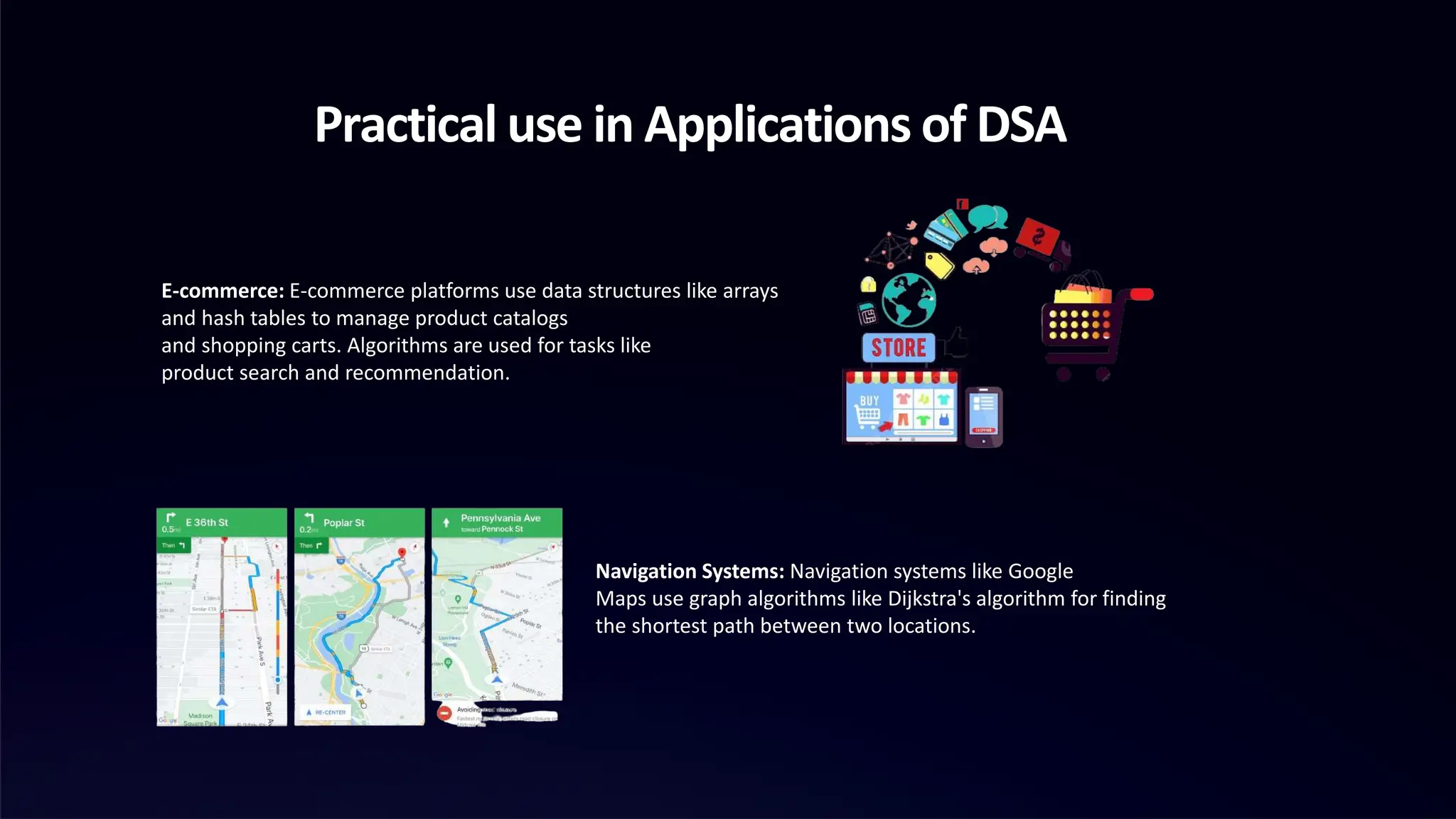
E-commerce: E-commerce platforms use data structures like arrays
and hash tables to manage product catalogs
and shopping carts. Algorithms are used for tasks like
product search and recommendation.
Navigation Systems: Navigation systems like Google
Maps use graph algorithms like Dijkstra's algorithm for finding
the shortest path between two locations.
Practical use in Applications of DSA
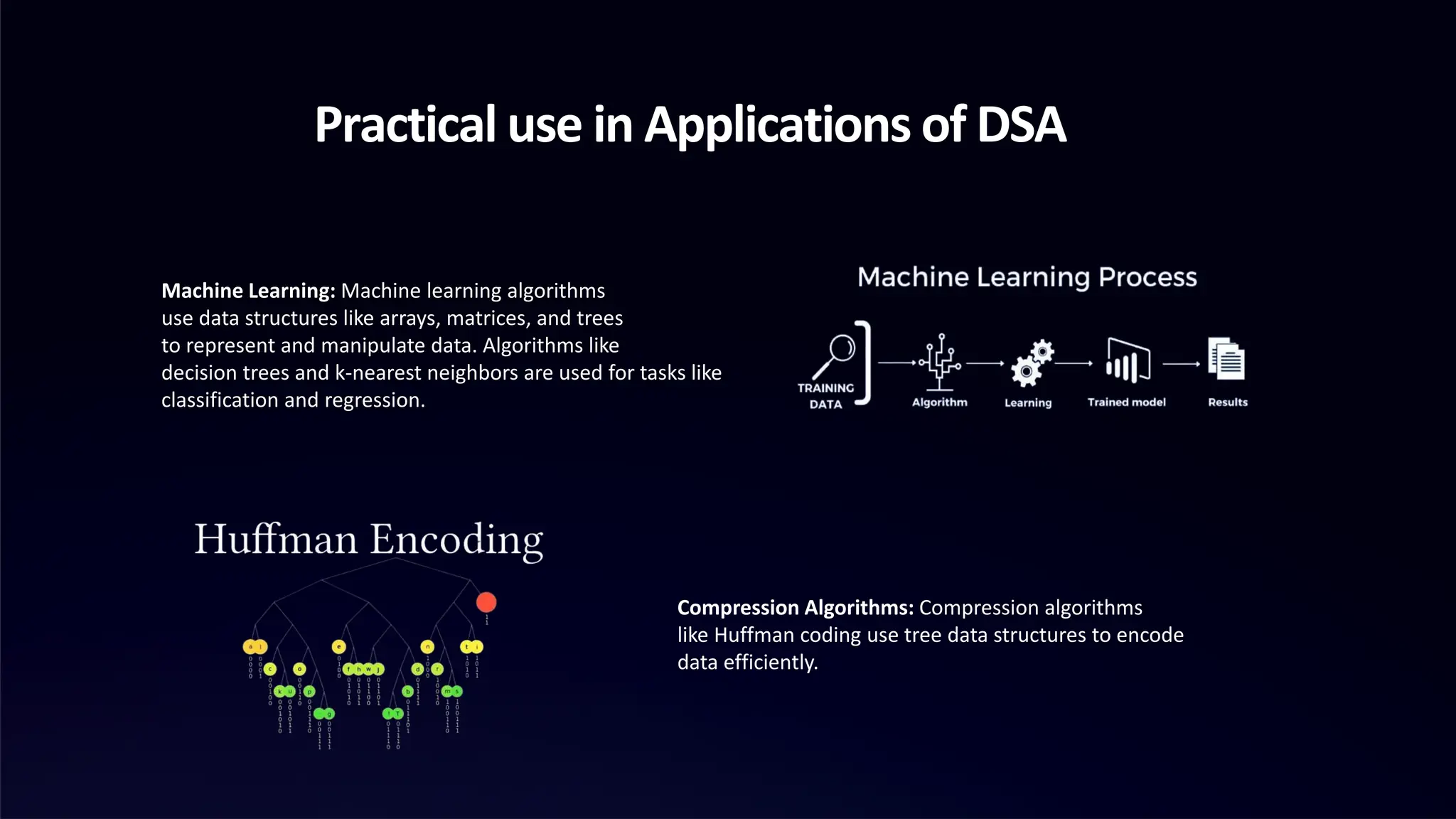
Machine Learning: Machine learning algorithms
use data structures like arrays, matrices, and trees
to represent and manipulate data. Algorithms like
decision trees and k-nearest neighbors are used for tasks like
classification and regression.
Compression Algorithms: Compression algorithms
like Huffman coding use tree data structures to encode
data efficiently.
Practical use in Applications of DSA
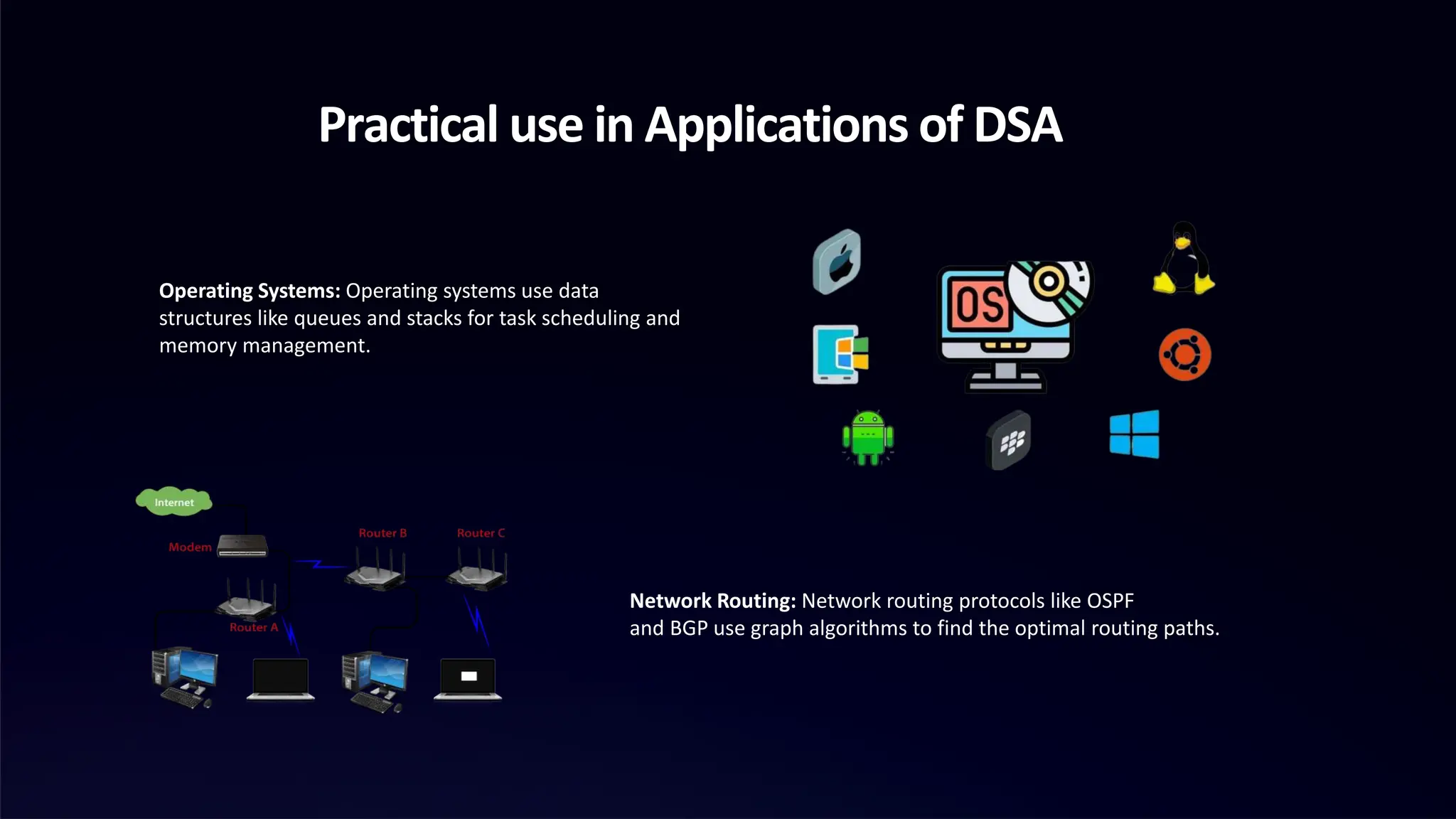
Operating Systems: Operating systems use data
structures like queues and stacks for task scheduling and
memory management.
Network Routing: Network routing protocols like OSPF
and BGP use graph algorithms to find the optimal routing paths.
Competitive Programming and Coding
Interviews
1 Problem-Solving Skills
Showcase your ability to tackle complex
challenges.
2 Efficiency
Demonstrate optimized code and algorithmic
thinking.
3 Time Management
Quickly develop solutions within limited
timeframes.
4 Algorithmic Knowledge
Apply data structures to solve real-world
problems.
Common DSA Topics in Tech Interviews
IBM
• Dynamic Programming
• GreedyAlgorithms
• BitManipulation
Infosys
• ArrayManipulation
• Dynamic Programming
• String Manipulation
Common DSA Topics in Tech Interviews
Facebook
• HashTablesandSets
• Two-pointerTechnique
• Dynamic Programming
Service Now
• Backtracking
• Dynamic Programming
• ArrayManipulation
Conclusion and Key Takeaways
3
Efficiency
Maximize performance and minimize resource usage.
7
Applications
Diverse range of real-world problem-solving
applications.

intoductiontoData_structutreandalgortihmppt.pptx

  • 1.
    Introduction to Data Structuresand Algorithms Learn the building blocks of computer science. by Mayank Mishra
  • 2.
    Importance of LearningData Structures and Algorithms 1 Enhancing Problem-Solving Skills Develop logical and analytical thinking capabilities. 2 Efficient Use of Resources Optimize memory and processing power. 3 Optimization of Code and Algorithms Write faster and more efficient programs.
  • 3.
    Handling Large Datasets BigData Efficiently manage and process large volumes of information. Scalability Build systems that can handle growth and increased demand. Performance Ensure fast retrieval and manipulation of massive data sets.
  • 4.
    Building Scalable andRobust Applications Scalability Design applications that can grow to meet user demand. Reliability Create applications that are resilient and dependable. Security Implement safeguards to protect against cyber threats.
  • 5.
    Real-World Applications ofData Structures and Algorithms Telecommunications Efficient routing and data transmission. Finance Optimizing trading algorithms and risk management. Healthcare Managing medical records and patient data.
  • 6.
    Practical use inApplications of DSA Search Engines: Search engines like Google use algorithms such as PageRank to rank web pages in search results. Data structures like graphs and hash tables are used to store and manage the vast amount of data. Social Networks: Social networking platforms like Facebook and Twitter use graph data structures to represent and manage the connections between users. Algorithms are used to analyze social graphs for features like friend suggestions and community detection.
  • 7.
    Practical use inApplications of DSA Databases: Databases use data structures like B-trees and hash indexes to store and retrieve data efficiently. Algorithms are used for query optimization and transaction management. File Systems: File systems use data structures like trees and linked lists to manage files and directories. Algorithms are used for tasks like file allocation and directory traversal.
  • 8.
    Practical use inApplications of DSA E-commerce: E-commerce platforms use data structures like arrays and hash tables to manage product catalogs and shopping carts. Algorithms are used for tasks like product search and recommendation. Navigation Systems: Navigation systems like Google Maps use graph algorithms like Dijkstra's algorithm for finding the shortest path between two locations.
  • 9.
    Practical use inApplications of DSA Machine Learning: Machine learning algorithms use data structures like arrays, matrices, and trees to represent and manipulate data. Algorithms like decision trees and k-nearest neighbors are used for tasks like classification and regression. Compression Algorithms: Compression algorithms like Huffman coding use tree data structures to encode data efficiently.
  • 10.
    Practical use inApplications of DSA Operating Systems: Operating systems use data structures like queues and stacks for task scheduling and memory management. Network Routing: Network routing protocols like OSPF and BGP use graph algorithms to find the optimal routing paths.
  • 11.
    Competitive Programming andCoding Interviews 1 Problem-Solving Skills Showcase your ability to tackle complex challenges. 2 Efficiency Demonstrate optimized code and algorithmic thinking. 3 Time Management Quickly develop solutions within limited timeframes. 4 Algorithmic Knowledge Apply data structures to solve real-world problems.
  • 12.
    Common DSA Topicsin Tech Interviews IBM • Dynamic Programming • GreedyAlgorithms • BitManipulation Infosys • ArrayManipulation • Dynamic Programming • String Manipulation
  • 13.
    Common DSA Topicsin Tech Interviews Facebook • HashTablesandSets • Two-pointerTechnique • Dynamic Programming Service Now • Backtracking • Dynamic Programming • ArrayManipulation
  • 14.
    Conclusion and KeyTakeaways 3 Efficiency Maximize performance and minimize resource usage. 7 Applications Diverse range of real-world problem-solving applications.