Interviewing for a Job April 14, 2008
Who the Employer Seeks? Do you look like the right person? Can you be counted on? Can you do the Job?
Typical Rating Made Potential Ability to Learn
3 Things You Need to Know The Company The Position  YOURSELF
2 Important Words Positive  Enthusiastic
Before the Interview… Research Organization Become aware of the Mission Statement  Interviewer Responsibilities & Accomplishments  Position Duties, Salary Range, Skills  Drive the Route
Be Prepared! Know what you want What skills are you selling? Network Learn to pronounce Interviewers names Bring pen and paper to take Notes
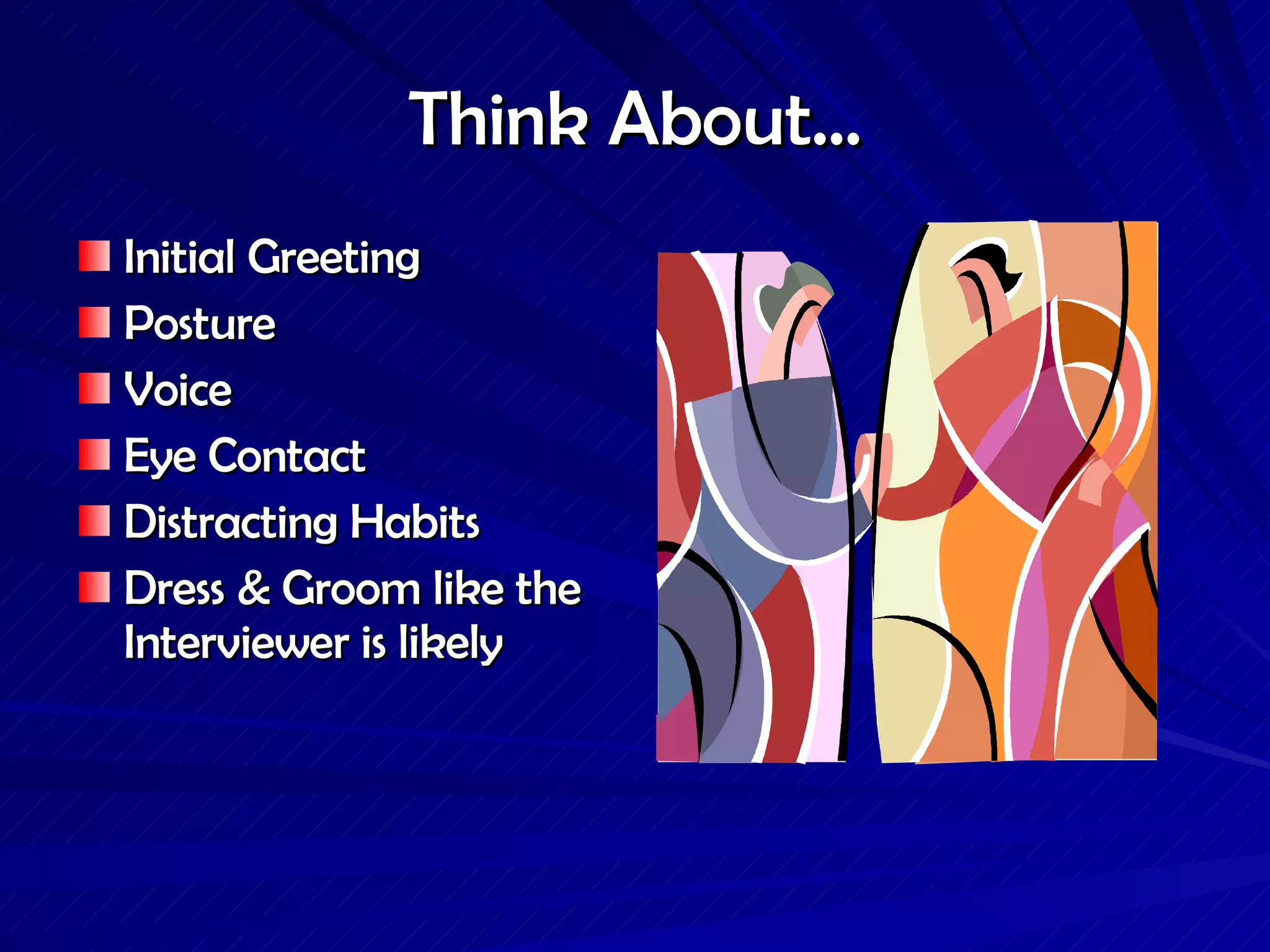
Think About… Initial Greeting Posture Voice Eye Contact Distracting Habits Dress & Groom like the Interviewer is likely
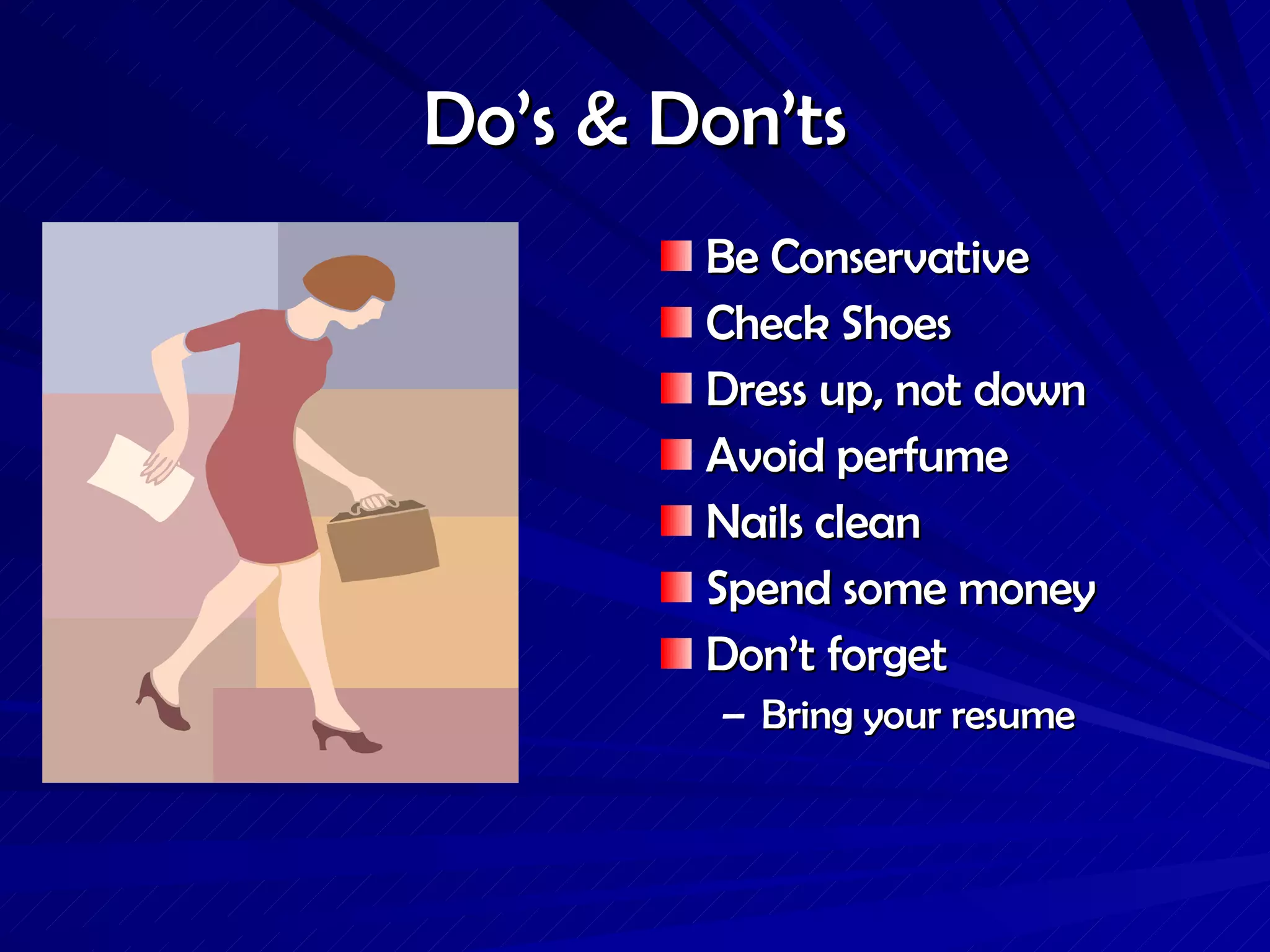
Do’s & Don’ts Be Conservative Check Shoes Dress up, not down Avoid perfume Nails clean Spend some money Don’t forget Bring your resume
The Interview Arrive Early Final Grooming Be nice to all Example: Receptionist  First impression is very important Eye contact, face person with relaxed posture
Typical Interview Routine Rapport Establishment Small Talk Opener Question they will ask you Exploration of Facts Goals, Examples, Resume, etc Conclusion Summary & Instructions
What Are Your Weaknesses? Cite a corrected weakness Cite an unrelated skill I would love to learn more about…
Never Underestimate… Value of Good Rapport Honesty Art of Listening Just being Nice Don’t Ramble
Don’t! Plead Cry Mumble Brag Try too hard Talk too much Act inferior/superior Argue Criticize
Conclusive of Post Interview: Highlights Written Down Afterwards keep a folder/file of what occurred Follow Up Contact the Company 1-2 Weeks after Interview Thank You Note Hand write a note to the Interviewer ASAP Thank you for your time… etc
Finally… Always Be Yourself!

Interviewing For A Job

  • 1.
    Interviewing for aJob April 14, 2008
  • 2.
    Who the EmployerSeeks? Do you look like the right person? Can you be counted on? Can you do the Job?
  • 3.
    Typical Rating MadePotential Ability to Learn
  • 4.
    3 Things YouNeed to Know The Company The Position YOURSELF
  • 5.
    2 Important WordsPositive Enthusiastic
  • 6.
    Before the Interview…Research Organization Become aware of the Mission Statement Interviewer Responsibilities & Accomplishments Position Duties, Salary Range, Skills Drive the Route
  • 7.
    Be Prepared! Knowwhat you want What skills are you selling? Network Learn to pronounce Interviewers names Bring pen and paper to take Notes
  • 8.
    Think About… InitialGreeting Posture Voice Eye Contact Distracting Habits Dress & Groom like the Interviewer is likely
  • 9.
    Do’s & Don’tsBe Conservative Check Shoes Dress up, not down Avoid perfume Nails clean Spend some money Don’t forget Bring your resume
  • 10.
    The Interview ArriveEarly Final Grooming Be nice to all Example: Receptionist First impression is very important Eye contact, face person with relaxed posture
  • 11.
    Typical Interview RoutineRapport Establishment Small Talk Opener Question they will ask you Exploration of Facts Goals, Examples, Resume, etc Conclusion Summary & Instructions
  • 12.
    What Are YourWeaknesses? Cite a corrected weakness Cite an unrelated skill I would love to learn more about…
  • 13.
    Never Underestimate… Valueof Good Rapport Honesty Art of Listening Just being Nice Don’t Ramble
  • 14.
    Don’t! Plead CryMumble Brag Try too hard Talk too much Act inferior/superior Argue Criticize
  • 15.
    Conclusive of PostInterview: Highlights Written Down Afterwards keep a folder/file of what occurred Follow Up Contact the Company 1-2 Weeks after Interview Thank You Note Hand write a note to the Interviewer ASAP Thank you for your time… etc
  • 16.