Interview – Meaning,Types, Do’s &
Don’ts, Advantages & Limitations
• A comprehensive understanding of the
interview process
• Presented by: [Your Name]
• Date: [Your Date]
2.
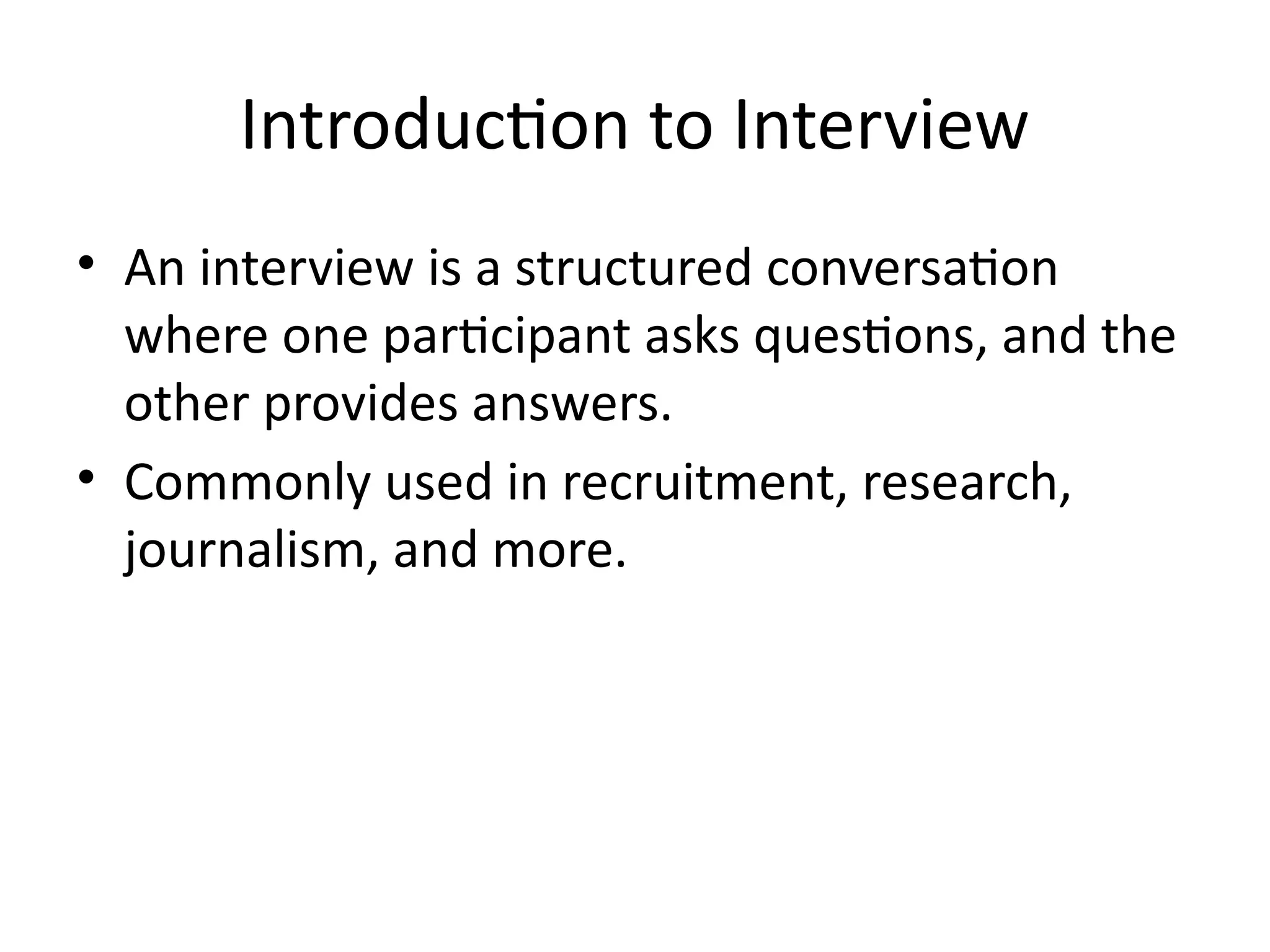
Introduction to Interview
•An interview is a structured conversation
where one participant asks questions, and the
other provides answers.
• Commonly used in recruitment, research,
journalism, and more.
3.
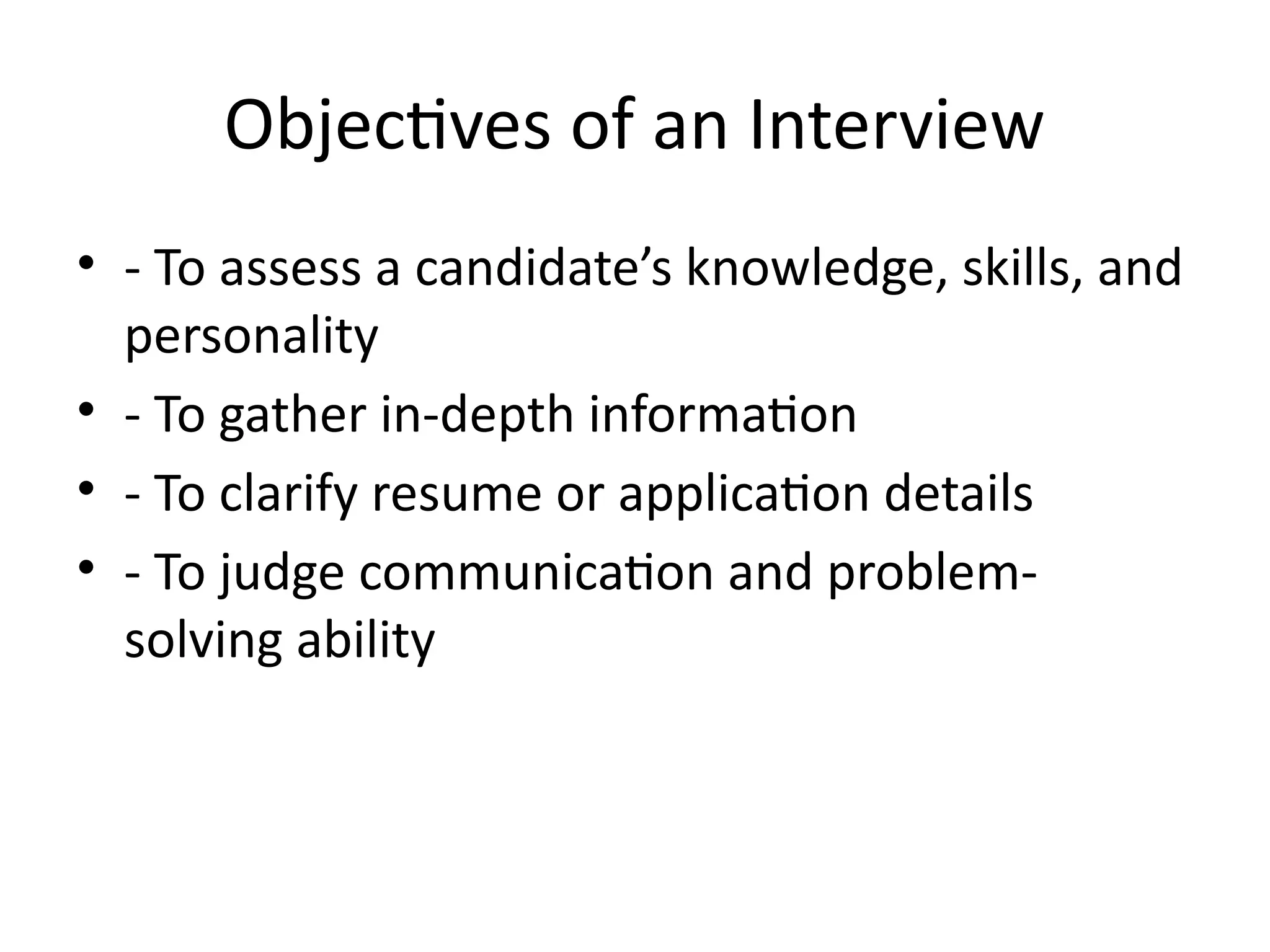
Objectives of anInterview
• - To assess a candidate’s knowledge, skills, and
personality
• - To gather in-depth information
• - To clarify resume or application details
• - To judge communication and problem-
solving ability
4.
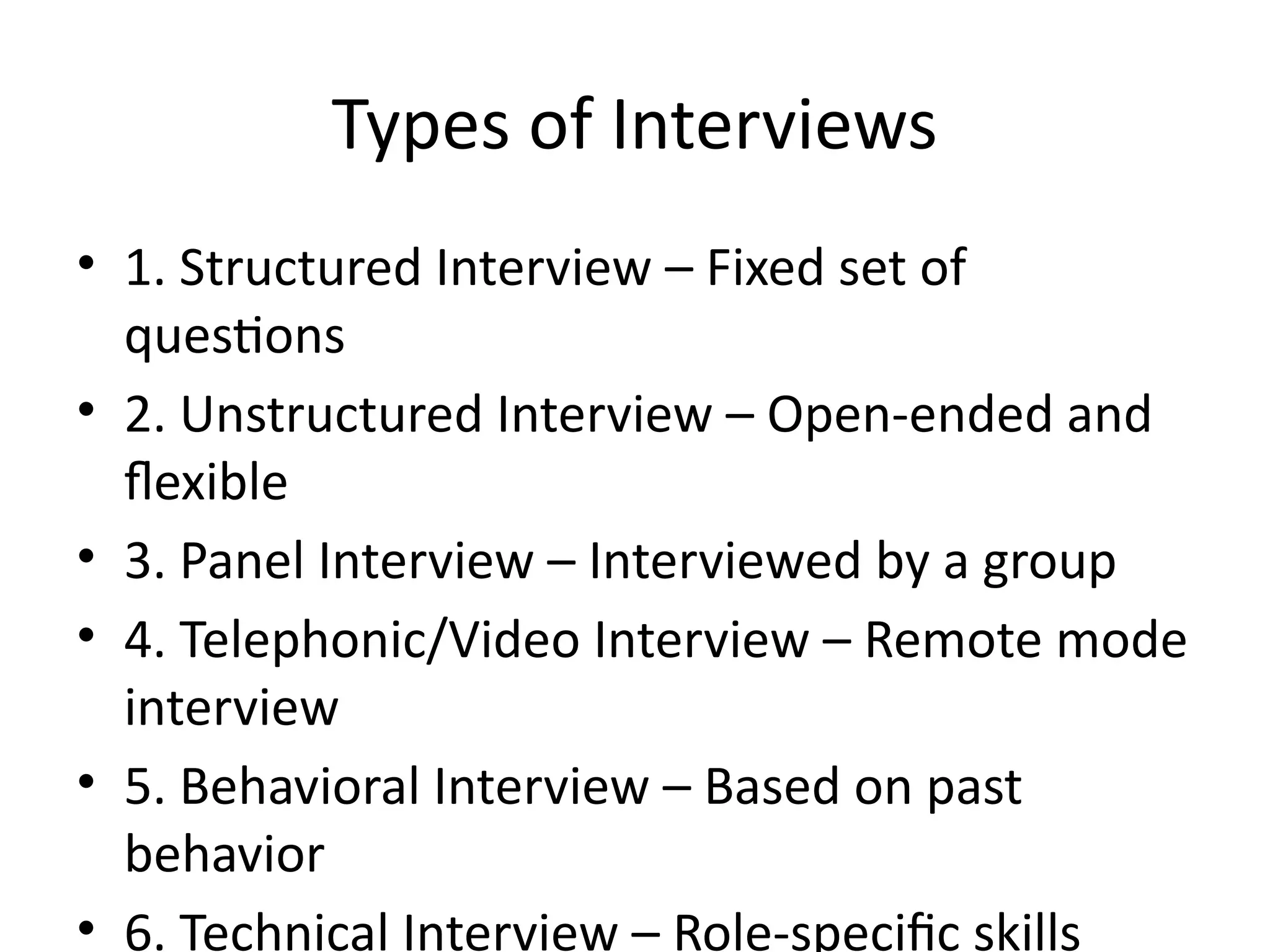
Types of Interviews
•1. Structured Interview – Fixed set of
questions
• 2. Unstructured Interview – Open-ended and
flexible
• 3. Panel Interview – Interviewed by a group
• 4. Telephonic/Video Interview – Remote mode
interview
• 5. Behavioral Interview – Based on past
behavior
• 6. Technical Interview – Role-specific skills
5.
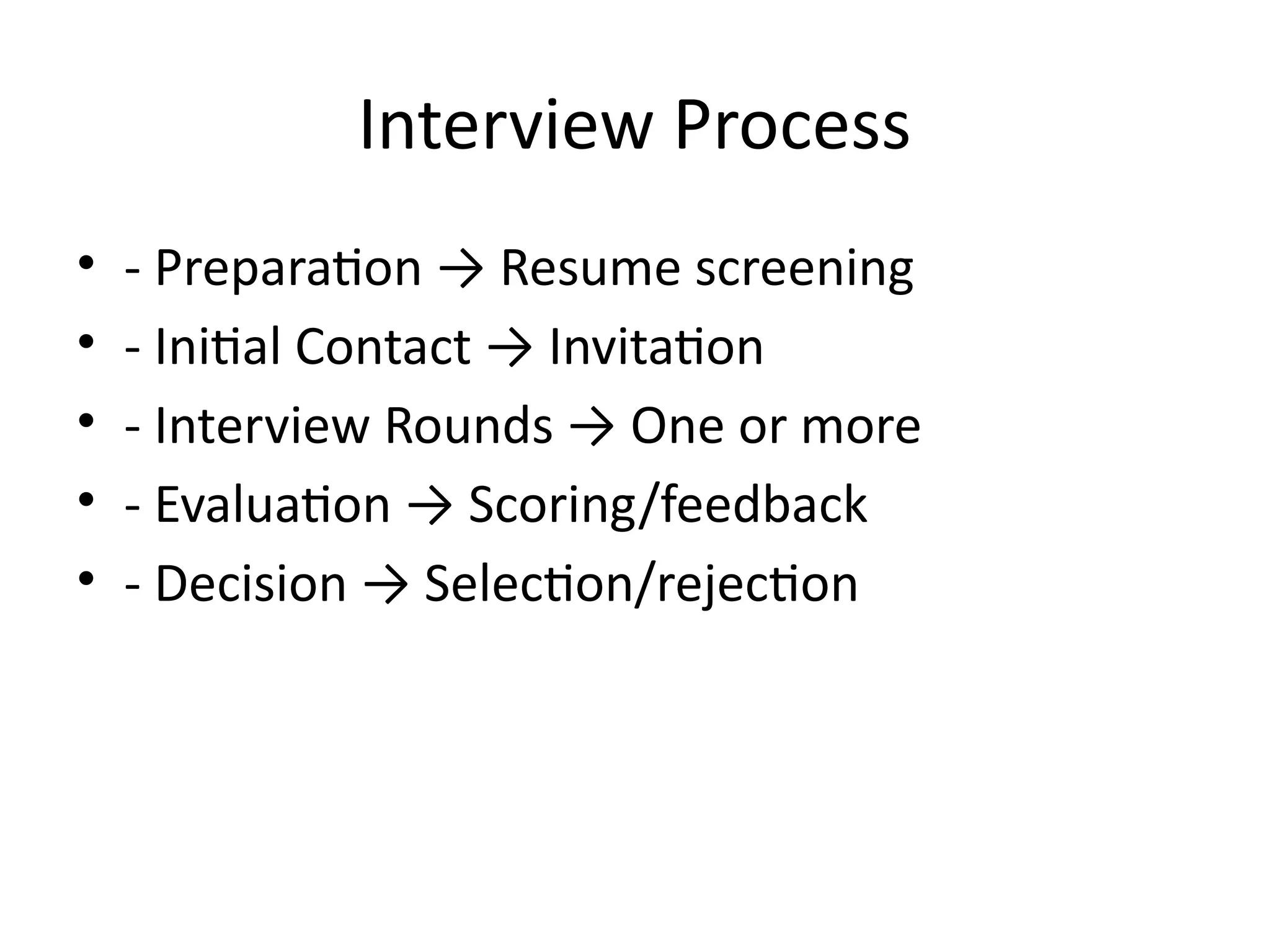
Interview Process
• -Preparation → Resume screening
• - Initial Contact → Invitation
• - Interview Rounds → One or more
• - Evaluation → Scoring/feedback
• - Decision → Selection/rejection
6.
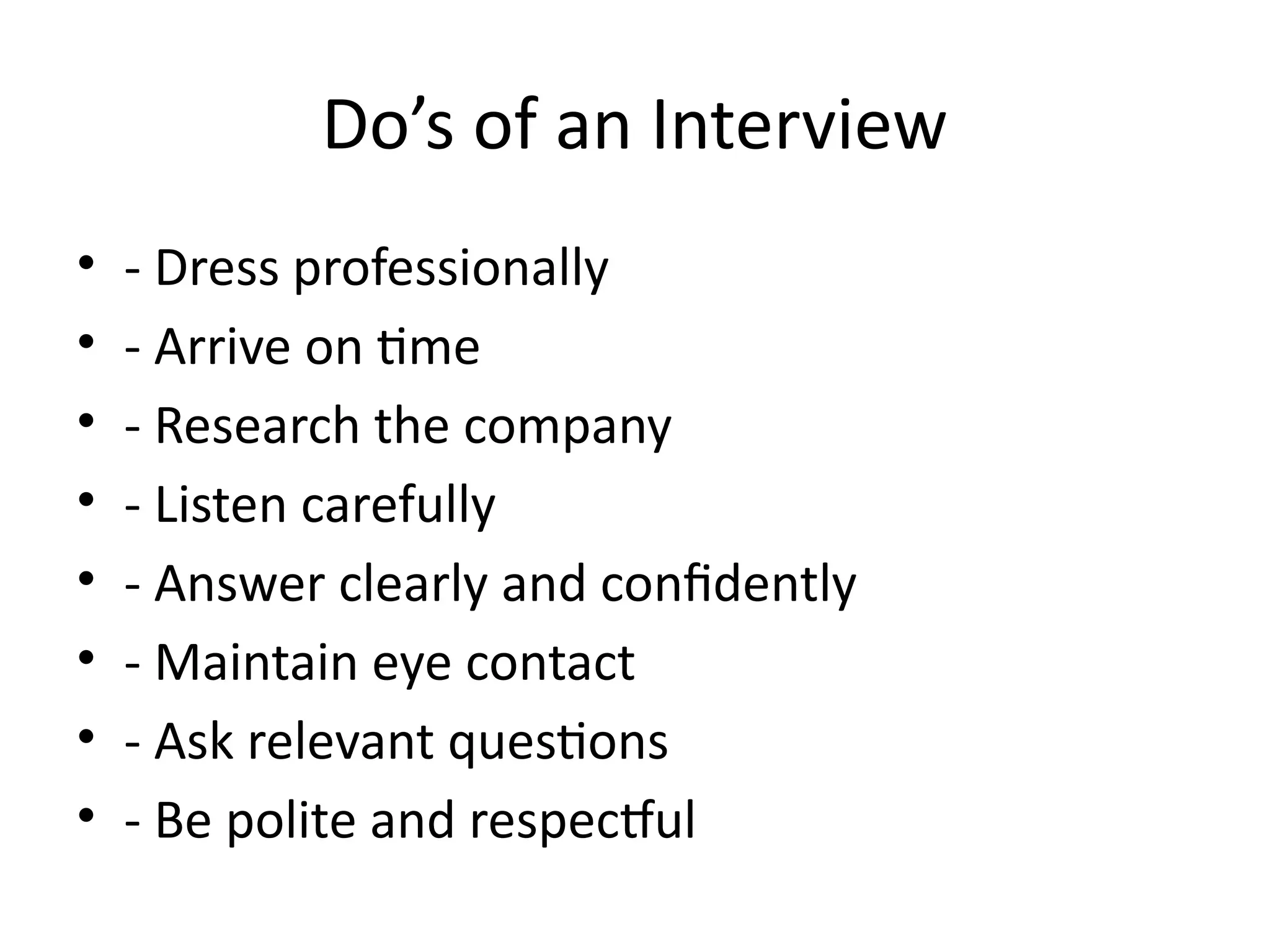
Do’s of anInterview
• - Dress professionally
• - Arrive on time
• - Research the company
• - Listen carefully
• - Answer clearly and confidently
• - Maintain eye contact
• - Ask relevant questions
• - Be polite and respectful
7.
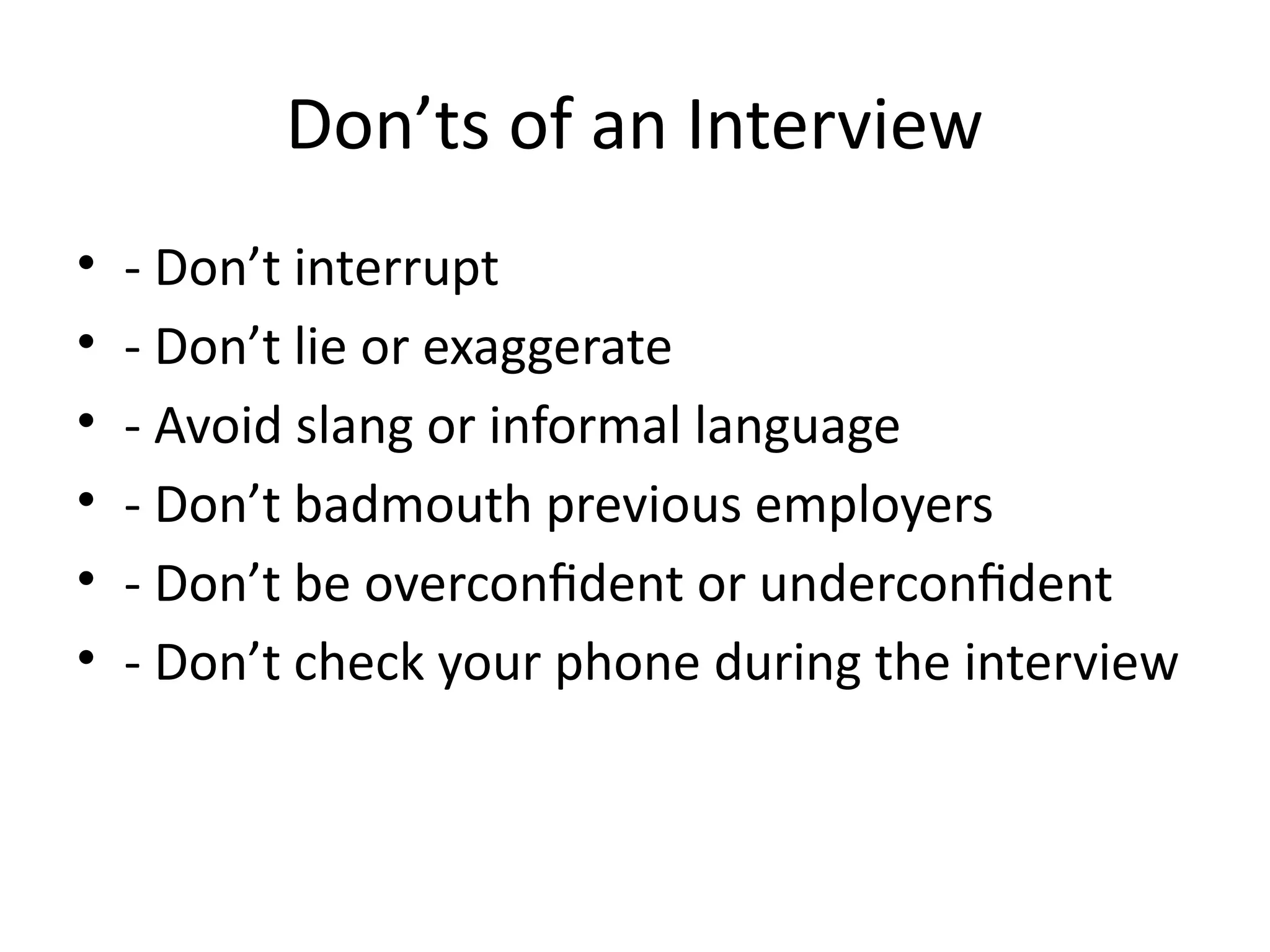
Don’ts of anInterview
• - Don’t interrupt
• - Don’t lie or exaggerate
• - Avoid slang or informal language
• - Don’t badmouth previous employers
• - Don’t be overconfident or underconfident
• - Don’t check your phone during the interview
8.
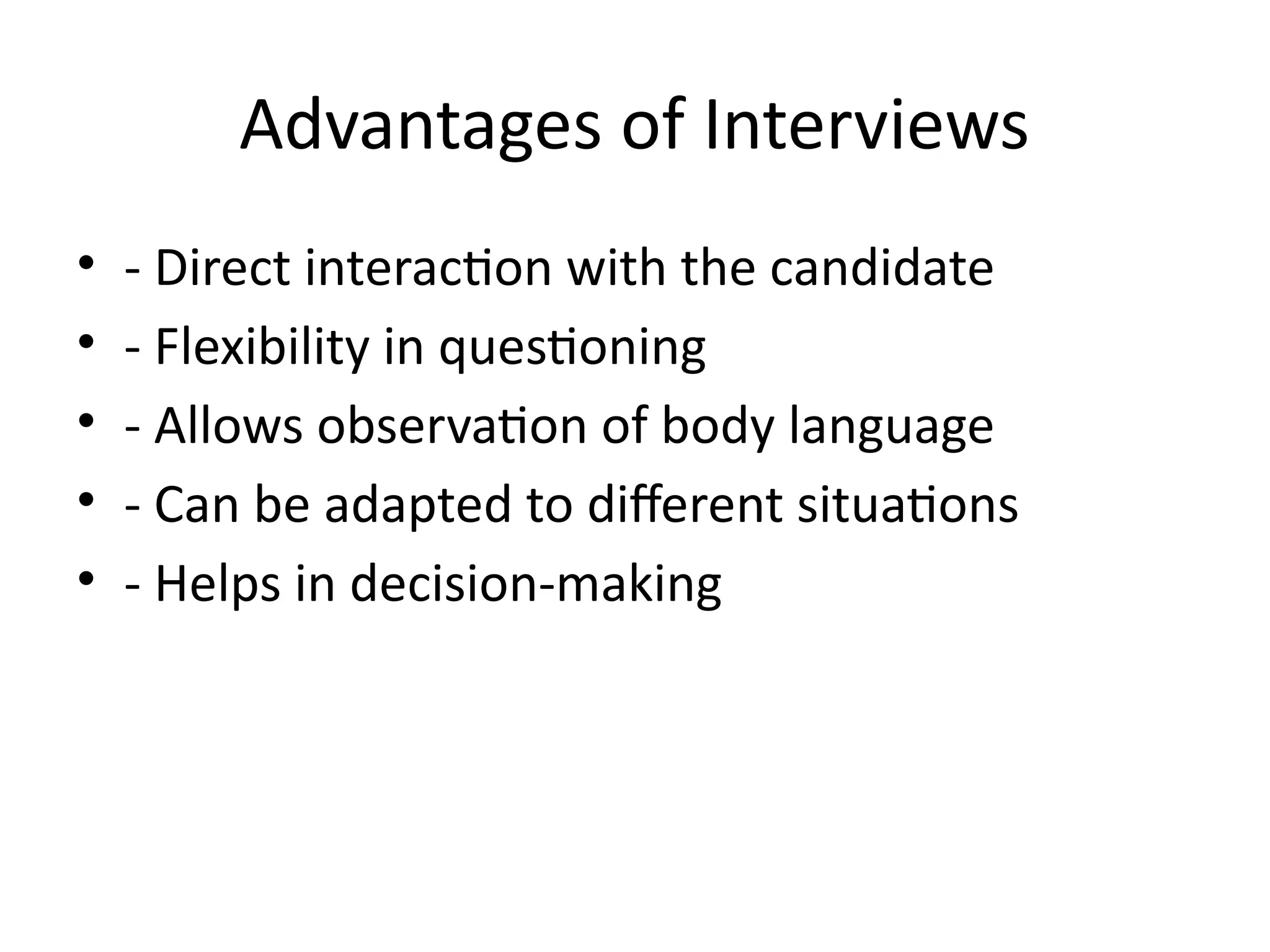
Advantages of Interviews
•- Direct interaction with the candidate
• - Flexibility in questioning
• - Allows observation of body language
• - Can be adapted to different situations
• - Helps in decision-making
9.
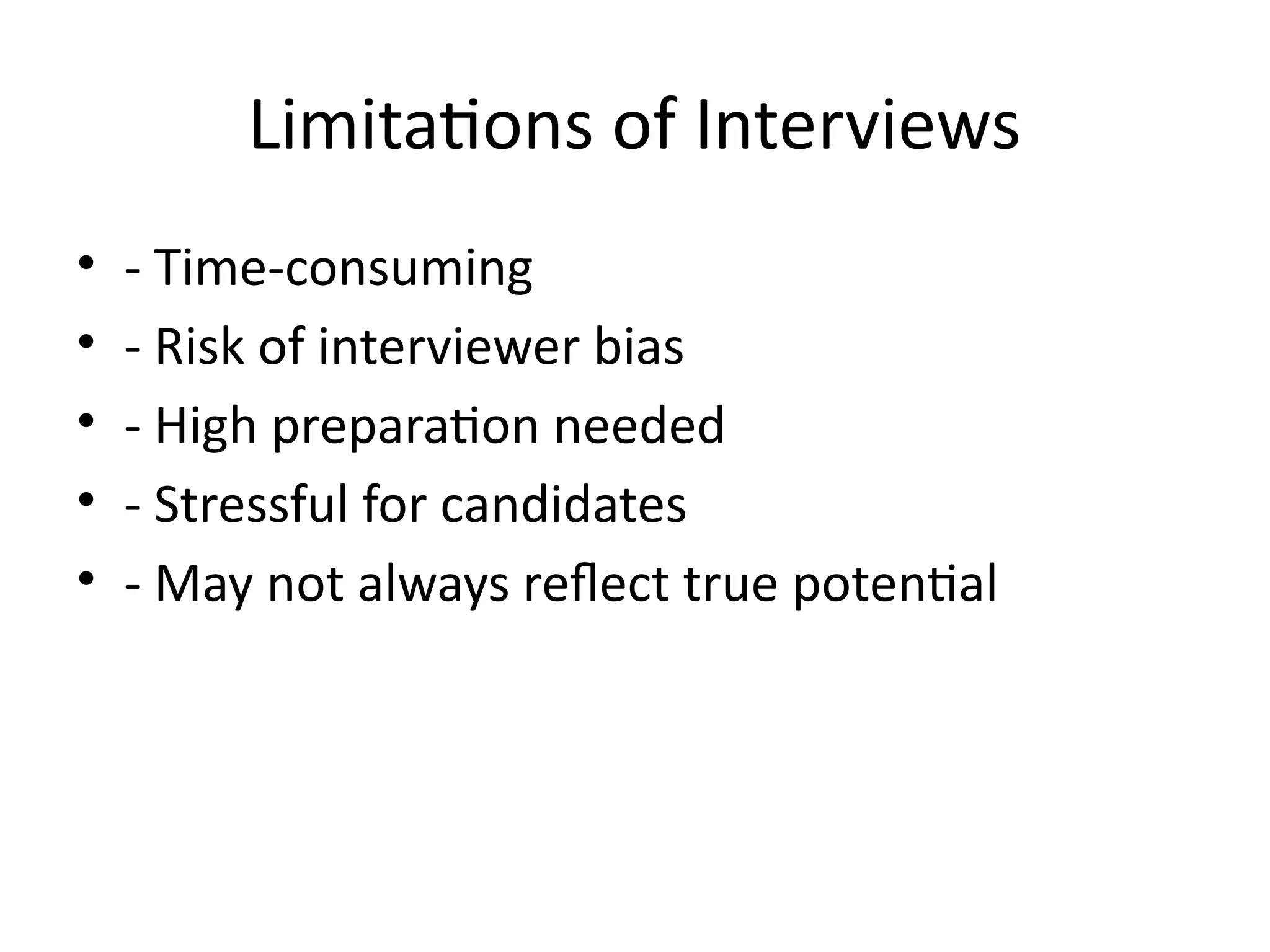
Limitations of Interviews
•- Time-consuming
• - Risk of interviewer bias
• - High preparation needed
• - Stressful for candidates
• - May not always reflect true potential
10.
Tips for Success
•- Practice mock interviews
• - Prepare key questions and answers
• - Know your strengths and weaknesses
• - Stay calm and confident
• - Follow up with a thank-you email
11.
Conclusion
• - Interviewsare essential in assessing
suitability for roles
• - Being well-prepared increases your chances
of success
• - Always learn and improve after each
interview experience
![Interview – Meaning, Types, Do’s &
Don’ts, Advantages & Limitations
• A comprehensive understanding of the
interview process
• Presented by: [Your Name]
• Date: [Your Date]](https://image.slidesharecdn.com/interviewpresentationwithimages-250704165626-ee089146/75/Interview_Presentation__with_Images-pptx-1-2048.jpg)
![Thank You
• [Your Name]
• Contact Info (optional)](https://image.slidesharecdn.com/interviewpresentationwithimages-250704165626-ee089146/75/Interview_Presentation__with_Images-pptx-13-2048.jpg)


![tarunika_ppttxx effective elementation [1].pptx](https://cdn.slidesharecdn.com/ss_thumbnails/tarunikappttxx1-250911140722-1034d1e6-thumbnail.jpg?width=640&height=640&fit=bounds)


