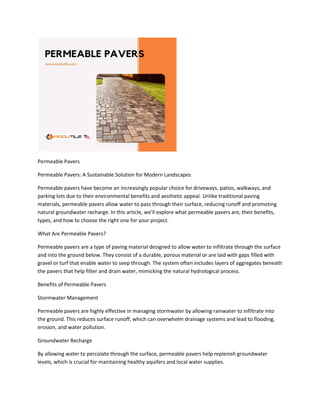
Permeable Pavers
Permeable Pavers: A Sustainable Solution for Modern Landscapes
Permeable pavers have become an increasingly popular choice for driveways, patios, walkways, and
parking lots due to their environmental benefits and aesthetic appeal.
materials, permeable pavers allow water to pass through their surface, reducing runoff and promoting
natural groundwater recharge. In this article, we’ll explore what permeable pavers are, their benefits,
types, and how to choose the right one for your project.
What Are Permeable Pavers?
Permeable pavers are a type of paving material designed to allow water to infiltrate through the surface
and into the ground below. They consist of a durable, porous material or are laid with gaps
gravel or turf that enable water to seep through. The system often includes layers of aggregates beneath
the pavers that help filter and drain water, mimicking the natural hydrological process.
Benefits of Permeable Pavers
Stormwater Management
Permeable pavers are highly effective in managing stormwater by allowing rainwater to infiltrate into
the ground. This reduces surface runoff, which can overwhelm drainage systems and lead to flooding,
erosion, and water pollution.
Groundwater Recharge
By allowing water to percolate through the surface, permeable pavers help replenish groundwater
levels, which is crucial for maintaining healthy aquifers and local water supplies.
Permeable Pavers: A Sustainable Solution for Modern Landscapes
Permeable pavers have become an increasingly popular choice for driveways, patios, walkways, and
parking lots due to their environmental benefits and aesthetic appeal. Unlike traditional paving
materials, permeable pavers allow water to pass through their surface, reducing runoff and promoting
natural groundwater recharge. In this article, we’ll explore what permeable pavers are, their benefits,
the right one for your project.
Permeable pavers are a type of paving material designed to allow water to infiltrate through the surface
and into the ground below. They consist of a durable, porous material or are laid with gaps
gravel or turf that enable water to seep through. The system often includes layers of aggregates beneath
the pavers that help filter and drain water, mimicking the natural hydrological process.
Permeable pavers are highly effective in managing stormwater by allowing rainwater to infiltrate into
the ground. This reduces surface runoff, which can overwhelm drainage systems and lead to flooding,
allowing water to percolate through the surface, permeable pavers help replenish groundwater
levels, which is crucial for maintaining healthy aquifers and local water supplies.
Permeable pavers have become an increasingly popular choice for driveways, patios, walkways, and
Unlike traditional paving
materials, permeable pavers allow water to pass through their surface, reducing runoff and promoting
natural groundwater recharge. In this article, we’ll explore what permeable pavers are, their benefits,
Permeable pavers are a type of paving material designed to allow water to infiltrate through the surface
and into the ground below. They consist of a durable, porous material or are laid with gaps filled with
gravel or turf that enable water to seep through. The system often includes layers of aggregates beneath
the pavers that help filter and drain water, mimicking the natural hydrological process.
Permeable pavers are highly effective in managing stormwater by allowing rainwater to infiltrate into
the ground. This reduces surface runoff, which can overwhelm drainage systems and lead to flooding,
allowing water to percolate through the surface, permeable pavers help replenish groundwater
Eco-Friendly
These pavers reduce the urban heat island effect by allowing vegetation to grow through gaps or using
light-colored materials that reflect rather than absorb heat. Additionally, they reduce the amount of
untreated stormwater that flows into rivers and lakes, lowering the risk of water pollution.
Durability and Low Maintenance
Permeable pavers are made from high-strength materials like concrete, brick, or natural stone, making
them highly durable. They are resistant to cracking, frost, and heavy loads. Maintenance is generally
low, involving occasional sweeping and removal of debris from the joints.
Aesthetic Versatility
Available in various colors, shapes, and sizes, permeable pavers can be customized to suit any landscape
design, enhancing the aesthetic appeal of outdoor spaces.
Compliance with Regulations
Many municipalities are enacting regulations to manage stormwater runoff. Installing permeable pavers
can help meet local environmental regulations and may even qualify for tax credits or incentives.
Types of Permeable Pavers
Permeable Interlocking Concrete Pavers (PICP)
These pavers are designed with larger gaps filled with gravel or small stones, allowing water to pass
through easily. They are available in various shapes and sizes, offering a great deal of design flexibility.
Porous Concrete and Asphalt Pavers
Porous concrete and asphalt are similar to traditional paving materials but are manufactured with voids
to allow water to permeate. They are ideal for large areas like parking lots and pathways.
Grid Pavers
Grid pavers are made from concrete or plastic grids that are filled with gravel, sand, or grass. These
pavers provide a strong, stable surface while allowing water to seep through. They are excellent for
driveways, fire lanes, and overflow parking areas.
Natural Stone Pavers
Natural stone, such as flagstone or slate, can be laid with gaps filled with gravel or planted with ground
cover. They provide a more rustic and natural look while still offering permeability.
Grass Pavers
Grass pavers are grids filled with soil and grass, providing a green, natural appearance. They are ideal for
low-traffic areas or areas where you want a lawn-like surface that also supports light vehicles.
How to Choose the Right Permeable Paver
Purpose and Traffic Load
Consider the intended use of the area. For driveways and parking lots, choose pavers that can withstand
the weight of vehicles, such as interlocking concrete or grid pavers. For patios and walkways, natural
stone or grass pavers may be more appropriate.
Climate and Soil Conditions
The climate and type of soil in your area can impact the effectiveness of permeable pavers. In regions
with heavy rainfall or clay soils, deeper aggregate layers may be necessary to ensure proper drainage.
Aesthetics and Design
Choose pavers that complement the overall design of your landscape. Permeable pavers come in various
colors, textures, and patterns, allowing for endless design possibilities.
Installation and Maintenance
Some types of permeable pavers require more extensive installation processes and may need
professional help. Consider the maintenance needs of each option; for example, grass pavers may need
regular mowing and irrigation, while gravel-filled grid pavers require minimal upkeep.
Budget
While permeable pavers can be more expensive upfront compared to traditional paving materials, they
offer long-term savings by reducing water bills, lowering maintenance costs, and potentially qualifying
for government incentives.
Installation Tips for Permeable Pavers
Proper Base Preparation: Ensure the base is adequately prepared with layers of crushed stone to
provide proper drainage and stability.
Correct Slope: A slight slope should be maintained to guide excess water toward drainage areas.
Regular Maintenance: To keep permeable pavers functioning properly, remove debris, clean the surface,
and refill gaps as needed.
Conclusion
Permeable pavers offer a sustainable, aesthetically pleasing, and functional solution for various
landscaping projects. Their ability to manage stormwater, recharge groundwater, and provide an eco-
friendly alternative to traditional paving materials makes them an excellent choice for homeowners,
businesses, and municipalities. By carefully selecting the right type of permeable paver and ensuring
proper installation and maintenance, you can create a beautiful and environmentally responsible
outdoor space that stands the test of time.
https://modutile.com/interlocking-permeable-pavers/

Interlocking Permeable Pavers – Driveway, Parking & More

  • 1.
    Permeable Pavers Permeable Pavers:A Sustainable Solution for Modern Landscapes Permeable pavers have become an increasingly popular choice for driveways, patios, walkways, and parking lots due to their environmental benefits and aesthetic appeal. materials, permeable pavers allow water to pass through their surface, reducing runoff and promoting natural groundwater recharge. In this article, we’ll explore what permeable pavers are, their benefits, types, and how to choose the right one for your project. What Are Permeable Pavers? Permeable pavers are a type of paving material designed to allow water to infiltrate through the surface and into the ground below. They consist of a durable, porous material or are laid with gaps gravel or turf that enable water to seep through. The system often includes layers of aggregates beneath the pavers that help filter and drain water, mimicking the natural hydrological process. Benefits of Permeable Pavers Stormwater Management Permeable pavers are highly effective in managing stormwater by allowing rainwater to infiltrate into the ground. This reduces surface runoff, which can overwhelm drainage systems and lead to flooding, erosion, and water pollution. Groundwater Recharge By allowing water to percolate through the surface, permeable pavers help replenish groundwater levels, which is crucial for maintaining healthy aquifers and local water supplies. Permeable Pavers: A Sustainable Solution for Modern Landscapes Permeable pavers have become an increasingly popular choice for driveways, patios, walkways, and parking lots due to their environmental benefits and aesthetic appeal. Unlike traditional paving materials, permeable pavers allow water to pass through their surface, reducing runoff and promoting natural groundwater recharge. In this article, we’ll explore what permeable pavers are, their benefits, the right one for your project. Permeable pavers are a type of paving material designed to allow water to infiltrate through the surface and into the ground below. They consist of a durable, porous material or are laid with gaps gravel or turf that enable water to seep through. The system often includes layers of aggregates beneath the pavers that help filter and drain water, mimicking the natural hydrological process. Permeable pavers are highly effective in managing stormwater by allowing rainwater to infiltrate into the ground. This reduces surface runoff, which can overwhelm drainage systems and lead to flooding, allowing water to percolate through the surface, permeable pavers help replenish groundwater levels, which is crucial for maintaining healthy aquifers and local water supplies. Permeable pavers have become an increasingly popular choice for driveways, patios, walkways, and Unlike traditional paving materials, permeable pavers allow water to pass through their surface, reducing runoff and promoting natural groundwater recharge. In this article, we’ll explore what permeable pavers are, their benefits, Permeable pavers are a type of paving material designed to allow water to infiltrate through the surface and into the ground below. They consist of a durable, porous material or are laid with gaps filled with gravel or turf that enable water to seep through. The system often includes layers of aggregates beneath the pavers that help filter and drain water, mimicking the natural hydrological process. Permeable pavers are highly effective in managing stormwater by allowing rainwater to infiltrate into the ground. This reduces surface runoff, which can overwhelm drainage systems and lead to flooding, allowing water to percolate through the surface, permeable pavers help replenish groundwater
  • 2.
    Eco-Friendly These pavers reducethe urban heat island effect by allowing vegetation to grow through gaps or using light-colored materials that reflect rather than absorb heat. Additionally, they reduce the amount of untreated stormwater that flows into rivers and lakes, lowering the risk of water pollution. Durability and Low Maintenance Permeable pavers are made from high-strength materials like concrete, brick, or natural stone, making them highly durable. They are resistant to cracking, frost, and heavy loads. Maintenance is generally low, involving occasional sweeping and removal of debris from the joints. Aesthetic Versatility Available in various colors, shapes, and sizes, permeable pavers can be customized to suit any landscape design, enhancing the aesthetic appeal of outdoor spaces. Compliance with Regulations Many municipalities are enacting regulations to manage stormwater runoff. Installing permeable pavers can help meet local environmental regulations and may even qualify for tax credits or incentives. Types of Permeable Pavers Permeable Interlocking Concrete Pavers (PICP) These pavers are designed with larger gaps filled with gravel or small stones, allowing water to pass through easily. They are available in various shapes and sizes, offering a great deal of design flexibility. Porous Concrete and Asphalt Pavers Porous concrete and asphalt are similar to traditional paving materials but are manufactured with voids to allow water to permeate. They are ideal for large areas like parking lots and pathways. Grid Pavers Grid pavers are made from concrete or plastic grids that are filled with gravel, sand, or grass. These pavers provide a strong, stable surface while allowing water to seep through. They are excellent for driveways, fire lanes, and overflow parking areas. Natural Stone Pavers Natural stone, such as flagstone or slate, can be laid with gaps filled with gravel or planted with ground cover. They provide a more rustic and natural look while still offering permeability. Grass Pavers
  • 3.
    Grass pavers aregrids filled with soil and grass, providing a green, natural appearance. They are ideal for low-traffic areas or areas where you want a lawn-like surface that also supports light vehicles. How to Choose the Right Permeable Paver Purpose and Traffic Load Consider the intended use of the area. For driveways and parking lots, choose pavers that can withstand the weight of vehicles, such as interlocking concrete or grid pavers. For patios and walkways, natural stone or grass pavers may be more appropriate. Climate and Soil Conditions The climate and type of soil in your area can impact the effectiveness of permeable pavers. In regions with heavy rainfall or clay soils, deeper aggregate layers may be necessary to ensure proper drainage. Aesthetics and Design Choose pavers that complement the overall design of your landscape. Permeable pavers come in various colors, textures, and patterns, allowing for endless design possibilities. Installation and Maintenance Some types of permeable pavers require more extensive installation processes and may need professional help. Consider the maintenance needs of each option; for example, grass pavers may need regular mowing and irrigation, while gravel-filled grid pavers require minimal upkeep. Budget While permeable pavers can be more expensive upfront compared to traditional paving materials, they offer long-term savings by reducing water bills, lowering maintenance costs, and potentially qualifying for government incentives. Installation Tips for Permeable Pavers Proper Base Preparation: Ensure the base is adequately prepared with layers of crushed stone to provide proper drainage and stability. Correct Slope: A slight slope should be maintained to guide excess water toward drainage areas. Regular Maintenance: To keep permeable pavers functioning properly, remove debris, clean the surface, and refill gaps as needed. Conclusion Permeable pavers offer a sustainable, aesthetically pleasing, and functional solution for various landscaping projects. Their ability to manage stormwater, recharge groundwater, and provide an eco- friendly alternative to traditional paving materials makes them an excellent choice for homeowners,
  • 4.
    businesses, and municipalities.By carefully selecting the right type of permeable paver and ensuring proper installation and maintenance, you can create a beautiful and environmentally responsible outdoor space that stands the test of time. https://modutile.com/interlocking-permeable-pavers/