Integrating Renewable Energy
with Information Technology
Presented By
Subair Ahamed S
Junior Engineer
Overview
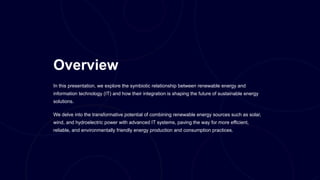
In this presentation, we explore the symbiotic relationship between renewable energy and
information technology (IT) and how their integration is shaping the future of sustainable energy
solutions.
We delve into the transformative potential of combining renewable energy sources such as solar,
wind, and hydroelectric power with advanced IT systems, paving the way for more efficient,
reliable, and environmentally friendly energy production and consumption practices.
Introduction to Renewable Energy and
Information Technology
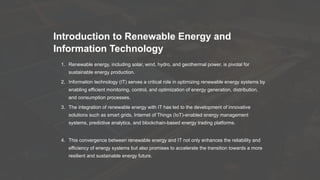
1. Renewable energy, including solar, wind, hydro, and geothermal power, is pivotal for
sustainable energy production.
2. Information technology (IT) serves a critical role in optimizing renewable energy systems by
enabling efficient monitoring, control, and optimization of energy generation, distribution,
and consumption processes.
3. The integration of renewable energy with IT has led to the development of innovative
solutions such as smart grids, Internet of Things (IoT)-enabled energy management
systems, predictive analytics, and blockchain-based energy trading platforms.
4. This convergence between renewable energy and IT not only enhances the reliability and
efficiency of energy systems but also promises to accelerate the transition towards a more
resilient and sustainable energy future.
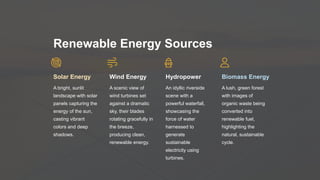
Renewable Energy Sources
Solar Energy
A bright, sunlit
landscape with solar
panels capturing the
energy of the sun,
casting vibrant
colors and deep
shadows.
Wind Energy
A scenic view of
wind turbines set
against a dramatic
sky, their blades
rotating gracefully in
the breeze,
producing clean,
renewable energy.
Hydropower
An idyllic riverside
scene with a
powerful waterfall,
showcasing the
force of water
harnessed to
generate
sustainable
electricity using
turbines.
Biomass Energy
A lush, green forest
with images of
organic waste being
converted into
renewable fuel,
highlighting the
natural, sustainable
cycle.
Information Technology Systems
Network
Infrastructure
The backbone of IT systems,
including hardware
components such as routers,
switches, and cables, and the
software protocols that enable
communication between
devices.
Data Management
Exploring methods and
technologies for storing,
organizing, and retrieving data
efficiently and securely,
encompassing databases, data
warehouses, and data analytics
tools.
Cybersecurity
Addressing measures and
practices aimed at protecting IT
systems from unauthorized
access, data breaches, and
malicious attacks, including
firewalls, encryption, and
security policies.
Key Technologies Used
 Smart Grids
 Data Analytics
 Internet of Things (IoT)
 Artificial Intelligence
 Blockchain Technology
 Energy Storage Solutions
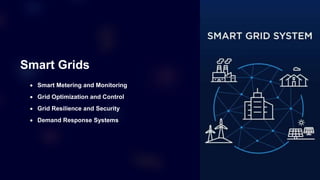
Smart Grids
 Smart Metering and Monitoring
 Grid Optimization and Control
 Grid Resilience and Security
 Demand Response Systems
Real World Example
Hornsdale Power Reserve:
The Hornsdale Power Reserve in South Australia, operated by Neoen and Tesla, is one of the
world's largest lithium-ion battery energy storage systems. This is commonly known as the "Tesla
big battery", is integrated with renewable energy sources and the grid to provide stability and
support during peak demand periods. Through IT optimization, it swiftly adjusts to fluctuations in
renewable generation and grid frequency, ensuring stability and reliability.
Pacific Gas and Electric (PG&E):
PG&E in California deploys smart meters with two-way communication, offering real-time
consumption of data. This empowers customers to track usage and make energy-efficient choices.
PG&E leverages this data to optimize grid operations, identify high-demand areas, and enact peak
load management strategies.
Data Analytics for Energy
Optimization
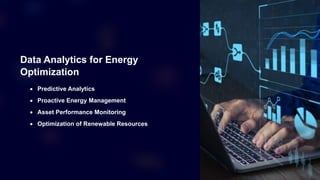
 Predictive Analytics
 Proactive Energy Management
 Asset Performance Monitoring
 Optimization of Renewable Resources
Benefits of Integrating Renewable Energy with
Information Technology
Cost Efficiency
Renewable energy integration reduces
operational costs and long-term energy
expenses.
Sustainability Impact
Reduces carbon footprint and
environmental impact, aligning with
sustainable practices.
Reliability and Resilience
Enhances energy reliability and security,
ensuring consistent energy availability
even in challenging conditions.
Scalability and Flexibility
Offers scalability and flexibility in meeting
energy demands, adapting to evolving
needs.
Challenges
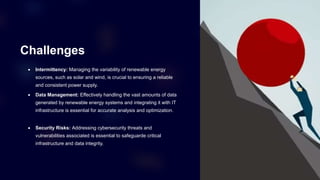
 Intermittency: Managing the variability of renewable energy
sources, such as solar and wind, is crucial to ensuring a reliable
and consistent power supply.
 Data Management: Effectively handling the vast amounts of data
generated by renewable energy systems and integrating it with IT
infrastructure is essential for accurate analysis and optimization.
 Security Risks: Addressing cybersecurity threats and
vulnerabilities associated is essential to safeguarde critical
infrastructure and data integrity.
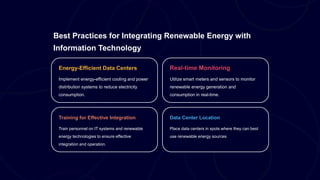
Best Practices for Integrating Renewable Energy with
Information Technology
Energy-Efficient Data Centers
Implement energy-efficient cooling and power
distribution systems to reduce electricity
consumption.
Real-time Monitoring
Utilize smart meters and sensors to monitor
renewable energy generation and
consumption in real-time.
Training for Effective Integration
Train personnel on IT systems and renewable
energy technologies to ensure effective
integration and operation.
Data Center Location
Place data centers in spots where they can best
use renewable energy sources
Future Trends
AI-Driven Energy
Management
Utilizing artificial intelligence
for predictive analytics and
autonomous control for
optimizing energy
consumption in IT
infrastructures.
Edge Computing
Integration of edge
computing technologies is
anticipated to enhance real-
time data processing and
decision-making, improving
overall efficiency and
reliability.
Blockchain Application
Implementing blockchain
technology to enable
decentralized energy trading
and peer-to-peer
transactions.
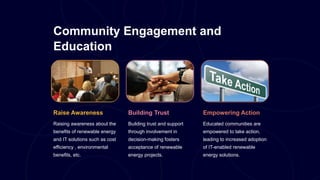
Community Engagement and
Education
Raise Awareness
Raising awareness about the
benefits of renewable energy
and IT solutions such as cost
efficiency , environmental
benefits, etc.
Building Trust
Building trust and support
through involvement in
decision-making fosters
acceptance of renewable
energy projects.
Empowering Action
Educated communities are
empowered to take action,
leading to increased adoption
of IT-enabled renewable
energy solutions.
Conclusion
The integration of renewable resources with information technology offers a promising pathway
towards a greener and more efficient energy landscape.
By combining renewable energy sources with advanced IT solutions, we can enhance energy
production, distribution, and management while reducing our environmental footprint.
This synergy represents a significant step forward in our efforts to combat climate change and build
a sustainable future for all.
Integrating-Renewable-Energy-with-Information-Technology (3).pptx

Integrating-Renewable-Energy-with-Information-Technology (3).pptx

  • 1.
    Integrating Renewable Energy withInformation Technology Presented By Subair Ahamed S Junior Engineer
  • 2.
    Overview In this presentation,we explore the symbiotic relationship between renewable energy and information technology (IT) and how their integration is shaping the future of sustainable energy solutions. We delve into the transformative potential of combining renewable energy sources such as solar, wind, and hydroelectric power with advanced IT systems, paving the way for more efficient, reliable, and environmentally friendly energy production and consumption practices.
  • 3.
    Introduction to RenewableEnergy and Information Technology 1. Renewable energy, including solar, wind, hydro, and geothermal power, is pivotal for sustainable energy production. 2. Information technology (IT) serves a critical role in optimizing renewable energy systems by enabling efficient monitoring, control, and optimization of energy generation, distribution, and consumption processes. 3. The integration of renewable energy with IT has led to the development of innovative solutions such as smart grids, Internet of Things (IoT)-enabled energy management systems, predictive analytics, and blockchain-based energy trading platforms. 4. This convergence between renewable energy and IT not only enhances the reliability and efficiency of energy systems but also promises to accelerate the transition towards a more resilient and sustainable energy future.
  • 4.
    Renewable Energy Sources SolarEnergy A bright, sunlit landscape with solar panels capturing the energy of the sun, casting vibrant colors and deep shadows. Wind Energy A scenic view of wind turbines set against a dramatic sky, their blades rotating gracefully in the breeze, producing clean, renewable energy. Hydropower An idyllic riverside scene with a powerful waterfall, showcasing the force of water harnessed to generate sustainable electricity using turbines. Biomass Energy A lush, green forest with images of organic waste being converted into renewable fuel, highlighting the natural, sustainable cycle.
  • 5.
    Information Technology Systems Network Infrastructure Thebackbone of IT systems, including hardware components such as routers, switches, and cables, and the software protocols that enable communication between devices. Data Management Exploring methods and technologies for storing, organizing, and retrieving data efficiently and securely, encompassing databases, data warehouses, and data analytics tools. Cybersecurity Addressing measures and practices aimed at protecting IT systems from unauthorized access, data breaches, and malicious attacks, including firewalls, encryption, and security policies.
  • 6.
    Key Technologies Used Smart Grids  Data Analytics  Internet of Things (IoT)  Artificial Intelligence  Blockchain Technology  Energy Storage Solutions
  • 7.
    Smart Grids  SmartMetering and Monitoring  Grid Optimization and Control  Grid Resilience and Security  Demand Response Systems
  • 8.
    Real World Example HornsdalePower Reserve: The Hornsdale Power Reserve in South Australia, operated by Neoen and Tesla, is one of the world's largest lithium-ion battery energy storage systems. This is commonly known as the "Tesla big battery", is integrated with renewable energy sources and the grid to provide stability and support during peak demand periods. Through IT optimization, it swiftly adjusts to fluctuations in renewable generation and grid frequency, ensuring stability and reliability. Pacific Gas and Electric (PG&E): PG&E in California deploys smart meters with two-way communication, offering real-time consumption of data. This empowers customers to track usage and make energy-efficient choices. PG&E leverages this data to optimize grid operations, identify high-demand areas, and enact peak load management strategies.
  • 9.
    Data Analytics forEnergy Optimization  Predictive Analytics  Proactive Energy Management  Asset Performance Monitoring  Optimization of Renewable Resources
  • 10.
    Benefits of IntegratingRenewable Energy with Information Technology Cost Efficiency Renewable energy integration reduces operational costs and long-term energy expenses. Sustainability Impact Reduces carbon footprint and environmental impact, aligning with sustainable practices. Reliability and Resilience Enhances energy reliability and security, ensuring consistent energy availability even in challenging conditions. Scalability and Flexibility Offers scalability and flexibility in meeting energy demands, adapting to evolving needs.
  • 11.
    Challenges  Intermittency: Managingthe variability of renewable energy sources, such as solar and wind, is crucial to ensuring a reliable and consistent power supply.  Data Management: Effectively handling the vast amounts of data generated by renewable energy systems and integrating it with IT infrastructure is essential for accurate analysis and optimization.  Security Risks: Addressing cybersecurity threats and vulnerabilities associated is essential to safeguarde critical infrastructure and data integrity.
  • 12.
    Best Practices forIntegrating Renewable Energy with Information Technology Energy-Efficient Data Centers Implement energy-efficient cooling and power distribution systems to reduce electricity consumption. Real-time Monitoring Utilize smart meters and sensors to monitor renewable energy generation and consumption in real-time. Training for Effective Integration Train personnel on IT systems and renewable energy technologies to ensure effective integration and operation. Data Center Location Place data centers in spots where they can best use renewable energy sources
  • 13.
    Future Trends AI-Driven Energy Management Utilizingartificial intelligence for predictive analytics and autonomous control for optimizing energy consumption in IT infrastructures. Edge Computing Integration of edge computing technologies is anticipated to enhance real- time data processing and decision-making, improving overall efficiency and reliability. Blockchain Application Implementing blockchain technology to enable decentralized energy trading and peer-to-peer transactions.
  • 14.
    Community Engagement and Education RaiseAwareness Raising awareness about the benefits of renewable energy and IT solutions such as cost efficiency , environmental benefits, etc. Building Trust Building trust and support through involvement in decision-making fosters acceptance of renewable energy projects. Empowering Action Educated communities are empowered to take action, leading to increased adoption of IT-enabled renewable energy solutions.
  • 15.
    Conclusion The integration ofrenewable resources with information technology offers a promising pathway towards a greener and more efficient energy landscape. By combining renewable energy sources with advanced IT solutions, we can enhance energy production, distribution, and management while reducing our environmental footprint. This synergy represents a significant step forward in our efforts to combat climate change and build a sustainable future for all.