Integrating SEO into
Your Website Design
Process
• Introduction to SEO and Website Design
• Key Components of SEO
• Researching Keywords for Your Website
• On-Page SEO Elements
• Designing an SEO-Friendly Site Structure
• Mobile Optimization
• Creating Quality Content
Agenda
• Link Building Strategies
• Technical SEO Considerations
• Measuring SEO Success
• Common SEO Mistakes to Avoid
• SEO Best Practices Cheat Sheet
• Q&A
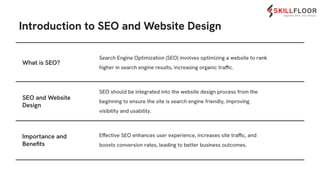
Introduction to SEO and Website Design
Search Engine Optimization (SEO) involves optimizing a website to rank
higher in search engine results, increasing organic traffic.
SEO should be integrated into the website design process from the
beginning to ensure the site is search engine friendly, improving
visibility and usability.
What is SEO?
SEO and Website
Design
Importance and
Benefits
Effective SEO enhances user experience, increases site traffic, and
boosts conversion rates, leading to better business outcomes.
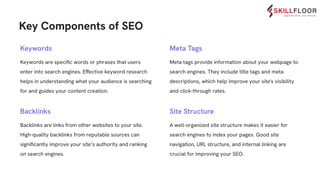
Keywords are specific words or phrases that users
enter into search engines. Effective keyword research
helps in understanding what your audience is searching
for and guides your content creation.
Meta tags provide information about your webpage to
search engines. They include title tags and meta
descriptions, which help improve your site's visibility
and click-through rates.
Backlinks are links from other websites to your site.
High-quality backlinks from reputable sources can
significantly improve your site’s authority and ranking
on search engines.
Keywords Meta Tags
Backlinks
A well-organized site structure makes it easier for
search engines to index your pages. Good site
navigation, URL structure, and internal linking are
crucial for improving your SEO.
Key Components of SEO
Site Structure
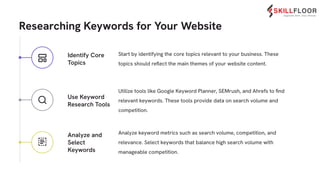
Researching Keywords for Your Website
Start by identifying the core topics relevant to your business. These
topics should reflect the main themes of your website content.
Utilize tools like Google Keyword Planner, SEMrush, and Ahrefs to find
relevant keywords. These tools provide data on search volume and
competition.
Identify Core
Topics
Use Keyword
Research Tools
Analyze and
Select
Keywords
Analyze keyword metrics such as search volume, competition, and
relevance. Select keywords that balance high search volume with
manageable competition.
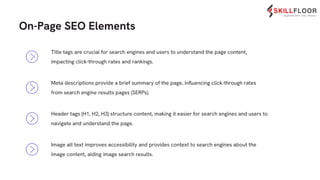
Header tags (H1, H2, H3) structure content, making it easier for search engines and users to
navigate and understand the page.
Meta descriptions provide a brief summary of the page, influencing click-through rates
from search engine results pages (SERPs).
Title tags are crucial for search engines and users to understand the page content,
impacting click-through rates and rankings.
On-Page SEO Elements
Image alt text improves accessibility and provides context to search engines about the
image content, aiding image search results.
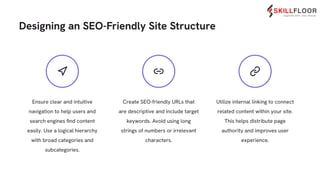
Create SEO-friendly URLs that
are descriptive and include target
keywords. Avoid using long
strings of numbers or irrelevant
characters.
Utilize internal linking to connect
related content within your site.
This helps distribute page
authority and improves user
experience.
Designing an SEO-Friendly Site Structure
Ensure clear and intuitive
navigation to help users and
search engines find content
easily. Use a logical hierarchy
with broad categories and
subcategories.
Mobile Optimization
● Google uses mobile-first indexing, prioritizing
mobile-friendly sites.
● Mobile users account for over 50% of global
web traffic.
● Better mobile experience leads to higher user
engagement and lower bounce rates.
● Use responsive web design to adapt to various
screen sizes.
● Optimize images and videos for faster loading
times on mobile.
● Ensure easy navigation with clear CTAs and
readable fonts.
Importance of Mobile Optimization for
SEO
Tips for Ensuring Mobile-Friendliness
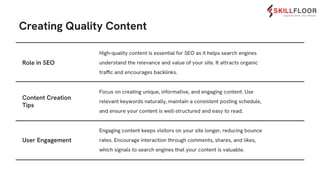
Creating Quality Content
High-quality content is essential for SEO as it helps search engines
understand the relevance and value of your site. It attracts organic
traffic and encourages backlinks.
Focus on creating unique, informative, and engaging content. Use
relevant keywords naturally, maintain a consistent posting schedule,
and ensure your content is well-structured and easy to read.
Role in SEO
Content Creation
Tips
User Engagement
Engaging content keeps visitors on your site longer, reducing bounce
rates. Encourage interaction through comments, shares, and likes,
which signals to search engines that your content is valuable.
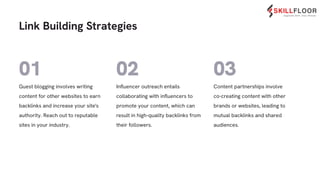
Content partnerships involve
co-creating content with other
brands or websites, leading to
mutual backlinks and shared
audiences.
Influencer outreach entails
collaborating with influencers to
promote your content, which can
result in high-quality backlinks from
their followers.
Guest blogging involves writing
content for other websites to earn
backlinks and increase your site's
authority. Reach out to reputable
sites in your industry.
Link Building Strategies
02 03
01
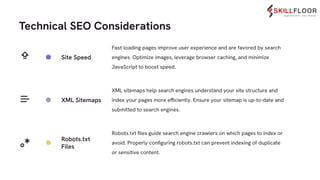
Technical SEO Considerations
Fast-loading pages improve user experience and are favored by search
engines. Optimize images, leverage browser caching, and minimize
JavaScript to boost speed.
XML sitemaps help search engines understand your site structure and
index your pages more efficiently. Ensure your sitemap is up-to-date and
submitted to search engines.
Site Speed
XML Sitemaps
Robots.txt
Files
Robots.txt files guide search engine crawlers on which pages to index or
avoid. Properly configuring robots.txt can prevent indexing of duplicate
or sensitive content.
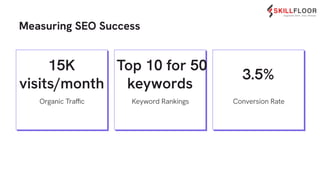
Measuring SEO Success
15K
visits/month
Organic Traffic
Top 10 for 50
keywords
Keyword Rankings
3.5%
Conversion Rate
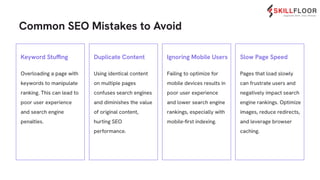
Ignoring Mobile Users
Overloading a page with
keywords to manipulate
ranking. This can lead to
poor user experience
and search engine
penalties.
Keyword Stuffing Duplicate Content
Common SEO Mistakes to Avoid
Using identical content
on multiple pages
confuses search engines
and diminishes the value
of original content,
hurting SEO
performance.
Failing to optimize for
mobile devices results in
poor user experience
and lower search engine
rankings, especially with
mobile-first indexing.
Pages that load slowly
can frustrate users and
negatively impact search
engine rankings. Optimize
images, reduce redirects,
and leverage browser
caching.
Slow Page Speed
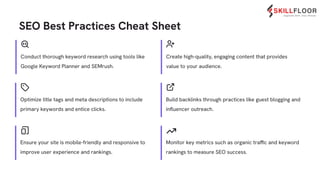
Optimize title tags and meta descriptions to include
primary keywords and entice clicks.
Create high-quality, engaging content that provides
value to your audience.
SEO Best Practices Cheat Sheet
Conduct thorough keyword research using tools like
Google Keyword Planner and SEMrush.
Build backlinks through practices like guest blogging and
influencer outreach.
Ensure your site is mobile-friendly and responsive to
improve user experience and rankings.
Monitor key metrics such as organic traffic and keyword
rankings to measure SEO success.
Q&A
● What are the best practices for integrating SEO during the initial stages of website design?
● How do mobile optimization and SEO interrelate, and what steps should be taken to ensure
both are effectively implemented?
● Can you provide examples of effective keyword research tools and how to leverage them
for better SEO outcomes?
● What technical SEO elements should be prioritized to improve site performance and search
engine rankings?
● How can content creation strategies be aligned with SEO goals to enhance user
engagement and organic traffic?

Integrating SEO into Your Website Design Process | Skillfloor

  • 1.
    Integrating SEO into YourWebsite Design Process
  • 2.
    • Introduction toSEO and Website Design • Key Components of SEO • Researching Keywords for Your Website • On-Page SEO Elements • Designing an SEO-Friendly Site Structure • Mobile Optimization • Creating Quality Content Agenda • Link Building Strategies • Technical SEO Considerations • Measuring SEO Success • Common SEO Mistakes to Avoid • SEO Best Practices Cheat Sheet • Q&A
  • 3.
    Introduction to SEOand Website Design Search Engine Optimization (SEO) involves optimizing a website to rank higher in search engine results, increasing organic traffic. SEO should be integrated into the website design process from the beginning to ensure the site is search engine friendly, improving visibility and usability. What is SEO? SEO and Website Design Importance and Benefits Effective SEO enhances user experience, increases site traffic, and boosts conversion rates, leading to better business outcomes.
  • 4.
    Keywords are specificwords or phrases that users enter into search engines. Effective keyword research helps in understanding what your audience is searching for and guides your content creation. Meta tags provide information about your webpage to search engines. They include title tags and meta descriptions, which help improve your site's visibility and click-through rates. Backlinks are links from other websites to your site. High-quality backlinks from reputable sources can significantly improve your site’s authority and ranking on search engines. Keywords Meta Tags Backlinks A well-organized site structure makes it easier for search engines to index your pages. Good site navigation, URL structure, and internal linking are crucial for improving your SEO. Key Components of SEO Site Structure
  • 5.
    Researching Keywords forYour Website Start by identifying the core topics relevant to your business. These topics should reflect the main themes of your website content. Utilize tools like Google Keyword Planner, SEMrush, and Ahrefs to find relevant keywords. These tools provide data on search volume and competition. Identify Core Topics Use Keyword Research Tools Analyze and Select Keywords Analyze keyword metrics such as search volume, competition, and relevance. Select keywords that balance high search volume with manageable competition.
  • 6.
    Header tags (H1,H2, H3) structure content, making it easier for search engines and users to navigate and understand the page. Meta descriptions provide a brief summary of the page, influencing click-through rates from search engine results pages (SERPs). Title tags are crucial for search engines and users to understand the page content, impacting click-through rates and rankings. On-Page SEO Elements Image alt text improves accessibility and provides context to search engines about the image content, aiding image search results.
  • 7.
    Create SEO-friendly URLsthat are descriptive and include target keywords. Avoid using long strings of numbers or irrelevant characters. Utilize internal linking to connect related content within your site. This helps distribute page authority and improves user experience. Designing an SEO-Friendly Site Structure Ensure clear and intuitive navigation to help users and search engines find content easily. Use a logical hierarchy with broad categories and subcategories.
  • 8.
    Mobile Optimization ● Googleuses mobile-first indexing, prioritizing mobile-friendly sites. ● Mobile users account for over 50% of global web traffic. ● Better mobile experience leads to higher user engagement and lower bounce rates. ● Use responsive web design to adapt to various screen sizes. ● Optimize images and videos for faster loading times on mobile. ● Ensure easy navigation with clear CTAs and readable fonts. Importance of Mobile Optimization for SEO Tips for Ensuring Mobile-Friendliness
  • 9.
    Creating Quality Content High-qualitycontent is essential for SEO as it helps search engines understand the relevance and value of your site. It attracts organic traffic and encourages backlinks. Focus on creating unique, informative, and engaging content. Use relevant keywords naturally, maintain a consistent posting schedule, and ensure your content is well-structured and easy to read. Role in SEO Content Creation Tips User Engagement Engaging content keeps visitors on your site longer, reducing bounce rates. Encourage interaction through comments, shares, and likes, which signals to search engines that your content is valuable.
  • 10.
    Content partnerships involve co-creatingcontent with other brands or websites, leading to mutual backlinks and shared audiences. Influencer outreach entails collaborating with influencers to promote your content, which can result in high-quality backlinks from their followers. Guest blogging involves writing content for other websites to earn backlinks and increase your site's authority. Reach out to reputable sites in your industry. Link Building Strategies 02 03 01
  • 11.
    Technical SEO Considerations Fast-loadingpages improve user experience and are favored by search engines. Optimize images, leverage browser caching, and minimize JavaScript to boost speed. XML sitemaps help search engines understand your site structure and index your pages more efficiently. Ensure your sitemap is up-to-date and submitted to search engines. Site Speed XML Sitemaps Robots.txt Files Robots.txt files guide search engine crawlers on which pages to index or avoid. Properly configuring robots.txt can prevent indexing of duplicate or sensitive content.
  • 12.
    Measuring SEO Success 15K visits/month OrganicTraffic Top 10 for 50 keywords Keyword Rankings 3.5% Conversion Rate
  • 13.
    Ignoring Mobile Users Overloadinga page with keywords to manipulate ranking. This can lead to poor user experience and search engine penalties. Keyword Stuffing Duplicate Content Common SEO Mistakes to Avoid Using identical content on multiple pages confuses search engines and diminishes the value of original content, hurting SEO performance. Failing to optimize for mobile devices results in poor user experience and lower search engine rankings, especially with mobile-first indexing. Pages that load slowly can frustrate users and negatively impact search engine rankings. Optimize images, reduce redirects, and leverage browser caching. Slow Page Speed
  • 14.
    Optimize title tagsand meta descriptions to include primary keywords and entice clicks. Create high-quality, engaging content that provides value to your audience. SEO Best Practices Cheat Sheet Conduct thorough keyword research using tools like Google Keyword Planner and SEMrush. Build backlinks through practices like guest blogging and influencer outreach. Ensure your site is mobile-friendly and responsive to improve user experience and rankings. Monitor key metrics such as organic traffic and keyword rankings to measure SEO success.
  • 15.
    Q&A ● What arethe best practices for integrating SEO during the initial stages of website design? ● How do mobile optimization and SEO interrelate, and what steps should be taken to ensure both are effectively implemented? ● Can you provide examples of effective keyword research tools and how to leverage them for better SEO outcomes? ● What technical SEO elements should be prioritized to improve site performance and search engine rankings? ● How can content creation strategies be aligned with SEO goals to enhance user engagement and organic traffic?