SEO Marketing: A
Beginner's Guide
Welcome to the world of Search Engine Optimization! This presentation
will explore the basics of SEO. We'll cover keyword research, on-page
and off-page optimization.
by fikalmyid.com
Why SEO Matters:
Understanding Organic
Search
SEO is crucial. It improves your website's visibility in search results.
Organic search drives valuable traffic to your site.
1 Increased Visibility
Top rankings boost brand
awareness.
2 Cost-Effective
Organic traffic is essentially
free.
3 Trust and Credibility
High rankings signal authority to users.
Keyword Research: Finding What Your
Audience Searches For
Keywords connect your content to user queries. Effective keyword research helps you understand user intent. Target the
right keywords to attract the right audience.
Brainstorming
Generate initial ideas for relevant
keywords.
Tools
Use keyword research tools for data
and suggestions.
Analysis
Analyze search volume, competition,
and relevance.
On-Page Optimization: Making
Your Website Search-Engine
Friendly
On-page SEO involves optimizing elements within your website. Improve content,
meta tags, and internal linking. This helps search engines understand your site.
Title Tags
Create compelling and keyword-rich titles.
Meta Descriptions
Write engaging summaries for search snippets.
Header Tags
Use header tags to structure content.
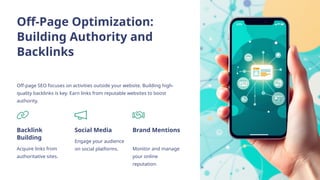
Off-Page Optimization:
Building Authority and
Backlinks
Off-page SEO focuses on activities outside your website. Building high-
quality backlinks is key. Earn links from reputable websites to boost
authority.
Backlink
Building
Acquire links from
authoritative sites.
Social Media
Engage your audience
on social platforms.
Brand Mentions
Monitor and manage
your online
reputation.
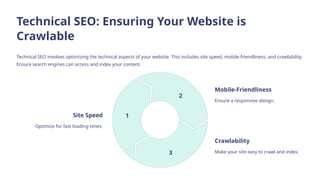
Technical SEO: Ensuring Your Website is
Crawlable
Technical SEO involves optimizing the technical aspects of your website. This includes site speed, mobile-friendliness, and crawlability.
Ensure search engines can access and index your content.
Site Speed
Optimize for fast loading times.
1
Mobile-Friendliness
Ensure a responsive design.
2
Crawlability
Make your site easy to crawl and index.
3
Content Marketing: Creating
Valuable and Engaging
Content
Content marketing involves creating and distributing valuable content. Attract
and engage your target audience with informative content. High-quality content
drives organic traffic and conversions.
Blog Posts
Share valuable insights and
expertise.
Infographics
Present data in a visually
appealing format.
Videos
Create engaging video content.
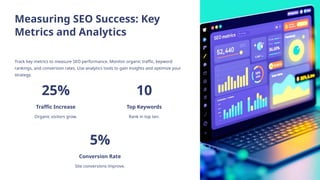
Measuring SEO Success: Key
Metrics and Analytics
Track key metrics to measure SEO performance. Monitor organic traffic, keyword
rankings, and conversion rates. Use analytics tools to gain insights and optimize your
strategy.
25%
Traffic Increase
Organic visitors grow.
10
Top Keywords
Rank in top ten.
5%
Conversion Rate
Site conversions improve.
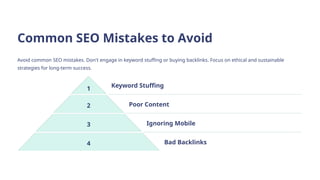
Common SEO Mistakes to Avoid
Avoid common SEO mistakes. Don't engage in keyword stuffing or buying backlinks. Focus on ethical and sustainable
strategies for long-term success.
1 Keyword Stuffing
2 Poor Content
3 Ignoring Mobile
4 Bad Backlinks
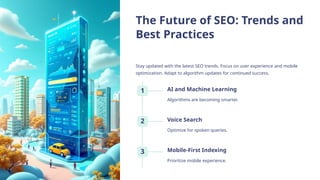
The Future of SEO: Trends and
Best Practices
Stay updated with the latest SEO trends. Focus on user experience and mobile
optimization. Adapt to algorithm updates for continued success.
1 AI and Machine Learning
Algorithms are becoming smarter.
2 Voice Search
Optimize for spoken queries.
3 Mobile-First Indexing
Prioritize mobile experience.

SEO Marketing: A Beginner's Guide PowerPoint

  • 1.
    SEO Marketing: A Beginner'sGuide Welcome to the world of Search Engine Optimization! This presentation will explore the basics of SEO. We'll cover keyword research, on-page and off-page optimization. by fikalmyid.com
  • 2.
    Why SEO Matters: UnderstandingOrganic Search SEO is crucial. It improves your website's visibility in search results. Organic search drives valuable traffic to your site. 1 Increased Visibility Top rankings boost brand awareness. 2 Cost-Effective Organic traffic is essentially free. 3 Trust and Credibility High rankings signal authority to users.
  • 3.
    Keyword Research: FindingWhat Your Audience Searches For Keywords connect your content to user queries. Effective keyword research helps you understand user intent. Target the right keywords to attract the right audience. Brainstorming Generate initial ideas for relevant keywords. Tools Use keyword research tools for data and suggestions. Analysis Analyze search volume, competition, and relevance.
  • 4.
    On-Page Optimization: Making YourWebsite Search-Engine Friendly On-page SEO involves optimizing elements within your website. Improve content, meta tags, and internal linking. This helps search engines understand your site. Title Tags Create compelling and keyword-rich titles. Meta Descriptions Write engaging summaries for search snippets. Header Tags Use header tags to structure content.
  • 5.
    Off-Page Optimization: Building Authorityand Backlinks Off-page SEO focuses on activities outside your website. Building high- quality backlinks is key. Earn links from reputable websites to boost authority. Backlink Building Acquire links from authoritative sites. Social Media Engage your audience on social platforms. Brand Mentions Monitor and manage your online reputation.
  • 6.
    Technical SEO: EnsuringYour Website is Crawlable Technical SEO involves optimizing the technical aspects of your website. This includes site speed, mobile-friendliness, and crawlability. Ensure search engines can access and index your content. Site Speed Optimize for fast loading times. 1 Mobile-Friendliness Ensure a responsive design. 2 Crawlability Make your site easy to crawl and index. 3
  • 7.
    Content Marketing: Creating Valuableand Engaging Content Content marketing involves creating and distributing valuable content. Attract and engage your target audience with informative content. High-quality content drives organic traffic and conversions. Blog Posts Share valuable insights and expertise. Infographics Present data in a visually appealing format. Videos Create engaging video content.
  • 8.
    Measuring SEO Success:Key Metrics and Analytics Track key metrics to measure SEO performance. Monitor organic traffic, keyword rankings, and conversion rates. Use analytics tools to gain insights and optimize your strategy. 25% Traffic Increase Organic visitors grow. 10 Top Keywords Rank in top ten. 5% Conversion Rate Site conversions improve.
  • 9.
    Common SEO Mistakesto Avoid Avoid common SEO mistakes. Don't engage in keyword stuffing or buying backlinks. Focus on ethical and sustainable strategies for long-term success. 1 Keyword Stuffing 2 Poor Content 3 Ignoring Mobile 4 Bad Backlinks
  • 10.
    The Future ofSEO: Trends and Best Practices Stay updated with the latest SEO trends. Focus on user experience and mobile optimization. Adapt to algorithm updates for continued success. 1 AI and Machine Learning Algorithms are becoming smarter. 2 Voice Search Optimize for spoken queries. 3 Mobile-First Indexing Prioritize mobile experience.