DEVELOPMENT COMMUNICATION AND ITS
APPROACHES
SUBMITTED BY:
SAYAN BACHASPATI
REGN N0-220202140004
&
UMA CHOUDHURY
REGN NO-220202140002
MBA ABM
SEMESTER 1
CONTENTS
1. Development Communication
2. Integrated Approach to Development
Communication
3. Localized Approach to Development
Communication
4.Planned Strategy to Development
Communication
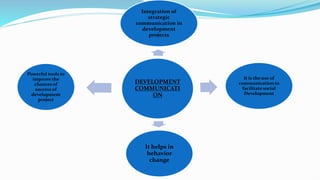
DEVELOPMENT
COMMUNICATI
ON
Integration of
strategic
communication in
development
projects
It is the use of
communication to
facilitate social
Development
It helps in
behavior
change
Powerful tools to
improve the
chances of
success of
development
project
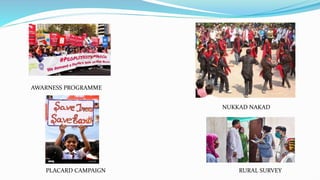
AWARNESS PROGRAMME
NUKKAD NAKAD
PLACARD CAMPAIGN RURAL SURVEY
INTEGRATED APPROACH
INTEGRATED APPROACH
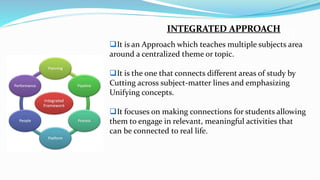
It is an Approach which teaches multiple subjects area
around a centralized theme or topic.
It is the one that connects different areas of study by
Cutting across subject-matter lines and emphasizing
Unifying concepts.
It focuses on making connections for students allowing
them to engage in relevant, meaningful activities that
can be connected to real life.
CHARACTERISTICS
 It primarily focuses on problem solving.
 Integrated learning Explores and uses
information effectively.
 Creativity,critical reasoning and
collaborations are the key features.
 It is a compilation of assessment,curriculum
development etc.
BENEFITS
Better understanding of the content.
Active participation in relevant real life
experiences.
Connection between various curricular
disciplines.
Higher level thinking skills.
EXAMPLES
 “Integration” became a fashionable symbol for solving
population problems.
 An interest in integrated family planning with material
and child health services are with other development
programs such as A)Education B)Social Welfare
C)placing family.
 One of the main concerns that however is how many
integrated family planning projects are “real”
integration rather than “symbolic”.
 The integrated approach are more effective in
development activities in rural development.
LOCALIZED APPROACH TO DEVELOPMENT
COMMUNICATION
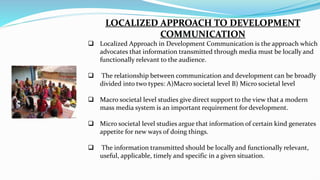
 Localized Approach in Development Communication is the approach which
advocates that information transmitted through media must be locally and
functionally relevant to the audience.
 The relationship between communication and development can be broadly
divided into two types: A)Macro societal level B) Micro societal level
 Macro societal level studies give direct support to the view that a modern
mass media system is an important requirement for development.
 Micro societal level studies argue that information of certain kind generates
appetite for new ways of doing things.
 The information transmitted should be locally and functionally relevant,
useful, applicable, timely and specific in a given situation.
BENEFITS
 As the needs of people vary widely in different regions and sub-regions.
 In a large developing country like India, there is diversity of cultures and
languages.
 Localized approach would enable the communicators to design messages
which will be relevant in terms of utility, timeliness, applicability, specificity
etc.
 The approach would tailor message for local conditions.
 Such an approach will allow greater involvement and participation of the
audience in the communication process.
Local Governance and Development Communication: A Case
Study of Gram Panchayat from Cooch Behar District in West
Bengal, India
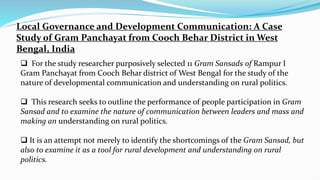
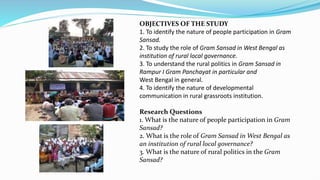
 For the study researcher purposively selected 11 Gram Sansads of Rampur I
Gram Panchayat from Cooch Behar district of West Bengal for the study of the
nature of developmental communication and understanding on rural politics.
 This research seeks to outline the performance of people participation in Gram
Sansad and to examine the nature of communication between leaders and mass and
making an understanding on rural politics.
 It is an attempt not merely to identify the shortcomings of the Gram Sansad, but
also to examine it as a tool for rural development and understanding on rural
politics.
OBJECTIVES OF THE STUDY
1. To identify the nature of people participation in Gram
Sansad.
2. To study the role of Gram Sansad in West Bengal as
institution of rural local governance.
3. To understand the rural politics in Gram Sansad in
Rampur I Gram Panchayat in particular and
West Bengal in general.
4. To identify the nature of developmental
communication in rural grassroots institution.
Research Questions
1. What is the nature of people participation in Gram
Sansad?
2. What is the role of Gram Sansad in West Bengal as
an institution of rural local governance?
3. What is the nature of rural politics in the Gram
Sansad?
Planned Strategy to Development
Communication
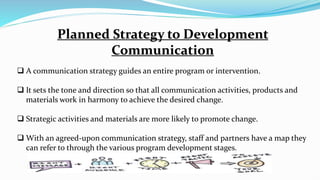
 A communication strategy guides an entire program or intervention.
 It sets the tone and direction so that all communication activities, products and
materials work in harmony to achieve the desired change.
 Strategic activities and materials are more likely to promote change.
 With an agreed-upon communication strategy, staff and partners have a map they
can refer to through the various program development stages.
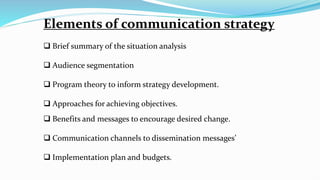
Elements of communication strategy
 Brief summary of the situation analysis
 Audience segmentation
 Program theory to inform strategy development.
 Approaches for achieving objectives.
 Benefits and messages to encourage desired change.
 Communication channels to dissemination messages’
 Implementation plan and budgets.
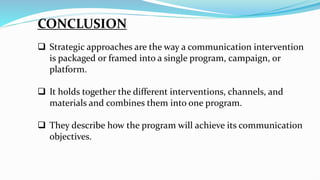
CONCLUSION
 Strategic approaches are the way a communication intervention
is packaged or framed into a single program, campaign, or
platform.
 It holds together the different interventions, channels, and
materials and combines them into one program.
 They describe how the program will achieve its communication
objectives.
THANK YOU

Integrated and localized Approach in Development Communication.pptx

  • 1.
    DEVELOPMENT COMMUNICATION ANDITS APPROACHES SUBMITTED BY: SAYAN BACHASPATI REGN N0-220202140004 & UMA CHOUDHURY REGN NO-220202140002 MBA ABM SEMESTER 1
  • 2.
    CONTENTS 1. Development Communication 2.Integrated Approach to Development Communication 3. Localized Approach to Development Communication 4.Planned Strategy to Development Communication
  • 3.
    DEVELOPMENT COMMUNICATI ON Integration of strategic communication in development projects Itis the use of communication to facilitate social Development It helps in behavior change Powerful tools to improve the chances of success of development project
  • 4.
  • 5.
    INTEGRATED APPROACH INTEGRATED APPROACH Itis an Approach which teaches multiple subjects area around a centralized theme or topic. It is the one that connects different areas of study by Cutting across subject-matter lines and emphasizing Unifying concepts. It focuses on making connections for students allowing them to engage in relevant, meaningful activities that can be connected to real life.
  • 6.
    CHARACTERISTICS  It primarilyfocuses on problem solving.  Integrated learning Explores and uses information effectively.  Creativity,critical reasoning and collaborations are the key features.  It is a compilation of assessment,curriculum development etc.
  • 7.
    BENEFITS Better understanding ofthe content. Active participation in relevant real life experiences. Connection between various curricular disciplines. Higher level thinking skills.
  • 8.
    EXAMPLES  “Integration” becamea fashionable symbol for solving population problems.  An interest in integrated family planning with material and child health services are with other development programs such as A)Education B)Social Welfare C)placing family.  One of the main concerns that however is how many integrated family planning projects are “real” integration rather than “symbolic”.  The integrated approach are more effective in development activities in rural development.
  • 9.
    LOCALIZED APPROACH TODEVELOPMENT COMMUNICATION  Localized Approach in Development Communication is the approach which advocates that information transmitted through media must be locally and functionally relevant to the audience.  The relationship between communication and development can be broadly divided into two types: A)Macro societal level B) Micro societal level  Macro societal level studies give direct support to the view that a modern mass media system is an important requirement for development.  Micro societal level studies argue that information of certain kind generates appetite for new ways of doing things.  The information transmitted should be locally and functionally relevant, useful, applicable, timely and specific in a given situation.
  • 10.
    BENEFITS  As theneeds of people vary widely in different regions and sub-regions.  In a large developing country like India, there is diversity of cultures and languages.  Localized approach would enable the communicators to design messages which will be relevant in terms of utility, timeliness, applicability, specificity etc.  The approach would tailor message for local conditions.  Such an approach will allow greater involvement and participation of the audience in the communication process.
  • 11.
    Local Governance andDevelopment Communication: A Case Study of Gram Panchayat from Cooch Behar District in West Bengal, India  For the study researcher purposively selected 11 Gram Sansads of Rampur I Gram Panchayat from Cooch Behar district of West Bengal for the study of the nature of developmental communication and understanding on rural politics.  This research seeks to outline the performance of people participation in Gram Sansad and to examine the nature of communication between leaders and mass and making an understanding on rural politics.  It is an attempt not merely to identify the shortcomings of the Gram Sansad, but also to examine it as a tool for rural development and understanding on rural politics.
  • 12.
    OBJECTIVES OF THESTUDY 1. To identify the nature of people participation in Gram Sansad. 2. To study the role of Gram Sansad in West Bengal as institution of rural local governance. 3. To understand the rural politics in Gram Sansad in Rampur I Gram Panchayat in particular and West Bengal in general. 4. To identify the nature of developmental communication in rural grassroots institution. Research Questions 1. What is the nature of people participation in Gram Sansad? 2. What is the role of Gram Sansad in West Bengal as an institution of rural local governance? 3. What is the nature of rural politics in the Gram Sansad?
  • 13.
    Planned Strategy toDevelopment Communication  A communication strategy guides an entire program or intervention.  It sets the tone and direction so that all communication activities, products and materials work in harmony to achieve the desired change.  Strategic activities and materials are more likely to promote change.  With an agreed-upon communication strategy, staff and partners have a map they can refer to through the various program development stages.
  • 14.
    Elements of communicationstrategy  Brief summary of the situation analysis  Audience segmentation  Program theory to inform strategy development.  Approaches for achieving objectives.  Benefits and messages to encourage desired change.  Communication channels to dissemination messages’  Implementation plan and budgets.
  • 16.
    CONCLUSION  Strategic approachesare the way a communication intervention is packaged or framed into a single program, campaign, or platform.  It holds together the different interventions, channels, and materials and combines them into one program.  They describe how the program will achieve its communication objectives.
  • 17.