Insomnia is most frequently defined by an individual's report
of sleeping difficulties. While the term is sometimes used in
sleep literature to describe a disorder demonstrated by
polysomnographic evidence of disturbed sleep, insomnia is
often defined as a positive response to either of two
questions: "Do you experience difficulty sleeping?" or "Do
you have difficulty falling or staying asleep?"
The are different types of Insomnia. It can be classified as transient,
acute, or chronic.
1. Transient insomnia only lasts for less than a week. It can be
caused by many things: another disorder, by changes in the sleep
environment, by the timing of sleep, severe depression, or stress. Its
consequences, which include sleepiness and impaired psychomotor
performance, are similar to those of sleep deprivation.
2. Acute insomnia is not being able to sleep well constantly for less
than a month.
3. Chronic insomnia lasts for longer than a month. It can be a
primary disorder, or caused by another disorder. Its effects can vary
depending on its causes. People with chronic insomnia may suffer
from muscular fatigue, hallucinations, and mental fatigue, but they
often show increased alertness. Some people that live with this see
things as if it was happening in slow motion, where moving objects
seem to blend together. It can cause double vision.
Insomnia can be found in males and females of
all age groups, but its more common in
females and in the elderly. The ability to sleep,
rather than the need for sleep, appears to
decrease with ageing.
People with insomnia are evaluated with the help of a medical
history and a sleep history. This sleep history may be obtained
from a sleep diary the person fills out, or by an interview with the
their bed partner concerning the quantity and quality of the
patient’s sleep. Specialized sleep studies may be recommended,
but only if there is suspicion that the patient may have a primary
sleep disorder such as sleep apnea or narcolepsy.
Insomnia has always existed. There hasn’t always been a name for
it, or official diagnosis's, but people have always had trouble
sleeping.
The word ‘insomnia’ began back in 1623, in the third known
English Language dictionary, written by Henry Cockeram, and the
first that actually contains the word ‘dictionary’ in the title. He
gave the following meaning to the word insomnia: “Insomnie.
Watching, want of power to sleepe”. The start of the 20th century
attributed this with the meaning it has today.
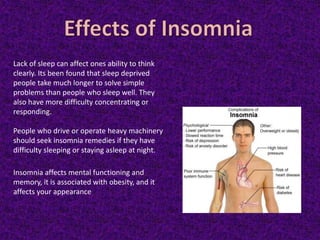
Lack of sleep can affect ones ability to think
clearly. Its been found that sleep deprived
people take much longer to solve simple
problems than people who sleep well. They
also have more difficulty concentrating or
responding.
People who drive or operate heavy machinery
should seek insomnia remedies if they have
difficulty sleeping or staying asleep at night.
Insomnia affects mental functioning and
memory, it is associated with obesity, and it
affects your appearance
http://www.abc.net.au/science/articles/2010/02/17/2822399.htm
http://sleepcottage.com/the-history-of-insomnia/
http://www.insomnia-symptom.com/insomnia-effects
http://www.sleepaus.on.net/insomniainformation.html

Insomnia devon scott

  • 2.
    Insomnia is mostfrequently defined by an individual's report of sleeping difficulties. While the term is sometimes used in sleep literature to describe a disorder demonstrated by polysomnographic evidence of disturbed sleep, insomnia is often defined as a positive response to either of two questions: "Do you experience difficulty sleeping?" or "Do you have difficulty falling or staying asleep?"
  • 3.
    The are differenttypes of Insomnia. It can be classified as transient, acute, or chronic. 1. Transient insomnia only lasts for less than a week. It can be caused by many things: another disorder, by changes in the sleep environment, by the timing of sleep, severe depression, or stress. Its consequences, which include sleepiness and impaired psychomotor performance, are similar to those of sleep deprivation. 2. Acute insomnia is not being able to sleep well constantly for less than a month. 3. Chronic insomnia lasts for longer than a month. It can be a primary disorder, or caused by another disorder. Its effects can vary depending on its causes. People with chronic insomnia may suffer from muscular fatigue, hallucinations, and mental fatigue, but they often show increased alertness. Some people that live with this see things as if it was happening in slow motion, where moving objects seem to blend together. It can cause double vision.
  • 4.
    Insomnia can befound in males and females of all age groups, but its more common in females and in the elderly. The ability to sleep, rather than the need for sleep, appears to decrease with ageing. People with insomnia are evaluated with the help of a medical history and a sleep history. This sleep history may be obtained from a sleep diary the person fills out, or by an interview with the their bed partner concerning the quantity and quality of the patient’s sleep. Specialized sleep studies may be recommended, but only if there is suspicion that the patient may have a primary sleep disorder such as sleep apnea or narcolepsy.
  • 5.
    Insomnia has alwaysexisted. There hasn’t always been a name for it, or official diagnosis's, but people have always had trouble sleeping. The word ‘insomnia’ began back in 1623, in the third known English Language dictionary, written by Henry Cockeram, and the first that actually contains the word ‘dictionary’ in the title. He gave the following meaning to the word insomnia: “Insomnie. Watching, want of power to sleepe”. The start of the 20th century attributed this with the meaning it has today.
  • 6.
    Lack of sleepcan affect ones ability to think clearly. Its been found that sleep deprived people take much longer to solve simple problems than people who sleep well. They also have more difficulty concentrating or responding. People who drive or operate heavy machinery should seek insomnia remedies if they have difficulty sleeping or staying asleep at night. Insomnia affects mental functioning and memory, it is associated with obesity, and it affects your appearance
  • 7.