Inheritance in Java
Prof. Neeraj Bhargava
Kapil Chauhan
Department of Computer Science
School of Engineering & Systems Sciences
MDS University, Ajmer
Introduction
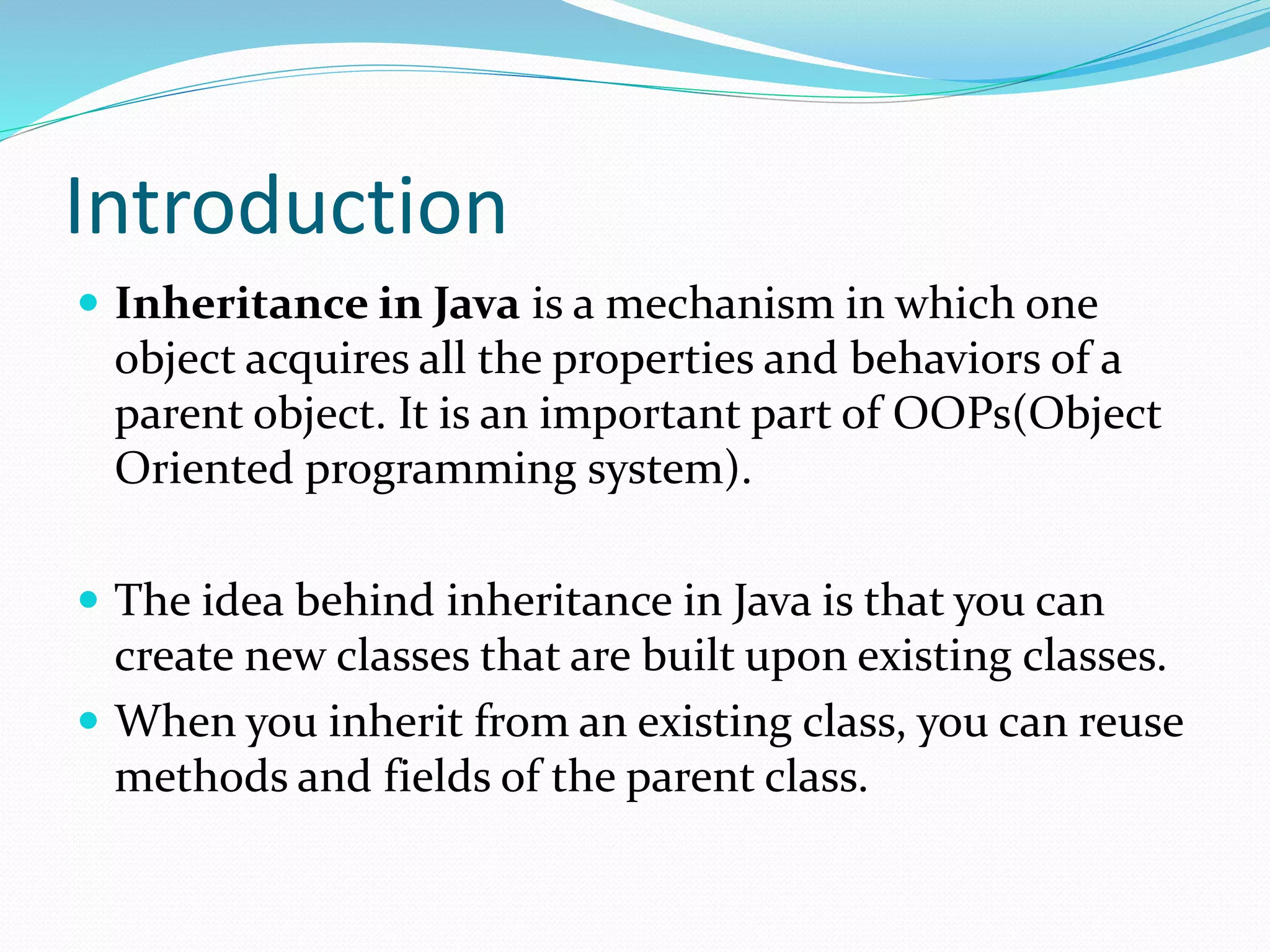
 Inheritance in Java is a mechanism in which one
object acquires all the properties and behaviors of a
parent object. It is an important part of OOPs(Object
Oriented programming system).
 The idea behind inheritance in Java is that you can
create new classes that are built upon existing classes.
 When you inherit from an existing class, you can reuse
methods and fields of the parent class.
Cont..
 Moreover, you can add new methods and fields in your
current class also.
 Inheritance represents the IS-A relationship which is
also known as a parent-child relationship.
Terms used in Inheritance
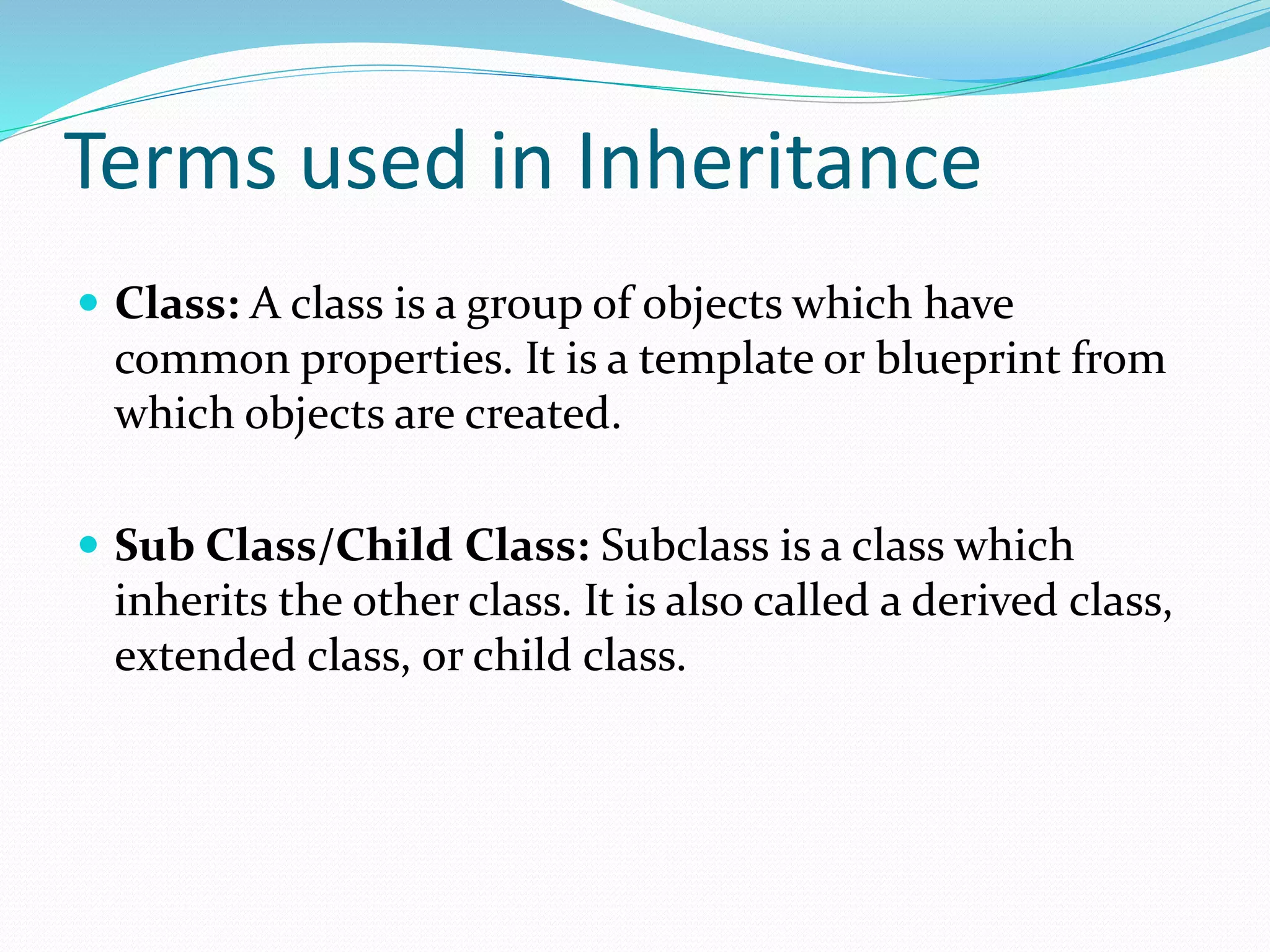
 Class: A class is a group of objects which have
common properties. It is a template or blueprint from
which objects are created.
 Sub Class/Child Class: Subclass is a class which
inherits the other class. It is also called a derived class,
extended class, or child class.
Cont..
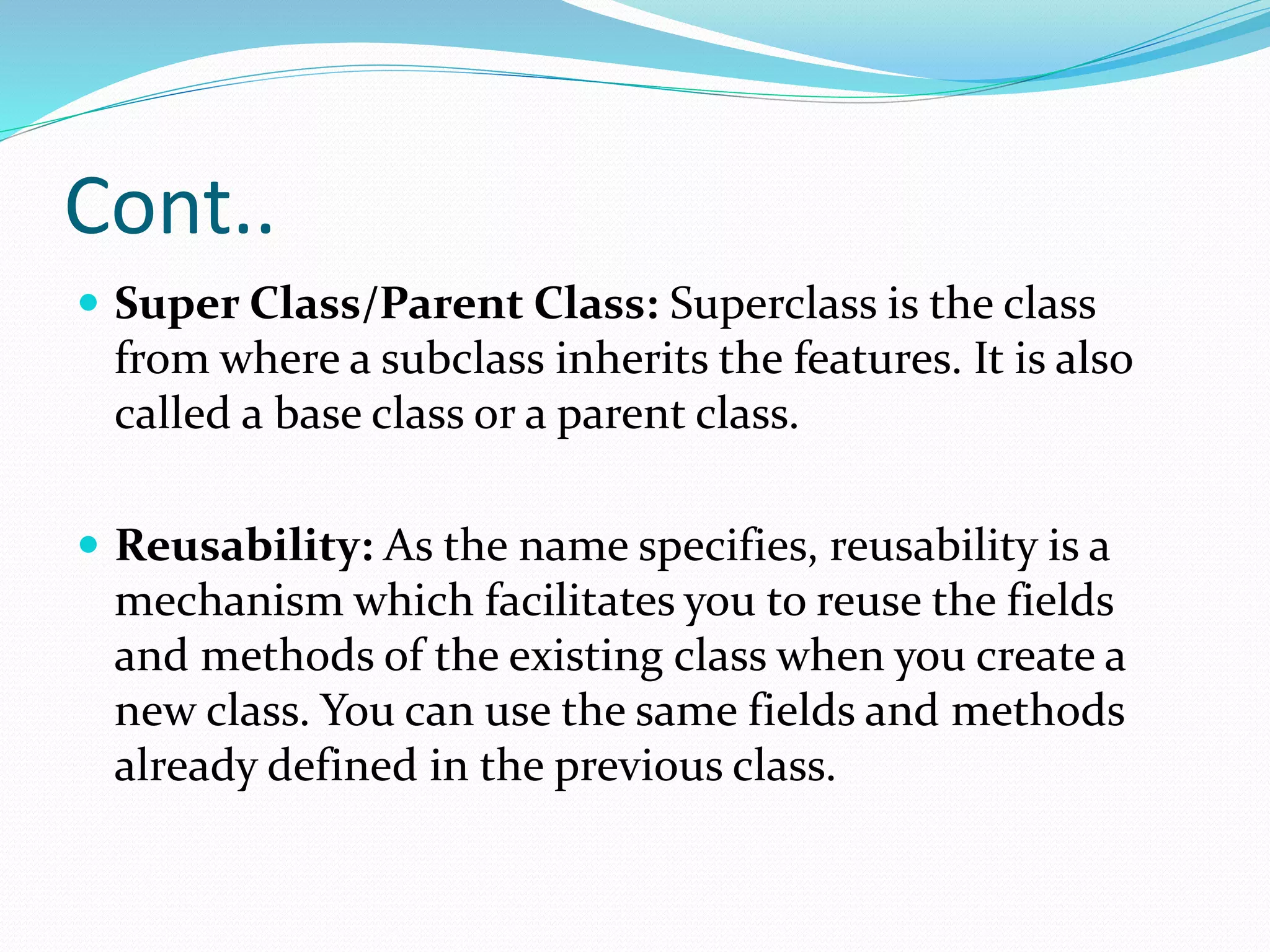
 Super Class/Parent Class: Superclass is the class
from where a subclass inherits the features. It is also
called a base class or a parent class.
 Reusability: As the name specifies, reusability is a
mechanism which facilitates you to reuse the fields
and methods of the existing class when you create a
new class. You can use the same fields and methods
already defined in the previous class.
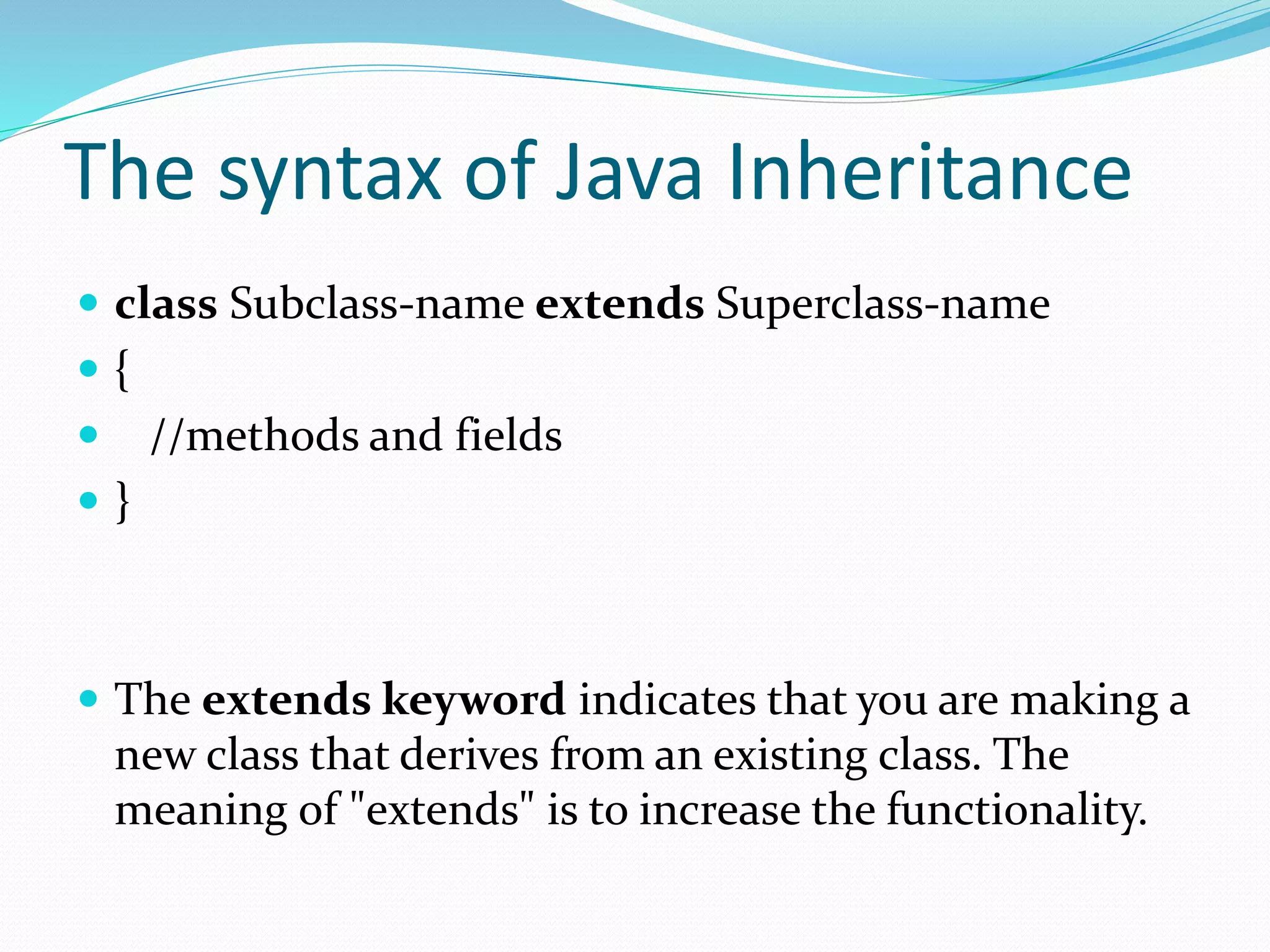
The syntax of Java Inheritance
 class Subclass-name extends Superclass-name
 {
 //methods and fields
 }
 The extends keyword indicates that you are making a
new class that derives from an existing class. The
meaning of "extends" is to increase the functionality.
Example1
 class Employee{
 float salary=40000;
 }
 class Programmer extends Employee{
 int bonus=10000;
 public static void main(String args[]){
 Programmer p=new Programmer();
 System.out.println("Programmer salary is:"+p.salary);
 System.out.println("Bonus of Programmer is:"+p.bonus);
 }
 }
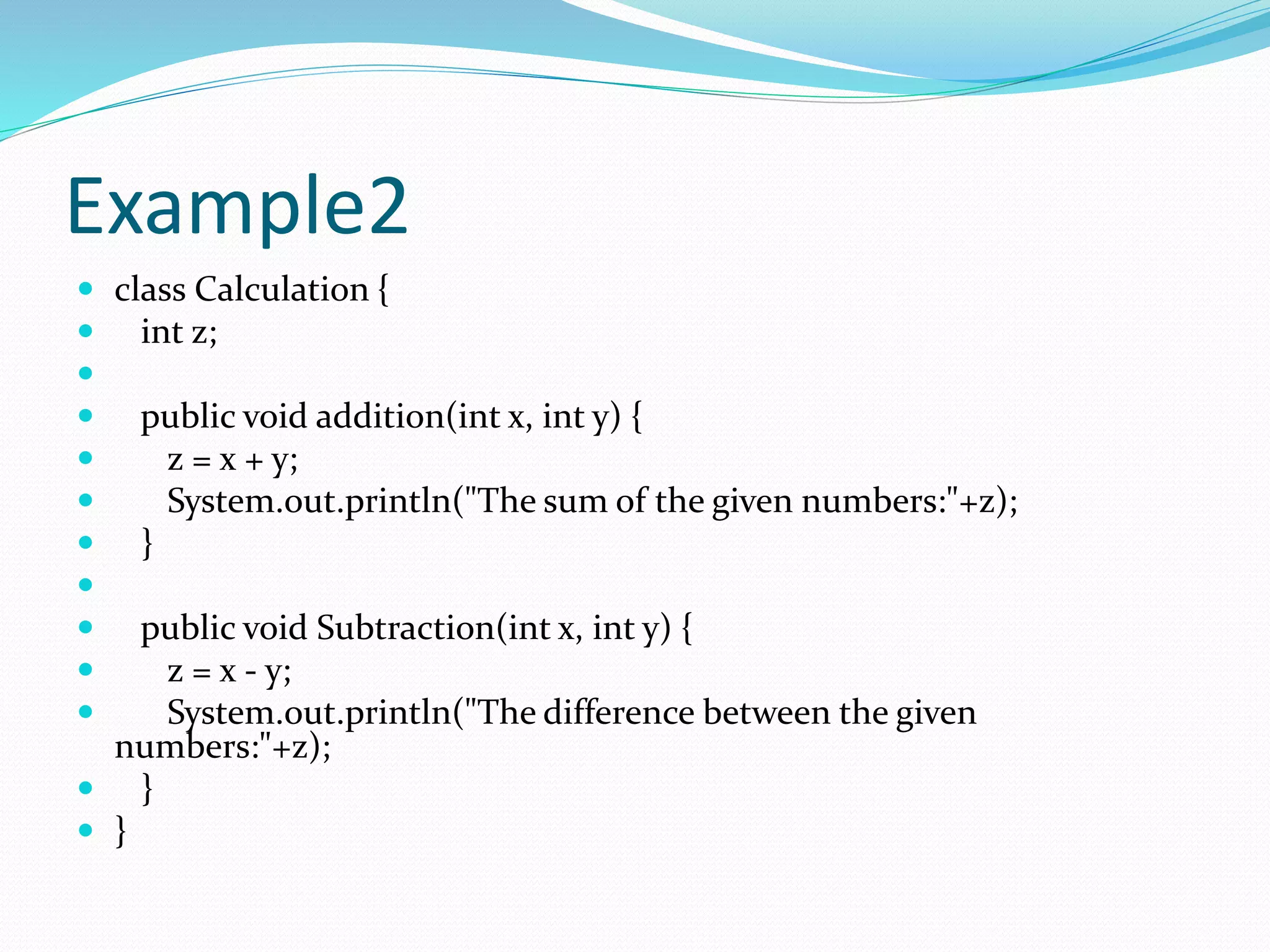
Example2
 class Calculation {
 int z;

 public void addition(int x, int y) {
 z = x + y;
 System.out.println("The sum of the given numbers:"+z);
 }

 public void Subtraction(int x, int y) {
 z = x - y;
 System.out.println("The difference between the given
numbers:"+z);
 }
 }
Cont..
 public class My_Calculation extends Calculation {
 public void multiplication(int x, int y) {
 z = x * y;
 System.out.println("The product of the given numbers:"+z);
 }

 public static void main(String args[]) {
 int a = 20, b = 10;
 My_Calculation demo = new My_Calculation();
 demo.addition(a, b);
 demo.Subtraction(a, b);
 demo.multiplication(a, b);
 }
 }
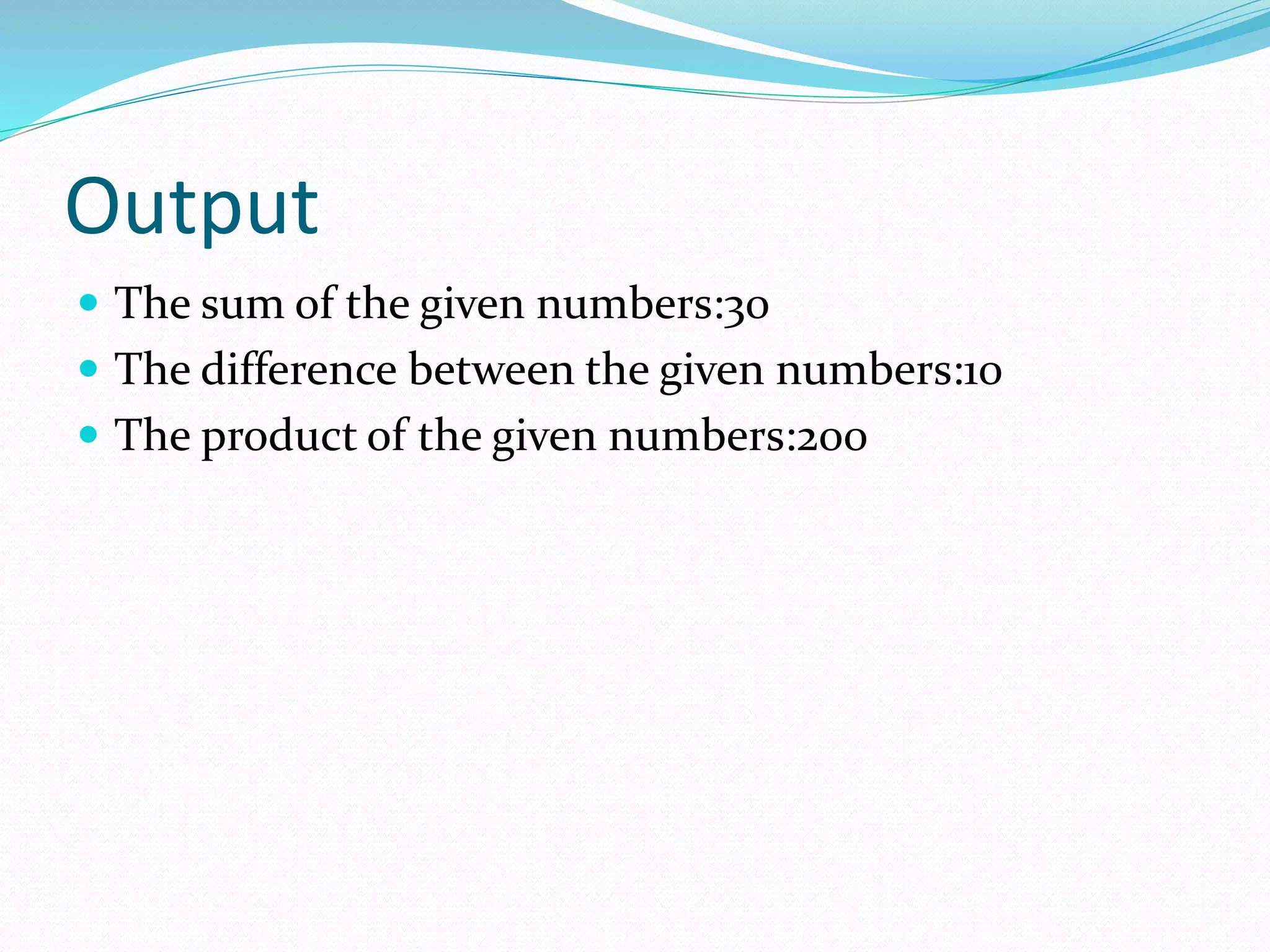
Output
 The sum of the given numbers:30
 The difference between the given numbers:10
 The product of the given numbers:200

Inheritance in java

  • 1.
    Inheritance in Java Prof.Neeraj Bhargava Kapil Chauhan Department of Computer Science School of Engineering & Systems Sciences MDS University, Ajmer
  • 2.
    Introduction  Inheritance inJava is a mechanism in which one object acquires all the properties and behaviors of a parent object. It is an important part of OOPs(Object Oriented programming system).  The idea behind inheritance in Java is that you can create new classes that are built upon existing classes.  When you inherit from an existing class, you can reuse methods and fields of the parent class.
  • 3.
    Cont..  Moreover, youcan add new methods and fields in your current class also.  Inheritance represents the IS-A relationship which is also known as a parent-child relationship.
  • 4.
    Terms used inInheritance  Class: A class is a group of objects which have common properties. It is a template or blueprint from which objects are created.  Sub Class/Child Class: Subclass is a class which inherits the other class. It is also called a derived class, extended class, or child class.
  • 5.
    Cont..  Super Class/ParentClass: Superclass is the class from where a subclass inherits the features. It is also called a base class or a parent class.  Reusability: As the name specifies, reusability is a mechanism which facilitates you to reuse the fields and methods of the existing class when you create a new class. You can use the same fields and methods already defined in the previous class.
  • 6.
    The syntax ofJava Inheritance  class Subclass-name extends Superclass-name  {  //methods and fields  }  The extends keyword indicates that you are making a new class that derives from an existing class. The meaning of "extends" is to increase the functionality.
  • 7.
    Example1  class Employee{ float salary=40000;  }  class Programmer extends Employee{  int bonus=10000;  public static void main(String args[]){  Programmer p=new Programmer();  System.out.println("Programmer salary is:"+p.salary);  System.out.println("Bonus of Programmer is:"+p.bonus);  }  }
  • 8.
    Example2  class Calculation{  int z;   public void addition(int x, int y) {  z = x + y;  System.out.println("The sum of the given numbers:"+z);  }   public void Subtraction(int x, int y) {  z = x - y;  System.out.println("The difference between the given numbers:"+z);  }  }
  • 9.
    Cont..  public classMy_Calculation extends Calculation {  public void multiplication(int x, int y) {  z = x * y;  System.out.println("The product of the given numbers:"+z);  }   public static void main(String args[]) {  int a = 20, b = 10;  My_Calculation demo = new My_Calculation();  demo.addition(a, b);  demo.Subtraction(a, b);  demo.multiplication(a, b);  }  }
  • 10.
    Output  The sumof the given numbers:30  The difference between the given numbers:10  The product of the given numbers:200