Investigation - Nepal Earthquake 2015
Learning Lessons from Nepal - Embracing ICTs for Disaster Management
Hotel Yak & Yeti, Kathmandu, Nepal
2016 March 18
Evaluation of Nepal’s Emergency
Communication System
Nuwan Waidyanatha
Senior Research Fellow
nuwan@lirneasia.net
Kunming, China
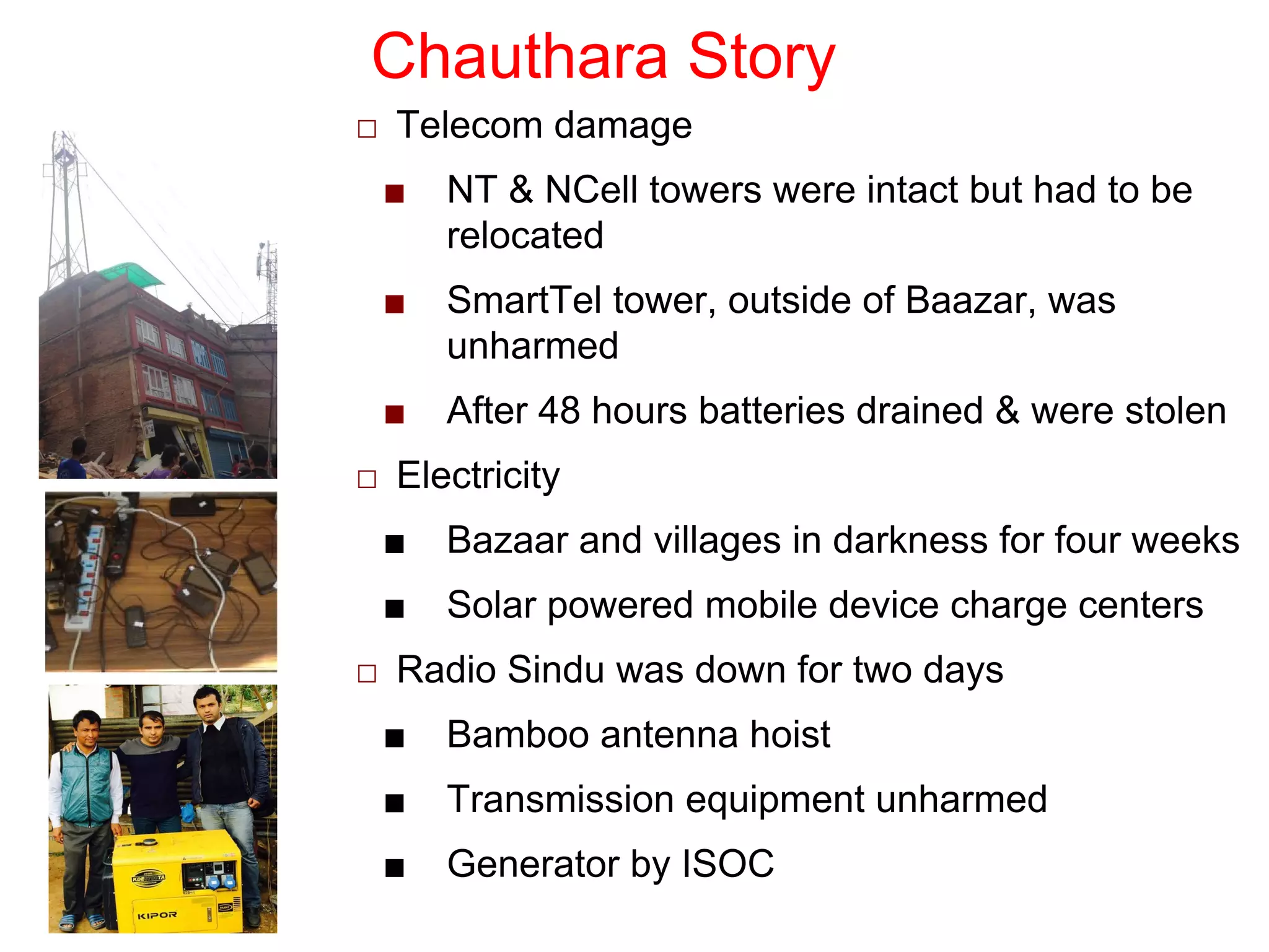
Chauthara Story
□ Telecom damage
■ NT & NCell towers were intact but had to be
relocated
■ SmartTel tower, outside of Baazar, was
unharmed
■ After 48 hours batteries drained & were stolen
□ Electricity
■ Bazaar and villages in darkness for four weeks
■ Solar powered mobile device charge centers
□ Radio Sindu was down for two days
■ Bamboo antenna hoist
■ Transmission equipment unharmed
■ Generator by ISOC
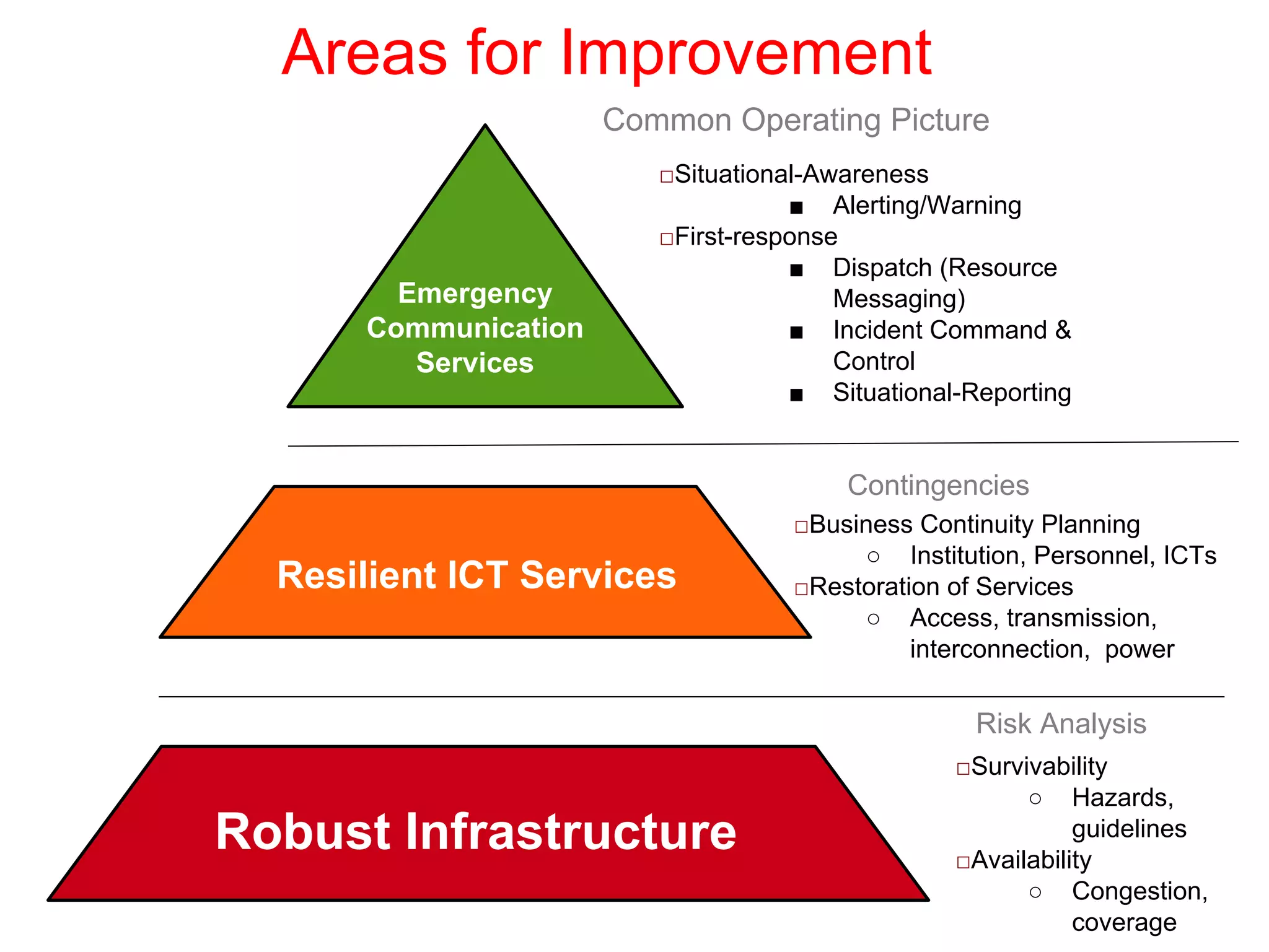
Areas for Improvement
Resilient ICT Services
Robust Infrastructure
□Situational-Awareness
■ Alerting/Warning
□First-response
■ Dispatch (Resource
Messaging)
■ Incident Command &
Control
■ Situational-Reporting
Emergency
Communication
Services
Common Operating Picture
□Business Continuity Planning
○ Institution, Personnel, ICTs
□Restoration of Services
○ Access, transmission,
interconnection, power
□Survivability
○ Hazards,
guidelines
□Availability
○ Congestion,
coverage
Contingencies
Risk Analysis
Key Recommendations
I. Assess Telecom Survivability and Availability in
support of a robust Government Emergency
Communications (GEOC)
II. Develop a Rapid Restoration of Access to
Telecommunications (RREACT) program for
continuity of emergency communications
III. Pilot-test a Cross-Agency Situational-Awareness
(CASA) platform and Incident Command and
Control (ICCS) for a Common Operating Picture
in support of emergency management
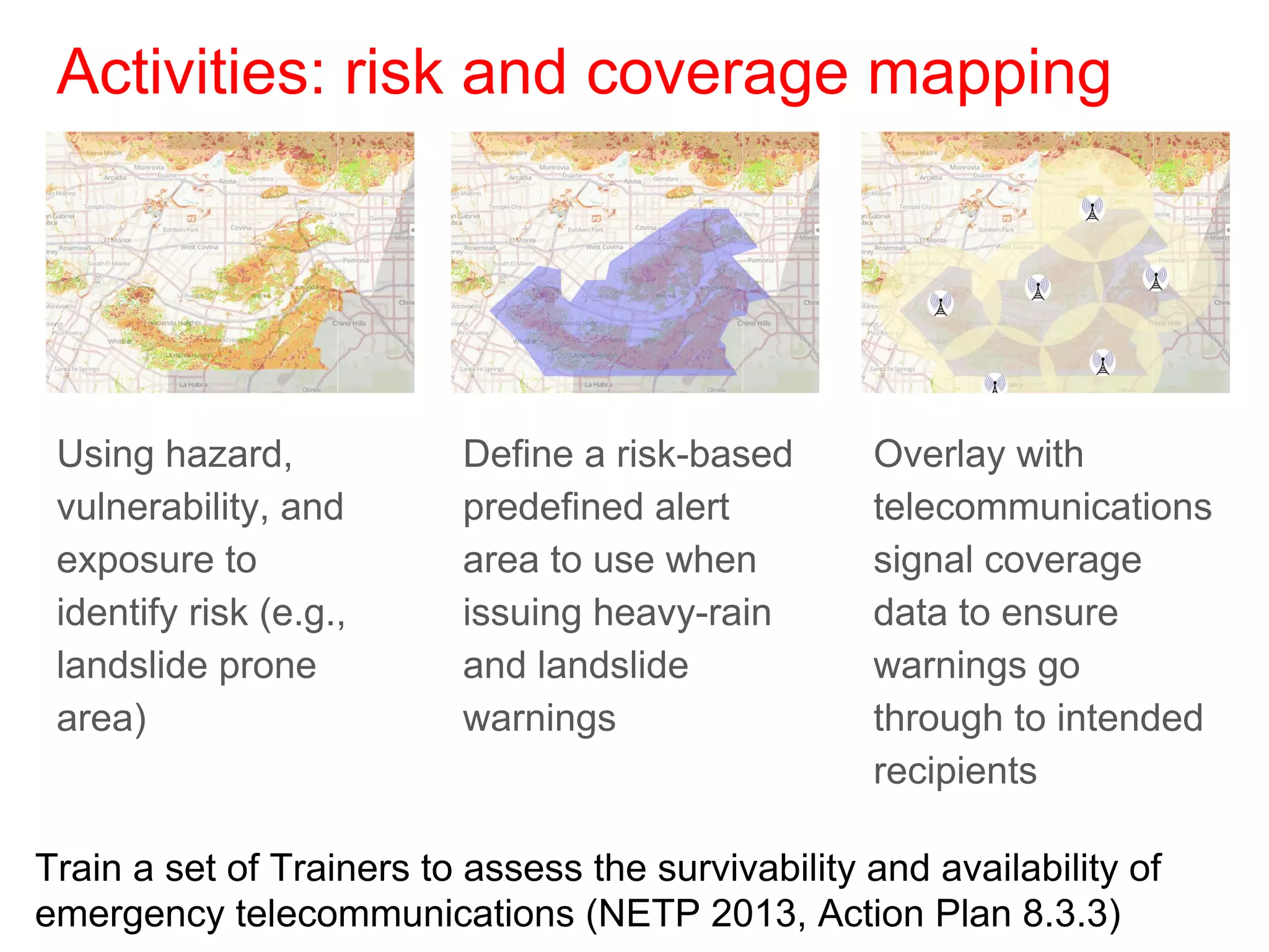
Activities: risk and coverage mapping
Using hazard,
vulnerability, and
exposure to
identify risk (e.g.,
landslide prone
area)
Define a risk-based
predefined alert
area to use when
issuing heavy-rain
and landslide
warnings
Overlay with
telecommunications
signal coverage
data to ensure
warnings go
through to intended
recipients
Train a set of Trainers to assess the survivability and availability of
emergency telecommunications (NETP 2013, Action Plan 8.3.3)
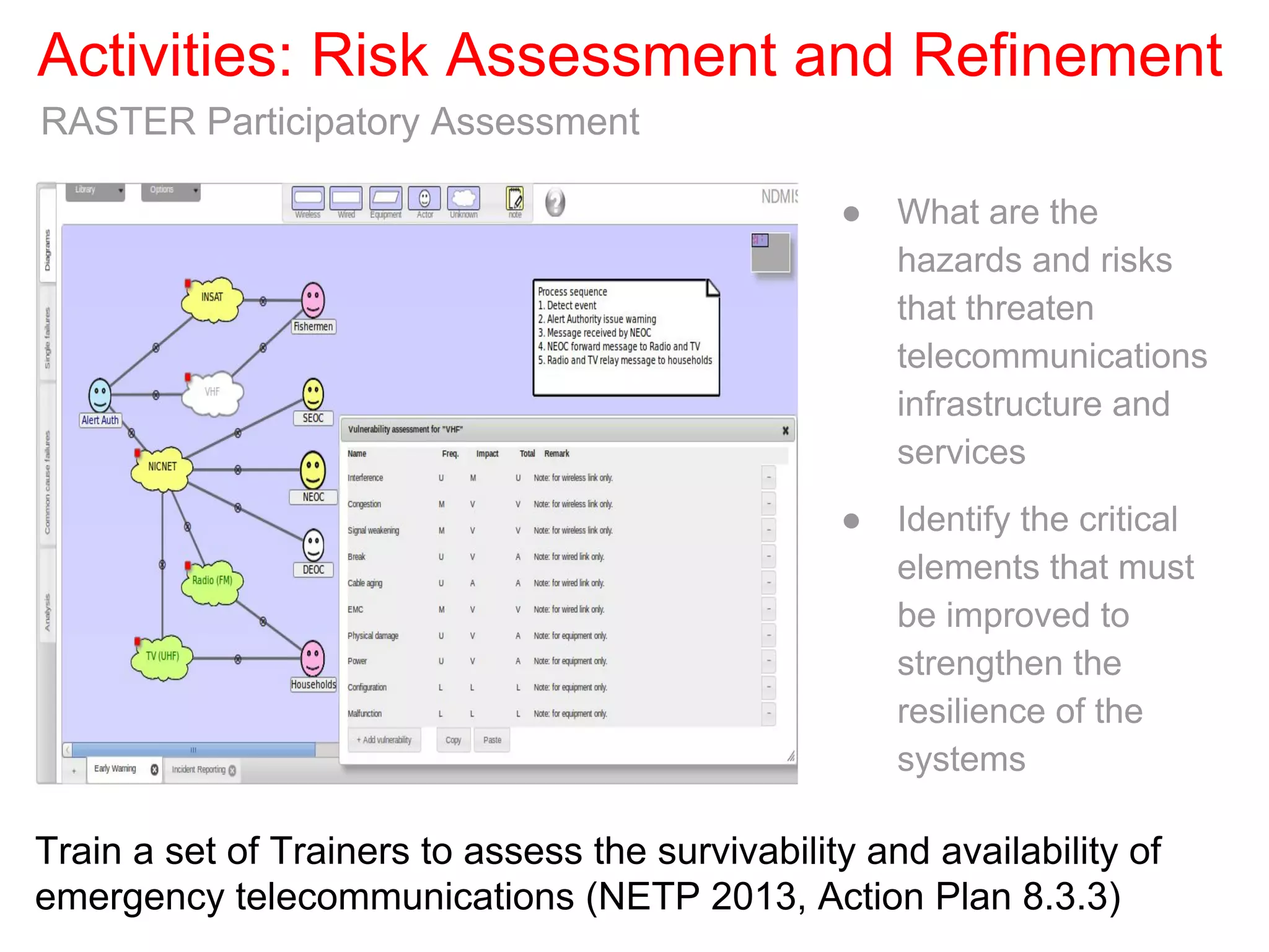
Activities: Risk Assessment and Refinement
● What are the
hazards and risks
that threaten
telecommunications
infrastructure and
services
● Identify the critical
elements that must
be improved to
strengthen the
resilience of the
systems
RASTER Participatory Assessment
Train a set of Trainers to assess the survivability and availability of
emergency telecommunications (NETP 2013, Action Plan 8.3.3)
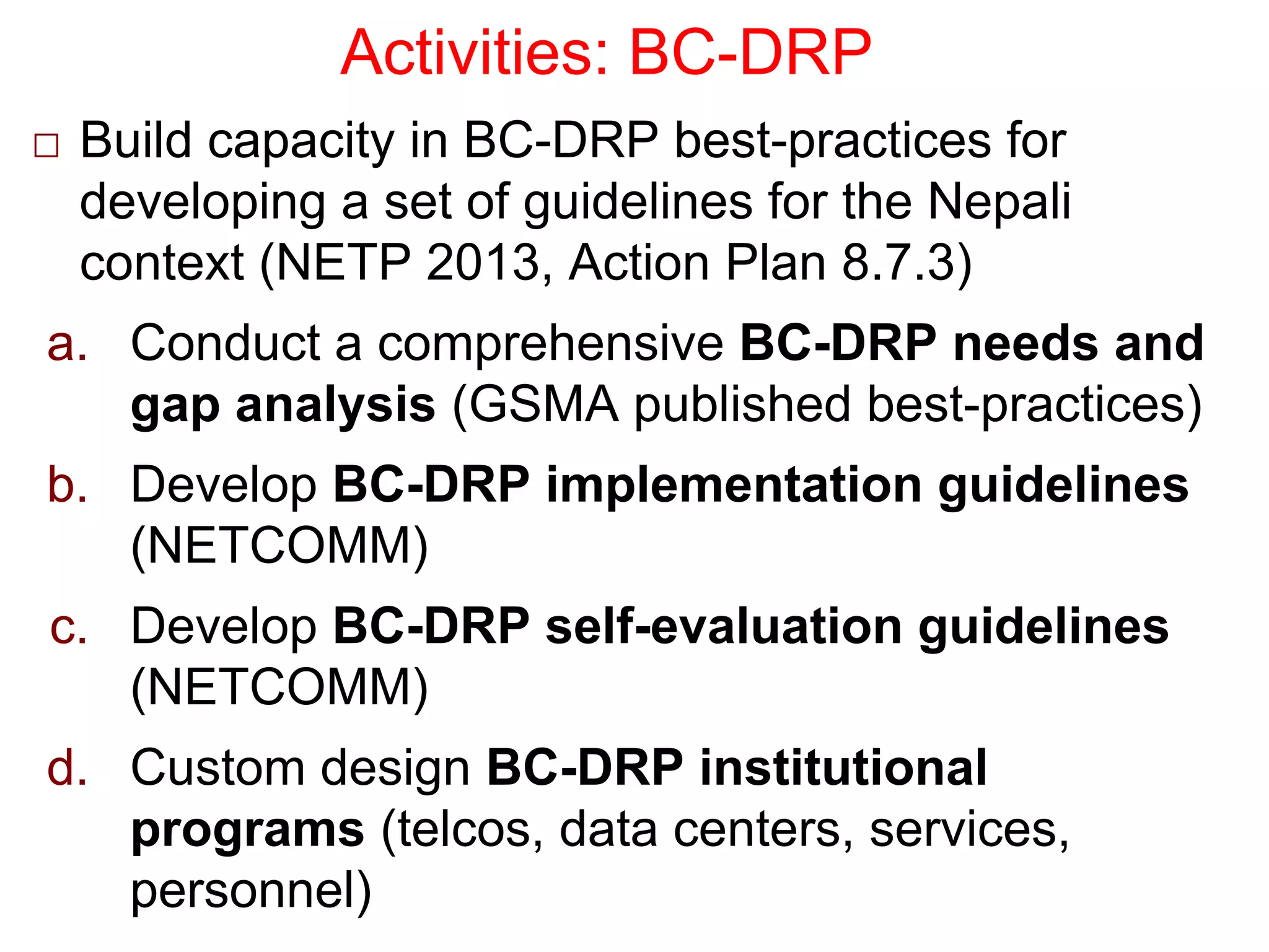
Activities: BC-DRP
□ Build capacity in BC-DRP best-practices for
developing a set of guidelines for the Nepali
context (NETP 2013, Action Plan 8.7.3)
a. Conduct a comprehensive BC-DRP needs and
gap analysis (GSMA published best-practices)
b. Develop BC-DRP implementation guidelines
(NETCOMM)
c. Develop BC-DRP self-evaluation guidelines
(NETCOMM)
d. Custom design BC-DRP institutional
programs (telcos, data centers, services,
personnel)
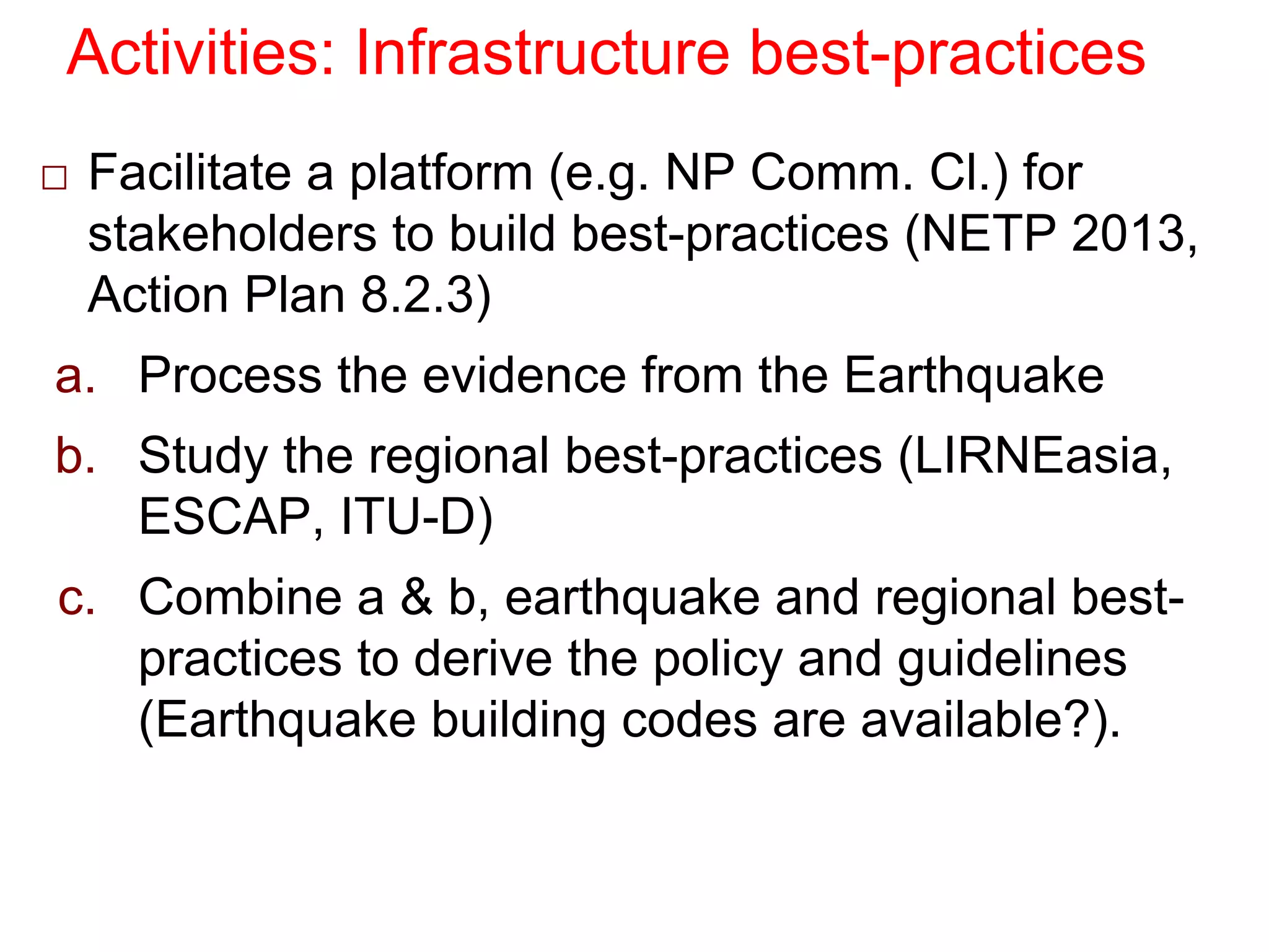
Activities: Infrastructure best-practices
□ Facilitate a platform (e.g. NP Comm. Cl.) for
stakeholders to build best-practices (NETP 2013,
Action Plan 8.2.3)
a. Process the evidence from the Earthquake
b. Study the regional best-practices (LIRNEasia,
ESCAP, ITU-D)
c. Combine a & b, earthquake and regional best-
practices to derive the policy and guidelines
(Earthquake building codes are available?).
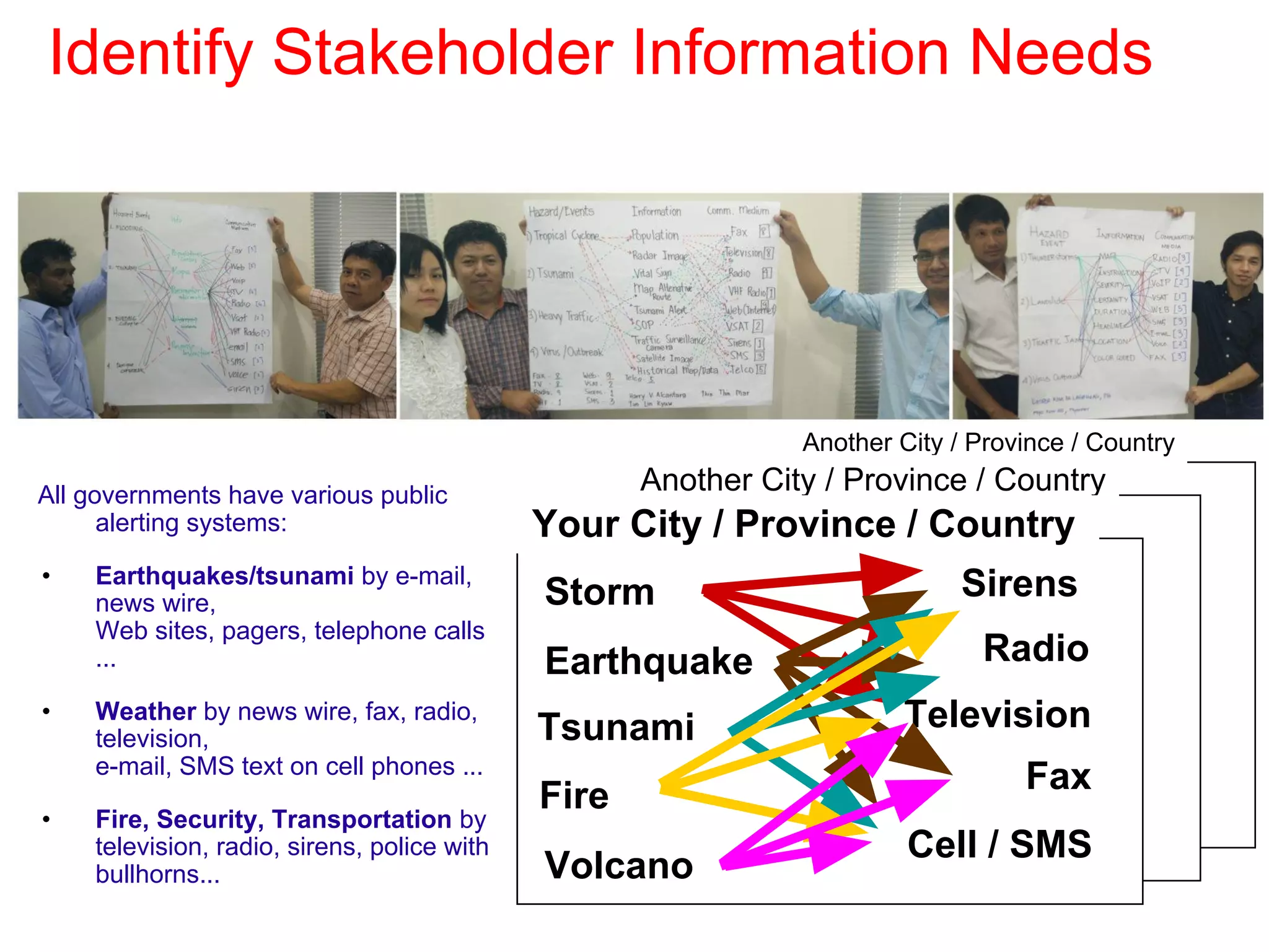
Another City / Province / Country
Your City / Province / CountryYour City / Province / Country
Radio
Television
Fax
Cell / SMS
SirensStorm
Earthquake
Tsunami
Fire
Volcano
All governments have various public
alerting systems:
• Earthquakes/tsunami by e-mail,
news wire,
Web sites, pagers, telephone calls
...
• Weather by news wire, fax, radio,
television,
e-mail, SMS text on cell phones ...
• Fire, Security, Transportation by
television, radio, sirens, police with
bullhorns...
Identify Stakeholder Information Needs
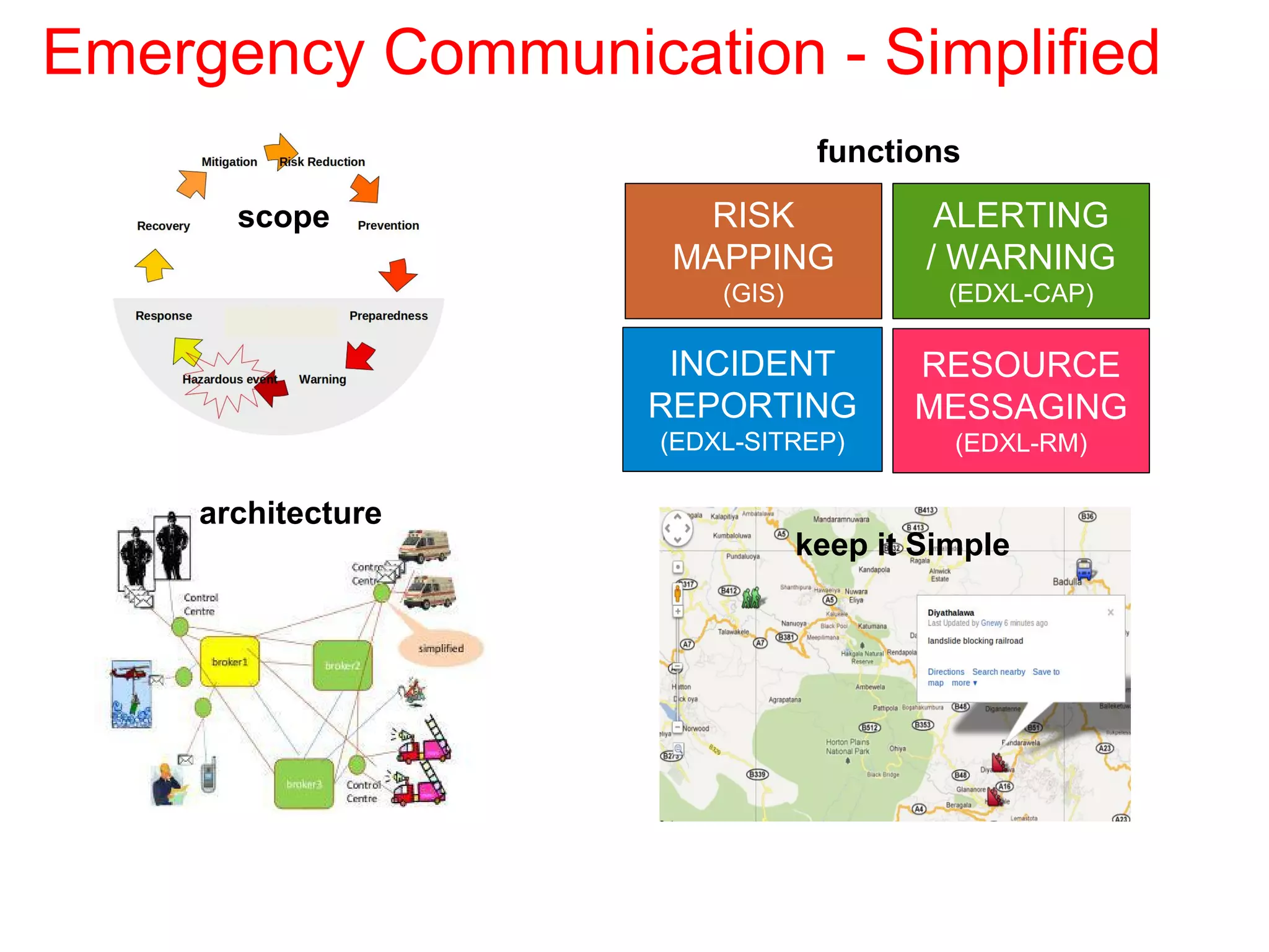
Emergency Communication - Simplified
functions
ALERTING
/ WARNING
(EDXL-CAP)
INCIDENT
REPORTING
(EDXL-SITREP)
scope
architecture
keep it Simple
RISK
MAPPING
(GIS)
RESOURCE
MESSAGING
(EDXL-RM)
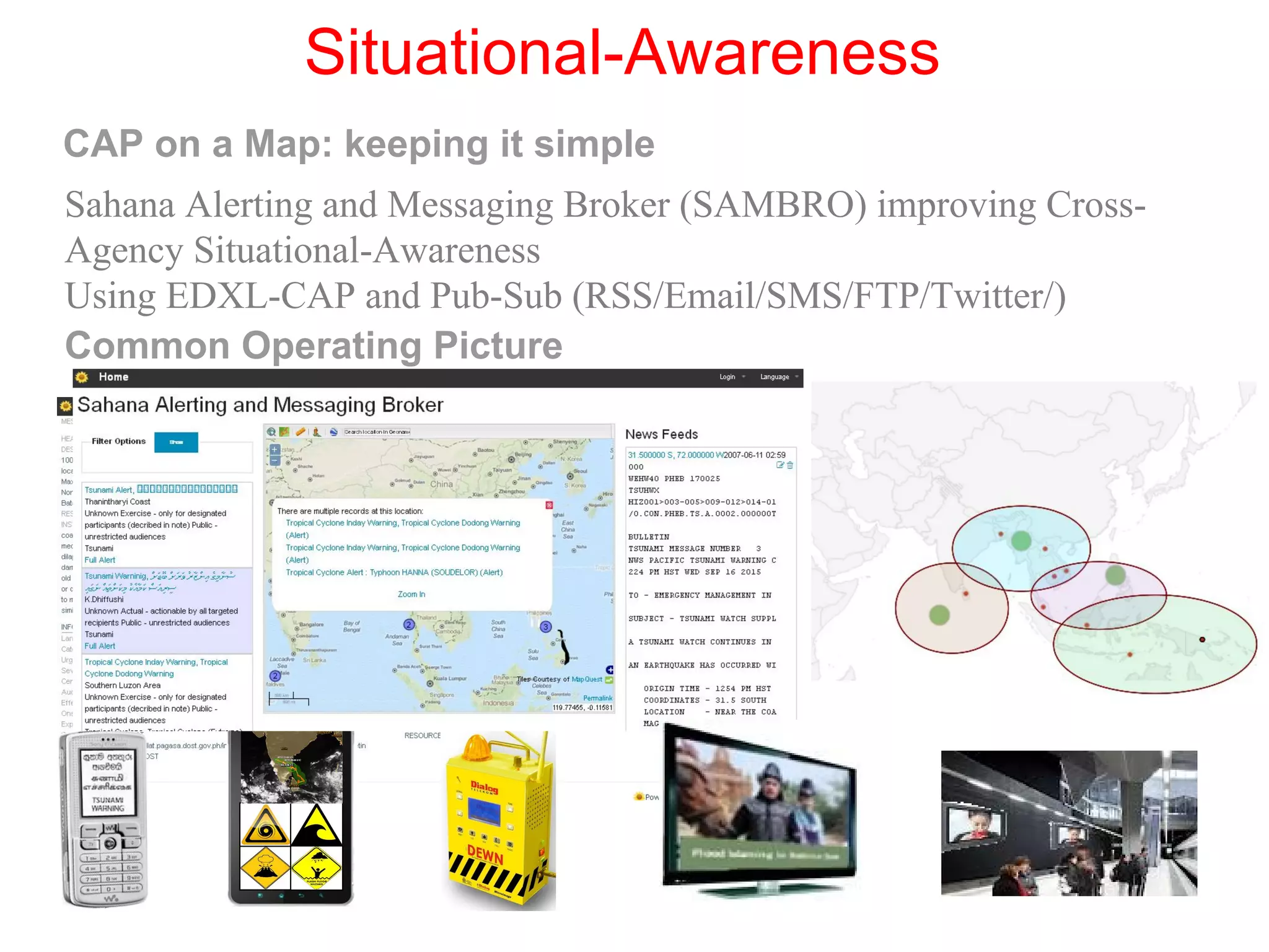
Situational-Awareness
CAP on a Map: keeping it simple
Sahana Alerting and Messaging Broker (SAMBRO) improving Cross-
Agency Situational-Awareness
Using EDXL-CAP and Pub-Sub (RSS/Email/SMS/FTP/Twitter/)
Common Operating Picture
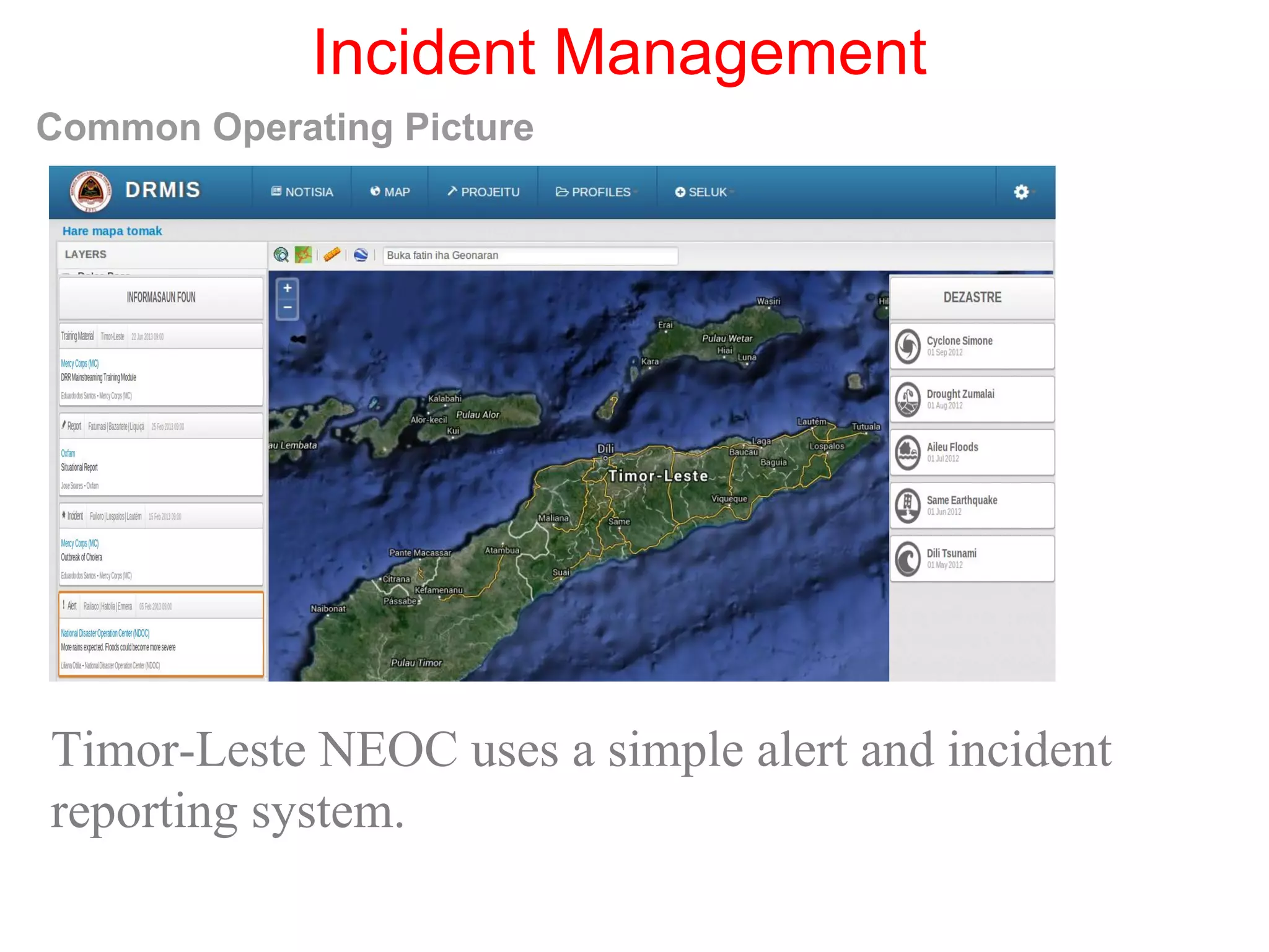
Incident Management
Common Operating Picture
Timor-Leste NEOC uses a simple alert and incident
reporting system.
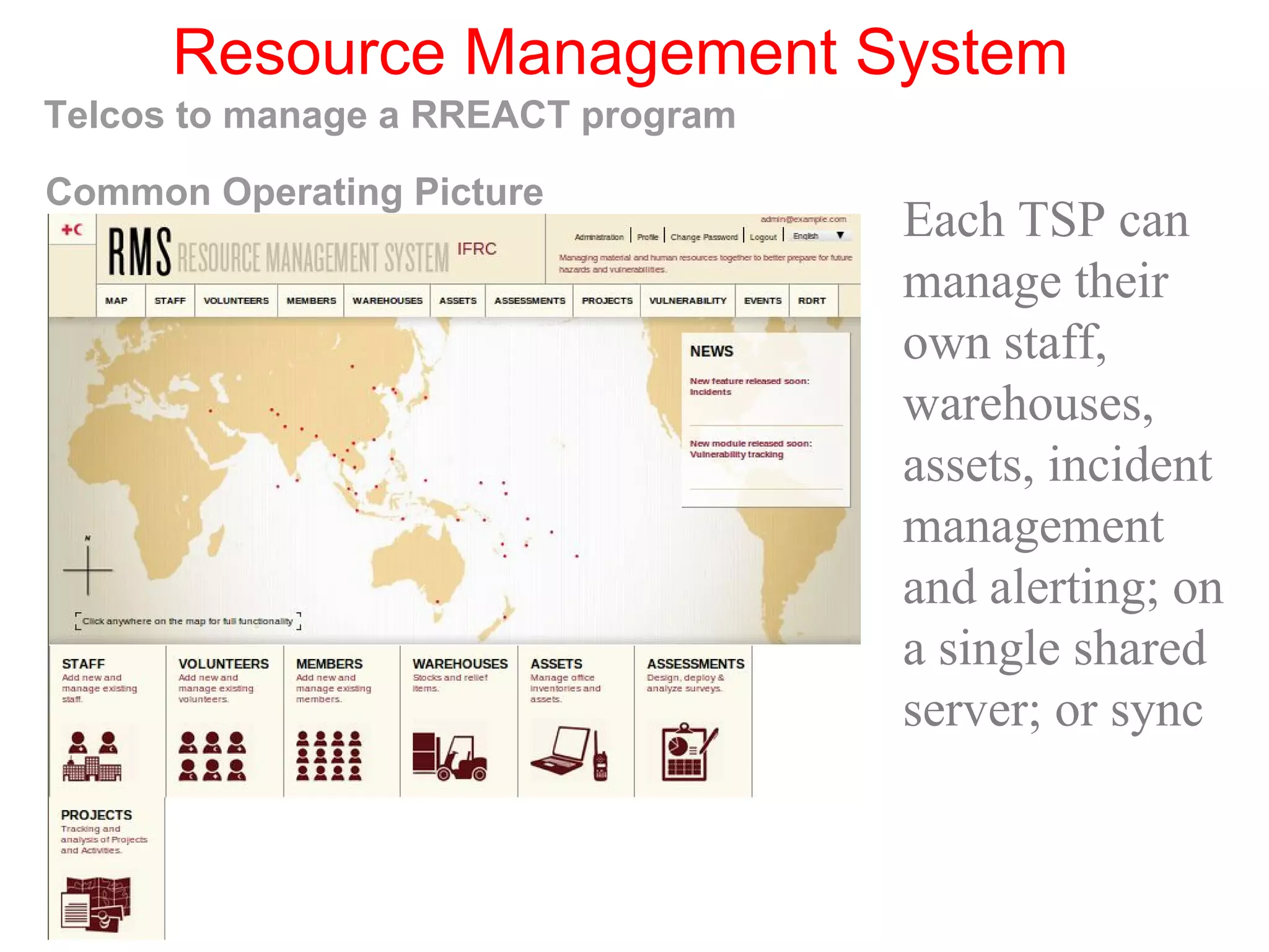
Resource Management System
Telcos to manage a RREACT program
Each TSP can
manage their
own staff,
warehouses,
assets, incident
management
and alerting; on
a single shared
server; or sync
Common Operating Picture
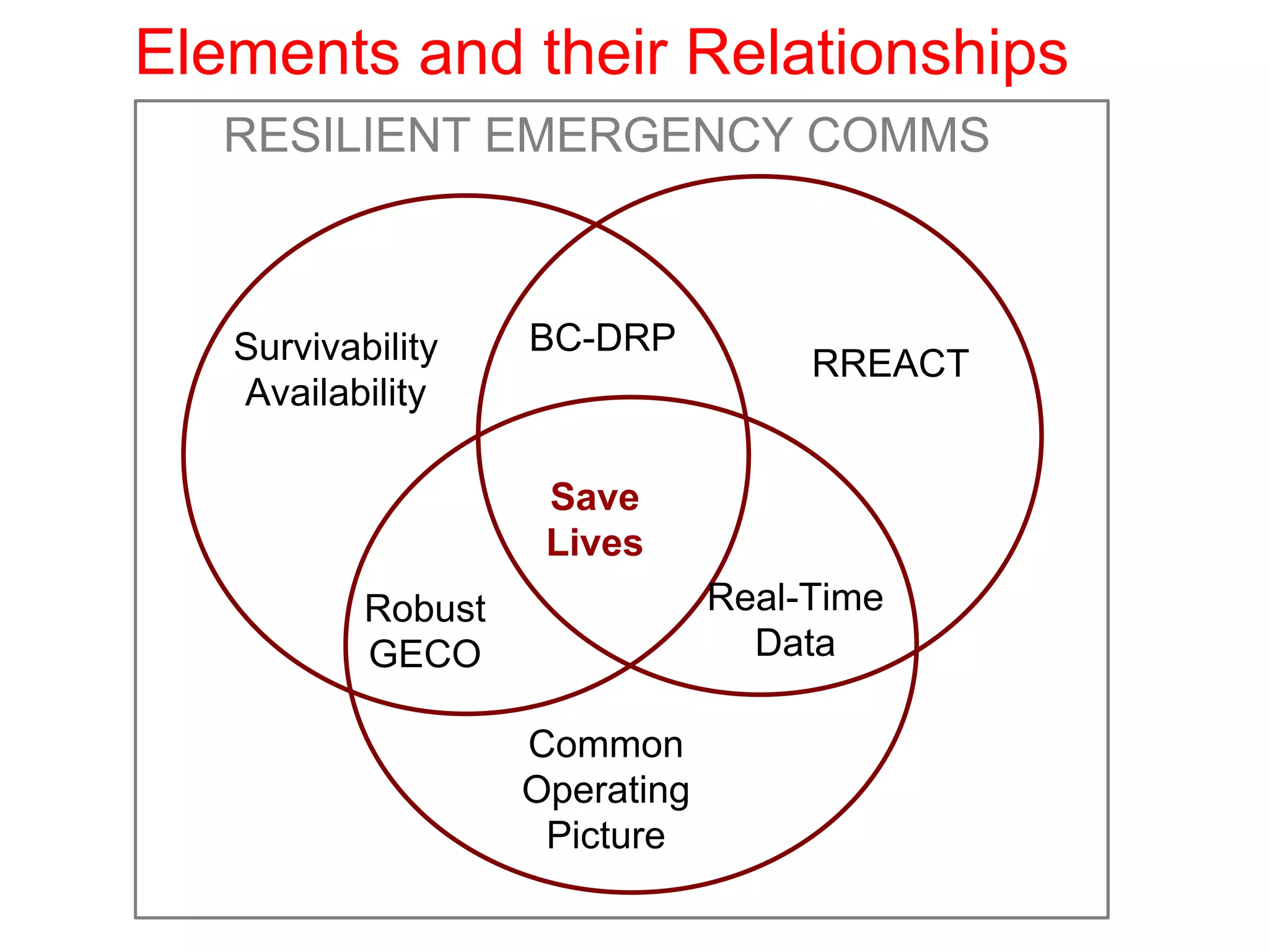
RESILIENT EMERGENCY COMMS
Elements and their Relationships
Survivability
Availability
BC-DRP
RREACT
Save
Lives
Robust
GECO
Real-Time
Data
Common
Operating
Picture
THANK YOU

INET-Kathmandu, Study on NP Em. Comms.

  • 1.
    Investigation - NepalEarthquake 2015 Learning Lessons from Nepal - Embracing ICTs for Disaster Management Hotel Yak & Yeti, Kathmandu, Nepal 2016 March 18 Evaluation of Nepal’s Emergency Communication System Nuwan Waidyanatha Senior Research Fellow nuwan@lirneasia.net Kunming, China
  • 2.
    Chauthara Story □ Telecomdamage ■ NT & NCell towers were intact but had to be relocated ■ SmartTel tower, outside of Baazar, was unharmed ■ After 48 hours batteries drained & were stolen □ Electricity ■ Bazaar and villages in darkness for four weeks ■ Solar powered mobile device charge centers □ Radio Sindu was down for two days ■ Bamboo antenna hoist ■ Transmission equipment unharmed ■ Generator by ISOC
  • 3.
    Areas for Improvement ResilientICT Services Robust Infrastructure □Situational-Awareness ■ Alerting/Warning □First-response ■ Dispatch (Resource Messaging) ■ Incident Command & Control ■ Situational-Reporting Emergency Communication Services Common Operating Picture □Business Continuity Planning ○ Institution, Personnel, ICTs □Restoration of Services ○ Access, transmission, interconnection, power □Survivability ○ Hazards, guidelines □Availability ○ Congestion, coverage Contingencies Risk Analysis
  • 4.
    Key Recommendations I. AssessTelecom Survivability and Availability in support of a robust Government Emergency Communications (GEOC) II. Develop a Rapid Restoration of Access to Telecommunications (RREACT) program for continuity of emergency communications III. Pilot-test a Cross-Agency Situational-Awareness (CASA) platform and Incident Command and Control (ICCS) for a Common Operating Picture in support of emergency management
  • 5.
    Activities: risk andcoverage mapping Using hazard, vulnerability, and exposure to identify risk (e.g., landslide prone area) Define a risk-based predefined alert area to use when issuing heavy-rain and landslide warnings Overlay with telecommunications signal coverage data to ensure warnings go through to intended recipients Train a set of Trainers to assess the survivability and availability of emergency telecommunications (NETP 2013, Action Plan 8.3.3)
  • 6.
    Activities: Risk Assessmentand Refinement ● What are the hazards and risks that threaten telecommunications infrastructure and services ● Identify the critical elements that must be improved to strengthen the resilience of the systems RASTER Participatory Assessment Train a set of Trainers to assess the survivability and availability of emergency telecommunications (NETP 2013, Action Plan 8.3.3)
  • 7.
    Activities: BC-DRP □ Buildcapacity in BC-DRP best-practices for developing a set of guidelines for the Nepali context (NETP 2013, Action Plan 8.7.3) a. Conduct a comprehensive BC-DRP needs and gap analysis (GSMA published best-practices) b. Develop BC-DRP implementation guidelines (NETCOMM) c. Develop BC-DRP self-evaluation guidelines (NETCOMM) d. Custom design BC-DRP institutional programs (telcos, data centers, services, personnel)
  • 8.
    Activities: Infrastructure best-practices □Facilitate a platform (e.g. NP Comm. Cl.) for stakeholders to build best-practices (NETP 2013, Action Plan 8.2.3) a. Process the evidence from the Earthquake b. Study the regional best-practices (LIRNEasia, ESCAP, ITU-D) c. Combine a & b, earthquake and regional best- practices to derive the policy and guidelines (Earthquake building codes are available?).
  • 9.
    Another City /Province / Country Another City / Province / Country Your City / Province / CountryYour City / Province / Country Radio Television Fax Cell / SMS SirensStorm Earthquake Tsunami Fire Volcano All governments have various public alerting systems: • Earthquakes/tsunami by e-mail, news wire, Web sites, pagers, telephone calls ... • Weather by news wire, fax, radio, television, e-mail, SMS text on cell phones ... • Fire, Security, Transportation by television, radio, sirens, police with bullhorns... Identify Stakeholder Information Needs
  • 10.
    Emergency Communication -Simplified functions ALERTING / WARNING (EDXL-CAP) INCIDENT REPORTING (EDXL-SITREP) scope architecture keep it Simple RISK MAPPING (GIS) RESOURCE MESSAGING (EDXL-RM)
  • 11.
    Situational-Awareness CAP on aMap: keeping it simple Sahana Alerting and Messaging Broker (SAMBRO) improving Cross- Agency Situational-Awareness Using EDXL-CAP and Pub-Sub (RSS/Email/SMS/FTP/Twitter/) Common Operating Picture
  • 12.
    Incident Management Common OperatingPicture Timor-Leste NEOC uses a simple alert and incident reporting system.
  • 13.
    Resource Management System Telcosto manage a RREACT program Each TSP can manage their own staff, warehouses, assets, incident management and alerting; on a single shared server; or sync Common Operating Picture
  • 14.
    RESILIENT EMERGENCY COMMS Elementsand their Relationships Survivability Availability BC-DRP RREACT Save Lives Robust GECO Real-Time Data Common Operating Picture
  • 15.