Indus Valley Civilization
 A Primary Phase Culture
 Little or no continuity with the following cultures
 Forgotten until the 19th Century
 rediscovered by the British, while building railroads
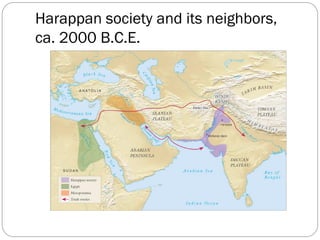
Harappan society and its neighbors,
ca. 2000 B.C.E.
Harappan Culture
 Indus valley
 not desert
 well-watered and heavily forested
 500 miles along the river valley
 10-20 times larger than Mesopotamia or Egypt
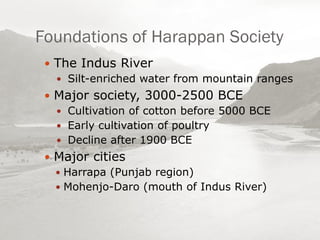
Foundations of Harappan Society
 The Indus River
 Silt-enriched water from mountain ranges
 Major society, 3000-2500 BCE
 Cultivation of cotton before 5000 BCE
 Early cultivation of poultry
 Decline after 1900 BCE
 Major cities
 Harrapa (Punjab region)
 Mohenjo-Daro (mouth of Indus River)
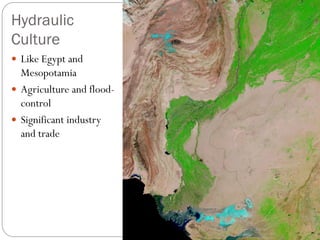
Hydraulic
Culture
 Like Egypt and
Mesopotamia
 Agriculture and flood-
control
 Significant industry
and trade
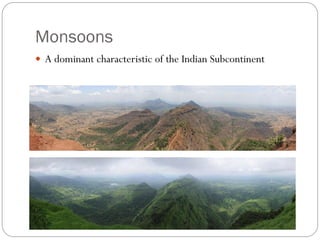
Monsoons
 A dominant characteristic of the Indian Subcontinent
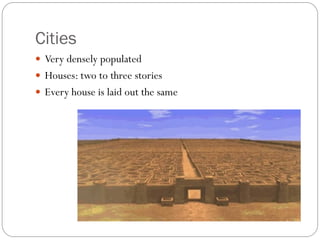
Cities
 Very densely populated
 Houses: two to three stories
 Every house is laid out the same
Mohenjo-Daro
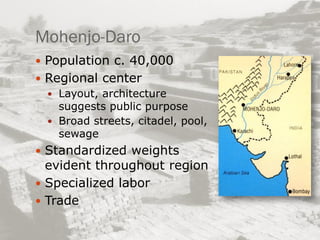
 Population c. 40,000
 Regional center
 Layout, architecture
suggests public purpose
 Broad streets, citadel, pool,
sewage
 Standardized weights
evident throughout region
 Specialized labor
 Trade
Mohenjo-Daro
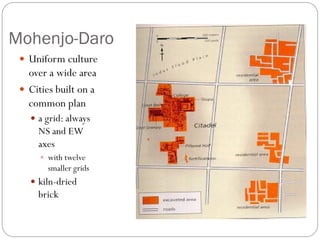
 Uniform culture
over a wide area
 Cities built on a
common plan
 a grid: always
NS and EW
axes
 with twelve
smaller grids
 kiln-dried
brick
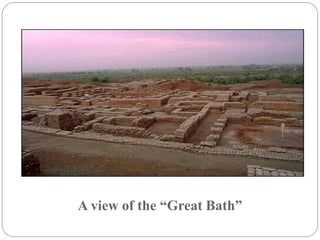
A view of the “Great Bath”
Harappan Society
 Dominated by priests ?
 From the fortified palaces and temples ?
 Power base: fertility ?
 Deities: male and female
 No written records
The Aryan “Invasion”
 Aryans, lighter-skinned invaders from
the north
 Warrior-nomads
 Indo-European language and culture
 Difficulty of theory: no evidence of
large-scale military conquest
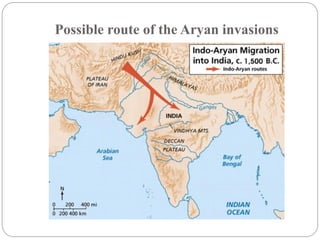
Possible route of the Aryan invasions
The Early Aryans
 Entered India in about 1500 BCE
 Pastoral economy: sheep, goats, horses,
cattle
 Vegetarianism not widespread until many
centuries later
 Religious and Literary works: The Vedas
 Sanskrit: sacred tongue
 Prakrit: everyday language, evolved into
Hindi, Urdu, Bengali
 Four Vedas, most important Rig Veda
 1,028 hymms to gods
Oral Tradition
 passed down from priests and singers
 written down in the 500’s
 TheVedas
 “Veda” means “knowledge”
The Vedas
 our primary source
 earlyAryan tradition
 later Hindu religion
 four “vedas”
 the RigVeda is the oldest
The Vedas
 oral poetry
 come to have a sacred character
 provide some historical information
The Aryans
 restless, warlike people
 tall, fair-skinned
 describe the indigenous population as
 short,“black”, enslaved
The Aryans, con’t
 villages and kingdoms constantly fighting
 warchiefs and kings
 aristocrats and freemen
The Aryans, con’t
 fond of fighting, drinking, chariot racing, gambling chasing
women and bragging about their spears
 any modern comparisons ???
 fond of taking soma
 a psychedelic drug
 probably psychotropic mushrooms
Aryans and Hindus
 Aryans give rise to Hindu society, but some different
characteristics
 Cows: they ate them
 Classes, but no castes
 Priests subordinate to the nobility
 the Mahabharata
The Iron Age: new sources
 theVedas: passed on orally
 the Brahamanas: interpretations on theVedas
 the Upanishads: interpretations and symbolic studies
 forerunners of later dissenting literature
Strain of change
 IronAge change causes strain on the class system
 blurring of lines betweenAryans and Daas
 answered with the caste system
Caste System, 1000 BC
 skin color
 ritual purity
 “Us--Them” feelings
 divine order of four castes
Caste System (“Varnas”)
 Brahmins: the priests
 Kshatriyas: the warriors
 Vaisyas: merchants and peasants
 Sudras: non-Aryans
 dalits: lowest class, performed the most undesireable jobs
Caste system, con’t
 produced by Brahmins
 literature emphasized the divine order
 hierarchical relationship
 inheritance and marriage
Caste system in practice
 warrior class did not always accept it
 nor the other classes
 the process of evolution is still going on
 the most powerful organizer of Indian society
 thousand of castes today

indus valley.pdf

  • 1.
  • 2.
    Indus Valley Civilization A Primary Phase Culture  Little or no continuity with the following cultures  Forgotten until the 19th Century  rediscovered by the British, while building railroads
  • 3.
    Harappan society andits neighbors, ca. 2000 B.C.E.
  • 4.
    Harappan Culture  Indusvalley  not desert  well-watered and heavily forested  500 miles along the river valley  10-20 times larger than Mesopotamia or Egypt
  • 5.
    Foundations of HarappanSociety  The Indus River  Silt-enriched water from mountain ranges  Major society, 3000-2500 BCE  Cultivation of cotton before 5000 BCE  Early cultivation of poultry  Decline after 1900 BCE  Major cities  Harrapa (Punjab region)  Mohenjo-Daro (mouth of Indus River)
  • 6.
    Hydraulic Culture  Like Egyptand Mesopotamia  Agriculture and flood- control  Significant industry and trade
  • 7.
    Monsoons  A dominantcharacteristic of the Indian Subcontinent
  • 8.
    Cities  Very denselypopulated  Houses: two to three stories  Every house is laid out the same
  • 9.
    Mohenjo-Daro  Population c.40,000  Regional center  Layout, architecture suggests public purpose  Broad streets, citadel, pool, sewage  Standardized weights evident throughout region  Specialized labor  Trade
  • 10.
    Mohenjo-Daro  Uniform culture overa wide area  Cities built on a common plan  a grid: always NS and EW axes  with twelve smaller grids  kiln-dried brick
  • 11.
    A view ofthe “Great Bath”
  • 12.
    Harappan Society  Dominatedby priests ?  From the fortified palaces and temples ?  Power base: fertility ?  Deities: male and female  No written records
  • 13.
    The Aryan “Invasion” Aryans, lighter-skinned invaders from the north  Warrior-nomads  Indo-European language and culture  Difficulty of theory: no evidence of large-scale military conquest
  • 14.
    Possible route ofthe Aryan invasions
  • 15.
    The Early Aryans Entered India in about 1500 BCE  Pastoral economy: sheep, goats, horses, cattle  Vegetarianism not widespread until many centuries later  Religious and Literary works: The Vedas  Sanskrit: sacred tongue  Prakrit: everyday language, evolved into Hindi, Urdu, Bengali  Four Vedas, most important Rig Veda  1,028 hymms to gods
  • 16.
    Oral Tradition  passeddown from priests and singers  written down in the 500’s  TheVedas  “Veda” means “knowledge”
  • 17.
    The Vedas  ourprimary source  earlyAryan tradition  later Hindu religion  four “vedas”  the RigVeda is the oldest
  • 18.
    The Vedas  oralpoetry  come to have a sacred character  provide some historical information
  • 19.
    The Aryans  restless,warlike people  tall, fair-skinned  describe the indigenous population as  short,“black”, enslaved
  • 20.
    The Aryans, con’t villages and kingdoms constantly fighting  warchiefs and kings  aristocrats and freemen
  • 21.
    The Aryans, con’t fond of fighting, drinking, chariot racing, gambling chasing women and bragging about their spears  any modern comparisons ???  fond of taking soma  a psychedelic drug  probably psychotropic mushrooms
  • 22.
    Aryans and Hindus Aryans give rise to Hindu society, but some different characteristics  Cows: they ate them  Classes, but no castes  Priests subordinate to the nobility  the Mahabharata
  • 23.
    The Iron Age:new sources  theVedas: passed on orally  the Brahamanas: interpretations on theVedas  the Upanishads: interpretations and symbolic studies  forerunners of later dissenting literature
  • 24.
    Strain of change IronAge change causes strain on the class system  blurring of lines betweenAryans and Daas  answered with the caste system
  • 25.
    Caste System, 1000BC  skin color  ritual purity  “Us--Them” feelings  divine order of four castes
  • 26.
    Caste System (“Varnas”) Brahmins: the priests  Kshatriyas: the warriors  Vaisyas: merchants and peasants  Sudras: non-Aryans  dalits: lowest class, performed the most undesireable jobs
  • 27.
    Caste system, con’t produced by Brahmins  literature emphasized the divine order  hierarchical relationship  inheritance and marriage
  • 28.
    Caste system inpractice  warrior class did not always accept it  nor the other classes  the process of evolution is still going on  the most powerful organizer of Indian society  thousand of castes today