Induction Program Planning
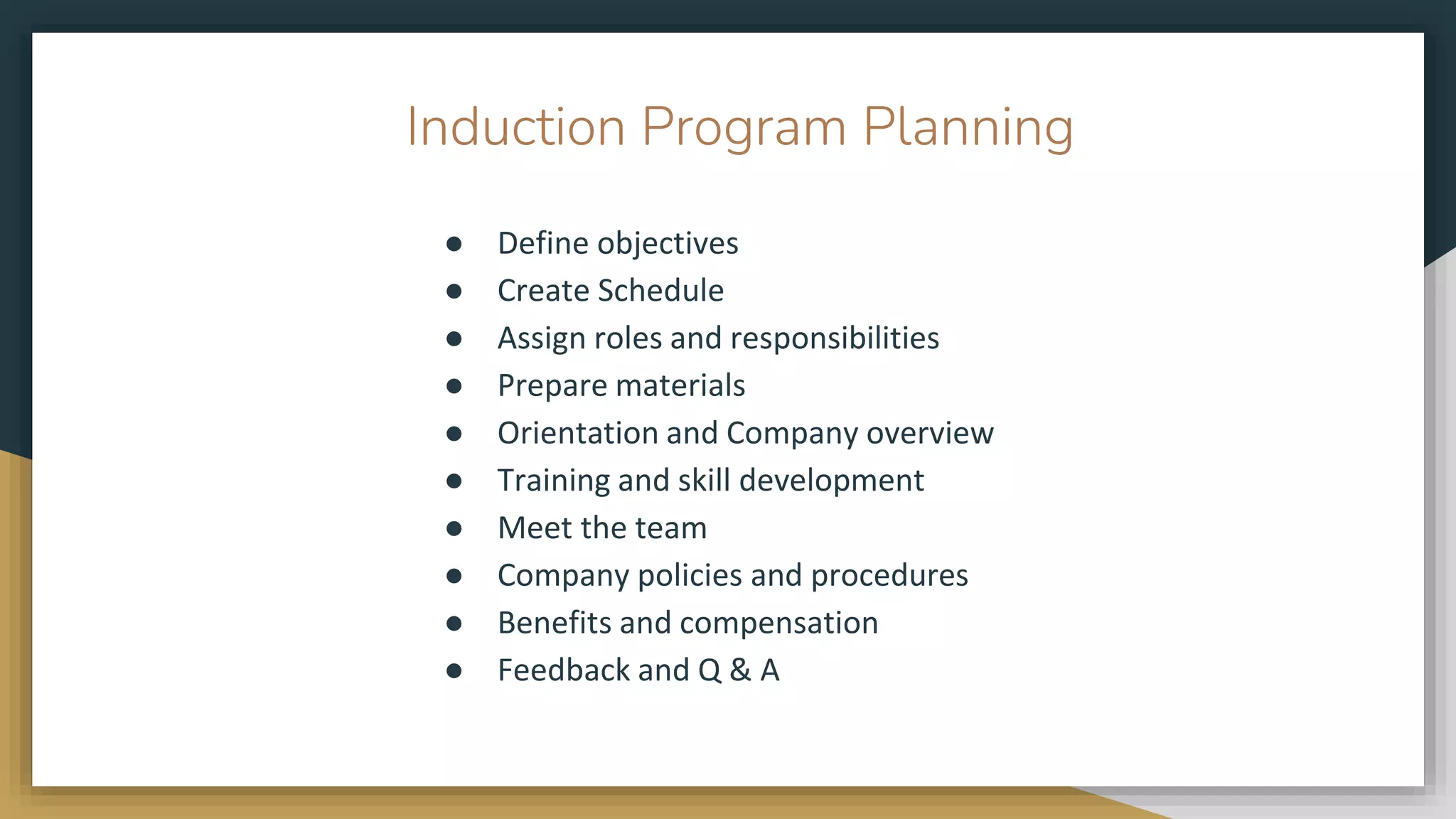
● Define objectives
● Create Schedule
● Assign roles and responsibilities
● Prepare materials
● Orientation and Company overview
● Training and skill development
● Meet the team
● Company policies and procedures
● Benefits and compensation
● Feedback and Q & A
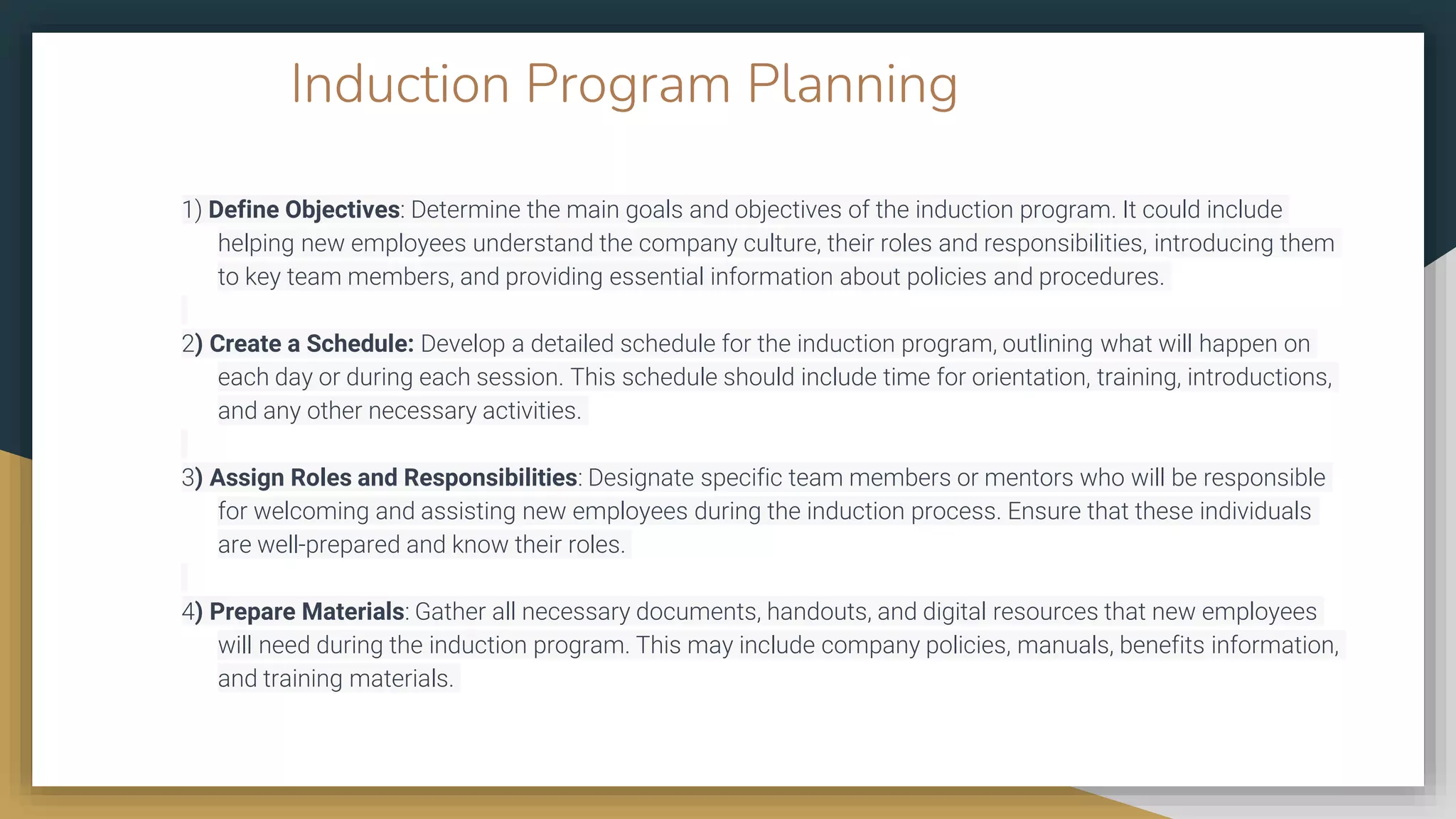
1) Define Objectives: Determine the main goals and objectives of the induction program. It could include
helping new employees understand the company culture, their roles and responsibilities, introducing them
to key team members, and providing essential information about policies and procedures.
2) Create a Schedule: Develop a detailed schedule for the induction program, outlining what will happen on
each day or during each session. This schedule should include time for orientation, training, introductions,
and any other necessary activities.
3) Assign Roles and Responsibilities: Designate specific team members or mentors who will be responsible
for welcoming and assisting new employees during the induction process. Ensure that these individuals
are well-prepared and know their roles.
4) Prepare Materials: Gather all necessary documents, handouts, and digital resources that new employees
will need during the induction program. This may include company policies, manuals, benefits information,
and training materials.
Induction Program Planning
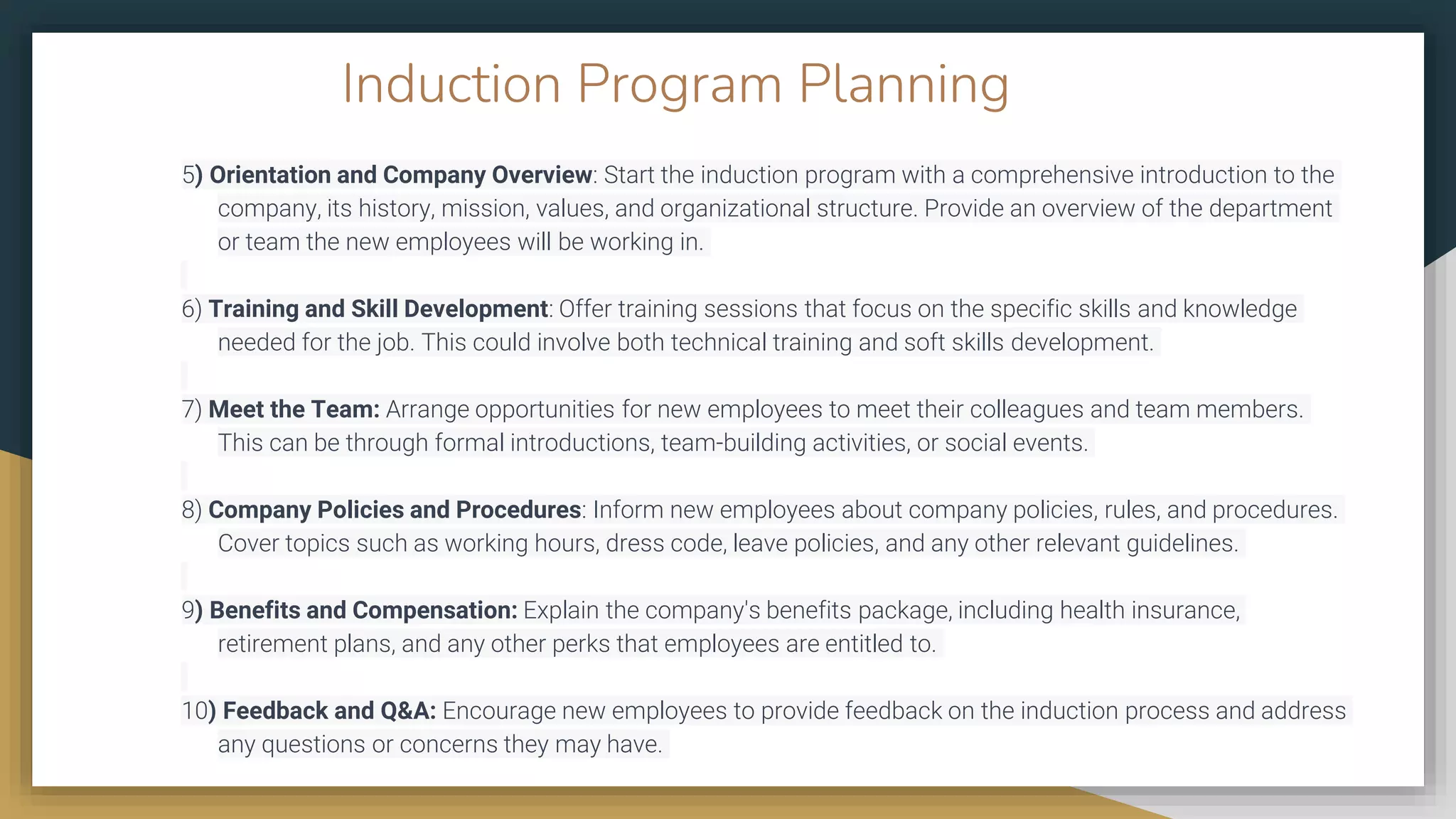
5) Orientation and Company Overview: Start the induction program with a comprehensive introduction to the
company, its history, mission, values, and organizational structure. Provide an overview of the department
or team the new employees will be working in.
6) Training and Skill Development: Offer training sessions that focus on the specific skills and knowledge
needed for the job. This could involve both technical training and soft skills development.
7) Meet the Team: Arrange opportunities for new employees to meet their colleagues and team members.
This can be through formal introductions, team-building activities, or social events.
8) Company Policies and Procedures: Inform new employees about company policies, rules, and procedures.
Cover topics such as working hours, dress code, leave policies, and any other relevant guidelines.
9) Benefits and Compensation: Explain the company's benefits package, including health insurance,
retirement plans, and any other perks that employees are entitled to.
10) Feedback and Q&A: Encourage new employees to provide feedback on the induction process and address
any questions or concerns they may have.
Induction Program Planning
Compensation Structure
A compensation structure refers to the framework or system that an organization uses to determine how it
compensates its employees. It includes various elements that make up an employee's overall compensation package,
which can include salary, bonuses, benefits, and other forms of remuneration.
● Base Salary: The fixed amount of money paid to an employee for their regular work hours, typically provided on
a monthly or annual basis.
● Bonuses: Additional financial rewards given to employees based on individual or team performance, company
profits, or other predefined metrics.
● Benefits: Non-monetary rewards offered to employees, such as health insurance, retirement plans, paid time
off, flexible work arrangements, wellness programs, and more.
● Incentives: Special rewards or perks designed to motivate and encourage specific behaviors or achievements
within the organization.
Compensation Structure
● Commissions: A variable form of compensation, often used in sales roles, where employees earn a percentage of the sales
revenue they generate.
● Equity or Stock Options: Ownership in the company in the form of stocks or stock options, offered as part of the
compensation package, especially in startups and larger corporations.
● Performance-based pay: Compensation that varies depending on an employee's individual performance, which can be
tied to key performance indicators (KPIs) and achievement of specific goals.
● Cost of Living Adjustments (COLAs): Periodic salary increases to account for inflation and changes in the cost of living.
● Market Data Analysis: Organizations often conduct market research to determine the average compensation levels for
specific job roles within their industry and geographical area. This data helps in setting competitive compensation levels.
● Job Evaluation: The process of assessing and assigning relative value to different job roles within the organization, which
influences salary ranges and pay grades.

Induction Program Planning and Compensation structure .pptx

  • 1.
  • 2.
    Induction Program Planning ●Define objectives ● Create Schedule ● Assign roles and responsibilities ● Prepare materials ● Orientation and Company overview ● Training and skill development ● Meet the team ● Company policies and procedures ● Benefits and compensation ● Feedback and Q & A
  • 3.
    1) Define Objectives:Determine the main goals and objectives of the induction program. It could include helping new employees understand the company culture, their roles and responsibilities, introducing them to key team members, and providing essential information about policies and procedures. 2) Create a Schedule: Develop a detailed schedule for the induction program, outlining what will happen on each day or during each session. This schedule should include time for orientation, training, introductions, and any other necessary activities. 3) Assign Roles and Responsibilities: Designate specific team members or mentors who will be responsible for welcoming and assisting new employees during the induction process. Ensure that these individuals are well-prepared and know their roles. 4) Prepare Materials: Gather all necessary documents, handouts, and digital resources that new employees will need during the induction program. This may include company policies, manuals, benefits information, and training materials. Induction Program Planning
  • 4.
    5) Orientation andCompany Overview: Start the induction program with a comprehensive introduction to the company, its history, mission, values, and organizational structure. Provide an overview of the department or team the new employees will be working in. 6) Training and Skill Development: Offer training sessions that focus on the specific skills and knowledge needed for the job. This could involve both technical training and soft skills development. 7) Meet the Team: Arrange opportunities for new employees to meet their colleagues and team members. This can be through formal introductions, team-building activities, or social events. 8) Company Policies and Procedures: Inform new employees about company policies, rules, and procedures. Cover topics such as working hours, dress code, leave policies, and any other relevant guidelines. 9) Benefits and Compensation: Explain the company's benefits package, including health insurance, retirement plans, and any other perks that employees are entitled to. 10) Feedback and Q&A: Encourage new employees to provide feedback on the induction process and address any questions or concerns they may have. Induction Program Planning
  • 5.
    Compensation Structure A compensationstructure refers to the framework or system that an organization uses to determine how it compensates its employees. It includes various elements that make up an employee's overall compensation package, which can include salary, bonuses, benefits, and other forms of remuneration. ● Base Salary: The fixed amount of money paid to an employee for their regular work hours, typically provided on a monthly or annual basis. ● Bonuses: Additional financial rewards given to employees based on individual or team performance, company profits, or other predefined metrics. ● Benefits: Non-monetary rewards offered to employees, such as health insurance, retirement plans, paid time off, flexible work arrangements, wellness programs, and more. ● Incentives: Special rewards or perks designed to motivate and encourage specific behaviors or achievements within the organization.
  • 6.
    Compensation Structure ● Commissions:A variable form of compensation, often used in sales roles, where employees earn a percentage of the sales revenue they generate. ● Equity or Stock Options: Ownership in the company in the form of stocks or stock options, offered as part of the compensation package, especially in startups and larger corporations. ● Performance-based pay: Compensation that varies depending on an employee's individual performance, which can be tied to key performance indicators (KPIs) and achievement of specific goals. ● Cost of Living Adjustments (COLAs): Periodic salary increases to account for inflation and changes in the cost of living. ● Market Data Analysis: Organizations often conduct market research to determine the average compensation levels for specific job roles within their industry and geographical area. This data helps in setting competitive compensation levels. ● Job Evaluation: The process of assessing and assigning relative value to different job roles within the organization, which influences salary ranges and pay grades.