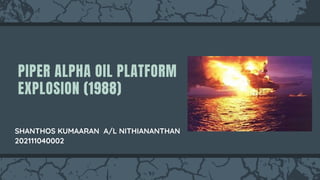
INTRODUCTION - ACCIDENTOVERVIEW
• Location: North Sea, approximately 120 miles northeast of Aberdeen, Scotland.
• Date: July 6, 1988.
• Primary cause: The Piper Alpha disaster, which occurred on July 6, 1988, was
primarily caused by a gas leak that led to a series of catastrophic explosions and an
uncontrollable fire.
• Fatalities: 167 out of 226 personnel on board the platform lost their lives. Only 59
workers survived, many of whom suffered severe injuries and trauma.
• Economic Impact: The disaster caused billions of dollars in financial losses, including
the destruction of the platform and the loss of production.
• Environmental Impact: The explosions and fire resulted in the release of a significant
amount of oil and gas into the North Sea, causing environmental damage.
3.
1. Timely Communication:
•Effectiveness of Communication: The first explosion at 10:00 PM on July 6, 1988, destroyed the control room, severely hampering
communication capabilities. Despite the control room's destruction, some emergency alarms were activated, but the confusion
and panic caused by the explosion made it difficult for workers to receive clear instructions.
• Challenges: The destruction of the control room and emergency communication systems led to a lack of coordinated efforts in
evacuation and response. Many workers were left unaware of the severity of the situation and the required actions. Coordination
with external rescue teams was delayed. The nearby platforms and coast guard received distress signals but faced difficulties in
establishing a clear communication line with Piper Alpha.
RESPONSE PHASE
4.
2. Evacuation andSheltering:
• Evacuation Procedures: After the first explosion, many workers attempted to evacuate using the designated lifeboats. However, the
fire and subsequent explosions blocked access to many of the lifeboat stations. Alternative Escape Routes of accident is some
workers used alternative escape routes, such as the living quarters' windows, to jump into the sea. These impromptu escape
methods were hazardous but became necessary due to blocked exits.
• Challenges and Solutions: The intensity of the fire and smoke quickly engulfed the main evacuation routes, trapping many workers.
The lifeboats, which were a primary means of evacuation, were inaccessible due to the fire's spread. Workers had to improvise their
escape, with some managing to reach the sea and await rescue.
RESPONSE PHASE
5.
3. Resource Allocation:
•Medical Aid and Personnel: The immediate medical response was hindered by the difficulty of accessing the platform and the
ongoing fire. Rescue helicopters and vessels were dispatched as soon as the distress signal was received.
• Rescue Operations: Rescue operations were conducted by helicopters and standby vessels. Despite the challenging conditions,
rescue teams managed to save 59 workers.
• Resource Shortcomings: The disaster highlighted the need for better-equipped rescue operations. The lack of adequate firefighting
equipment and the overwhelming intensity of the fire made it nearly impossible to control the blaze and conduct effective rescues.
• Successes: Despite the overwhelming challenges, the coordinated efforts of rescue teams from nearby platforms and emergency
services played a crucial role in saving lives and providing immediate medical attention to survivors.
RESPONSE PHASE
6.
1. Support andRehabilitation:
Programs Provided:
• In the immediate aftermath of the disaster, extensive support was provided to survivors and the families of the deceased. This
included financial compensation, psychological counseling, and legal assistance.
• Long-term rehabilitation programs were established to help survivors and affected families cope with the trauma. These programs
included ongoing counseling services, medical treatment for injuries sustained during the disaster, and support groups to provide a
sense of community and shared healing.
Effectiveness:
• The compensation packages were critical in providing financial stability to the affected families. The psychological support provided
was generally effective in helping survivors and families deal with the trauma. Many benefited from the counseling services,
although some felt that more could have been done to address long-term mental health issues.
RECOVERY PHASE
7.
2. Infrastructure Restoration:
Efforts:
•The first step in infrastructure restoration was the clearance of the Piper Alpha site. Debris from the destroyed platform was
removed, and the area was secured to prevent further environmental contamination.
• Rather than rebuilding the Piper Alpha platform, efforts focused on reviewing and reforming safety protocols and infrastructure on
other platforms.
Infrastructure Improvements:
• Critical infrastructure on other platforms was upgraded to include improved fire suppression systems, better communication
networks, and more robust structural designs to withstand potential explosions. The disaster prompted significant regulatory
changes, mandating higher safety standards and regular inspections to ensure compliance.
RECOVERY PHASE
8.
3. Community Resilience:
InitiativesUndertaken:
• One of the key initiatives to enhance community resilience was the implementation of comprehensive training programs for
offshore workers. These programs focused on emergency response, safety procedures, and crisis management.
• Regular emergency drills were conducted to ensure that workers were familiar with evacuation procedures and could respond
effectively in the event of a disaster. These drills simulated various emergency scenarios, including fires and explosions.
• Community support networks were established to provide ongoing assistance and resources to affected individuals and their
families.
RECOVERY PHASE
9.
1. Lessons Learned:
•Key Lessons: The disaster underscored the importance of
effective communication, comprehensive evacuation
plans, and rigorous safety standards.
• Application: Enhanced safety protocols, regular safety
drills, and better-designed emergency response systems
have been implemented to prevent similar incidents.
CONCLUSION
2. Policy and Legislation:
• Role of Policy: The disaster led to significant changes in
offshore safety regulations, including the establishment
of the Cullen Inquiry, which recommended major
reforms in safety practices and regulations.
• Improvements: The introduction of the Offshore
Installations (Safety Case) Regulations in 1992 and the
creation of the Health and Safety Executive (HSE) to
oversee safety in offshore installations were direct
outcomes of the Piper Alpha disaster.
10.
3. Technology andInnovation:
• Technological Advancements: Innovations in fire suppression systems, improved emergency communication technology, and
advanced safety equipment have been developed to enhance preparedness and response capabilities.
• Innovative Solutions: The adoption of real-time monitoring systems and automated emergency response protocols has
significantly improved the safety of offshore installations
CONCLUSION
11.
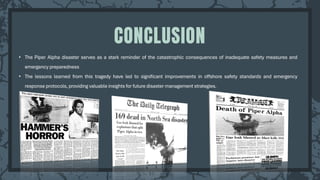
• The PiperAlpha disaster serves as a stark reminder of the catastrophic consequences of inadequate safety measures and
emergency preparedness
• The lessons learned from this tragedy have led to significant improvements in offshore safety standards and emergency
response protocols, providing valuable insights for future disaster management strategies.
CONCLUSION