Setting the Context Eda Colbert – Marketing Director British Council
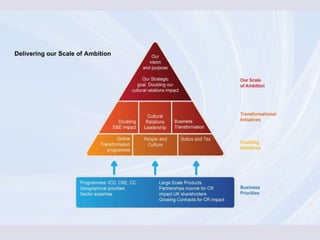
Delivering our Scale of Ambition
Learning Objectives An understanding of why developing products and programmes around customer/audience needs is essential Practical knowledge of how to use marketing tools through the product/programme development process How to commission and utilise research effectively A thorough understanding of market analysis and trends
The “Marketing Line” Where are you on the marketing line? Where do you want to be after Wednesday?
Expectations What are your expectations –  what do you want to achieve? Working in groups for 5 minutes Feedback from all to Mike
Introduction Understanding our Customers/Audiences John Bromley
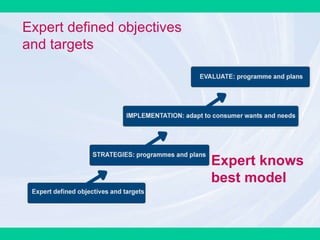
Expert defined objectives  and targets Expert knows best model
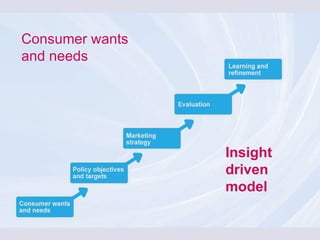
Consumer wants and needs Insight driven model
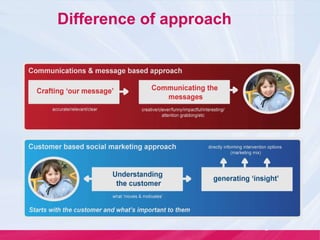
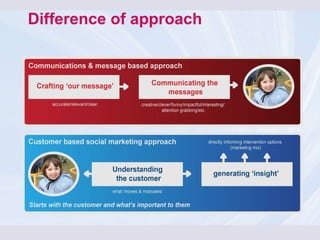
Difference of approach
Why this approach? •  Research expensive – a luxury we can’t afford? More expensive than wasting Millions of £’s on programmes nobody wants Alienating our audience?
The Difference between sales and marketing Sales is “finding customers for existing products and trying to persuade them to buy them” Marketing is “ discovering the wants of a target audience and then creating the goods and services to satisfy them”
Customer Orientation Developing a full understanding of your audience, based on good market and consumer research and combining data from different sources.
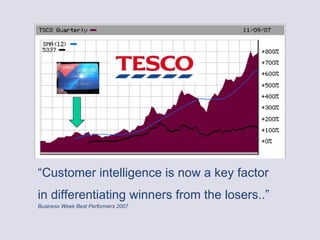
“ Customer intelligence is now a key factor  in differentiating winners from the losers..”   Business Week Best Performers 2007
Developing Insight Marketing is driven by ‘insights’ that are able to provide a guide for  selecting and developing programmes.
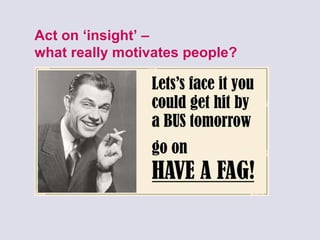
Act on ‘insight’ –  what really motivates people?
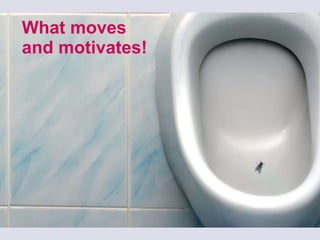
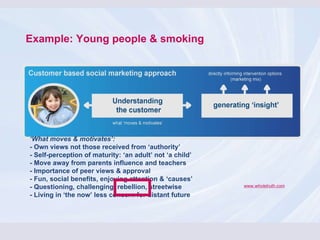
What moves  and motivates!
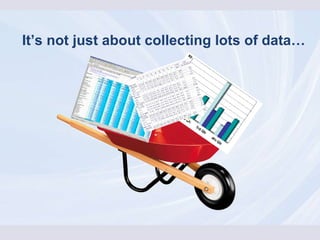
It’s not just about collecting lots of data…
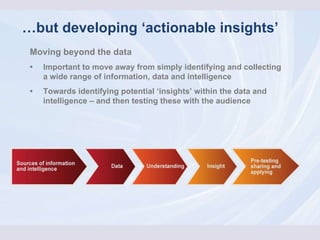
… but developing ‘actionable insights’ Moving beyond the data  • Important to move away from simply identifying and collecting a wide range of information, data and intelligence • Towards identifying potential ‘insights’ within the data and intelligence – and then testing these with the audience
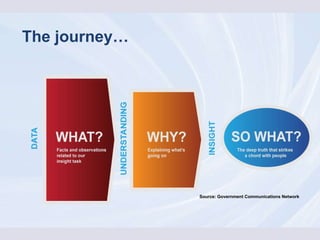
Source: Government Communications Network  The journey…
Segmentation Using segmentation to look at the audience and try to identify sub-groups (segments) that may have similar needs, attitudes or behaviours.
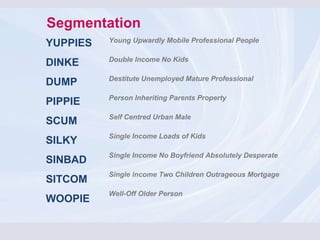
Segmentation Young Upwardly Mobile Professional People Double Income No Kids Destitute Unemployed Mature Professional Person Inheriting Parents Property Self Centred Urban Male Single Income Loads of Kids Single Income No Boyfriend Absolutely Desperate Single income Two Children Outrageous Mortgage Well-Off Older Person YUPPIES DINKE DUMP PIPPIE SCUM SILKY SINBAD SITCOM WOOPIE
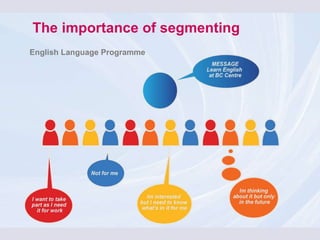
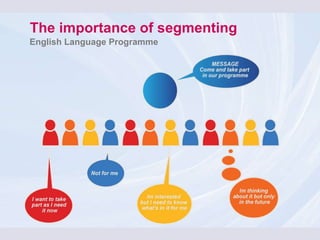
The importance of segmenting English Language Programme
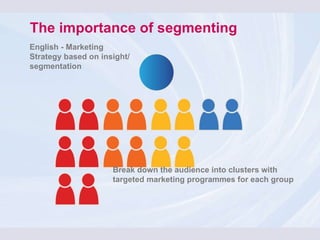
The importance of segmenting English - Marketing Strategy based on insight/segmentation Break down the audience into clusters with targeted marketing programmes for each group
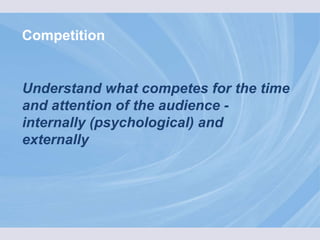
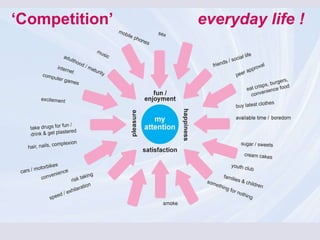
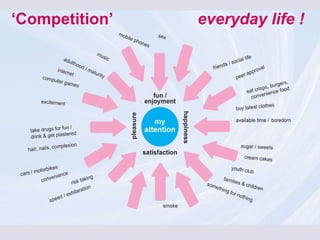
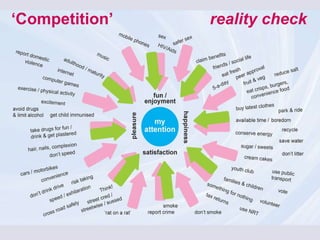
Competition Understand what competes for the time and attention of the audience -  internally (psychological) and externally
everyday life ! ‘ Competition’
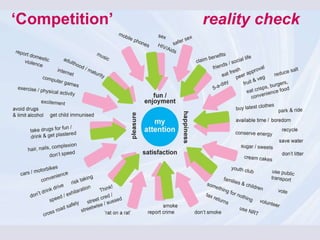
reality check ‘ Competition’
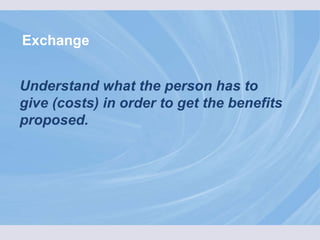
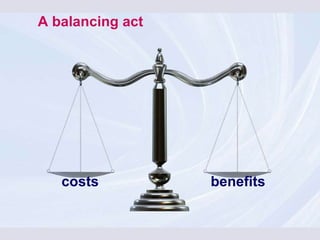
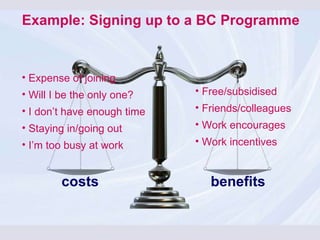
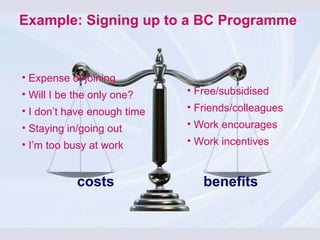
Exchange Understand what the person has to give (costs) in order to get the benefits proposed.
costs benefits A balancing act
Example: Signing up to a BC Programme benefits Expense of joining Will I be the only one? I don’t have enough time Staying in/going out I’m too busy at work Free/subsidised  Friends/colleagues Work encourages Work incentives costs
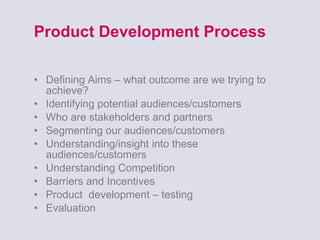
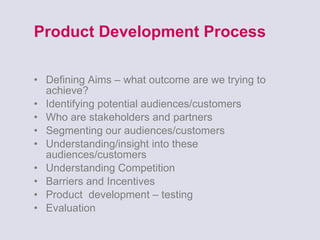
Product Development Process Defining Aims – what outcome are we trying to achieve? Identifying potential audiences/customers Who are stakeholders and partners Segmenting our audiences/customers Understanding/insight into these audiences/customers Understanding Competition Barriers and Incentives Product  development – testing Evaluation
Break 11.00 -11.30 – please be back on time
Product Development Process Defining Aims – what outcome are we trying to achieve? Identifying potential audiences/customers Who are stakeholders and partners Segmenting our audiences/customers Understanding/insight into these audiences/customers Understanding Competition Barriers and Incentives Product  development – testing Evaluation
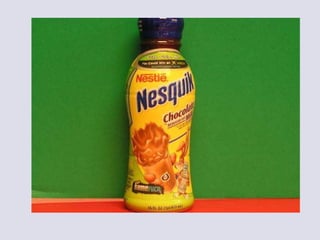
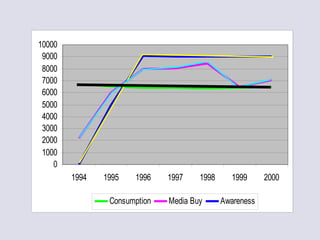
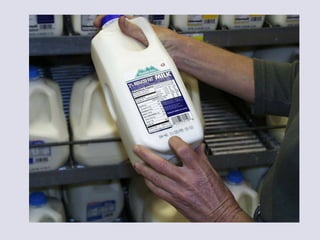
Why do we need marketing throughout the development process? No end of marketing activity can cure the “wrong” product Milk – a warning!
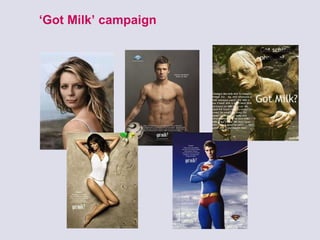
‘ Got Milk’ campaign
Got milk?   Highly successful campaign Over 90% awareness But did the campaign increase  longer term sales?


Using Marketing tools can help you get the right product Marketing needs to be involved at the start, middle and end of the product development process
Delivering and Measuring Impact Is it purely about numbers or the actual impact our programmes have? When we begin the product/programme development process do we think enough about what we want to actually achieve? Understanding the “numbers” is an important element but its really the outcome that matters!
Aims and Objectives Aim – broad strategic purpose Objective - A specific measurable goal whose achievement will contribute towards the aim
Objectives should be S.M.A.R.T S   pecific:    not open to different interpretations. M  easurable:  A   chievable:    with the resources that are available. R   eliable / realistic:    durable & consistent data can be gathered T   ime bound:    can be measured within the time frame    of the intervention
Group Exercise Choose one British Council product or programme What is the programme trying to achieve – what is the overall aim? What is the success criteria  - how will we know if we have achieved our aim? Group Feedback
Summing up We need to focus our energy in trying to understand our customers before we develop products Understanding what we are try to achieve is critical Next sessions will give you the tools to enable you to do this
LUNCH 13.00 – 14.00 – please be back on time
The Case Study John Bromley to introduce the case study Aims and objectives Case study representative – not looking to have an answer – “a learning tool”
How will we work with the  Case Study? Workshop – objectives developing skills and expertise Case study  - utilise these tools on a real life example to help demonstrate and embed the “theory” The project team will utilise our work over the next few days in the product development process Don’t worry – all the learning is transferable!
Rajasthan Artisans/crafts people Programme aims – to encourage the development of artisan/craft industry in the region Developing partnerships to secure the long term future of the skills and expertise of the craftsmen and artisans
Defining aims and objectives Group Session What is the overall aim of the programme? What are the objectives of the programme? Remember  - SMART Try to concentrate on the “end users” and outcomes not on numbers
Customer mapping Remember  - what are we trying to achieve – so who do we need to engage with to do this Try to build customer maps of key people we want to attract to take part in the programme
Stakeholder Mapping We now have your key target audience/customers What we need to do now is to determine the key partners/stakeholders that we need to engage with. Try to think about “gate keepers” and “intermediaries” to your target groups Who is important and has influence on your target groups but also within/outside the British Council?
What is segmentation?  ‘… the process of subdividing a market into distinct subsets of customers that behave in the same way or have similar needs.’  Commercial companies usually segment according to one or more key criteria:  Geography Demographics Psychographics  Behavioural characteristics  Benefits sought
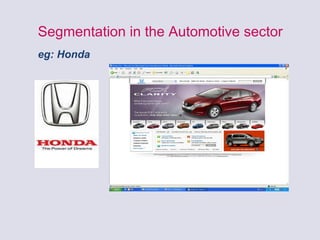
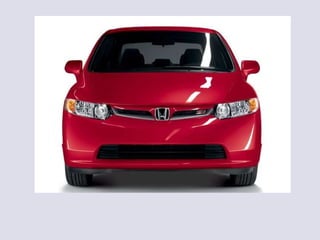
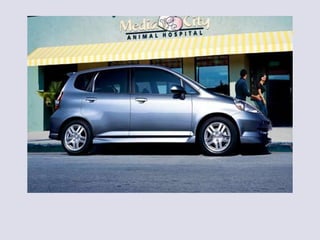
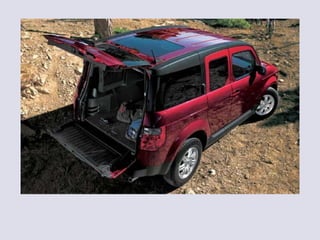
Segmentation in the Automotive sector  eg: Honda


The importance of segmenting English Language Programme
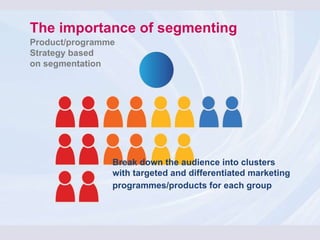
The importance of segmenting Product/programme  Strategy based  on segmentation Break down the audience into clusters  with targeted and differentiated marketing programmes/products for each group
Rajasthan Artisans/crafts people What are the main types of people that we want to attract into the programme? Things to think about Urban/rural Countries/regions Sex and age Living environment
Summing up Many thanks for your enthusiasm We start tomorrow at 9.00
Day 2 Recap – where did we get to? Insight Research Competition Barriers and Incentives Product
Insight A deep ‘truth’ about the customer based on their behaviour, experiences, beliefs, needs or desires, that is relevant to the task orissue and ‘rings bells’ with target people.
Difference of approach
www.wholetruth.com Example: Young people & smoking ‘ What moves & motivates’:  - Own views not those received from ‘authority’  - Self-perception of maturity: ‘an adult’ not ‘a child’  - Move away from parents influence and teachers  - Importance of peer views & approval  - Fun, social benefits, enjoying attention & ‘causes’  - Questioning, challenging, rebellion, streetwise  - Living in ‘the now’ less concern for distant future
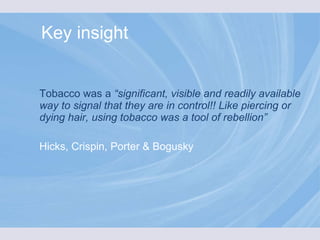
Tobacco was a  “significant, visible and readily available way to signal that they are in control!! Like piercing or dying hair, using tobacco was a tool of rebellion” Hicks, Crispin, Porter & Bogusky Key insight
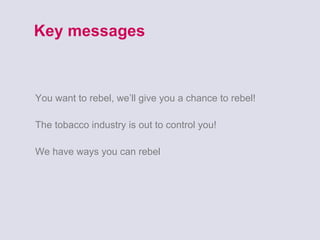
Key messages   You want to rebel, we ’ ll give you a chance to rebel! The tobacco industry is out to control you! We have ways you can rebel
 
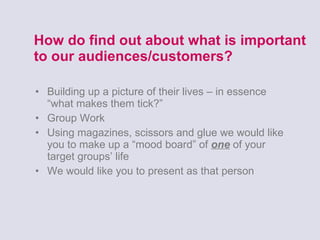
Percent in Florida public middle and high school students  Who smoked cigarettes on one or more of the past 30 days
How do find out about what is important to our audiences/customers? Building up a picture of their lives – in essence “what makes them tick?” Group Work Using magazines, scissors and glue we would like you to make up a “mood board” of  one  of your target groups’ life We would like you to present as that person
What you may want to consider Where do they live - what is their neighborhood like? Friends and family What products do they consume - where do they go to buy, what products/services are important to them Hobbies and habits (good and bad) Attitude to education/careers Work and attitude to free-time What’s impacted on their lives, who do they consider role models What makes them the person that they are today?
Comparing our perceptions  with the “real thing” Our perceptions of our audience could be correct or it could be wrong – how do we know? Young people especially! Young people  - often seen as very selfish? How do you get them to do something? Seat Belts
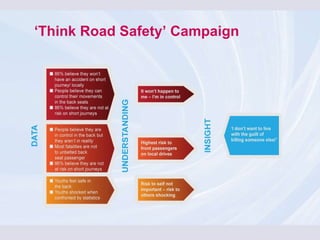
‘ Think Road Safety’ Campaign
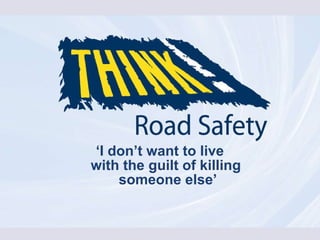
‘ I don’t want to live  with the guilt of killing  someone else’
When and how to commission research Our perceptions of audiences are often not enough to find real insight Commissioning research  - do as much as you can in-house Primary and secondary research Identifying aims and objectives Identifying/prioritising audiences What are the questions you want answering? Can you do some of the analysis yourself?
Break 10.30 – 11.00
Presentation by Mike Coney Research – Raajasthan 2009
Lunch 13.00 – 14.00, try to be back on time
Competition What is competition? Its not just about direct competitors but also other things your target group might prefer doing with their time!
‘ Competition’ everyday life !
‘ Competition’ reality check
Group work - Competition You have your target group You have your perceptions of your target group You have research on your target group What is the competition that could affect your target group taking part in the programme?
Example: Signing up to a BC Programme costs benefits Expense of joining Will I be the only one? I don’t have enough time Staying in/going out I’m too busy at work Free/subsidised  Friends/colleagues Work encourages Work incentives
Barriers and Incentives What are the barriers to stop your target group being involved in the programme? Can you overcome these barriers by providing incentives? What can we do to adapt our programme to make it more attractive? Where should we market our product? Where and when should we offer the product? What could we do in terms of price/cost?
Final Group Work Using the information that has been developed over the last two days we would like you to prepare a very brief presentation to include What is the aim and objectives of the programme? Who is the target group? What do you think are some of the key insights of this group? What is the main competition? What are the key features of the product? What are the main barriers and what incentives would you offer to overcome the barriers? What should the programme do?
Final Summing up Reviewing learning objectives and expectations Taking this back to work – group discussion The Marketing Line – where are you now?

India Presentation 1

  • 1.
  • 2.
    Setting the ContextEda Colbert – Marketing Director British Council
  • 3.
  • 4.
    Learning Objectives Anunderstanding of why developing products and programmes around customer/audience needs is essential Practical knowledge of how to use marketing tools through the product/programme development process How to commission and utilise research effectively A thorough understanding of market analysis and trends
  • 5.
    The “Marketing Line”Where are you on the marketing line? Where do you want to be after Wednesday?
  • 6.
    Expectations What areyour expectations – what do you want to achieve? Working in groups for 5 minutes Feedback from all to Mike
  • 7.
    Introduction Understanding ourCustomers/Audiences John Bromley
  • 8.
    Expert defined objectives and targets Expert knows best model
  • 9.
    Consumer wants andneeds Insight driven model
  • 10.
  • 11.
    Why this approach?• Research expensive – a luxury we can’t afford? More expensive than wasting Millions of £’s on programmes nobody wants Alienating our audience?
  • 12.
    The Difference betweensales and marketing Sales is “finding customers for existing products and trying to persuade them to buy them” Marketing is “ discovering the wants of a target audience and then creating the goods and services to satisfy them”
  • 13.
    Customer Orientation Developinga full understanding of your audience, based on good market and consumer research and combining data from different sources.
  • 14.
    “ Customer intelligenceis now a key factor in differentiating winners from the losers..” Business Week Best Performers 2007
  • 15.
    Developing Insight Marketingis driven by ‘insights’ that are able to provide a guide for selecting and developing programmes.
  • 16.
    Act on ‘insight’– what really motivates people?
  • 17.
    What moves and motivates!
  • 18.
    It’s not justabout collecting lots of data…
  • 19.
    … but developing‘actionable insights’ Moving beyond the data • Important to move away from simply identifying and collecting a wide range of information, data and intelligence • Towards identifying potential ‘insights’ within the data and intelligence – and then testing these with the audience
  • 20.
    Source: Government CommunicationsNetwork The journey…
  • 21.
    Segmentation Using segmentationto look at the audience and try to identify sub-groups (segments) that may have similar needs, attitudes or behaviours.
  • 22.
    Segmentation Young UpwardlyMobile Professional People Double Income No Kids Destitute Unemployed Mature Professional Person Inheriting Parents Property Self Centred Urban Male Single Income Loads of Kids Single Income No Boyfriend Absolutely Desperate Single income Two Children Outrageous Mortgage Well-Off Older Person YUPPIES DINKE DUMP PIPPIE SCUM SILKY SINBAD SITCOM WOOPIE
  • 23.
    The importance ofsegmenting English Language Programme
  • 24.
    The importance ofsegmenting English - Marketing Strategy based on insight/segmentation Break down the audience into clusters with targeted marketing programmes for each group
  • 25.
    Competition Understand whatcompetes for the time and attention of the audience - internally (psychological) and externally
  • 26.
    everyday life !‘ Competition’
  • 27.
    reality check ‘Competition’
  • 28.
    Exchange Understand whatthe person has to give (costs) in order to get the benefits proposed.
  • 29.
    costs benefits Abalancing act
  • 30.
    Example: Signing upto a BC Programme benefits Expense of joining Will I be the only one? I don’t have enough time Staying in/going out I’m too busy at work Free/subsidised Friends/colleagues Work encourages Work incentives costs
  • 31.
    Product Development ProcessDefining Aims – what outcome are we trying to achieve? Identifying potential audiences/customers Who are stakeholders and partners Segmenting our audiences/customers Understanding/insight into these audiences/customers Understanding Competition Barriers and Incentives Product development – testing Evaluation
  • 32.
    Break 11.00 -11.30– please be back on time
  • 33.
    Product Development ProcessDefining Aims – what outcome are we trying to achieve? Identifying potential audiences/customers Who are stakeholders and partners Segmenting our audiences/customers Understanding/insight into these audiences/customers Understanding Competition Barriers and Incentives Product development – testing Evaluation
  • 34.
    Why do weneed marketing throughout the development process? No end of marketing activity can cure the “wrong” product Milk – a warning!
  • 35.
  • 36.
    Got milk? Highly successful campaign Over 90% awareness But did the campaign increase longer term sales?
  • 37.
  • 38.
  • 39.
  • 40.
    Using Marketing toolscan help you get the right product Marketing needs to be involved at the start, middle and end of the product development process
  • 41.
    Delivering and MeasuringImpact Is it purely about numbers or the actual impact our programmes have? When we begin the product/programme development process do we think enough about what we want to actually achieve? Understanding the “numbers” is an important element but its really the outcome that matters!
  • 42.
    Aims and ObjectivesAim – broad strategic purpose Objective - A specific measurable goal whose achievement will contribute towards the aim
  • 43.
    Objectives should beS.M.A.R.T S pecific: not open to different interpretations. M easurable: A chievable: with the resources that are available. R eliable / realistic: durable & consistent data can be gathered T ime bound: can be measured within the time frame of the intervention
  • 44.
    Group Exercise Chooseone British Council product or programme What is the programme trying to achieve – what is the overall aim? What is the success criteria - how will we know if we have achieved our aim? Group Feedback
  • 45.
    Summing up Weneed to focus our energy in trying to understand our customers before we develop products Understanding what we are try to achieve is critical Next sessions will give you the tools to enable you to do this
  • 46.
    LUNCH 13.00 –14.00 – please be back on time
  • 47.
    The Case StudyJohn Bromley to introduce the case study Aims and objectives Case study representative – not looking to have an answer – “a learning tool”
  • 48.
    How will wework with the Case Study? Workshop – objectives developing skills and expertise Case study - utilise these tools on a real life example to help demonstrate and embed the “theory” The project team will utilise our work over the next few days in the product development process Don’t worry – all the learning is transferable!
  • 49.
    Rajasthan Artisans/crafts peopleProgramme aims – to encourage the development of artisan/craft industry in the region Developing partnerships to secure the long term future of the skills and expertise of the craftsmen and artisans
  • 50.
    Defining aims andobjectives Group Session What is the overall aim of the programme? What are the objectives of the programme? Remember - SMART Try to concentrate on the “end users” and outcomes not on numbers
  • 51.
    Customer mapping Remember - what are we trying to achieve – so who do we need to engage with to do this Try to build customer maps of key people we want to attract to take part in the programme
  • 52.
    Stakeholder Mapping Wenow have your key target audience/customers What we need to do now is to determine the key partners/stakeholders that we need to engage with. Try to think about “gate keepers” and “intermediaries” to your target groups Who is important and has influence on your target groups but also within/outside the British Council?
  • 53.
    What is segmentation? ‘… the process of subdividing a market into distinct subsets of customers that behave in the same way or have similar needs.’ Commercial companies usually segment according to one or more key criteria: Geography Demographics Psychographics Behavioural characteristics Benefits sought
  • 54.
    Segmentation in theAutomotive sector eg: Honda
  • 55.
  • 56.
  • 57.
  • 58.
    The importance ofsegmenting English Language Programme
  • 59.
    The importance ofsegmenting Product/programme Strategy based on segmentation Break down the audience into clusters with targeted and differentiated marketing programmes/products for each group
  • 60.
    Rajasthan Artisans/crafts peopleWhat are the main types of people that we want to attract into the programme? Things to think about Urban/rural Countries/regions Sex and age Living environment
  • 61.
    Summing up Manythanks for your enthusiasm We start tomorrow at 9.00
  • 62.
    Day 2 Recap– where did we get to? Insight Research Competition Barriers and Incentives Product
  • 63.
    Insight A deep‘truth’ about the customer based on their behaviour, experiences, beliefs, needs or desires, that is relevant to the task orissue and ‘rings bells’ with target people.
  • 64.
  • 65.
    www.wholetruth.com Example: Youngpeople & smoking ‘ What moves & motivates’: - Own views not those received from ‘authority’ - Self-perception of maturity: ‘an adult’ not ‘a child’ - Move away from parents influence and teachers - Importance of peer views & approval - Fun, social benefits, enjoying attention & ‘causes’ - Questioning, challenging, rebellion, streetwise - Living in ‘the now’ less concern for distant future
  • 66.
    Tobacco was a “significant, visible and readily available way to signal that they are in control!! Like piercing or dying hair, using tobacco was a tool of rebellion” Hicks, Crispin, Porter & Bogusky Key insight
  • 67.
    Key messages You want to rebel, we ’ ll give you a chance to rebel! The tobacco industry is out to control you! We have ways you can rebel
  • 68.
  • 69.
    Percent in Floridapublic middle and high school students Who smoked cigarettes on one or more of the past 30 days
  • 70.
    How do findout about what is important to our audiences/customers? Building up a picture of their lives – in essence “what makes them tick?” Group Work Using magazines, scissors and glue we would like you to make up a “mood board” of one of your target groups’ life We would like you to present as that person
  • 71.
    What you maywant to consider Where do they live - what is their neighborhood like? Friends and family What products do they consume - where do they go to buy, what products/services are important to them Hobbies and habits (good and bad) Attitude to education/careers Work and attitude to free-time What’s impacted on their lives, who do they consider role models What makes them the person that they are today?
  • 72.
    Comparing our perceptions with the “real thing” Our perceptions of our audience could be correct or it could be wrong – how do we know? Young people especially! Young people - often seen as very selfish? How do you get them to do something? Seat Belts
  • 73.
    ‘ Think RoadSafety’ Campaign
  • 74.
    ‘ I don’twant to live with the guilt of killing someone else’
  • 75.
    When and howto commission research Our perceptions of audiences are often not enough to find real insight Commissioning research - do as much as you can in-house Primary and secondary research Identifying aims and objectives Identifying/prioritising audiences What are the questions you want answering? Can you do some of the analysis yourself?
  • 76.
  • 77.
    Presentation by MikeConey Research – Raajasthan 2009
  • 78.
    Lunch 13.00 –14.00, try to be back on time
  • 79.
    Competition What iscompetition? Its not just about direct competitors but also other things your target group might prefer doing with their time!
  • 80.
  • 81.
  • 82.
    Group work -Competition You have your target group You have your perceptions of your target group You have research on your target group What is the competition that could affect your target group taking part in the programme?
  • 83.
    Example: Signing upto a BC Programme costs benefits Expense of joining Will I be the only one? I don’t have enough time Staying in/going out I’m too busy at work Free/subsidised Friends/colleagues Work encourages Work incentives
  • 84.
    Barriers and IncentivesWhat are the barriers to stop your target group being involved in the programme? Can you overcome these barriers by providing incentives? What can we do to adapt our programme to make it more attractive? Where should we market our product? Where and when should we offer the product? What could we do in terms of price/cost?
  • 85.
    Final Group WorkUsing the information that has been developed over the last two days we would like you to prepare a very brief presentation to include What is the aim and objectives of the programme? Who is the target group? What do you think are some of the key insights of this group? What is the main competition? What are the key features of the product? What are the main barriers and what incentives would you offer to overcome the barriers? What should the programme do?
  • 86.
    Final Summing upReviewing learning objectives and expectations Taking this back to work – group discussion The Marketing Line – where are you now?

Editor's Notes

  • #2 Before we get started, I’d like first to give you a quick introduction to the NSM Centre itself. The NSM Centre is a strategic partnership between the Government (Department of Health) and the National Consumer Council in England. The partnership was first established in 2005 to undertake an independent review of health-related campaigns and social marketing across Government This found strong evidence that social marketing can and does work, but that support was needed to build skills and capacity in the field across Britain. In the ‘Choosing Health’ Public Health White Paper, and in the NCC report ‘It’s our health!’ (June 2006) recommended founding a National Social Marketing Centre to address this need. The Centre was officially opened in December 2006, and has 6 core work programmes. Currently it’s main funding comes from the Department of Health. It therefore has a particular focus on working with people to improve the impact of health-related interventions. Part of this work involves developing commissioning expertise. Developing commissioning guide for DH – will be available – WHEN?
  • #4 Everything is led by our vision and our purpose. Everything we do is to advance cultural relations – the building of engagement and trust between people of different cultures through the exchange of knowledge and ideas There are three main initiatives:- 1. Cultural Relations Leadership We want to be a world leader in cultural relations, in the UK and globally. We will attract and find more partners to work with us. 2. Business Transformation We want to transform the way we work so we can invest a greater proportion of our income in our cultural relations work. We want to attract partners in the UK and around the world into funding, delivering and supporting cultural relations We will find £25m over two years (2009/10 and 2010/11) to fund investment in transformation and growth which will come largely, but not exclusively, from efficiency savings in the UK and business support services globally. Programmes that are not delivering enough impact may also be stopped and the money diverted into higher impact work. 3. Doubling English One our first priorities will be to use efficiency savings and some of our reserves to invest in rapidly growing our English & Exams business to double its revenue and impact. There is evidence from previous recessions that spend on education, including E&E services, remains strong during a downturn
  • #8 Before we get started, I’d like first to give you a quick introduction to the NSM Centre itself. The NSM Centre is a strategic partnership between the Government (Department of Health) and the National Consumer Council in England. The partnership was first established in 2005 to undertake an independent review of health-related campaigns and social marketing across Government This found strong evidence that social marketing can and does work, but that support was needed to build skills and capacity in the field across Britain. In the ‘Choosing Health’ Public Health White Paper, and in the NCC report ‘It’s our health!’ (June 2006) recommended founding a National Social Marketing Centre to address this need. The Centre was officially opened in December 2006, and has 6 core work programmes. Currently it’s main funding comes from the Department of Health. It therefore has a particular focus on working with people to improve the impact of health-related interventions. Part of this work involves developing commissioning expertise. Developing commissioning guide for DH – will be available – WHEN?
  • #9 Moving away from an expert knows best model, where its only at the implementation stage that public wants and needs are considered to a public driven model
  • #10 Where we start by listening to the public/consumer and what there needs and wants are – As Gordon Brown said when he took over as prime minister.
  • #14 Like commercial marketing, social marketing starts with the customer first. Do you just focus on the one problem area or do you focus on understanding theie life as a whole and how that problem area fits with the rest of their life It looks at the ‘customer in the round’ – focuses on understanding their lives as a whole and in all aspects, rather than JUST considering one particular ‘problem area’ Involves RESEARCH – focus groups, qualitative and quantitative data collection, stakeholder engagement. Not just collection of data for its own sake. Mass of information exists. Some in private sector Through a real knowledge of the customer, social marketing can then deliver interventions that respond to individuals’ actual needs, circumstances or ambitions.
  • #16 The emphasis is on gaining insight into what moves and motivates the customer its not just about collecting data Aim = to identify key factors that influence a particular behaviour. = to understand WHY people behave in the way that they do (what they think, feel, believe) Need to understand data and then generate the insight
  • #17 Advertisers use it! so should we. What moves people? Why do they act as they do? How can we use that insight to generate change? e.g. if children won’t take school meals because they aren’t ‘cool’ – what can we do to use that insight and make it into action? School food clubs, make food fun, cooking lessons, parents involved, food fun days… If men aren’t using stop smoking services because there’s a ‘women’s hour’ feel to them – what can we do? Dad’s clubs, men sessions, blokey campaigns… If people aren’t attending for breast screening because it’s inconvenient to get to the hospital – how can we overcome that? Screening services in supermarket carparks, easier appointment system etc etc. Understand what motivates people and use that understanding
  • #22 i.e. identifying distinct sub-groups within the more general population. … the process of subdividing a market into distinct subsets of customers that behave in the same way or have similar needs. Ideally, each consumer should be treated differently and made a unique offering. This isn ’ t practical, so consumers are grouped according to similarity of needs/desires … Remember – hedonist exercise at start of presentation – crude example of segmentaion
  • #23 Also have examples of segmentation – heard of – quick quiz to see if you know them
  • #25 Almost need to think about segmentation before you start which sub groups will you be focussing on – Also need to be flexible might have to change focus if research dictates Eg Chlamydia demonstration site - focus on teenage girls screening but research showed GPs not offering service
  • #26 Who is your competition? Never get a commercial company ignoring competition – can we We see so many messages everyday – health ones as well as commercial ones – how do we compete – particularly with commercial organisations – budgets, firepower we can’t – should we – can we work in partnership? Eg MTV breakfast club – Food Dudes and Aldis – in particular the research and customer understanding Internal competition – tyranny of small decisions – yes go to the gym – how many going to the gym after the conference? How may actually go as tired after today – work to do family to see! Also have to face fear of failure self- belief
  • #27 “ working with people to generate solutions to behaviour challenges” working to realise the potential of effective social marketing National Social Marketing Centre The NSM Centre is a strategic partnership, between the Government and the National Consumer Council in England. The partnership was first established in 2005 to undertake an independent review as a cross-Government commitment made in the ‘Choosing Health’ Public Health White Paper, and in June 2006 the ‘It’s our health!’ review report was published. The NSM Centre was formally launched by the cross-Government Minister for Public Health, Caroline Flint on 11 th December 2006 and works to develop and build capacity and skills in social marketing. Currently it’s main funding comes from the Department of Health. It therefore has a particular focus on working with people to improve the impact and effectiveness of health-related interventions, programmes and campaigns at the national and local levels, by integrating effective strategic and operational social marketing approaches. c/o National Consumer Council 20 Grosvenor Gardens, London, SW1W 0DH 0207 881 3045 [email_address] www.nsmcentre.org.uk www.ncc.org.uk
  • #28 “ working with people to generate solutions to behaviour challenges” working to realise the potential of effective social marketing National Social Marketing Centre The NSM Centre is a strategic partnership, between the Government and the National Consumer Council in England. The partnership was first established in 2005 to undertake an independent review as a cross-Government commitment made in the ‘Choosing Health’ Public Health White Paper, and in June 2006 the ‘It’s our health!’ review report was published. The NSM Centre was formally launched by the cross-Government Minister for Public Health, Caroline Flint on 11 th December 2006 and works to develop and build capacity and skills in social marketing. Currently it’s main funding comes from the Department of Health. It therefore has a particular focus on working with people to improve the impact and effectiveness of health-related interventions, programmes and campaigns at the national and local levels, by integrating effective strategic and operational social marketing approaches. c/o National Consumer Council 20 Grosvenor Gardens, London, SW1W 0DH 0207 881 3045 [email_address] www.nsmcentre.org.uk www.ncc.org.uk
  • #29 Often offering long term, delayed benefits, in exchange for immediate costs – effort, discomfort, change of habit/ routine, cost… Easy to see the exchange in a commercial sector – 40p for a Mars Bar – there’s the cost here is the benefit How do we make it clear easy, fun and popular How do we reduce the barriers and increase the incentives
  • #30 Mammogram = fear of finding cancer, painful pressure, wait time, finding a parking place, going to the hospital, cold metal surfaces, having to wait a week for the results Increase benefits = Heat mental surfaces, reduce wait time, provide valet parking, etc. So, Consider the completion Can you decrease your costs relative to the completion? Can you increase monetary or nonmonetary benefits?
  • #31 Mammogram = fear of finding cancer, painful pressure, wait time, finding a parking place, going to the hospital, cold metal surfaces, having to wait a week for the results Increase benefits = Heat mental surfaces, reduce wait time, provide valet parking, etc. So, Consider the completion Can you decrease your costs relative to the completion? Can you increase monetary or nonmonetary benefits?
  • #39 They had not looked at the product
  • #40 When they changed the product, sales increased and still going well in US market
  • #54 In the 1960’s the American company divided the European market into three broad categories – international sophisticate, semi-sophisticate, provincial. Geography Demographics (including income, size of population) Psychographics (values, attitudes and lifestyles) Behavioural characteristics Benefits sought Segmentation = greater impact Can Segment to find accessible and cost effective audiences There is NO such thing as ‘ Targeting the General Public’
  • #55 Put up your hand if you have heard of the brand honda Now keep your hand in their air if you know someone who owns or has owned a honda Still keep your hand in the air if or a close family member owns or has owned one Finally keep your hand in the air if you currently own a honda This is a form of segmentation based on behaviour I have done with you I have a colleague who used to work for Honda and she helped them develop their marketing strategy for the new 4X4 cars as that is the only really profitable car market currently
  • #56 civic
  • #57 Fit
  • #58 Element
  • #60 Almost need to think about segmentation before you start which sub groups will you be focussing on – Also need to be flexible might have to change focus if research dictates Eg Chlamydia demonstration site - focus on teenage girls screening but research showed GPs not offering service
  • #69 TV, radio & print ads Youth advocacy groups & grassroots activism ‘ Truth’ tour - 13 city train ride & concert series Website & online advocacy activities Branding ‘Truth’ Merchandising - T-shirts, caps, etc.
  • #81 “ working with people to generate solutions to behaviour challenges” working to realise the potential of effective social marketing National Social Marketing Centre The NSM Centre is a strategic partnership, between the Government and the National Consumer Council in England. The partnership was first established in 2005 to undertake an independent review as a cross-Government commitment made in the ‘Choosing Health’ Public Health White Paper, and in June 2006 the ‘It’s our health!’ review report was published. The NSM Centre was formally launched by the cross-Government Minister for Public Health, Caroline Flint on 11 th December 2006 and works to develop and build capacity and skills in social marketing. Currently it’s main funding comes from the Department of Health. It therefore has a particular focus on working with people to improve the impact and effectiveness of health-related interventions, programmes and campaigns at the national and local levels, by integrating effective strategic and operational social marketing approaches. c/o National Consumer Council 20 Grosvenor Gardens, London, SW1W 0DH 0207 881 3045 [email_address] www.nsmcentre.org.uk www.ncc.org.uk
  • #82 “ working with people to generate solutions to behaviour challenges” working to realise the potential of effective social marketing National Social Marketing Centre The NSM Centre is a strategic partnership, between the Government and the National Consumer Council in England. The partnership was first established in 2005 to undertake an independent review as a cross-Government commitment made in the ‘Choosing Health’ Public Health White Paper, and in June 2006 the ‘It’s our health!’ review report was published. The NSM Centre was formally launched by the cross-Government Minister for Public Health, Caroline Flint on 11 th December 2006 and works to develop and build capacity and skills in social marketing. Currently it’s main funding comes from the Department of Health. It therefore has a particular focus on working with people to improve the impact and effectiveness of health-related interventions, programmes and campaigns at the national and local levels, by integrating effective strategic and operational social marketing approaches. c/o National Consumer Council 20 Grosvenor Gardens, London, SW1W 0DH 0207 881 3045 [email_address] www.nsmcentre.org.uk www.ncc.org.uk
  • #84 Mammogram = fear of finding cancer, painful pressure, wait time, finding a parking place, going to the hospital, cold metal surfaces, having to wait a week for the results Increase benefits = Heat mental surfaces, reduce wait time, provide valet parking, etc. So, Consider the completion Can you decrease your costs relative to the completion? Can you increase monetary or nonmonetary benefits?