INCLUSIVE LEARNING
Learning for all
Refiloe Matshiya
What is inclusive learning?
 Inclusive learning can be defined as the process of increasing the
participation of students in the culture, curricula, and communities of local
mainstream schools – (Musfar Rashad, 2018:1)
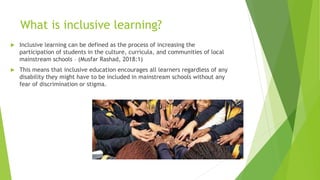
 This means that inclusive education encourages all learners regardless of any
disability they might have to be included in mainstream schools without any
fear of discrimination or stigma.
Why is inclusive education important?
 Students with disabilities have a higher achievement and are able to improve
their skills
 Better communication skills and improved social skills and more friendships.
In a mainstream school, they are able collaborate with other diverse learners
that could help them with their social and communication skills.
 Academic gains
 Findings about attitude in that they have higher self-concept.
Aims and objectives of inclusive
education
 Education for all
 Protection of rights
 Identification of skills
 Development of social consciousness
 To prepare for new challenges
 To improve quality education
Benefits of inclusive education for
students with special needs
 Families’ visions of a typical little for their children can come true.
 All parents want their children to be accepted by their peers, have friends
and lead “regular” lives. Inclusive settings can make this vision a reality for
many children with disabilities.
Benefits of inclusive education for
students with special needs
 Children learn important academic skills.
 In inclusive classrooms, children with and without disabilities are expected to
learn and read, write and do math. With higher expectations and good
instruction children with disabilities learn academic skills.
Benefits of inclusive education for
students with special needs
 Children develop a positive understanding of themselves and others.
 When children attend classes that reflect the similarities and differences of
people in the real world, they learn to appreciate diversity. Respect and
understanding grow when children of differing abilities and cultures play and
learn together.
POLICIES THAT OUTLINE INCLUSIVE
EDUCATION IN SOUTH AFRICA
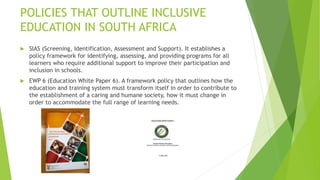
 SIAS (Screening, Identification, Assessment and Support). It establishes a
policy framework for identifying, assessing, and providing programs for all
learners who require additional support to improve their participation and
inclusion in schools.
 EWP 6 (Education White Paper 6). A framework policy that outlines how the
education and training system must transform itself in order to contribute to
the establishment of a caring and humane society, how it must change in
order to accommodate the full range of learning needs.
REFERENCES
 Rashad, M. 2018. Inclusive education. Available from Slideshare at
https://www.slideshare.net/musfarrashadkunnumma (Accessed 20 August 2022)
 Chaurasia, P. 2014. BARRIERS AND BENEFITS OF INCLUSIVE EDUCATION. Available
from Slideshare at https://www.slideshare.net/PriyankaChaurasia3 (Accessed 20
August 2022)
 Tamang, S. 2019. Inclusion education. Available from Slideshare at
https://www.slideshare.net/robingurung5 (Accessed 20 August 2022)
 Biswas, M. 2021. Inclusive education. Available from Slideshare at
https://www.slideshare.net/MousumiBiswas27 (Accessed 20 August 2022)
 Suraiya, A. 2018. Inclusive education. Available from Slideshare at
https://www.slideshare.net/anam1994 (Accessed 20 August 2022)

INCLUSIVE LEARNING presentation (1).pptx

  • 1.
    INCLUSIVE LEARNING Learning forall Refiloe Matshiya
  • 2.
    What is inclusivelearning?  Inclusive learning can be defined as the process of increasing the participation of students in the culture, curricula, and communities of local mainstream schools – (Musfar Rashad, 2018:1)  This means that inclusive education encourages all learners regardless of any disability they might have to be included in mainstream schools without any fear of discrimination or stigma.
  • 4.
    Why is inclusiveeducation important?  Students with disabilities have a higher achievement and are able to improve their skills  Better communication skills and improved social skills and more friendships. In a mainstream school, they are able collaborate with other diverse learners that could help them with their social and communication skills.  Academic gains  Findings about attitude in that they have higher self-concept.
  • 5.
    Aims and objectivesof inclusive education  Education for all  Protection of rights  Identification of skills  Development of social consciousness  To prepare for new challenges  To improve quality education
  • 6.
    Benefits of inclusiveeducation for students with special needs  Families’ visions of a typical little for their children can come true.  All parents want their children to be accepted by their peers, have friends and lead “regular” lives. Inclusive settings can make this vision a reality for many children with disabilities.
  • 7.
    Benefits of inclusiveeducation for students with special needs  Children learn important academic skills.  In inclusive classrooms, children with and without disabilities are expected to learn and read, write and do math. With higher expectations and good instruction children with disabilities learn academic skills.
  • 8.
    Benefits of inclusiveeducation for students with special needs  Children develop a positive understanding of themselves and others.  When children attend classes that reflect the similarities and differences of people in the real world, they learn to appreciate diversity. Respect and understanding grow when children of differing abilities and cultures play and learn together.
  • 9.
    POLICIES THAT OUTLINEINCLUSIVE EDUCATION IN SOUTH AFRICA  SIAS (Screening, Identification, Assessment and Support). It establishes a policy framework for identifying, assessing, and providing programs for all learners who require additional support to improve their participation and inclusion in schools.  EWP 6 (Education White Paper 6). A framework policy that outlines how the education and training system must transform itself in order to contribute to the establishment of a caring and humane society, how it must change in order to accommodate the full range of learning needs.
  • 10.
    REFERENCES  Rashad, M.2018. Inclusive education. Available from Slideshare at https://www.slideshare.net/musfarrashadkunnumma (Accessed 20 August 2022)  Chaurasia, P. 2014. BARRIERS AND BENEFITS OF INCLUSIVE EDUCATION. Available from Slideshare at https://www.slideshare.net/PriyankaChaurasia3 (Accessed 20 August 2022)  Tamang, S. 2019. Inclusion education. Available from Slideshare at https://www.slideshare.net/robingurung5 (Accessed 20 August 2022)  Biswas, M. 2021. Inclusive education. Available from Slideshare at https://www.slideshare.net/MousumiBiswas27 (Accessed 20 August 2022)  Suraiya, A. 2018. Inclusive education. Available from Slideshare at https://www.slideshare.net/anam1994 (Accessed 20 August 2022)