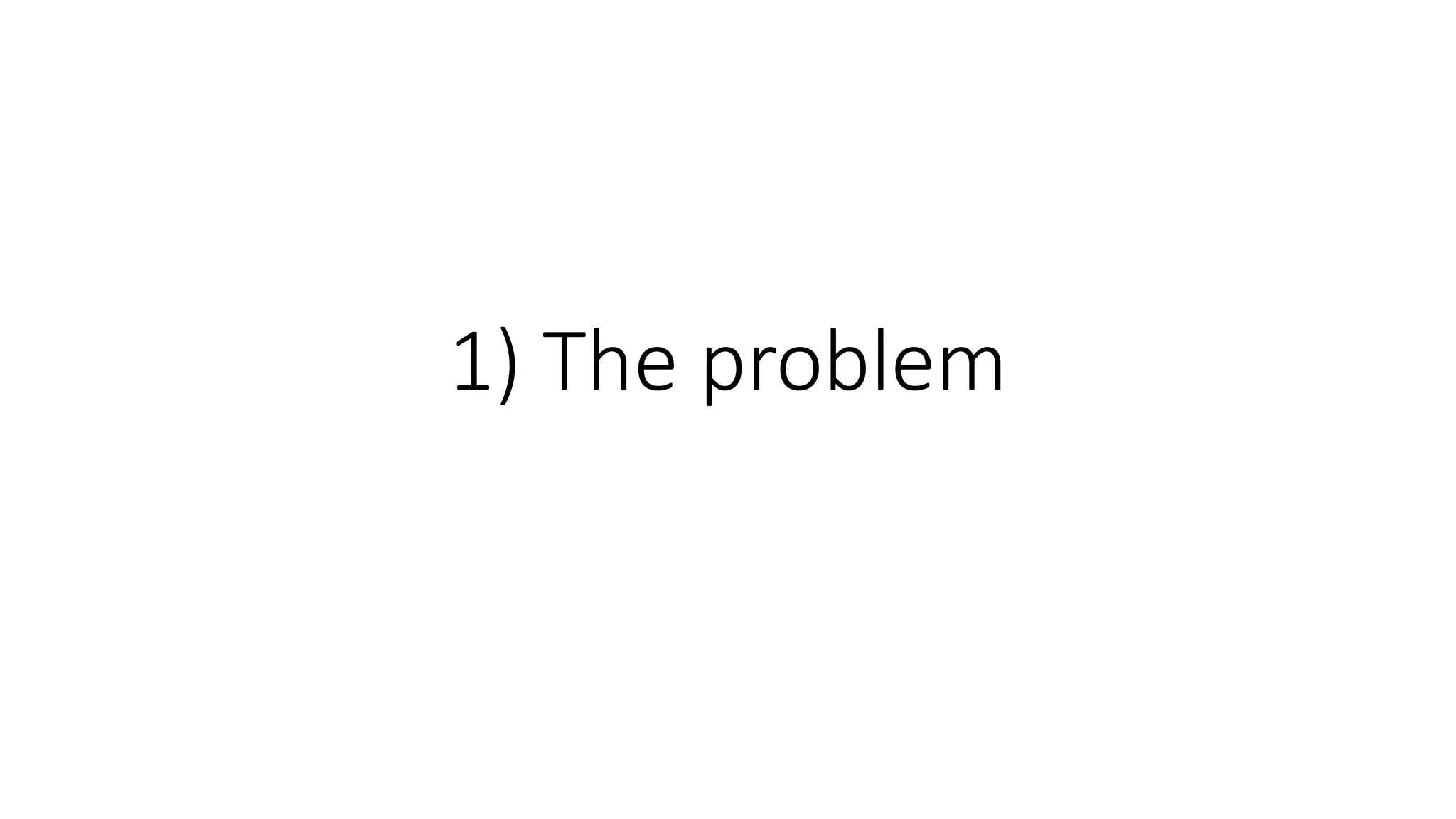
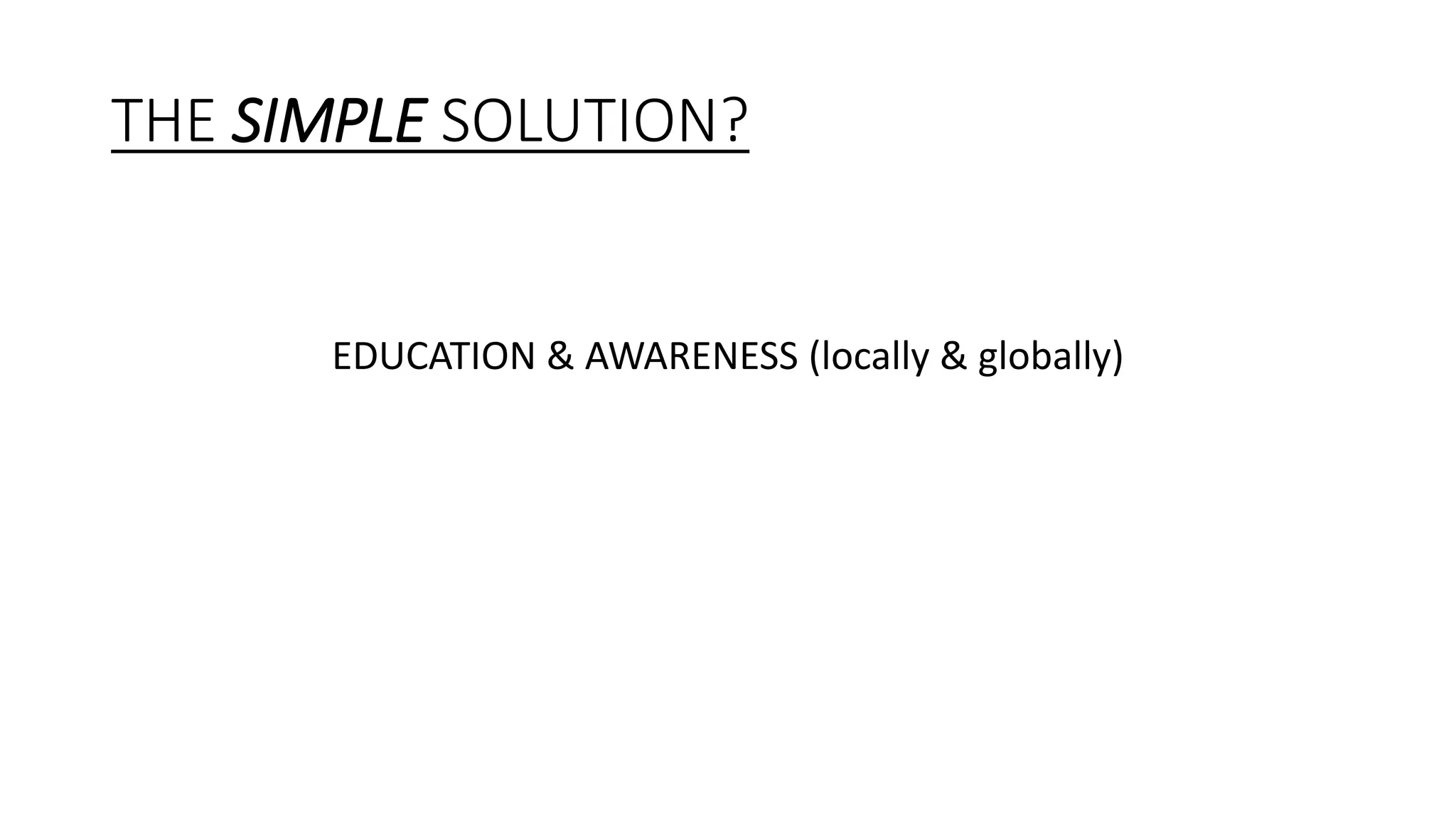
Education in the Heart of Borneo
A small solution to a big problem
Abbie Wakelin: Masters of Wildlife Management,
Department of Zoology, 2016
1) The problem
THE PROBLEM?
Source: Abbie Wakelin Source: Abbie Wakelin
THE PROBLEM?
Hansen et al., 2013Fitzherbert et al., 2008
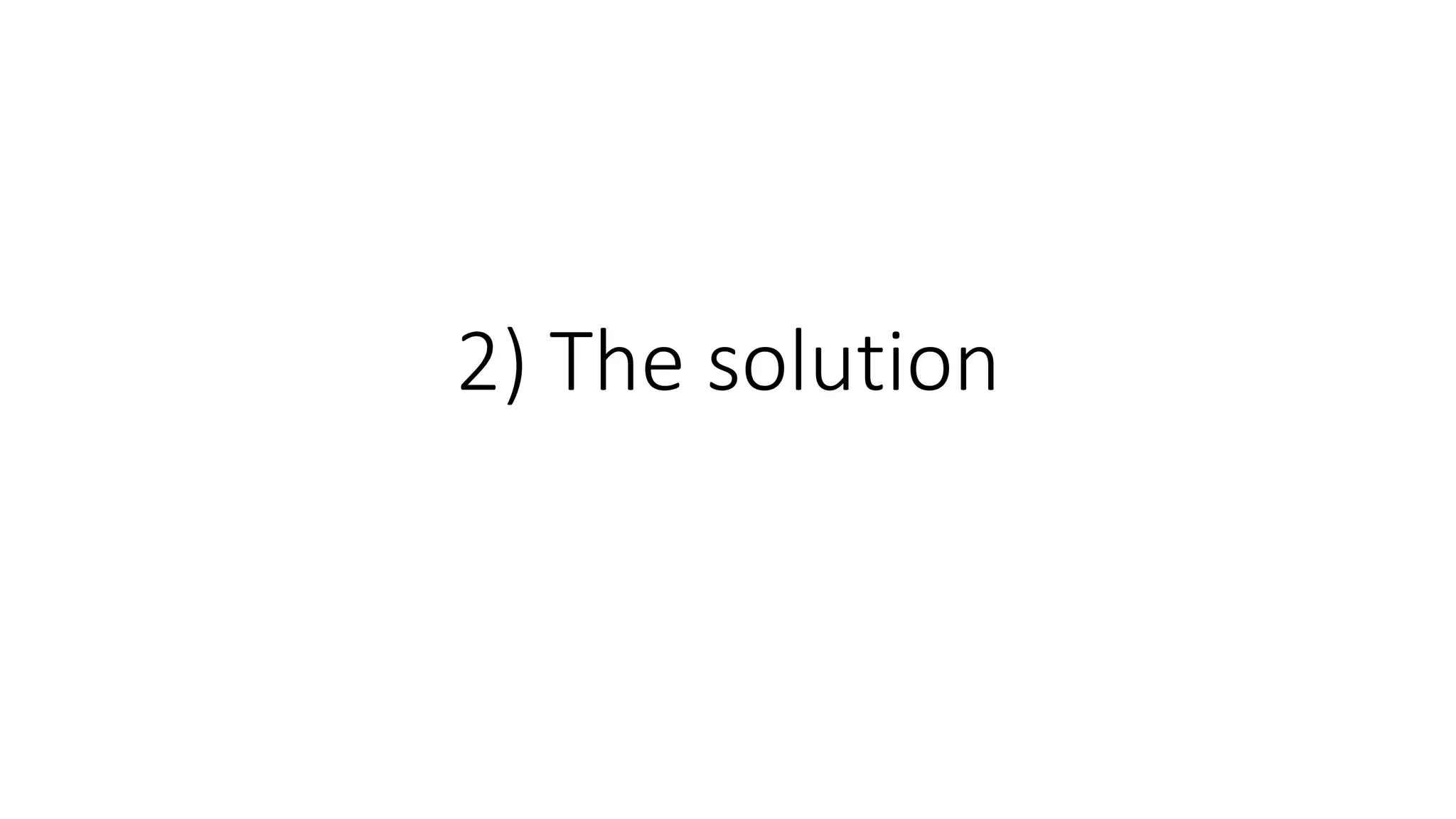
10-20% of Sabah land area is cultivated for Palm oil.
Forest cover loss between 2000 & 2014
THE PROBLEM?
Gaharu, Agarwood or Aloe wood
Source: gaharujinkou.wordpress.com
Peat Fires
Source: Mashable Australia
Illegal poaching/hunting
Source: Sabah Wildlife Department
2) The solution
THE SIMPLE SOLUTION?
EDUCATION & AWARENESS (locally & globally)
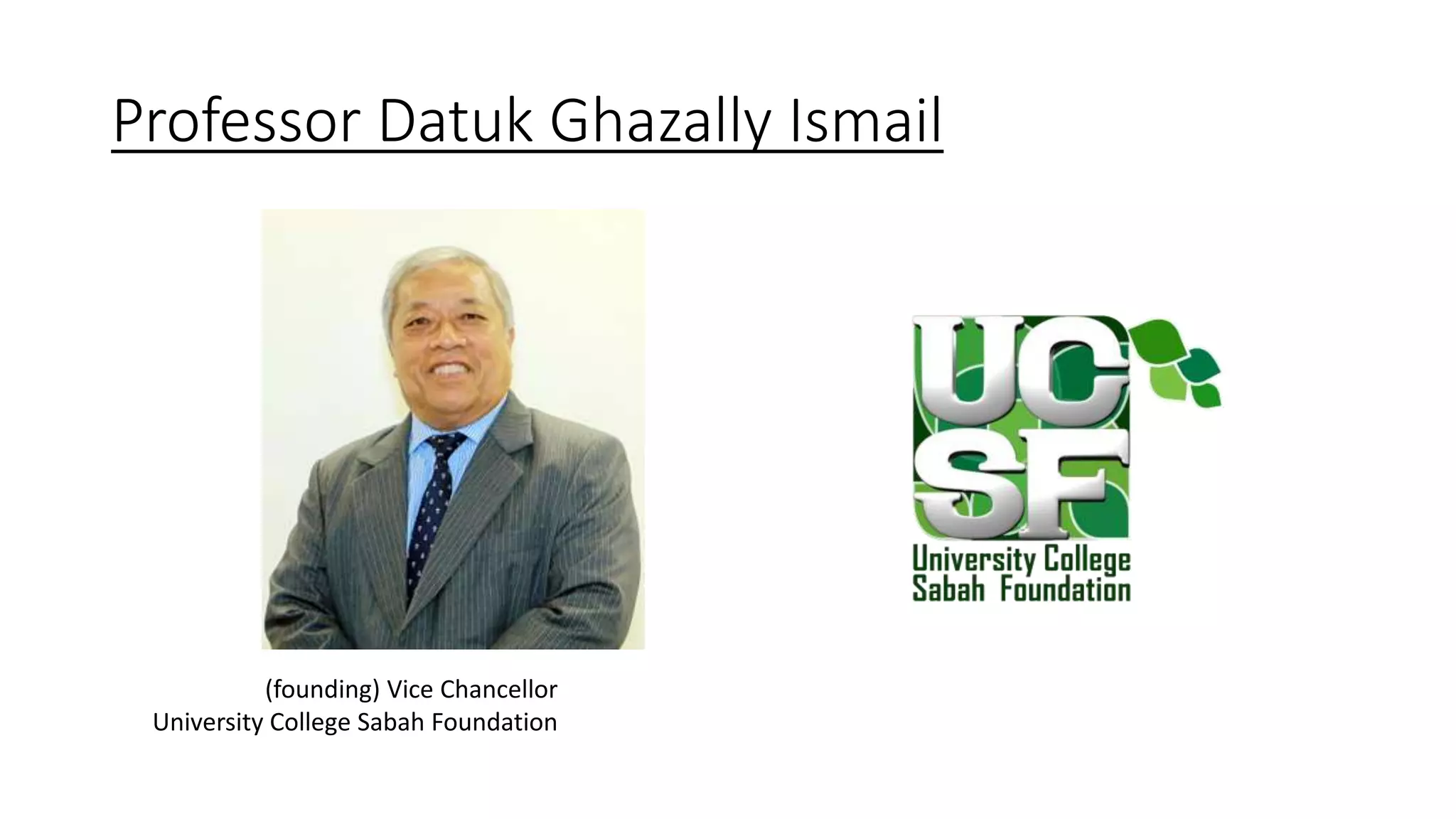
Professor Datuk Ghazally Ismail
(founding) Vice Chancellor
University College Sabah Foundation
Interactive E-book
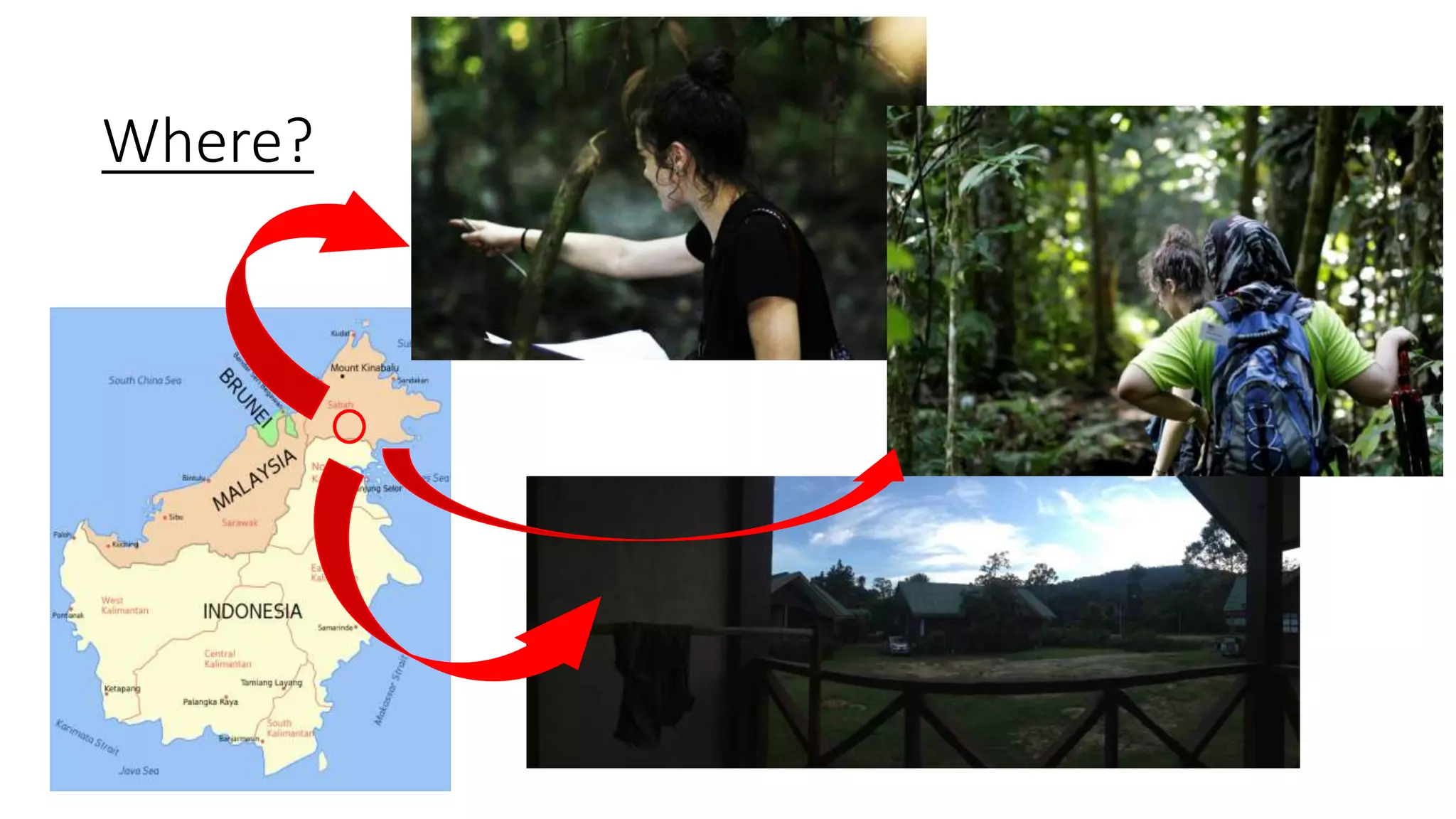
Where?
Where? Maliau Basin Conservation Area
• World Heritage Site?
• Danum Valley & Imbak Canyon
• Increasing popularity in ecotourism
• 2002: 242 visitors
• 2013: 2153 visitors
• Species:
• Flora: 1863 species
• Mammals: 92 species
• Birds: 278 species
3) To do list:
Not everything gets done
to plan.
To do list:
• Travel to Kota Kinabalu
• Collect gear
• Travel to Maliau Basin
• Training (photography, ID)
• Research (resources there)
• Travel to Kuala Lumpur
• Training (Digital enhancement & graphic design)
• Return to NZ
• Make E-book
To do list:
• Travel to Kota Kinabalu
• Collect gear
• Travel to Maliau Basin
• Training (photography, ID)
• Research (resources there)
• Travel to Kuala Lumpur
• Training (Digital enhancement & graphic design)
• Return to NZ
• Make E-book … Not as intended
4) Interactive E-books?
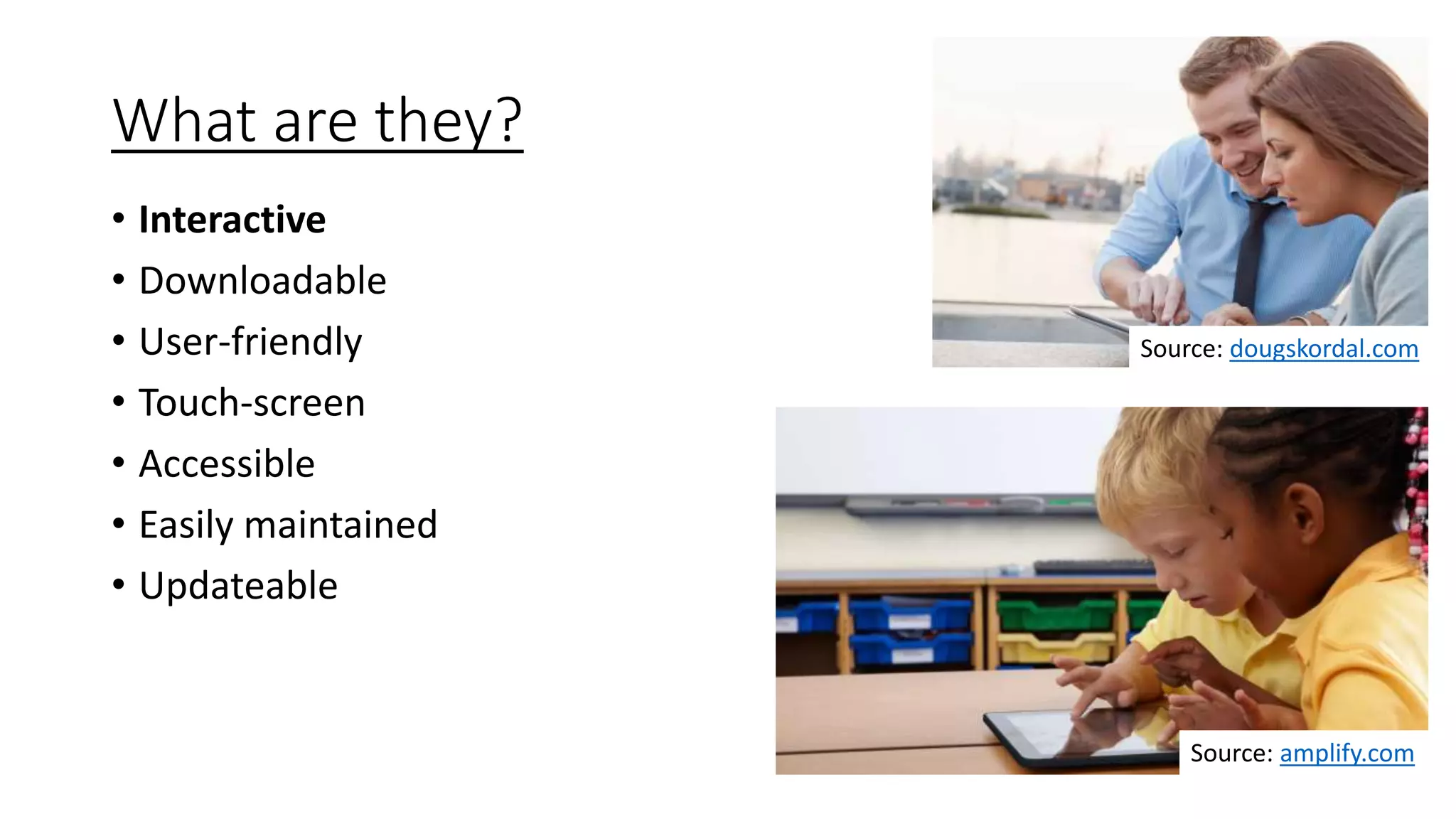
What are they?
• Interactive
• Downloadable
• User-friendly
• Touch-screen
• Accessible
• Easily maintained
• Updateable
Source: dougskordal.com
Source: amplify.com
Designs & functionality
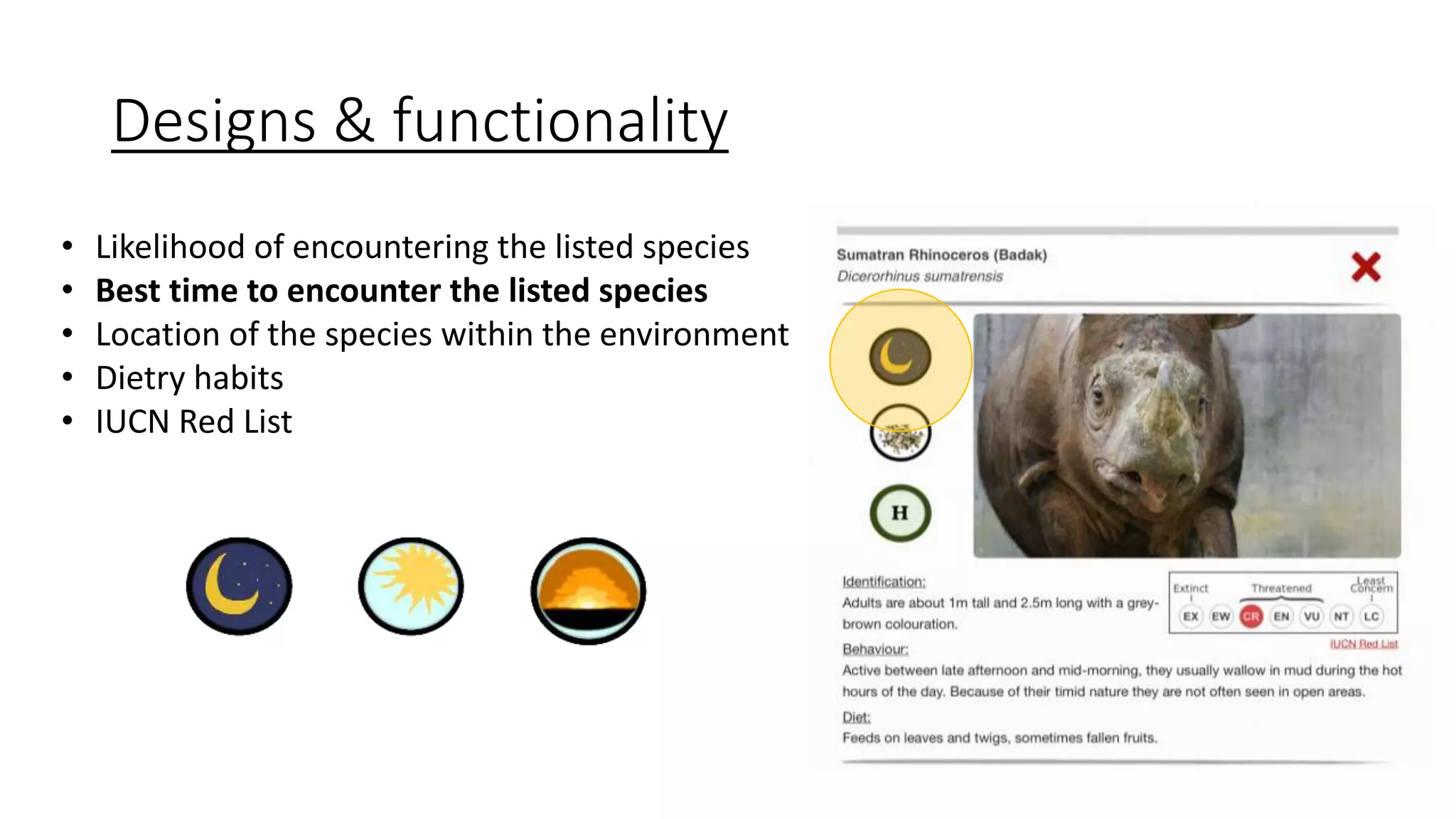
• Likelihood of encountering the listed species
• Best time to encounter the listed species
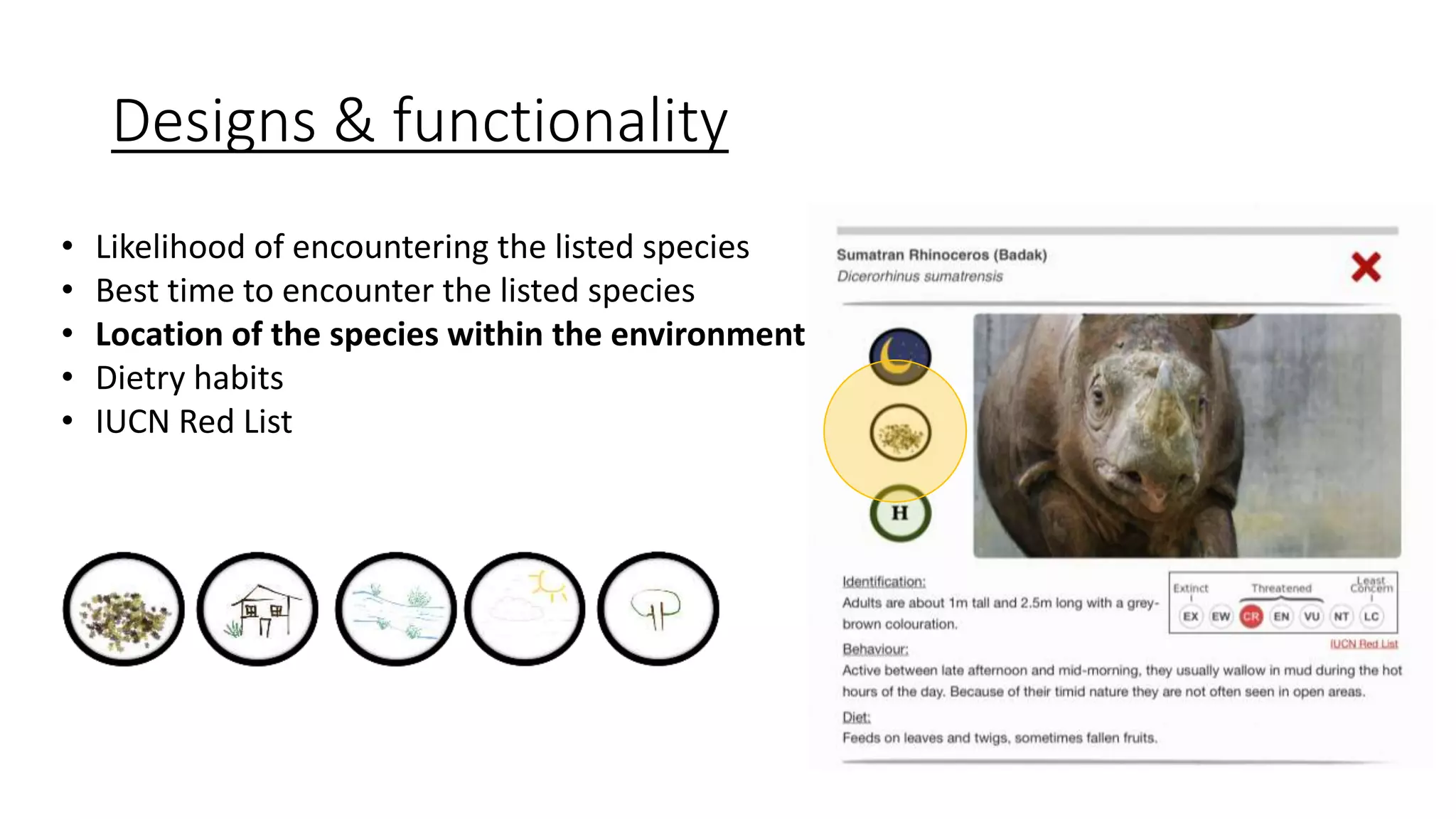
• Location of the species within the environment
• Dietry habits
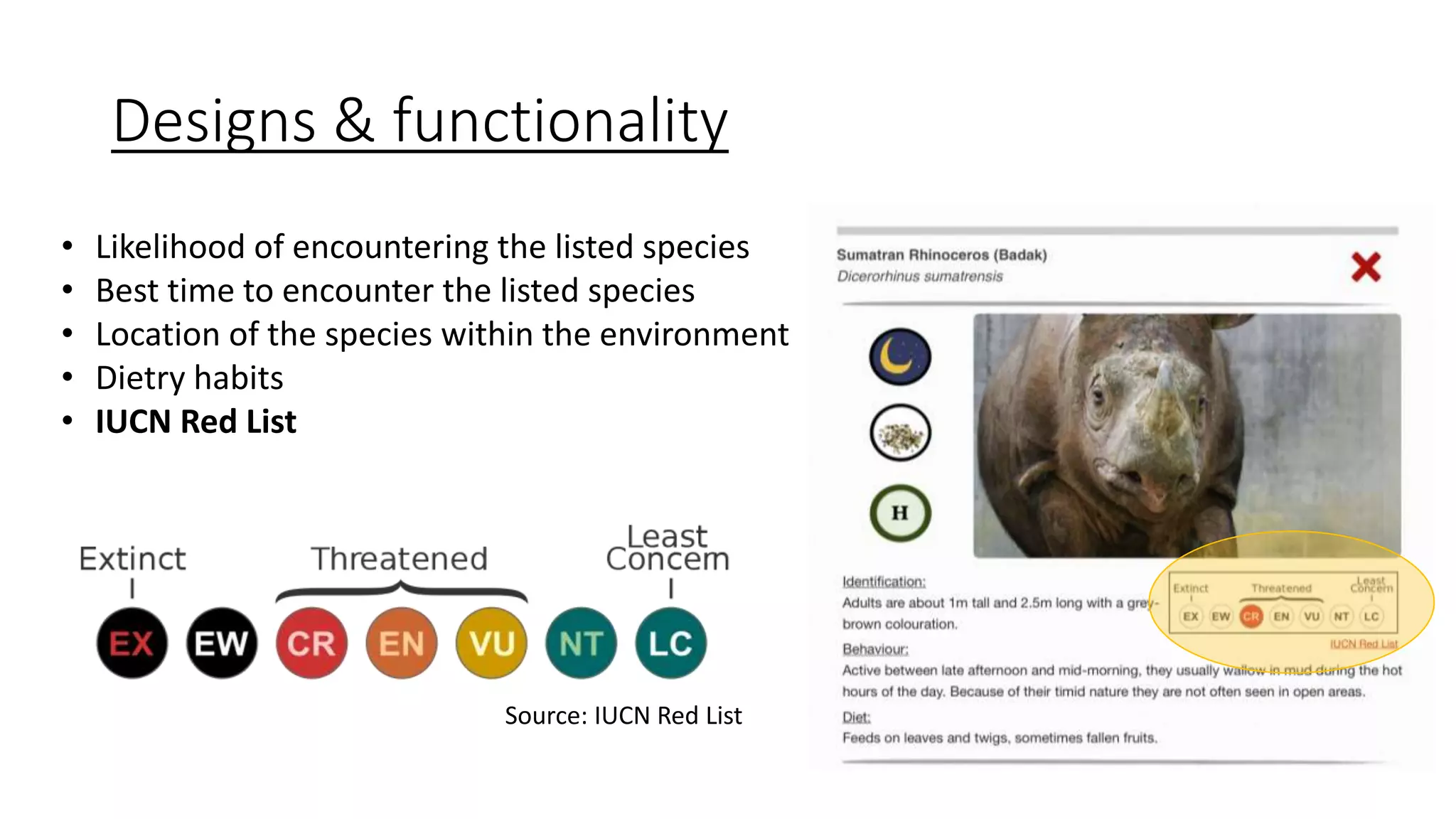
• IUCN Red List
Designs & functionality
• Likelihood of encountering the listed species
• Best time to encounter the listed species
• Location of the species within the environment
• Dietry habits
• IUCN Red List
Designs & functionality
• Likelihood of encountering the listed species
• Best time to encounter the listed species
• Location of the species within the environment
• Dietry habits
• IUCN Red List
Designs & functionality
• Likelihood of encountering the listed species
• Best time to encounter the listed species
• Location of the species within the environment
• Dietry habits
• IUCN Red List
Designs & functionality
• Likelihood of encountering the listed species
• Best time to encounter the listed species
• Location of the species within the environment
• Dietry habits
• IUCN Red List
Source: IUCN Red List
5) Will it meet
requirements?
Host needs:
• Educational
• User-friendly
• Cost-efficient
• Environmentally friendly
User needs:
• Educational (subtle)
• Interesting & enjoyable
• Easy to use
• Cheap
Survey responses
0
5
10
15
20
25
30
35
40
45
50
Pamphlets Maps Education
Centre
Hardcopy
Book
Electronic
book
Interactive
app
Educational
videos
other
Numberofrespondents
What education tools do you find most appropriate for learning about the
environment?
10
46
30
Survey responses
When visiting national parks and other protected areas for tourism,
what topics are important to you?
1. Self-guided trail maps (locations & sights described)
2. Ecosystem importance (why the area is important to protect)
3. Threats to the animals/plants/birds
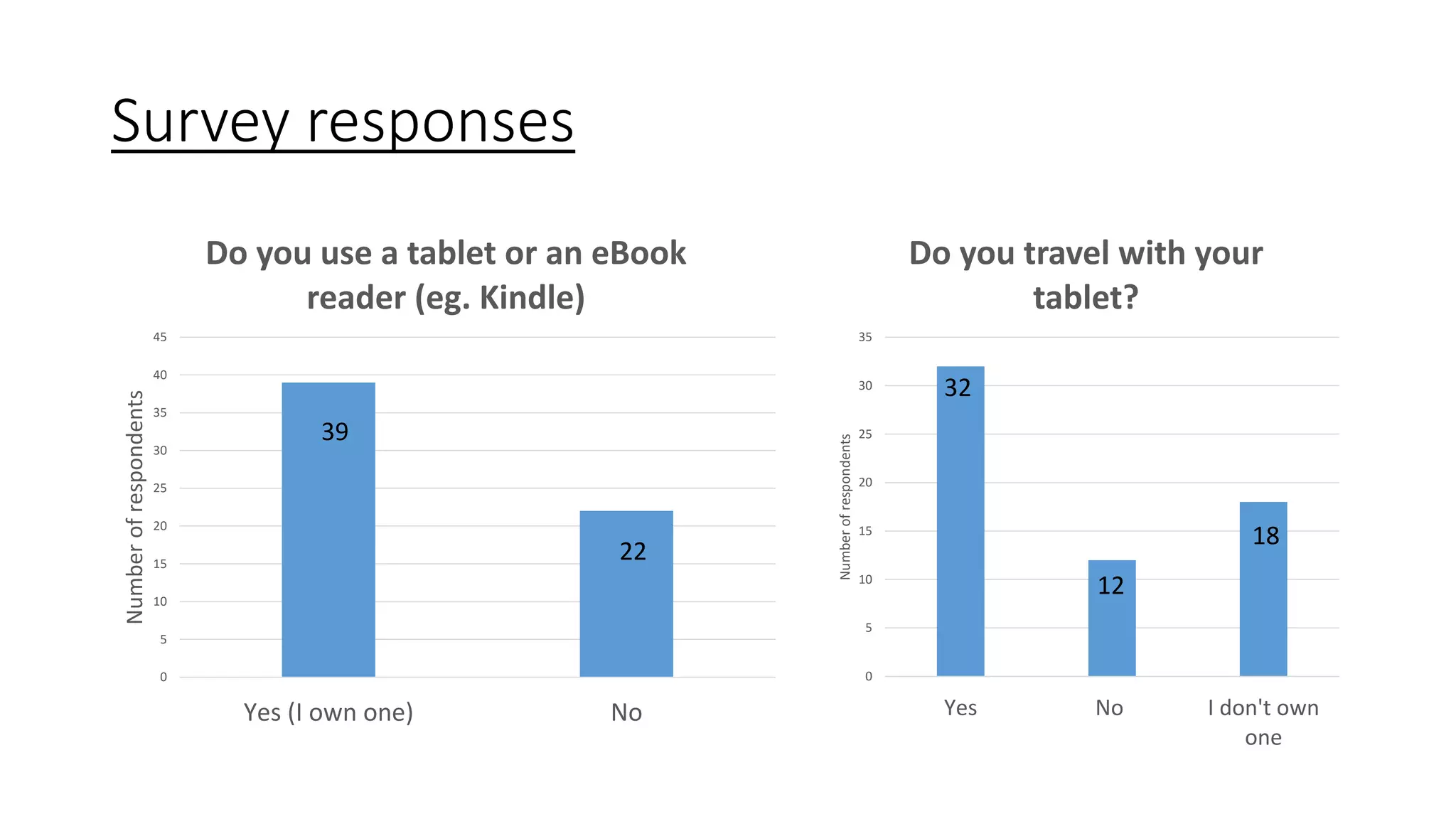
Survey responses
0
5
10
15
20
25
30
35
40
45
Yes (I own one) No
Numberofrespondents
Do you use a tablet or an eBook
reader (eg. Kindle)
0
5
10
15
20
25
30
35
Yes No I don't own
one
Numberofrespondents
Do you travel with your
tablet?
39
22
32
12
18
E-books might have potential in tomorrows
ecotourism & education industries
Acknowledgements
• Maliau Basin
• Jadda Suhaimi
• Masliadi
• Andreas Gøricke
• All rangers and staff at Maliau Basin
• UCSF
• Prof. Ghazally Ismail
• Asnerah
• All staff who helped me out
• Otago Uni support
• Phil Bishop (point of contact while
overseas)
• Phil Seddon
• Leida Dos Santos
• Lloyd Spencer-Davis
• Robert Brown
• Wiebke Finkler
• Ana Terry & Don Hunter
• Funding
• Prime Minister’s Scholarships for
Asia (PMSA)

In the Heart of Borneo

  • 1.
    Education in theHeart of Borneo A small solution to a big problem Abbie Wakelin: Masters of Wildlife Management, Department of Zoology, 2016
  • 2.
  • 3.
    THE PROBLEM? Source: AbbieWakelin Source: Abbie Wakelin
  • 4.
    THE PROBLEM? Hansen etal., 2013Fitzherbert et al., 2008 10-20% of Sabah land area is cultivated for Palm oil. Forest cover loss between 2000 & 2014
  • 6.
    THE PROBLEM? Gaharu, Agarwoodor Aloe wood Source: gaharujinkou.wordpress.com Peat Fires Source: Mashable Australia Illegal poaching/hunting Source: Sabah Wildlife Department
  • 7.
  • 8.
    THE SIMPLE SOLUTION? EDUCATION& AWARENESS (locally & globally)
  • 9.
    Professor Datuk GhazallyIsmail (founding) Vice Chancellor University College Sabah Foundation
  • 10.
  • 11.
  • 12.
    Where? Maliau BasinConservation Area • World Heritage Site? • Danum Valley & Imbak Canyon • Increasing popularity in ecotourism • 2002: 242 visitors • 2013: 2153 visitors • Species: • Flora: 1863 species • Mammals: 92 species • Birds: 278 species
  • 13.
    3) To dolist: Not everything gets done to plan.
  • 14.
    To do list: •Travel to Kota Kinabalu • Collect gear • Travel to Maliau Basin • Training (photography, ID) • Research (resources there) • Travel to Kuala Lumpur • Training (Digital enhancement & graphic design) • Return to NZ • Make E-book
  • 15.
    To do list: •Travel to Kota Kinabalu • Collect gear • Travel to Maliau Basin • Training (photography, ID) • Research (resources there) • Travel to Kuala Lumpur • Training (Digital enhancement & graphic design) • Return to NZ • Make E-book … Not as intended
  • 16.
  • 17.
    What are they? •Interactive • Downloadable • User-friendly • Touch-screen • Accessible • Easily maintained • Updateable Source: dougskordal.com Source: amplify.com
  • 18.
    Designs & functionality •Likelihood of encountering the listed species • Best time to encounter the listed species • Location of the species within the environment • Dietry habits • IUCN Red List
  • 19.
    Designs & functionality •Likelihood of encountering the listed species • Best time to encounter the listed species • Location of the species within the environment • Dietry habits • IUCN Red List
  • 20.
    Designs & functionality •Likelihood of encountering the listed species • Best time to encounter the listed species • Location of the species within the environment • Dietry habits • IUCN Red List
  • 21.
    Designs & functionality •Likelihood of encountering the listed species • Best time to encounter the listed species • Location of the species within the environment • Dietry habits • IUCN Red List
  • 22.
    Designs & functionality •Likelihood of encountering the listed species • Best time to encounter the listed species • Location of the species within the environment • Dietry habits • IUCN Red List Source: IUCN Red List
  • 23.
    5) Will itmeet requirements?
  • 24.
    Host needs: • Educational •User-friendly • Cost-efficient • Environmentally friendly User needs: • Educational (subtle) • Interesting & enjoyable • Easy to use • Cheap
  • 25.
    Survey responses 0 5 10 15 20 25 30 35 40 45 50 Pamphlets MapsEducation Centre Hardcopy Book Electronic book Interactive app Educational videos other Numberofrespondents What education tools do you find most appropriate for learning about the environment? 10 46 30
  • 26.
    Survey responses When visitingnational parks and other protected areas for tourism, what topics are important to you? 1. Self-guided trail maps (locations & sights described) 2. Ecosystem importance (why the area is important to protect) 3. Threats to the animals/plants/birds
  • 27.
    Survey responses 0 5 10 15 20 25 30 35 40 45 Yes (Iown one) No Numberofrespondents Do you use a tablet or an eBook reader (eg. Kindle) 0 5 10 15 20 25 30 35 Yes No I don't own one Numberofrespondents Do you travel with your tablet? 39 22 32 12 18
  • 28.
    E-books might havepotential in tomorrows ecotourism & education industries
  • 29.
    Acknowledgements • Maliau Basin •Jadda Suhaimi • Masliadi • Andreas Gøricke • All rangers and staff at Maliau Basin • UCSF • Prof. Ghazally Ismail • Asnerah • All staff who helped me out • Otago Uni support • Phil Bishop (point of contact while overseas) • Phil Seddon • Leida Dos Santos • Lloyd Spencer-Davis • Robert Brown • Wiebke Finkler • Ana Terry & Don Hunter • Funding • Prime Minister’s Scholarships for Asia (PMSA)