• Denice Colson, PhD, LPC, MAC. CPCS, CCS
• Trauma Education & Consultation
Services, Inc.
“
”
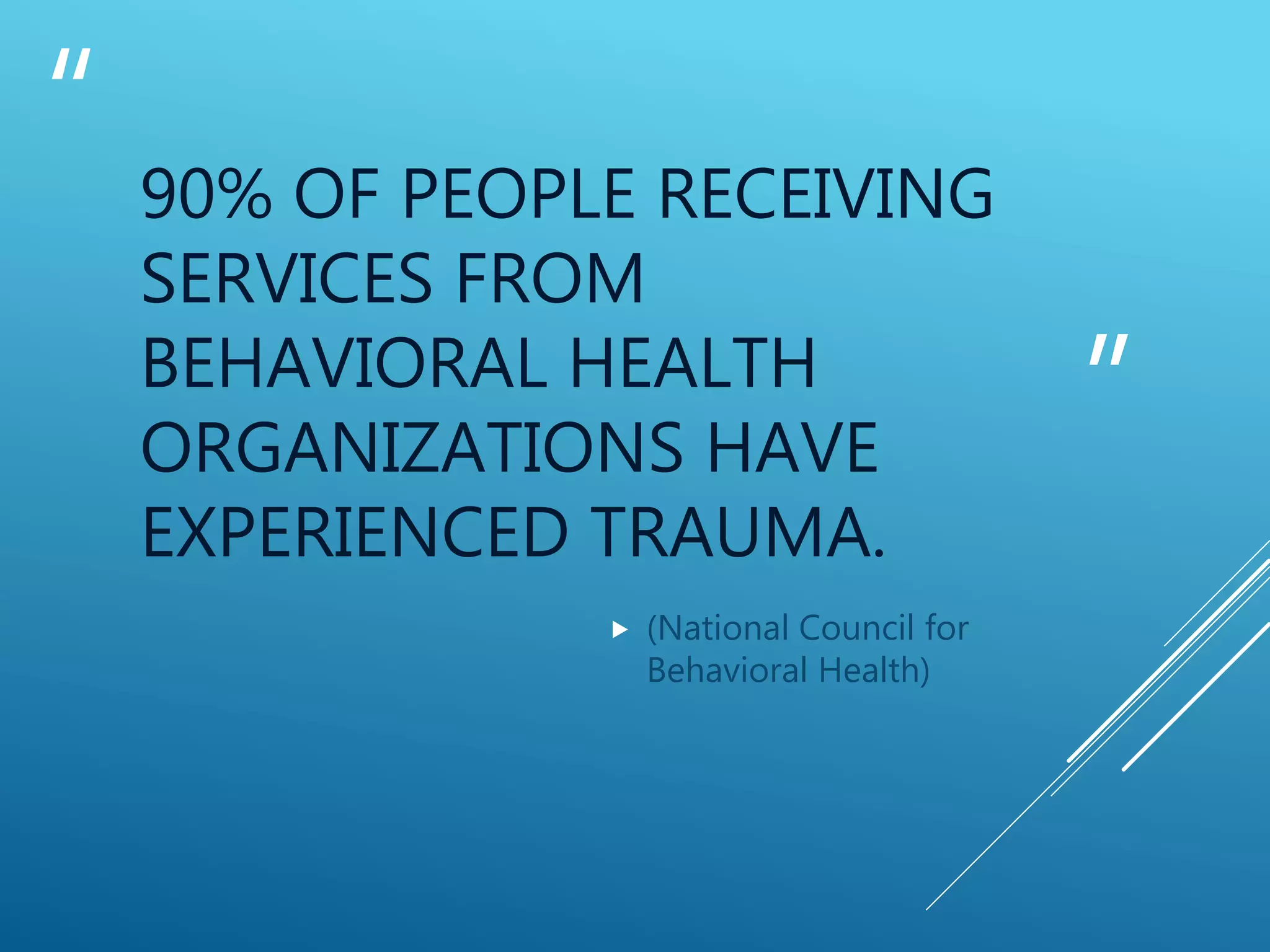
90% OF PEOPLE RECEIVING
SERVICES FROM
BEHAVIORAL HEALTH
ORGANIZATIONS HAVE
EXPERIENCED TRAUMA.
 (National Council for
Behavioral Health)
“
”
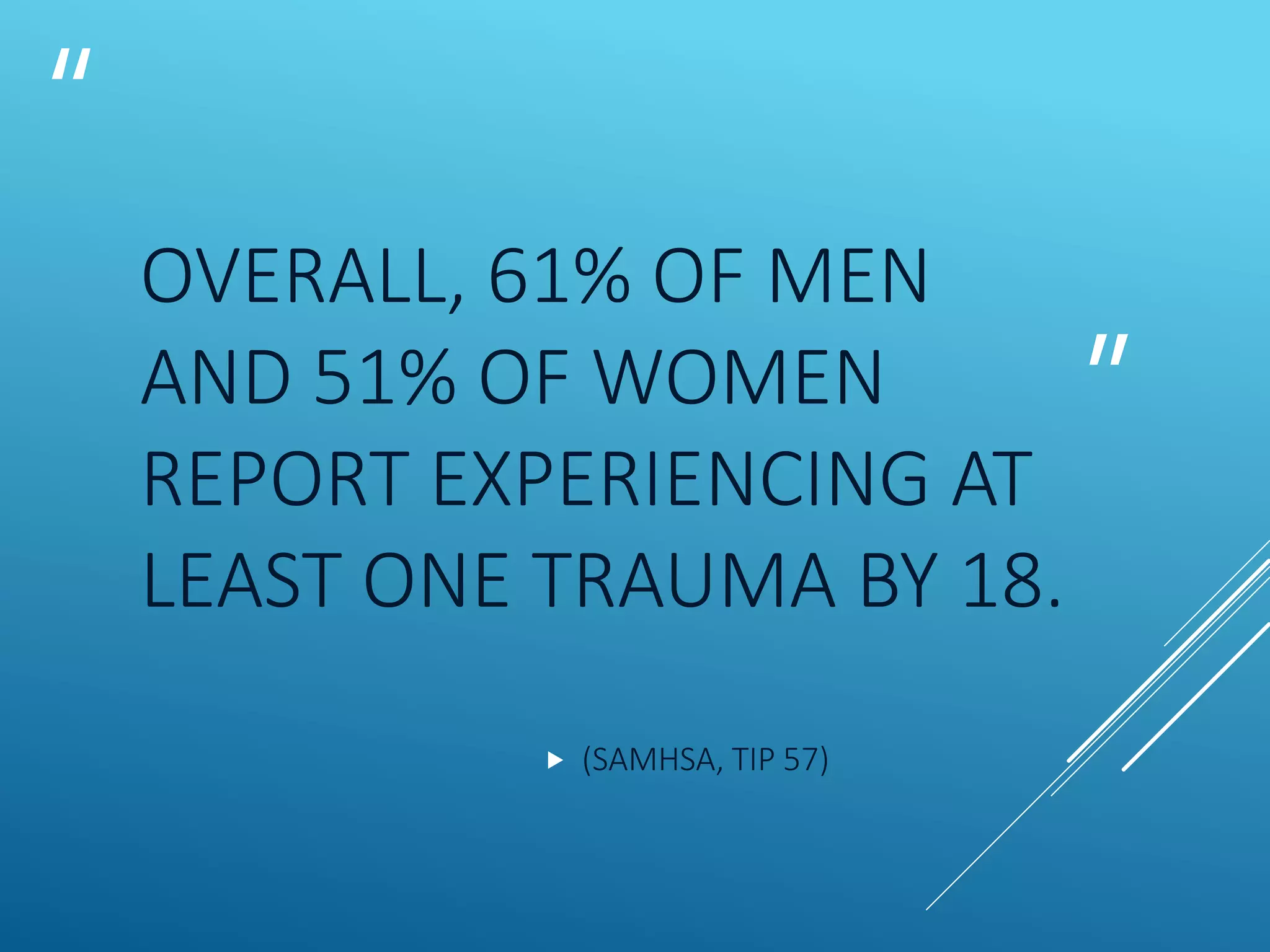
OVERALL, 61% OF MEN
AND 51% OF WOMEN
REPORT EXPERIENCING AT
LEAST ONE TRAUMA BY 18.
 (SAMHSA, TIP 57)
“
”
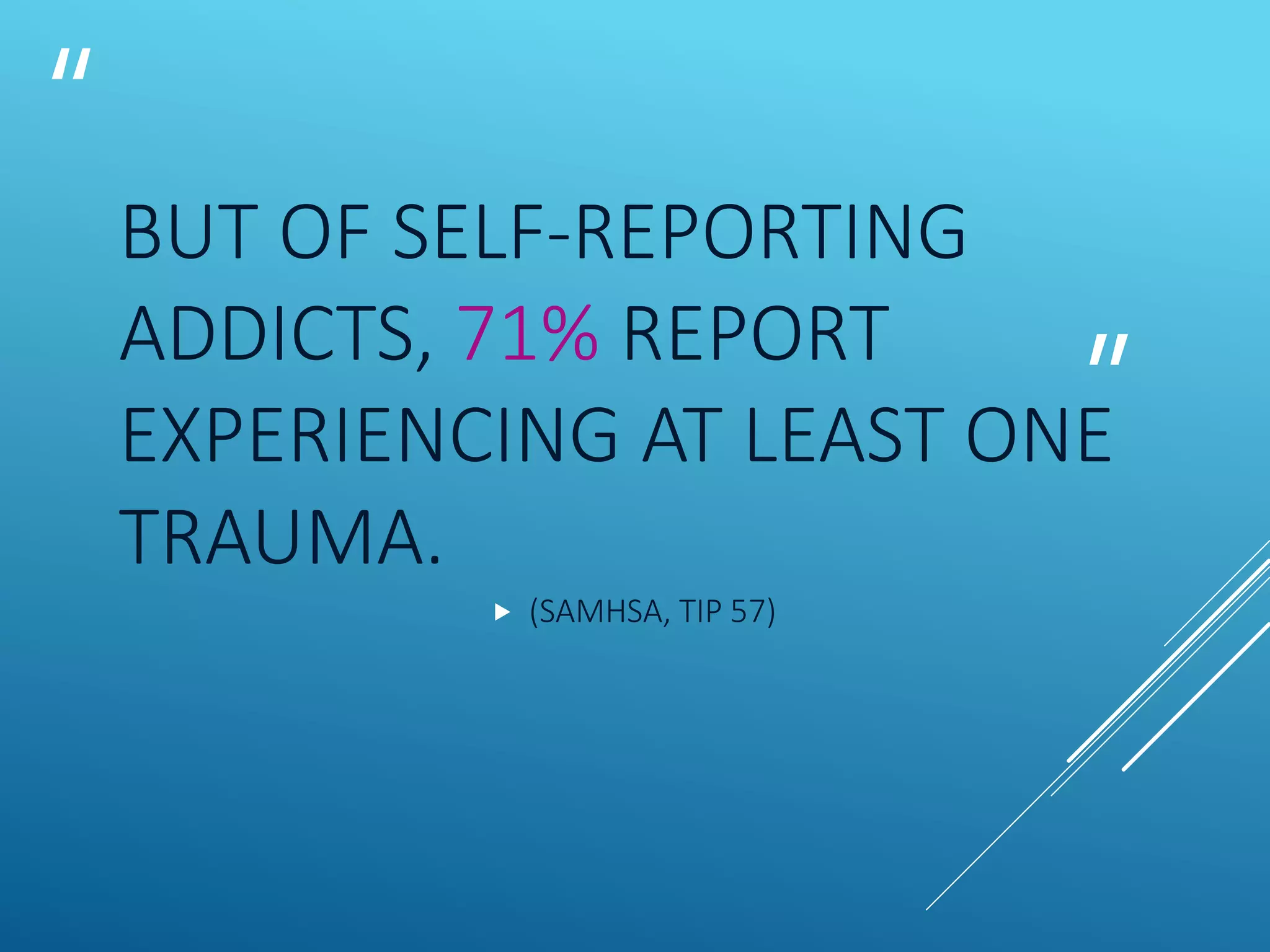
BUT OF SELF-REPORTING
ADDICTS, 71% REPORT
EXPERIENCING AT LEAST ONE
TRAUMA.
 (SAMHSA, TIP 57)
MY JOURNEY
DENICE COLSON, PHD, LPC, MAC, CPCS, CCS
 Worked in the mental health field since 1982.
 Experience includes:
 Residential treatment for adolescents
 Inpatient treatment for children and adults
 Developed and managed a co-occurring disorders inpatient program that
was specifically Christian in early 1990s in Texas.
 Outpatient treatment for adults and adolescents.
 Specializing in trauma recovery since 1992-3
 Currently Executive Director at Eagle’s Landing Christian
Counseling Center with main office in McDonough and
satellite office in Conyers.
MY PURPOSE
 I am a Christian, a Christ-Follower, a Born-Again believer first,
and a counselor second.
 I see my life purpose as ministry using the methodology of
counseling.
 I am an “Integrationist” from the beginning of my career.
 I believe in the principle from Experiencing God (Henry
Blackaby), which is:
 Look around, see where God is working, and go and join
Him there!
 I believe that trauma, especially childhood trauma, is where
God is working in the field of counseling NOW.
Denice Colson, PhD, LPC, MAC, CPCS* Copyright 2014
7
TRAUMA=PAIN
“Mental pain is less dramatic than physical
pain, but it is more common and also more
hard to bear. The frequent attempt to
conceal mental pain increases the burden: it
is easier to say “My tooth is aching” than to
say “My heart is broken.”
― C.S. Lewis, The Problem of Pain
R. Denice Colson PhD, LPC, MAC, CPCS* Copyright 2014
8
THE OPPORTUNITY FOR CHRISTIAN
COUNSELORS…
“We can ignore even pleasure. But pain insists
upon being attended to. God whispers to us in our
pleasures, speaks in our conscience, but shouts in
our pains: it is his megaphone to rouse a deaf
world.”
(C.S. Lewis, The Problem of Pain)
2 SHARE EACH OTHER’S
BURDENS, AND IN THIS
WAY OBEY THE LAW OF
CHRIST. (GALATIANS 6:2)
We have the opportunity to
meet people in their pain,
develop a comforting and
healing relationship with them,
and, by being good
ambassadors, introduce them
to the ONE who can provide
ultimate and eternal healing
for their souls.
“Comfort, comfort my
people,”
says your God.
2 “Speak tenderly to
Jerusalem.
Tell her that her sad days
are gone
and her sins are
pardoned. (Isaiah 40: 1-2)
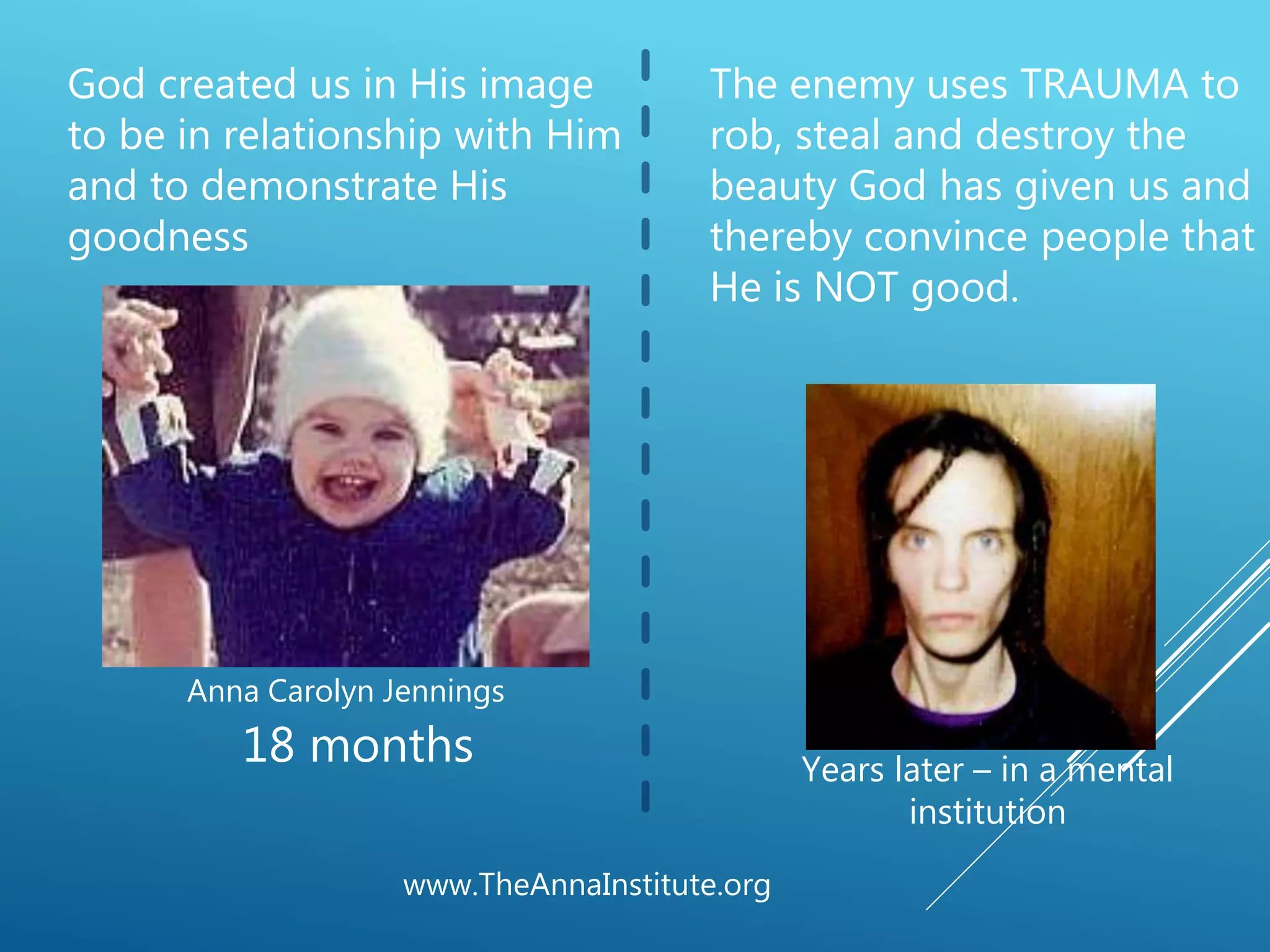
www.TheAnnaInstitute.org
18 months
Anna Carolyn Jennings
God created us in His image
to be in relationship with Him
and to demonstrate His
goodness
Years later – in a mental
institution
The enemy uses TRAUMA to
rob, steal and destroy the
beauty God has given us and
thereby convince people that
He is NOT good.
OBJECTIVES FOR
TODAY
Increase your Trauma-Informed Quotient by:
 Introducing the ACE Study
 Sharing options for assessment
 Introduce a Christian-integrated trauma recovery method, The
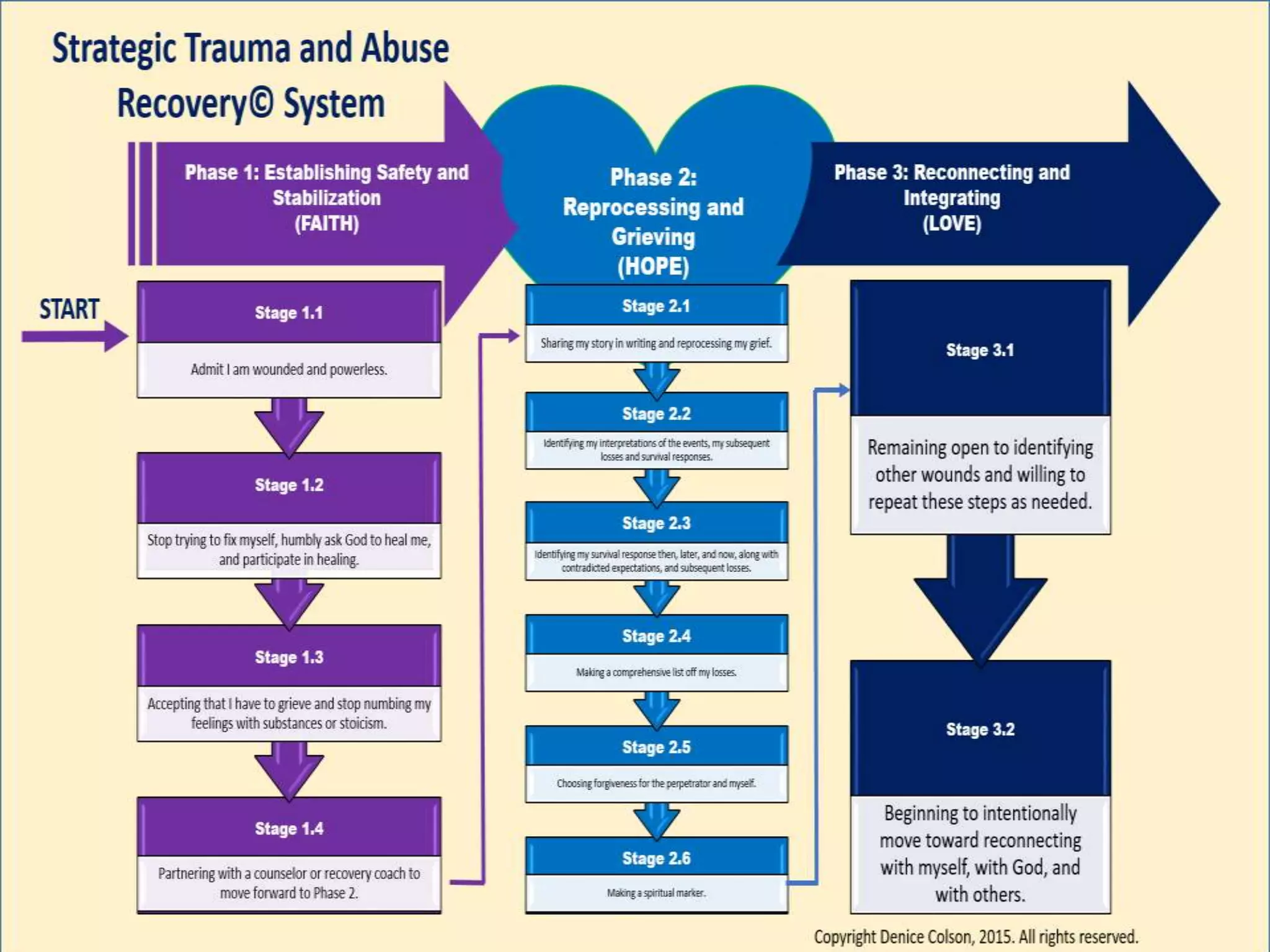
Strategic Trauma and Abuse Recovery© System
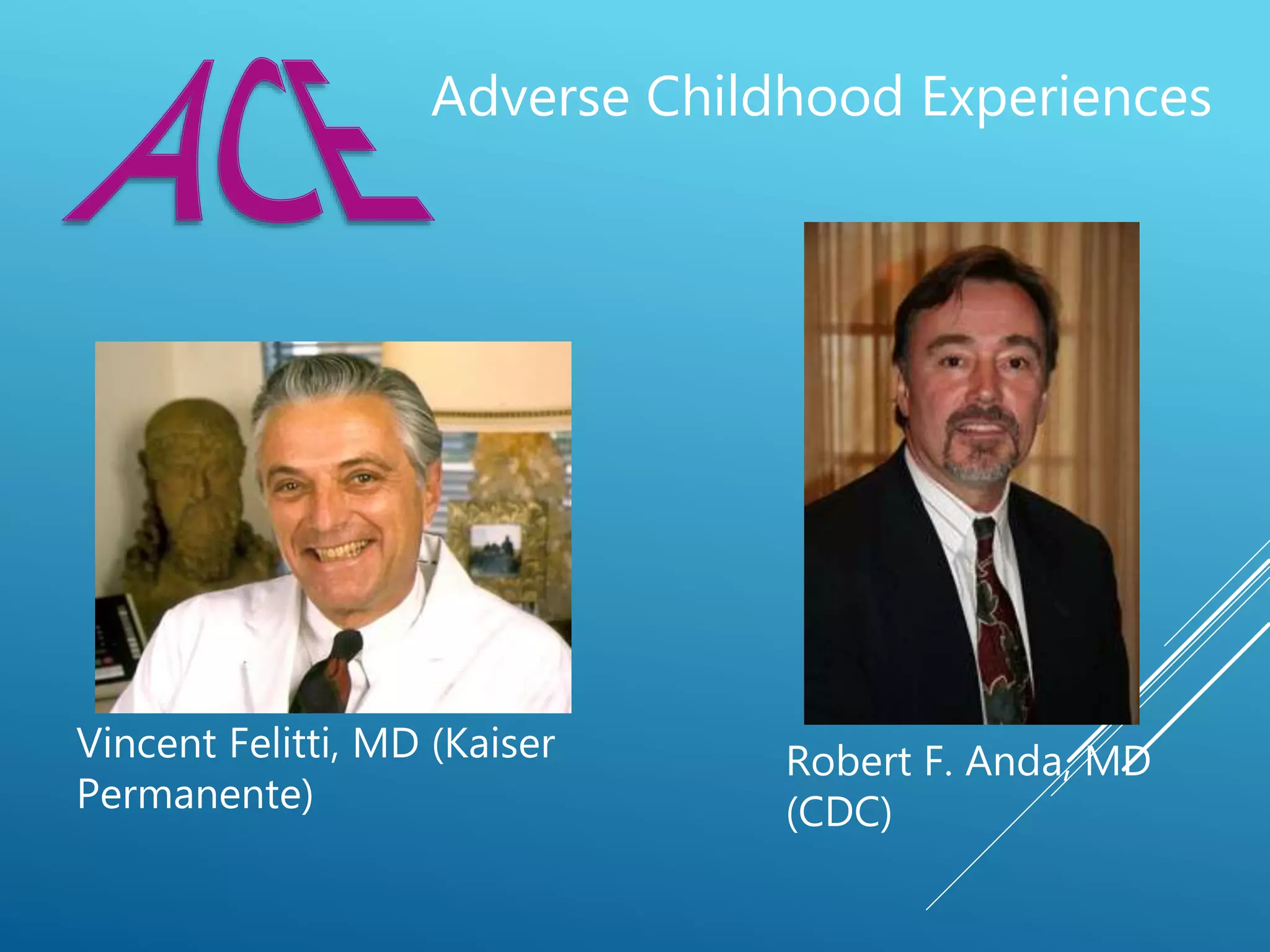
Vincent Felitti, MD (Kaiser
Permanente)
Robert F. Anda, MD
(CDC)
Adverse Childhood Experiences
Largest scientific research study of it’s kind
Analyzes the relationship between multiple
categories of childhood trauma (ACEs), and
health and behavioral outcomes later in life.
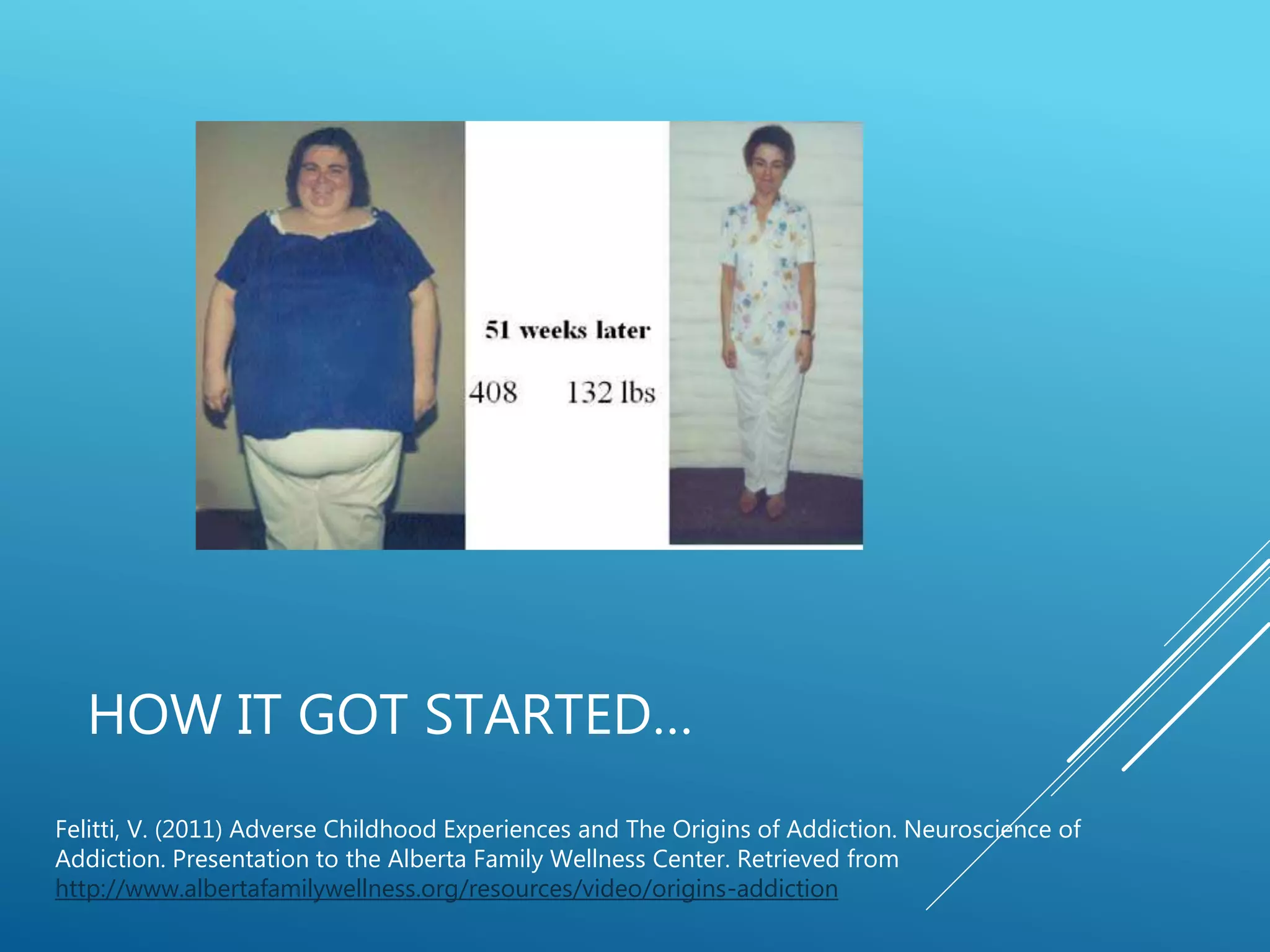
HOW IT GOT STARTED…
Felitti, V. (2011) Adverse Childhood Experiences and The Origins of Addiction. Neuroscience of
Addiction. Presentation to the Alberta Family Wellness Center. Retrieved from
http://www.albertafamilywellness.org/resources/video/origins-addiction
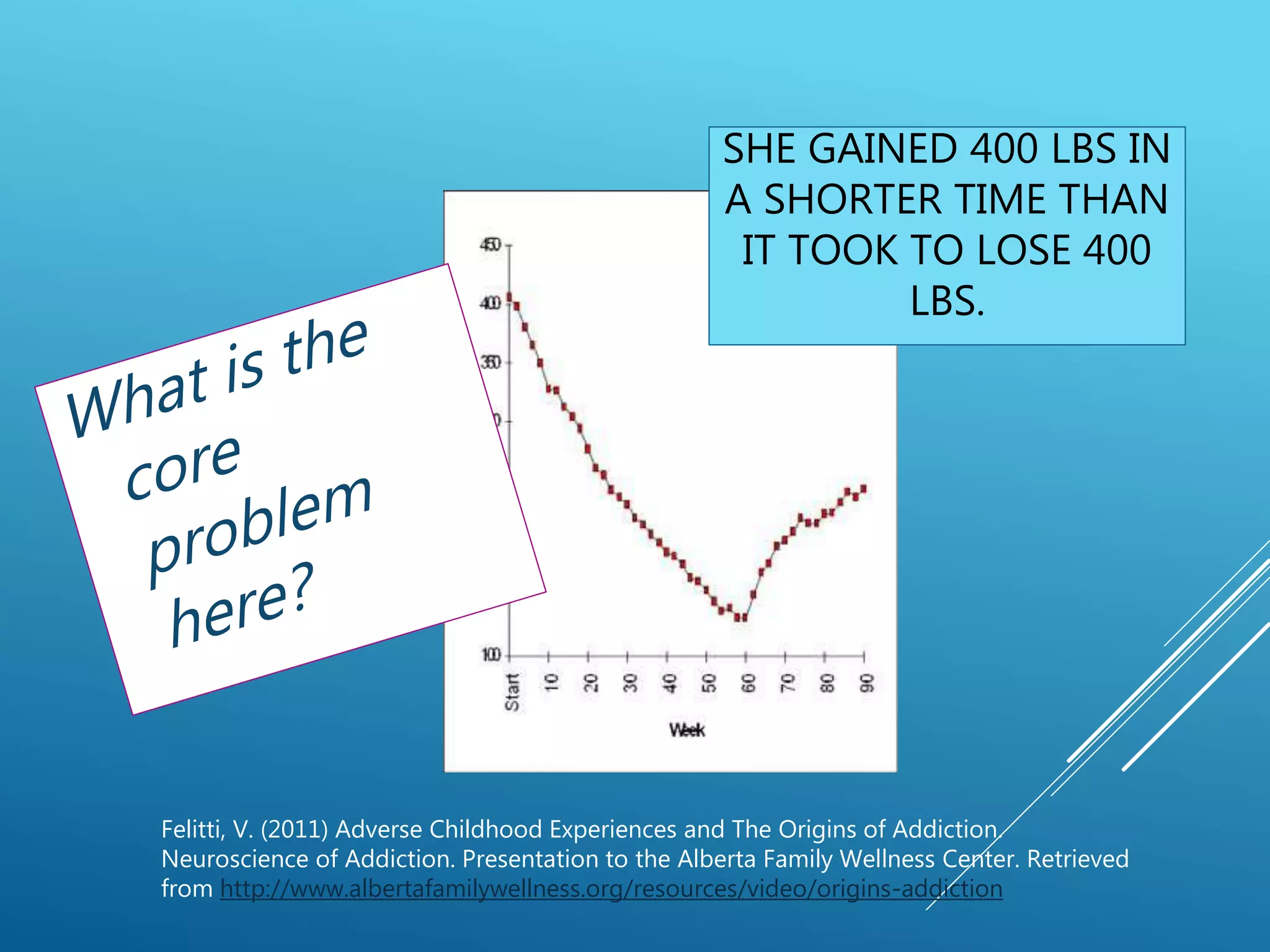
SHE GAINED 400 LBS IN
A SHORTER TIME THAN
IT TOOK TO LOSE 400
LBS.
Felitti, V. (2011) Adverse Childhood Experiences and The Origins of Addiction.
Neuroscience of Addiction. Presentation to the Alberta Family Wellness Center. Retrieved
from http://www.albertafamilywellness.org/resources/video/origins-addiction
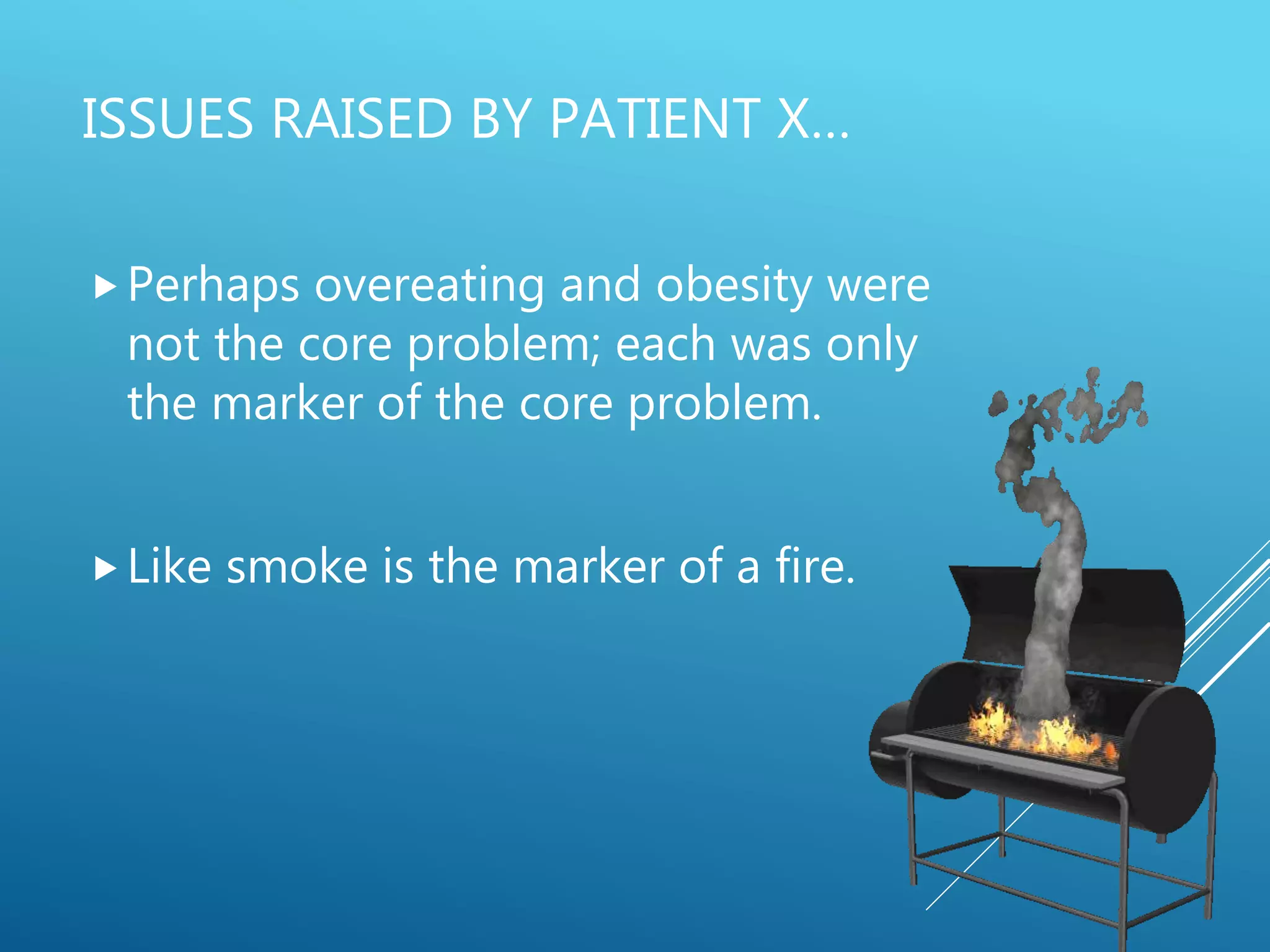
ISSUES RAISED BY PATIENT X…
Perhaps overeating and obesity were
not the core problem; each was only
the marker of the core problem.
Like smoke is the marker of a fire.
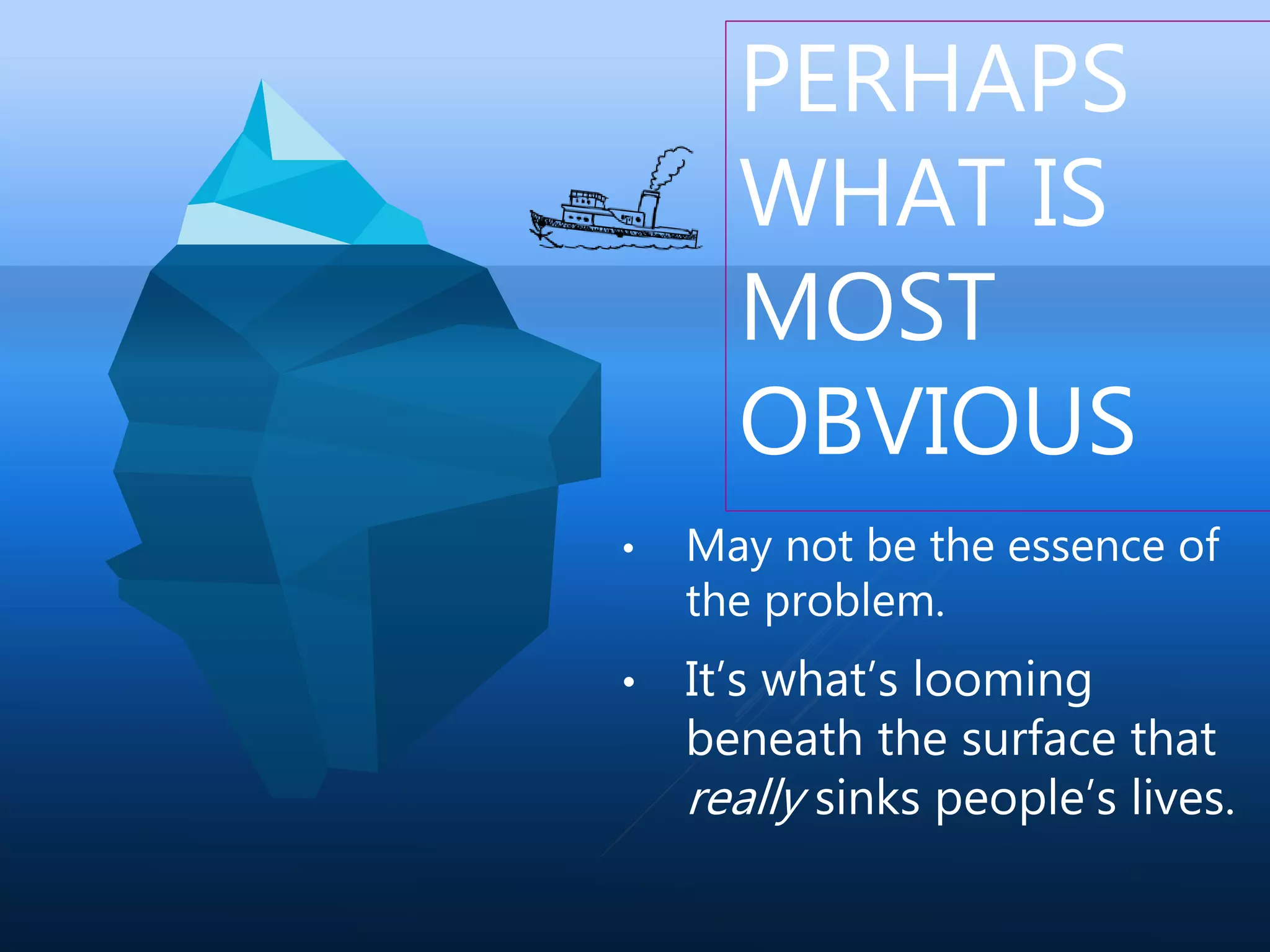
PERHAPS
WHAT IS
MOST
OBVIOUS
• May not be the essence of
the problem.
• It’s what’s looming
beneath the surface that
really sinks people’s lives.
STUDY DESIGN
Initiated in 1995 and 1997- enrollees at Kaiser
Permanente in San Diego are being tracked
17,500+ middle-class American adults
Cohort population was 80% white including
Hispanic, 10% black, and 10% Asian.
Their average age was 57 years;
74% had been to college, 44% had graduated
college; 49.5% were men.
 10 questions: Review handout now.
 Take the assessment now for yourself and post your score anonymously to
PollEverywhere.com by using the app.
 Directions: To participate, open your text app. In the “To” screen type
37607. In the message type RDA3. You will receive a response.
 Once you find your score, identify the corresponding letter. When the poll
is “live” this is what you will text:
20 Denice Colson, PhD, LPC, MAC, CPCS* Copyright 2014
FINDING YOUR ACE SCORE
A—0
B—1
C—2
D—3
E—4
F—5
G—6
H—7
I—8
J—9
K--10
21Denice Colson, PhD, LPC, MAC, CPCS* Copyright 2014
HOW STRONG IS THE STUDY?
 Replicated in 20 US states and Puerto Rico as well as China,
Macedonia, Philippines, Saudi Arabia, South Africa,
Thailand, and Viet Nam
 ACE surveys had been completed in Albania, Latvia,
Lithuania, and Macedonia, with further studies underway in
Montenegro, Romania, Russian Federation and Turkey
 61 Publications by principles and their associations on
CDC.gov
 Same results.
Used a simple scoring system from 0 to 10
 Exposure during childhood or adolescence to
any category of ACE was scored as one point.
 Multiple exposures within a category were not
scored
ACE Score Determination
Research outcomes
tend to understate
the findings.
GENERAL FINDINGS…
Less than half of this middle-class
population had an ACE Score of 0.
One in fourteen had an ACE Score of 4
or more.
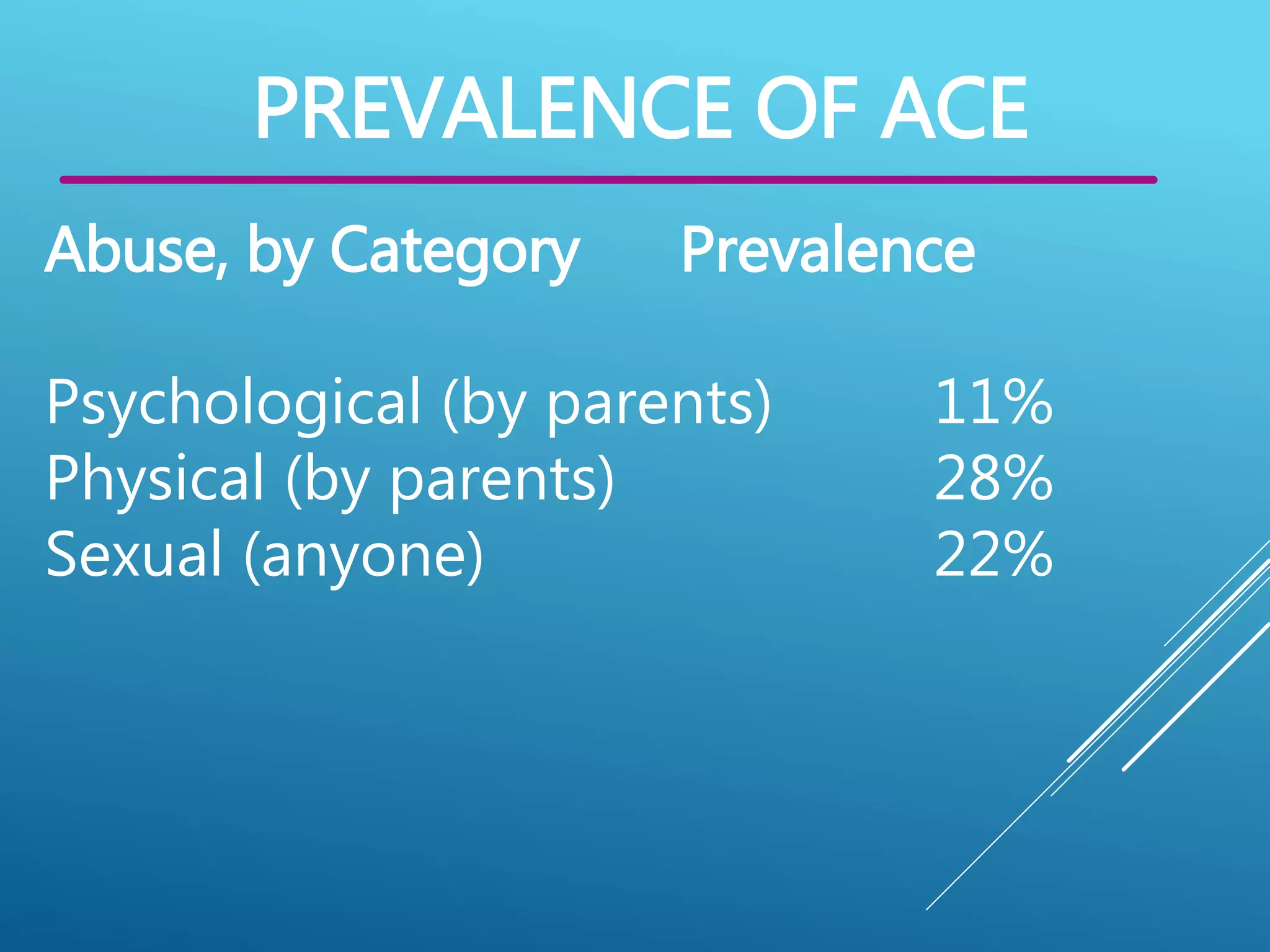
Abuse, by Category Prevalence
Psychological (by parents) 11%
Physical (by parents) 28%
Sexual (anyone) 22%
PREVALENCE OF ACE
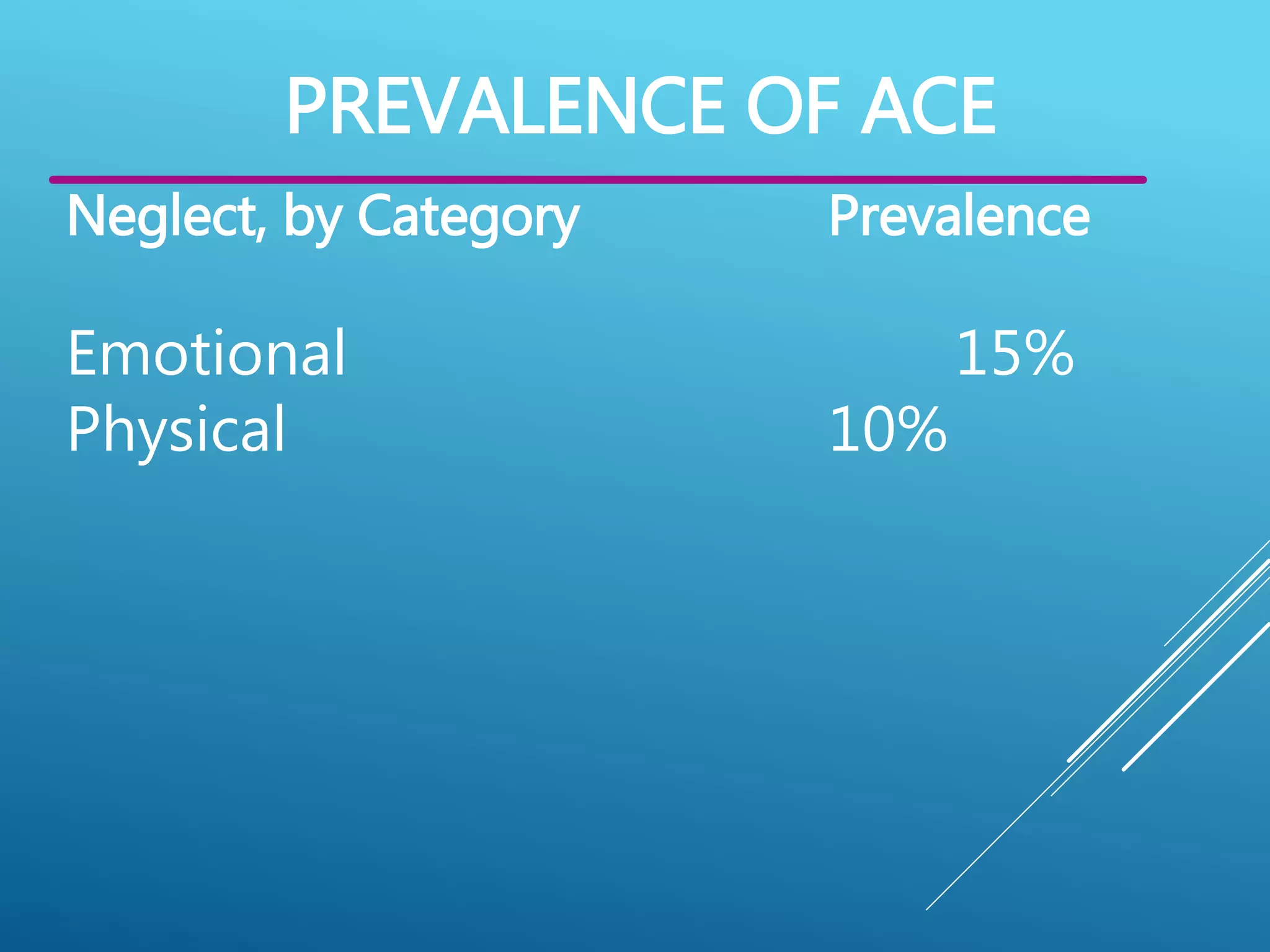
Neglect, by Category Prevalence
Emotional 15%
Physical 10%
PREVALENCE OF ACE
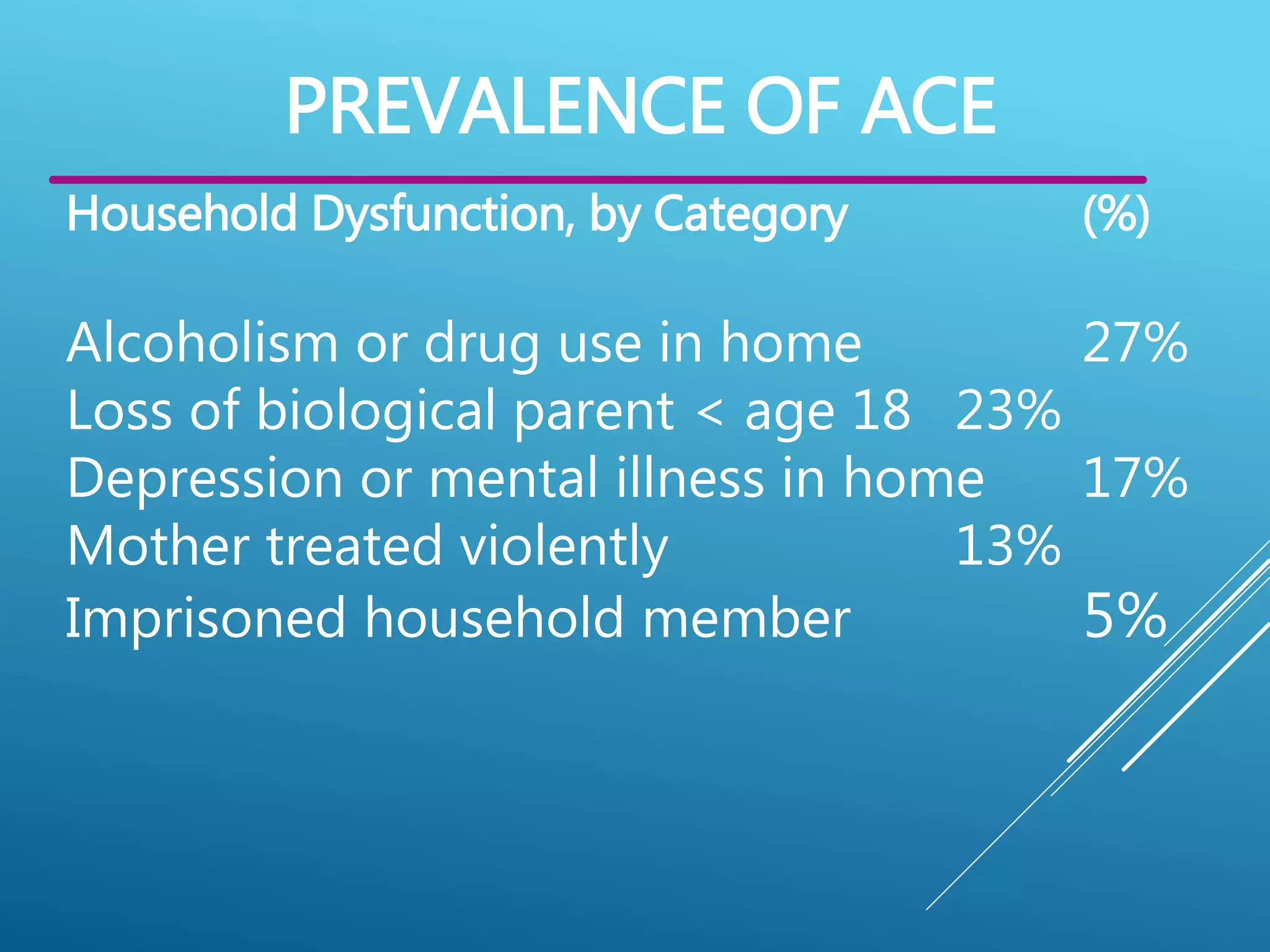
Household Dysfunction, by Category (%)
Alcoholism or drug use in home 27%
Loss of biological parent < age 18 23%
Depression or mental illness in home 17%
Mother treated violently 13%
Imprisoned household member 5%
PREVALENCE OF ACE
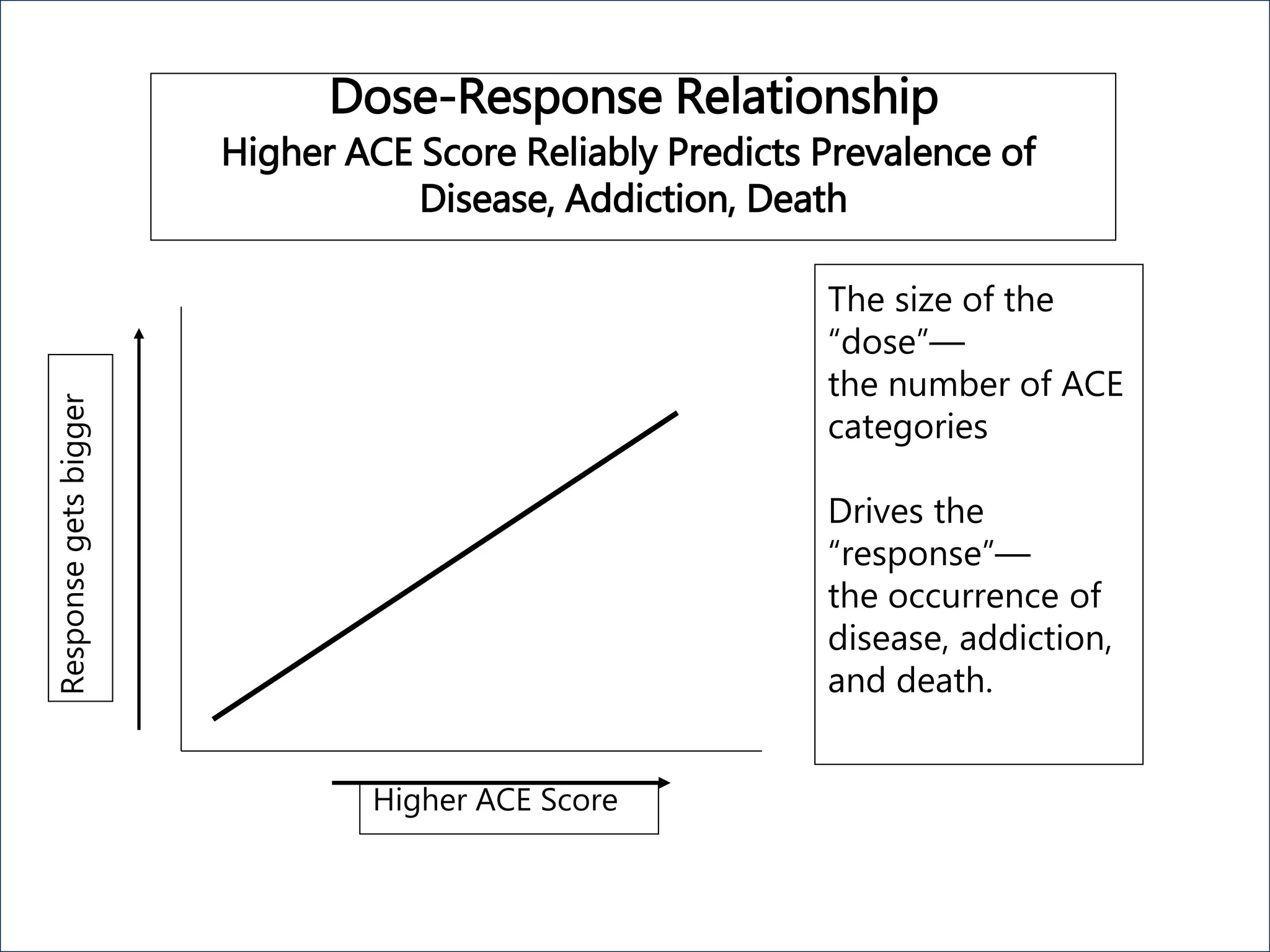
Dose-Response Relationship
Higher ACE Score Reliably Predicts Prevalence of
Disease, Addiction, Death
Higher ACE Score
Responsegetsbigger
The size of the
“dose”—
the number of ACE
categories
Drives the
“response”—
the occurrence of
disease, addiction,
and death.
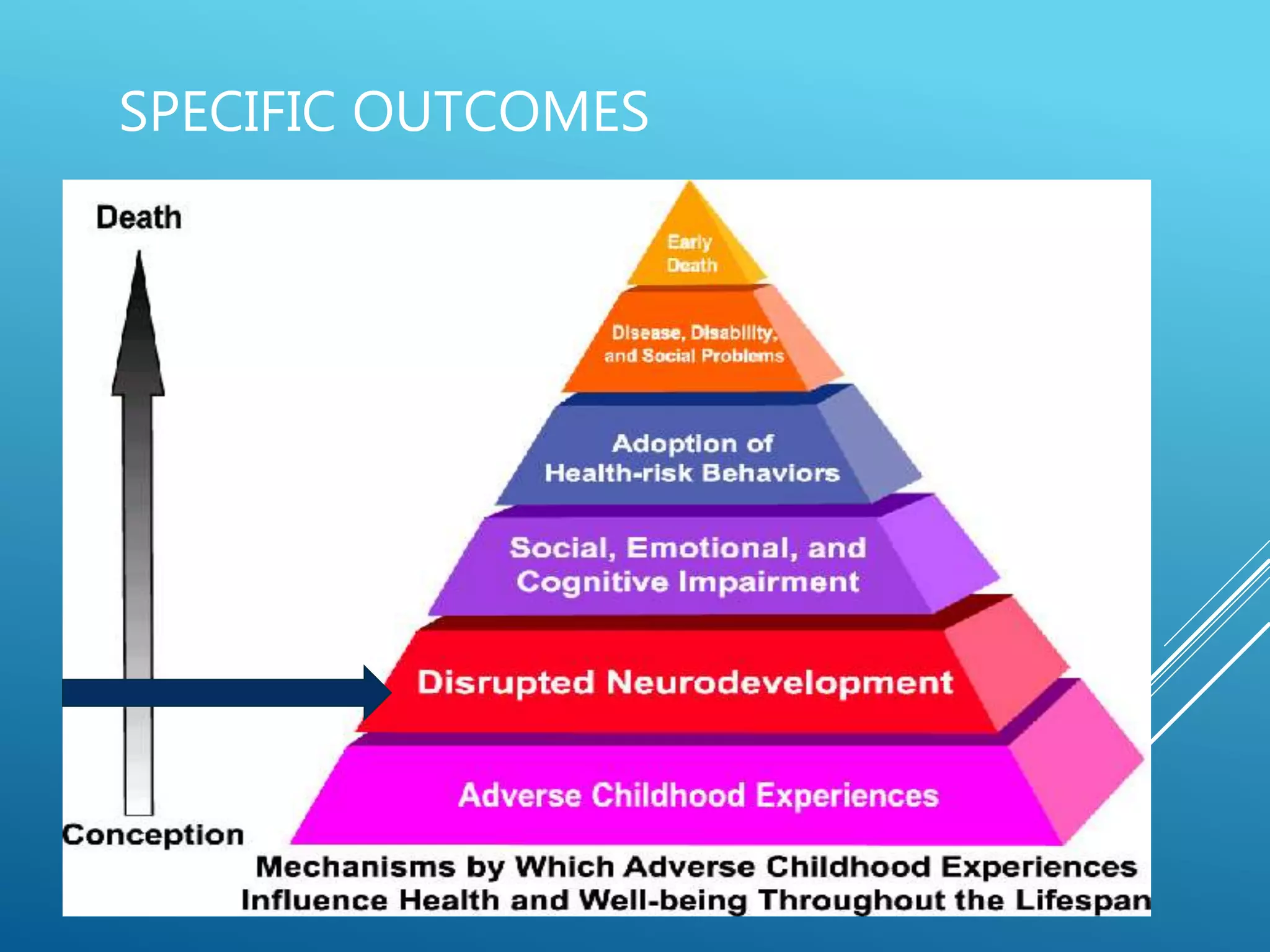
SPECIFIC OUTCOMES
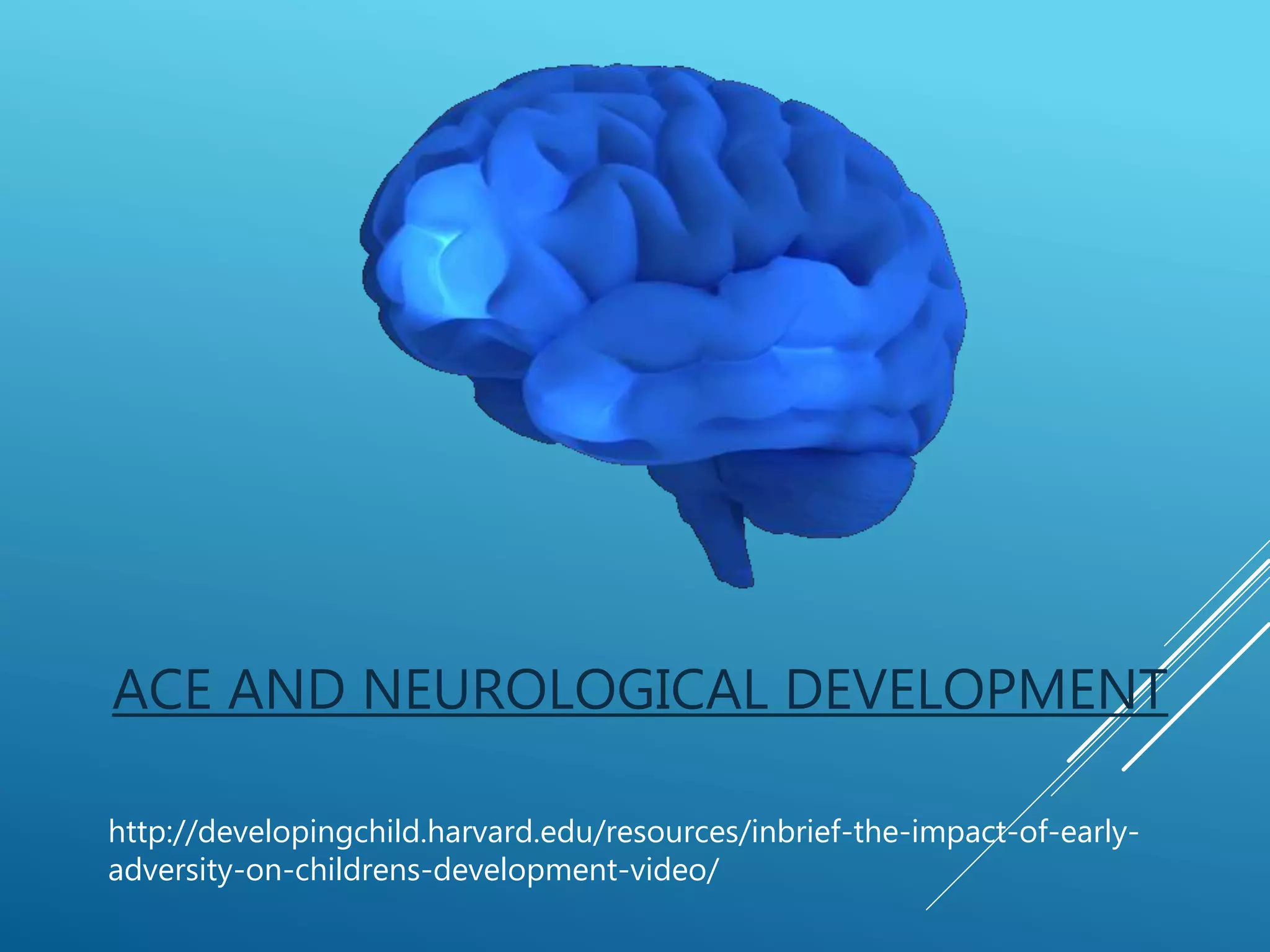
ACE AND NEUROLOGICAL DEVELOPMENT
http://developingchild.harvard.edu/resources/inbrief-the-impact-of-early-
adversity-on-childrens-development-video/
http://developingchild.harvard.edu/resources/toxic-stress-
derails-healthy-development/
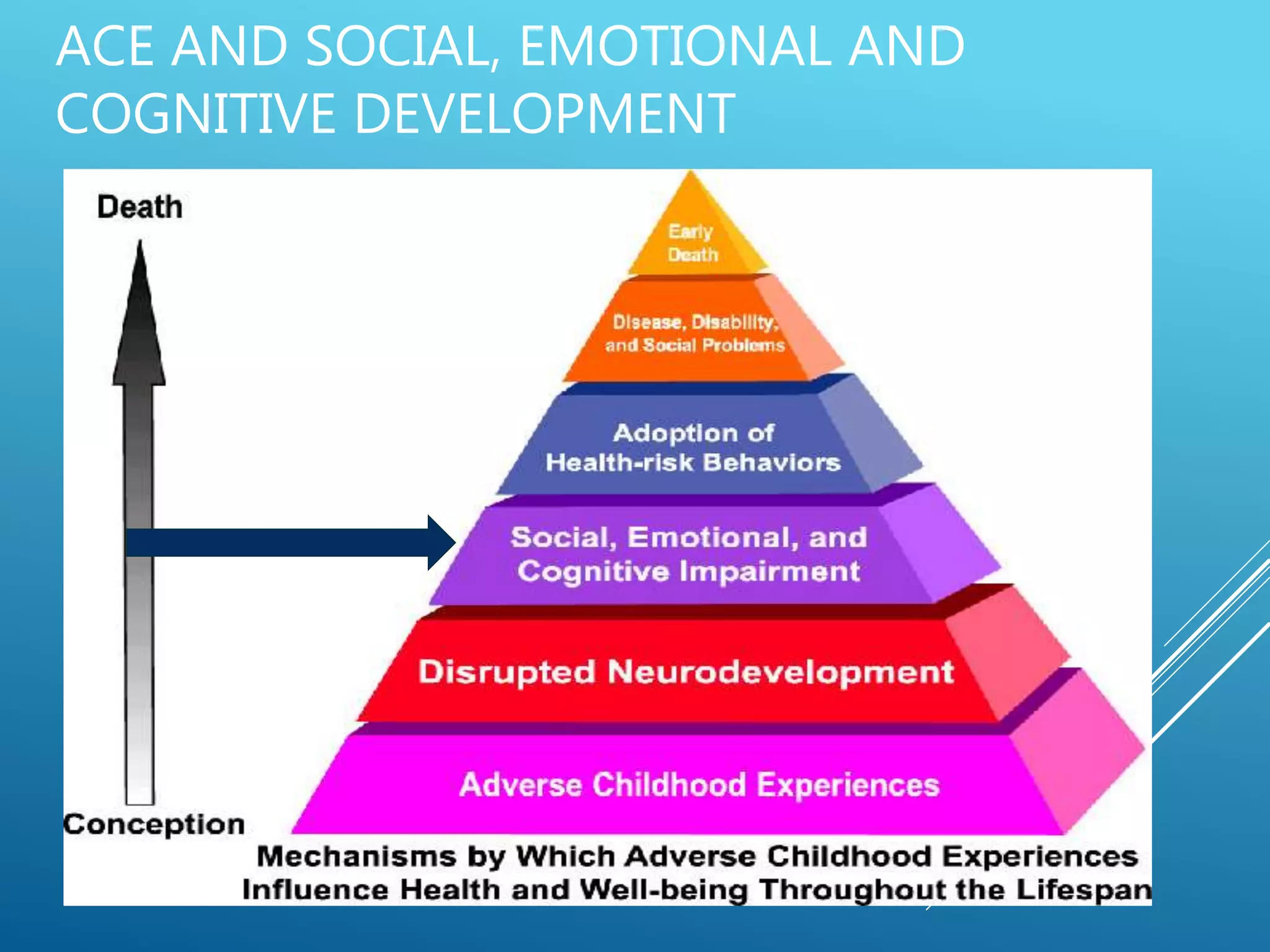
ACE AND SOCIAL, EMOTIONAL AND
COGNITIVE DEVELOPMENT
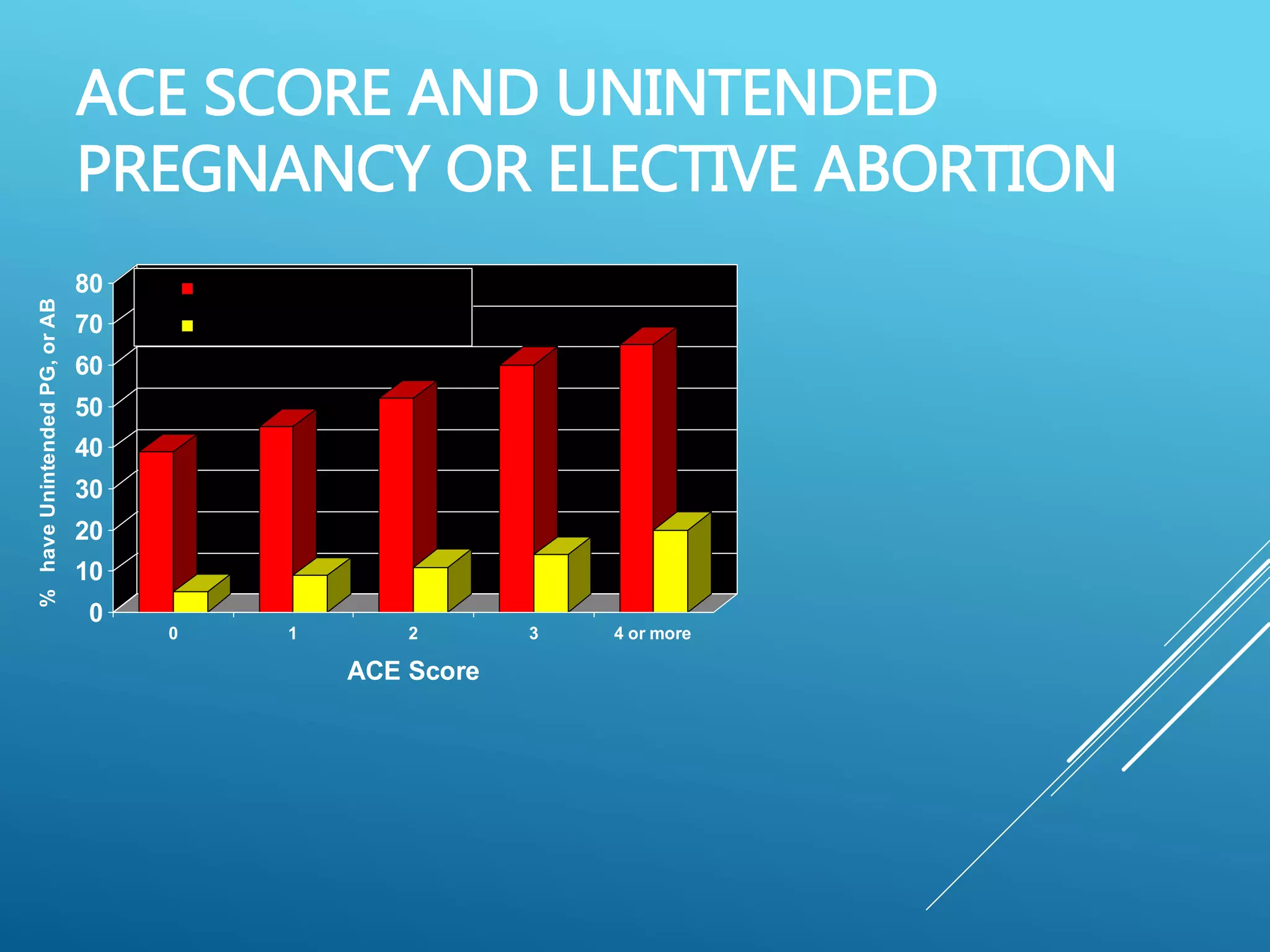
ACE SCORE AND UNINTENDED
PREGNANCY OR ELECTIVE ABORTION
0
10
20
30
40
50
60
70
80
%haveUnintendedPG,orAB
0 1 2 3 4 or more
ACE Score
Unintended Pregnancy
Elective Abortion
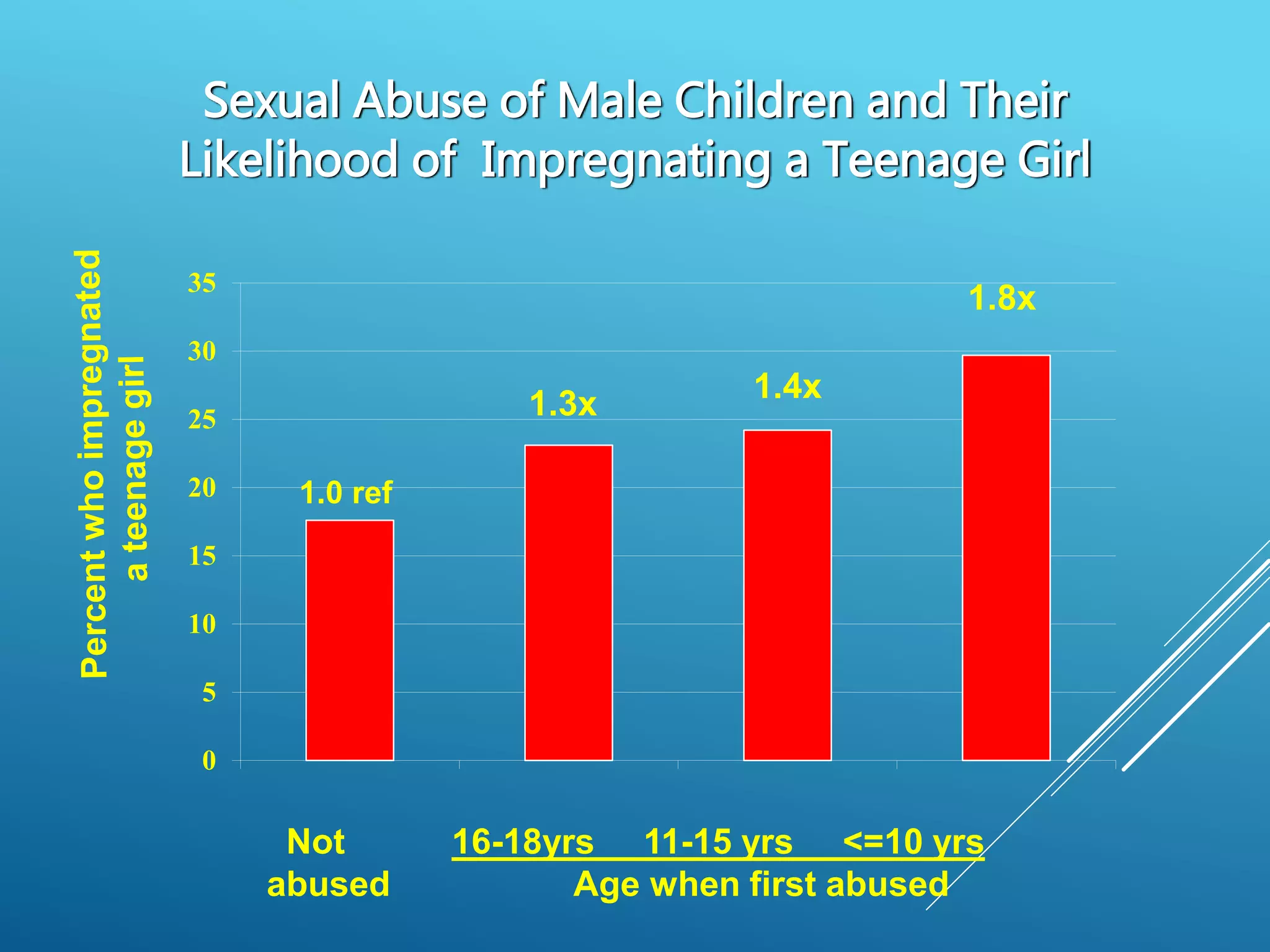
Sexual Abuse of Male Children and Their
Likelihood of Impregnating a Teenage Girl
0
5
10
15
20
25
30
35
Not 16-18yrs 11-15 yrs <=10 yrs
abused Age when first abused
1.3x 1.4x
1.8x
1.0 ref
IN OTHER WORDS…
Boys who were sexually abused are more
likely to impregnate a teenage girl.
The earlier the age when the boy was
sexually abused – the greater the
likelihood that he will impregnate a
teenage girl
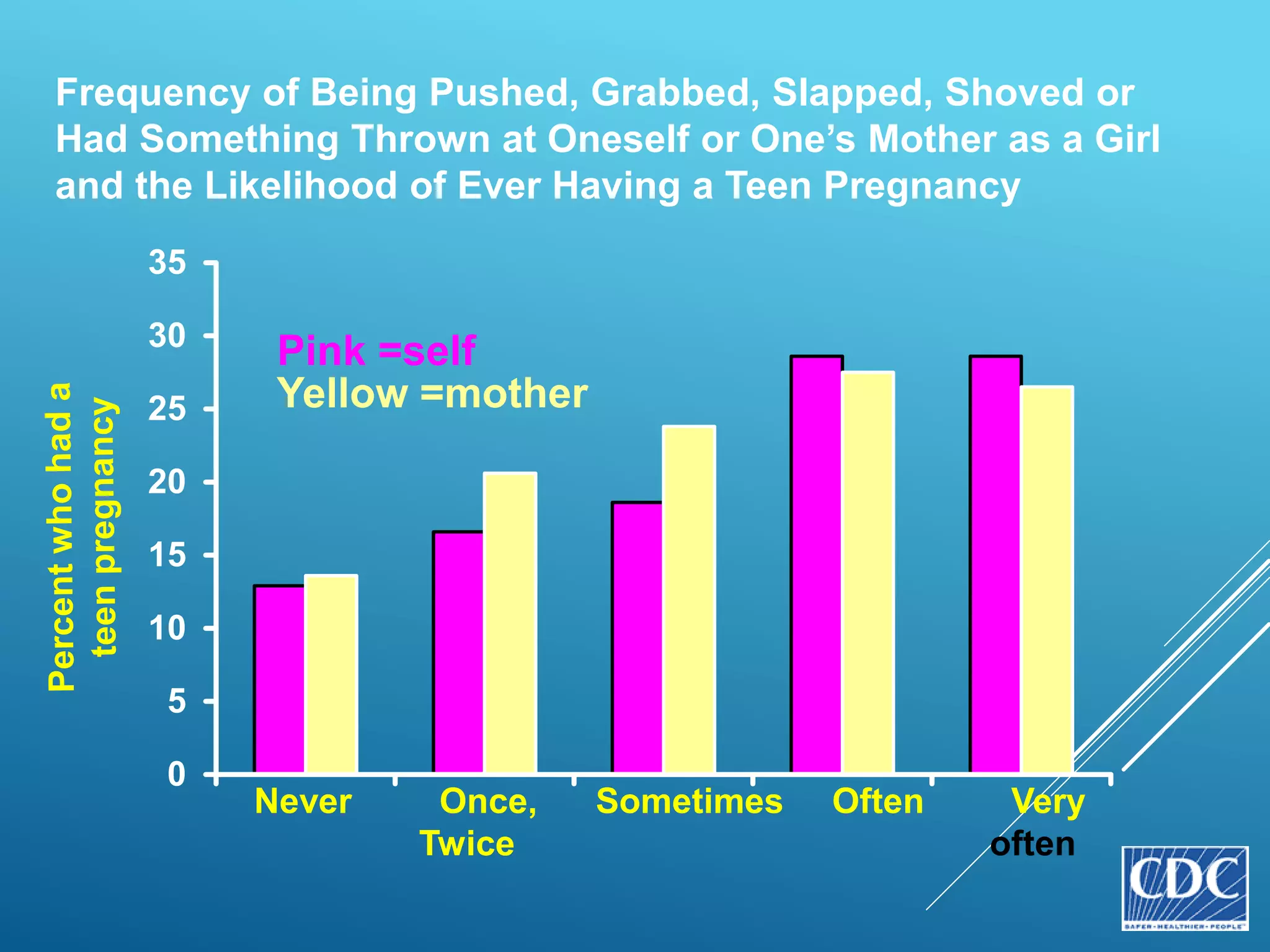
Frequency of Being Pushed, Grabbed, Slapped, Shoved or
Had Something Thrown at Oneself or One’s Mother as a Girl
and the Likelihood of Ever Having a Teen Pregnancy
0
5
10
15
20
25
30
35
Never Once, Sometimes Often Very
Twice often
Pink =self
Yellow =mother
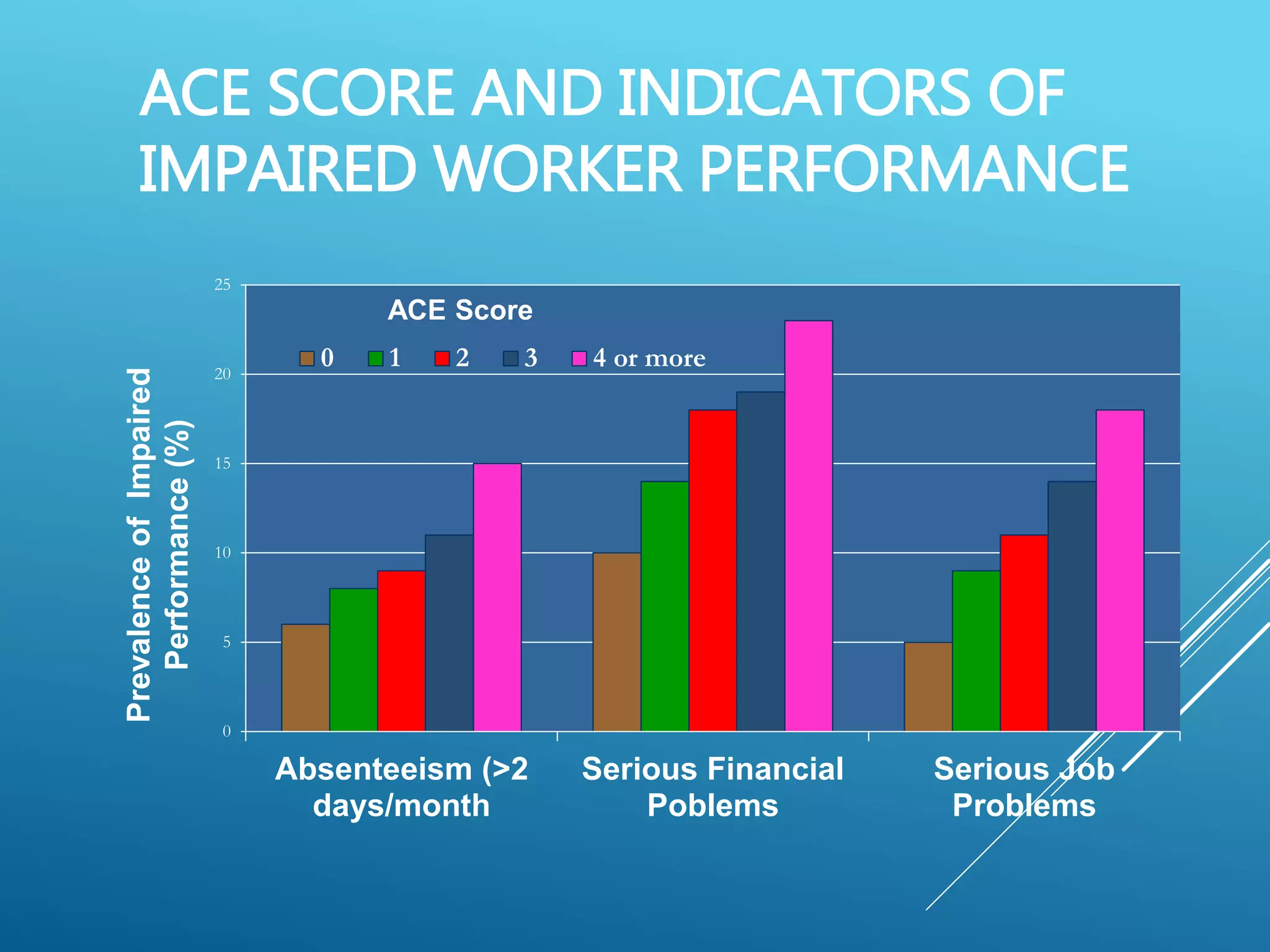
ACE SCORE AND INDICATORS OF
IMPAIRED WORKER PERFORMANCE
0
5
10
15
20
25
Absenteeism (>2
days/month
Serious Financial
Poblems
Serious Job
Problems
0 1 2 3 4 or more
ACE Score
PrevalenceofImpaired
Performance(%)
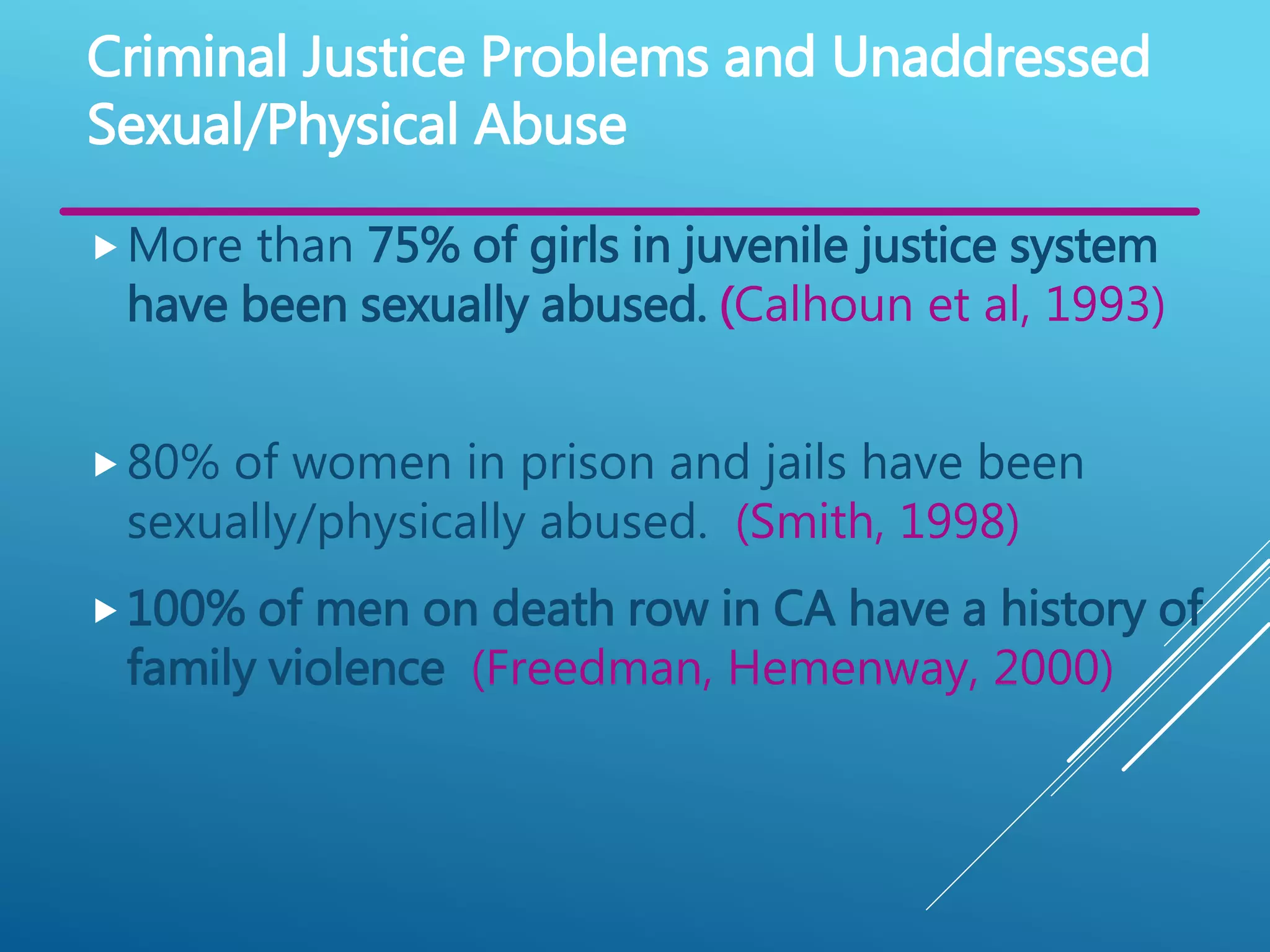
More than 75% of girls in juvenile justice system
have been sexually abused. (Calhoun et al, 1993)
Criminal Justice Problems and Unaddressed
Sexual/Physical Abuse
80% of women in prison and jails have been
sexually/physically abused. (Smith, 1998)
100% of men on death row in CA have a history of
family violence (Freedman, Hemenway, 2000)
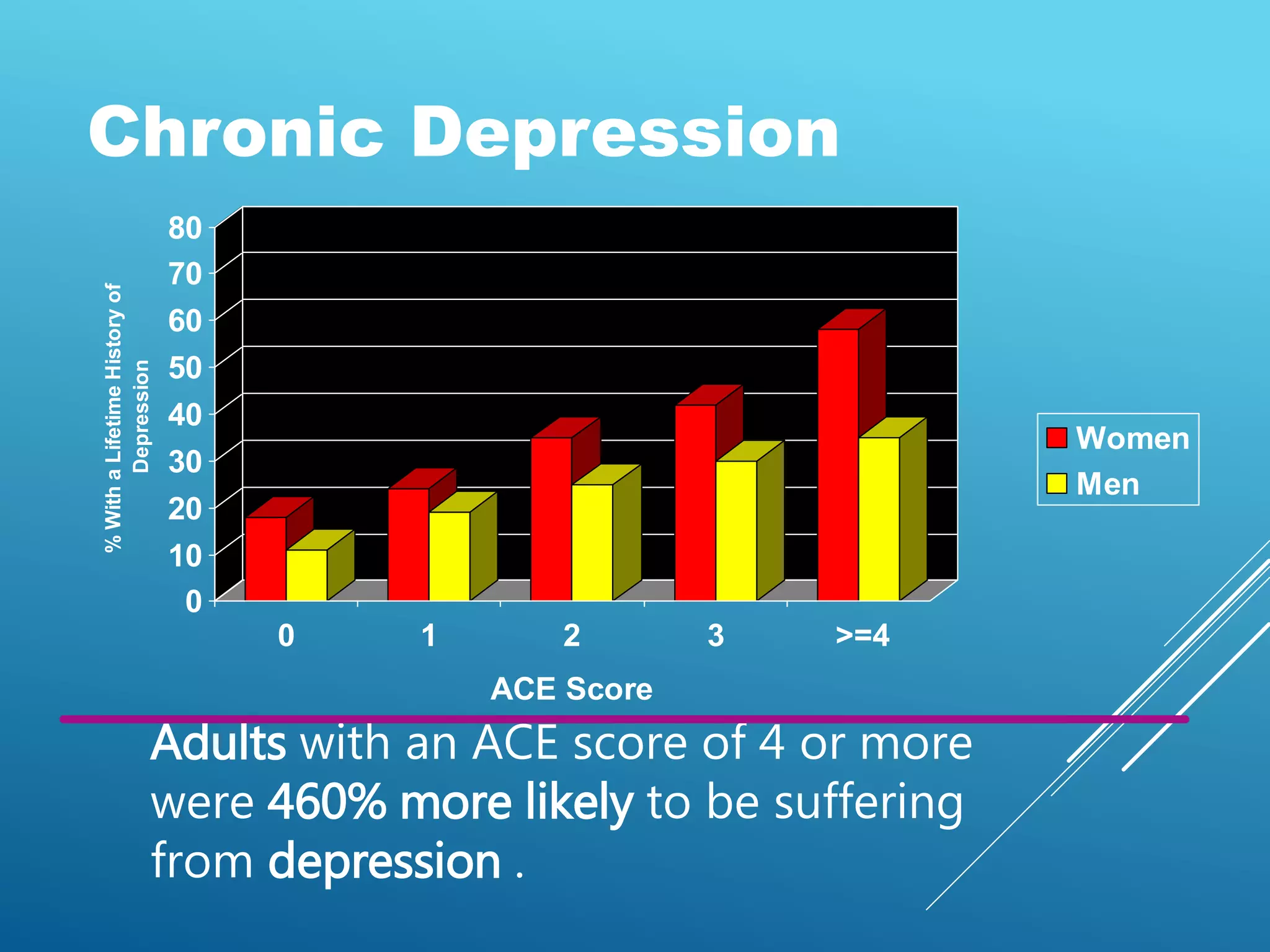
Chronic Depression
0
10
20
30
40
50
60
70
80
%WithaLifetimeHistoryof
Depression
0 1 2 3 >=4
ACE Score
Women
Men
Adults with an ACE score of 4 or more
were 460% more likely to be suffering
from depression .
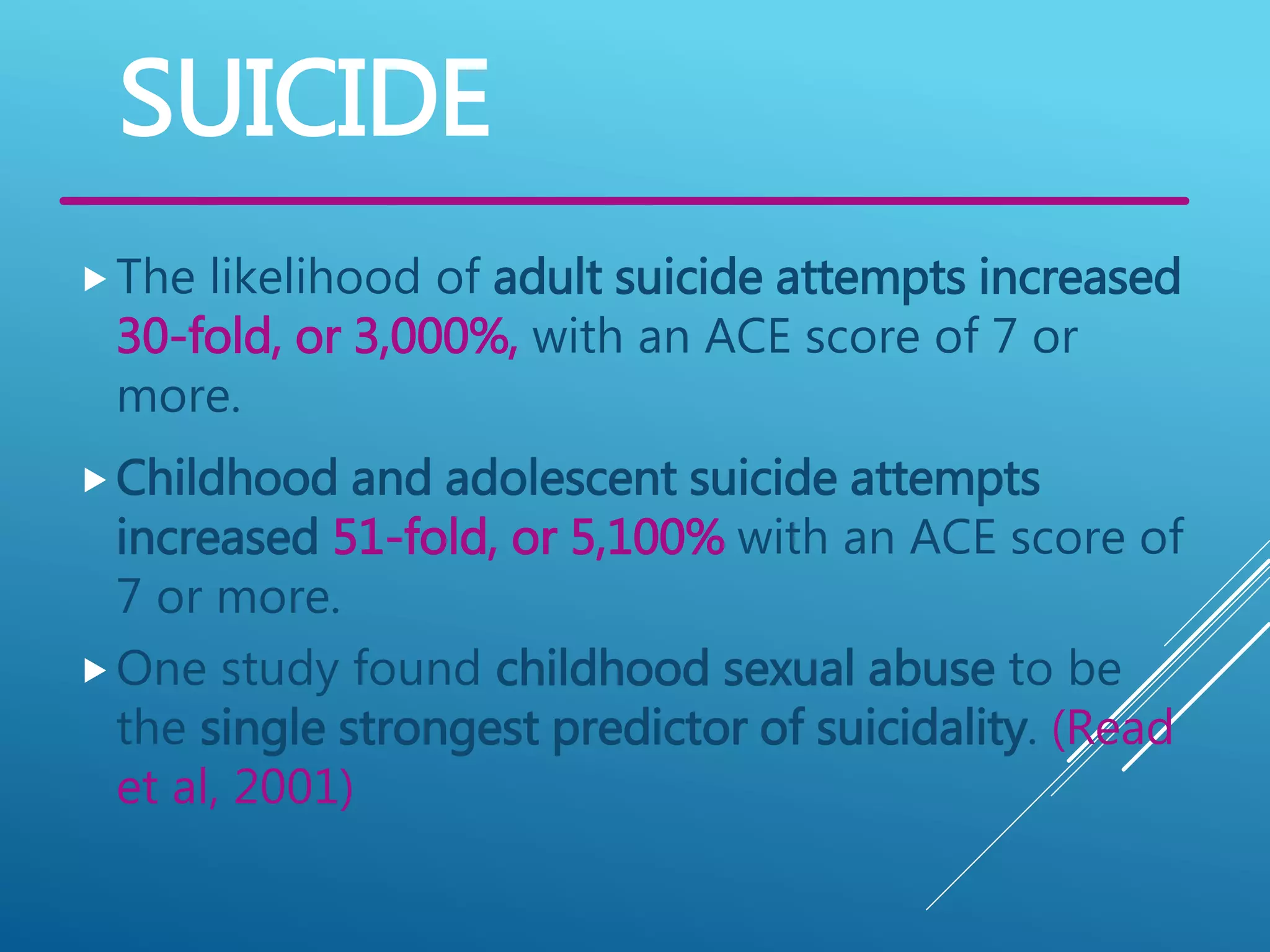
SUICIDE
The likelihood of adult suicide attempts increased
30-fold, or 3,000%, with an ACE score of 7 or
more.
Childhood and adolescent suicide attempts
increased 51-fold, or 5,100% with an ACE score of
7 or more.
One study found childhood sexual abuse to be
the single strongest predictor of suicidality. (Read
et al, 2001)
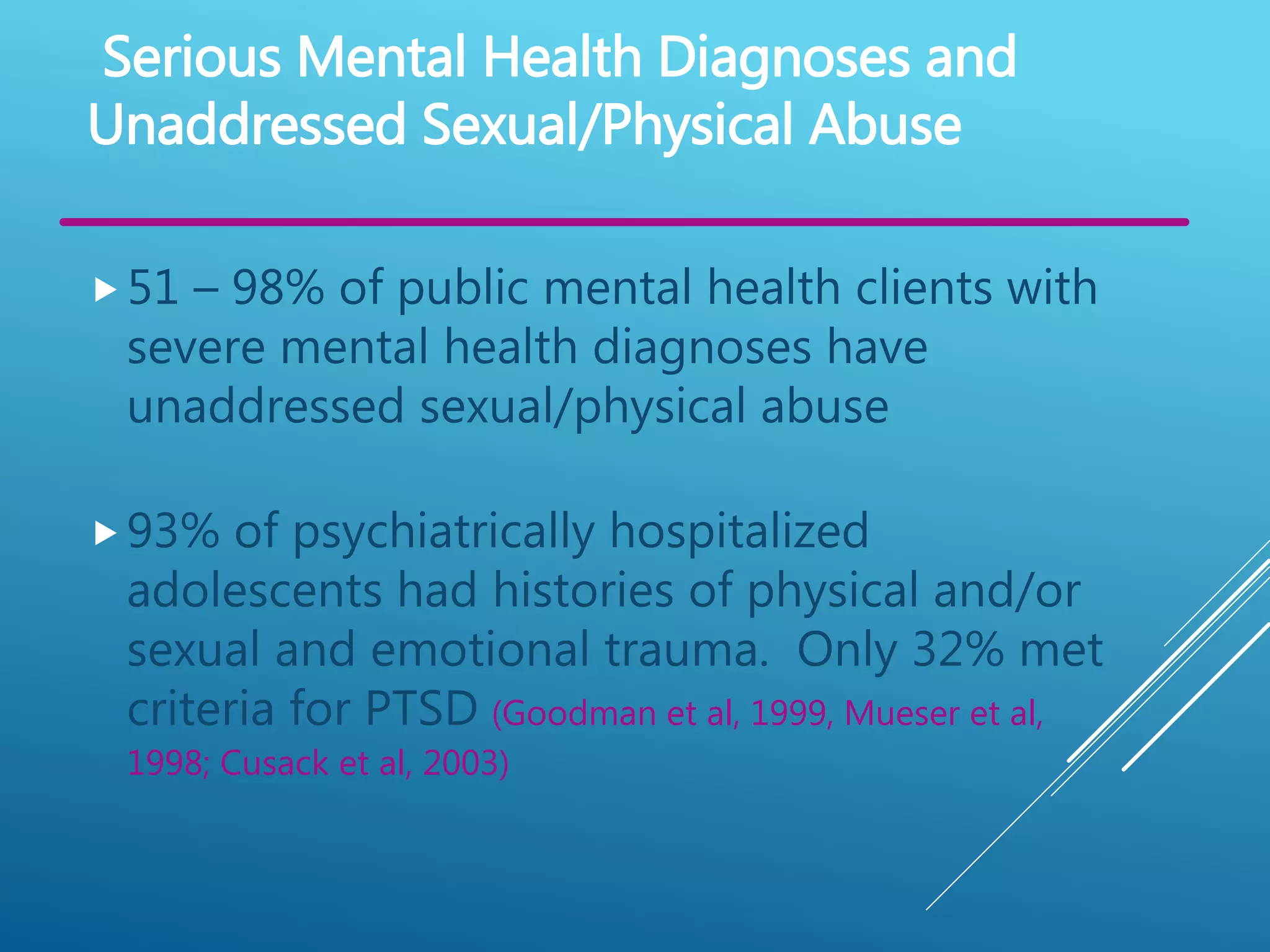
51 – 98% of public mental health clients with
severe mental health diagnoses have
unaddressed sexual/physical abuse
Serious Mental Health Diagnoses and
Unaddressed Sexual/Physical Abuse
93% of psychiatrically hospitalized
adolescents had histories of physical and/or
sexual and emotional trauma. Only 32% met
criteria for PTSD (Goodman et al, 1999, Mueser et al,
1998; Cusack et al, 2003)
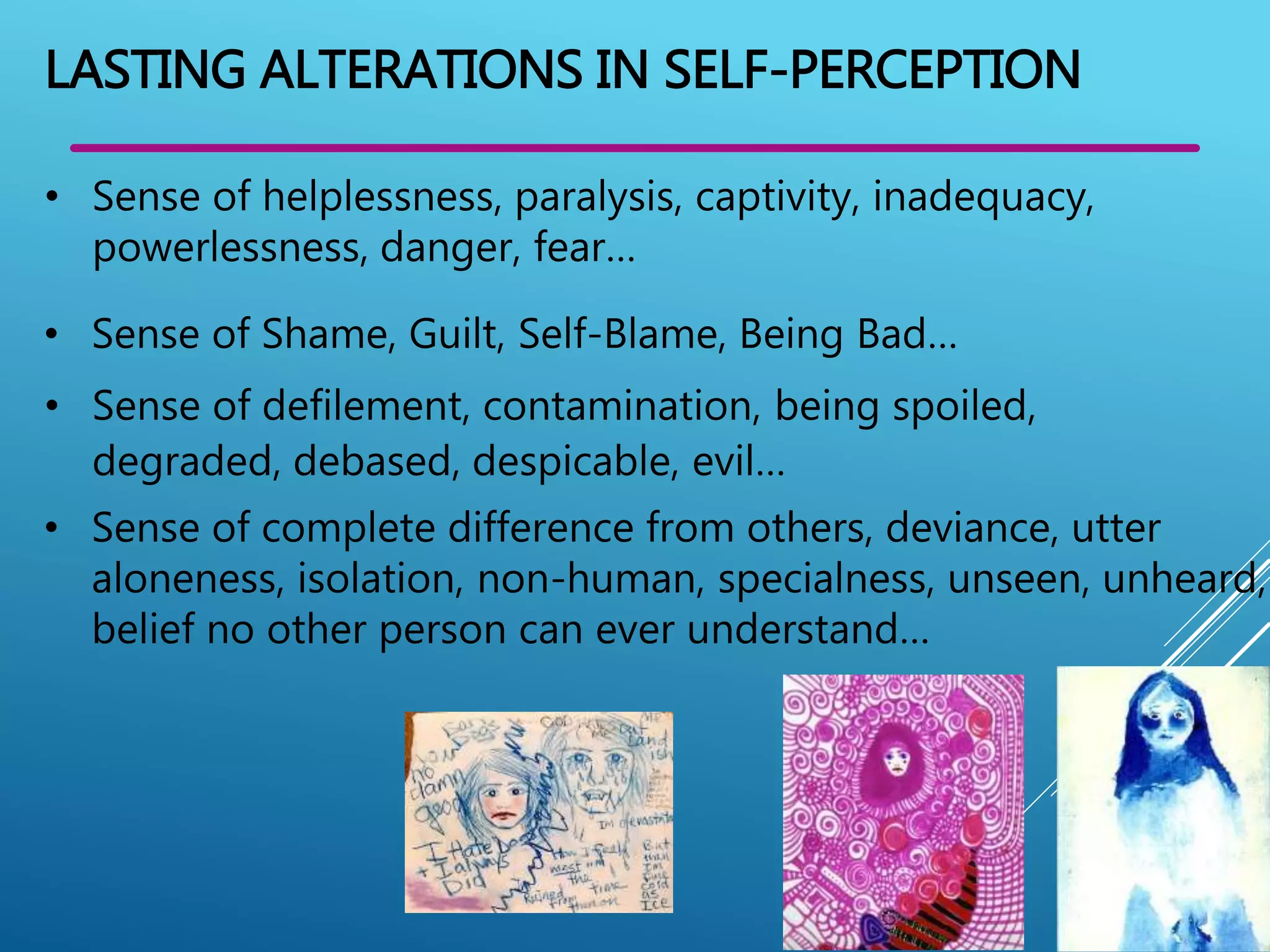
• Sense of helplessness, paralysis, captivity, inadequacy,
powerlessness, danger, fear…
LASTING ALTERATIONS IN SELF-PERCEPTION
• Sense of Shame, Guilt, Self-Blame, Being Bad…
• Sense of defilement, contamination, being spoiled,
degraded, debased, despicable, evil…
• Sense of complete difference from others, deviance, utter
aloneness, isolation, non-human, specialness, unseen, unheard,
belief no other person can ever understand…
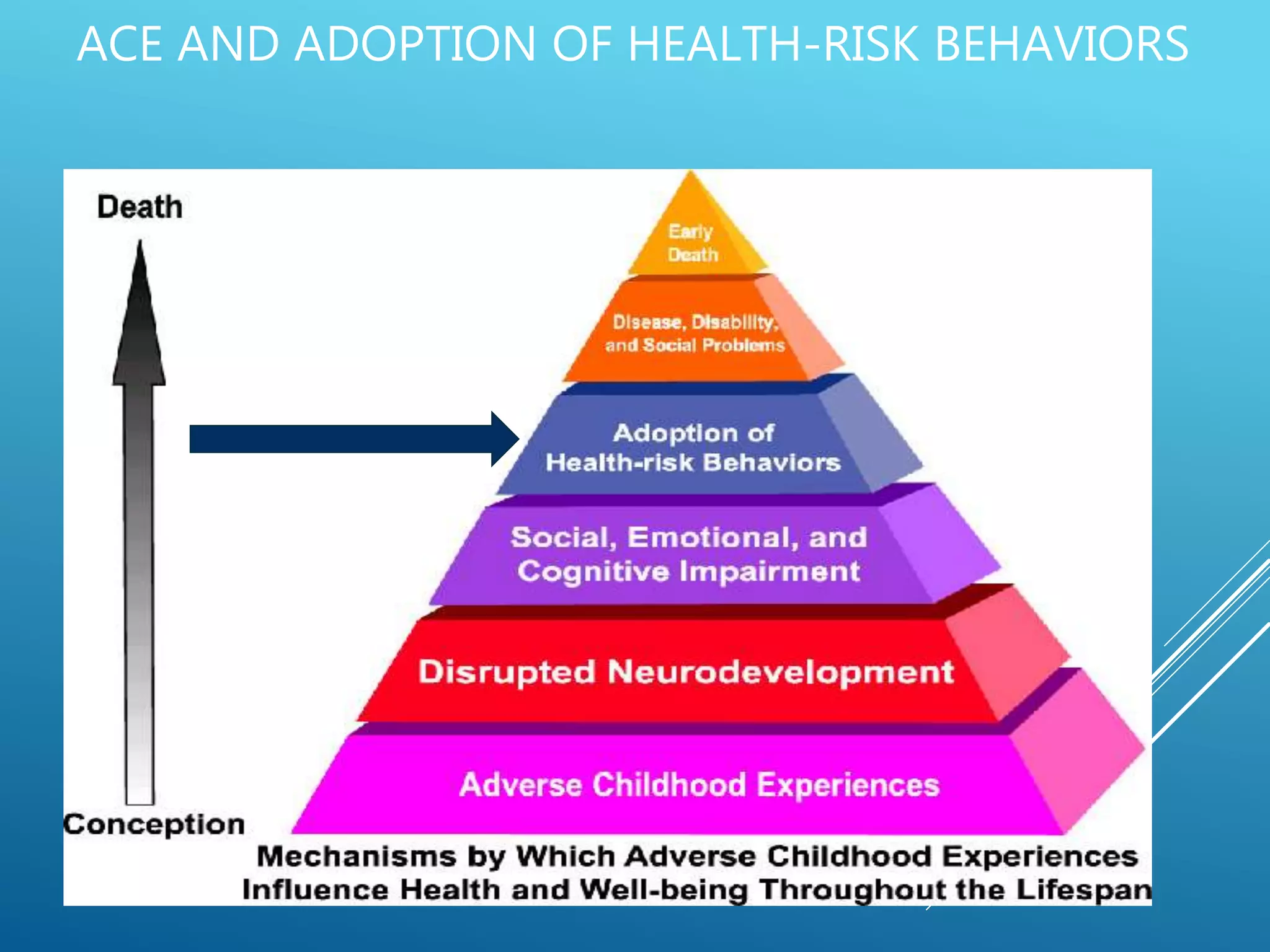
ACE AND ADOPTION OF HEALTH-RISK BEHAVIORS
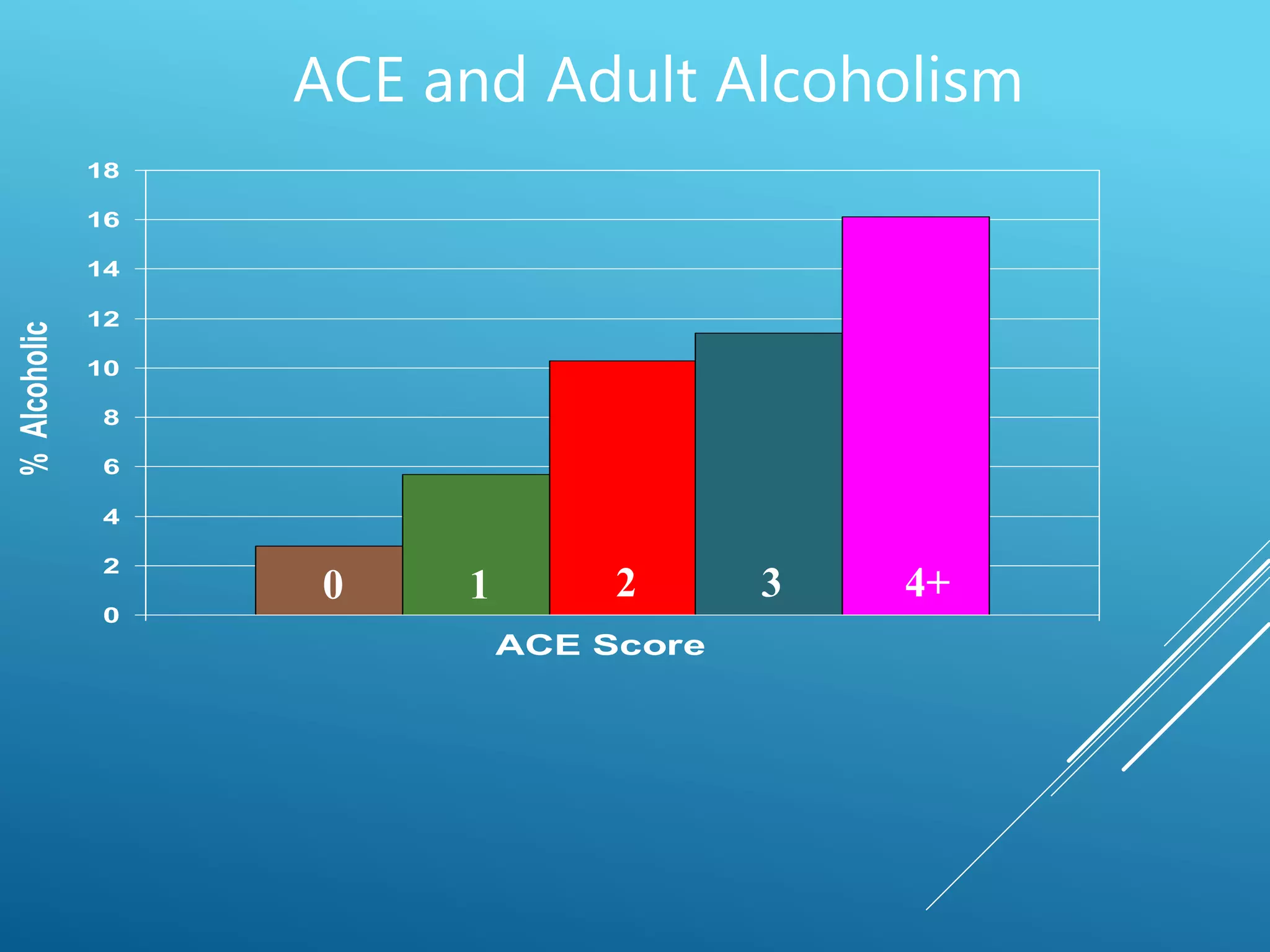
ACE AND ADULT ALCOHOLISM
A 500% increase in adult alcoholism is
directly related to adverse childhood
experiences.
As the number of ACE increase, the
more likely a person is to begin
drinking before 14, or between 15-17
and the less likely they are to begin
drinking at 18 or at 21 (the legal age).
ACE and Adult Alcoholism
0
2
4
6
8
10
12
14
16
18
%Alcoholic
ACE Score
0 1 2 3 4+
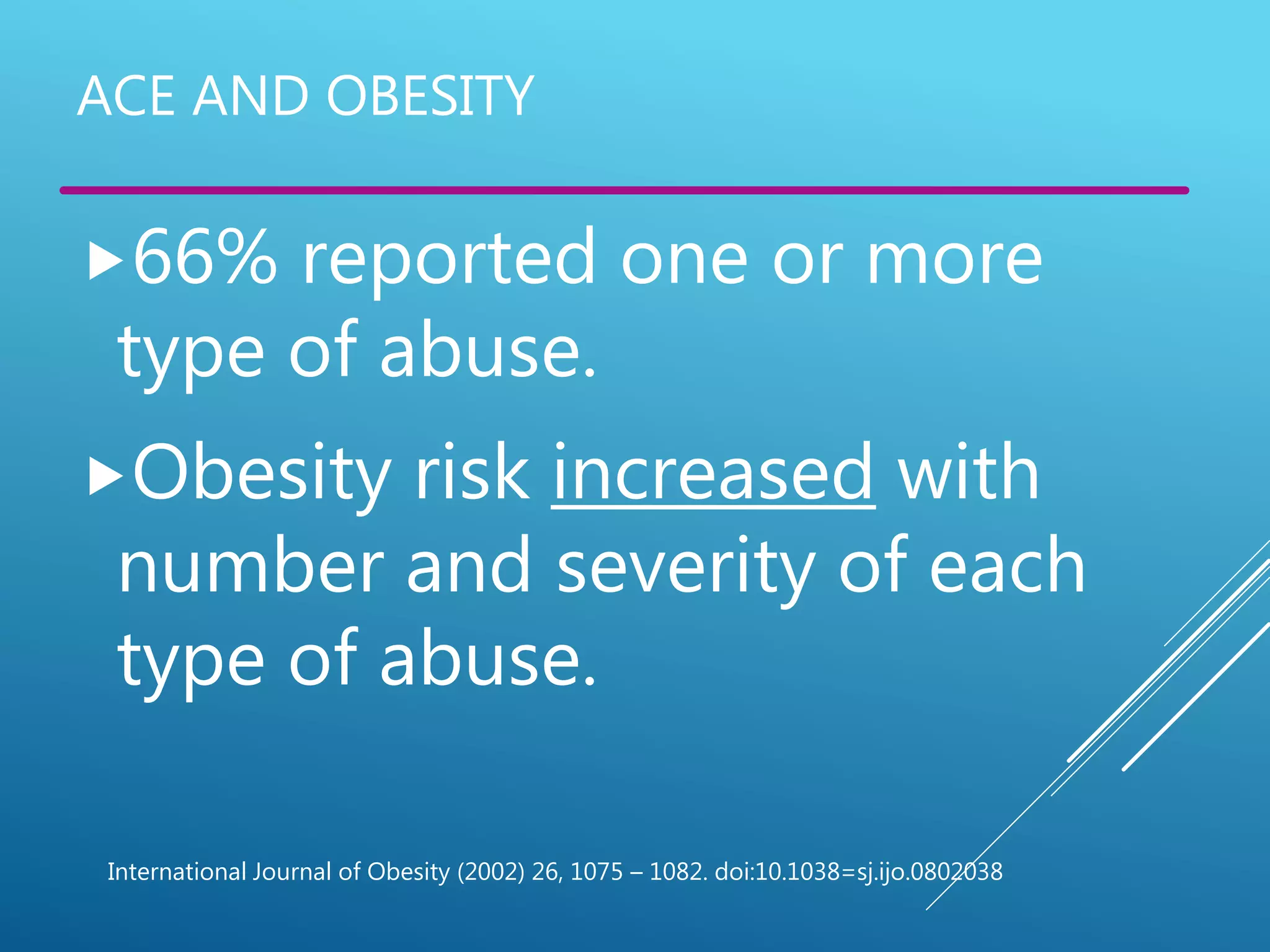
ACE AND OBESITY
66% reported one or more
type of abuse.
Obesity risk increased with
number and severity of each
type of abuse.
International Journal of Obesity (2002) 26, 1075 – 1082. doi:10.1038=sj.ijo.0802038
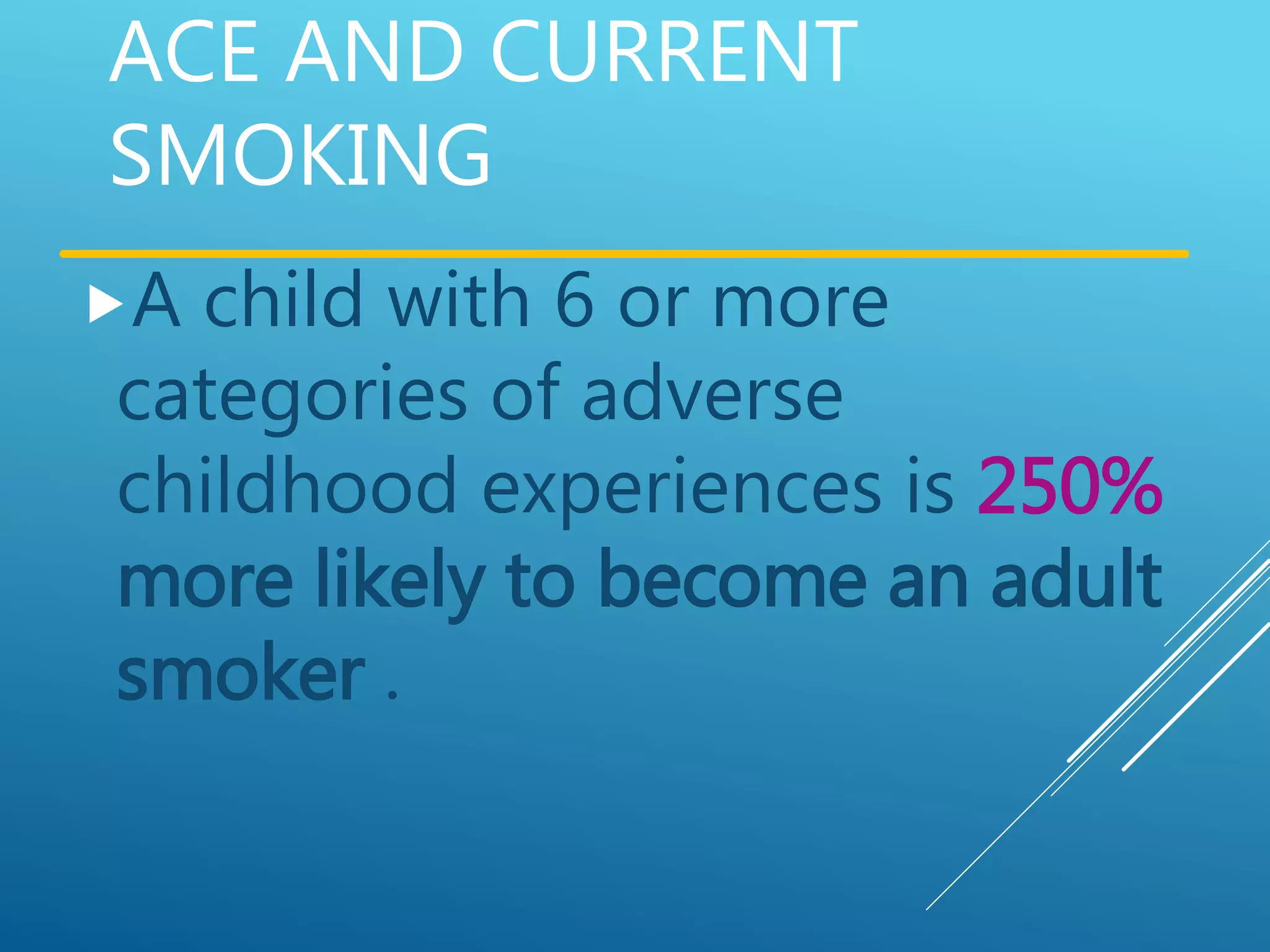
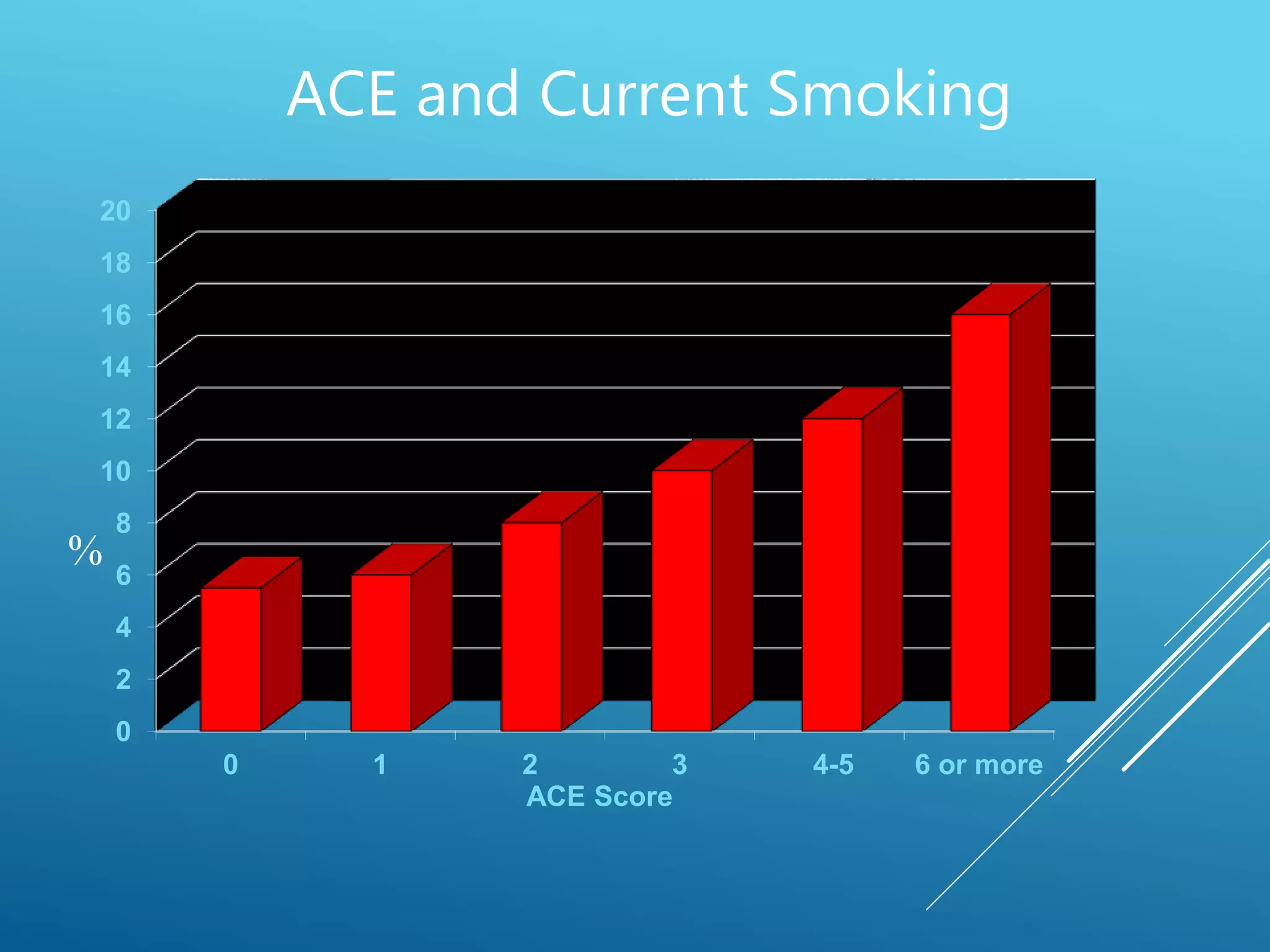
ACE AND CURRENT
SMOKING
A child with 6 or more
categories of adverse
childhood experiences is 250%
more likely to become an adult
smoker .
ACE and Current Smoking
0
2
4
6
8
10
12
14
16
18
20
0 1 2 3 4-5 6 or more
ACE Score
%
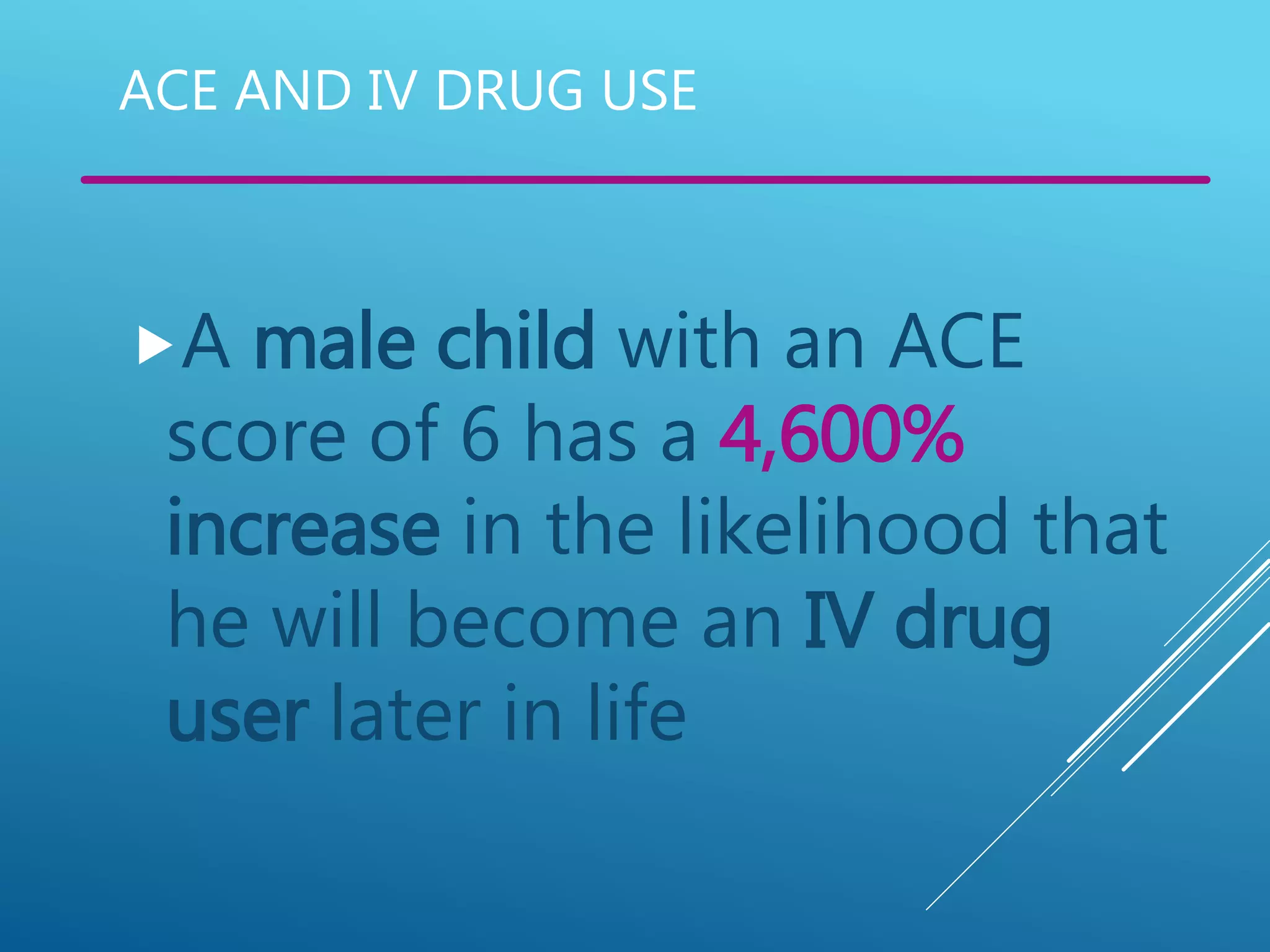
ACE AND IV DRUG USE
A male child with an ACE
score of 6 has a 4,600%
increase in the likelihood that
he will become an IV drug
user later in life
Adverse Childhood Experiences and
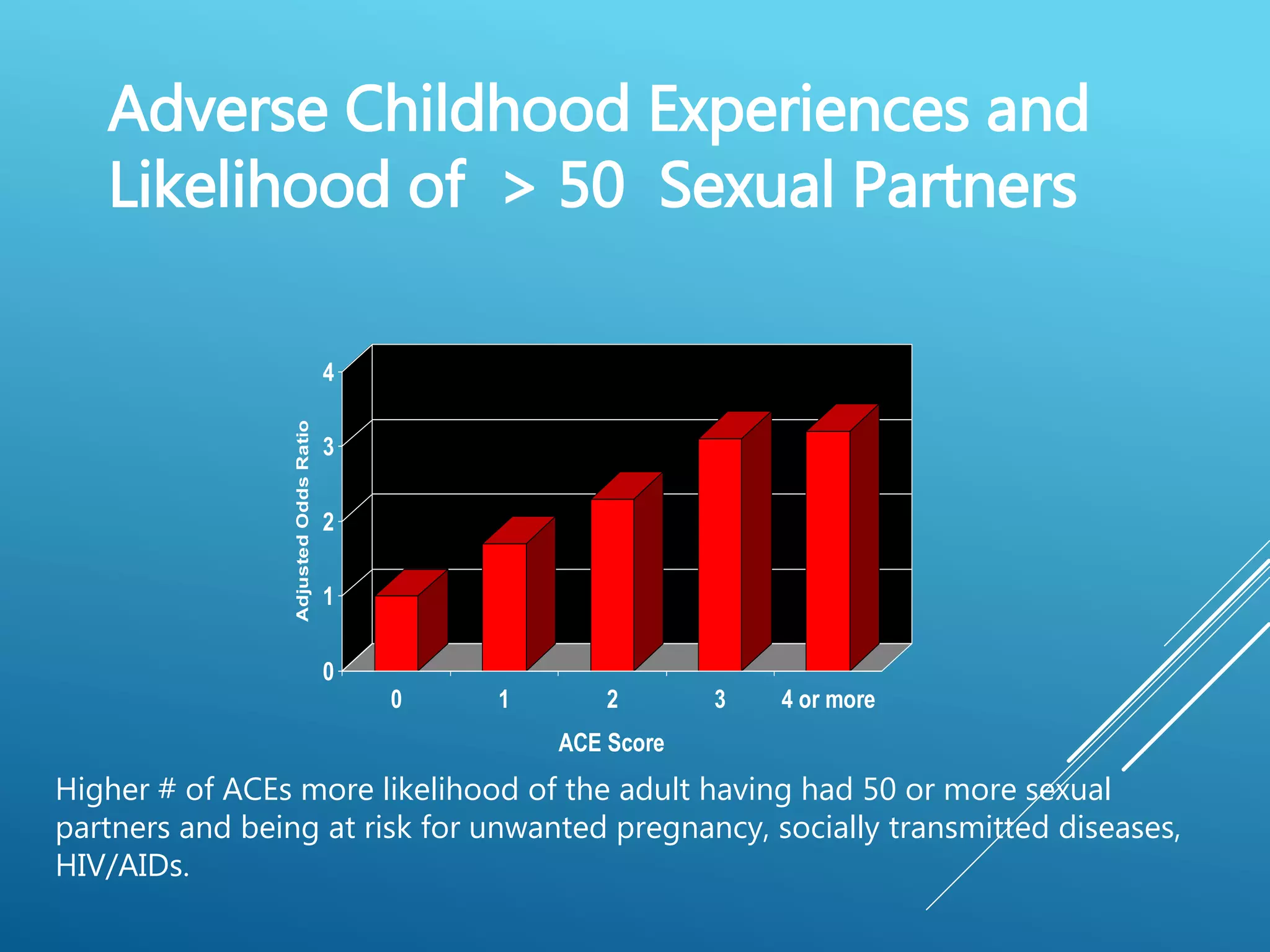
Likelihood of > 50 Sexual Partners
0
1
2
3
4
AdjustedOddsRatio
0 1 2 3 4 or more
ACE Score
Higher # of ACEs more likelihood of the adult having had 50 or more sexual
partners and being at risk for unwanted pregnancy, socially transmitted diseases,
HIV/AIDs.
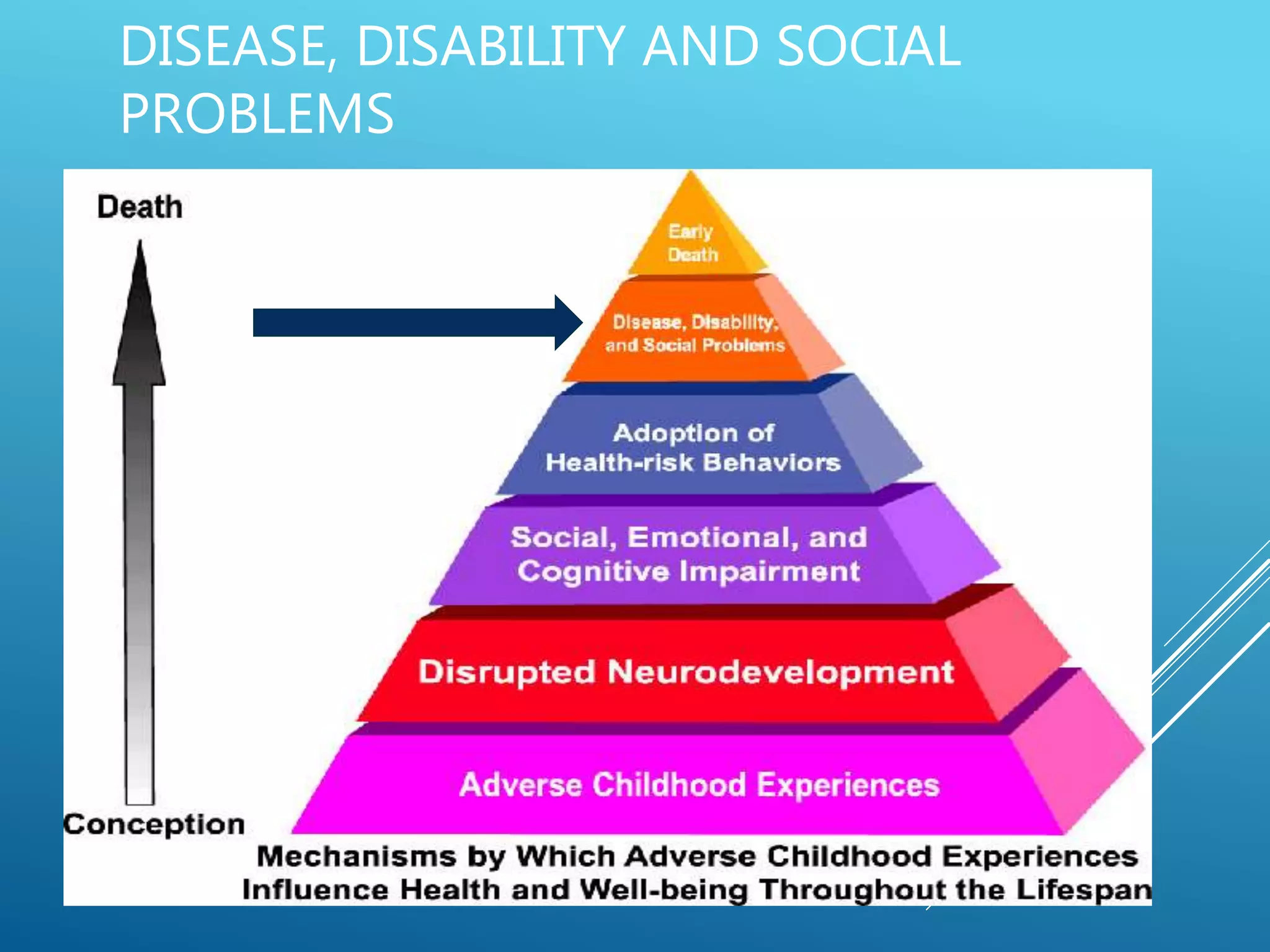
DISEASE, DISABILITY AND SOCIAL
PROBLEMS
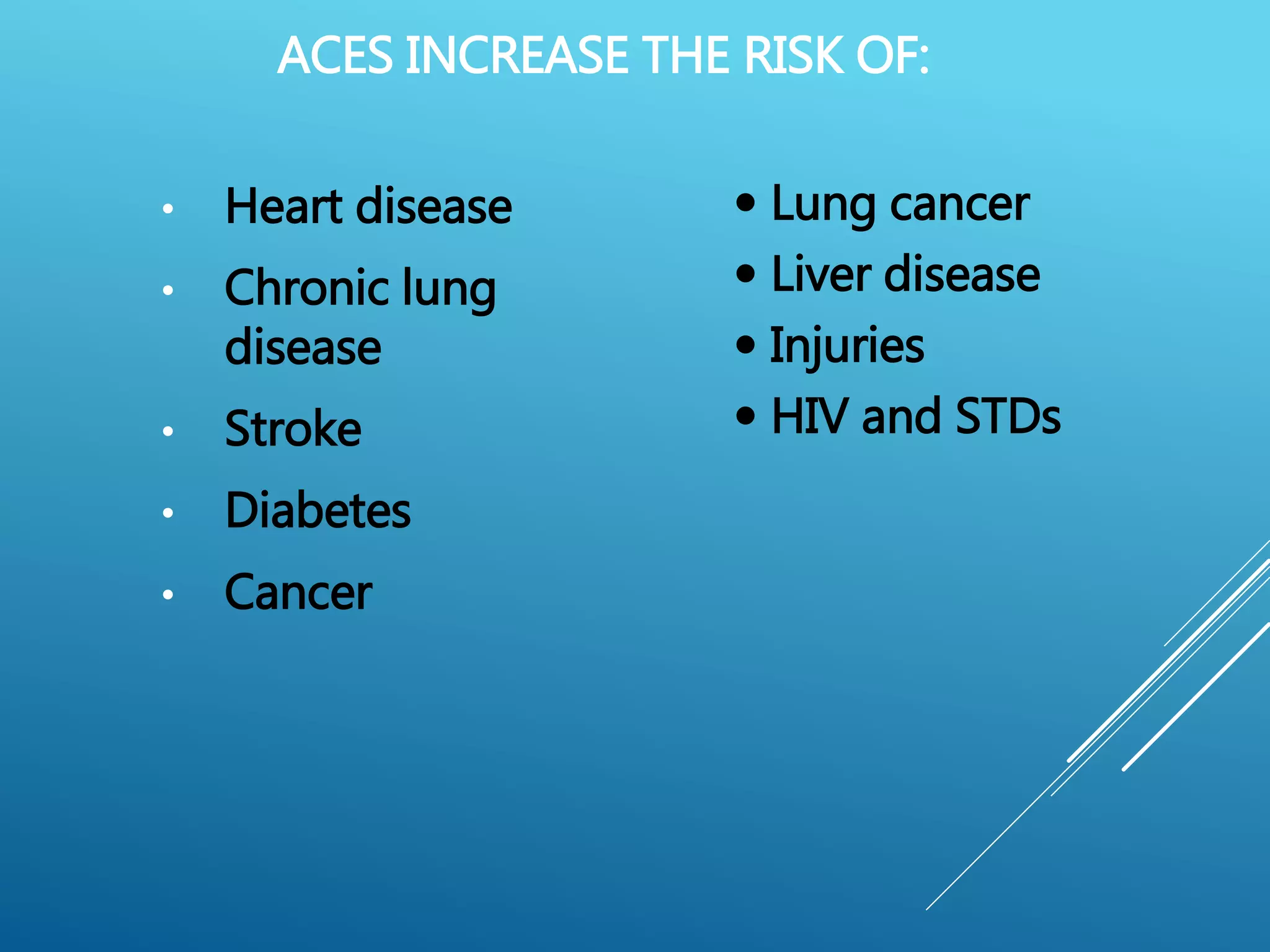
ACES INCREASE THE RISK OF:
• Heart disease
• Chronic lung
disease
• Stroke
• Diabetes
• Cancer
 Lung cancer
 Liver disease
 Injuries
 HIV and STDs
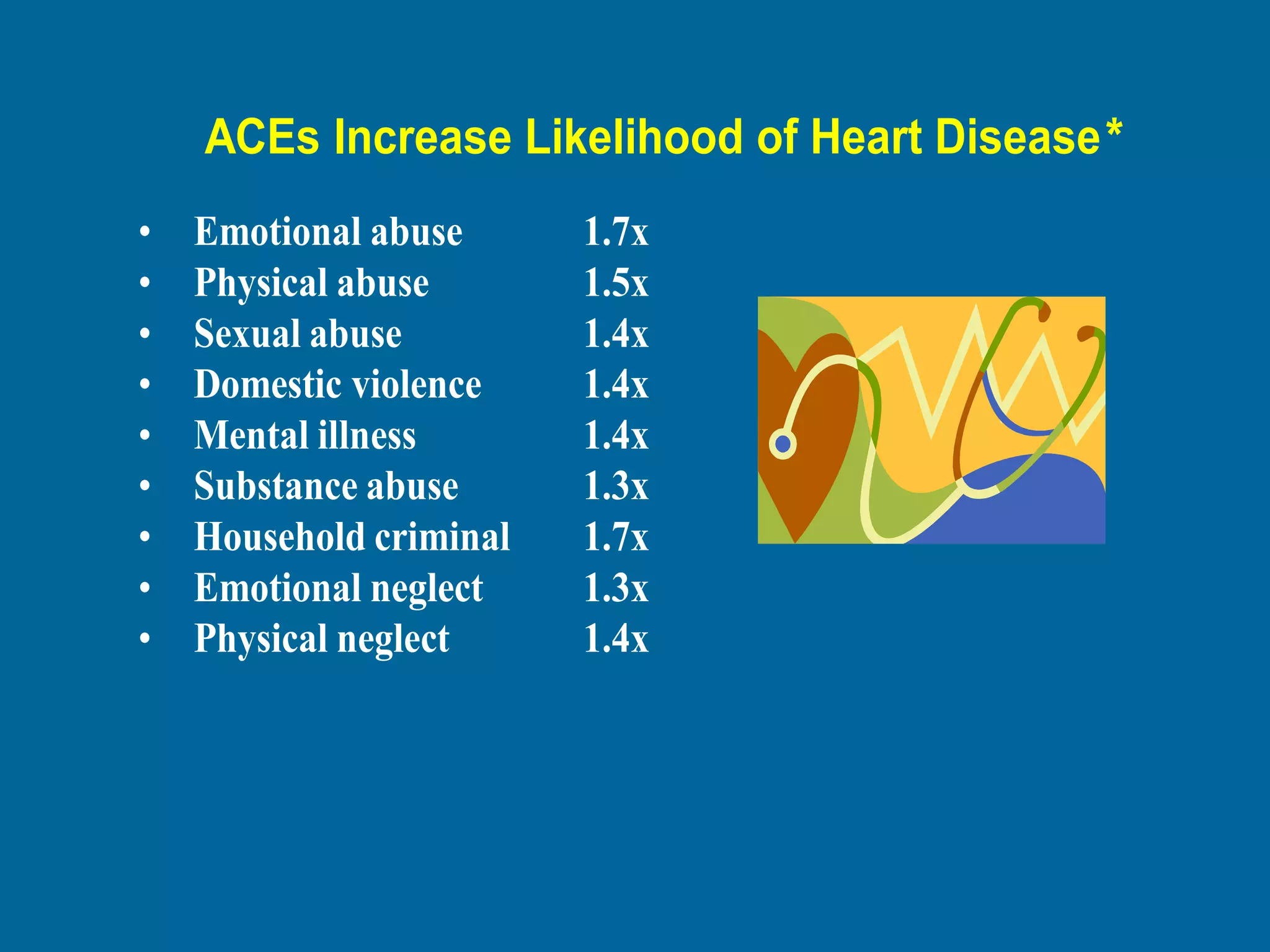
ACEs Increase Likelihood of Heart Disease*
• Emotional abuse 1.7x
• Physical abuse 1.5x
• Sexual abuse 1.4x
• Domestic violence 1.4x
• Mental illness 1.4x
• Substance abuse 1.3x
• Household criminal 1.7x
• Emotional neglect 1.3x
• Physical neglect 1.4x
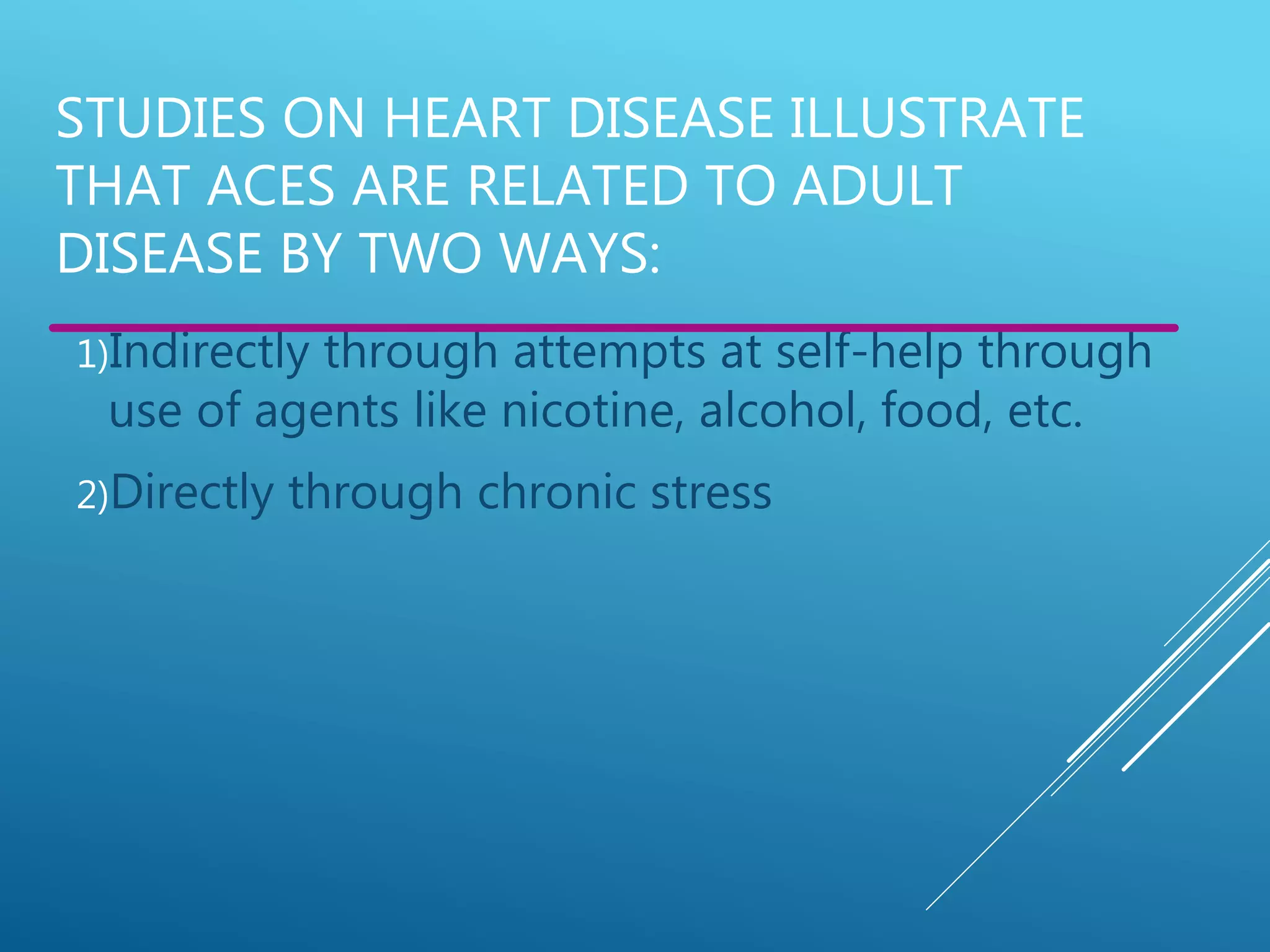
STUDIES ON HEART DISEASE ILLUSTRATE
THAT ACES ARE RELATED TO ADULT
DISEASE BY TWO WAYS:
1)Indirectly through attempts at self-help through
use of agents like nicotine, alcohol, food, etc.
2)Directly through chronic stress
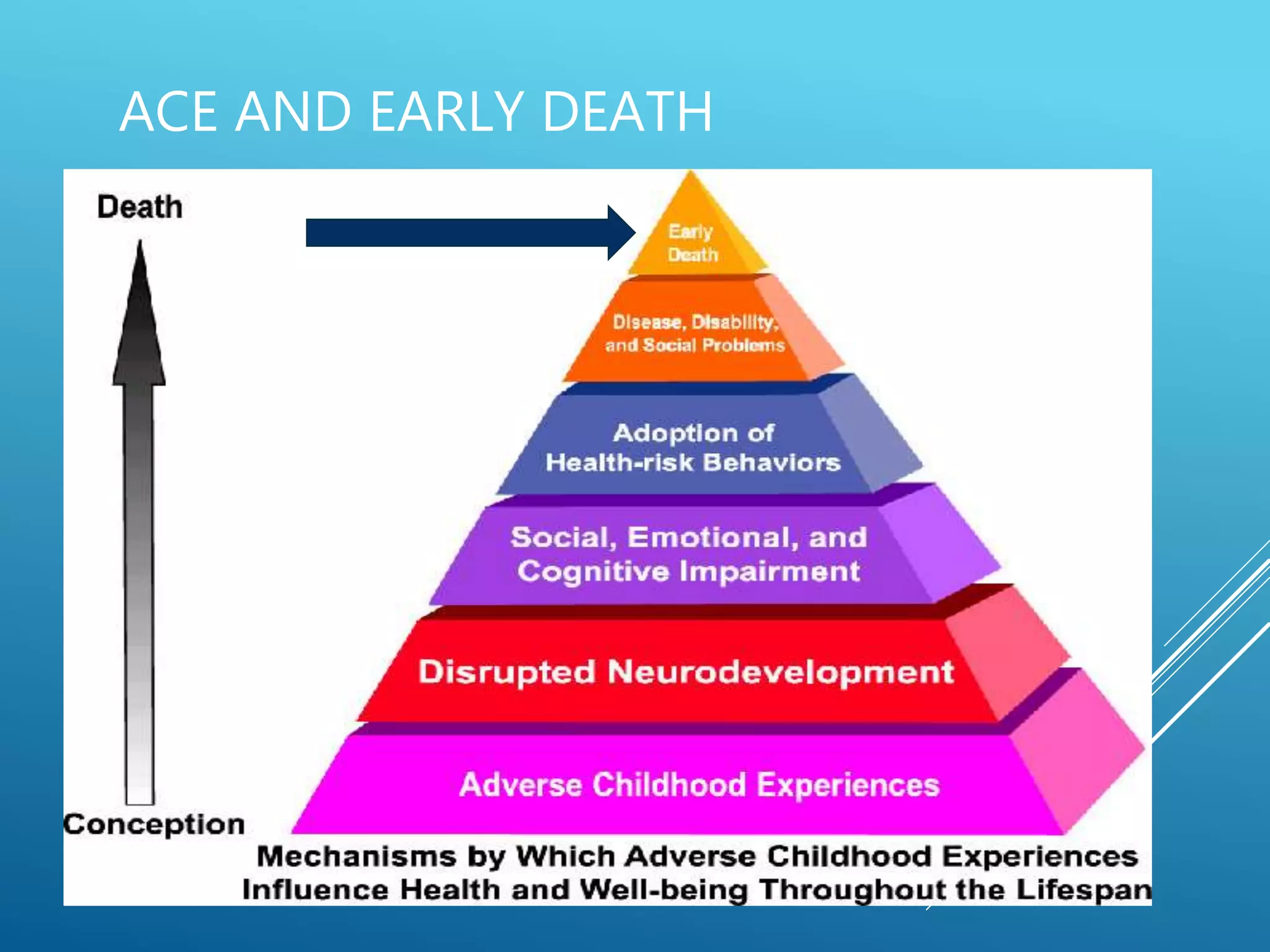
ACE AND EARLY DEATH
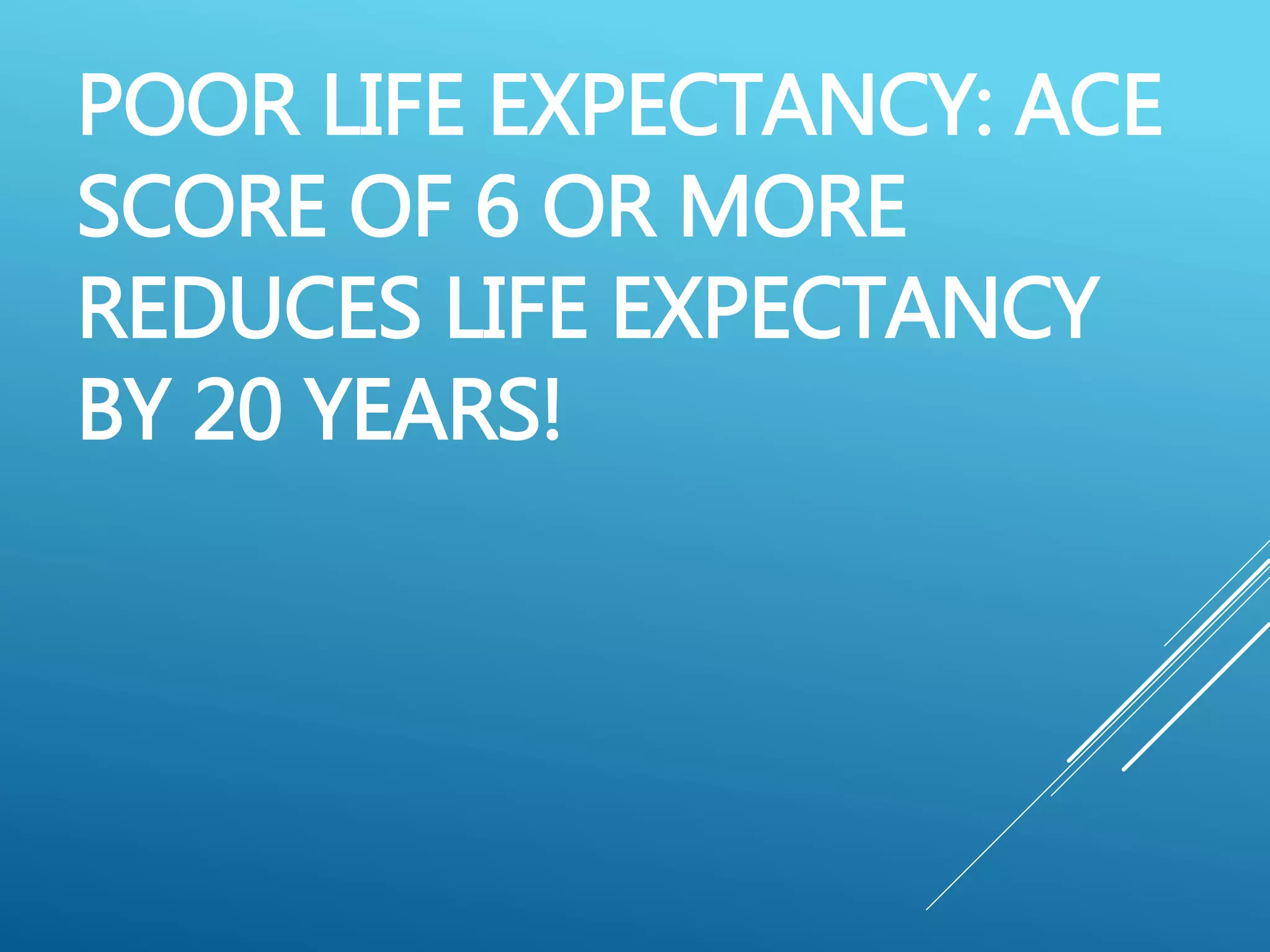
POOR LIFE EXPECTANCY: ACE
SCORE OF 6 OR MORE
REDUCES LIFE EXPECTANCY
BY 20 YEARS!
ACE AND SPIRITUAL DEVELOPMENT
The Impact on View of God, Self-in relationship to God, and
Attachment to God
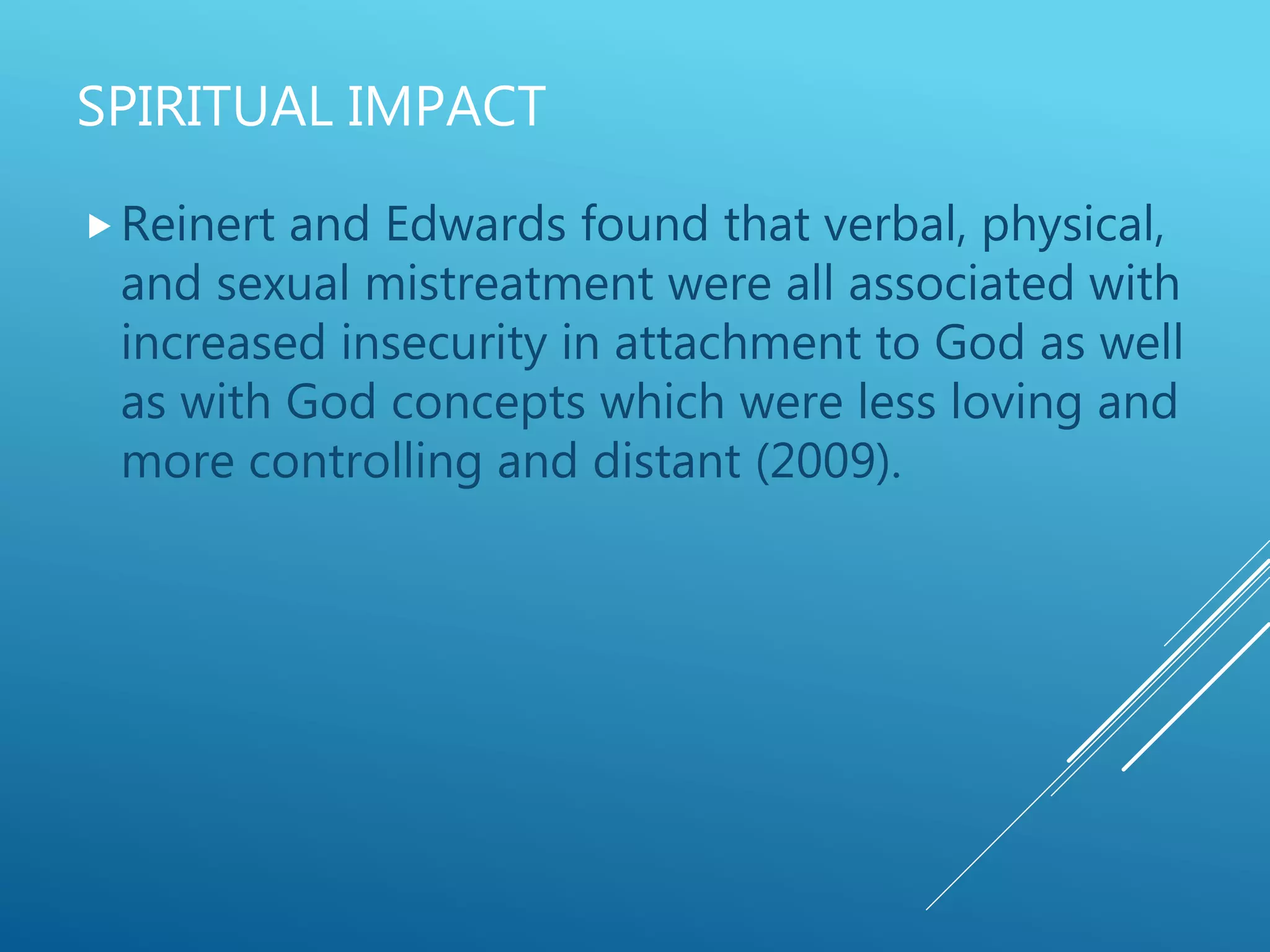
SPIRITUAL IMPACT
If a person’s physical and psychological health is
impacted by adverse childhood experiences even
50 years after their occurrence (Felitti, 2004), then
their spiritual health will also be impacted.
SPIRITUAL IMPACT
 One study found that 77% of their targeted population,
adults who were participating in therapy and had
experienced sexual abuse as a child, reported
experiencing obstacles to spiritual development,
including:
 lack of worthiness,
 existential questions about the meaning and purpose of life,
 unresolved religious questions about the beliefs they grew up
with,
 disillusionment about their faith or religious beliefs,
 distrust, anger, guilt, and other miscellaneous obstacles (Ganje-
Fling, Veach, Kuang, and Hoag, 2000).
Same study: 68% of the comparison group, which
was also participating in therapy but had not
experienced sexual abuse as children, reported
the same obstacles.
Whether or not this group had experienced some
other type of traumatic experience was not
assessed, though the fact that they were in
psychotherapy would indicate the presence of
some type of distress.
Spiritual Impact
SPIRITUAL IMPACT
 One’s image of God appears to grow out of one’s
paternal and maternal care-giving images (Brokaw &
Edwards, 1994; Dickie et al., 1997; Hall & Brokaw,
1995; Hall et al., 1998; Justice & Lambert, 1986;
Nelson, 1971).
 Parents have the strongest influence on their
adolescent’s religiosity (Benson, Donahue, and
Erickson, 1989).
 Poor attachment bonds with God are related to
difficulty finding meaning and purpose in life (Beck
and McDonald, 2004)
SPIRITUAL IMPACT
Reinert and Edwards found that verbal, physical,
and sexual mistreatment were all associated with
increased insecurity in attachment to God as well
as with God concepts which were less loving and
more controlling and distant (2009).
THE FINANCIAL BURDEN TO
SOCIETY OF CHILDHOOD
ABUSE AND TRAUMA IS
STAGGERING.
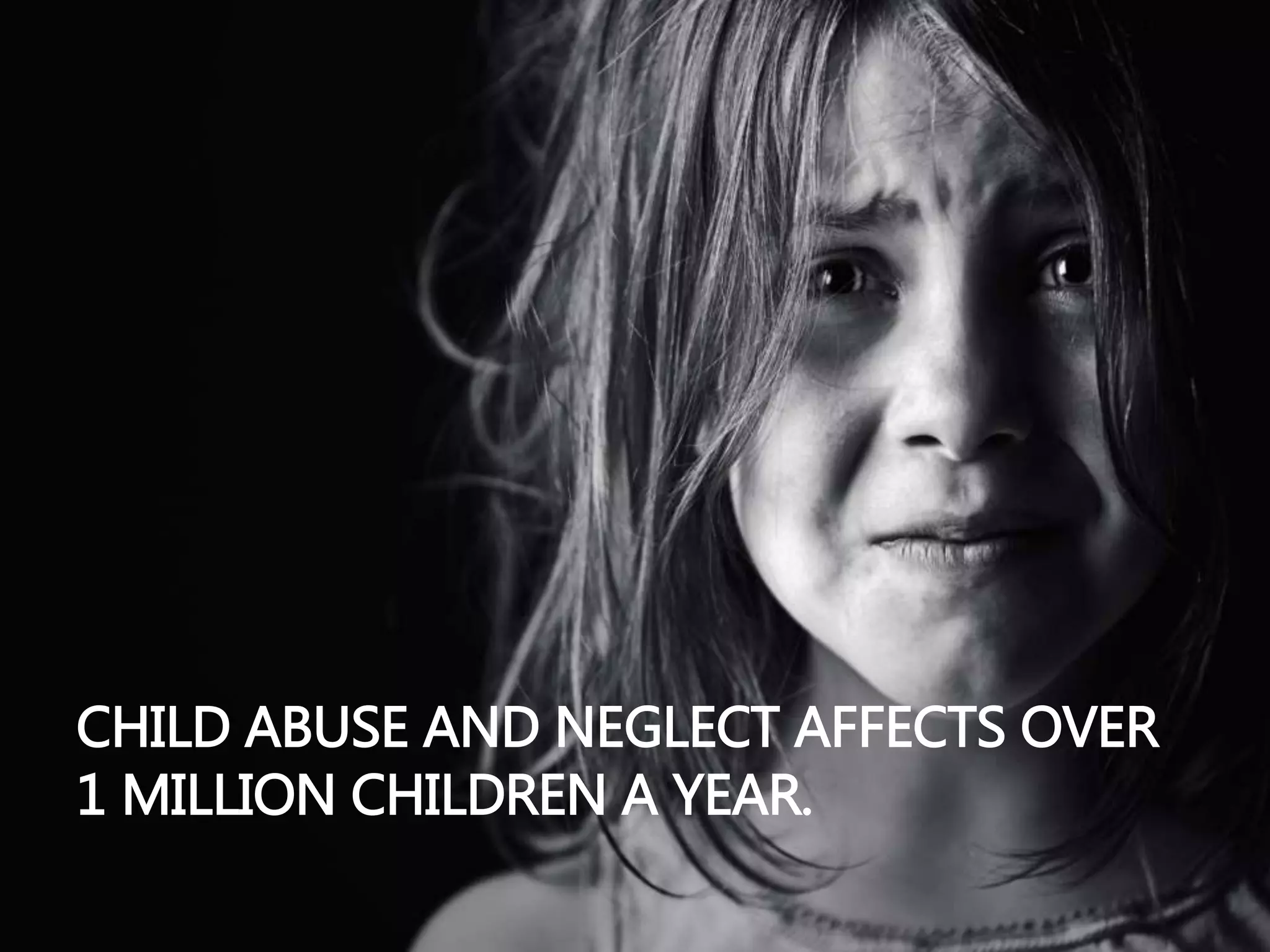
CHILD ABUSE AND NEGLECT AFFECTS OVER
1 MILLION CHILDREN A YEAR.
COSTS OUR
NATION 220
MILLION EVERY
DAY.
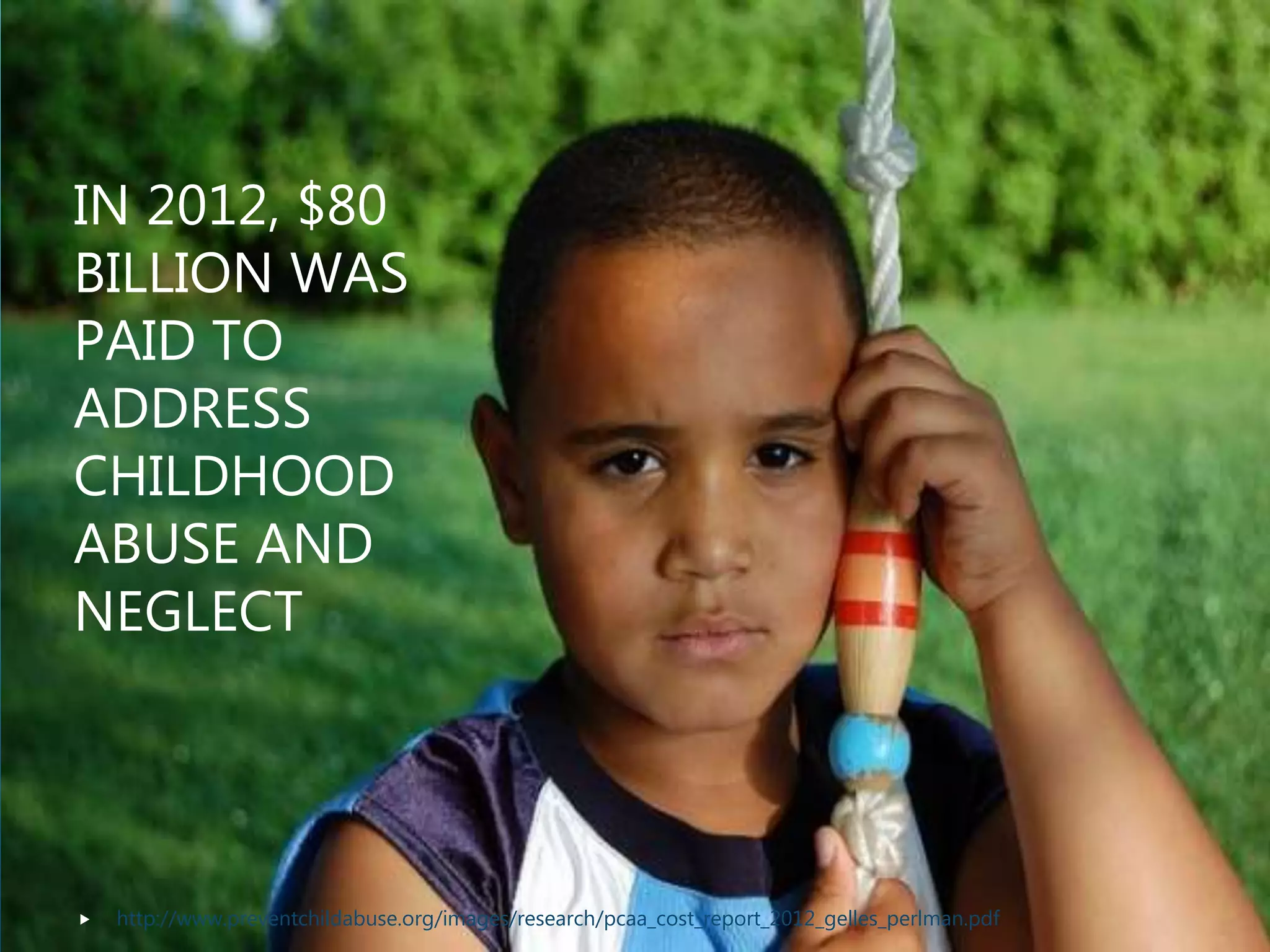
IN 2012, $80
BILLION WAS
PAID TO
ADDRESS
CHILDHOOD
ABUSE AND
NEGLECT
 http://www.preventchildabuse.org/images/research/pcaa_cost_report_2012_gelles_perlman.pdf
SUMMARY OF ACE
IMPACT
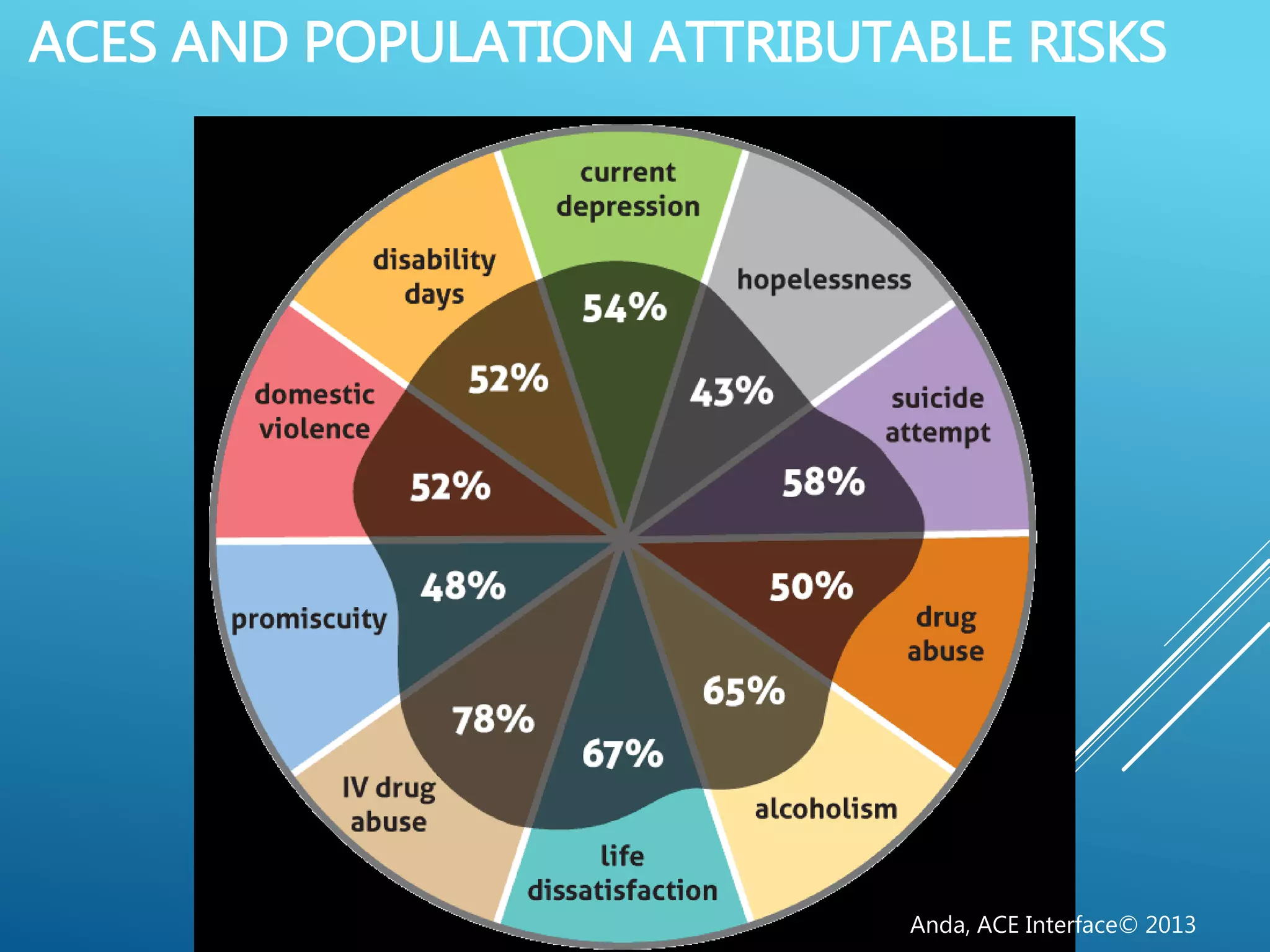
ACES AND POPULATION ATTRIBUTABLE RISKS
Anda, ACE Interface© 2013
ACE Causes serious and chronic health, behavioral
health and social problems
 Impacts one’s perception of self and others.
 Often unrecognized, ignored or denied.
 Finally, ACE is a public health tragedy of epidemic
proportions Leading to long-term use of multi-
human service systems at an estimated annual cost
of $80 billion
 Impacts brain and nervous system directly.
CONSIDERING ALL OF THIS
INFORMATION…
 What can we do about it?
FIRST STEP…
ADMIT WE HAVE A PROBLEM
(One survivor who didn’t get a trauma-informed treatment
approach)
TRAUMA-INFORMED CARE
(SAMHSA-NATIONAL CENTER FOR TRAUMA
INFORMED CARE)
 Trauma-informed care is an approach to engaging people
with histories of trauma that recognizes the presence of
trauma symptoms and acknowledges the role that
trauma has played in their lives. …seeks to change the
paradigm from one that asks, "What's wrong with you?"
to one that asks, "What has happened to you?“
http://www.samhsa.gov/nctic/
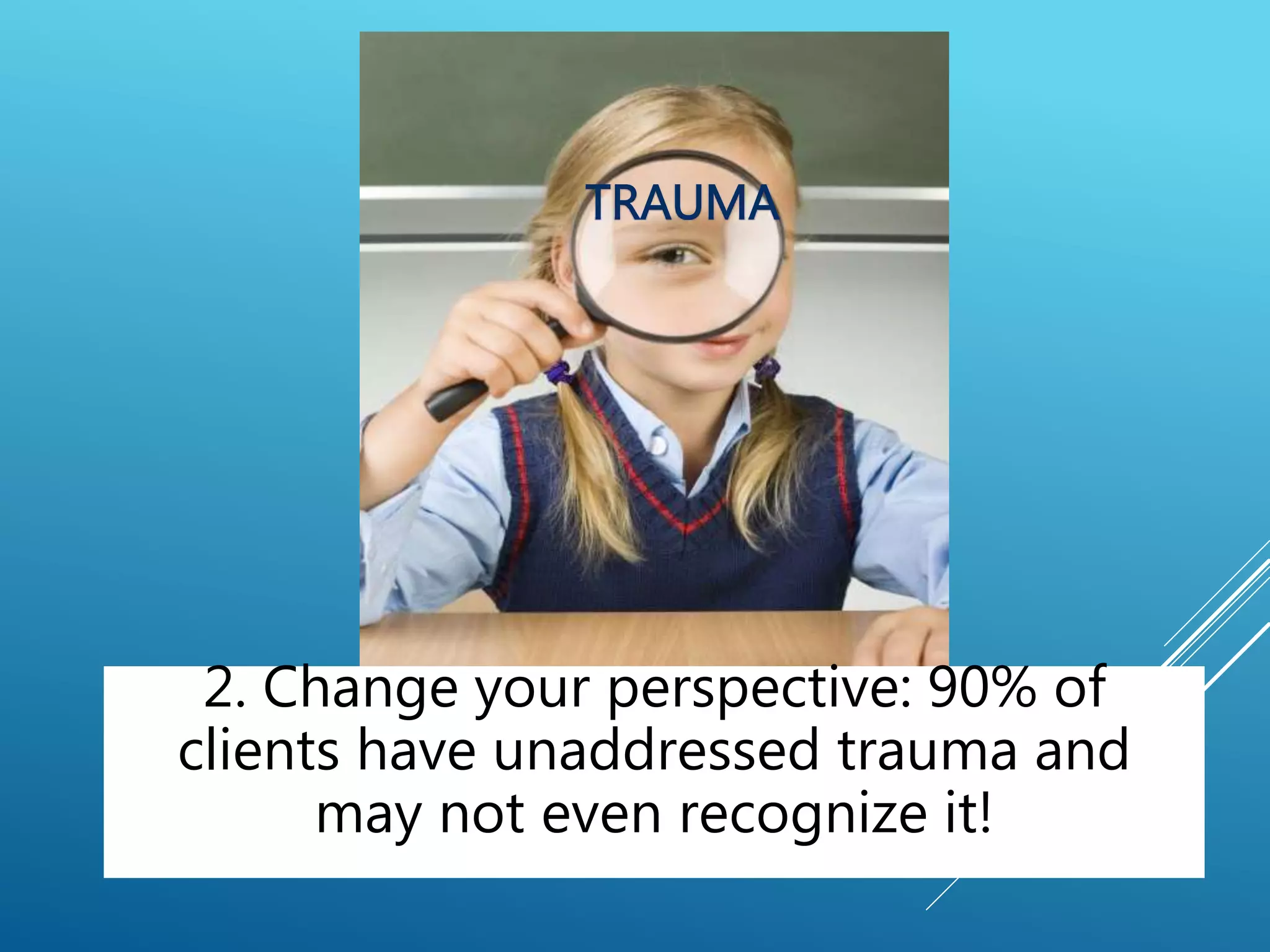
2. Change your perspective: 90% of
clients have unaddressed trauma and
may not even recognize it!
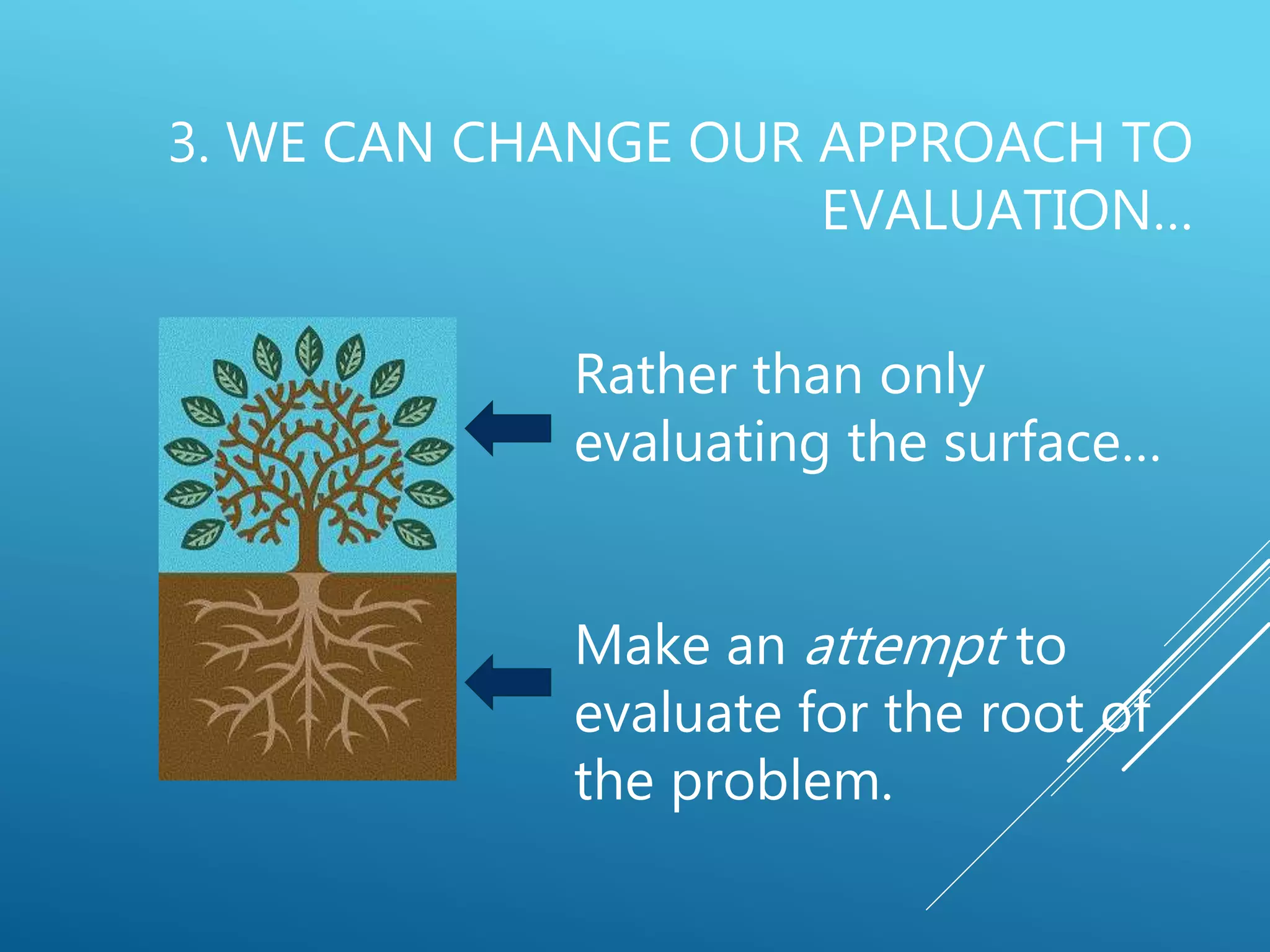
3. WE CAN CHANGE OUR APPROACH TO
EVALUATION…
Rather than only
evaluating the surface…
Make an attempt to
evaluate for the root of
the problem.
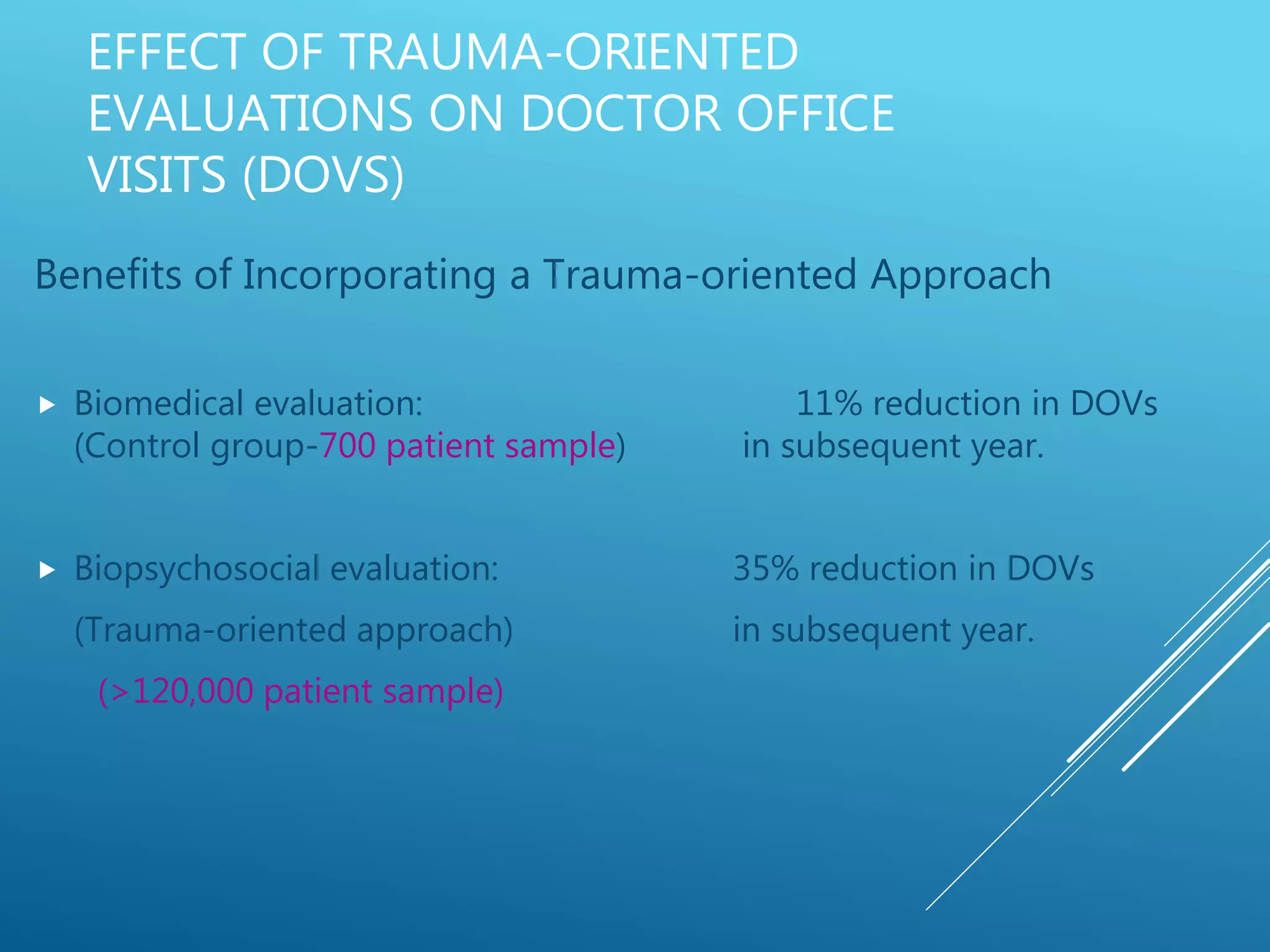
EFFECT OF TRAUMA-ORIENTED
EVALUATIONS ON DOCTOR OFFICE
VISITS (DOVS)
Benefits of Incorporating a Trauma-oriented Approach
 Biomedical evaluation: 11% reduction in DOVs
(Control group-700 patient sample) in subsequent year.
 Biopsychosocial evaluation: 35% reduction in DOVs
(Trauma-oriented approach) in subsequent year.
(>120,000 patient sample)
PRINCIPLES TO APPLY RE: EVALUATION
AND TREATMENT
• Do a trauma evaluation as part of intake or after
first session.
• Avoid Common Errors of Trauma
Informed Care
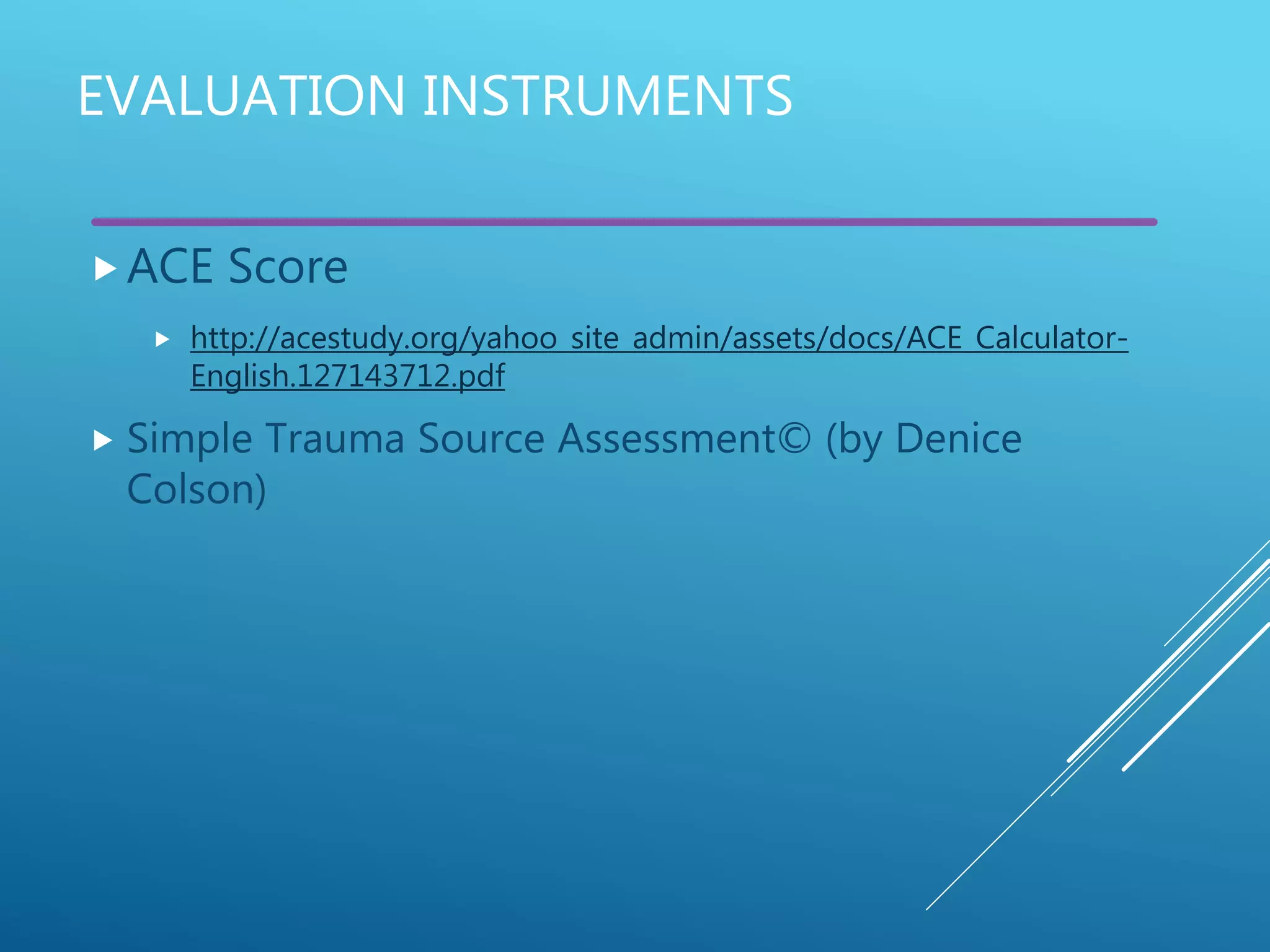
ACE Score
 http://acestudy.org/yahoo_site_admin/assets/docs/ACE_Calculator-
English.127143712.pdf
 Simple Trauma Source Assessment© (by Denice
Colson)
EVALUATION INSTRUMENTS
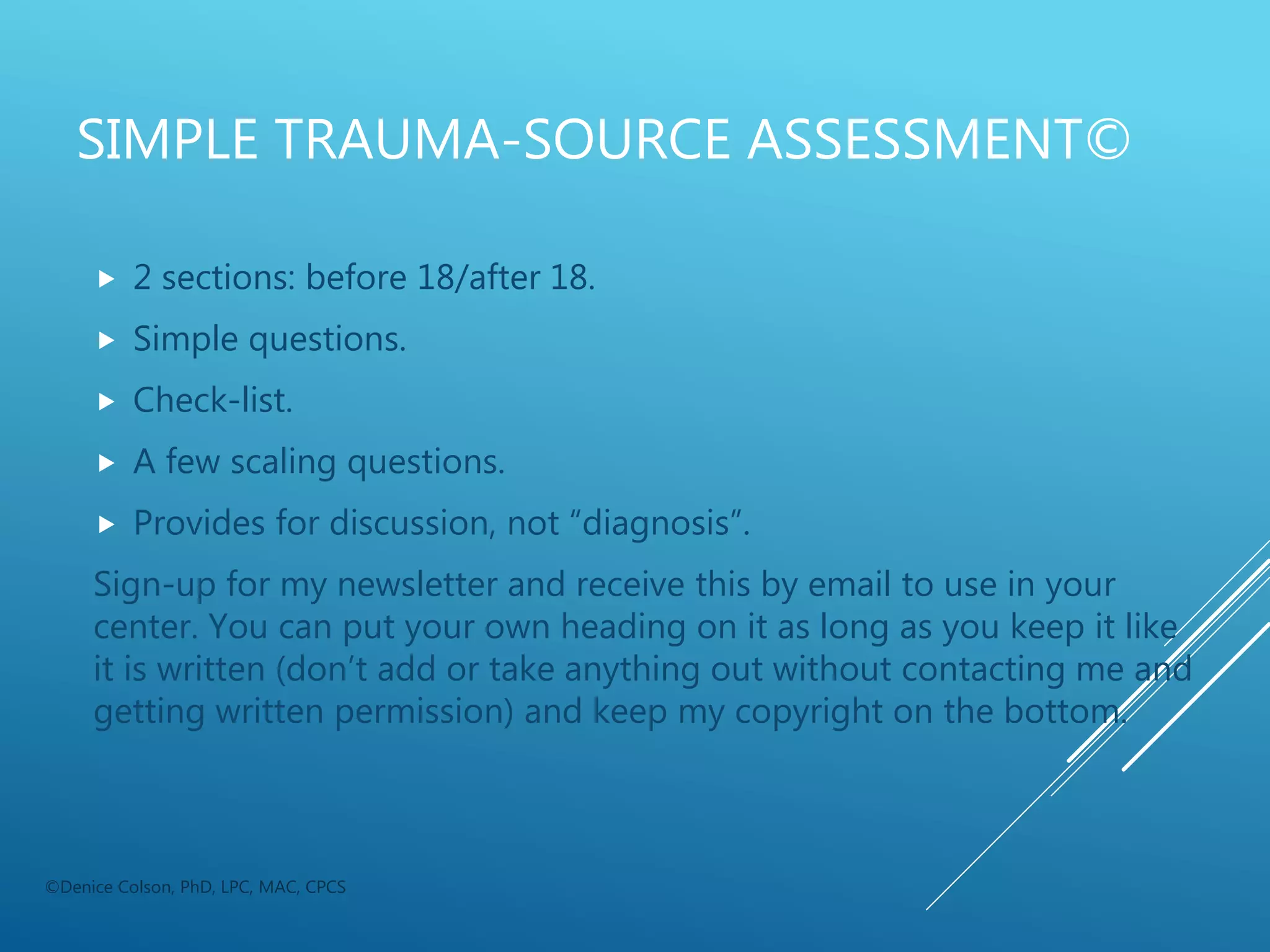
SIMPLE TRAUMA-SOURCE ASSESSMENT©
 2 sections: before 18/after 18.
 Simple questions.
 Check-list.
 A few scaling questions.
 Provides for discussion, not “diagnosis”.
Sign-up for my newsletter and receive this by email to use in your
center. You can put your own heading on it as long as you keep it like
it is written (don’t add or take anything out without contacting me and
getting written permission) and keep my copyright on the bottom.
©Denice Colson, PhD, LPC, MAC, CPCS
HANDOUTS AND EDUCATIONAL
MATERIALS
Impact of Trauma and Abuse
Handout (available on website if you
sign up for my newsletter)
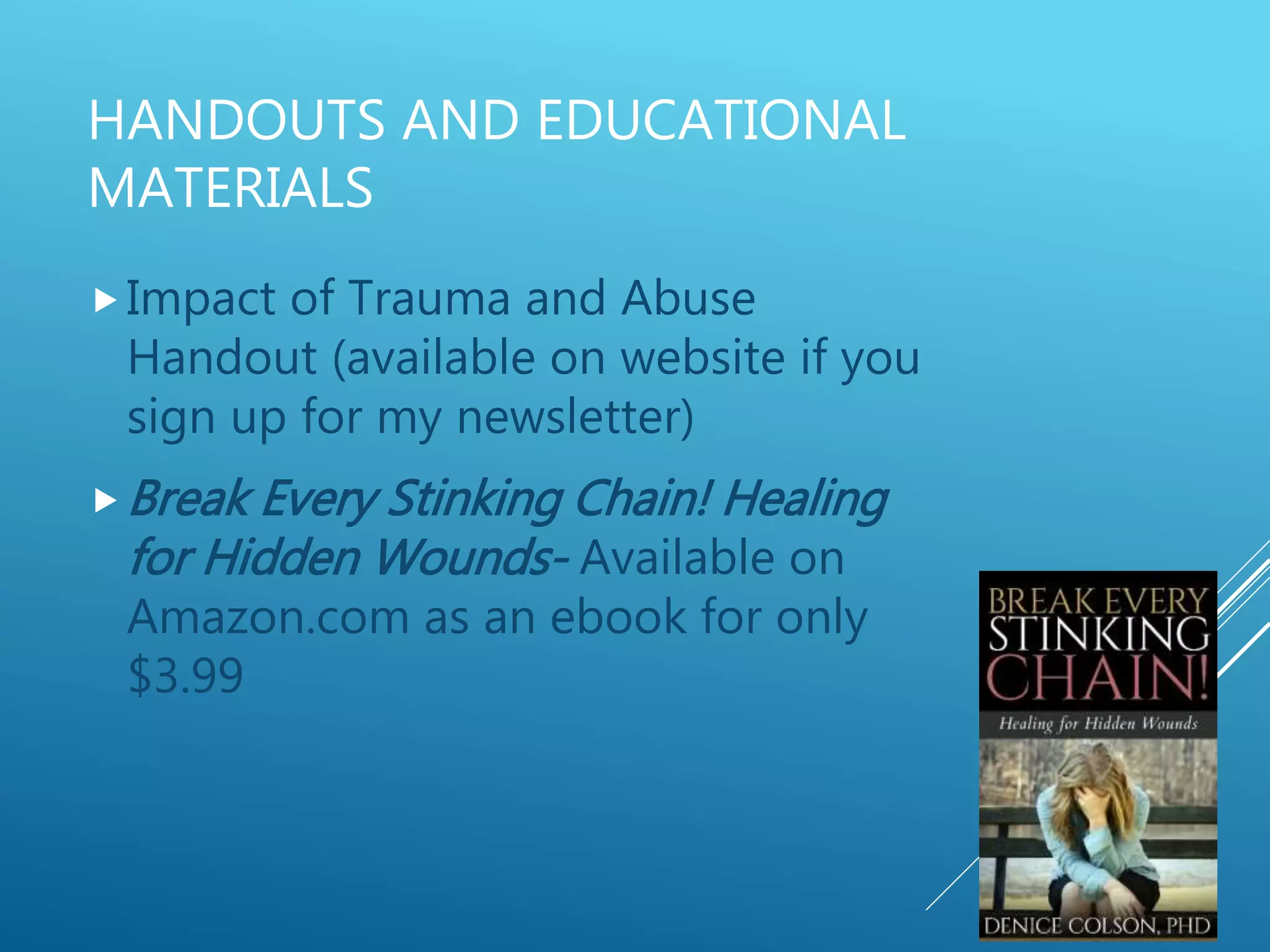
Break Every Stinking Chain! Healing
for Hidden Wounds- Available on
Amazon.com as an ebook for only
$3.99
Avoid Most Common Mistakes: Herman
writes…
“…the single most common therapeutic error
is avoidance of the traumatic material…”
and, “…probably the second most common error is
premature or precipitate engagement in
exploratory work, without sufficient attention to
the tasks of establishing safety and securing a
therapeutic alliance” (1997, p. 172)
GET TRAINED!
Strategic Trauma and Abuse Recovery August 10-
11, 2016, McDonough!
www.TraumaEducation.com
Sign up for email newsletter.
Denice Colson, PhD, LPC, MAC, CPCS* Copyright 2014
86
©Denice Colson 2013
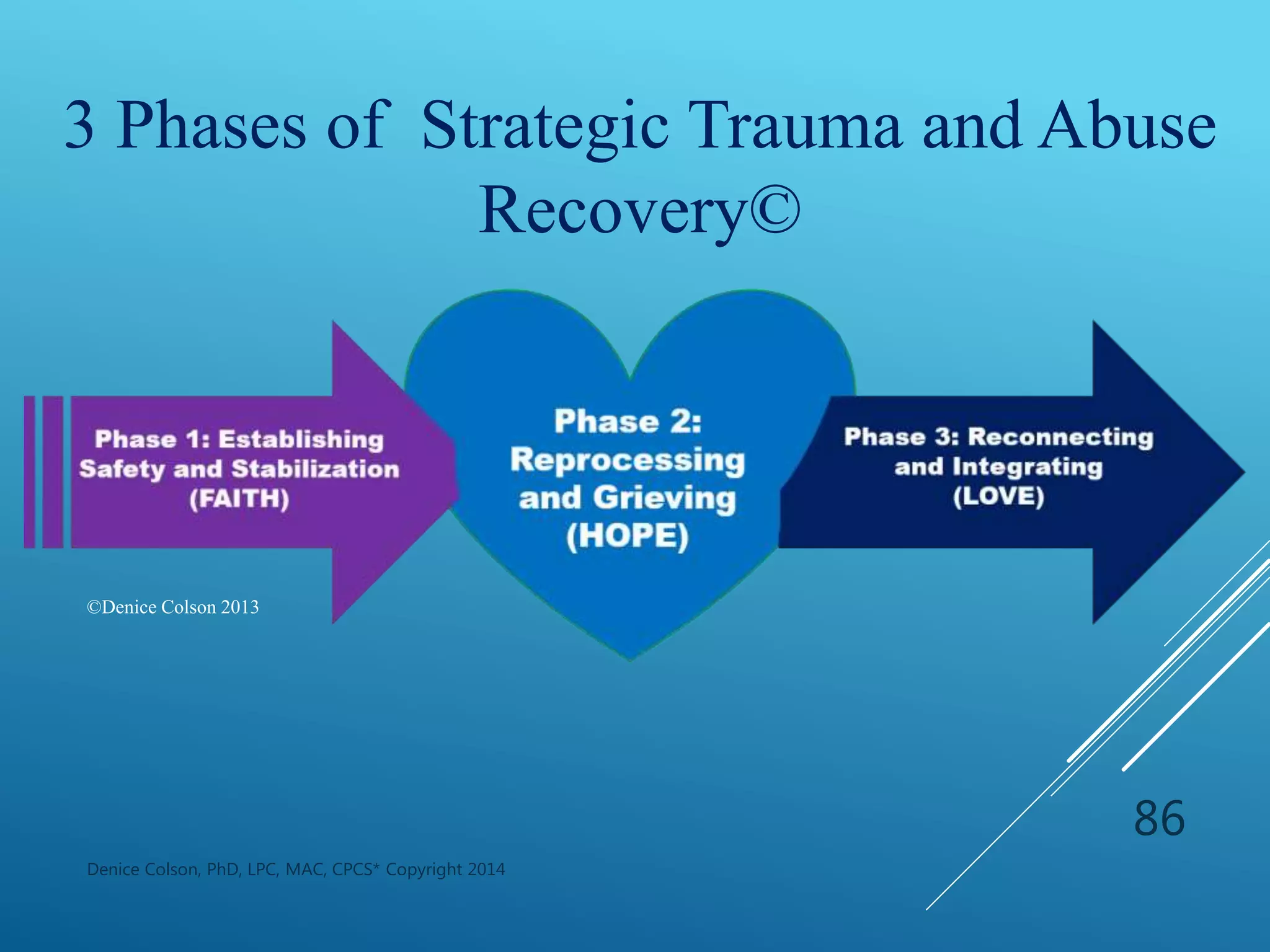
3 Phases of Strategic Trauma and Abuse
Recovery©
87Denice Colson, PhD, LPC, MAC, CPCS* Copyright 2014
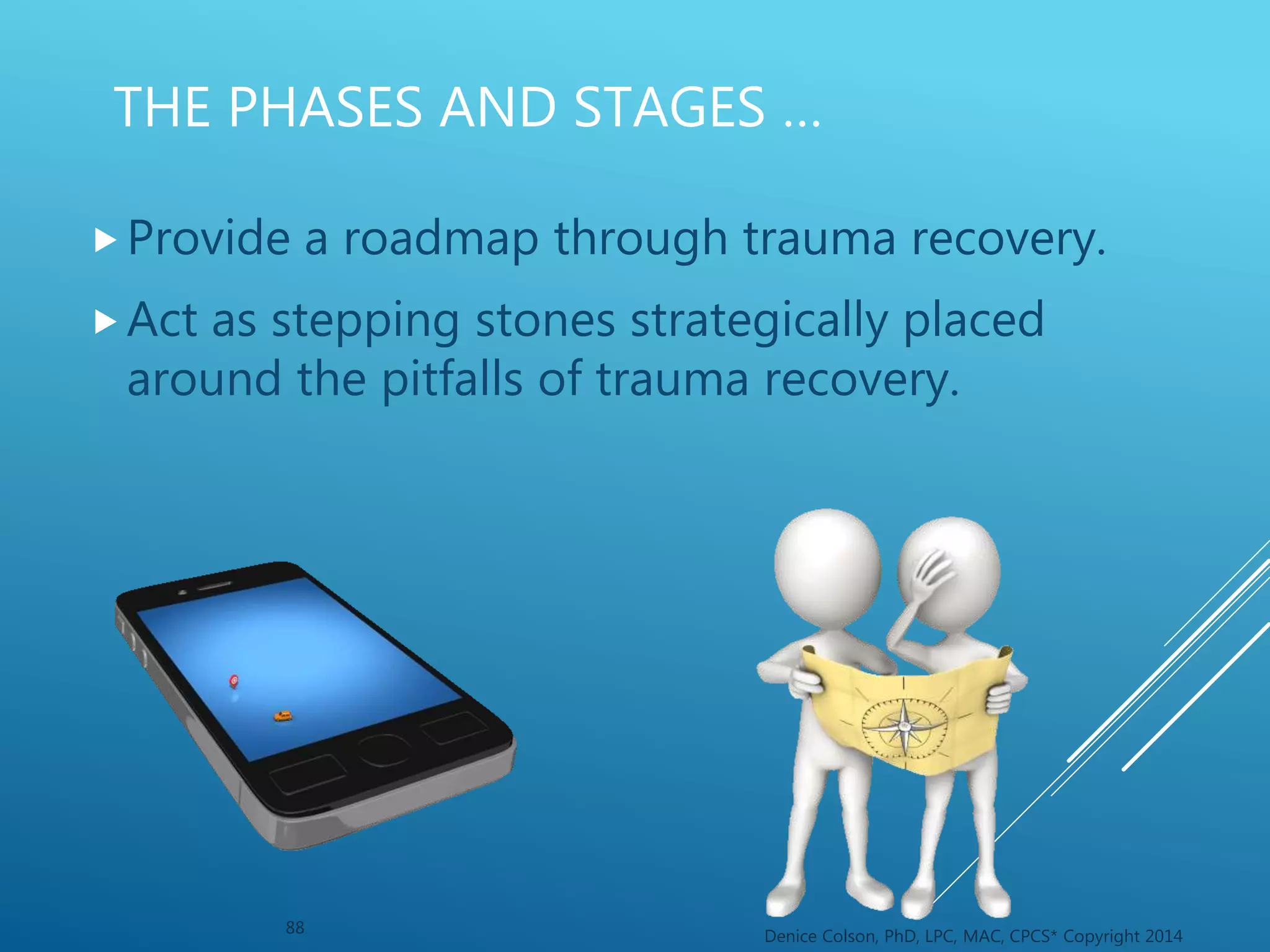
Provide a roadmap through trauma recovery.
Act as stepping stones strategically placed
around the pitfalls of trauma recovery.
88 Denice Colson, PhD, LPC, MAC, CPCS* Copyright 2014
THE PHASES AND STAGES …
CONCLUSION
“I BELIEVE THIS IS THE MOST IMPORTANT
THING THAT YOU CAN EVER DO, TO BEGIN
TO DEAL WITH THIS, WITH THIS
INTERGENERATIONAL TRANSMISSION OF
ADVERSITY THAT CAUSES SO MANY
PROBLEMS IN OUR SOCIETY.”
ROBERT F. ANDA, MD
DENICE COLSON, PHD,
LPC, MAC, CPCS, CCS
 www.TraumaEducation.com
 www.ELCCC.org
 DrColson@TraumaEducation.com
 Supervision, training, coaching , and trauma recovery.

Implementing Trauma-Informed Care in Christian Counseling

  • 1.
    • Denice Colson,PhD, LPC, MAC. CPCS, CCS • Trauma Education & Consultation Services, Inc.
  • 2.
    “ ” 90% OF PEOPLERECEIVING SERVICES FROM BEHAVIORAL HEALTH ORGANIZATIONS HAVE EXPERIENCED TRAUMA.  (National Council for Behavioral Health)
  • 3.
    “ ” OVERALL, 61% OFMEN AND 51% OF WOMEN REPORT EXPERIENCING AT LEAST ONE TRAUMA BY 18.  (SAMHSA, TIP 57)
  • 4.
    “ ” BUT OF SELF-REPORTING ADDICTS,71% REPORT EXPERIENCING AT LEAST ONE TRAUMA.  (SAMHSA, TIP 57)
  • 5.
    MY JOURNEY DENICE COLSON,PHD, LPC, MAC, CPCS, CCS  Worked in the mental health field since 1982.  Experience includes:  Residential treatment for adolescents  Inpatient treatment for children and adults  Developed and managed a co-occurring disorders inpatient program that was specifically Christian in early 1990s in Texas.  Outpatient treatment for adults and adolescents.  Specializing in trauma recovery since 1992-3  Currently Executive Director at Eagle’s Landing Christian Counseling Center with main office in McDonough and satellite office in Conyers.
  • 6.
    MY PURPOSE  Iam a Christian, a Christ-Follower, a Born-Again believer first, and a counselor second.  I see my life purpose as ministry using the methodology of counseling.  I am an “Integrationist” from the beginning of my career.  I believe in the principle from Experiencing God (Henry Blackaby), which is:  Look around, see where God is working, and go and join Him there!  I believe that trauma, especially childhood trauma, is where God is working in the field of counseling NOW.
  • 7.
    Denice Colson, PhD,LPC, MAC, CPCS* Copyright 2014 7 TRAUMA=PAIN “Mental pain is less dramatic than physical pain, but it is more common and also more hard to bear. The frequent attempt to conceal mental pain increases the burden: it is easier to say “My tooth is aching” than to say “My heart is broken.” ― C.S. Lewis, The Problem of Pain
  • 8.
    R. Denice ColsonPhD, LPC, MAC, CPCS* Copyright 2014 8 THE OPPORTUNITY FOR CHRISTIAN COUNSELORS… “We can ignore even pleasure. But pain insists upon being attended to. God whispers to us in our pleasures, speaks in our conscience, but shouts in our pains: it is his megaphone to rouse a deaf world.” (C.S. Lewis, The Problem of Pain)
  • 9.
    2 SHARE EACHOTHER’S BURDENS, AND IN THIS WAY OBEY THE LAW OF CHRIST. (GALATIANS 6:2) We have the opportunity to meet people in their pain, develop a comforting and healing relationship with them, and, by being good ambassadors, introduce them to the ONE who can provide ultimate and eternal healing for their souls. “Comfort, comfort my people,” says your God. 2 “Speak tenderly to Jerusalem. Tell her that her sad days are gone and her sins are pardoned. (Isaiah 40: 1-2)
  • 10.
    www.TheAnnaInstitute.org 18 months Anna CarolynJennings God created us in His image to be in relationship with Him and to demonstrate His goodness Years later – in a mental institution The enemy uses TRAUMA to rob, steal and destroy the beauty God has given us and thereby convince people that He is NOT good.
  • 11.
    OBJECTIVES FOR TODAY Increase yourTrauma-Informed Quotient by:  Introducing the ACE Study  Sharing options for assessment  Introduce a Christian-integrated trauma recovery method, The Strategic Trauma and Abuse Recovery© System
  • 13.
    Vincent Felitti, MD(Kaiser Permanente) Robert F. Anda, MD (CDC) Adverse Childhood Experiences
  • 14.
    Largest scientific researchstudy of it’s kind Analyzes the relationship between multiple categories of childhood trauma (ACEs), and health and behavioral outcomes later in life.
  • 15.
    HOW IT GOTSTARTED… Felitti, V. (2011) Adverse Childhood Experiences and The Origins of Addiction. Neuroscience of Addiction. Presentation to the Alberta Family Wellness Center. Retrieved from http://www.albertafamilywellness.org/resources/video/origins-addiction
  • 16.
    SHE GAINED 400LBS IN A SHORTER TIME THAN IT TOOK TO LOSE 400 LBS. Felitti, V. (2011) Adverse Childhood Experiences and The Origins of Addiction. Neuroscience of Addiction. Presentation to the Alberta Family Wellness Center. Retrieved from http://www.albertafamilywellness.org/resources/video/origins-addiction
  • 17.
    ISSUES RAISED BYPATIENT X… Perhaps overeating and obesity were not the core problem; each was only the marker of the core problem. Like smoke is the marker of a fire.
  • 18.
    PERHAPS WHAT IS MOST OBVIOUS • Maynot be the essence of the problem. • It’s what’s looming beneath the surface that really sinks people’s lives.
  • 19.
    STUDY DESIGN Initiated in1995 and 1997- enrollees at Kaiser Permanente in San Diego are being tracked 17,500+ middle-class American adults Cohort population was 80% white including Hispanic, 10% black, and 10% Asian. Their average age was 57 years; 74% had been to college, 44% had graduated college; 49.5% were men.
  • 20.
     10 questions:Review handout now.  Take the assessment now for yourself and post your score anonymously to PollEverywhere.com by using the app.  Directions: To participate, open your text app. In the “To” screen type 37607. In the message type RDA3. You will receive a response.  Once you find your score, identify the corresponding letter. When the poll is “live” this is what you will text: 20 Denice Colson, PhD, LPC, MAC, CPCS* Copyright 2014 FINDING YOUR ACE SCORE A—0 B—1 C—2 D—3 E—4 F—5 G—6 H—7 I—8 J—9 K--10
  • 21.
    21Denice Colson, PhD,LPC, MAC, CPCS* Copyright 2014
  • 22.
    HOW STRONG ISTHE STUDY?  Replicated in 20 US states and Puerto Rico as well as China, Macedonia, Philippines, Saudi Arabia, South Africa, Thailand, and Viet Nam  ACE surveys had been completed in Albania, Latvia, Lithuania, and Macedonia, with further studies underway in Montenegro, Romania, Russian Federation and Turkey  61 Publications by principles and their associations on CDC.gov  Same results.
  • 23.
    Used a simplescoring system from 0 to 10  Exposure during childhood or adolescence to any category of ACE was scored as one point.  Multiple exposures within a category were not scored ACE Score Determination
  • 24.
    Research outcomes tend tounderstate the findings.
  • 25.
    GENERAL FINDINGS… Less thanhalf of this middle-class population had an ACE Score of 0. One in fourteen had an ACE Score of 4 or more.
  • 26.
    Abuse, by CategoryPrevalence Psychological (by parents) 11% Physical (by parents) 28% Sexual (anyone) 22% PREVALENCE OF ACE
  • 27.
    Neglect, by CategoryPrevalence Emotional 15% Physical 10% PREVALENCE OF ACE
  • 28.
    Household Dysfunction, byCategory (%) Alcoholism or drug use in home 27% Loss of biological parent < age 18 23% Depression or mental illness in home 17% Mother treated violently 13% Imprisoned household member 5% PREVALENCE OF ACE
  • 29.
    Dose-Response Relationship Higher ACEScore Reliably Predicts Prevalence of Disease, Addiction, Death Higher ACE Score Responsegetsbigger The size of the “dose”— the number of ACE categories Drives the “response”— the occurrence of disease, addiction, and death.
  • 30.
  • 31.
    ACE AND NEUROLOGICALDEVELOPMENT http://developingchild.harvard.edu/resources/inbrief-the-impact-of-early- adversity-on-childrens-development-video/
  • 32.
  • 33.
    ACE AND SOCIAL,EMOTIONAL AND COGNITIVE DEVELOPMENT
  • 36.
    ACE SCORE ANDUNINTENDED PREGNANCY OR ELECTIVE ABORTION 0 10 20 30 40 50 60 70 80 %haveUnintendedPG,orAB 0 1 2 3 4 or more ACE Score Unintended Pregnancy Elective Abortion
  • 37.
    Sexual Abuse ofMale Children and Their Likelihood of Impregnating a Teenage Girl 0 5 10 15 20 25 30 35 Not 16-18yrs 11-15 yrs <=10 yrs abused Age when first abused 1.3x 1.4x 1.8x 1.0 ref
  • 38.
    IN OTHER WORDS… Boyswho were sexually abused are more likely to impregnate a teenage girl. The earlier the age when the boy was sexually abused – the greater the likelihood that he will impregnate a teenage girl
  • 39.
    Frequency of BeingPushed, Grabbed, Slapped, Shoved or Had Something Thrown at Oneself or One’s Mother as a Girl and the Likelihood of Ever Having a Teen Pregnancy 0 5 10 15 20 25 30 35 Never Once, Sometimes Often Very Twice often Pink =self Yellow =mother
  • 40.
    ACE SCORE ANDINDICATORS OF IMPAIRED WORKER PERFORMANCE 0 5 10 15 20 25 Absenteeism (>2 days/month Serious Financial Poblems Serious Job Problems 0 1 2 3 4 or more ACE Score PrevalenceofImpaired Performance(%)
  • 41.
    More than 75%of girls in juvenile justice system have been sexually abused. (Calhoun et al, 1993) Criminal Justice Problems and Unaddressed Sexual/Physical Abuse 80% of women in prison and jails have been sexually/physically abused. (Smith, 1998) 100% of men on death row in CA have a history of family violence (Freedman, Hemenway, 2000)
  • 42.
    Chronic Depression 0 10 20 30 40 50 60 70 80 %WithaLifetimeHistoryof Depression 0 12 3 >=4 ACE Score Women Men Adults with an ACE score of 4 or more were 460% more likely to be suffering from depression .
  • 43.
    SUICIDE The likelihood ofadult suicide attempts increased 30-fold, or 3,000%, with an ACE score of 7 or more. Childhood and adolescent suicide attempts increased 51-fold, or 5,100% with an ACE score of 7 or more. One study found childhood sexual abuse to be the single strongest predictor of suicidality. (Read et al, 2001)
  • 44.
    51 – 98%of public mental health clients with severe mental health diagnoses have unaddressed sexual/physical abuse Serious Mental Health Diagnoses and Unaddressed Sexual/Physical Abuse 93% of psychiatrically hospitalized adolescents had histories of physical and/or sexual and emotional trauma. Only 32% met criteria for PTSD (Goodman et al, 1999, Mueser et al, 1998; Cusack et al, 2003)
  • 45.
    • Sense ofhelplessness, paralysis, captivity, inadequacy, powerlessness, danger, fear… LASTING ALTERATIONS IN SELF-PERCEPTION • Sense of Shame, Guilt, Self-Blame, Being Bad… • Sense of defilement, contamination, being spoiled, degraded, debased, despicable, evil… • Sense of complete difference from others, deviance, utter aloneness, isolation, non-human, specialness, unseen, unheard, belief no other person can ever understand…
  • 46.
    ACE AND ADOPTIONOF HEALTH-RISK BEHAVIORS
  • 47.
    ACE AND ADULTALCOHOLISM A 500% increase in adult alcoholism is directly related to adverse childhood experiences. As the number of ACE increase, the more likely a person is to begin drinking before 14, or between 15-17 and the less likely they are to begin drinking at 18 or at 21 (the legal age).
  • 48.
    ACE and AdultAlcoholism 0 2 4 6 8 10 12 14 16 18 %Alcoholic ACE Score 0 1 2 3 4+
  • 49.
    ACE AND OBESITY 66%reported one or more type of abuse. Obesity risk increased with number and severity of each type of abuse. International Journal of Obesity (2002) 26, 1075 – 1082. doi:10.1038=sj.ijo.0802038
  • 50.
    ACE AND CURRENT SMOKING Achild with 6 or more categories of adverse childhood experiences is 250% more likely to become an adult smoker .
  • 51.
    ACE and CurrentSmoking 0 2 4 6 8 10 12 14 16 18 20 0 1 2 3 4-5 6 or more ACE Score %
  • 52.
    ACE AND IVDRUG USE A male child with an ACE score of 6 has a 4,600% increase in the likelihood that he will become an IV drug user later in life
  • 53.
    Adverse Childhood Experiencesand Likelihood of > 50 Sexual Partners 0 1 2 3 4 AdjustedOddsRatio 0 1 2 3 4 or more ACE Score Higher # of ACEs more likelihood of the adult having had 50 or more sexual partners and being at risk for unwanted pregnancy, socially transmitted diseases, HIV/AIDs.
  • 54.
    DISEASE, DISABILITY ANDSOCIAL PROBLEMS
  • 55.
    ACES INCREASE THERISK OF: • Heart disease • Chronic lung disease • Stroke • Diabetes • Cancer  Lung cancer  Liver disease  Injuries  HIV and STDs
  • 56.
    ACEs Increase Likelihoodof Heart Disease* • Emotional abuse 1.7x • Physical abuse 1.5x • Sexual abuse 1.4x • Domestic violence 1.4x • Mental illness 1.4x • Substance abuse 1.3x • Household criminal 1.7x • Emotional neglect 1.3x • Physical neglect 1.4x
  • 57.
    STUDIES ON HEARTDISEASE ILLUSTRATE THAT ACES ARE RELATED TO ADULT DISEASE BY TWO WAYS: 1)Indirectly through attempts at self-help through use of agents like nicotine, alcohol, food, etc. 2)Directly through chronic stress
  • 58.
  • 59.
    POOR LIFE EXPECTANCY:ACE SCORE OF 6 OR MORE REDUCES LIFE EXPECTANCY BY 20 YEARS!
  • 60.
    ACE AND SPIRITUALDEVELOPMENT The Impact on View of God, Self-in relationship to God, and Attachment to God
  • 61.
    SPIRITUAL IMPACT If aperson’s physical and psychological health is impacted by adverse childhood experiences even 50 years after their occurrence (Felitti, 2004), then their spiritual health will also be impacted.
  • 62.
    SPIRITUAL IMPACT  Onestudy found that 77% of their targeted population, adults who were participating in therapy and had experienced sexual abuse as a child, reported experiencing obstacles to spiritual development, including:  lack of worthiness,  existential questions about the meaning and purpose of life,  unresolved religious questions about the beliefs they grew up with,  disillusionment about their faith or religious beliefs,  distrust, anger, guilt, and other miscellaneous obstacles (Ganje- Fling, Veach, Kuang, and Hoag, 2000).
  • 63.
    Same study: 68%of the comparison group, which was also participating in therapy but had not experienced sexual abuse as children, reported the same obstacles. Whether or not this group had experienced some other type of traumatic experience was not assessed, though the fact that they were in psychotherapy would indicate the presence of some type of distress. Spiritual Impact
  • 64.
    SPIRITUAL IMPACT  One’simage of God appears to grow out of one’s paternal and maternal care-giving images (Brokaw & Edwards, 1994; Dickie et al., 1997; Hall & Brokaw, 1995; Hall et al., 1998; Justice & Lambert, 1986; Nelson, 1971).  Parents have the strongest influence on their adolescent’s religiosity (Benson, Donahue, and Erickson, 1989).  Poor attachment bonds with God are related to difficulty finding meaning and purpose in life (Beck and McDonald, 2004)
  • 65.
    SPIRITUAL IMPACT Reinert andEdwards found that verbal, physical, and sexual mistreatment were all associated with increased insecurity in attachment to God as well as with God concepts which were less loving and more controlling and distant (2009).
  • 66.
    THE FINANCIAL BURDENTO SOCIETY OF CHILDHOOD ABUSE AND TRAUMA IS STAGGERING.
  • 67.
    CHILD ABUSE ANDNEGLECT AFFECTS OVER 1 MILLION CHILDREN A YEAR.
  • 68.
  • 69.
    IN 2012, $80 BILLIONWAS PAID TO ADDRESS CHILDHOOD ABUSE AND NEGLECT  http://www.preventchildabuse.org/images/research/pcaa_cost_report_2012_gelles_perlman.pdf
  • 70.
  • 71.
    ACES AND POPULATIONATTRIBUTABLE RISKS Anda, ACE Interface© 2013
  • 72.
    ACE Causes seriousand chronic health, behavioral health and social problems  Impacts one’s perception of self and others.  Often unrecognized, ignored or denied.  Finally, ACE is a public health tragedy of epidemic proportions Leading to long-term use of multi- human service systems at an estimated annual cost of $80 billion  Impacts brain and nervous system directly.
  • 73.
    CONSIDERING ALL OFTHIS INFORMATION…  What can we do about it?
  • 74.
    FIRST STEP… ADMIT WEHAVE A PROBLEM (One survivor who didn’t get a trauma-informed treatment approach)
  • 76.
    TRAUMA-INFORMED CARE (SAMHSA-NATIONAL CENTERFOR TRAUMA INFORMED CARE)  Trauma-informed care is an approach to engaging people with histories of trauma that recognizes the presence of trauma symptoms and acknowledges the role that trauma has played in their lives. …seeks to change the paradigm from one that asks, "What's wrong with you?" to one that asks, "What has happened to you?“ http://www.samhsa.gov/nctic/
  • 77.
    2. Change yourperspective: 90% of clients have unaddressed trauma and may not even recognize it!
  • 78.
    3. WE CANCHANGE OUR APPROACH TO EVALUATION… Rather than only evaluating the surface… Make an attempt to evaluate for the root of the problem.
  • 79.
    EFFECT OF TRAUMA-ORIENTED EVALUATIONSON DOCTOR OFFICE VISITS (DOVS) Benefits of Incorporating a Trauma-oriented Approach  Biomedical evaluation: 11% reduction in DOVs (Control group-700 patient sample) in subsequent year.  Biopsychosocial evaluation: 35% reduction in DOVs (Trauma-oriented approach) in subsequent year. (>120,000 patient sample)
  • 80.
    PRINCIPLES TO APPLYRE: EVALUATION AND TREATMENT • Do a trauma evaluation as part of intake or after first session. • Avoid Common Errors of Trauma Informed Care
  • 81.
    ACE Score  http://acestudy.org/yahoo_site_admin/assets/docs/ACE_Calculator- English.127143712.pdf Simple Trauma Source Assessment© (by Denice Colson) EVALUATION INSTRUMENTS
  • 82.
    SIMPLE TRAUMA-SOURCE ASSESSMENT© 2 sections: before 18/after 18.  Simple questions.  Check-list.  A few scaling questions.  Provides for discussion, not “diagnosis”. Sign-up for my newsletter and receive this by email to use in your center. You can put your own heading on it as long as you keep it like it is written (don’t add or take anything out without contacting me and getting written permission) and keep my copyright on the bottom. ©Denice Colson, PhD, LPC, MAC, CPCS
  • 83.
    HANDOUTS AND EDUCATIONAL MATERIALS Impactof Trauma and Abuse Handout (available on website if you sign up for my newsletter) Break Every Stinking Chain! Healing for Hidden Wounds- Available on Amazon.com as an ebook for only $3.99
  • 84.
    Avoid Most CommonMistakes: Herman writes… “…the single most common therapeutic error is avoidance of the traumatic material…” and, “…probably the second most common error is premature or precipitate engagement in exploratory work, without sufficient attention to the tasks of establishing safety and securing a therapeutic alliance” (1997, p. 172)
  • 85.
    GET TRAINED! Strategic Traumaand Abuse Recovery August 10- 11, 2016, McDonough! www.TraumaEducation.com Sign up for email newsletter.
  • 86.
    Denice Colson, PhD,LPC, MAC, CPCS* Copyright 2014 86 ©Denice Colson 2013 3 Phases of Strategic Trauma and Abuse Recovery©
  • 87.
    87Denice Colson, PhD,LPC, MAC, CPCS* Copyright 2014
  • 88.
    Provide a roadmapthrough trauma recovery. Act as stepping stones strategically placed around the pitfalls of trauma recovery. 88 Denice Colson, PhD, LPC, MAC, CPCS* Copyright 2014 THE PHASES AND STAGES …
  • 89.
  • 90.
    “I BELIEVE THISIS THE MOST IMPORTANT THING THAT YOU CAN EVER DO, TO BEGIN TO DEAL WITH THIS, WITH THIS INTERGENERATIONAL TRANSMISSION OF ADVERSITY THAT CAUSES SO MANY PROBLEMS IN OUR SOCIETY.” ROBERT F. ANDA, MD
  • 91.
    DENICE COLSON, PHD, LPC,MAC, CPCS, CCS  www.TraumaEducation.com  www.ELCCC.org  DrColson@TraumaEducation.com  Supervision, training, coaching , and trauma recovery.