© OPITZ CONSULTING 2020
¢¢¢ Digitale Service Manufaktur
© OPITZ CONSULTING 2020
Sven Bernhardt, Chief Architect / Integration
Evangelist
Implementing API-led
Cloud-native apps on OCI
© OPITZ CONSULTING 2020 Implementing API-led Cloud-native apps on OCI
That’s me
Sven Bernhardt
Cloud-Native enthusiast, API & integration geek. Always curious how new
technologies and concepts can help to make things more valuable and
efficient.
Proud father of a son, passionate football/soccer fan and player. Loves
listening to good hand-made music (Heavy Metal).
¢ Chief Architect / Integration Evangelist
@OPITZ CONSULTING Deutschland GmbH
¢ Oracle ACE Director
@sbernhardt
https://svenbernhardt.wordpress.com/
Seite 2
© OPITZ CONSULTING 2020 Seite 3
Agenda
1
2
3
4
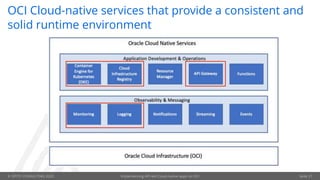
5
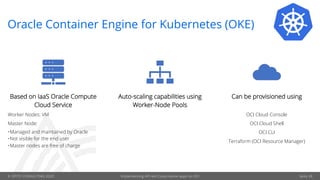
Cloud-Native apps development
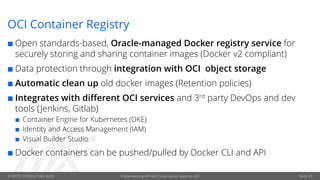
API-led architecture and API design-first
Cloud-native development approach
OCI Cloud-native Services
Summary
Implementing API-led Cloud-native apps on OCI
© OPITZ CONSULTING 2020
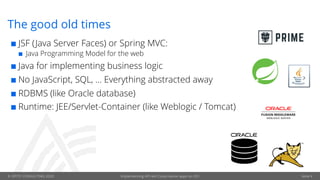
¢ JSF (Java Server Faces) or Spring MVC:
¢ Java Programming Model for the web
¢ Java for implementing business logic
¢ No JavaScript, SQL, … Everything abstracted away
¢ RDBMS (like Oracle database)
¢ Runtime: JEE/Servlet-Container (like Weblogic / Tomcat)
The good old times
Implementing API-led Cloud-native apps on OCI Seite 4
© OPITZ CONSULTING 2020
¢ One Language
¢ One Development Stack
¢ Production is an afterthought
¢ Is that really all?
¢ Not quite, because sometimes we had things like Maven, Git or
Jenkins CI
¢ But that’s it; Really!
The world was easy, wasn’t it?
Implementing API-led Cloud-native apps on OCI Seite 5
© OPITZ CONSULTING 2020 Seite 6
Cloud-Native apps development
1
Implementing API-led Cloud-native apps on OCI
© OPITZ CONSULTING 2020 Implementing API-led Cloud-native apps on OCI Seite 7
Why should I care about Cloud-Native development?
¢ Cloud is a competitive advantage (if used the right way)
¢ Lower total cost of ownership (CAPEX à OPEX)
¢ Increased speed / idea-to-market
¢ Increased scalability
¢ Increased flexibility
© OPITZ CONSULTING 2020 Implementing API-led Cloud-native apps on OCI Seite 8
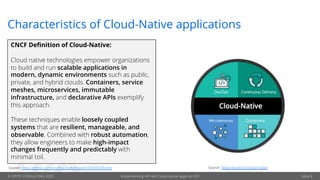
Characteristics of Cloud-Native applications
CNCF Definition of Cloud-Native:
Cloud native technologies empower organizations
to build and run scalable applications in
modern, dynamic environments such as public,
private, and hybrid clouds. Containers, service
meshes, microservices, immutable
infrastructure, and declarative APIs exemplify
this approach.
These techniques enable loosely coupled
systems that are resilient, manageable, and
observable. Combined with robust automation,
they allow engineers to make high-impact
changes frequently and predictably with
minimal toil.
Source: https://github.com/cncf/toc/blob/master/DEFINITION.md Source: https://pivotal.io/cloud-native
© OPITZ CONSULTING 2020 Implementing API-led Cloud-native apps on OCI Seite 9
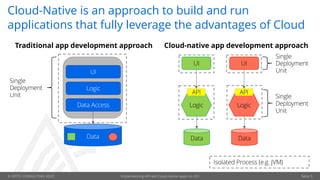
Cloud-Native is an approach to build and run
applications that fully leverage the advantages of Cloud
Data
Single
Deployment
Unit
Traditional app development approach Cloud-native app development approach
UI
Logic
Data Access
UI
Logic
API
Data
UI
Logic
API
Data
Single
Deployment
Unit
Single
Deployment
Unit
Isolated Process (e.g. JVM)
© OPITZ CONSULTING 2020 Seite 10
Cloud-native characteristics
API design-first
• Define the contract before implementing
• Supports multi-team development
• Not only REST, but also Events, GraphQL,
GRPC, …
Dependency Management
• Rigorous management of anything to
develop and run your application
• Security checks per default
• Libraries, Container Images, Tools, …
Elasticity
• Think about quickly scaling up and gracefully
scaling down
• Efficient resource usage
Environment Parity
• Same procedures on every environment
• Same people
• Every commit is a deployment candidate
Implementing API-led Cloud-native apps on OCI
© OPITZ CONSULTING 2020 Implementing API-led Cloud-native apps on OCI Seite 11
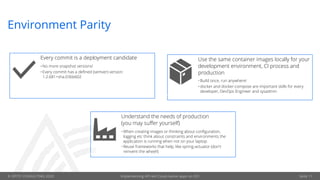
Environment Parity
Every commit is a deployment candidate
•No more snapshot versions!
•Every commit has a defined (semver) version:
1.2.681+sha.036b602
Use the same container images locally for your
development environment, CI process and
production
•Build once, run anywhere!
•docker and docker-compose are important skills for every
developer, DevOps Engineer and sysadmin
Understand the needs of production
(you may suffer yourself)
•When creating images or thinking about configuration,
logging etc think about constraints and environments the
application is running when not on your laptop
•Reuse frameworks that help, like spring-actuator (don't
reinvent the wheel!)
© OPITZ CONSULTING 2020 Seite 12
API-led architecture and API design-
first
2
Implementing API-led Cloud-native apps on OCI
© OPITZ CONSULTING 2020 Implementing API-led Cloud-native apps on OCI Seite 13
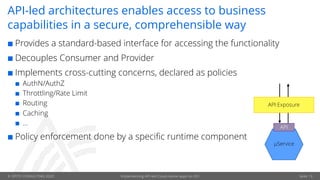
API-led architectures enables access to business
capabilities in a secure, comprehensible way
¢ Provides a standard-based interface for accessing the functionality
¢ Decouples Consumer and Provider
¢ Implements cross-cutting concerns, declared as policies
¢ AuthN/AuthZ
¢ Throttling/Rate Limit
¢ Routing
¢ Caching
¢ …
¢ Policy enforcement done by a specific runtime component
µService
API
API Exposure
© OPITZ CONSULTING 2020 Implementing API-led Cloud-native apps on OCI Seite 14
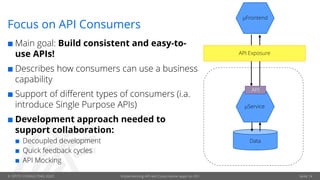
Focus on API Consumers
¢ Main goal: Build consistent and easy-to-
use APIs!
¢ Describes how consumers can use a business
capability
¢ Support of different types of consumers (i.a.
introduce Single Purpose APIs)
¢ Development approach needed to
support collaboration:
¢ Decoupled development
¢ Quick feedback cycles
¢ API Mocking
Data
µService
µFrontend
API
API Exposure
© OPITZ CONSULTING 2020 Implementing API-led Cloud-native apps on OCI Seite 15
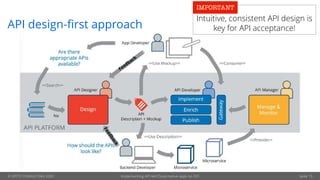
API design-first approach
Feedback
Feedback
Intuitive, consistent API design is
key for API acceptance!
IMPORTANT
© OPITZ CONSULTING 2020 Implementing API-led Cloud-native apps on OCI Seite 16
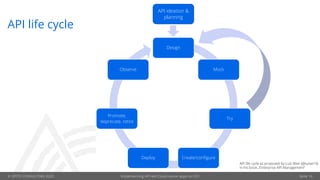
API life cycle
Design
Mock
Try
Create/configureDeploy
Promote,
deprecate, retire
Observe
API ideation &
planning
API life cycle as proposed by Luis Weir (@luisw19)
in his book „Enterprise API Management“
© OPITZ CONSULTING 2020 Implementing API-led Cloud-native apps on OCI
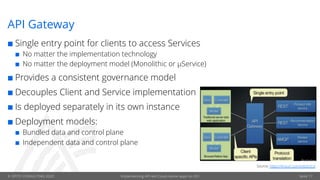
API Gateway
¢ Single entry point for clients to access Services
¢ No matter the implementation technology
¢ No matter the deployment model (Monolithic or µService)
¢ Provides a consistent governance model
¢ Decouples Client and Service implementation
¢ Is deployed separately in its own instance
¢ Deployment models:
¢ Bundled data and control plane
¢ Independent data and control plane
Source: https://tinyurl.com/yxbds3cd
Seite 17
© OPITZ CONSULTING 2020 Implementing API-led Cloud-native apps on OCI
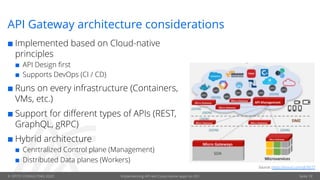
API Gateway architecture considerations
¢ Implemented based on Cloud-native
principles
¢ API Design first
¢ Supports DevOps (CI / CD)
¢ Runs on every infrastructure (Containers,
VMs, etc.)
¢ Support for different types of APIs (REST,
GraphQL, gRPC)
¢ Hybrid architecture
¢ Cenrtralized Control plane (Management)
¢ Distributed Data planes (Workers)
Source: https://tinyurl.com/y67tlr77
Seite 18
© OPITZ CONSULTING 2020 Seite 19
Cloud-native development approach
3
Implementing API-led Cloud-native apps on OCI
© OPITZ CONSULTING 2020 Implementing API-led Cloud-native apps on OCI Seite 20
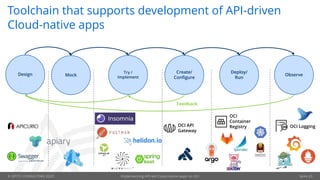
Toolchain that supports development of API-driven
Cloud-native apps
Design Try /
Implement
Create/
Configure
Deploy/
Run
Observe
Feedback
Mock
OCI API
Gateway
OCI
Container
Registry OCI Logging
© OPITZ CONSULTING 2020 Implementing API-led Cloud-native apps on OCI Seite 21
Consistently design and mock your API Specs
¢ Supports API first design approach
¢ Collaboration through Github integration
¢ Ensures consistent API design
¢ Support for API Blueprint and Open API 3.x
¢ Provide an API mock very early and without lots of effort
¢ Without coding and deployment
¢ Easily adjustable in case of feedback and respective changes
© OPITZ CONSULTING 2020 Implementing API-led Cloud-native apps on OCI Seite 22
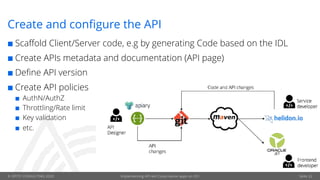
Create and configure the API
¢ Scaffold Client/Server code, e.g by generating Code based on the IDL
¢ Create APIs metadata and documentation (API page)
¢ Define API version
¢ Create API policies
¢ AuthN/AuthZ
¢ Throttling/Rate limit
¢ Key validation
¢ etc.
© OPITZ CONSULTING 2020 Implementing API-led Cloud-native apps on OCI Seite 23
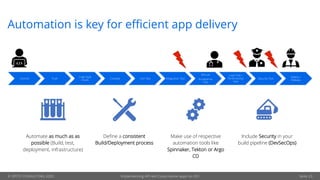
Automation is key for efficient app delivery
Commit Push
Code Style
Check
Compile Unit Test Integration Test
Manual
Acceptance
Test
Load Test /
Performance
Test
Security Test
Deploy +
Release
Automate as much as as
possible (Build, test,
deployment, infrastructure)
Define a consistent
Build/Deployment process
Make use of respective
automation tools like
Spinnaker, Tekton or Argo
CD
Include Security in your
build pipeline (DevSecOps)

© OPITZ CONSULTING 2020 Implementing API-led Cloud-native apps on OCI Seite 24
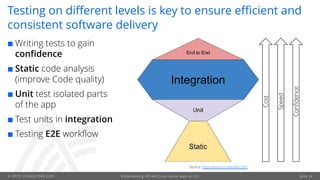
Testing on different levels is key to ensure efficient and
consistent software delivery
¢ Writing tests to gain
confidence
¢ Static code analysis
(improve Code quality)
¢ Unit test isolated parts
of the app
¢ Test units in integration
¢ Testing E2E workflow
Cost
Speed
Confidence
Source: https://tinyurl.com/y6k533or
© OPITZ CONSULTING 2020 Implementing API-led Cloud-native apps on OCI Seite 25
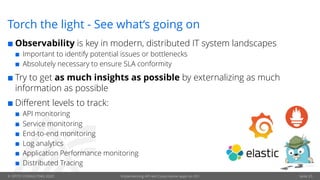
Torch the light - See what‘s going on
¢ Observability is key in modern, distributed IT system landscapes
¢ Important to identify potential issues or bottlenecks
¢ Absolutely necessary to ensure SLA conformity
¢ Try to get as much insights as possible by externalizing as much
information as possible
¢ Different levels to track:
¢ API monitoring
¢ Service monitoring
¢ End-to-end monitoring
¢ Log analytics
¢ Application Performance monitoring
¢ Distributed Tracing
© OPITZ CONSULTING 2020 Seite 26
OCI Cloud-native Services
3
Implementing API-led Cloud-native apps on OCI
© OPITZ CONSULTING 2020 Implementing API-led Cloud-native apps on OCI Seite 27
OCI Cloud-native services that provide a consistent and
solid runtime environment
© OPITZ CONSULTING 2020 Implementing API-led Cloud-native apps on OCI
Oracle Container Engine for Kubernetes (OKE)
Based on IaaS Oracle Compute
Cloud Service
Worker Nodes: VM
Master Node:
•Managed and maintained by Oracle
•Not visible for the end user
•Master nodes are free of charge
Auto-scaling capabilities using
Worker-Node Pools
Can be provisioned using
OCI Cloud Console
OCI Cloud Shell
OCI CLI
Terraform (OCI Resource Manager)
Seite 28
© OPITZ CONSULTING 2020 Implementing API-led Cloud-native apps on OCI Seite 29
OCI Container Registry
¢ Open standards-based, Oracle-managed Docker registry service for
securely storing and sharing container images (Docker v2 compliant)
¢ Data protection through integration with OCI object storage
¢ Automatic clean up old docker images (Retention policies)
¢ Integrates with different OCI services and 3rd party DevOps and dev
tools (Jenkins, Gitlab)
¢ Container Engine for Kubernetes (OKE)
¢ Identity and Access Management (IAM)
¢ Visual Builder Studio
¢ Docker containers can be pushed/pulled by Docker CLI and API
© OPITZ CONSULTING 2020 Implementing API-led Cloud-native apps on OCI
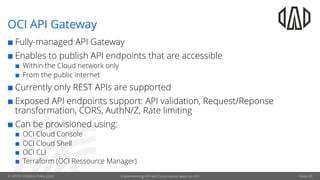
OCI API Gateway
¢ Fully-managed API Gateway
¢ Enables to publish API endpoints that are accessible
¢ Within the Cloud network only
¢ From the public internet
¢ Currently only REST APIs are supported
¢ Exposed API endpoints support: API validation, Request/Reponse
transformation, CORS, AuthN/Z, Rate limiting
¢ Can be provisioned using:
¢ OCI Cloud Console
¢ OCI Cloud Shell
¢ OCI CLI
¢ Terraform (OCI Ressource Manager)
Seite 30
© OPITZ CONSULTING 2020 Implementing API-led Cloud-native apps on OCI Seite 31
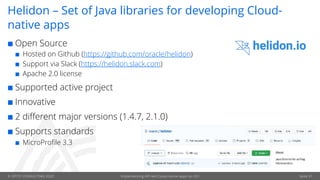
Helidon – Set of Java libraries for developing Cloud-
native apps
¢ Open Source
¢ Hosted on Github (https://github.com/oracle/helidon)
¢ Support via Slack (https://helidon.slack.com)
¢ Apache 2.0 license
¢ Supported active project
¢ Innovative
¢ 2 different major versions (1.4.7, 2.1.0)
¢ Supports standards
¢ MicroProfile 3.3
© OPITZ CONSULTING 2020 Implementing API-led Cloud-native apps on OCI Seite 32
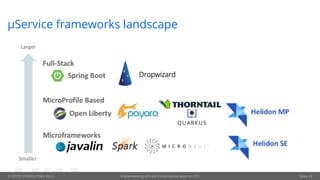
µService frameworks landscape
Dropwizard
© OPITZ CONSULTING 2020 Implementing API-led Cloud-native apps on OCI Seite 33
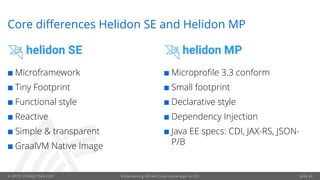
Core differences Helidon SE and Helidon MP
¢ Microframework
¢ Tiny Footprint
¢ Functional style
¢ Reactive
¢ Simple & transparent
¢ GraalVM Native Image
¢ Microprofile 3.3 conform
¢ Small footprint
¢ Declarative style
¢ Dependency Injection
¢ Java EE specs: CDI, JAX-RS, JSON-
P/B
© OPITZ CONSULTING 2020 Implementing API-led Cloud-native apps on OCI Seite 34
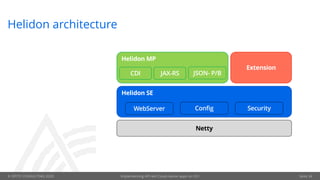
Helidon architecture
Netty
Helidon SE
WebServer Config Security
Helidon MP
CDI JAX-RS JSON- P/B
Extension
© OPITZ CONSULTING 2020 Implementing API-led Cloud-native apps on OCI Seite 35
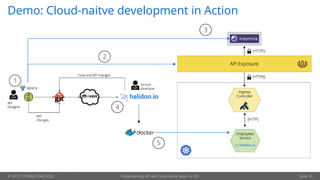
Demo: Cloud-naitve development in Action
1
2
3
4
5
© OPITZ CONSULTING 2020 Seite 36
Summary
5
Implementing API-led Cloud-native apps on OCI
© OPITZ CONSULTING 2020 Implementing API-led Cloud-native apps on OCI Seite 37
Key takeaways
¢ Apps should be built in a Cloud-native fashion
¢ Containers, DevOps and APIs are basic building blocks
¢ API design-first is important for consistent, intuitive API design
¢ Consistent, intuitive APIs are essential for API acceptance
¢ An API that is not used, is useless
¢ API design is as important as for Cloud-native apps, as UI design (UX) is for User interfaces
¢ APIs help to further transparency with respect to Service usage
¢ Who is using a specific µService?
¢ How many requests are sent to this specific µService resp. to certain resources?
© OPITZ CONSULTING 2020 Implementing API-led Cloud-native apps on OCI Seite 38
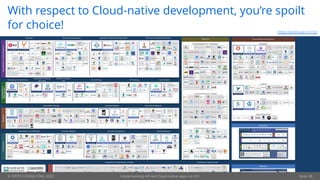
With respect to Cloud-native development, you’re spoilt
for choice! https://landscape.cncf.io/
© OPITZ CONSULTING 2020 Implementing API-led Cloud-native apps on OCI Seite 39
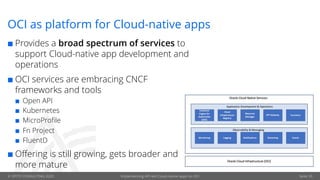
OCI as platform for Cloud-native apps
¢ Provides a broad spectrum of services to
support Cloud-native app development and
operations
¢ OCI services are embracing CNCF
frameworks and tools
¢ Open API
¢ Kubernetes
¢ MicroProfile
¢ Fn Project
¢ FluentD
¢ Offering is still growing, gets broader and
more mature
© OPITZ CONSULTING 2020 Implementing API-led Cloud-native apps on OCI Seite 40
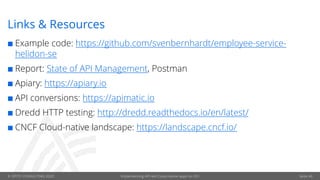
Links & Resources
¢ Example code: https://github.com/svenbernhardt/employee-service-
helidon-se
¢ Report: State of API Management, Postman
¢ Apiary: https://apiary.io
¢ API conversions: https://apimatic.io
¢ Dredd HTTP testing: http://dredd.readthedocs.io/en/latest/
¢ CNCF Cloud-native landscape: https://landscape.cncf.io/
© OPITZ CONSULTING 2020 Seite 41
Q & A
Implementing API-led Cloud-native apps on OCI
© OPITZ CONSULTING 2020
¢¢¢ Digitale Service Manufaktur
@OC_WIRE
OPITZCONSULTING
opitzconsulting
opitz-consulting-bcb8-1009116
WWW.OPITZ-CONSULTING.COM
Thanks for your attention!
Implementing API-led Cloud-native apps on OCI
Sven Bernhardt
Chief Architect / Integration Evangelist | Oracle ACE Director
OPITZ CONSULTING Deutschland GmbH
Kirchstrasse 6, 51647 Gummersbach, Germany
Phone: +49 172 2193529
Mail: sven.bernhardt@opitz-consulting.com
@sbernhardt
https://svenbernhardt.wordpress.com
Seite 42

Implementing API-led Cloud-native apps on OCI

  • 1.
    © OPITZ CONSULTING2020 ¢¢¢ Digitale Service Manufaktur © OPITZ CONSULTING 2020 Sven Bernhardt, Chief Architect / Integration Evangelist Implementing API-led Cloud-native apps on OCI
  • 2.
    © OPITZ CONSULTING2020 Implementing API-led Cloud-native apps on OCI That’s me Sven Bernhardt Cloud-Native enthusiast, API & integration geek. Always curious how new technologies and concepts can help to make things more valuable and efficient. Proud father of a son, passionate football/soccer fan and player. Loves listening to good hand-made music (Heavy Metal). ¢ Chief Architect / Integration Evangelist @OPITZ CONSULTING Deutschland GmbH ¢ Oracle ACE Director @sbernhardt https://svenbernhardt.wordpress.com/ Seite 2
  • 3.
    © OPITZ CONSULTING2020 Seite 3 Agenda 1 2 3 4 5 Cloud-Native apps development API-led architecture and API design-first Cloud-native development approach OCI Cloud-native Services Summary Implementing API-led Cloud-native apps on OCI
  • 4.
    © OPITZ CONSULTING2020 ¢ JSF (Java Server Faces) or Spring MVC: ¢ Java Programming Model for the web ¢ Java for implementing business logic ¢ No JavaScript, SQL, … Everything abstracted away ¢ RDBMS (like Oracle database) ¢ Runtime: JEE/Servlet-Container (like Weblogic / Tomcat) The good old times Implementing API-led Cloud-native apps on OCI Seite 4
  • 5.
    © OPITZ CONSULTING2020 ¢ One Language ¢ One Development Stack ¢ Production is an afterthought ¢ Is that really all? ¢ Not quite, because sometimes we had things like Maven, Git or Jenkins CI ¢ But that’s it; Really! The world was easy, wasn’t it? Implementing API-led Cloud-native apps on OCI Seite 5
  • 6.
    © OPITZ CONSULTING2020 Seite 6 Cloud-Native apps development 1 Implementing API-led Cloud-native apps on OCI
  • 7.
    © OPITZ CONSULTING2020 Implementing API-led Cloud-native apps on OCI Seite 7 Why should I care about Cloud-Native development? ¢ Cloud is a competitive advantage (if used the right way) ¢ Lower total cost of ownership (CAPEX à OPEX) ¢ Increased speed / idea-to-market ¢ Increased scalability ¢ Increased flexibility
  • 8.
    © OPITZ CONSULTING2020 Implementing API-led Cloud-native apps on OCI Seite 8 Characteristics of Cloud-Native applications CNCF Definition of Cloud-Native: Cloud native technologies empower organizations to build and run scalable applications in modern, dynamic environments such as public, private, and hybrid clouds. Containers, service meshes, microservices, immutable infrastructure, and declarative APIs exemplify this approach. These techniques enable loosely coupled systems that are resilient, manageable, and observable. Combined with robust automation, they allow engineers to make high-impact changes frequently and predictably with minimal toil. Source: https://github.com/cncf/toc/blob/master/DEFINITION.md Source: https://pivotal.io/cloud-native
  • 9.
    © OPITZ CONSULTING2020 Implementing API-led Cloud-native apps on OCI Seite 9 Cloud-Native is an approach to build and run applications that fully leverage the advantages of Cloud Data Single Deployment Unit Traditional app development approach Cloud-native app development approach UI Logic Data Access UI Logic API Data UI Logic API Data Single Deployment Unit Single Deployment Unit Isolated Process (e.g. JVM)
  • 10.
    © OPITZ CONSULTING2020 Seite 10 Cloud-native characteristics API design-first • Define the contract before implementing • Supports multi-team development • Not only REST, but also Events, GraphQL, GRPC, … Dependency Management • Rigorous management of anything to develop and run your application • Security checks per default • Libraries, Container Images, Tools, … Elasticity • Think about quickly scaling up and gracefully scaling down • Efficient resource usage Environment Parity • Same procedures on every environment • Same people • Every commit is a deployment candidate Implementing API-led Cloud-native apps on OCI
  • 11.
    © OPITZ CONSULTING2020 Implementing API-led Cloud-native apps on OCI Seite 11 Environment Parity Every commit is a deployment candidate •No more snapshot versions! •Every commit has a defined (semver) version: 1.2.681+sha.036b602 Use the same container images locally for your development environment, CI process and production •Build once, run anywhere! •docker and docker-compose are important skills for every developer, DevOps Engineer and sysadmin Understand the needs of production (you may suffer yourself) •When creating images or thinking about configuration, logging etc think about constraints and environments the application is running when not on your laptop •Reuse frameworks that help, like spring-actuator (don't reinvent the wheel!)
  • 12.
    © OPITZ CONSULTING2020 Seite 12 API-led architecture and API design- first 2 Implementing API-led Cloud-native apps on OCI
  • 13.
    © OPITZ CONSULTING2020 Implementing API-led Cloud-native apps on OCI Seite 13 API-led architectures enables access to business capabilities in a secure, comprehensible way ¢ Provides a standard-based interface for accessing the functionality ¢ Decouples Consumer and Provider ¢ Implements cross-cutting concerns, declared as policies ¢ AuthN/AuthZ ¢ Throttling/Rate Limit ¢ Routing ¢ Caching ¢ … ¢ Policy enforcement done by a specific runtime component µService API API Exposure
  • 14.
    © OPITZ CONSULTING2020 Implementing API-led Cloud-native apps on OCI Seite 14 Focus on API Consumers ¢ Main goal: Build consistent and easy-to- use APIs! ¢ Describes how consumers can use a business capability ¢ Support of different types of consumers (i.a. introduce Single Purpose APIs) ¢ Development approach needed to support collaboration: ¢ Decoupled development ¢ Quick feedback cycles ¢ API Mocking Data µService µFrontend API API Exposure
  • 15.
    © OPITZ CONSULTING2020 Implementing API-led Cloud-native apps on OCI Seite 15 API design-first approach Feedback Feedback Intuitive, consistent API design is key for API acceptance! IMPORTANT
  • 16.
    © OPITZ CONSULTING2020 Implementing API-led Cloud-native apps on OCI Seite 16 API life cycle Design Mock Try Create/configureDeploy Promote, deprecate, retire Observe API ideation & planning API life cycle as proposed by Luis Weir (@luisw19) in his book „Enterprise API Management“
  • 17.
    © OPITZ CONSULTING2020 Implementing API-led Cloud-native apps on OCI API Gateway ¢ Single entry point for clients to access Services ¢ No matter the implementation technology ¢ No matter the deployment model (Monolithic or µService) ¢ Provides a consistent governance model ¢ Decouples Client and Service implementation ¢ Is deployed separately in its own instance ¢ Deployment models: ¢ Bundled data and control plane ¢ Independent data and control plane Source: https://tinyurl.com/yxbds3cd Seite 17
  • 18.
    © OPITZ CONSULTING2020 Implementing API-led Cloud-native apps on OCI API Gateway architecture considerations ¢ Implemented based on Cloud-native principles ¢ API Design first ¢ Supports DevOps (CI / CD) ¢ Runs on every infrastructure (Containers, VMs, etc.) ¢ Support for different types of APIs (REST, GraphQL, gRPC) ¢ Hybrid architecture ¢ Cenrtralized Control plane (Management) ¢ Distributed Data planes (Workers) Source: https://tinyurl.com/y67tlr77 Seite 18
  • 19.
    © OPITZ CONSULTING2020 Seite 19 Cloud-native development approach 3 Implementing API-led Cloud-native apps on OCI
  • 20.
    © OPITZ CONSULTING2020 Implementing API-led Cloud-native apps on OCI Seite 20 Toolchain that supports development of API-driven Cloud-native apps Design Try / Implement Create/ Configure Deploy/ Run Observe Feedback Mock OCI API Gateway OCI Container Registry OCI Logging
  • 21.
    © OPITZ CONSULTING2020 Implementing API-led Cloud-native apps on OCI Seite 21 Consistently design and mock your API Specs ¢ Supports API first design approach ¢ Collaboration through Github integration ¢ Ensures consistent API design ¢ Support for API Blueprint and Open API 3.x ¢ Provide an API mock very early and without lots of effort ¢ Without coding and deployment ¢ Easily adjustable in case of feedback and respective changes
  • 22.
    © OPITZ CONSULTING2020 Implementing API-led Cloud-native apps on OCI Seite 22 Create and configure the API ¢ Scaffold Client/Server code, e.g by generating Code based on the IDL ¢ Create APIs metadata and documentation (API page) ¢ Define API version ¢ Create API policies ¢ AuthN/AuthZ ¢ Throttling/Rate limit ¢ Key validation ¢ etc.
  • 23.
    © OPITZ CONSULTING2020 Implementing API-led Cloud-native apps on OCI Seite 23 Automation is key for efficient app delivery Commit Push Code Style Check Compile Unit Test Integration Test Manual Acceptance Test Load Test / Performance Test Security Test Deploy + Release Automate as much as as possible (Build, test, deployment, infrastructure) Define a consistent Build/Deployment process Make use of respective automation tools like Spinnaker, Tekton or Argo CD Include Security in your build pipeline (DevSecOps)
  • 24.
    © OPITZ CONSULTING2020 Implementing API-led Cloud-native apps on OCI Seite 24 Testing on different levels is key to ensure efficient and consistent software delivery ¢ Writing tests to gain confidence ¢ Static code analysis (improve Code quality) ¢ Unit test isolated parts of the app ¢ Test units in integration ¢ Testing E2E workflow Cost Speed Confidence Source: https://tinyurl.com/y6k533or
  • 25.
    © OPITZ CONSULTING2020 Implementing API-led Cloud-native apps on OCI Seite 25 Torch the light - See what‘s going on ¢ Observability is key in modern, distributed IT system landscapes ¢ Important to identify potential issues or bottlenecks ¢ Absolutely necessary to ensure SLA conformity ¢ Try to get as much insights as possible by externalizing as much information as possible ¢ Different levels to track: ¢ API monitoring ¢ Service monitoring ¢ End-to-end monitoring ¢ Log analytics ¢ Application Performance monitoring ¢ Distributed Tracing
  • 26.
    © OPITZ CONSULTING2020 Seite 26 OCI Cloud-native Services 3 Implementing API-led Cloud-native apps on OCI
  • 27.
    © OPITZ CONSULTING2020 Implementing API-led Cloud-native apps on OCI Seite 27 OCI Cloud-native services that provide a consistent and solid runtime environment
  • 28.
    © OPITZ CONSULTING2020 Implementing API-led Cloud-native apps on OCI Oracle Container Engine for Kubernetes (OKE) Based on IaaS Oracle Compute Cloud Service Worker Nodes: VM Master Node: •Managed and maintained by Oracle •Not visible for the end user •Master nodes are free of charge Auto-scaling capabilities using Worker-Node Pools Can be provisioned using OCI Cloud Console OCI Cloud Shell OCI CLI Terraform (OCI Resource Manager) Seite 28
  • 29.
    © OPITZ CONSULTING2020 Implementing API-led Cloud-native apps on OCI Seite 29 OCI Container Registry ¢ Open standards-based, Oracle-managed Docker registry service for securely storing and sharing container images (Docker v2 compliant) ¢ Data protection through integration with OCI object storage ¢ Automatic clean up old docker images (Retention policies) ¢ Integrates with different OCI services and 3rd party DevOps and dev tools (Jenkins, Gitlab) ¢ Container Engine for Kubernetes (OKE) ¢ Identity and Access Management (IAM) ¢ Visual Builder Studio ¢ Docker containers can be pushed/pulled by Docker CLI and API
  • 30.
    © OPITZ CONSULTING2020 Implementing API-led Cloud-native apps on OCI OCI API Gateway ¢ Fully-managed API Gateway ¢ Enables to publish API endpoints that are accessible ¢ Within the Cloud network only ¢ From the public internet ¢ Currently only REST APIs are supported ¢ Exposed API endpoints support: API validation, Request/Reponse transformation, CORS, AuthN/Z, Rate limiting ¢ Can be provisioned using: ¢ OCI Cloud Console ¢ OCI Cloud Shell ¢ OCI CLI ¢ Terraform (OCI Ressource Manager) Seite 30
  • 31.
    © OPITZ CONSULTING2020 Implementing API-led Cloud-native apps on OCI Seite 31 Helidon – Set of Java libraries for developing Cloud- native apps ¢ Open Source ¢ Hosted on Github (https://github.com/oracle/helidon) ¢ Support via Slack (https://helidon.slack.com) ¢ Apache 2.0 license ¢ Supported active project ¢ Innovative ¢ 2 different major versions (1.4.7, 2.1.0) ¢ Supports standards ¢ MicroProfile 3.3
  • 32.
    © OPITZ CONSULTING2020 Implementing API-led Cloud-native apps on OCI Seite 32 µService frameworks landscape Dropwizard
  • 33.
    © OPITZ CONSULTING2020 Implementing API-led Cloud-native apps on OCI Seite 33 Core differences Helidon SE and Helidon MP ¢ Microframework ¢ Tiny Footprint ¢ Functional style ¢ Reactive ¢ Simple & transparent ¢ GraalVM Native Image ¢ Microprofile 3.3 conform ¢ Small footprint ¢ Declarative style ¢ Dependency Injection ¢ Java EE specs: CDI, JAX-RS, JSON- P/B
  • 34.
    © OPITZ CONSULTING2020 Implementing API-led Cloud-native apps on OCI Seite 34 Helidon architecture Netty Helidon SE WebServer Config Security Helidon MP CDI JAX-RS JSON- P/B Extension
  • 35.
    © OPITZ CONSULTING2020 Implementing API-led Cloud-native apps on OCI Seite 35 Demo: Cloud-naitve development in Action 1 2 3 4 5
  • 36.
    © OPITZ CONSULTING2020 Seite 36 Summary 5 Implementing API-led Cloud-native apps on OCI
  • 37.
    © OPITZ CONSULTING2020 Implementing API-led Cloud-native apps on OCI Seite 37 Key takeaways ¢ Apps should be built in a Cloud-native fashion ¢ Containers, DevOps and APIs are basic building blocks ¢ API design-first is important for consistent, intuitive API design ¢ Consistent, intuitive APIs are essential for API acceptance ¢ An API that is not used, is useless ¢ API design is as important as for Cloud-native apps, as UI design (UX) is for User interfaces ¢ APIs help to further transparency with respect to Service usage ¢ Who is using a specific µService? ¢ How many requests are sent to this specific µService resp. to certain resources?
  • 38.
    © OPITZ CONSULTING2020 Implementing API-led Cloud-native apps on OCI Seite 38 With respect to Cloud-native development, you’re spoilt for choice! https://landscape.cncf.io/
  • 39.
    © OPITZ CONSULTING2020 Implementing API-led Cloud-native apps on OCI Seite 39 OCI as platform for Cloud-native apps ¢ Provides a broad spectrum of services to support Cloud-native app development and operations ¢ OCI services are embracing CNCF frameworks and tools ¢ Open API ¢ Kubernetes ¢ MicroProfile ¢ Fn Project ¢ FluentD ¢ Offering is still growing, gets broader and more mature
  • 40.
    © OPITZ CONSULTING2020 Implementing API-led Cloud-native apps on OCI Seite 40 Links & Resources ¢ Example code: https://github.com/svenbernhardt/employee-service- helidon-se ¢ Report: State of API Management, Postman ¢ Apiary: https://apiary.io ¢ API conversions: https://apimatic.io ¢ Dredd HTTP testing: http://dredd.readthedocs.io/en/latest/ ¢ CNCF Cloud-native landscape: https://landscape.cncf.io/
  • 41.
    © OPITZ CONSULTING2020 Seite 41 Q & A Implementing API-led Cloud-native apps on OCI
  • 42.
    © OPITZ CONSULTING2020 ¢¢¢ Digitale Service Manufaktur @OC_WIRE OPITZCONSULTING opitzconsulting opitz-consulting-bcb8-1009116 WWW.OPITZ-CONSULTING.COM Thanks for your attention! Implementing API-led Cloud-native apps on OCI Sven Bernhardt Chief Architect / Integration Evangelist | Oracle ACE Director OPITZ CONSULTING Deutschland GmbH Kirchstrasse 6, 51647 Gummersbach, Germany Phone: +49 172 2193529 Mail: sven.bernhardt@opitz-consulting.com @sbernhardt https://svenbernhardt.wordpress.com Seite 42