Implementing a
Curriculum daily
in the classroom
Good News!
DepEd Order No. 70 s. 2012:
This order states that teachers in public elementary
and secondary schools are generally not required to
prepare detailed lesson plans. They can use daily
lesson logs that include information from the
Teacher Guide (TG) and Teacher Manual (TM), noting
student interventions and the number of students
who mastered the lesson or need remediation.
Introduction
Exception: Teachers with less than two
years of teaching experience are required
to prepare Daily Lesson Plans. These plans
must include:
Objectives: The learning goals of the
lesson. Subject Matter: The content
covered in the lesson.
Procedure: The steps taken to teach the
lesson.
Assessment: How student learning will be
evaluated.
Assignment: Homework or further tasks for
students.
Lesson Planning Prospective teachers must
prepare lesson plans with specific
components. While private schools may use
different formats, the fundamental parts
remain the same. A lesson plan includes:
Objectives: What the lesson aims to achieve.
Subject Matter: The content of the lesson.
Intended Learning Outcomes (ILO): Desired
learning outcomes.
Procedure or Strategies of Teaching: How
the lesson will be taught.
Assessment of Learning Outcomes (ALO):
How student learning will be measured.
Assignment or Agreement: Homework or
further tasks.
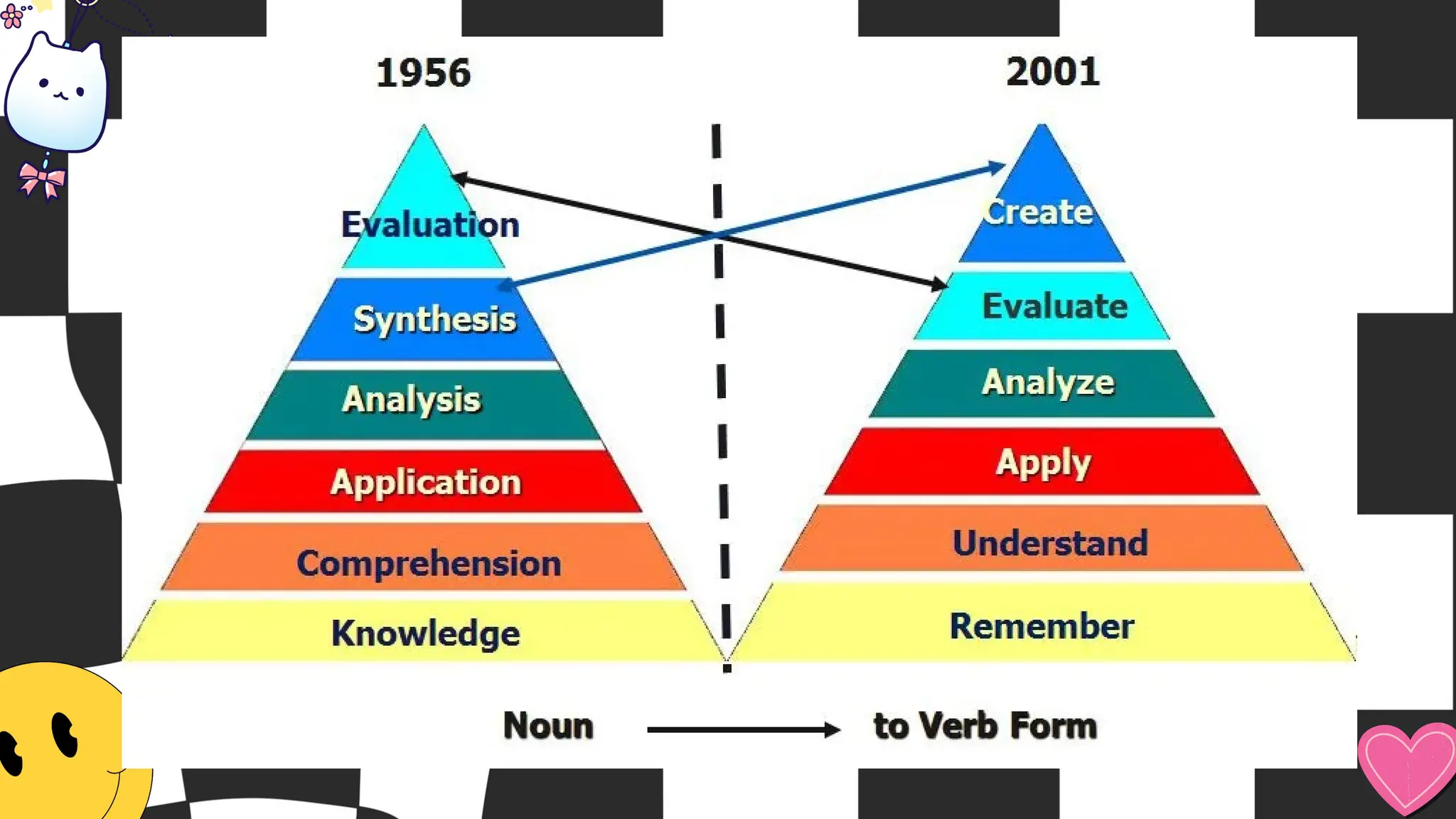
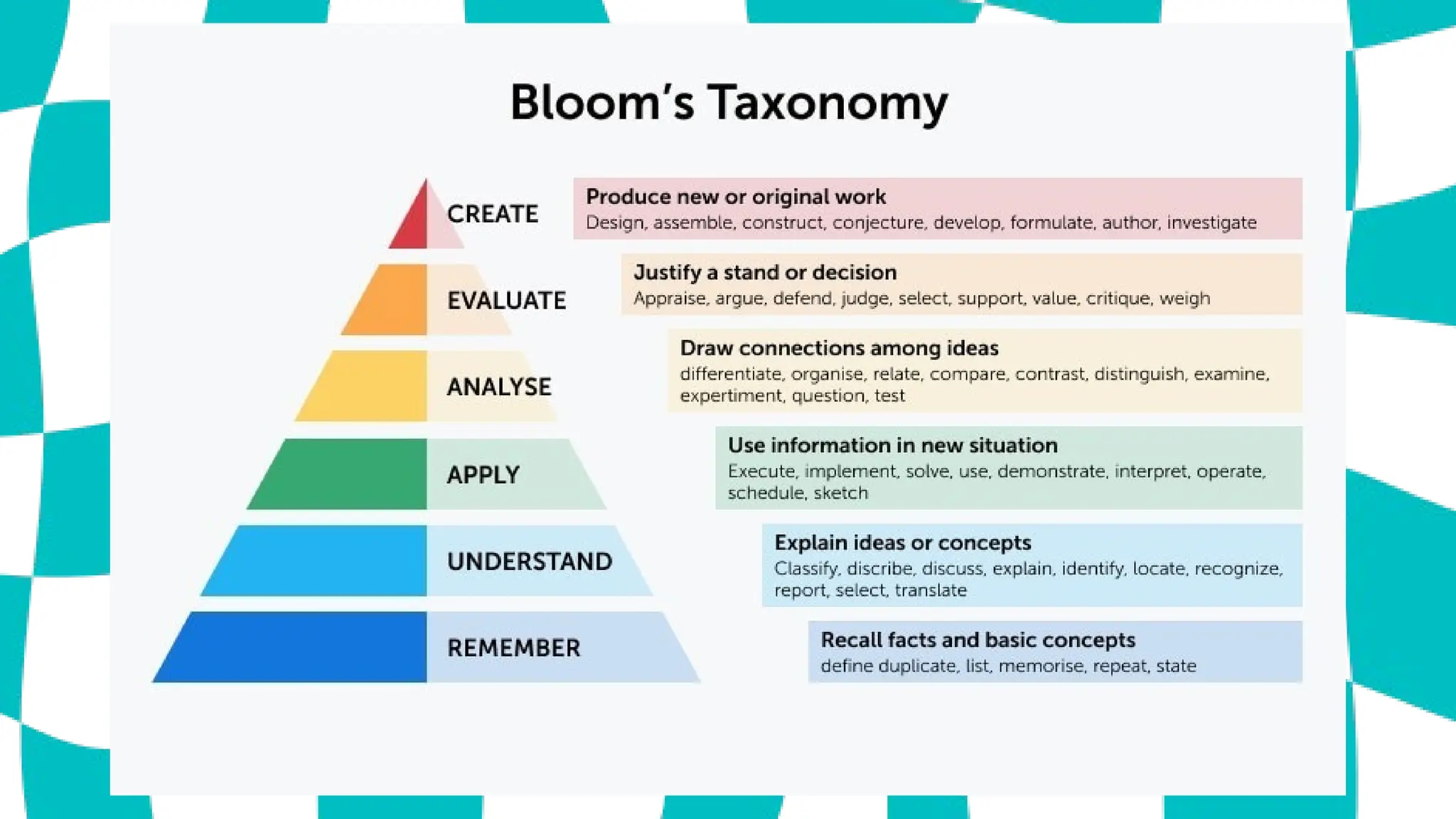
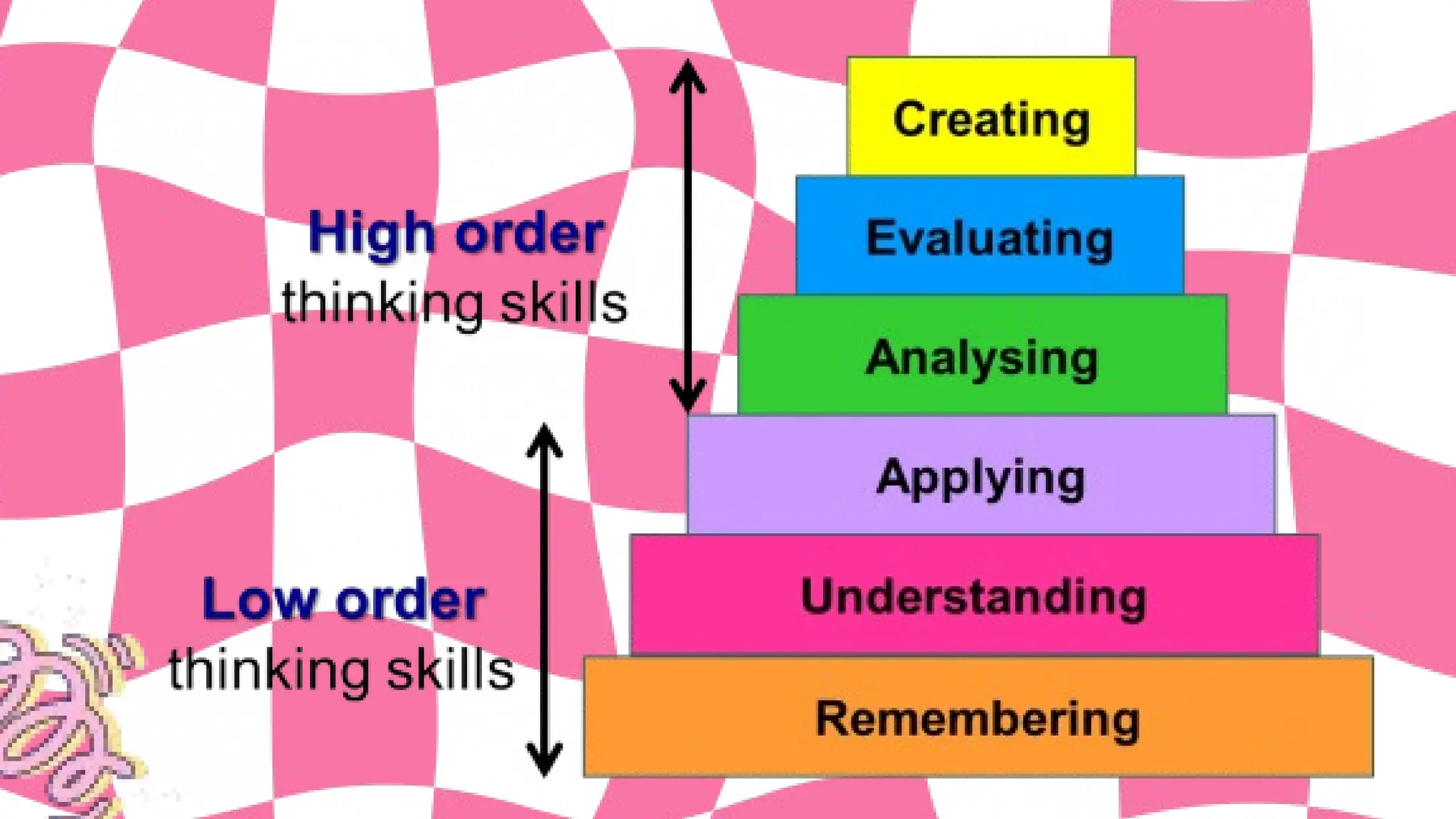
The diagram presents a hierarchy of thinking skills, dividing them
into Higher-Order Thinking Skills (HOTS) and Lower-Order Thinking
Skills (LOTS).
Levels of Knowledge:
Factual Knowledge: Basic facts, ideas, or specific data.
Conceptual Knowledge: Words or ideas with common features; concepts are facts that interrelate to
function together.
Procedural Knowledge: How things work; step-by-step actions and methods of inquiry.
Metacognitive Knowledge: Knowledge of one's own cognition, thinking, and awareness of
knowledge.
Intended Learning Outcomes (ILOs):
These emphasizes that ILOs should be written using the SMART criteria: Specific, Measurable,
Attainable, Result-oriented, and Time-bound.
Components of a Lesson Plan:
- I. Subject Matter or Content (SM): This is the "what" of teaching—the knowledge (facts, concepts,
procedures, and metacognition) that students will learn. The teacher guides the learning process.
- II. Procedure or Methods and Strategies: This is the "how" of teaching—how the teacher will
Teaching Methods for Different Learners
1.Direct Demonstration Methods: These include Guided
Exploratory/Discovery Approach, Inquiry Method, Problem-
based Learning (PBL), and Project Method. These are more
teacher-directed
2..Cooperative Learning Approaches: This involves collaborative
learning, such as Peer Tutoring and Learning Action Cells, and
Think-Pair-Share.
3.Deductive or Inductive Approaches: These include Project
Method and Inquiry-Based Learning. These approaches differ
in how they present information; deductive starts with a
general principle and moves to specifics, while inductive
starts with specific examples and moves to a general
principle. Other
4.Approaches: This includes Blended Learning, Reflective
Teaching, and Outcomes-Based Approach. These combine
Learning Styles
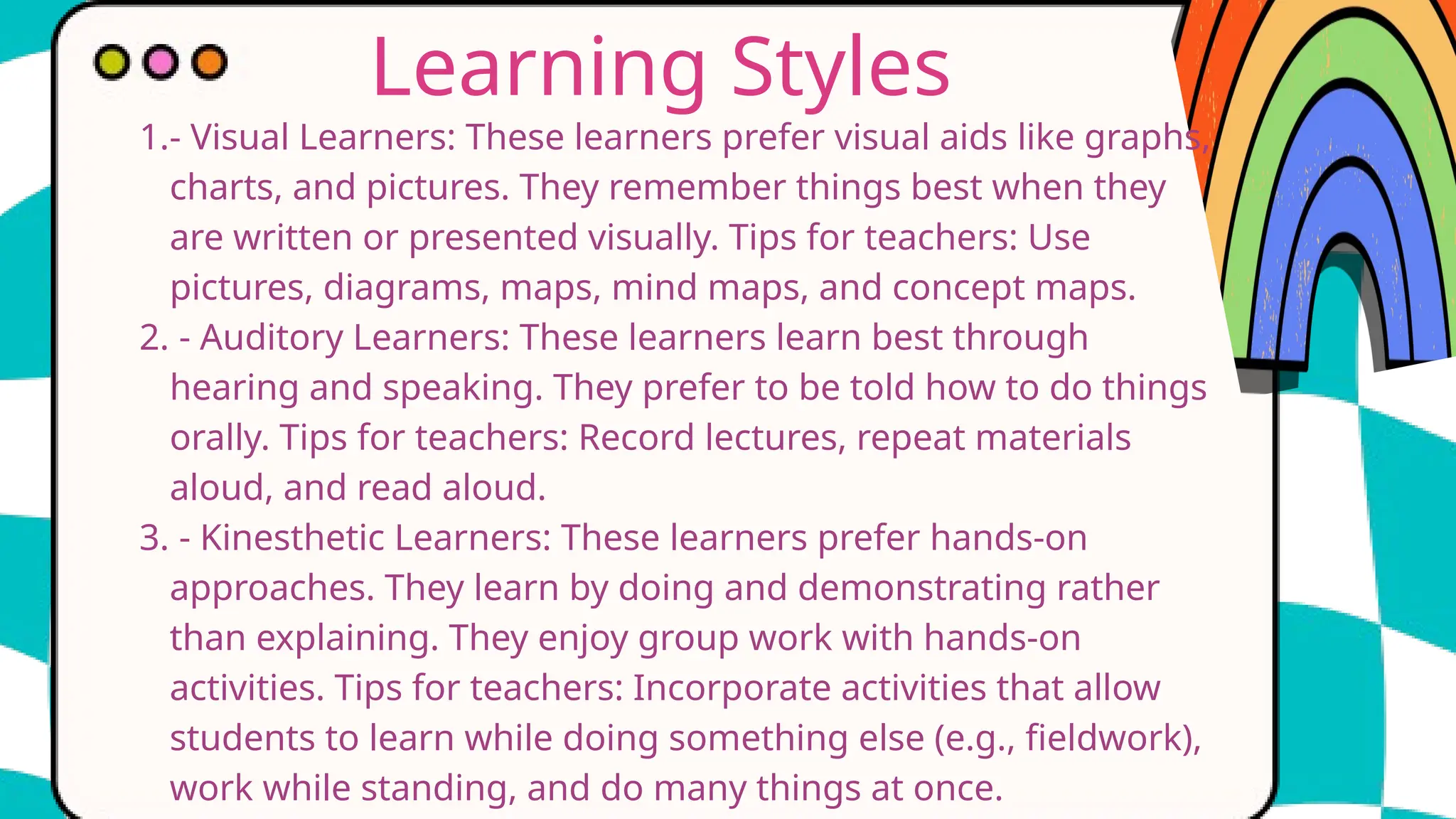
1.- Visual Learners: These learners prefer visual aids like graphs,
charts, and pictures. They remember things best when they
are written or presented visually. Tips for teachers: Use
pictures, diagrams, maps, mind maps, and concept maps.
2. - Auditory Learners: These learners learn best through
hearing and speaking. They prefer to be told how to do things
orally. Tips for teachers: Record lectures, repeat materials
aloud, and read aloud.
3. - Kinesthetic Learners: These learners prefer hands-on
approaches. They learn by doing and demonstrating rather
than explaining. They enjoy group work with hands-on
activities. Tips for teachers: Incorporate activities that allow
students to learn while doing something else (e.g., fieldwork),
work while standing, and do many things at once.
Teaching and learning must be supported by
instructional materials (IMs). The choice of
teaching methodologies and learning styles
will influence the types of instructional
materials needed. To ensure that individual
differences are addressed, a variety of
support materials should be considered.
Instructional materials should complement
visual, auditory, and tactile learning styles, or
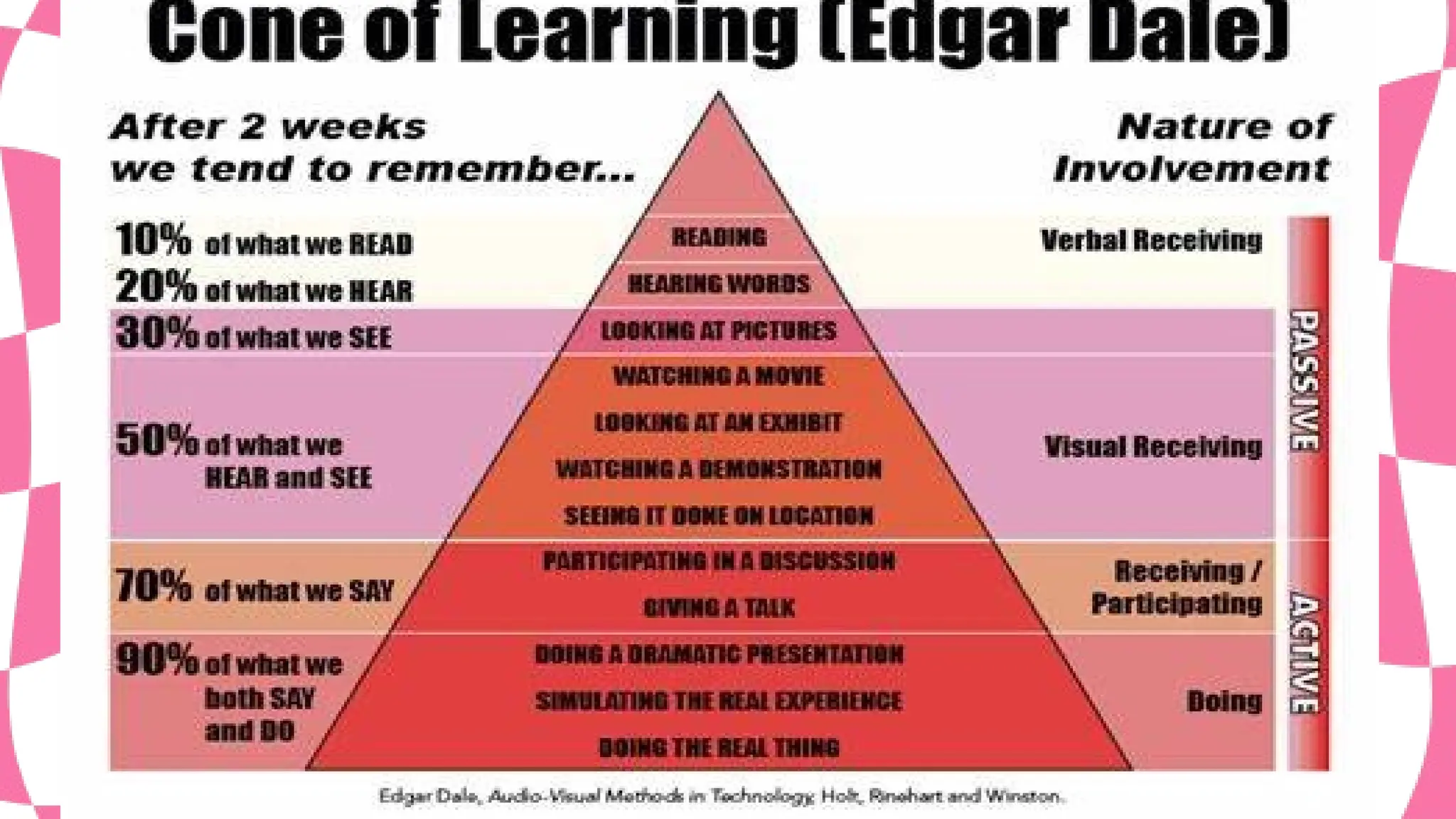
a combination of these. Using the Cone of
Learning as a guide can help teachers select
the resources and materials that will
maximize learning.
Guidelines for Choosing
Instructional Materials:
• Learning by Doing: Prioritize learning activities that
involve direct, purposeful experience. Learning by doing
(simulating or doing the real thing) leads to the highest
retention rate (90%). Examples include field trips, field
studies, and practice teaching.
• Active Participation (70%): Methods involving talk and
writing, such as small group discussions, buzz sessions,
individual reporting, role play, and panel discussions.
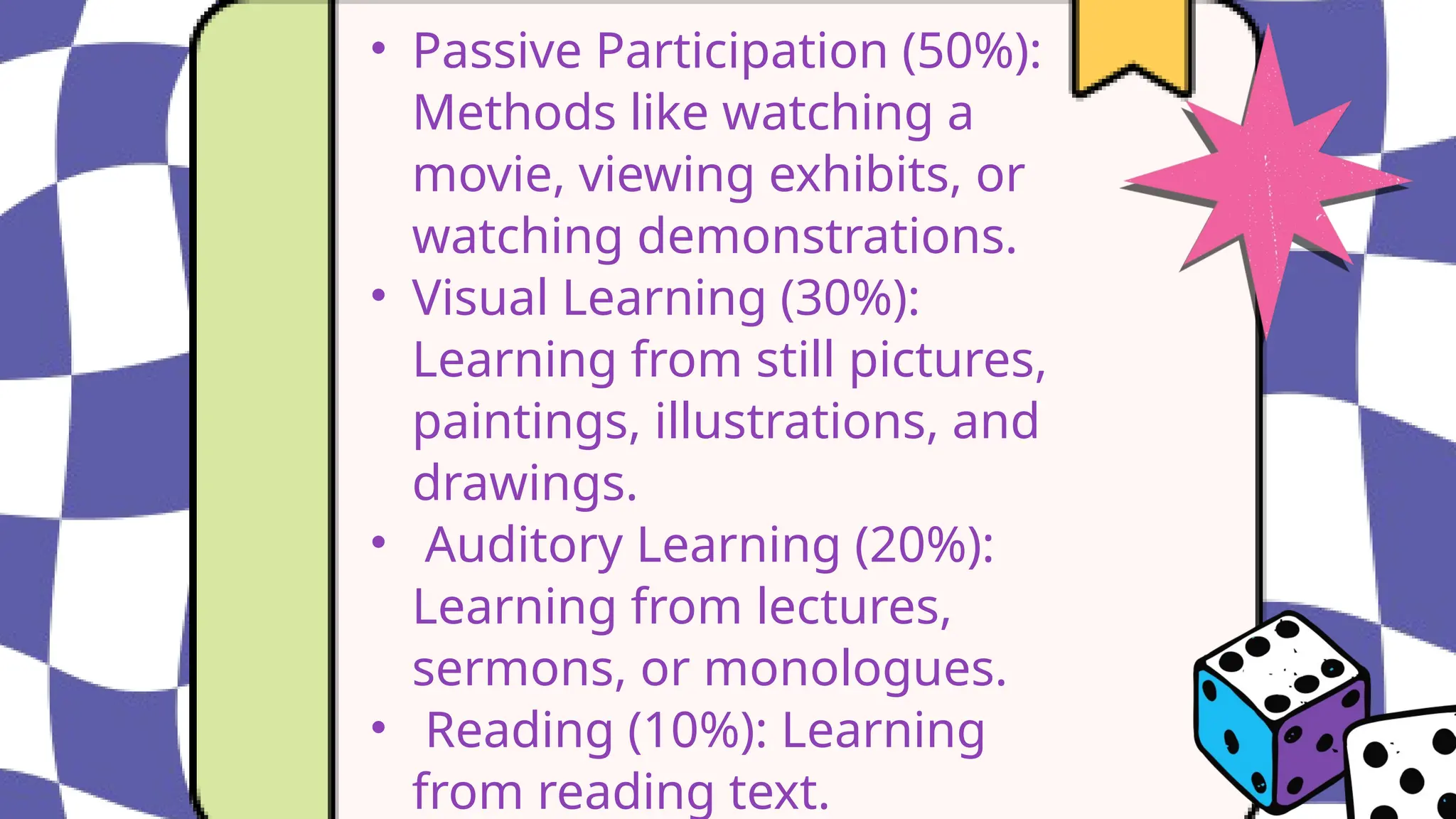
• Passive Participation (50%):
Methods like watching a
movie, viewing exhibits, or
watching demonstrations.
• Visual Learning (30%):
Learning from still pictures,
paintings, illustrations, and
drawings.
• Auditory Learning (20%):
Learning from lectures,
sermons, or monologues.
• Reading (10%): Learning
from reading text.
• Visual: Concrete materials (flat, 3-dimensional,
realias, models, etc.) or abstract (verbal symbols,
words).
• Audio: Recordings of sounds (natural or
artificial).
• Audio-Visual: Combination of visual and auditory
materials.
• Kinesthetic: Manipulative materials (modeling
clay, rings, dumbbells, equipment, etc.).
• Experiential: Utilizes all modalities.
Different types of materials are categorized to
support various learning styles:
implementing a curriculum daily in the classroom

implementing a curriculum daily in the classroom

  • 1.
  • 2.
    Good News! DepEd OrderNo. 70 s. 2012: This order states that teachers in public elementary and secondary schools are generally not required to prepare detailed lesson plans. They can use daily lesson logs that include information from the Teacher Guide (TG) and Teacher Manual (TM), noting student interventions and the number of students who mastered the lesson or need remediation.
  • 3.
    Introduction Exception: Teachers withless than two years of teaching experience are required to prepare Daily Lesson Plans. These plans must include: Objectives: The learning goals of the lesson. Subject Matter: The content covered in the lesson. Procedure: The steps taken to teach the lesson. Assessment: How student learning will be evaluated. Assignment: Homework or further tasks for students.
  • 4.
    Lesson Planning Prospectiveteachers must prepare lesson plans with specific components. While private schools may use different formats, the fundamental parts remain the same. A lesson plan includes: Objectives: What the lesson aims to achieve. Subject Matter: The content of the lesson. Intended Learning Outcomes (ILO): Desired learning outcomes. Procedure or Strategies of Teaching: How the lesson will be taught. Assessment of Learning Outcomes (ALO): How student learning will be measured. Assignment or Agreement: Homework or further tasks.
  • 8.
    The diagram presentsa hierarchy of thinking skills, dividing them into Higher-Order Thinking Skills (HOTS) and Lower-Order Thinking Skills (LOTS). Levels of Knowledge: Factual Knowledge: Basic facts, ideas, or specific data. Conceptual Knowledge: Words or ideas with common features; concepts are facts that interrelate to function together. Procedural Knowledge: How things work; step-by-step actions and methods of inquiry. Metacognitive Knowledge: Knowledge of one's own cognition, thinking, and awareness of knowledge. Intended Learning Outcomes (ILOs): These emphasizes that ILOs should be written using the SMART criteria: Specific, Measurable, Attainable, Result-oriented, and Time-bound. Components of a Lesson Plan: - I. Subject Matter or Content (SM): This is the "what" of teaching—the knowledge (facts, concepts, procedures, and metacognition) that students will learn. The teacher guides the learning process. - II. Procedure or Methods and Strategies: This is the "how" of teaching—how the teacher will
  • 9.
    Teaching Methods forDifferent Learners 1.Direct Demonstration Methods: These include Guided Exploratory/Discovery Approach, Inquiry Method, Problem- based Learning (PBL), and Project Method. These are more teacher-directed 2..Cooperative Learning Approaches: This involves collaborative learning, such as Peer Tutoring and Learning Action Cells, and Think-Pair-Share. 3.Deductive or Inductive Approaches: These include Project Method and Inquiry-Based Learning. These approaches differ in how they present information; deductive starts with a general principle and moves to specifics, while inductive starts with specific examples and moves to a general principle. Other 4.Approaches: This includes Blended Learning, Reflective Teaching, and Outcomes-Based Approach. These combine
  • 10.
    Learning Styles 1.- VisualLearners: These learners prefer visual aids like graphs, charts, and pictures. They remember things best when they are written or presented visually. Tips for teachers: Use pictures, diagrams, maps, mind maps, and concept maps. 2. - Auditory Learners: These learners learn best through hearing and speaking. They prefer to be told how to do things orally. Tips for teachers: Record lectures, repeat materials aloud, and read aloud. 3. - Kinesthetic Learners: These learners prefer hands-on approaches. They learn by doing and demonstrating rather than explaining. They enjoy group work with hands-on activities. Tips for teachers: Incorporate activities that allow students to learn while doing something else (e.g., fieldwork), work while standing, and do many things at once.
  • 11.
    Teaching and learningmust be supported by instructional materials (IMs). The choice of teaching methodologies and learning styles will influence the types of instructional materials needed. To ensure that individual differences are addressed, a variety of support materials should be considered. Instructional materials should complement visual, auditory, and tactile learning styles, or a combination of these. Using the Cone of Learning as a guide can help teachers select the resources and materials that will maximize learning.
  • 13.
    Guidelines for Choosing InstructionalMaterials: • Learning by Doing: Prioritize learning activities that involve direct, purposeful experience. Learning by doing (simulating or doing the real thing) leads to the highest retention rate (90%). Examples include field trips, field studies, and practice teaching. • Active Participation (70%): Methods involving talk and writing, such as small group discussions, buzz sessions, individual reporting, role play, and panel discussions.
  • 14.
    • Passive Participation(50%): Methods like watching a movie, viewing exhibits, or watching demonstrations. • Visual Learning (30%): Learning from still pictures, paintings, illustrations, and drawings. • Auditory Learning (20%): Learning from lectures, sermons, or monologues. • Reading (10%): Learning from reading text.
  • 15.
    • Visual: Concretematerials (flat, 3-dimensional, realias, models, etc.) or abstract (verbal symbols, words). • Audio: Recordings of sounds (natural or artificial). • Audio-Visual: Combination of visual and auditory materials. • Kinesthetic: Manipulative materials (modeling clay, rings, dumbbells, equipment, etc.). • Experiential: Utilizes all modalities. Different types of materials are categorized to support various learning styles: