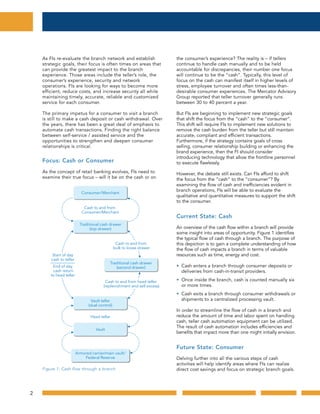
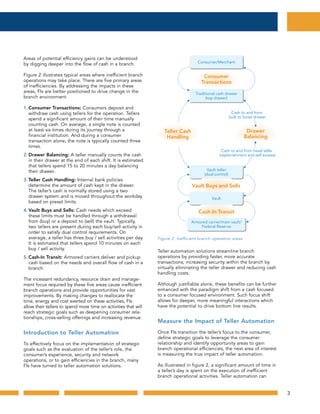
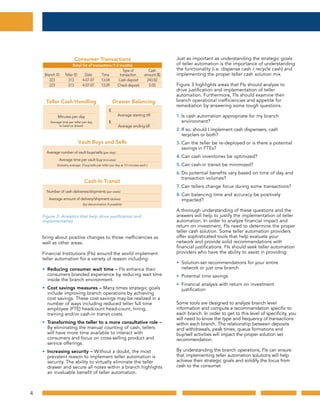
The document discusses measuring the impact of teller automation in financial institutions. It notes that as the economy has shifted to prioritizing experiences over products, businesses must deliver memorable customer experiences. The document then outlines how tellers currently spend significant time on manual cash handling tasks, leaving little time for customer interactions. It also identifies five key areas of inefficiency in branch operations related to cash handling. Teller automation aims to streamline cash transactions and reallocate teller time and focus to strategic goals like deepening customer relationships and cross-selling. Financial institutions implement teller automation to reduce wait times, lower costs through reduced staff needs, transform tellers to a more consultative role, and increase security by eliminating cash in drawers.