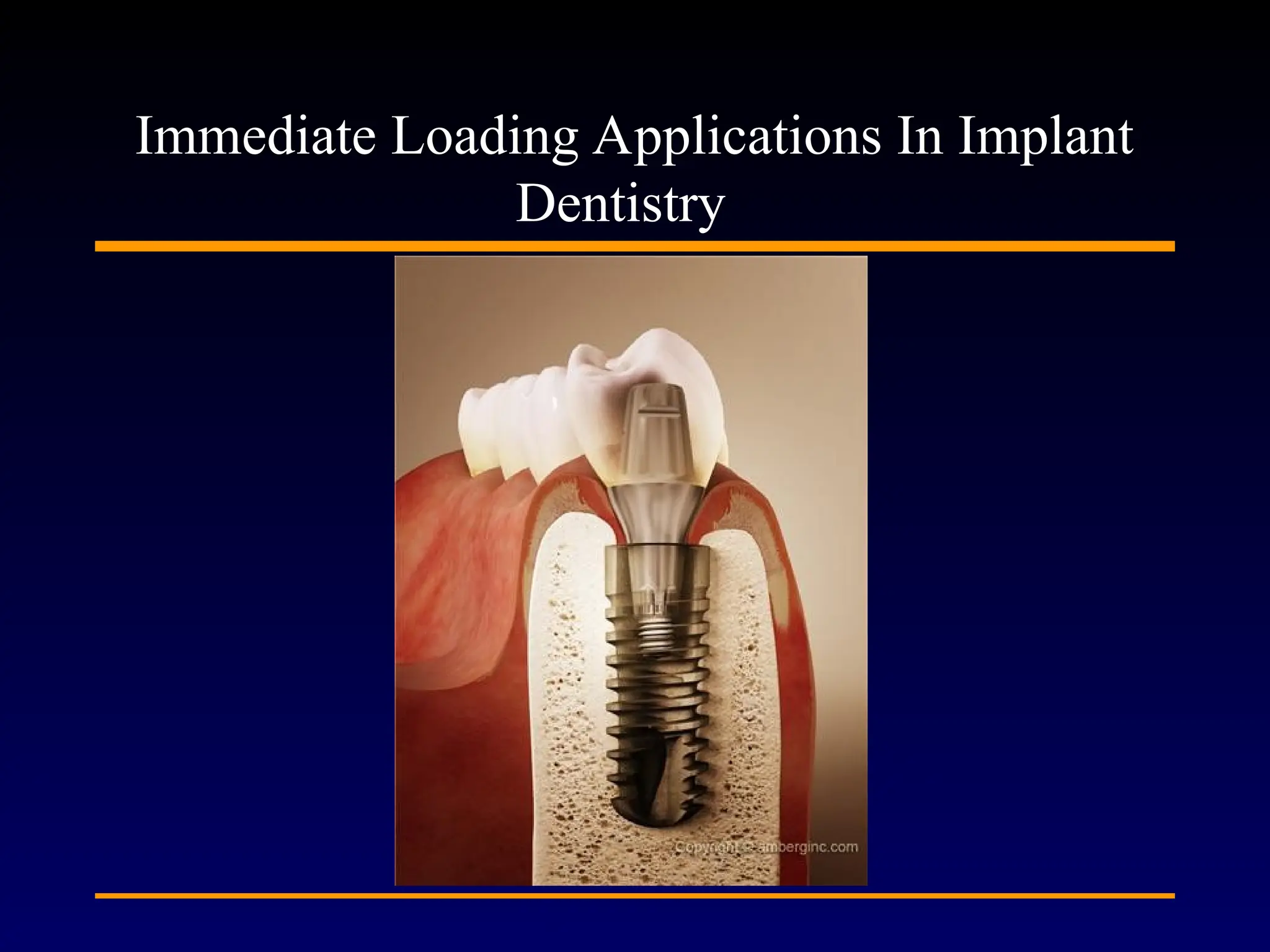
Immediate Loading Applications In Implant
Dentistry
History
• Is immediate load concept new?
• concept of immediately loading implants actually began 47
years ago with the contributions of Dr. Leonard I. Linkow.
• As early as 1963, Dr Linkow had developed the first self-
tapping endosseous root-form implant, known as the
Ventplant.
• The protocol that was ultimately adopted was to
immediately load these implants with overdentures or
acrylic, provisional fixed bridges.
• immediate loaded subperiosteal implants followed in 1964.
History
• Is immediate load concept new?
• In 1967, the endosseous blade implant, which also called
for immediate loading (for splinting purposes), was
introduced.
• Before 1967, Dr Linkow carefully established a protocol
for immediate loading in root-form procedures.
• From 1967 to the latter part of 1999, myriad blade and
plate-form implants were also placed into immediate
function.
History
• Is immediate load concept new?
• In totally edentulous cases the prosthesis should follow a
very strict occlusal pattern, such as narrow occlusal tables,
with planes inclined to no more than 15 degrees and with
group function posteriorly in lateral excursions, as
developed by Dr Charles English.
• Professor Carl Donath of the University of Munich
performed the histopathology on this blade implant, which
showed an average of 72% bone-to-metal contact.
Introduction
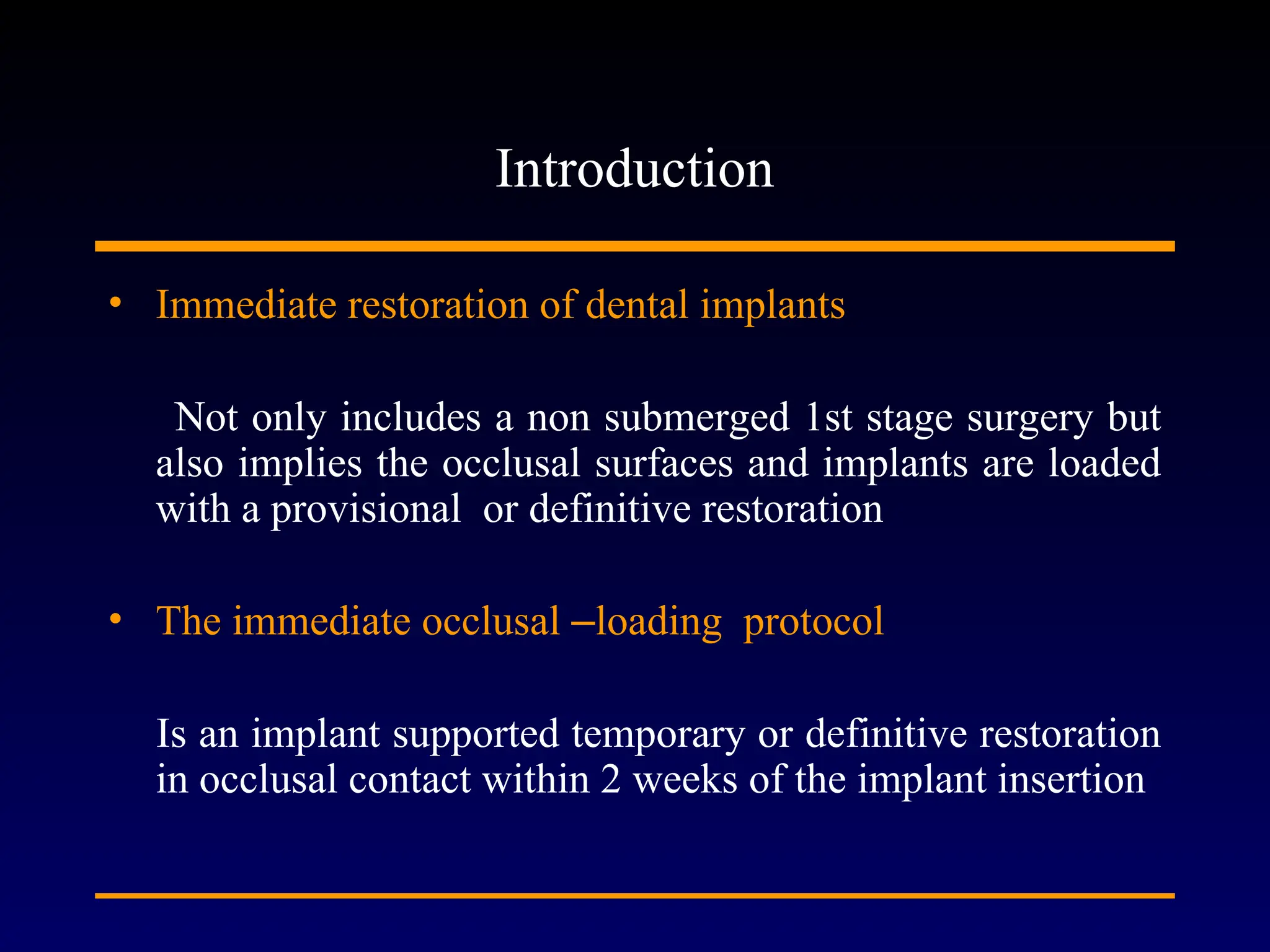
• Immediate restoration of dental implants
Not only includes a non submerged 1st stage surgery but
also implies the occlusal surfaces and implants are loaded
with a provisional or definitive restoration
• The immediate occlusal –loading protocol
Is an implant supported temporary or definitive restoration
in occlusal contact within 2 weeks of the implant insertion
Introduction
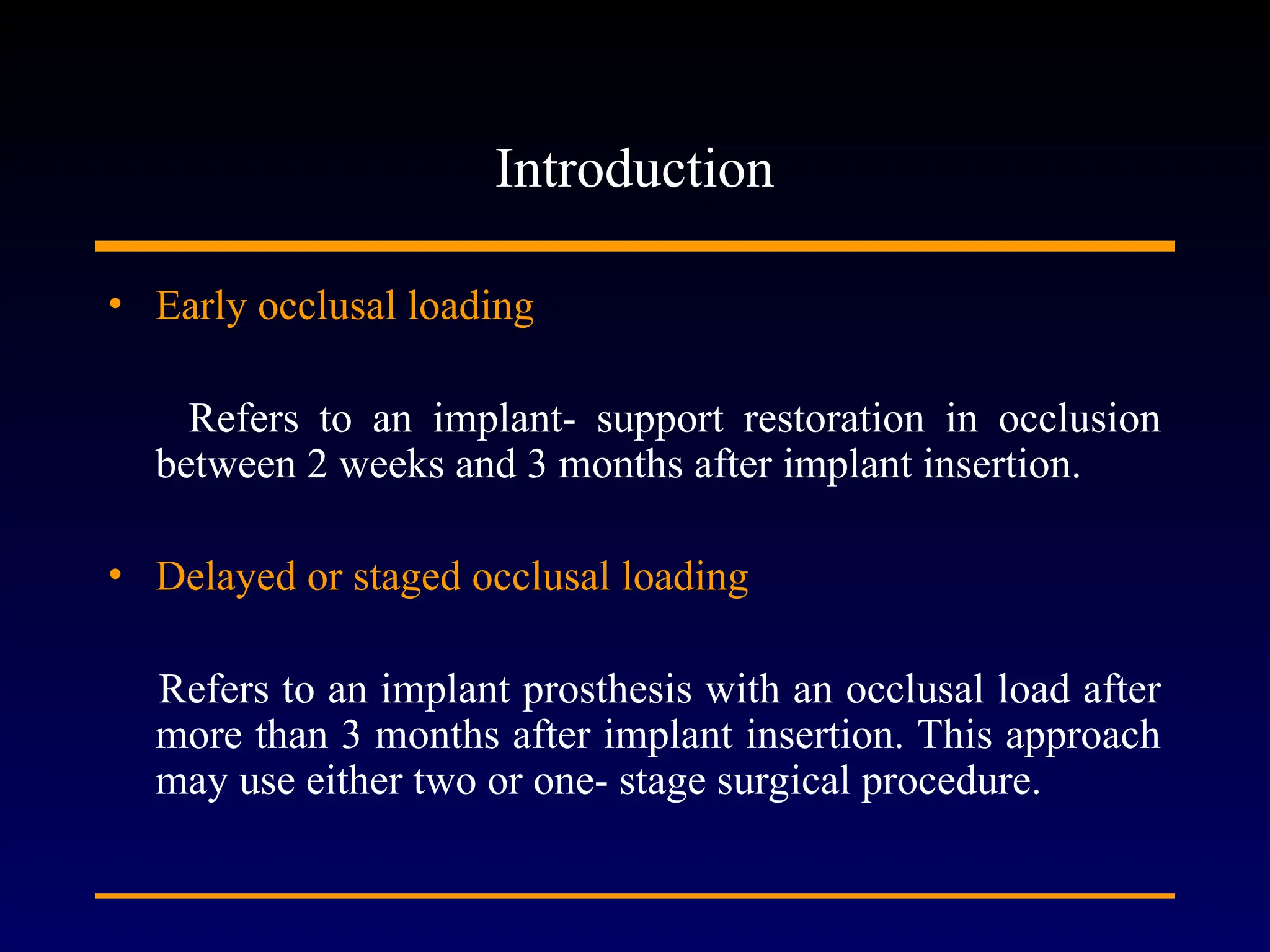
• Early occlusal loading
Refers to an implant- support restoration in occlusion
between 2 weeks and 3 months after implant insertion.
• Delayed or staged occlusal loading
Refers to an implant prosthesis with an occlusal load after
more than 3 months after implant insertion. This approach
may use either two or one- stage surgical procedure.
Introduction
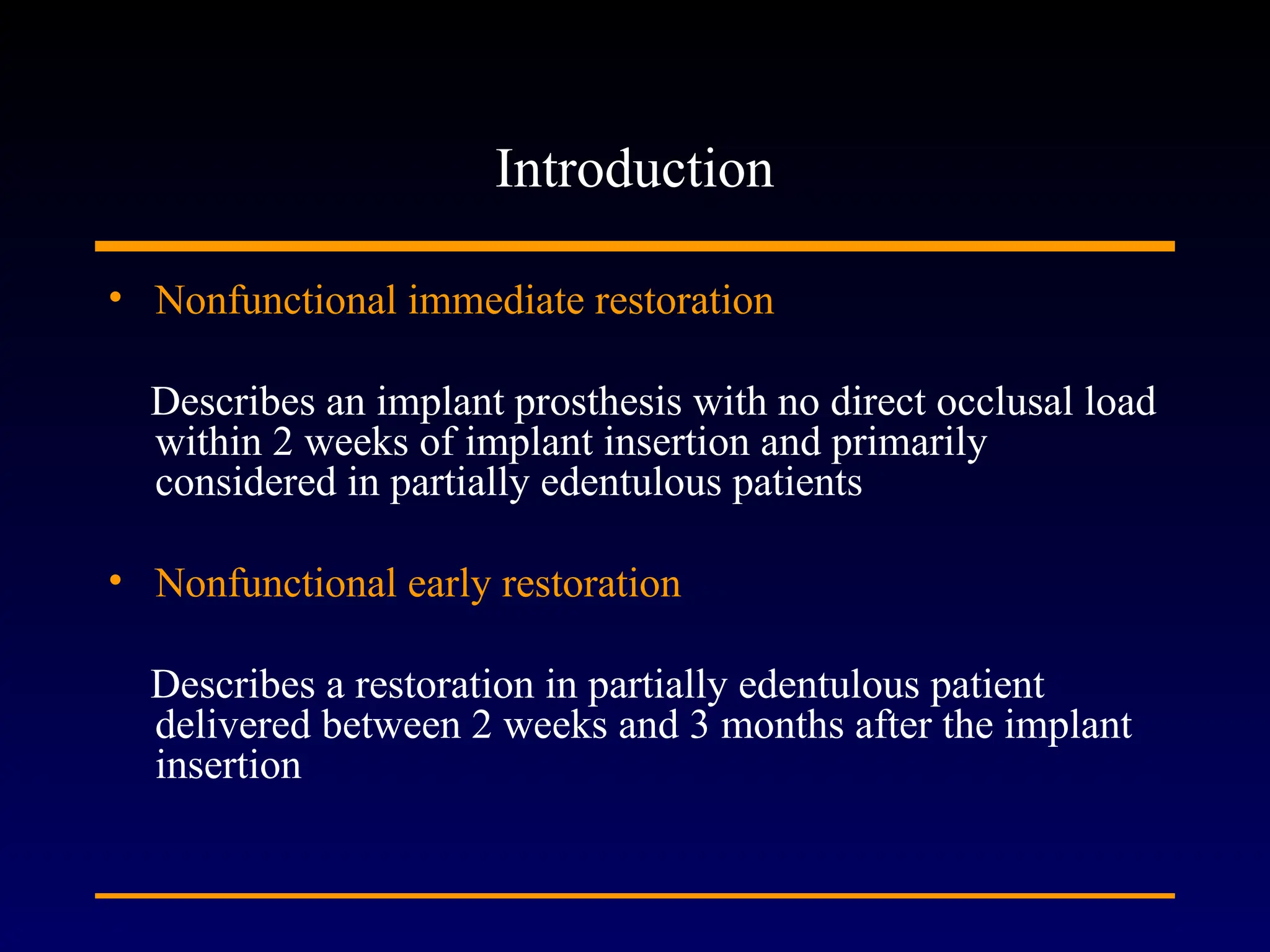
• Nonfunctional immediate restoration
Describes an implant prosthesis with no direct occlusal load
within 2 weeks of implant insertion and primarily
considered in partially edentulous patients
• Nonfunctional early restoration
Describes a restoration in partially edentulous patient
delivered between 2 weeks and 3 months after the implant
insertion
Introduction
Rationale For Implant Loading
• Surgical trauma
Causes of trauma include thermal injury and
microfracture of bone during implant placement which
may lead to osteonecrosis and result in fibrous
encapsulation around the implant (Erikson AR, Albreketsson et al 1982)
The bone interface is stronger in the day of implant
placement compared with 3 months later (Strid KG 1985)
Rationale For Implant Loading
• Surgical trauma (cont.)
The surgical process of the implant osteotomy preparation and
implant insertion cause a regional acceleratory phenomenon of bone
repair around the implant interface (Frost HM 1983)
The implant- bone interface is weakest and most at risk of overload at
3 to 6 weeks after surgical insertion because surgical trauma causes
bone remodeling at the interface that least mineralized and
unorganized during this time.
At 4 months the bone is still only 60% mineralized, organized
lamellar bone (RobertS WE 1987)
Rationale For Implant Loading
• Bone-loading trauma
After trauma the remodeling (bone turnover) permits the repair
of the bone, during remodeling process the bone mostly is
lamellar but may become woven bone.
Woven bone is unorganized, less mineralized, weaker, and more
flexible. Lamellar bone is highly mineralized, strongest bone
type, and able to respond to the mechanical environment of
occlusal loading
Rationale For Implant Loading
• Bone-loading trauma (cont.)
Therefore a rational for immediate loading is not only to
reduce the risk of fibrous tissue formation , but also to
minimize woven bone formation and promote lamellar
bone maturation (Parfitt AM 1983)
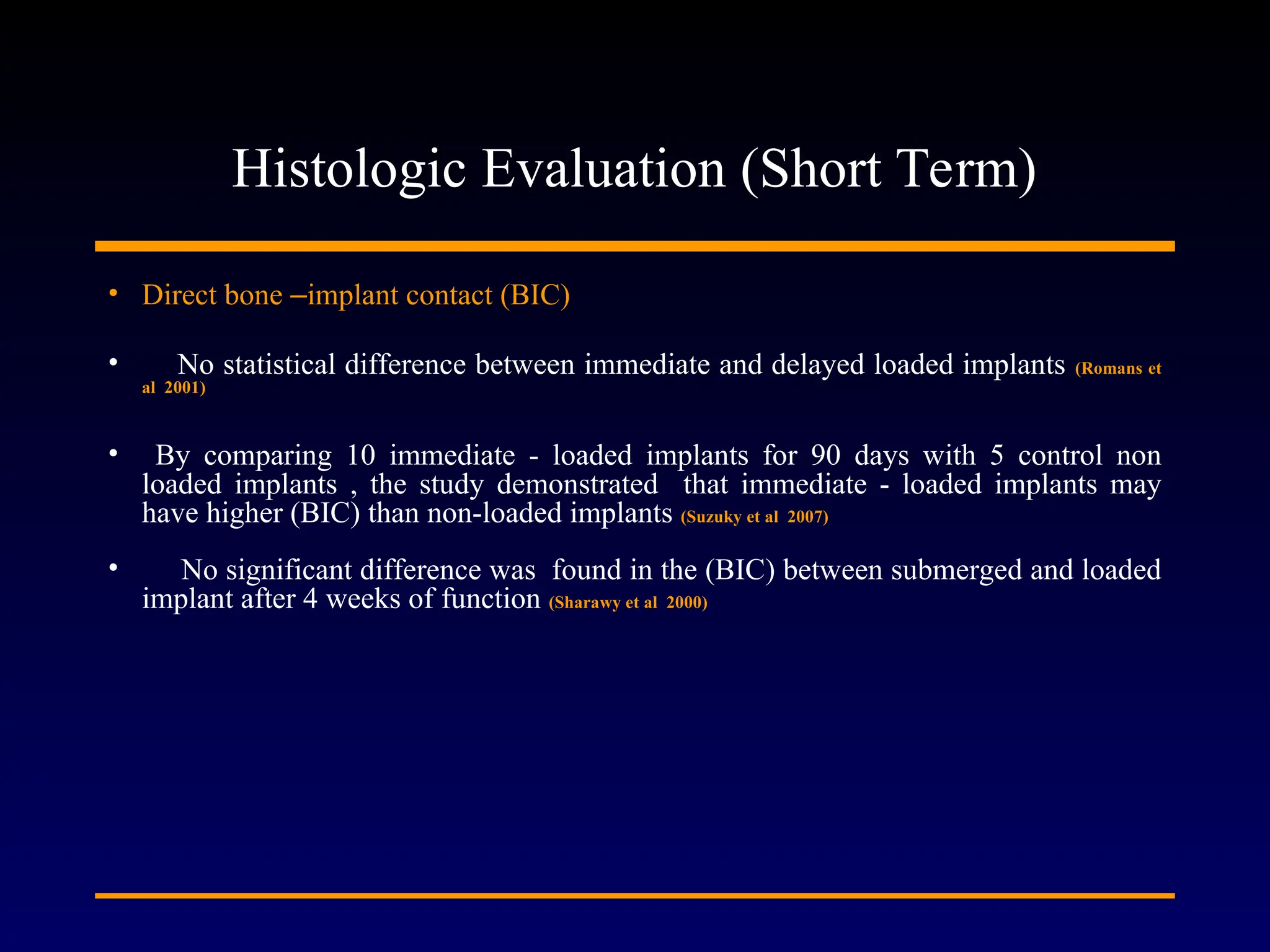
Histologic Evaluation (Short Term)
• Direct bone –implant contact (BIC)
• No statistical difference between immediate and delayed loaded implants (Romans et
al 2001)
• By comparing 10 immediate - loaded implants for 90 days with 5 control non
loaded implants , the study demonstrated that immediate - loaded implants may
have higher (BIC) than non-loaded implants (Suzuky et al 2007)
• No significant difference was found in the (BIC) between submerged and loaded
implant after 4 weeks of function (Sharawy et al 2000)
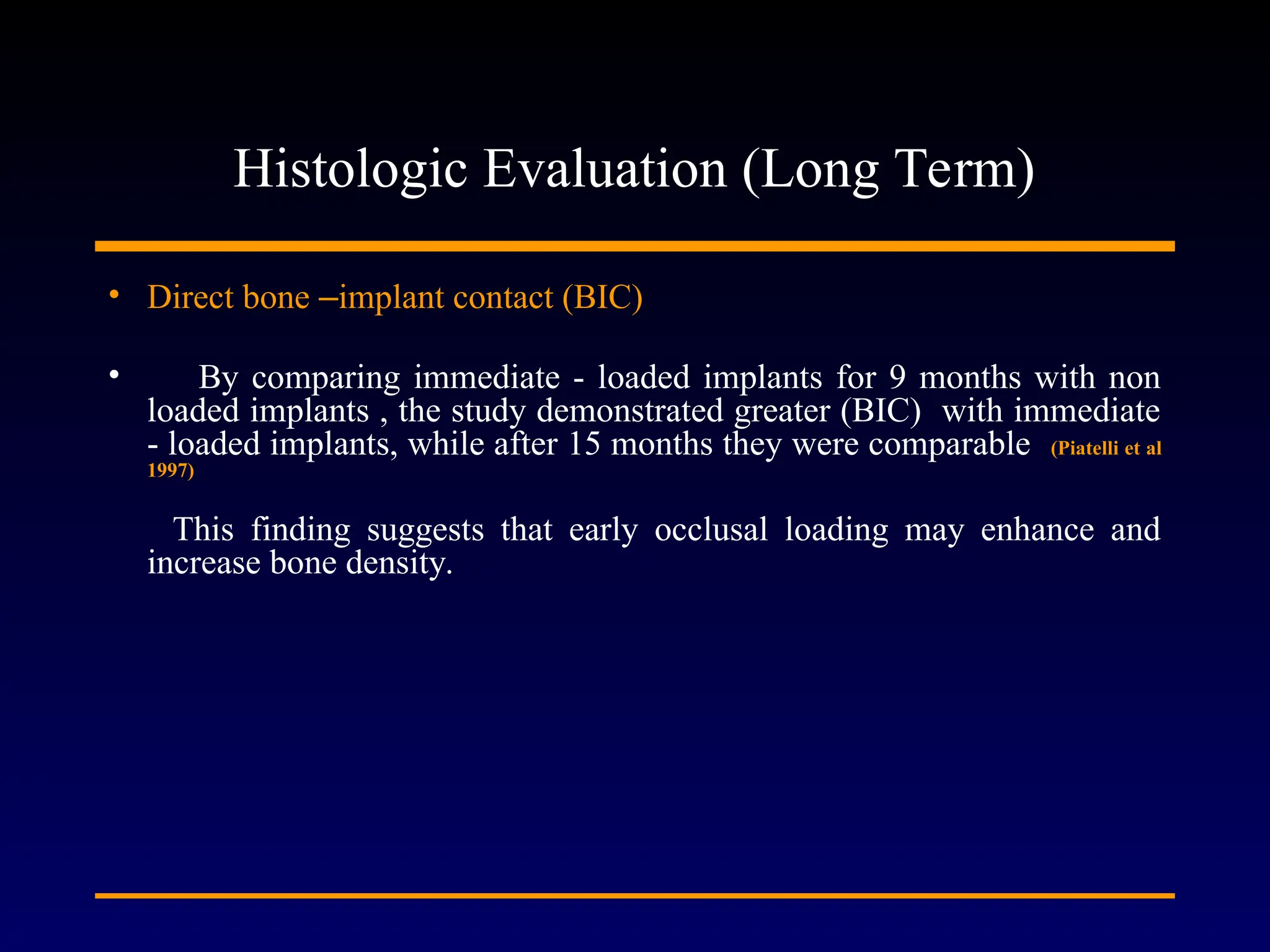
Histologic Evaluation (Long Term)
• Direct bone –implant contact (BIC)
• By comparing immediate - loaded implants for 9 months with non
loaded implants , the study demonstrated greater (BIC) with immediate
- loaded implants, while after 15 months they were comparable (Piatelli et al
1997)
This finding suggests that early occlusal loading may enhance and
increase bone density.
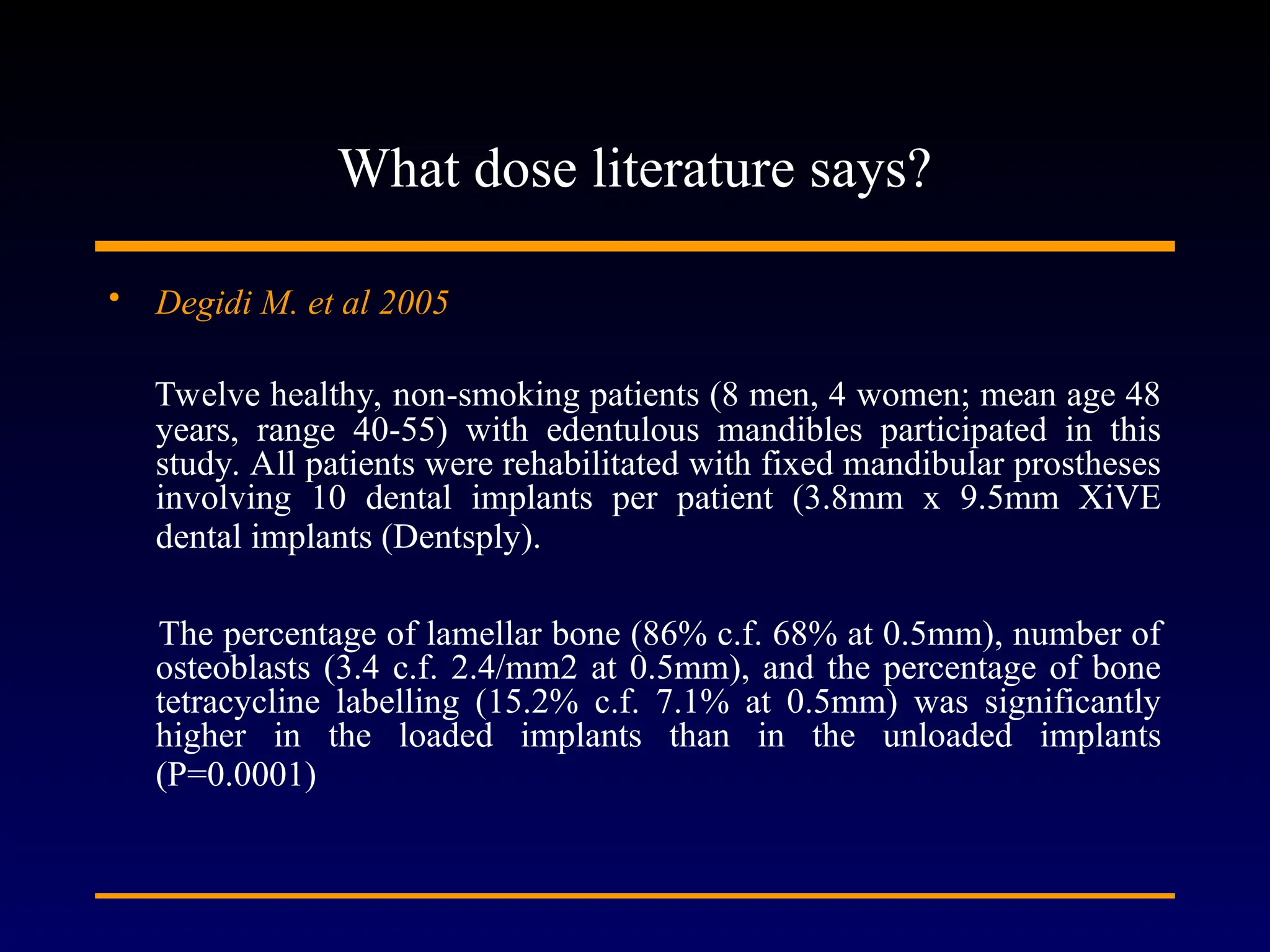
What dose literature says?
• Degidi M. et al 2005
Twelve healthy, non-smoking patients (8 men, 4 women; mean age 48
years, range 40-55) with edentulous mandibles participated in this
study. All patients were rehabilitated with fixed mandibular prostheses
involving 10 dental implants per patient (3.8mm x 9.5mm XiVE
dental implants (Dentsply).
The percentage of lamellar bone (86% c.f. 68% at 0.5mm), number of
osteoblasts (3.4 c.f. 2.4/mm2 at 0.5mm), and the percentage of bone
tetracycline labelling (15.2% c.f. 7.1% at 0.5mm) was significantly
higher in the loaded implants than in the unloaded implants
(P=0.0001)
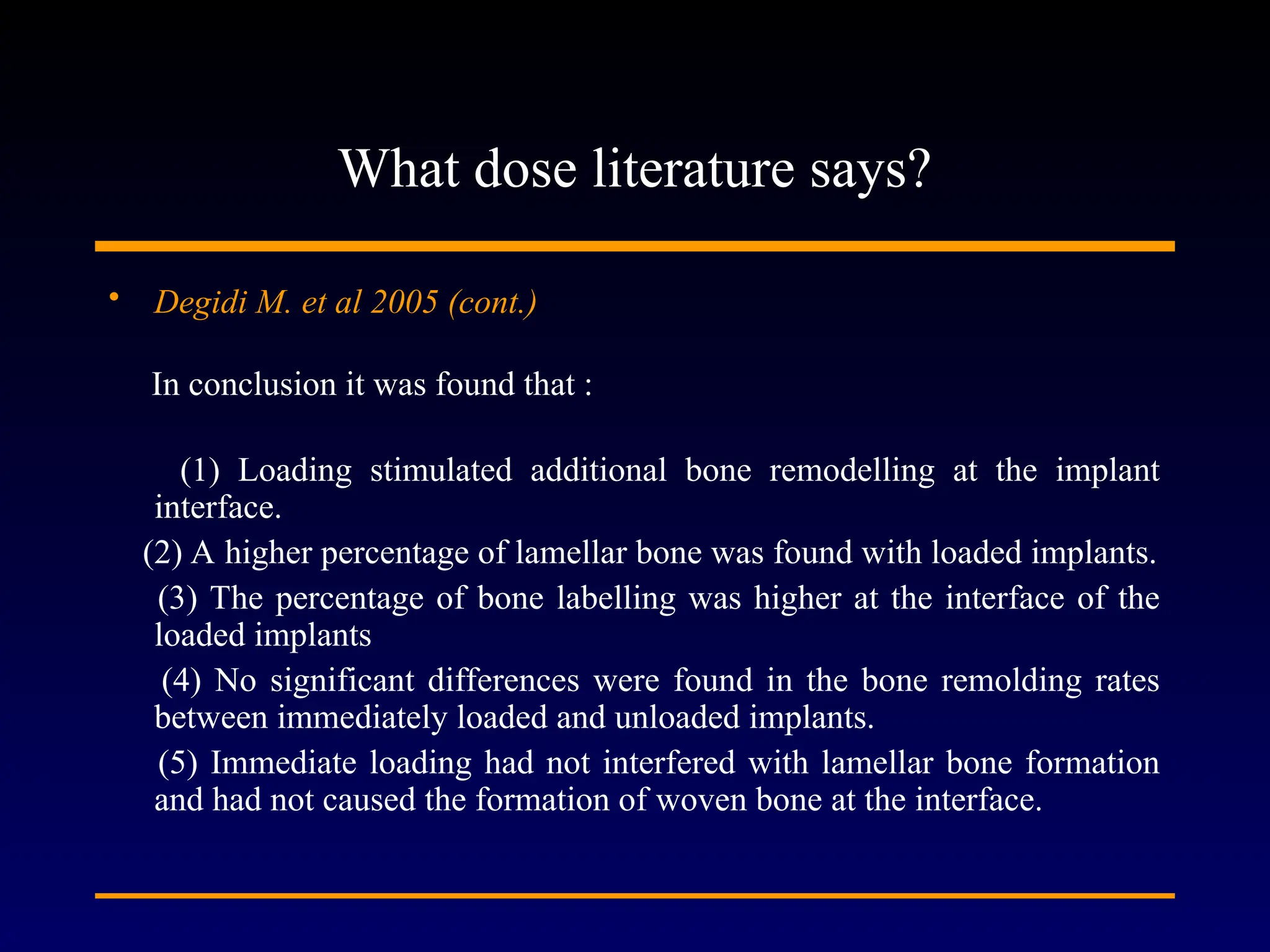
What dose literature says?
• Degidi M. et al 2005 (cont.)
In conclusion it was found that :
(1) Loading stimulated additional bone remodelling at the implant
interface.
(2) A higher percentage of lamellar bone was found with loaded implants.
(3) The percentage of bone labelling was higher at the interface of the
loaded implants
(4) No significant differences were found in the bone remolding rates
between immediately loaded and unloaded implants.
(5) Immediate loading had not interfered with lamellar bone formation
and had not caused the formation of woven bone at the interface.
What dose literature says?
• Degidi M. et al 2009
Patients enrolled to the study were healthy, non-bruxers, with good bone
quality and bone volume (sufficient to accept at least a 9.5mm x 3.4mm
implant (Maestro, Biohorizon, USA). Typical exclusion criteria such as
smoking > 20 cigarettes per day, excessive alcohol consumption, localized
irradiation therapy etc., were applied as was an implant insertion torque
value (ITV) of <25Ncm.
All 155 patients attended their follow up appointments for the 5 year study
period. The cumulative survival rates for both groups were A=98.8%; and
B=100%. There was no significant difference. Only 3 implants restored
immediately in the posterior mandible of one patient failed 5-years post-
loading. Crestal bone loss measured 0.3mm for both groups within the first
year with a further 0.6 mm (A) and 0.5mm (B) bone loss in the subsequent
4 years. Differences were not significant.
What dose literature says?
• Degidi M. et al 2009 (cont.)
It has been suggested that immediately loading implants within its
physiological limits may result in bone formation. This has been
demonstrated through greater bone to implant contact (BIC) and
higher resonance frequency analysis values for immediately loaded
implants compared to conventionally treated implants. Parafunctional
habits, presence of infection and/or poor bone quality/volume are all
potential risk factors in immediate loading and one or more of these
factors may have been implicated in the three failures described in the
current study.
What dose literature says?
• Attard N.J. & Zarb G. 2005
In this literature review English-language clinical studies from peer-
reviewed journals published between 1975 and 2004 and covering
‘immediate and early loading (IM/EL)’ protocols were evaluated. All
data was tabulated in order to compare the evidence for full arch,
overdenture, partial and single unit restorations delivered according to
either protocol.
It was concluded that IM/EL treatment protocols require a high degree
of operator skill and experience, and are predictable in the anterior
mandible, irrespective of implant type, surface topography, and
prosthesis design (full arch on four or more implants and overdentures
on two or more implants) showing success rates 90%-100%.
What dose literature says?
• Attard N.J. & Zarb G. 2005 (cont.)
For the endentulous maxilla and partially dentate cases there is a
shortage of data, even though those that do report early and medium-
term show results comparable with the anterior mandible. Many more,
accurate and long-term studies reporting on treatment protocols for
each clinical situation are required to allow meaningful comparisons
before definitive conclusions can be made about IM/EL protocols.
What dose literature says?
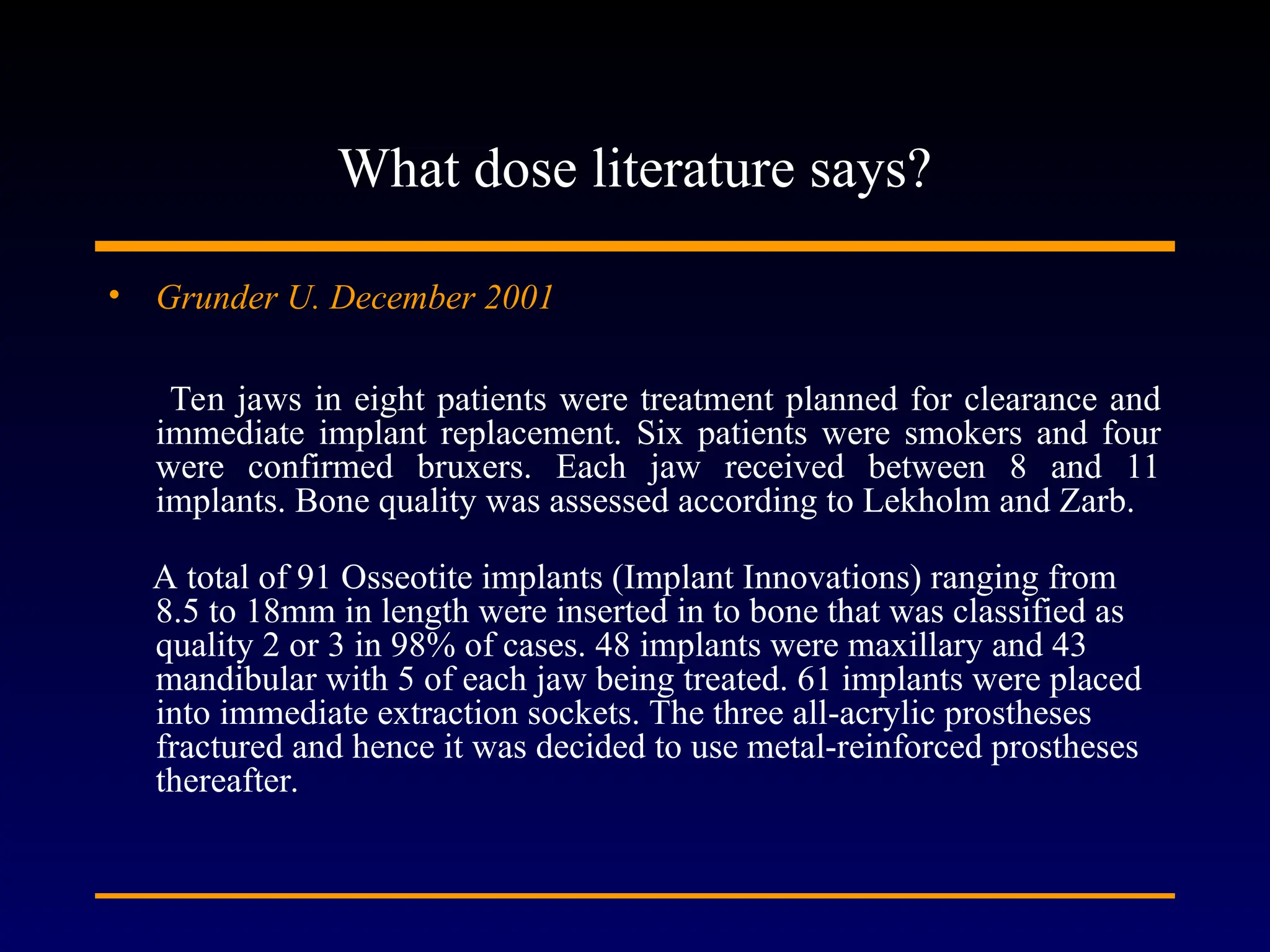
• Grunder U. December 2001
Ten jaws in eight patients were treatment planned for clearance and
immediate implant replacement. Six patients were smokers and four
were confirmed bruxers. Each jaw received between 8 and 11
implants. Bone quality was assessed according to Lekholm and Zarb.
A total of 91 Osseotite implants (Implant Innovations) ranging from
8.5 to 18mm in length were inserted in to bone that was classified as
quality 2 or 3 in 98% of cases. 48 implants were maxillary and 43
mandibular with 5 of each jaw being treated. 61 implants were placed
into immediate extraction sockets. The three all-acrylic prostheses
fractured and hence it was decided to use metal-reinforced prostheses
thereafter.
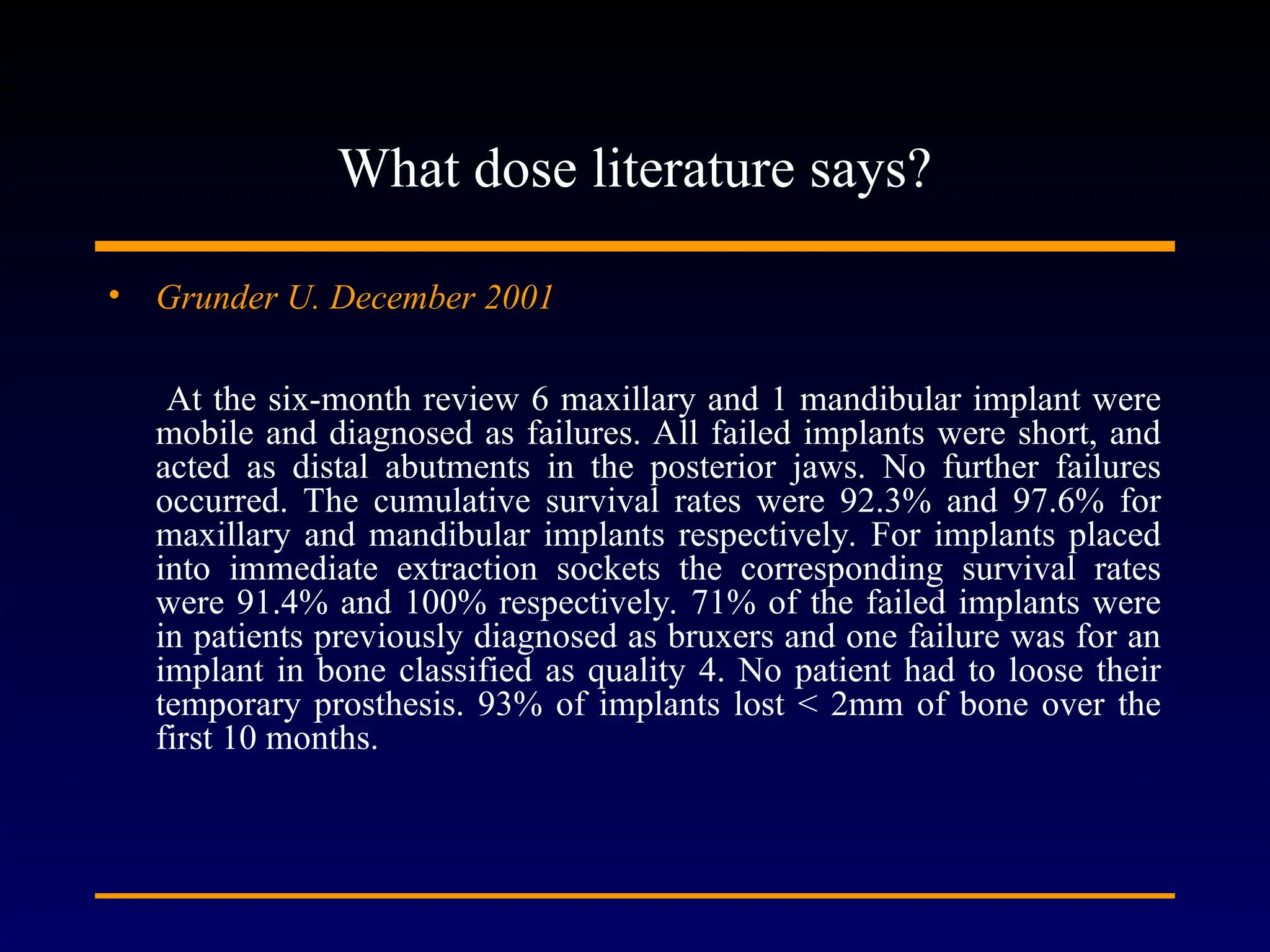
What dose literature says?
• Grunder U. December 2001
At the six-month review 6 maxillary and 1 mandibular implant were
mobile and diagnosed as failures. All failed implants were short, and
acted as distal abutments in the posterior jaws. No further failures
occurred. The cumulative survival rates were 92.3% and 97.6% for
maxillary and mandibular implants respectively. For implants placed
into immediate extraction sockets the corresponding survival rates
were 91.4% and 100% respectively. 71% of the failed implants were
in patients previously diagnosed as bruxers and one failure was for an
implant in bone classified as quality 4. No patient had to loose their
temporary prosthesis. 93% of implants lost < 2mm of bone over the
first 10 months.
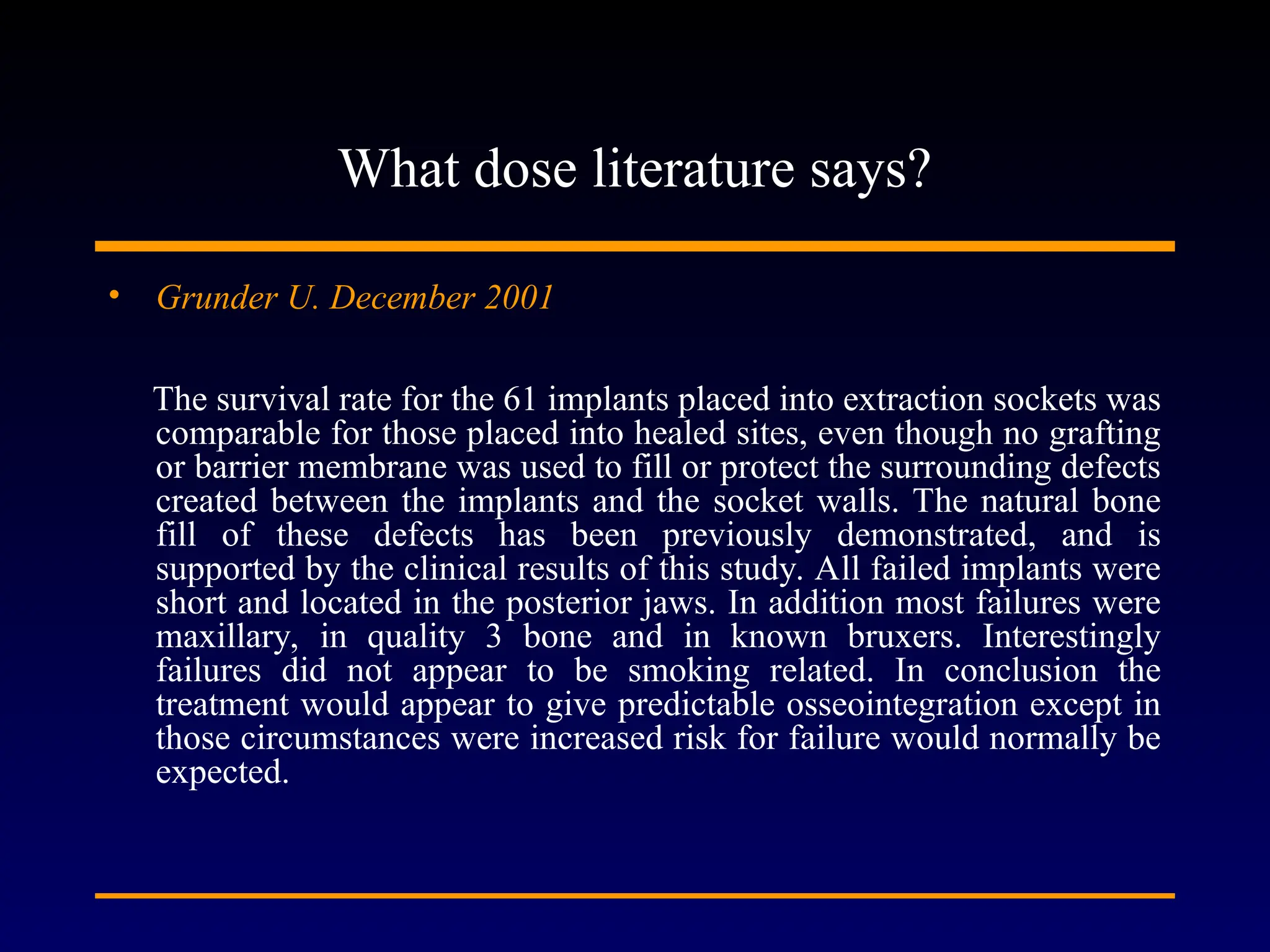
What dose literature says?
• Grunder U. December 2001
The survival rate for the 61 implants placed into extraction sockets was
comparable for those placed into healed sites, even though no grafting
or barrier membrane was used to fill or protect the surrounding defects
created between the implants and the socket walls. The natural bone
fill of these defects has been previously demonstrated, and is
supported by the clinical results of this study. All failed implants were
short and located in the posterior jaws. In addition most failures were
maxillary, in quality 3 bone and in known bruxers. Interestingly
failures did not appear to be smoking related. In conclusion the
treatment would appear to give predictable osseointegration except in
those circumstances were increased risk for failure would normally be
expected.
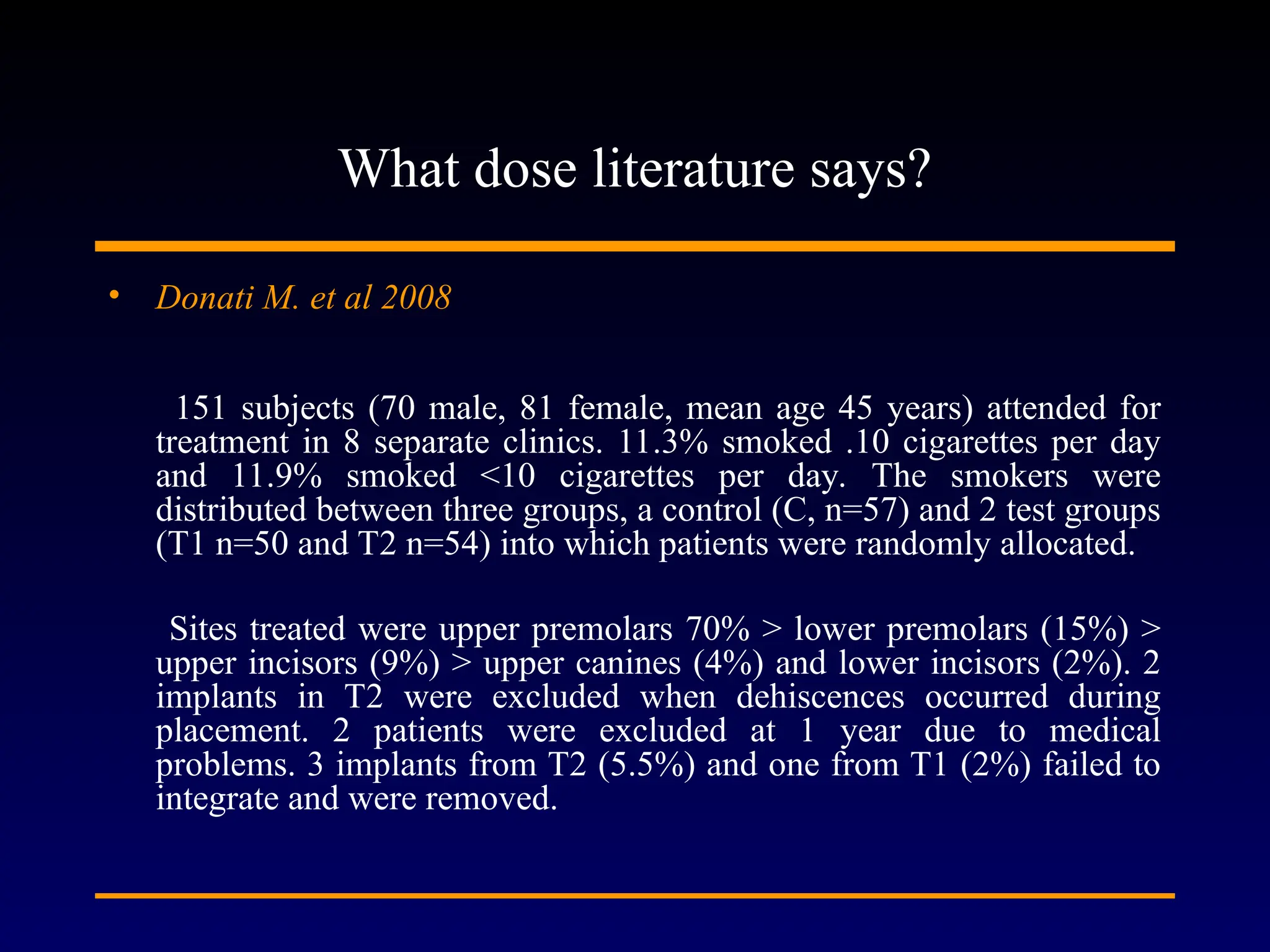
What dose literature says?
• Donati M. et al 2008
151 subjects (70 male, 81 female, mean age 45 years) attended for
treatment in 8 separate clinics. 11.3% smoked .10 cigarettes per day
and 11.9% smoked <10 cigarettes per day. The smokers were
distributed between three groups, a control (C, n=57) and 2 test groups
(T1 n=50 and T2 n=54) into which patients were randomly allocated.
Sites treated were upper premolars 70% > lower premolars (15%) >
upper incisors (9%) > upper canines (4%) and lower incisors (2%). 2
implants in T2 were excluded when dehiscences occurred during
placement. 2 patients were excluded at 1 year due to medical
problems. 3 implants from T2 (5.5%) and one from T1 (2%) failed to
integrate and were removed.
What dose literature says?
• Donati M. et al 2008 (cont.)
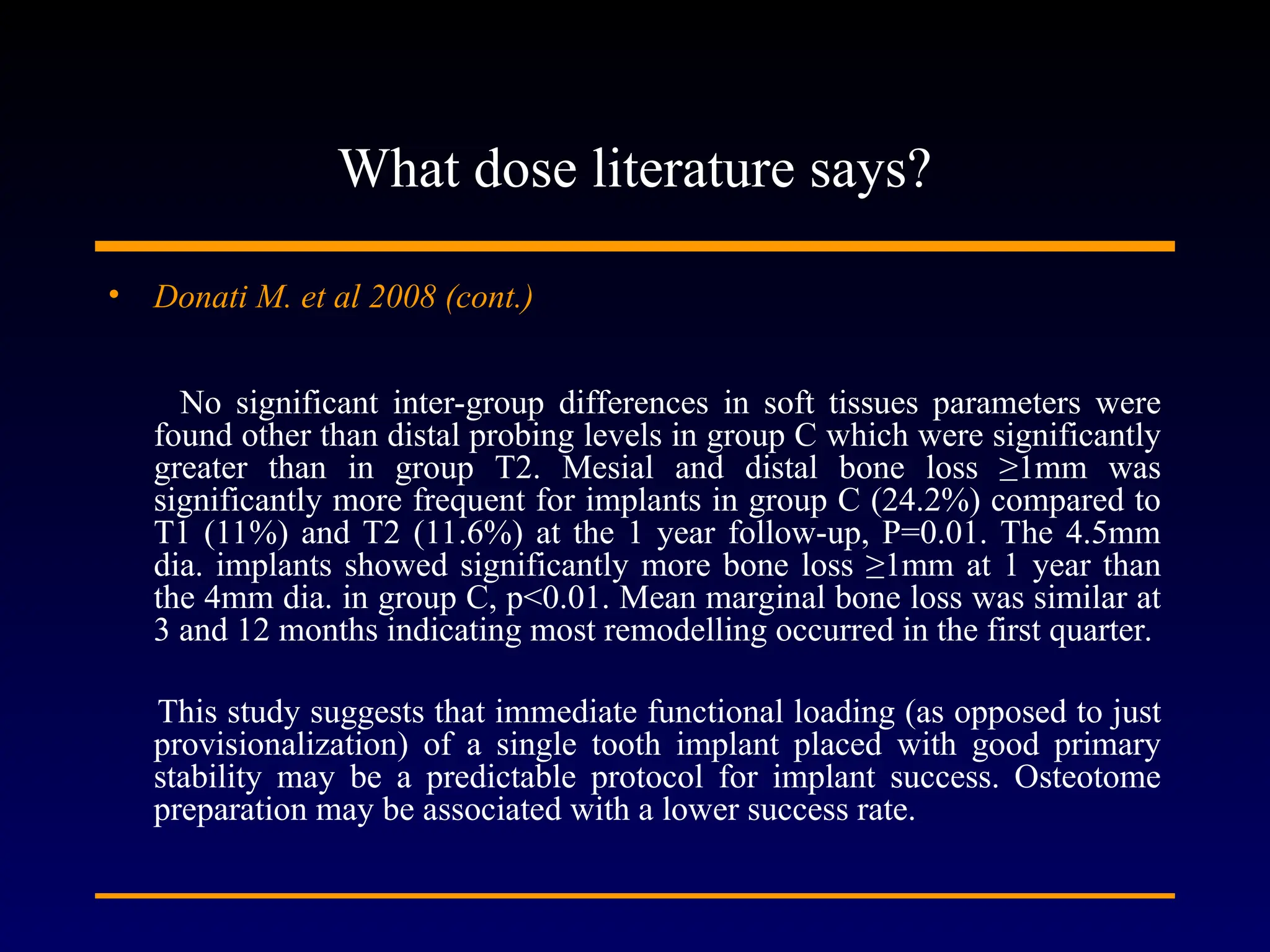
No significant inter-group differences in soft tissues parameters were
found other than distal probing levels in group C which were significantly
greater than in group T2. Mesial and distal bone loss ≥1mm was
significantly more frequent for implants in group C (24.2%) compared to
T1 (11%) and T2 (11.6%) at the 1 year follow-up, P=0.01. The 4.5mm
dia. implants showed significantly more bone loss ≥1mm at 1 year than
the 4mm dia. in group C, p<0.01. Mean marginal bone loss was similar at
3 and 12 months indicating most remodelling occurred in the first quarter.
This study suggests that immediate functional loading (as opposed to just
provisionalization) of a single tooth implant placed with good primary
stability may be a predictable protocol for implant success. Osteotome
preparation may be associated with a lower success rate.
• The micro strain (deformation) rate in the bone can be
decreased through:
• Increased surface area
Implant number, size, body design, surface condition
• Decreased force condition
Patient factors, occlusal load direction, and implant position
• Mechanical properties of the bone
Cortical vs trabecular bone
Factors that decrease risks of immediate occlusal
loading
• Increased surface area:
• Implant number
8 splinted implants or more for completely edentulous maxilla,
and 6 splinted implants or more fore mandible
• Implant size
which one is more important length or width? Why?
Factors that decrease risks of immediate occlusal
loading
• Implant body design
Should be more specific for immediate loading because no
time for bone to grow into undercuts Implant design
affects functional surface area more than implant size
Press- fit implants:(cylinder implants) exhibit less surface
area, less initial stability
Threaded implants even if smaller-diameter has greater
surface area
More threads number, greater threads depth give greater
functional surface area during immediate load
Factors that decrease risks of immediate occlusal
loading
• Implant body design cont.
Tapered-implant design disadvantages for immediate-load
applications cont. :
1) The implant does not engage the bone until it is seated
almost completely
into the bone site, this reduces the initial fixation
2) It has less surface area compared with a parallel-walled,
threaded implant
Factors that decrease risks of immediate occlusal
loading
• Implant body design
Tapered-implant design disadvantages for immediate-load
applications:
3) Many tapered implants have less thread depth near the
apical portion, this reduces surface area and initial
fixation
4) The tapered implant is less likely to engage lateral cortical
bone in the apical half of the implant
Factors that decrease risks of immediate occlusal
loading
• Implant surface condition
May affect the rate of bone contact, mineralization rate ,
lamellar bone formation
The coating or surface condition of the implant is most
beneficial during initial healing and early loading
The HA or roughened surface also may be of benefit
during the following healing period, especially at the 3
to 5 weeks when the bone is weak
Factors that decrease risks of immediate occlusal
loading
• Decreased Force condition :
• patient factors
Parafunction, crown height, and muscular dynamic require
more implant surface area
Balshi and Wolfinger reported that 75% of all failure in
immediate occlusal loading occurred in patients with
bruxism (Balshi and Wolfinger 1997)
Factors that decrease risks of immediate occlusal
loading
• Occlusal load direction:
• Narrow occlusal table
• No cantilevers with immediate -load
• Long-axis loads to the implant bodies whenever possible
• Using a definite cement with transitional restoration rather
than temporary cement
Factors that decrease risks of immediate
occlusal loading
• Implant positions :
The mandible may be divided into three sections around the
arch:
The canine- to- canine area and the bilateral posterior sections
The maxilla is usually divided into five sections :incisor region,
the bilateral canine areas, and the bilateral posterior regions
At least one implant should be inserted into each maxillary
section and splinted together during immediate loading
Factors that decrease risks of immediate occlusal
loading
There are two different options for immediate occlusal loading
for completely edentulous patient desiring a fixed prosthesis
1-The 1st option loads the implants the same day as the surgery
2-The 2nd option is to place the implants and make an
impression , then at the suture appointment (7 to 14 days later)
the dentist delivers the transitional fixed prosthesis
After healing 4 to 8 months (depends on bone density) the
transitional restoration may be cut off and the final prosthesis
fabricated
Immediate - loading procedures
for fixed prosthesis
The immediate-load concept for mandibular over dentures has
been used in the literature for more than 50 years
The risk of joining implants together with a bar for an implant
overdenture is less than for a fixed prosthesis !!
The immediately loaded overdenture procedures is similar to 2nd
option with fixed restorstion.The dentist makes an implant
body impression at the initial surgery
Implant overdentures
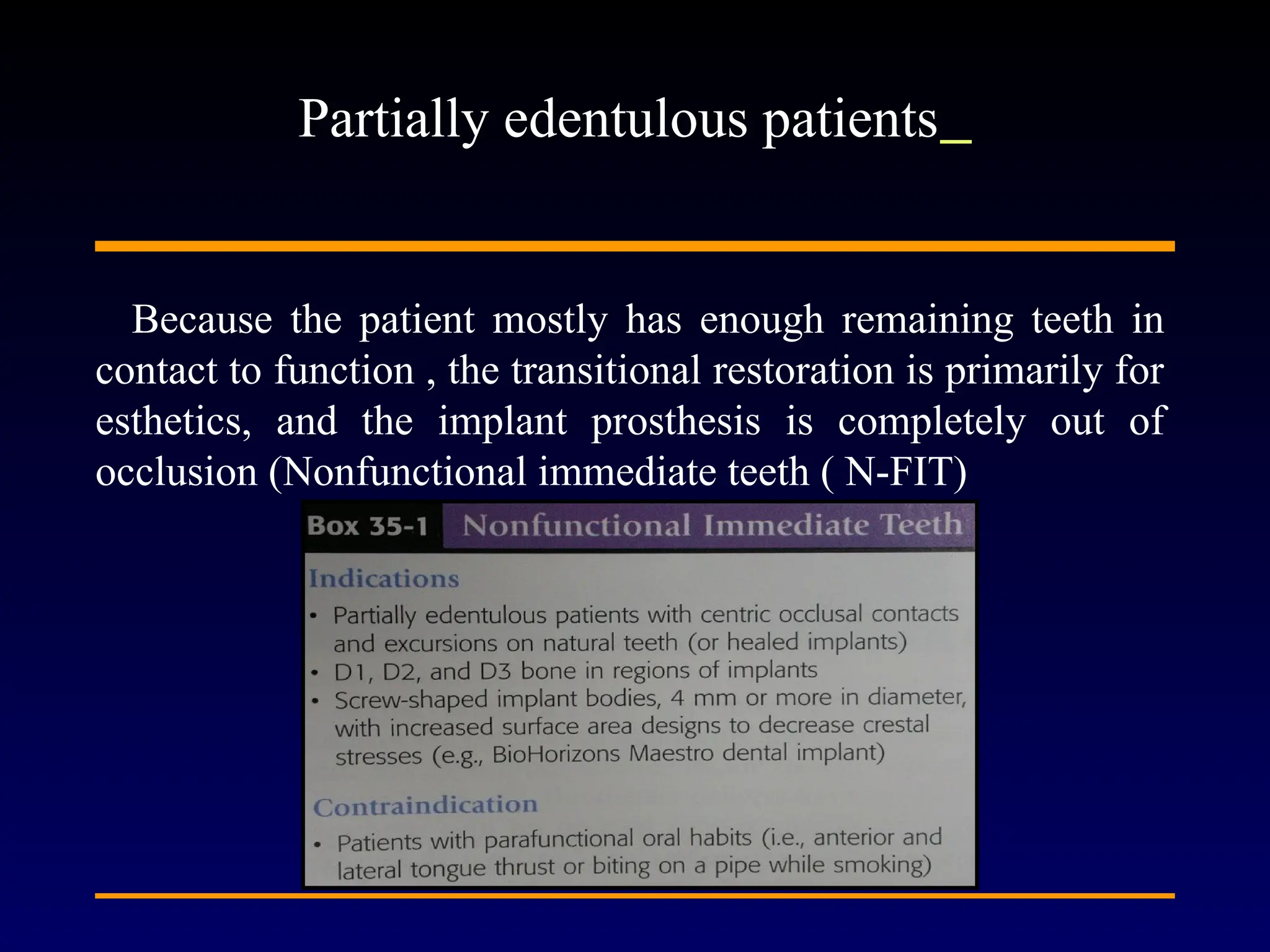
Because the patient mostly has enough remaining teeth in
contact to function , the transitional restoration is primarily for
esthetics, and the implant prosthesis is completely out of
occlusion (Nonfunctional immediate teeth ( N-FIT)
Partially edentulous patients
Nonfunctional immediate teeth N-FIT
Advantages
1-Esthetic
2-No stage II surgery
3-Implants splinted together
4-Creating emergence profile for final restoration
5- The soft tissue is mature (healed for many months)
6-Decrease risk of overload compared with functional loading
Disadvantages
1-Micromovement of implant
2-May cause crestal stress and bone loss
3-Impression material or acrylic may become trapped under the tissues
Partially edentulous patients
• 1mm decrease in width of an implant may decrease the
surface area of an implant by more than 40%.
• Therefore a 3 mm diameter implant may have almost one –
third less surface area of contact with bone as compared
with a 4mm diameter
• A 2 mm diameter implant is 16 times weaker than a 4-mm
diameter implant
• The fatigue strength of an implant is affected by implant
diameter, implant material, and amount of force
Limitations
• The abutment screw of narrow implant is more loosening due to
more exposure to force
• Abutment screw loosening of single implant is most common
prosthetic complication of single tooth implant (7-40%)
• One piece design implant eliminate the risk of abutment screw
loosening
• No microgap between implant and abutment with one piece design
implant , therefore crestal bone loss may be reduced
• Primary disadvantage of one piece design is requirement of
immediate restoration, and risk of overload
Limitations
• When adjacent mandibular incisors are missing, splinting 2 small
diameter implant is better than cantilever
• Each 3-mm increase in length can improve surface area support
by more than 20%
• The benefit of increased length is not to decrease stress in crestal
bone(area with most stress), but in initial stability
• Wider implant provides more BIC specially at crest, therefore
width is more important than length
• Maximum bite force in the anterior region of the mouth is 25 to
50 Ib/in2, and for molar 200 to 250 Ib/in 2
Limitations
A benefit /risk ratio may be assessed for each patient condition to
ascertain whether immediate occlusal loading is a worthwhile
alternative
Until the profession has longer term evidence and more multi center
studies, immediate occlusal loading will be a secondary treatment
option, restricted on a case-by- case basis
Summary

immediate loading of dental implants.ppt

  • 1.
    Immediate Loading ApplicationsIn Implant Dentistry
  • 2.
    History • Is immediateload concept new? • concept of immediately loading implants actually began 47 years ago with the contributions of Dr. Leonard I. Linkow. • As early as 1963, Dr Linkow had developed the first self- tapping endosseous root-form implant, known as the Ventplant. • The protocol that was ultimately adopted was to immediately load these implants with overdentures or acrylic, provisional fixed bridges. • immediate loaded subperiosteal implants followed in 1964.
  • 3.
    History • Is immediateload concept new? • In 1967, the endosseous blade implant, which also called for immediate loading (for splinting purposes), was introduced. • Before 1967, Dr Linkow carefully established a protocol for immediate loading in root-form procedures. • From 1967 to the latter part of 1999, myriad blade and plate-form implants were also placed into immediate function.
  • 4.
    History • Is immediateload concept new? • In totally edentulous cases the prosthesis should follow a very strict occlusal pattern, such as narrow occlusal tables, with planes inclined to no more than 15 degrees and with group function posteriorly in lateral excursions, as developed by Dr Charles English. • Professor Carl Donath of the University of Munich performed the histopathology on this blade implant, which showed an average of 72% bone-to-metal contact.
  • 5.
    Introduction • Immediate restorationof dental implants Not only includes a non submerged 1st stage surgery but also implies the occlusal surfaces and implants are loaded with a provisional or definitive restoration • The immediate occlusal –loading protocol Is an implant supported temporary or definitive restoration in occlusal contact within 2 weeks of the implant insertion
  • 6.
    Introduction • Early occlusalloading Refers to an implant- support restoration in occlusion between 2 weeks and 3 months after implant insertion. • Delayed or staged occlusal loading Refers to an implant prosthesis with an occlusal load after more than 3 months after implant insertion. This approach may use either two or one- stage surgical procedure.
  • 7.
    Introduction • Nonfunctional immediaterestoration Describes an implant prosthesis with no direct occlusal load within 2 weeks of implant insertion and primarily considered in partially edentulous patients • Nonfunctional early restoration Describes a restoration in partially edentulous patient delivered between 2 weeks and 3 months after the implant insertion
  • 8.
  • 9.
    Rationale For ImplantLoading • Surgical trauma Causes of trauma include thermal injury and microfracture of bone during implant placement which may lead to osteonecrosis and result in fibrous encapsulation around the implant (Erikson AR, Albreketsson et al 1982) The bone interface is stronger in the day of implant placement compared with 3 months later (Strid KG 1985)
  • 10.
    Rationale For ImplantLoading • Surgical trauma (cont.) The surgical process of the implant osteotomy preparation and implant insertion cause a regional acceleratory phenomenon of bone repair around the implant interface (Frost HM 1983) The implant- bone interface is weakest and most at risk of overload at 3 to 6 weeks after surgical insertion because surgical trauma causes bone remodeling at the interface that least mineralized and unorganized during this time. At 4 months the bone is still only 60% mineralized, organized lamellar bone (RobertS WE 1987)
  • 11.
    Rationale For ImplantLoading • Bone-loading trauma After trauma the remodeling (bone turnover) permits the repair of the bone, during remodeling process the bone mostly is lamellar but may become woven bone. Woven bone is unorganized, less mineralized, weaker, and more flexible. Lamellar bone is highly mineralized, strongest bone type, and able to respond to the mechanical environment of occlusal loading
  • 12.
    Rationale For ImplantLoading • Bone-loading trauma (cont.) Therefore a rational for immediate loading is not only to reduce the risk of fibrous tissue formation , but also to minimize woven bone formation and promote lamellar bone maturation (Parfitt AM 1983)
  • 13.
    Histologic Evaluation (ShortTerm) • Direct bone –implant contact (BIC) • No statistical difference between immediate and delayed loaded implants (Romans et al 2001) • By comparing 10 immediate - loaded implants for 90 days with 5 control non loaded implants , the study demonstrated that immediate - loaded implants may have higher (BIC) than non-loaded implants (Suzuky et al 2007) • No significant difference was found in the (BIC) between submerged and loaded implant after 4 weeks of function (Sharawy et al 2000)
  • 14.
    Histologic Evaluation (LongTerm) • Direct bone –implant contact (BIC) • By comparing immediate - loaded implants for 9 months with non loaded implants , the study demonstrated greater (BIC) with immediate - loaded implants, while after 15 months they were comparable (Piatelli et al 1997) This finding suggests that early occlusal loading may enhance and increase bone density.
  • 15.
    What dose literaturesays? • Degidi M. et al 2005 Twelve healthy, non-smoking patients (8 men, 4 women; mean age 48 years, range 40-55) with edentulous mandibles participated in this study. All patients were rehabilitated with fixed mandibular prostheses involving 10 dental implants per patient (3.8mm x 9.5mm XiVE dental implants (Dentsply). The percentage of lamellar bone (86% c.f. 68% at 0.5mm), number of osteoblasts (3.4 c.f. 2.4/mm2 at 0.5mm), and the percentage of bone tetracycline labelling (15.2% c.f. 7.1% at 0.5mm) was significantly higher in the loaded implants than in the unloaded implants (P=0.0001)
  • 16.
    What dose literaturesays? • Degidi M. et al 2005 (cont.) In conclusion it was found that : (1) Loading stimulated additional bone remodelling at the implant interface. (2) A higher percentage of lamellar bone was found with loaded implants. (3) The percentage of bone labelling was higher at the interface of the loaded implants (4) No significant differences were found in the bone remolding rates between immediately loaded and unloaded implants. (5) Immediate loading had not interfered with lamellar bone formation and had not caused the formation of woven bone at the interface.
  • 17.
    What dose literaturesays? • Degidi M. et al 2009 Patients enrolled to the study were healthy, non-bruxers, with good bone quality and bone volume (sufficient to accept at least a 9.5mm x 3.4mm implant (Maestro, Biohorizon, USA). Typical exclusion criteria such as smoking > 20 cigarettes per day, excessive alcohol consumption, localized irradiation therapy etc., were applied as was an implant insertion torque value (ITV) of <25Ncm. All 155 patients attended their follow up appointments for the 5 year study period. The cumulative survival rates for both groups were A=98.8%; and B=100%. There was no significant difference. Only 3 implants restored immediately in the posterior mandible of one patient failed 5-years post- loading. Crestal bone loss measured 0.3mm for both groups within the first year with a further 0.6 mm (A) and 0.5mm (B) bone loss in the subsequent 4 years. Differences were not significant.
  • 18.
    What dose literaturesays? • Degidi M. et al 2009 (cont.) It has been suggested that immediately loading implants within its physiological limits may result in bone formation. This has been demonstrated through greater bone to implant contact (BIC) and higher resonance frequency analysis values for immediately loaded implants compared to conventionally treated implants. Parafunctional habits, presence of infection and/or poor bone quality/volume are all potential risk factors in immediate loading and one or more of these factors may have been implicated in the three failures described in the current study.
  • 19.
    What dose literaturesays? • Attard N.J. & Zarb G. 2005 In this literature review English-language clinical studies from peer- reviewed journals published between 1975 and 2004 and covering ‘immediate and early loading (IM/EL)’ protocols were evaluated. All data was tabulated in order to compare the evidence for full arch, overdenture, partial and single unit restorations delivered according to either protocol. It was concluded that IM/EL treatment protocols require a high degree of operator skill and experience, and are predictable in the anterior mandible, irrespective of implant type, surface topography, and prosthesis design (full arch on four or more implants and overdentures on two or more implants) showing success rates 90%-100%.
  • 20.
    What dose literaturesays? • Attard N.J. & Zarb G. 2005 (cont.) For the endentulous maxilla and partially dentate cases there is a shortage of data, even though those that do report early and medium- term show results comparable with the anterior mandible. Many more, accurate and long-term studies reporting on treatment protocols for each clinical situation are required to allow meaningful comparisons before definitive conclusions can be made about IM/EL protocols.
  • 21.
    What dose literaturesays? • Grunder U. December 2001 Ten jaws in eight patients were treatment planned for clearance and immediate implant replacement. Six patients were smokers and four were confirmed bruxers. Each jaw received between 8 and 11 implants. Bone quality was assessed according to Lekholm and Zarb. A total of 91 Osseotite implants (Implant Innovations) ranging from 8.5 to 18mm in length were inserted in to bone that was classified as quality 2 or 3 in 98% of cases. 48 implants were maxillary and 43 mandibular with 5 of each jaw being treated. 61 implants were placed into immediate extraction sockets. The three all-acrylic prostheses fractured and hence it was decided to use metal-reinforced prostheses thereafter.
  • 22.
    What dose literaturesays? • Grunder U. December 2001 At the six-month review 6 maxillary and 1 mandibular implant were mobile and diagnosed as failures. All failed implants were short, and acted as distal abutments in the posterior jaws. No further failures occurred. The cumulative survival rates were 92.3% and 97.6% for maxillary and mandibular implants respectively. For implants placed into immediate extraction sockets the corresponding survival rates were 91.4% and 100% respectively. 71% of the failed implants were in patients previously diagnosed as bruxers and one failure was for an implant in bone classified as quality 4. No patient had to loose their temporary prosthesis. 93% of implants lost < 2mm of bone over the first 10 months.
  • 23.
    What dose literaturesays? • Grunder U. December 2001 The survival rate for the 61 implants placed into extraction sockets was comparable for those placed into healed sites, even though no grafting or barrier membrane was used to fill or protect the surrounding defects created between the implants and the socket walls. The natural bone fill of these defects has been previously demonstrated, and is supported by the clinical results of this study. All failed implants were short and located in the posterior jaws. In addition most failures were maxillary, in quality 3 bone and in known bruxers. Interestingly failures did not appear to be smoking related. In conclusion the treatment would appear to give predictable osseointegration except in those circumstances were increased risk for failure would normally be expected.
  • 24.
    What dose literaturesays? • Donati M. et al 2008 151 subjects (70 male, 81 female, mean age 45 years) attended for treatment in 8 separate clinics. 11.3% smoked .10 cigarettes per day and 11.9% smoked <10 cigarettes per day. The smokers were distributed between three groups, a control (C, n=57) and 2 test groups (T1 n=50 and T2 n=54) into which patients were randomly allocated. Sites treated were upper premolars 70% > lower premolars (15%) > upper incisors (9%) > upper canines (4%) and lower incisors (2%). 2 implants in T2 were excluded when dehiscences occurred during placement. 2 patients were excluded at 1 year due to medical problems. 3 implants from T2 (5.5%) and one from T1 (2%) failed to integrate and were removed.
  • 25.
    What dose literaturesays? • Donati M. et al 2008 (cont.) No significant inter-group differences in soft tissues parameters were found other than distal probing levels in group C which were significantly greater than in group T2. Mesial and distal bone loss ≥1mm was significantly more frequent for implants in group C (24.2%) compared to T1 (11%) and T2 (11.6%) at the 1 year follow-up, P=0.01. The 4.5mm dia. implants showed significantly more bone loss ≥1mm at 1 year than the 4mm dia. in group C, p<0.01. Mean marginal bone loss was similar at 3 and 12 months indicating most remodelling occurred in the first quarter. This study suggests that immediate functional loading (as opposed to just provisionalization) of a single tooth implant placed with good primary stability may be a predictable protocol for implant success. Osteotome preparation may be associated with a lower success rate.
  • 26.
    • The microstrain (deformation) rate in the bone can be decreased through: • Increased surface area Implant number, size, body design, surface condition • Decreased force condition Patient factors, occlusal load direction, and implant position • Mechanical properties of the bone Cortical vs trabecular bone Factors that decrease risks of immediate occlusal loading
  • 27.
    • Increased surfacearea: • Implant number 8 splinted implants or more for completely edentulous maxilla, and 6 splinted implants or more fore mandible • Implant size which one is more important length or width? Why? Factors that decrease risks of immediate occlusal loading
  • 28.
    • Implant bodydesign Should be more specific for immediate loading because no time for bone to grow into undercuts Implant design affects functional surface area more than implant size Press- fit implants:(cylinder implants) exhibit less surface area, less initial stability Threaded implants even if smaller-diameter has greater surface area More threads number, greater threads depth give greater functional surface area during immediate load Factors that decrease risks of immediate occlusal loading
  • 29.
    • Implant bodydesign cont. Tapered-implant design disadvantages for immediate-load applications cont. : 1) The implant does not engage the bone until it is seated almost completely into the bone site, this reduces the initial fixation 2) It has less surface area compared with a parallel-walled, threaded implant Factors that decrease risks of immediate occlusal loading
  • 30.
    • Implant bodydesign Tapered-implant design disadvantages for immediate-load applications: 3) Many tapered implants have less thread depth near the apical portion, this reduces surface area and initial fixation 4) The tapered implant is less likely to engage lateral cortical bone in the apical half of the implant Factors that decrease risks of immediate occlusal loading
  • 31.
    • Implant surfacecondition May affect the rate of bone contact, mineralization rate , lamellar bone formation The coating or surface condition of the implant is most beneficial during initial healing and early loading The HA or roughened surface also may be of benefit during the following healing period, especially at the 3 to 5 weeks when the bone is weak Factors that decrease risks of immediate occlusal loading
  • 32.
    • Decreased Forcecondition : • patient factors Parafunction, crown height, and muscular dynamic require more implant surface area Balshi and Wolfinger reported that 75% of all failure in immediate occlusal loading occurred in patients with bruxism (Balshi and Wolfinger 1997) Factors that decrease risks of immediate occlusal loading
  • 33.
    • Occlusal loaddirection: • Narrow occlusal table • No cantilevers with immediate -load • Long-axis loads to the implant bodies whenever possible • Using a definite cement with transitional restoration rather than temporary cement Factors that decrease risks of immediate occlusal loading
  • 34.
    • Implant positions: The mandible may be divided into three sections around the arch: The canine- to- canine area and the bilateral posterior sections The maxilla is usually divided into five sections :incisor region, the bilateral canine areas, and the bilateral posterior regions At least one implant should be inserted into each maxillary section and splinted together during immediate loading Factors that decrease risks of immediate occlusal loading
  • 35.
    There are twodifferent options for immediate occlusal loading for completely edentulous patient desiring a fixed prosthesis 1-The 1st option loads the implants the same day as the surgery 2-The 2nd option is to place the implants and make an impression , then at the suture appointment (7 to 14 days later) the dentist delivers the transitional fixed prosthesis After healing 4 to 8 months (depends on bone density) the transitional restoration may be cut off and the final prosthesis fabricated Immediate - loading procedures for fixed prosthesis
  • 36.
    The immediate-load conceptfor mandibular over dentures has been used in the literature for more than 50 years The risk of joining implants together with a bar for an implant overdenture is less than for a fixed prosthesis !! The immediately loaded overdenture procedures is similar to 2nd option with fixed restorstion.The dentist makes an implant body impression at the initial surgery Implant overdentures
  • 37.
    Because the patientmostly has enough remaining teeth in contact to function , the transitional restoration is primarily for esthetics, and the implant prosthesis is completely out of occlusion (Nonfunctional immediate teeth ( N-FIT) Partially edentulous patients
  • 38.
    Nonfunctional immediate teethN-FIT Advantages 1-Esthetic 2-No stage II surgery 3-Implants splinted together 4-Creating emergence profile for final restoration 5- The soft tissue is mature (healed for many months) 6-Decrease risk of overload compared with functional loading Disadvantages 1-Micromovement of implant 2-May cause crestal stress and bone loss 3-Impression material or acrylic may become trapped under the tissues Partially edentulous patients
  • 39.
    • 1mm decreasein width of an implant may decrease the surface area of an implant by more than 40%. • Therefore a 3 mm diameter implant may have almost one – third less surface area of contact with bone as compared with a 4mm diameter • A 2 mm diameter implant is 16 times weaker than a 4-mm diameter implant • The fatigue strength of an implant is affected by implant diameter, implant material, and amount of force Limitations
  • 40.
    • The abutmentscrew of narrow implant is more loosening due to more exposure to force • Abutment screw loosening of single implant is most common prosthetic complication of single tooth implant (7-40%) • One piece design implant eliminate the risk of abutment screw loosening • No microgap between implant and abutment with one piece design implant , therefore crestal bone loss may be reduced • Primary disadvantage of one piece design is requirement of immediate restoration, and risk of overload Limitations
  • 41.
    • When adjacentmandibular incisors are missing, splinting 2 small diameter implant is better than cantilever • Each 3-mm increase in length can improve surface area support by more than 20% • The benefit of increased length is not to decrease stress in crestal bone(area with most stress), but in initial stability • Wider implant provides more BIC specially at crest, therefore width is more important than length • Maximum bite force in the anterior region of the mouth is 25 to 50 Ib/in2, and for molar 200 to 250 Ib/in 2 Limitations
  • 42.
    A benefit /riskratio may be assessed for each patient condition to ascertain whether immediate occlusal loading is a worthwhile alternative Until the profession has longer term evidence and more multi center studies, immediate occlusal loading will be a secondary treatment option, restricted on a case-by- case basis Summary