Educating Special Needs StudentsUsing IEP’s and Assistive Technology
“Special Needs” defined:Learning disabilitiesAttention Deficit Hyperactivity Disorder (ADHD)Emotional disordersCognitive challengesAutism Hearing impairmentVisual impairmentSpeech or language impairmentDevelopmental delay
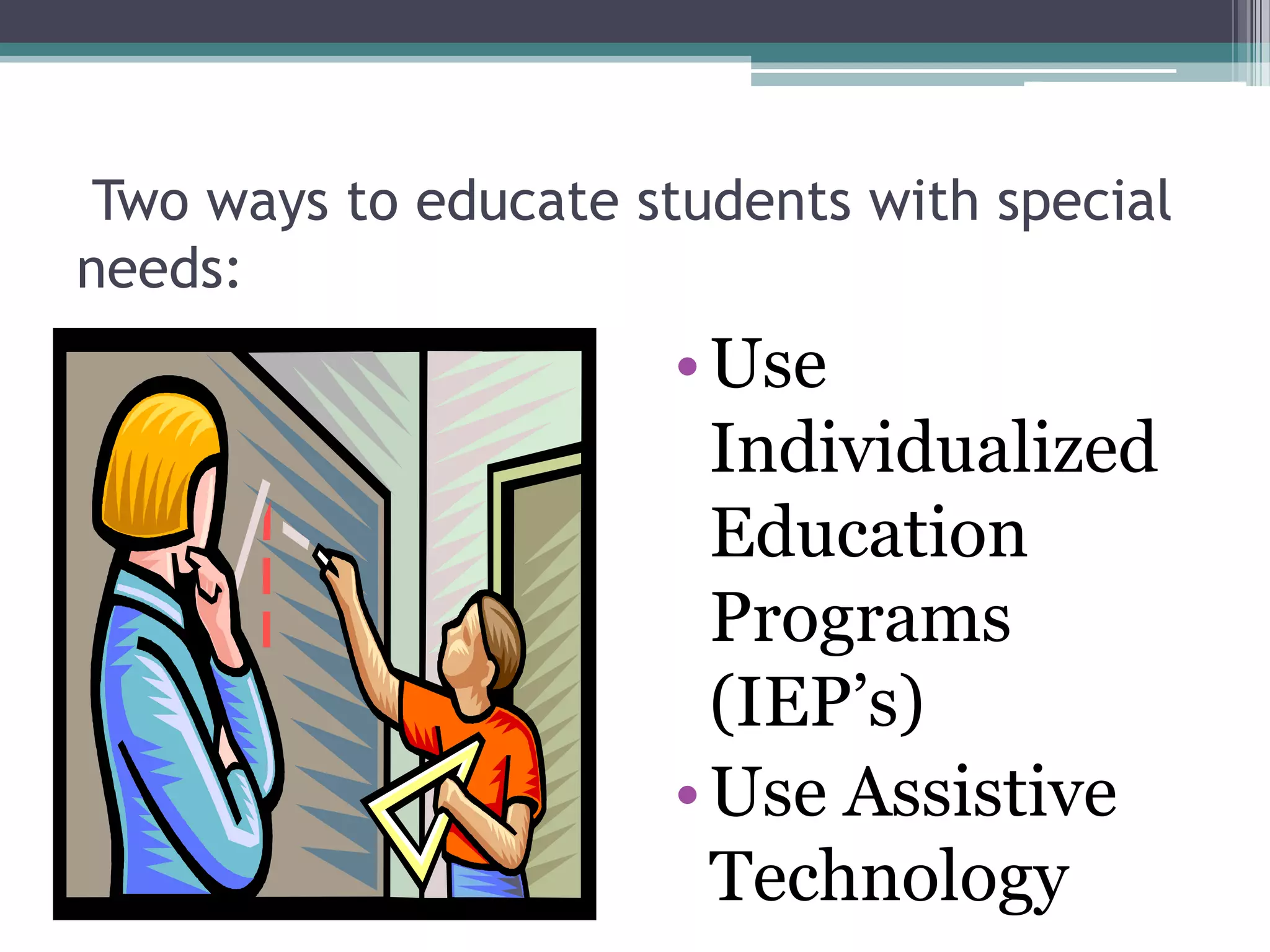
 Two ways to educate students with special needs:Use Individualized Education Programs (IEP’s)Use Assistive Technology
Description of an IEP:Parents work with educators to develop a plan (IEP) to help students succeed in schoolIEP details goals set by parents, educators and  other professionalsIEP identifies resources that will be used to assist student in accomplishing educational goals
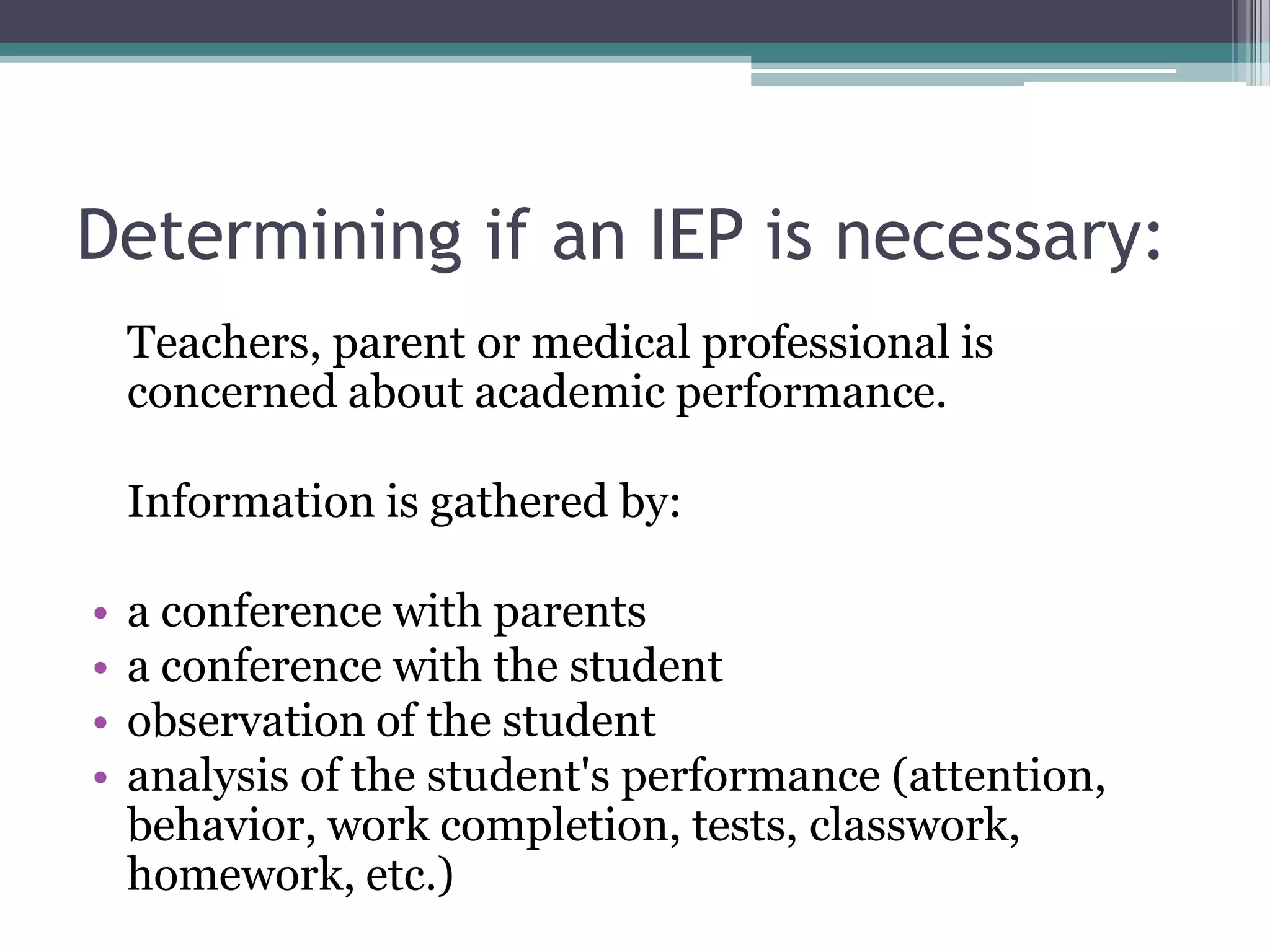
Determining if an IEP is necessary:	Teachers, parent or medical professional is concerned about academic performance. Information is gathered by:a conference with parentsa conference with the studentobservation of the studentanalysis of the student's performance (attention, behavior, work completion, tests, classwork, homework, etc.)
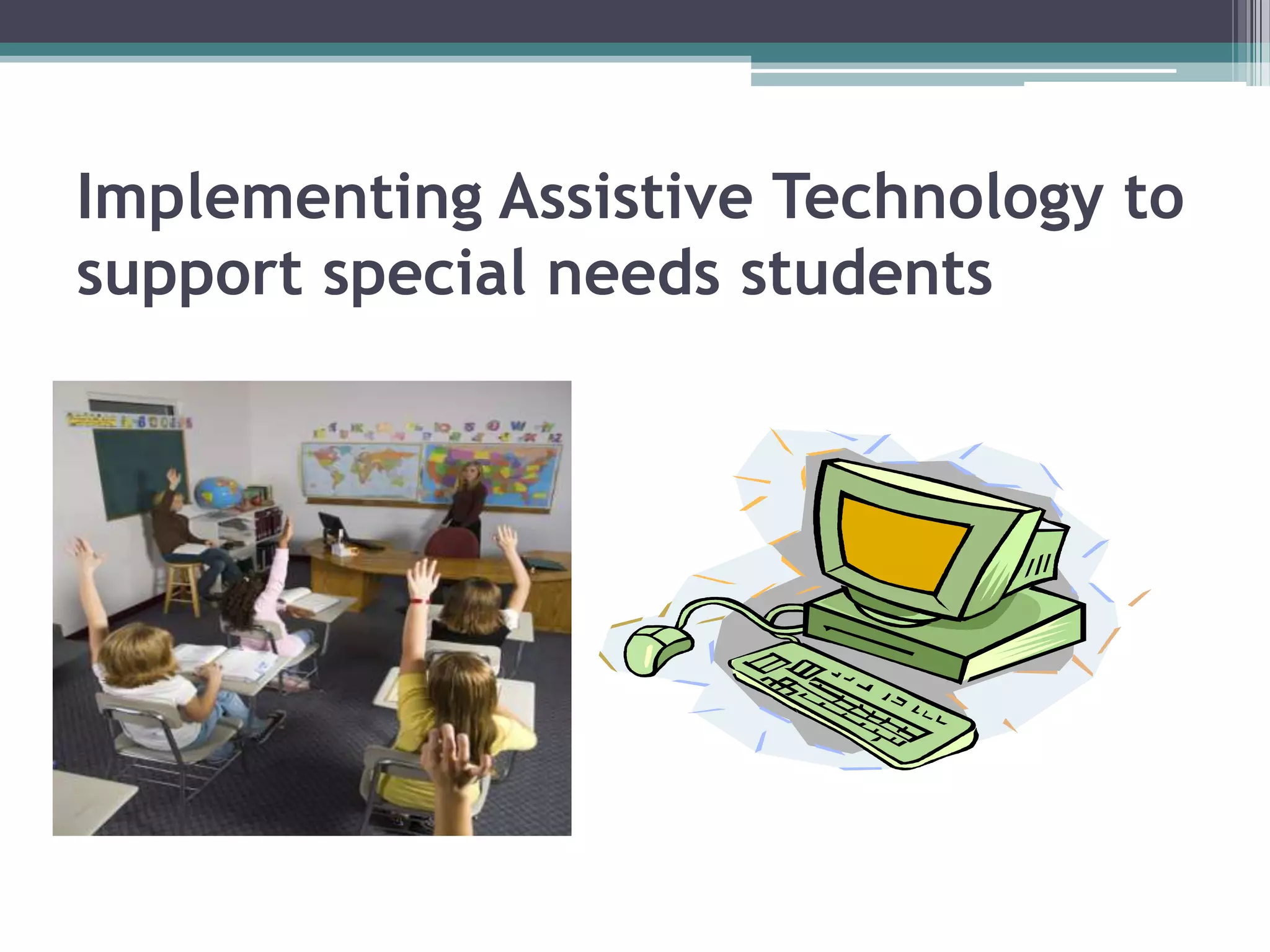
Implementing Assistive Technology to support special needs students
What is Assistive Technology (AT)?	“Assistive technology or adaptive technology (AT) is an umbrella term that includes assistive, adaptive, and rehabilitative devices for people with disabilities and also includes the process used in selecting, locating, and using them. AT promotes greater independence by enabling people to perform tasks that they were formerly unable to accomplish, or had great difficulty accomplishing, by providing enhancements to or changed methods of interacting with the technology needed to accomplish such tasks.”
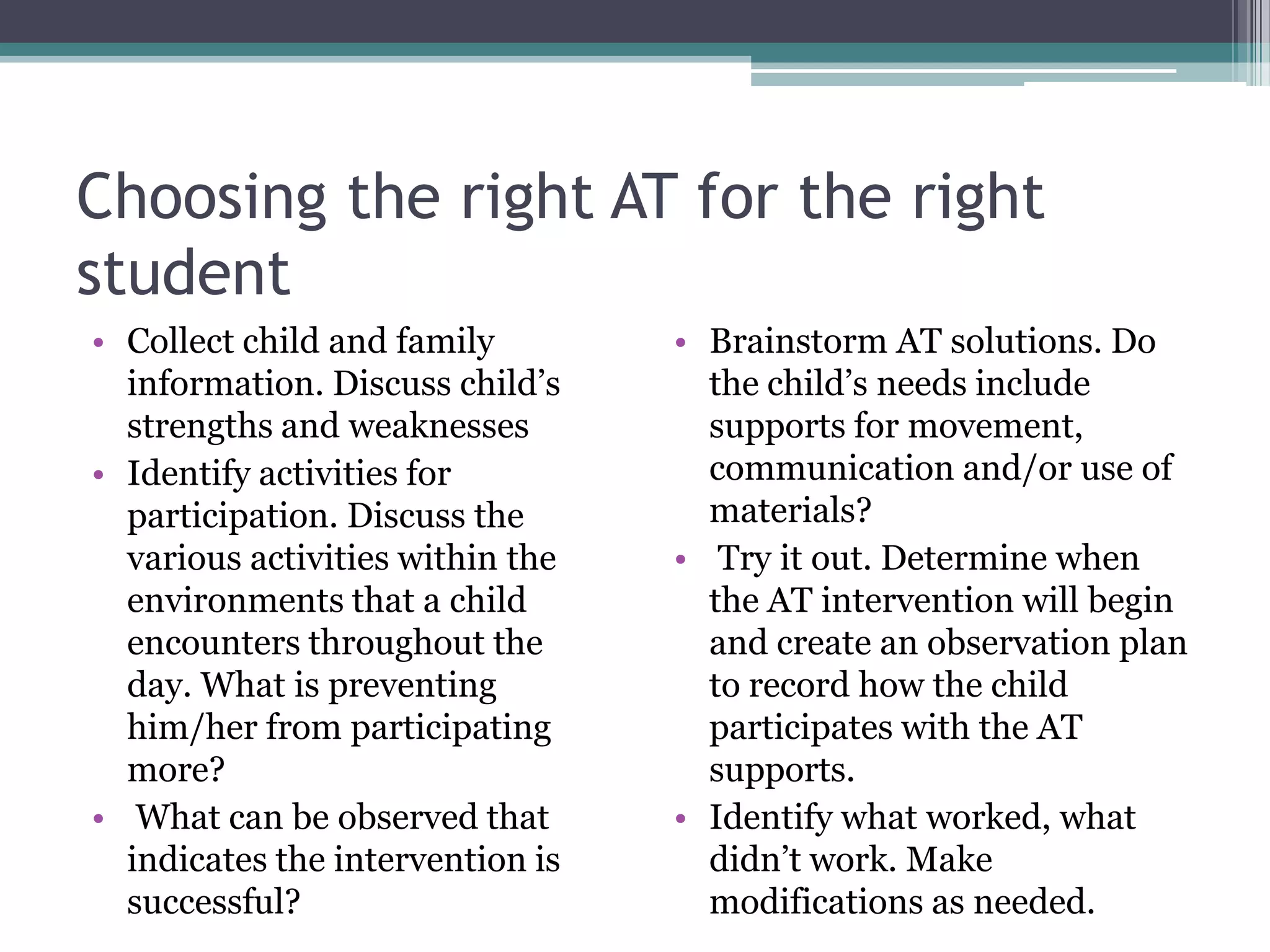
Choosing the right AT for the right studentCollect child and family information. Discuss child’s strengths and weaknessesIdentify activities for participation. Discuss the various activities within the environments that a child encounters throughout the day. What is preventing him/her from participating more? What can be observed that indicates the intervention is successful?Brainstorm AT solutions. Do the child’s needs include supports for movement, communication and/or use of materials?  Try it out. Determine when the AT intervention will begin and create an observation plan to record how the child participates with the AT supports.Identify what worked, what didn’t work. Make modifications as needed.
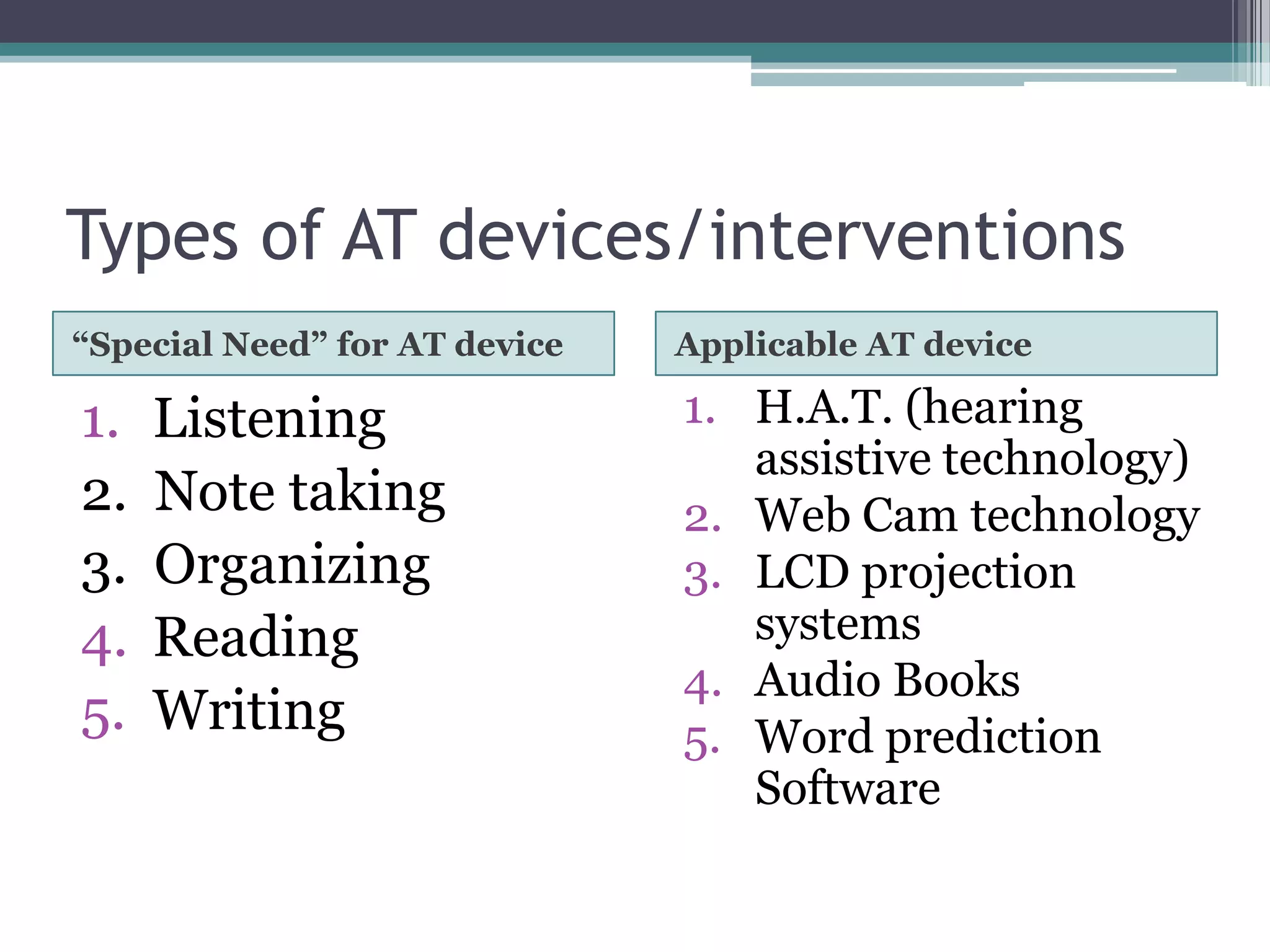
Types of AT devices/interventions“Special Need” for AT deviceApplicable AT deviceListening2.  Note taking3.  OrganizingReading  WritingH.A.T. (hearing assistive technology)Web Cam technologyLCD projection systemsAudio BooksWord prediction Software
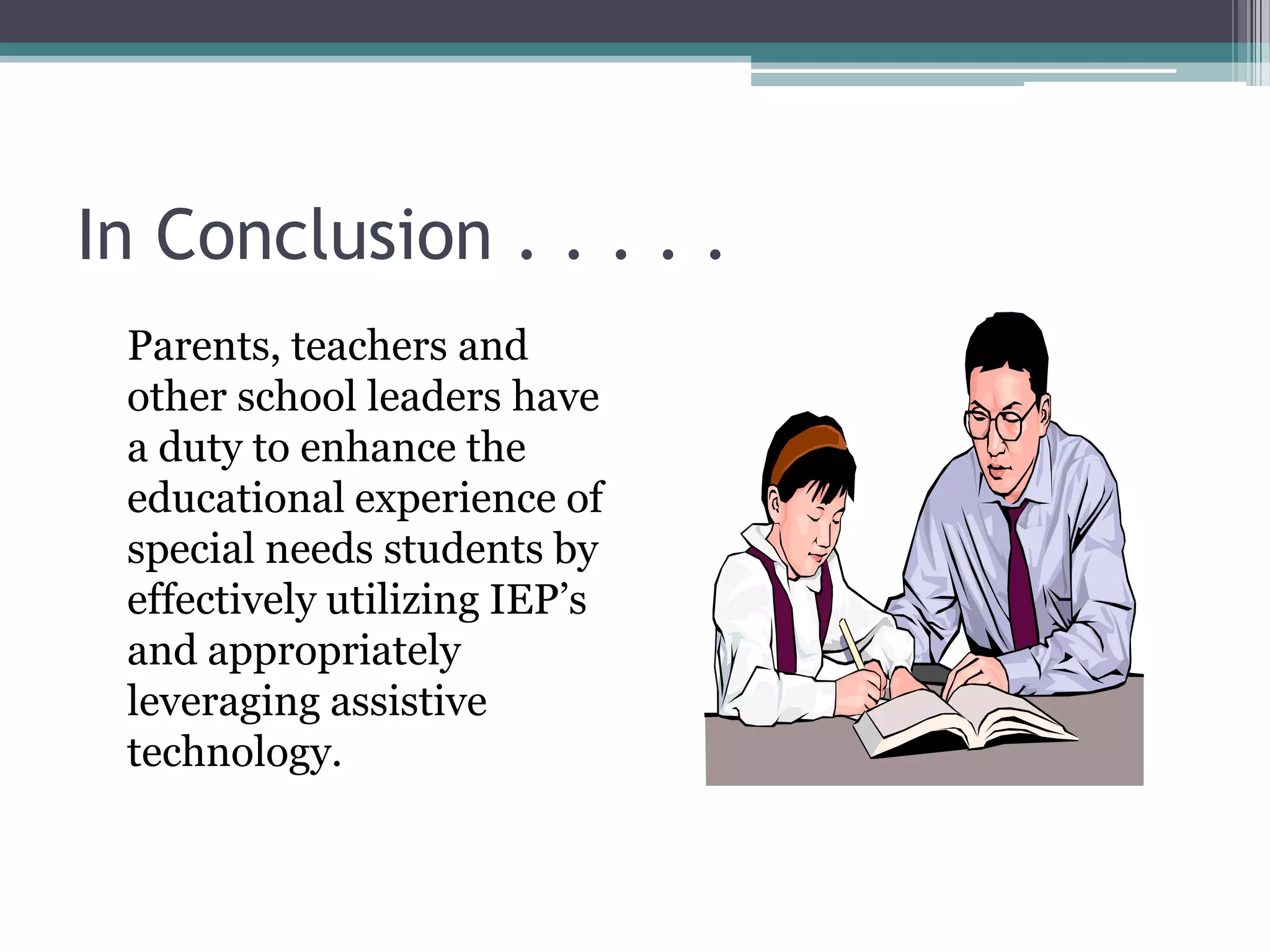
In Conclusion . . . . .	Parents, teachers and other school leaders have a duty to enhance the educational experience of special needs students by effectively utilizing IEP’s and appropriately leveraging assistive technology.

IEP & assistive technology

  • 1.
    Educating Special NeedsStudentsUsing IEP’s and Assistive Technology
  • 2.
    “Special Needs” defined:LearningdisabilitiesAttention Deficit Hyperactivity Disorder (ADHD)Emotional disordersCognitive challengesAutism Hearing impairmentVisual impairmentSpeech or language impairmentDevelopmental delay
  • 3.
    Two waysto educate students with special needs:Use Individualized Education Programs (IEP’s)Use Assistive Technology
  • 4.
    Description of anIEP:Parents work with educators to develop a plan (IEP) to help students succeed in schoolIEP details goals set by parents, educators and other professionalsIEP identifies resources that will be used to assist student in accomplishing educational goals
  • 5.
    Determining if anIEP is necessary: Teachers, parent or medical professional is concerned about academic performance. Information is gathered by:a conference with parentsa conference with the studentobservation of the studentanalysis of the student's performance (attention, behavior, work completion, tests, classwork, homework, etc.)
  • 6.
    Implementing Assistive Technologyto support special needs students
  • 7.
    What is AssistiveTechnology (AT)? “Assistive technology or adaptive technology (AT) is an umbrella term that includes assistive, adaptive, and rehabilitative devices for people with disabilities and also includes the process used in selecting, locating, and using them. AT promotes greater independence by enabling people to perform tasks that they were formerly unable to accomplish, or had great difficulty accomplishing, by providing enhancements to or changed methods of interacting with the technology needed to accomplish such tasks.”
  • 8.
    Choosing the rightAT for the right studentCollect child and family information. Discuss child’s strengths and weaknessesIdentify activities for participation. Discuss the various activities within the environments that a child encounters throughout the day. What is preventing him/her from participating more? What can be observed that indicates the intervention is successful?Brainstorm AT solutions. Do the child’s needs include supports for movement, communication and/or use of materials?  Try it out. Determine when the AT intervention will begin and create an observation plan to record how the child participates with the AT supports.Identify what worked, what didn’t work. Make modifications as needed.
  • 9.
    Types of ATdevices/interventions“Special Need” for AT deviceApplicable AT deviceListening2. Note taking3. OrganizingReading WritingH.A.T. (hearing assistive technology)Web Cam technologyLCD projection systemsAudio BooksWord prediction Software
  • 10.
    In Conclusion .. . . . Parents, teachers and other school leaders have a duty to enhance the educational experience of special needs students by effectively utilizing IEP’s and appropriately leveraging assistive technology.

Editor's Notes

  • #3 Information taken from:http://kidshealth.org/parent/positive/learning/iep.html
  • #5 Data taken from:http://kidshealth.org/parent/positive/learning/iep.html#
  • #6 Data taken from:http://kidshealth.org/parent/positive/learning/iep.html#
  • #8 Data taken from:http://en.wikipedia.org/wiki/Assistive_technology
  • #9 Data taken from:http://www.ldonline.org/article/8088
  • #10 Data taken from:http://www.greatschools.org/special-education/assistive-technology/948-reading-tools.gshttp://www.asha.org/public/hearing/treatment/assist_tech.htmhttp://www.ericdigests.org/2003-1/assistive.htm