Intensive English Language and Culture Program, Advanced B
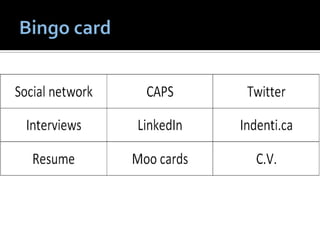
   When you hear me say a word on your
    card, mark the word

   Raise your hand when I have said all nine
    of the words on your card (Bingo!)

   The first student to hear all nine of their
    words wins a prize.
How big is the internet?


4
One Trillion URLs +++


5
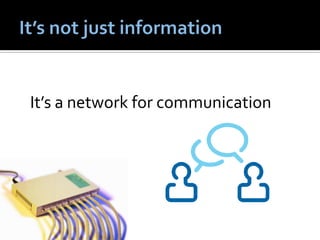
It’s a network for communication
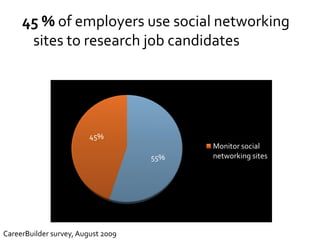
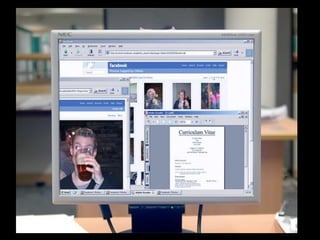
45 % of employers use social networking
      sites to research job candidates


                         45%
                                          Monitor social
                                    55%   networking sites


CareerBuilder survey, August 2009
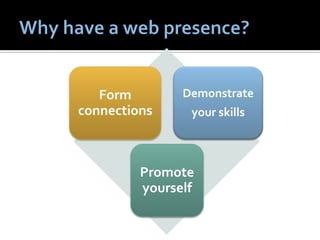
Form        Demonstrate
connections     your skills


         Promote
         yourself
   #1: Social networks
   Others???
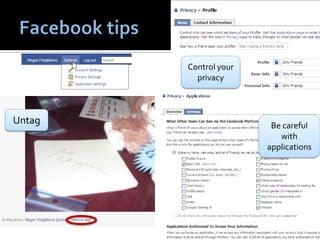
Control your
          privacy


Untag                   Be careful
                          with
                       applications
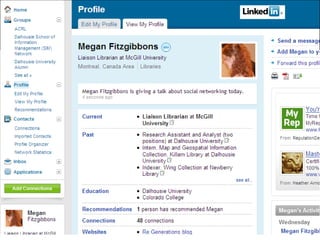
   Professional audience

   Easy alternative to a personal website

   Make contacts that might lead to a job
   #1: Social networks

   #2: Microblogging
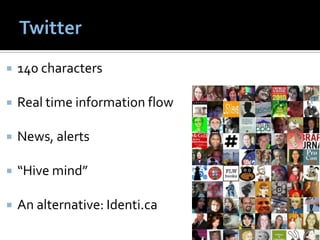
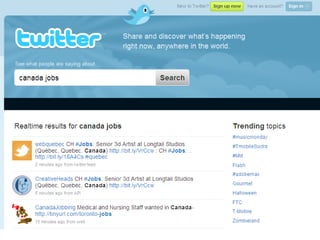
   140 characters

   Real time information flow

   News, alerts

   “Hive mind”

   An alternative: Identi.ca
   #1: Social networks

   #2: Microblogging

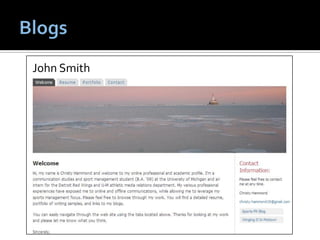
   #3: Blogs
John Smith
   #1: Share freely but not unprofessionally

   #2: Choose your username carefully

   #3: Let your online communication extend to
    in-person contacts
   It's important to post all of your contact
    information and work history when you post
    a resume online.

                           FALSE!
   Source: Pam Dixon, World Privacy Forum (2009)
    http://www.worldprivacyforum.org/resumedatabaseprivacytips.html
   It's unsafe to enter personal data (like credit
    card numbers) on a public wireless network
    (wi fi)

                             TRUE!

   Source: OnGuard Online (2006)
    http://www.onguardonline.gov/topics/wireless-security.aspx
   When you take a quiz on Facebook, almost
    everything on your profile is visible to the
    quiz creator and others who take the quiz,
    even if you modify your profile privacy
    settings.

                             TRUE!
   Source: American Civil Liberties Union (2009)
    http://blog.aclu.org/2009/06/11/quiz-what-do-facebook-quizzes-know-
    about-you/
   Cookies on websites are like viruses that
    infect your computer.

                           FALSE!
    But they can compromise your privacy.

   Source: Pam Dixon, World Privacy Forum (2009)
    http://www.worldprivacyforum.org/cookieoptout.html
   #1: Pay attention to what you download/click

   #2: Know who is collecting your information
    and why

   #3: Think before posting
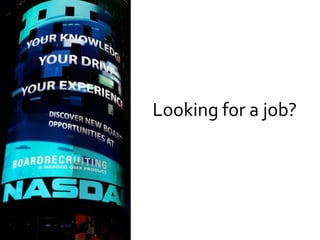
Looking for a job?
   McGill’s Career Planning Service
    ď‚§ Websites
    ď‚§ Workshops

   Library web pages
    ď‚§ Links to company information

    ď‚§ CV writing advice: websites and books

   Newspapers
Megan Fitzgibbons
    megan.fitzgibbons@mcgill.ca
    Humanities & Social Sciences Library
   Dixon, Pam. 2009. “Job Seekers' Guide to Resumes: Twelve Resume Posting
    Truths.” World Privacy Forum.
    http://www.worldprivacyforum.org/resumedatabaseprivacytips.html
   Dixon, Pam. 2009. “Consumer Tips: How to Opt-Out of Cookies That Track You.”
    World Privacy Forum. http://www.worldprivacyforum.org/cookieoptout.html
   “Forty-five Percent of Employers Use Social Networking Sites to Research Job
    Candidates, CareerBuilder Survey Finds.” PRNewswire. 2009, August 19.
    Retrieved October 2, 2009 from http://www.marketwatch.com/story/forty-five-
    percent-of-employers-use-social-networking-sites-to-research-job-candidates-
    careerbuilder-survey-finds-2009-08-19?siteid=nbsh
   “Quiz: What Do Facebook Quizzes Know About You?” 2009, June 11. American
    Civil Liberties Union. http://blog.aclu.org/2009/06/11/quiz-what-do-facebook-
    quizzes-know-about-you/
   “Wireless Security.” 2006. OnGuard Online..
    http://www.onguardonline.gov/topics/wireless-security.aspx
   Slide 9: Privacy by unknowndomain
    http://www.flickr.com/photos/62834984@N00/12518473/. License:
    Attribution-Noncommercial-No Derivative Works 2.0 Generic
   Slide 9: Sharing the Popsicle by The Facey Family
    http://www.flickr.com/photos/44124461706@N01/2384239540. License:
    Attribution-Noncommercial-Share Alike 2.0 Generic
   Slide 13: Social Stalking by Matthew Grum by visionnewspaper
    http://www.flickr.com/photos/44156128@N00/369769623/. License:
    Attribution-Noncommercial-No Derivative Works 2.0 Generic
   Slide 30: NASDAQ building by niallkennedy
    http://www.flickr.com/photos/35034351734@N01/3484815373/. License:
    Attribution-Noncommercial 2.0 Generic
   Slide 31: Pargeter by b_d_solis
    http://www.flickr.com/photos/briansolis/1411905457/. License: Attribution
    2.0 Generic

Ielc adv b_internet_career_winter2010

  • 1.
    Intensive English Languageand Culture Program, Advanced B
  • 2.
     When you hear me say a word on your card, mark the word  Raise your hand when I have said all nine of the words on your card (Bingo!)  The first student to hear all nine of their words wins a prize.
  • 4.
    How big isthe internet? 4
  • 5.
  • 6.
    It’s a networkfor communication
  • 7.
    45 % ofemployers use social networking sites to research job candidates 45% Monitor social 55% networking sites CareerBuilder survey, August 2009
  • 9.
    Form Demonstrate connections your skills Promote yourself
  • 10.
     #1: Social networks
  • 11.
     Others???
  • 13.
    Control your privacy Untag Be careful with applications
  • 15.
     Professional audience  Easy alternative to a personal website  Make contacts that might lead to a job
  • 18.
     #1: Social networks  #2: Microblogging
  • 19.
     140 characters  Real time information flow  News, alerts  “Hive mind”  An alternative: Identi.ca
  • 21.
     #1: Social networks  #2: Microblogging  #3: Blogs
  • 22.
  • 23.
     #1: Share freely but not unprofessionally  #2: Choose your username carefully  #3: Let your online communication extend to in-person contacts
  • 24.
     It's important to post all of your contact information and work history when you post a resume online. FALSE!  Source: Pam Dixon, World Privacy Forum (2009) http://www.worldprivacyforum.org/resumedatabaseprivacytips.html
  • 25.
     It's unsafe to enter personal data (like credit card numbers) on a public wireless network (wi fi) TRUE!  Source: OnGuard Online (2006) http://www.onguardonline.gov/topics/wireless-security.aspx
  • 26.
     When you take a quiz on Facebook, almost everything on your profile is visible to the quiz creator and others who take the quiz, even if you modify your profile privacy settings. TRUE!  Source: American Civil Liberties Union (2009) http://blog.aclu.org/2009/06/11/quiz-what-do-facebook-quizzes-know- about-you/
  • 27.
     Cookies on websites are like viruses that infect your computer. FALSE! But they can compromise your privacy.  Source: Pam Dixon, World Privacy Forum (2009) http://www.worldprivacyforum.org/cookieoptout.html
  • 28.
     #1: Pay attention to what you download/click  #2: Know who is collecting your information and why  #3: Think before posting
  • 29.
  • 30.
     McGill’s Career Planning Service  Websites  Workshops  Library web pages  Links to company information  CV writing advice: websites and books  Newspapers
  • 32.
    Megan Fitzgibbons megan.fitzgibbons@mcgill.ca Humanities & Social Sciences Library
  • 33.
     Dixon, Pam. 2009. “Job Seekers' Guide to Resumes: Twelve Resume Posting Truths.” World Privacy Forum. http://www.worldprivacyforum.org/resumedatabaseprivacytips.html  Dixon, Pam. 2009. “Consumer Tips: How to Opt-Out of Cookies That Track You.” World Privacy Forum. http://www.worldprivacyforum.org/cookieoptout.html  “Forty-five Percent of Employers Use Social Networking Sites to Research Job Candidates, CareerBuilder Survey Finds.” PRNewswire. 2009, August 19. Retrieved October 2, 2009 from http://www.marketwatch.com/story/forty-five- percent-of-employers-use-social-networking-sites-to-research-job-candidates- careerbuilder-survey-finds-2009-08-19?siteid=nbsh  “Quiz: What Do Facebook Quizzes Know About You?” 2009, June 11. American Civil Liberties Union. http://blog.aclu.org/2009/06/11/quiz-what-do-facebook- quizzes-know-about-you/  “Wireless Security.” 2006. OnGuard Online.. http://www.onguardonline.gov/topics/wireless-security.aspx
  • 34.
     Slide 9: Privacy by unknowndomain http://www.flickr.com/photos/62834984@N00/12518473/. License: Attribution-Noncommercial-No Derivative Works 2.0 Generic  Slide 9: Sharing the Popsicle by The Facey Family http://www.flickr.com/photos/44124461706@N01/2384239540. License: Attribution-Noncommercial-Share Alike 2.0 Generic  Slide 13: Social Stalking by Matthew Grum by visionnewspaper http://www.flickr.com/photos/44156128@N00/369769623/. License: Attribution-Noncommercial-No Derivative Works 2.0 Generic  Slide 30: NASDAQ building by niallkennedy http://www.flickr.com/photos/35034351734@N01/3484815373/. License: Attribution-Noncommercial 2.0 Generic  Slide 31: Pargeter by b_d_solis http://www.flickr.com/photos/briansolis/1411905457/. License: Attribution 2.0 Generic