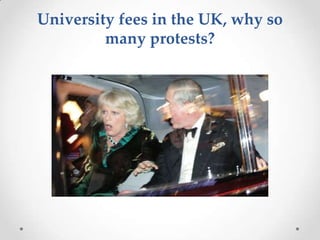
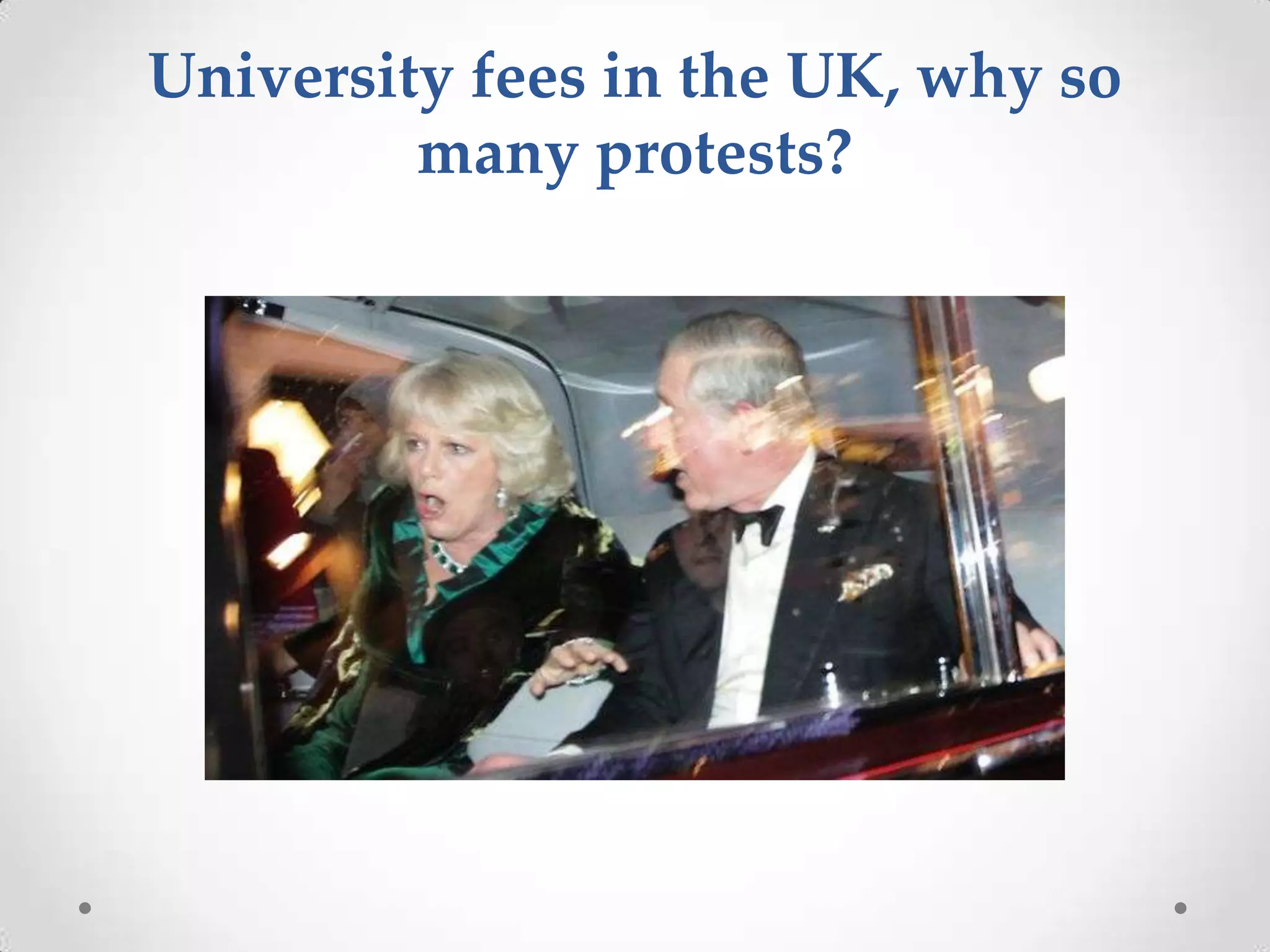
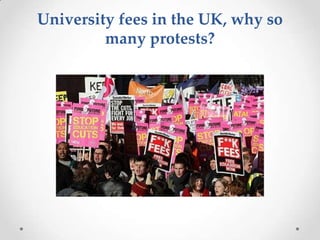

Universityfees in the UK, why so manyprotests?
A verybriefhistoryFurther education (post secondary school) was always free in the UK until September 1998 when Tony Blair’s Labour government introduced tuition fees
Tuition fees are a direct result of less government funding in education
Fees were quickly abolished by the devolved government in Scotland, creating a strange and confusing situation in the UK e.g. How much do Northern Irish students pay to study in Scotland? And a Scottish student in England???Key FactsFees in England to rise from £3,290 to a maximum of £9,000 a year, from 2012
Graduates will begin paying back loans covering their fees once they are earning at least £21,000 a year (average graduate salary is £25,000
They will pay back 9% of their earnings above this level
No tuition fees in Scotland, but universities are asking for 'graduate contributions' to maintain competiveness
Fees in Wales are to rise in line with those in England - but Welsh students will be subsidised wherever they study in the UK so will pay no more than the current fees of £3,290 a yearUniversityfees in the UK, why so manyprotests?
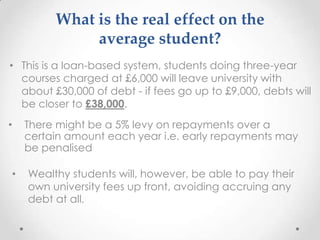
Whatisthe real effectontheaveragestudent?This is a loan-based system, students doing three-year courses charged at £6,000 will leave university with about £30,000 of debt - if fees go up to £9,000, debts will be closer to £38,000.
There might be a 5% levy on repayments over a certain amount each year i.e. early repayments may be penalised
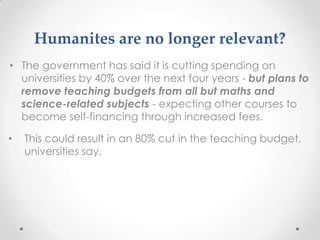
Wealthy students will, however, be able to pay their own university fees up front, avoiding accruing any debt at all.Humanites are no longerrelevant?The government has said it is cutting spending on universities by 40% over the next four years - but plans to remove teaching budgets from all but maths and science-related subjects - expecting other courses to become self-financing through increased fees.
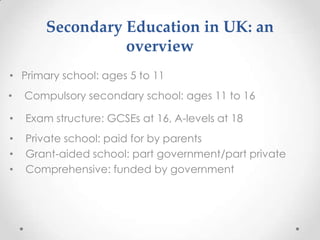
This could result in an 80% cut in the teaching budget, universities say.Secondary Education in UK: an overviewPrimary school: ages 5 to 11

Idiie katy x1x

  • 1.
    Universityfees in theUK, why so manyprotests?
  • 2.
    A verybriefhistoryFurther education(post secondary school) was always free in the UK until September 1998 when Tony Blair’s Labour government introduced tuition fees
  • 3.
    Tuition fees area direct result of less government funding in education
  • 4.
    Fees were quicklyabolished by the devolved government in Scotland, creating a strange and confusing situation in the UK e.g. How much do Northern Irish students pay to study in Scotland? And a Scottish student in England???Key FactsFees in England to rise from £3,290 to a maximum of £9,000 a year, from 2012
  • 5.
    Graduates will beginpaying back loans covering their fees once they are earning at least £21,000 a year (average graduate salary is £25,000
  • 6.
    They will payback 9% of their earnings above this level
  • 7.
    No tuition feesin Scotland, but universities are asking for 'graduate contributions' to maintain competiveness
  • 8.
    Fees in Walesare to rise in line with those in England - but Welsh students will be subsidised wherever they study in the UK so will pay no more than the current fees of £3,290 a yearUniversityfees in the UK, why so manyprotests?
  • 9.
    Whatisthe real effectontheaveragestudent?Thisis a loan-based system, students doing three-year courses charged at £6,000 will leave university with about £30,000 of debt - if fees go up to £9,000, debts will be closer to £38,000.
  • 10.
    There might bea 5% levy on repayments over a certain amount each year i.e. early repayments may be penalised
  • 11.
    Wealthy students will,however, be able to pay their own university fees up front, avoiding accruing any debt at all.Humanites are no longerrelevant?The government has said it is cutting spending on universities by 40% over the next four years - but plans to remove teaching budgets from all but maths and science-related subjects - expecting other courses to become self-financing through increased fees.
  • 12.
    This could resultin an 80% cut in the teaching budget, universities say.Secondary Education in UK: an overviewPrimary school: ages 5 to 11