1. Discuss theOccupational Safety and Health (OSH)
standards in ICT environments.
2. Recognize the importance of OSH standards in ICT
environments and develop a sense of responsibility by
advocating for their adherence to ensure a safe
workplace.
3. Create an essay on situation analysis that
demonstrates concern and responsibility by accurately
identifying key issues, proposing solutions, and
reflecting on the impact of these solutions.
LESSON TARGETS:
I can…
3.
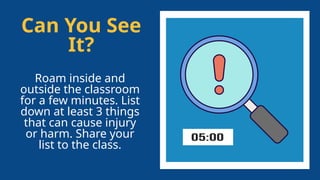
Can You See
It?
Roaminside and
outside the classroom
for a few minutes. List
down at least 3 things
that can cause injury
or harm. Share your
list to the class.
4.
1.How did youfind the activity?
3.What are the three (3) things you have listed
that can cause injury or harm?
2.What are the areas on the school campus
that you visited?
4.How do these hazards impact safety, and
what measures could be implemented to
mitigate these risks?
5.
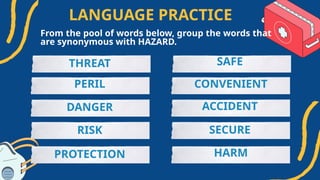
LANGUAGE PRACTICE
From thepool of words below, group the words that
are synonymous with HAZARD.
THREAT
PERIL
DANGER
RISK
PROTECTION
SAFE
CONVENIENT
ACCIDENT
SECURE
HARM
6.
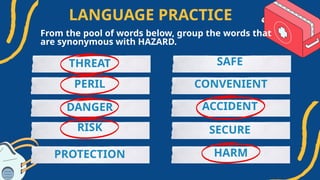
LANGUAGE PRACTICE
From thepool of words below, group the words that
are synonymous with HAZARD.
THREAT
PERIL
DANGER
RISK
PROTECTION
SAFE
CONVENIENT
ACCIDENT
SECURE
HARM
HAZARD
is any sourceof
potential damage,
harm or adverse
health effects
is anything that could
hurt you or anybody
9.
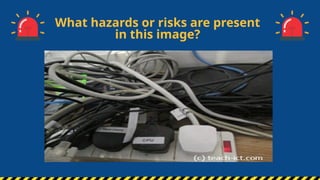
• frayed electricalcords (could
result in electrical shock)
• boxes stacked precariously (they
could fall on anybody)
• noisy machinery (could result in
damage to hearing)
10.
RISK
is the chanceor
probability that a person
will be harmed or
experience adverse
health effect if exposed
to a hazard
11.
OCCUPATIONAL
SAFETY AND HEALTH
(OSH)
•is a working system that
prevents illness and injury
• recognize and identify
hazards and risk
• encourages the highest
level of physical, mental,
and social health for all
employees
• established and
implemented by DOLE
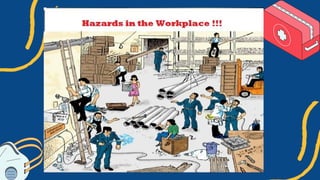
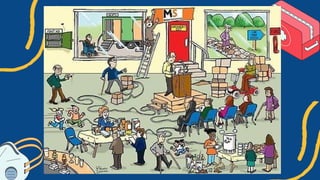
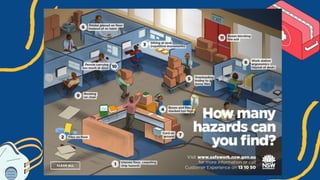
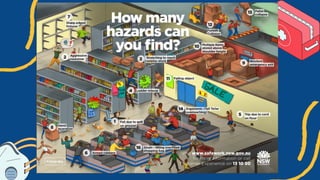
SPOT THE HAZARD
HAZARDIDENTIFICATION
• Being alert at all times
is good.
• some hazards cannot
be easily identified and
not obvious
14.
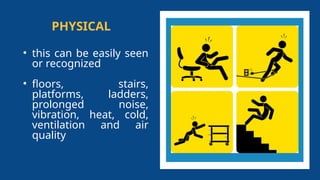
PHYSICAL
• this canbe easily seen
or recognized
• floors, stairs,
platforms, ladders,
prolonged noise,
vibration, heat, cold,
ventilation and air
quality
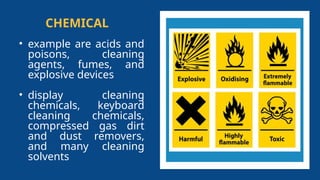
CHEMICAL
• example areacids and
poisons, cleaning
agents, fumes, and
explosive devices
• display cleaning
chemicals, keyboard
cleaning chemicals,
compressed gas dirt
and dust removers,
and many cleaning
solvents
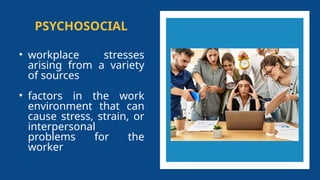
PSYCHOSOCIAL
• workplace stresses
arisingfrom a variety
of sources
• factors in the work
environment that can
cause stress, strain, or
interpersonal
problems for the
worker
19.
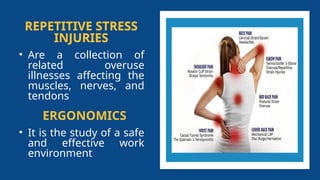
REPETITIVE STRESS
INJURIES
• Area collection of
related overuse
illnesses affecting the
muscles, nerves, and
tendons
REPETITIVE STRESS
INJURIES
ERGONOMICS
• It is the study of a safe
and effective work
environment
20.
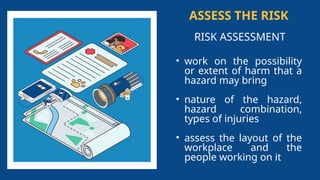
ASSESS THE RISK
RISKASSESSMENT
• work on the possibility
or extent of harm that a
hazard may bring
• nature of the hazard,
hazard combination,
types of injuries
• assess the layout of the
workplace and the
people working on it
25.
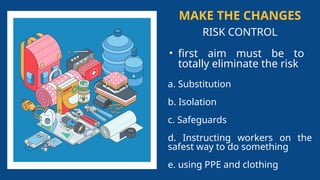
MAKE THE CHANGES
RISKCONTROL
• first aim must be to
totally eliminate the risk
a. Substitution
b. Isolation
c. Safeguards
d. Instructing workers on the
safest way to do something
e. using PPE and clothing
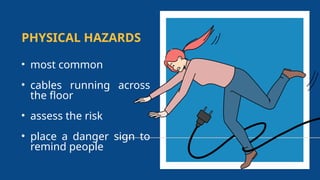
PHYSICAL HAZARDS
• mostcommon
• cables running across
the floor
• assess the risk
• place a danger sign to
remind people
28.
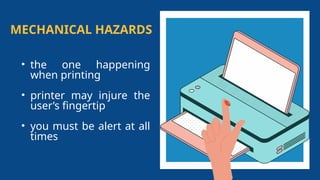
MECHANICAL HAZARDS
• theone happening
when printing
• printer may injure the
user’s fingertip
• you must be alert at all
times
29.
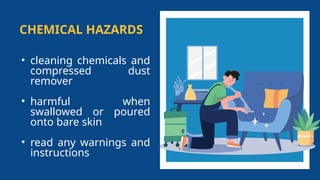
CHEMICAL HAZARDS
• cleaningchemicals and
compressed dust
remover
• harmful when
swallowed or poured
onto bare skin
• read any warnings and
instructions
30.
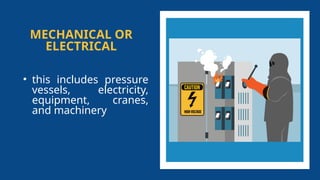
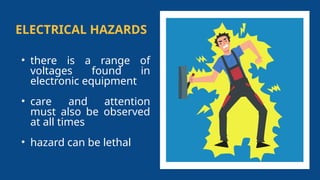
ELECTRICAL HAZARDS
• thereis a range of
voltages found in
electronic equipment
• care and attention
must also be observed
at all times
• hazard can be lethal
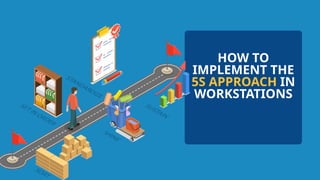
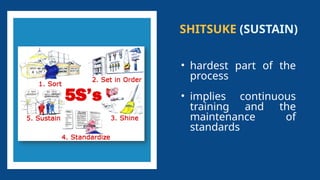
• systematic approachto workplace
organization focuses on reducing
waste, increases efficiency, and
overall work quality
• Hiroyuki Hirano created this to
have a safer, more efficient
operation
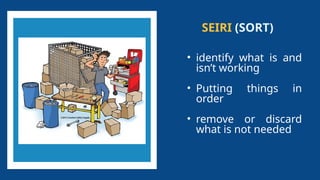
34.
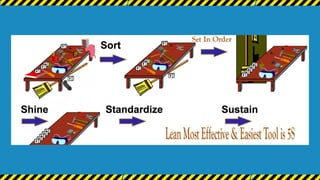
SEIRI (SORT)
• identifywhat is and
isn’t working
• Putting things in
order
• remove or discard
what is not needed
35.
After identifying thesenon-
essential things, classify them as:
1) Waste
2) Valuable, but not critical
Consider whether they are:
1) essential
2) used occasionally
3) never at all
36.
Imagine your classroomis a giant
puzzle, and every item has its own
piece. For a fun challenge, choose
three different types of items (e.g.,
books, supplies, or personal
belongings).
How would you "sort" these items to
make the classroom more organized?
Designate positions foreverything
you’ll need
• hand tools, cords, cables
• make a specific place for tools
Eliminate “hunting” for tools and
supplies
• create a place for those things
39.
Take time toconsider the flow of work.
Ask yourself:
• What do I need to do my job?
• Where should I locate it, once I’ve
determined an item is needed?
• How many do I need?
40.
Picture your workspaceis a busy
kitchen. For a fun twist, think of
three kitchen tools or utensils that
need to be "straightened" for
optimal use.
How would you arrange these tools to
make cooking easier and more
efficient?
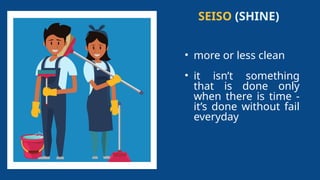
41.
SEISO (SHINE)
• moreor less clean
• it isn’t something
that is done only
when there is time -
it’s done without fail
everyday
42.
Imagine your classroomis a
magical garden that needs a little
"shining up." Choose three areas or
items in the room that could use
some extra sparkle and cleanliness.
How would you "shine" these areas to
make them look their best?
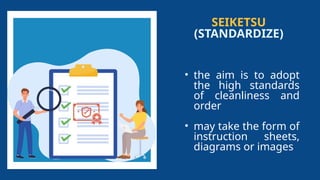
43.
SEIKETSU
(STANDARDIZE)
• the aimis to adopt
the high standards
of cleanliness and
order
• may take the form of
instruction sheets,
diagrams or images
44.
Think of yourclassroom as a game
show where the challenge is to
"standardize" the way things are
done. Choose three daily tasks or
routines (like organizing desks,
submitting the outputs, or setting
up materials).
How would you create a fun, step-by-
step guide or checklist to make sure
everyone follows the same process?
Imagine you're thecaptain of a
"Sustainability Squad" in your
classroom. Your mission is to create a
fun and engaging plan to keep your
classroom habits and routines on
track. Choose three key practices (like
tidying up after activities, maintaining
organization, or following a schedule).
How would you motivate your
classmates to stick to these practices
every day?
47.
How can minorhazards
in an ICT environment
lead to major safety and
security issues, and
what solutions would
effectively prevent this?
48.
How can applyingthe 5S
approach in a
workstation help reduce
hazards and risks, and
create a safer, more
efficient working
environment?
49.
As Teresians, how
doyou face
personal danger
like stress or
disorganization,
both in school
and in life? What
steps help you
overcome these
challenges?
50.
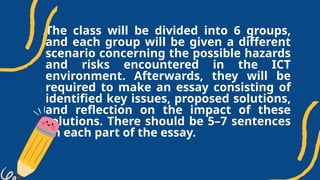
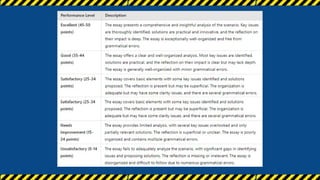
The class willbe divided into 6 groups,
and each group will be given a different
scenario concerning the possible hazards
and risks encountered in the ICT
environment. Afterwards, they will be
required to make an essay consisting of
identified key issues, proposed solutions,
and reflection on the impact of these
solutions. There should be 5–7 sentences
on each part of the essay.