The authors are members of the research project “Promoting success in mathematics” (PTDC/CPE-CED/121774/2010), funded
by Fundação para a Ciência e Tecnologia, the Portuguese national funding agency for science, research and technology.
Mathematics in Pre-service Teacher Education and
the quality of learning: The Monty Hall problem
Fernando Luís Santos
Piaget Institute, Universidade Nova de Lisboa, UIED
António Domingos
Universidade Nova de Lisboa, UIED
context
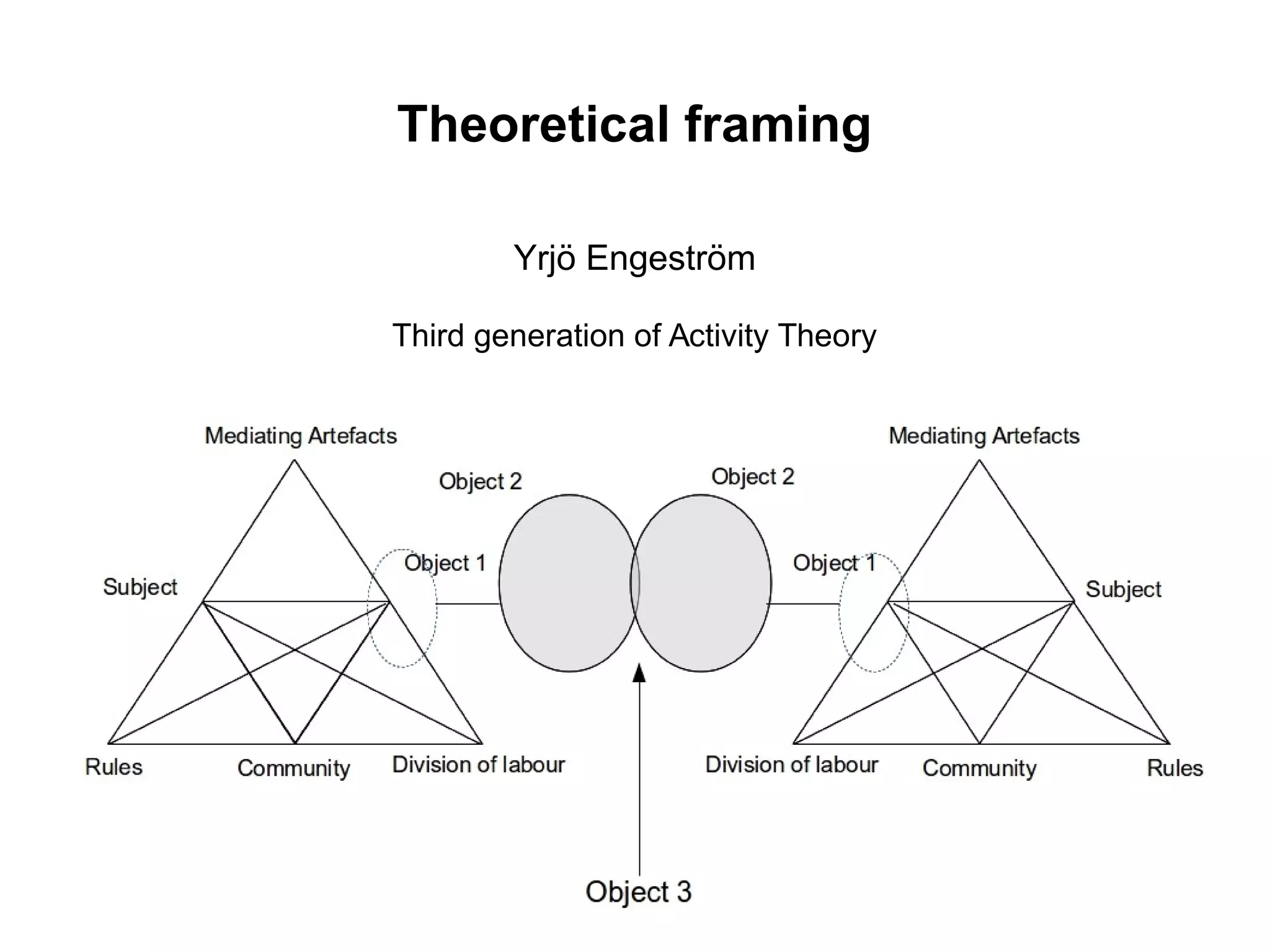
Theoretical framing
Theoretical framing
Eddie Gray and David Tall
Advanced mathematical thinking, procept, proceptual divide
Theoretical framing
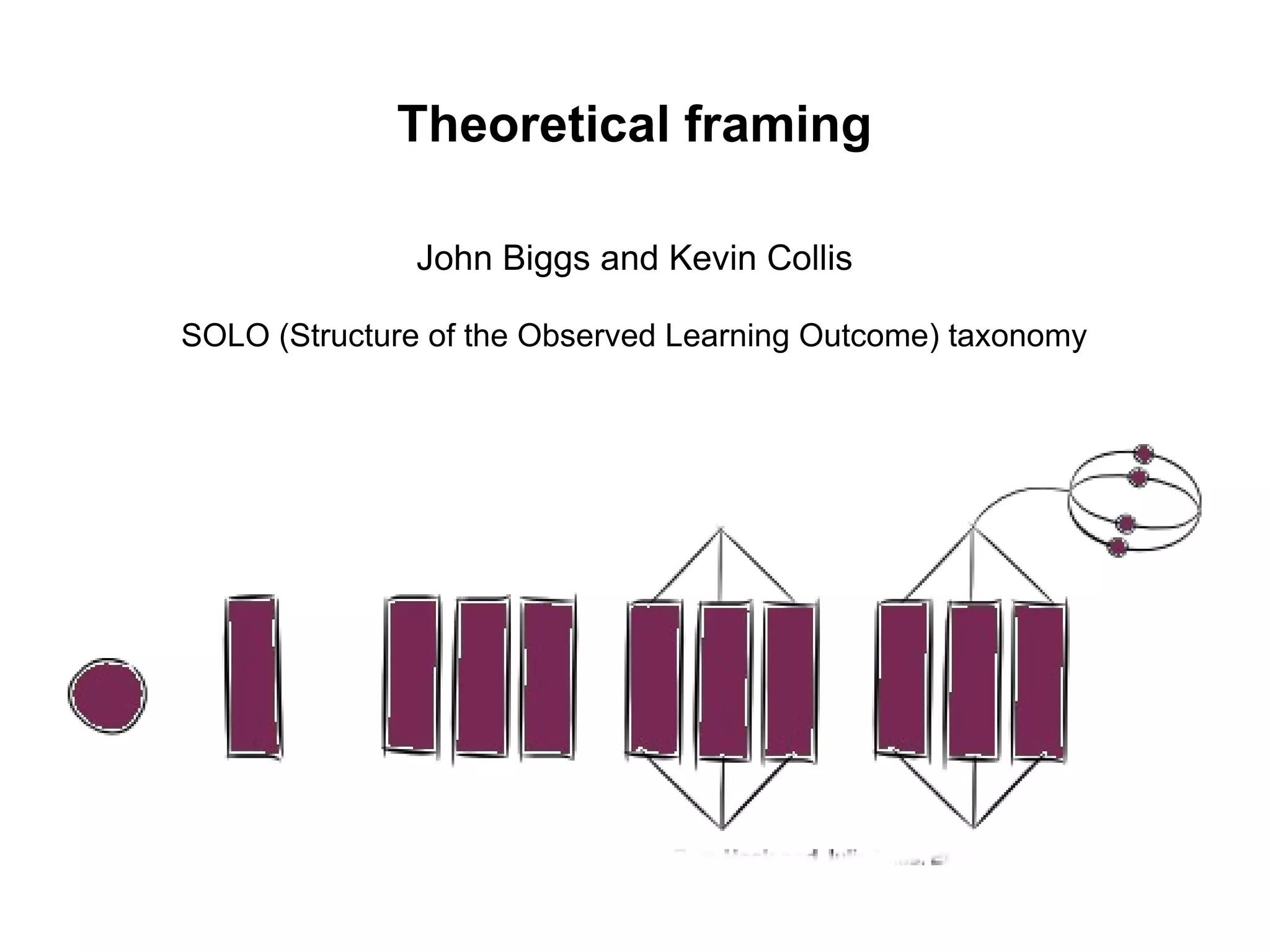
John Biggs and Kevin Collis
SOLO (Structure of the Observed Learning Outcome) taxonomy
Theoretical framing
Yrjö Engeström
Third generation of Activity Theory
setting
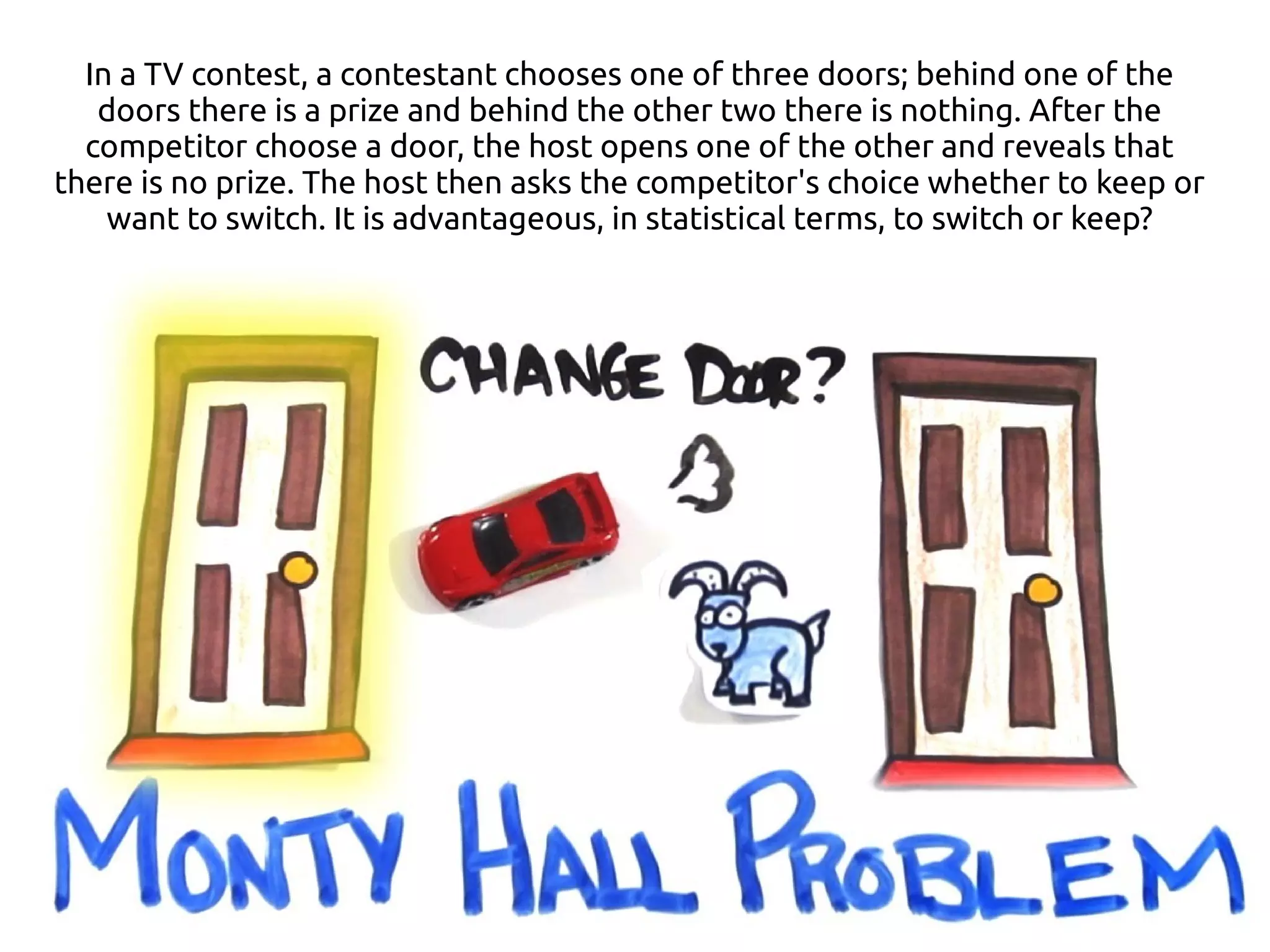
In a TV contest, a contestant chooses one of three doors; behind one of the
doors there is a prize and behind the other two there is nothing. After the
competitor choose a door, the host opens one of the other and reveals that
there is no prize. The host then asks the competitor's choice whether to keep or
want to switch. It is advantageous, in statistical terms, to switch or keep?
data
Two students (Raquel and Mariana)
Raquel from Business, Mariana from Education
Both correct answers
Two different kinds of answers
data
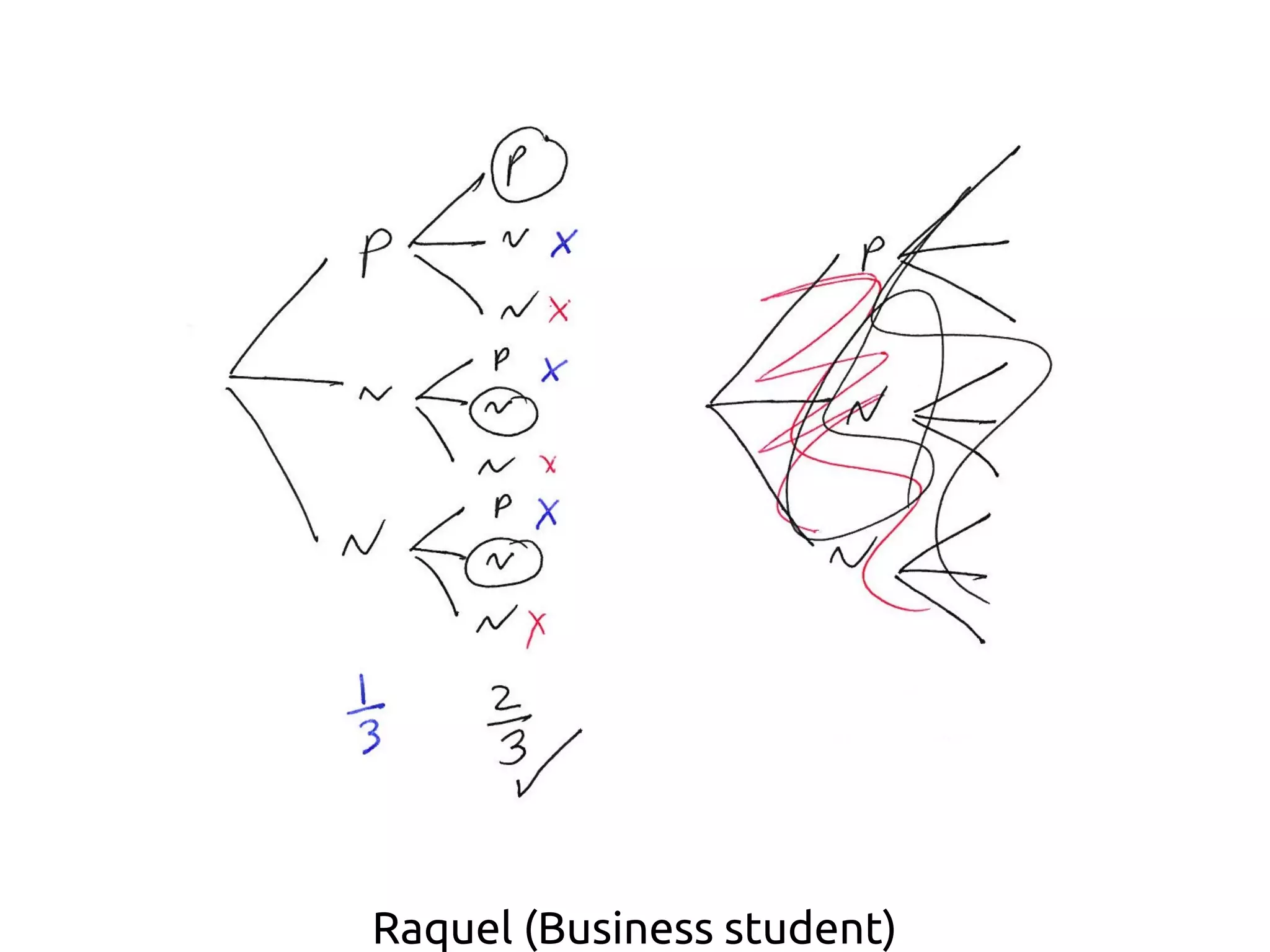
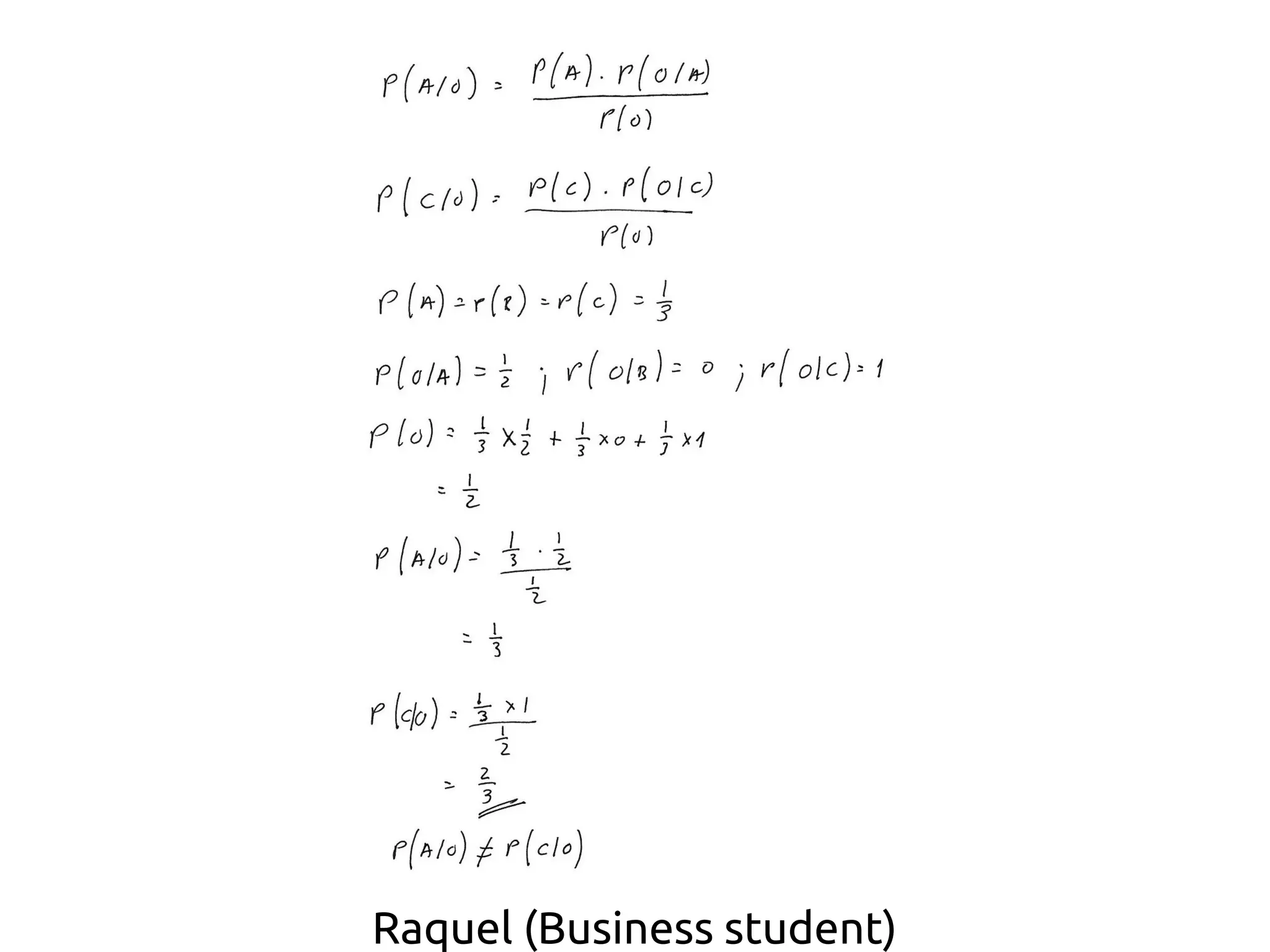
Raquel (Business student)
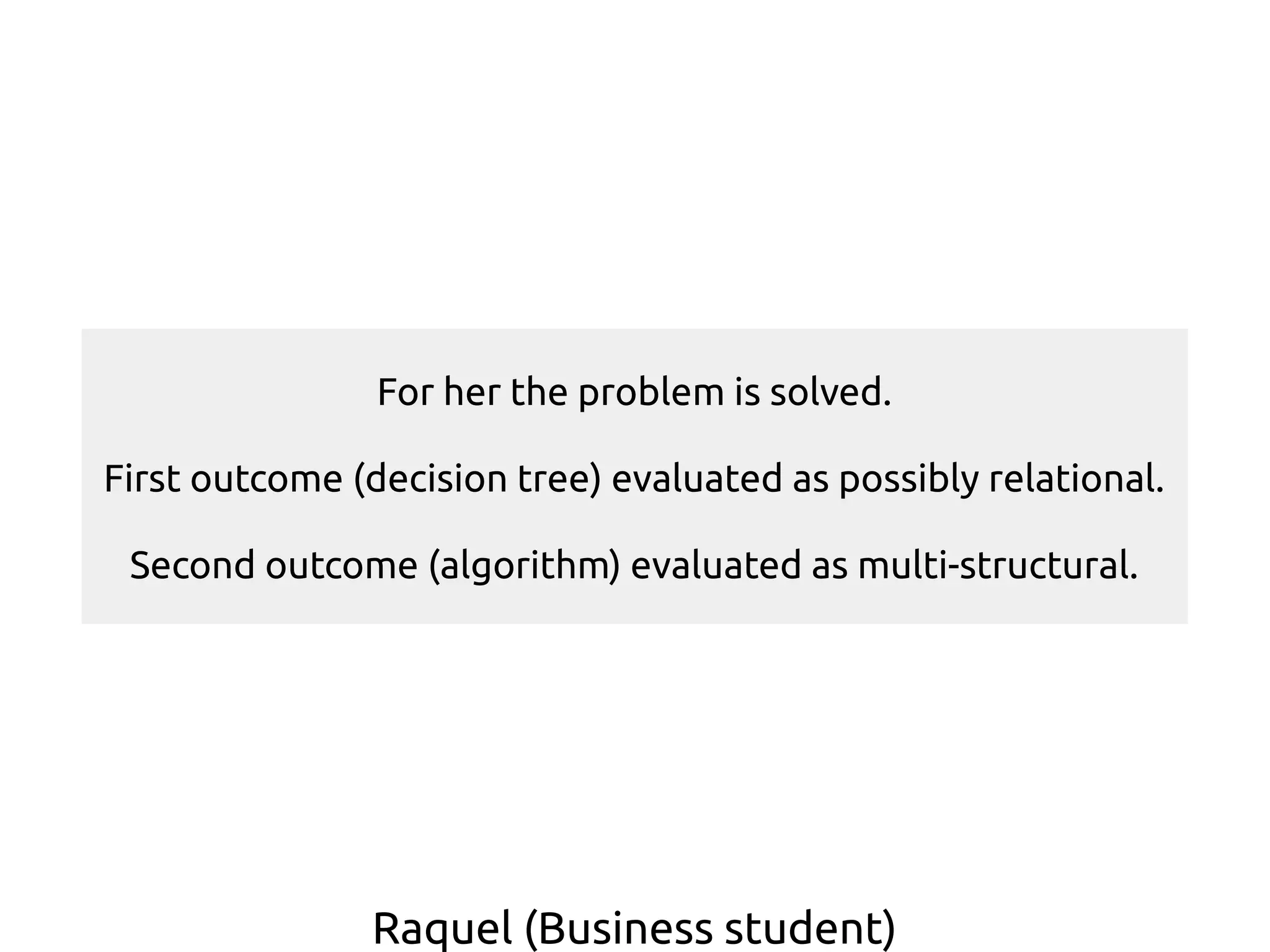
For her the problem is solved.
First outcome (decision tree) evaluated as possibly relational.
Second outcome (algorithm) evaluated as multi-structural.
Raquel (Business student)
Mariana (Education student)
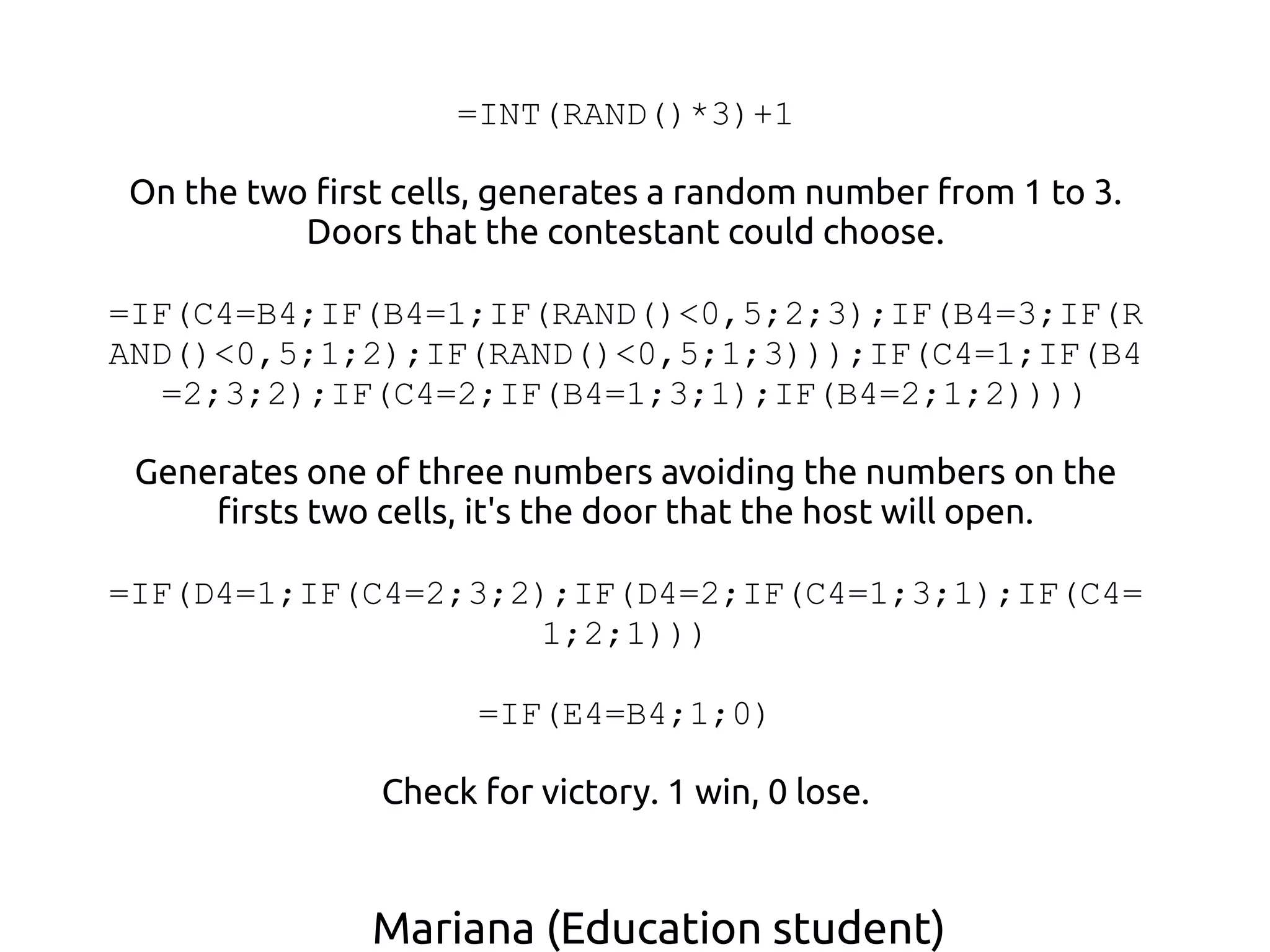
=INT(RAND()*3)+1
On the two first cells, generates a random number from 1 to 3.
Doors that the contestant could choose.
=IF(C4=B4;IF(B4=1;IF(RAND()<0,5;2;3);IF(B4=3;IF(R
AND()<0,5;1;2);IF(RAND()<0,5;1;3)));IF(C4=1;IF(B4
=2;3;2);IF(C4=2;IF(B4=1;3;1);IF(B4=2;1;2))))
Generates one of three numbers avoiding the numbers on the
firsts two cells, it's the door that the host will open.
=IF(D4=1;IF(C4=2;3;2);IF(D4=2;IF(C4=1;3;1);IF(C4=
1;2;1)))
=IF(E4=B4;1;0)
Check for victory. 1 win, 0 lose.
Mariana (Education student)
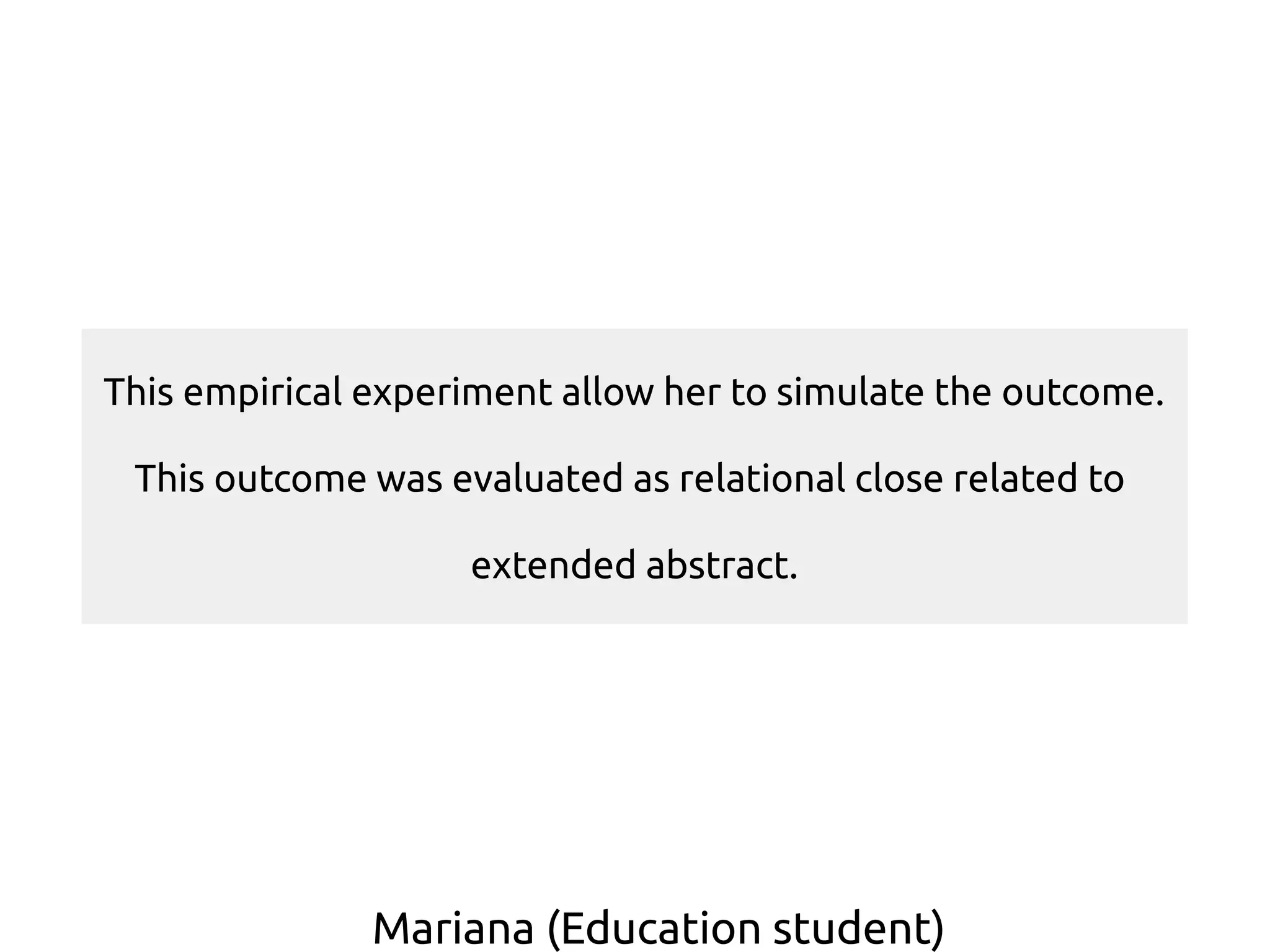
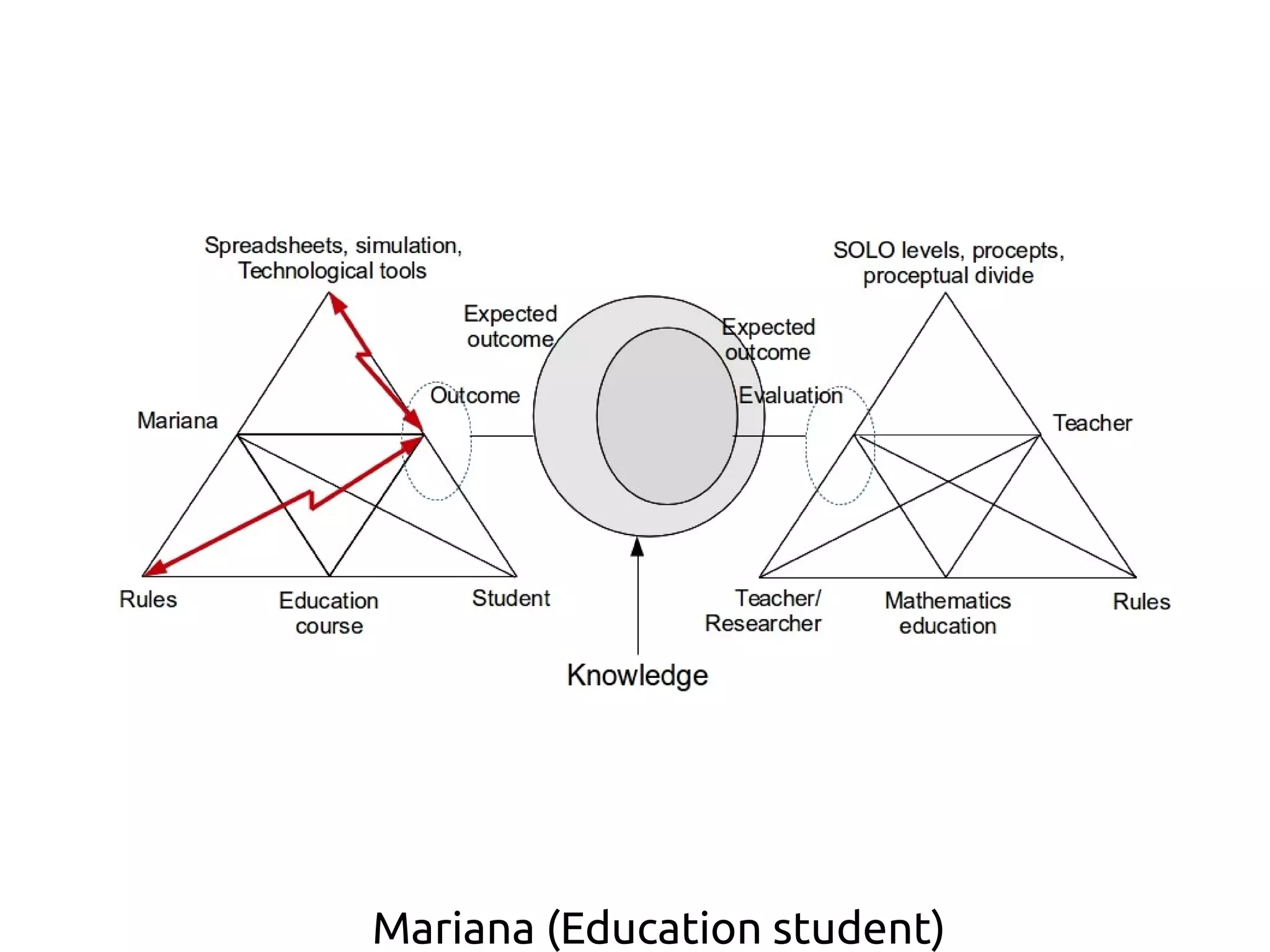
This empirical experiment allow her to simulate the outcome.
This outcome was evaluated as relational close related to
extended abstract.
Mariana (Education student)
Final remarks
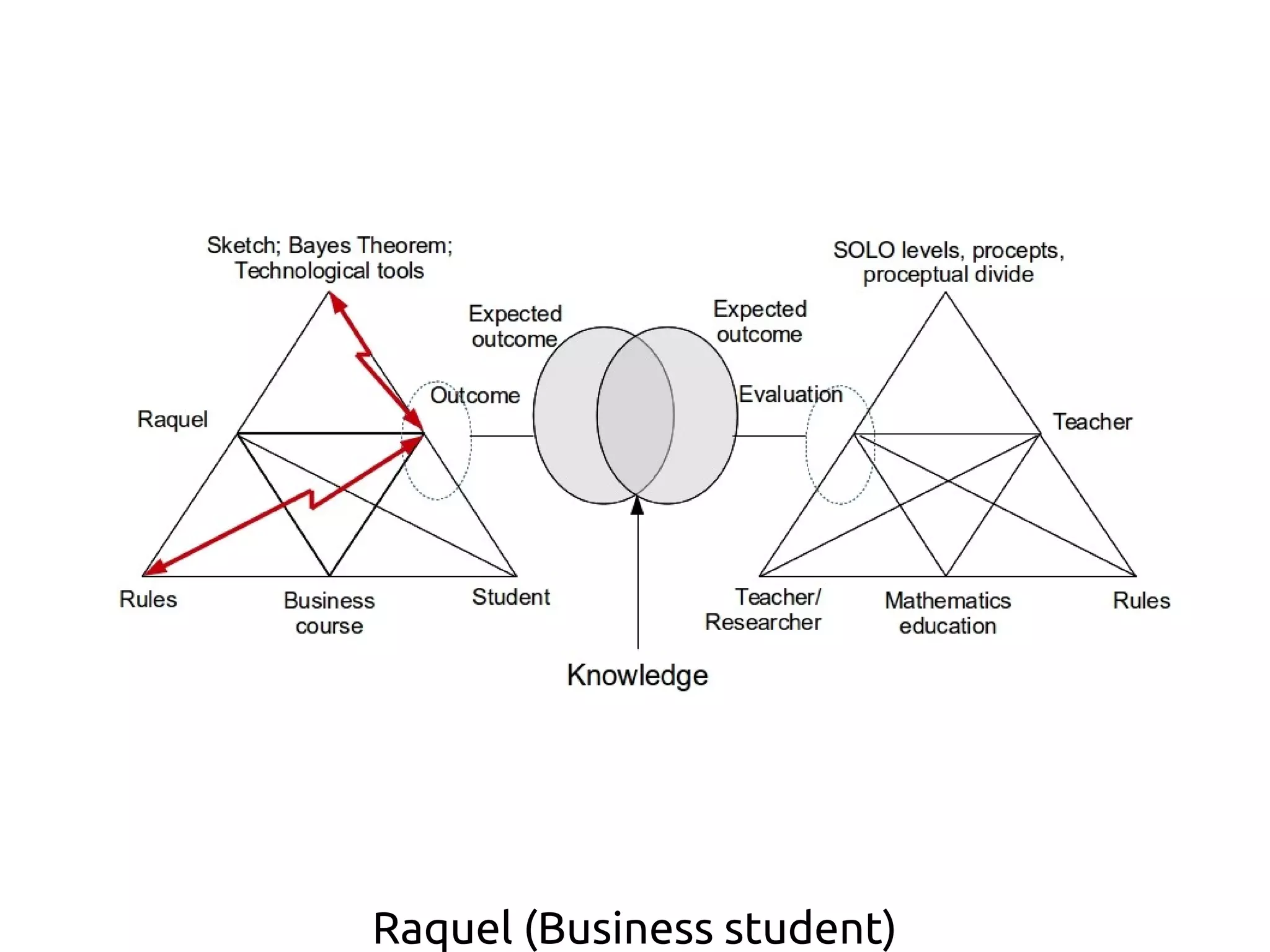
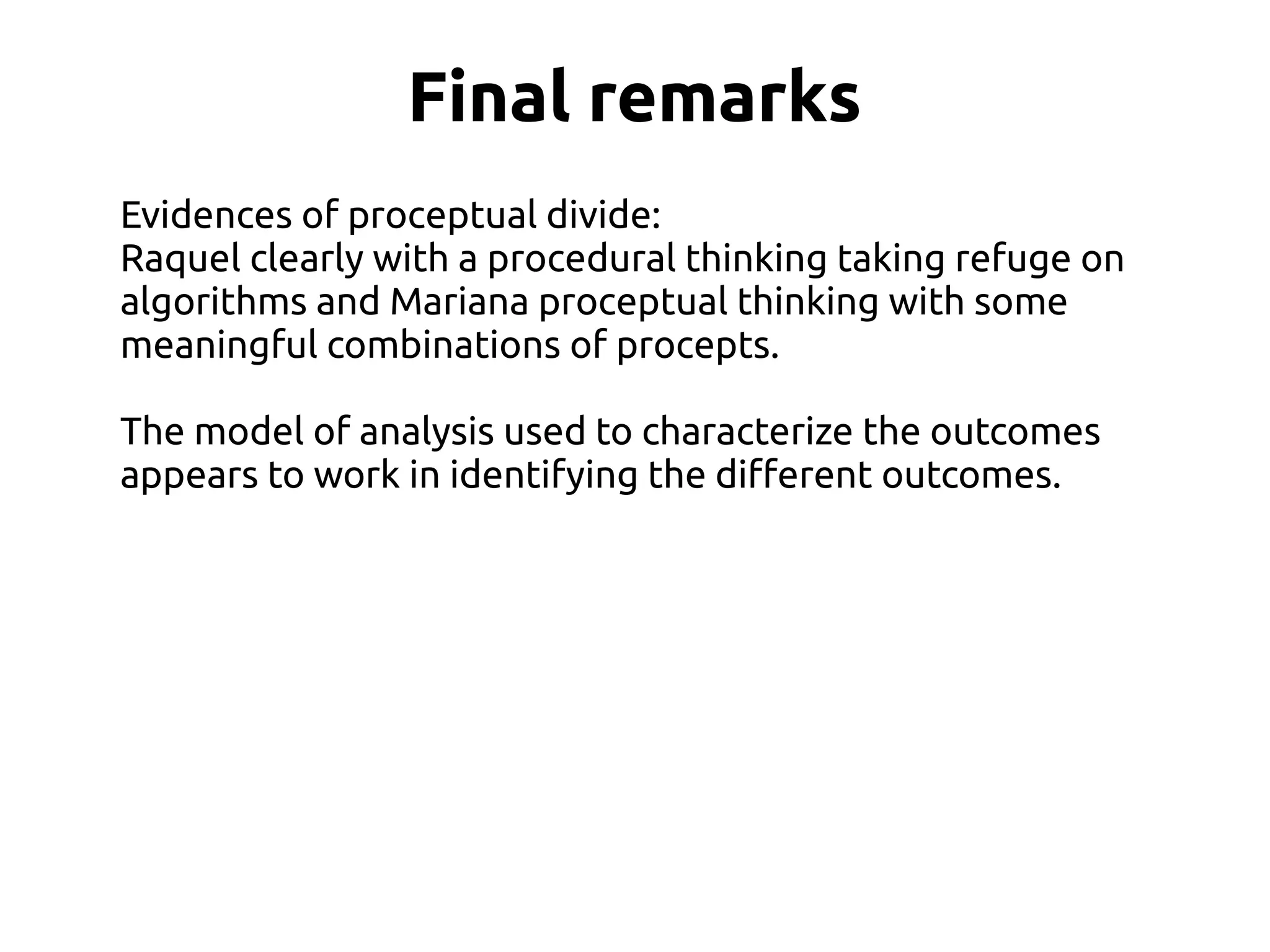
Evidences of proceptual divide:
Raquel clearly with a procedural thinking taking refuge on
algorithms and Mariana proceptual thinking with some
meaningful combinations of procepts.
The model of analysis used to characterize the outcomes
appears to work in identifying the different outcomes.
The authors are members of the research project “Promoting success in mathematics” (PTDC/CPE-CED/121774/2010), funded
by Fundação para a Ciência e Tecnologia, the Portuguese national funding agency for science, research and technology.
Mathematics in Pre-service Teacher Education and
the quality of learning: The Monty Hall problem
Fernando Luís Santos
Piaget Institute, Universidade Nova de Lisboa, UIED
António Domingos
Universidade Nova de Lisboa, UIED

Mathematics in pre-service teacher education and the quality of learning: The Monty Hall problem

  • 1.
    The authors aremembers of the research project “Promoting success in mathematics” (PTDC/CPE-CED/121774/2010), funded by Fundação para a Ciência e Tecnologia, the Portuguese national funding agency for science, research and technology. Mathematics in Pre-service Teacher Education and the quality of learning: The Monty Hall problem Fernando Luís Santos Piaget Institute, Universidade Nova de Lisboa, UIED António Domingos Universidade Nova de Lisboa, UIED
  • 2.
  • 3.
  • 4.
    Theoretical framing Eddie Grayand David Tall Advanced mathematical thinking, procept, proceptual divide
  • 5.
    Theoretical framing John Biggsand Kevin Collis SOLO (Structure of the Observed Learning Outcome) taxonomy
  • 6.
    Theoretical framing Yrjö Engeström Thirdgeneration of Activity Theory
  • 7.
  • 9.
    In a TVcontest, a contestant chooses one of three doors; behind one of the doors there is a prize and behind the other two there is nothing. After the competitor choose a door, the host opens one of the other and reveals that there is no prize. The host then asks the competitor's choice whether to keep or want to switch. It is advantageous, in statistical terms, to switch or keep?
  • 10.
  • 11.
    Two students (Raqueland Mariana) Raquel from Business, Mariana from Education Both correct answers Two different kinds of answers data
  • 12.
  • 13.
  • 14.
    Raquel (Business student) Forher the problem is solved. First outcome (decision tree) evaluated as possibly relational. Second outcome (algorithm) evaluated as multi-structural.
  • 15.
  • 16.
    Mariana (Education student) =INT(RAND()*3)+1 Onthe two first cells, generates a random number from 1 to 3. Doors that the contestant could choose. =IF(C4=B4;IF(B4=1;IF(RAND()<0,5;2;3);IF(B4=3;IF(R AND()<0,5;1;2);IF(RAND()<0,5;1;3)));IF(C4=1;IF(B4 =2;3;2);IF(C4=2;IF(B4=1;3;1);IF(B4=2;1;2)))) Generates one of three numbers avoiding the numbers on the firsts two cells, it's the door that the host will open. =IF(D4=1;IF(C4=2;3;2);IF(D4=2;IF(C4=1;3;1);IF(C4= 1;2;1))) =IF(E4=B4;1;0) Check for victory. 1 win, 0 lose.
  • 17.
    Mariana (Education student) Thisempirical experiment allow her to simulate the outcome. This outcome was evaluated as relational close related to extended abstract.
  • 18.
  • 19.
    Final remarks Evidences ofproceptual divide: Raquel clearly with a procedural thinking taking refuge on algorithms and Mariana proceptual thinking with some meaningful combinations of procepts. The model of analysis used to characterize the outcomes appears to work in identifying the different outcomes.
  • 20.
    The authors aremembers of the research project “Promoting success in mathematics” (PTDC/CPE-CED/121774/2010), funded by Fundação para a Ciência e Tecnologia, the Portuguese national funding agency for science, research and technology. Mathematics in Pre-service Teacher Education and the quality of learning: The Monty Hall problem Fernando Luís Santos Piaget Institute, Universidade Nova de Lisboa, UIED António Domingos Universidade Nova de Lisboa, UIED