Visual 2.1
ICS Overview
Unit 2:
ICS Overview
Visual 2.2
ICS Overview
Unit Objectives
Identify:
 Three purposes
of ICS.
 Requirements to use
ICS.
Visual 2.3
ICS Overview
What Is ICS?
ICS:
 Is a standardized, on-scene, all-hazards
incident management concept.
 Enables a coordinated response among
various jurisdictions and agencies.
 Establishes common processes for planning
and management of resources.
 Allows for integration within a common
organizational structure.
Visual 2.4
ICS Overview
ICS can be used to
manage:
 Natural hazards.
 Technological
hazards.
 Human-caused
hazards.
 Planned events.
When Is ICS Used?
Visual 2.5
ICS Overview
What Is an Incident?
An incident is . . .
. . . an occurrence
or event, natural or
human-caused, that
requires a response
to protect life or
property.
Visual 2.6
ICS Overview
Activity: ICS & Planned Events
Instructions: Working as a team . . .
1. Briefly describe one example where ICS
could be used to manage a planned event
(e.g., sporting event).
2. Identify the benefits of using ICS for the
selected event.
Visual 2.7
ICS Overview
Why Use ICS?
1. It Works! 2. Mandates
Visual 2.8
ICS Overview
National Incident Management System (NIMS)
What ? . . . NIMS provides a consistent
nationwide template . . .
Who? . . . to enable Federal, State, tribal,
and local governments, the private sector,
and nongovernmental organizations to
work together . . .
How? . . . to prepare for, prevent, respond
to, recover from, and mitigate the effects
of incidents regardless of cause, size,
location, or complexity . . .
Why? . . . in order to reduce the loss of life
and property, and harm to the
environment.
Visual 2.9
ICS Overview
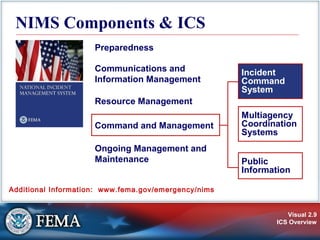
NIMS Components & ICS
Command and Management
Preparedness
Resource Management
Communications and
Information Management
Ongoing Management and
Maintenance
Incident
Command
System
Multiagency
Coordination
Systems
Public
Information
Additional Information: www.fema.gov/emergency/nims
Visual 2.10
ICS Overview
What are common
causes of incident
response problems?
Discussion Question
Visual 2.11
ICS Overview
Lessons Learned
Without ICS, incident
responses typically:
 Lack accountability.
 Have poor
communications.
 Use unsystematic
planning processes.
 Are unable to efficiently
integrate responders.
Visual 2.12
ICS Overview
ICS Benefits
ICS helps to ensure:
 The safety of
responders, workers,
and others.
 The achievement of
response objectives.
 The efficient use of
resources.
Visual 2.13
ICS Overview
Summary
ICS:
 Is a standardized management tool for meeting the
demands of small or large emergency and
nonemergency situations.
 Represents best practices, and has become the
standard for emergency management across the
country.
 May be used for planned events, natural disasters,
and acts of terrorism.
 Is a key feature of NIMS.

Ics part 2

  • 1.
  • 2.
    Visual 2.2 ICS Overview UnitObjectives Identify:  Three purposes of ICS.  Requirements to use ICS.
  • 3.
    Visual 2.3 ICS Overview WhatIs ICS? ICS:  Is a standardized, on-scene, all-hazards incident management concept.  Enables a coordinated response among various jurisdictions and agencies.  Establishes common processes for planning and management of resources.  Allows for integration within a common organizational structure.
  • 4.
    Visual 2.4 ICS Overview ICScan be used to manage:  Natural hazards.  Technological hazards.  Human-caused hazards.  Planned events. When Is ICS Used?
  • 5.
    Visual 2.5 ICS Overview WhatIs an Incident? An incident is . . . . . . an occurrence or event, natural or human-caused, that requires a response to protect life or property.
  • 6.
    Visual 2.6 ICS Overview Activity:ICS & Planned Events Instructions: Working as a team . . . 1. Briefly describe one example where ICS could be used to manage a planned event (e.g., sporting event). 2. Identify the benefits of using ICS for the selected event.
  • 7.
    Visual 2.7 ICS Overview WhyUse ICS? 1. It Works! 2. Mandates
  • 8.
    Visual 2.8 ICS Overview NationalIncident Management System (NIMS) What ? . . . NIMS provides a consistent nationwide template . . . Who? . . . to enable Federal, State, tribal, and local governments, the private sector, and nongovernmental organizations to work together . . . How? . . . to prepare for, prevent, respond to, recover from, and mitigate the effects of incidents regardless of cause, size, location, or complexity . . . Why? . . . in order to reduce the loss of life and property, and harm to the environment.
  • 9.
    Visual 2.9 ICS Overview NIMSComponents & ICS Command and Management Preparedness Resource Management Communications and Information Management Ongoing Management and Maintenance Incident Command System Multiagency Coordination Systems Public Information Additional Information: www.fema.gov/emergency/nims
  • 10.
    Visual 2.10 ICS Overview Whatare common causes of incident response problems? Discussion Question
  • 11.
    Visual 2.11 ICS Overview LessonsLearned Without ICS, incident responses typically:  Lack accountability.  Have poor communications.  Use unsystematic planning processes.  Are unable to efficiently integrate responders.
  • 12.
    Visual 2.12 ICS Overview ICSBenefits ICS helps to ensure:  The safety of responders, workers, and others.  The achievement of response objectives.  The efficient use of resources.
  • 13.
    Visual 2.13 ICS Overview Summary ICS: Is a standardized management tool for meeting the demands of small or large emergency and nonemergency situations.  Represents best practices, and has become the standard for emergency management across the country.  May be used for planned events, natural disasters, and acts of terrorism.  Is a key feature of NIMS.